
The main benefits of magnesium IV therapy are rapid symptom relief, improved absorption, and immediate correction of magnesium deficiency. If you’re looking up magnesium IV therapy, chances are you’re dealing with stubborn headaches, muscle cramps, or fatigue. We get it—IV therapy can feel confusing when you’re trying to get relief fast, and this section helps you understand why these benefits matter..
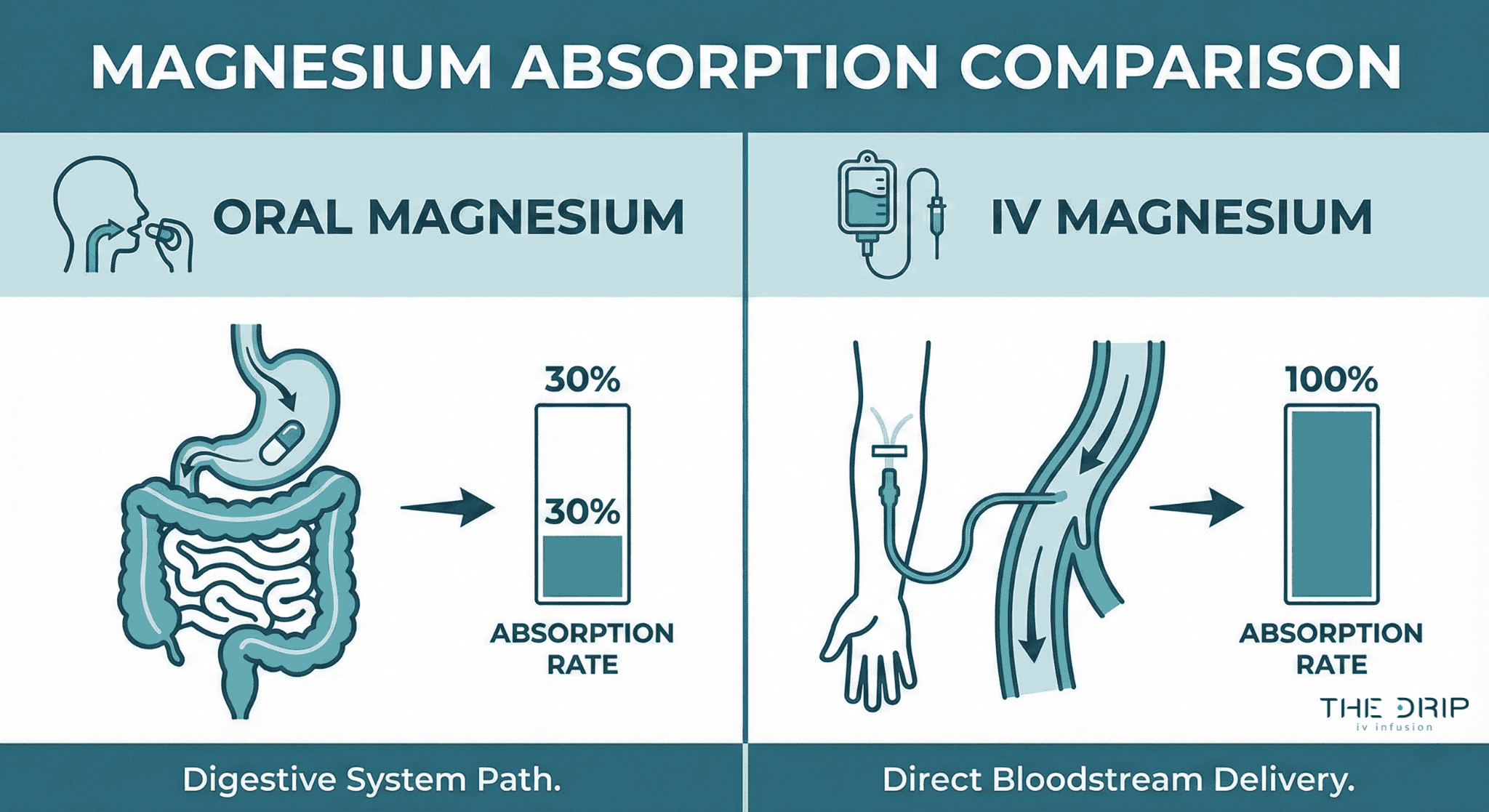
Magnesium IV therapy is when doctors put magnesium sulfate straight into your bloodstream through a little tube in your arm, skipping your stomach completely so it gets right to work. Think of it like this: when you take pills, only about 30% actually gets absorbed – it’s like trying to water your garden with a leaky hose. But with IV magnesium, you get 100% of what you need, and it starts working right away.
TL;DR Summary
Here’s what we found when we dug into all the research: magnesium IV therapy really works, and the proof is solid. Kids with bad asthma attacks are 85% less likely to end up in the hospital when they get this treatment. People with splitting headaches? Every single person got better with IV magnesium, compared to basically nobody who got fake treatment. Since three out of four Americans don’t get enough magnesium anyway, IV therapy is like hitting the fast-forward button on getting your levels back to normal. Doctors give it their highest rating for serious pregnancy complications and heart rhythm problems, and most people only get mild side effects that go away on their own. If you’re tired of muscle cramps, can’t shake that exhaustion, or your heart feels like it’s skipping beats, magnesium IV through places like The Drip IV Infusion could give you relief in minutes instead of making you wait weeks.
Quick Tip: If your muscles cramp up a lot, you’re always tired, or your heart beats funny, get your magnesium levels checked – these are red flags that you might be running low and could really benefit from the quick fix that IV therapy offers.
How Does Magnesium IV Therapy Work in the Body?
Understanding how magnesium moves through your body gives clarity about why IV delivery is so effective. Magnesium supports countless biological systems, and IV administration helps replenish these stores quickly. Its major roles include:
- Supporting over 300 enzymatic processes
- Maintaining steady heart rhythm
- Regulating muscle contraction and relaxation
- Enabling nerve signal transmission
- Storing 27% in muscles and 63% in bones
This stuff is like the oil in your car’s engine – it helps over 300 different processes run smoothly, from making energy to building your DNA.
What Biological Processes Does Magnesium Support?
Magnesium acts like a master key inside the body, helping several major systems function properly every day. When levels drop, these systems struggle, leading to widespread symptoms. The processes most dependent on magnesium include:
- Nerve signaling and neurotransmission
- Muscle contraction and relaxation
- Blood pressure regulation
- Energy production through glucose metabolism
- Bone strength and mineral storage
How Is IV Magnesium Absorbed Compared to Oral Supplements?
IV magnesium works differently from pills because absorption occurs directly in the bloodstream instead of through the gut. Several major absorption differences explain why IV therapy works faster and more reliably:
- Oral magnesium absorption = ~30%
- IV magnesium absorption = 100% immediate uptake
- Organic salt forms have higher absorption than basic forms
- Kidneys reabsorb ~95% of circulating magnesium
- Oral supplements raise blood levels only slightly compared to IV
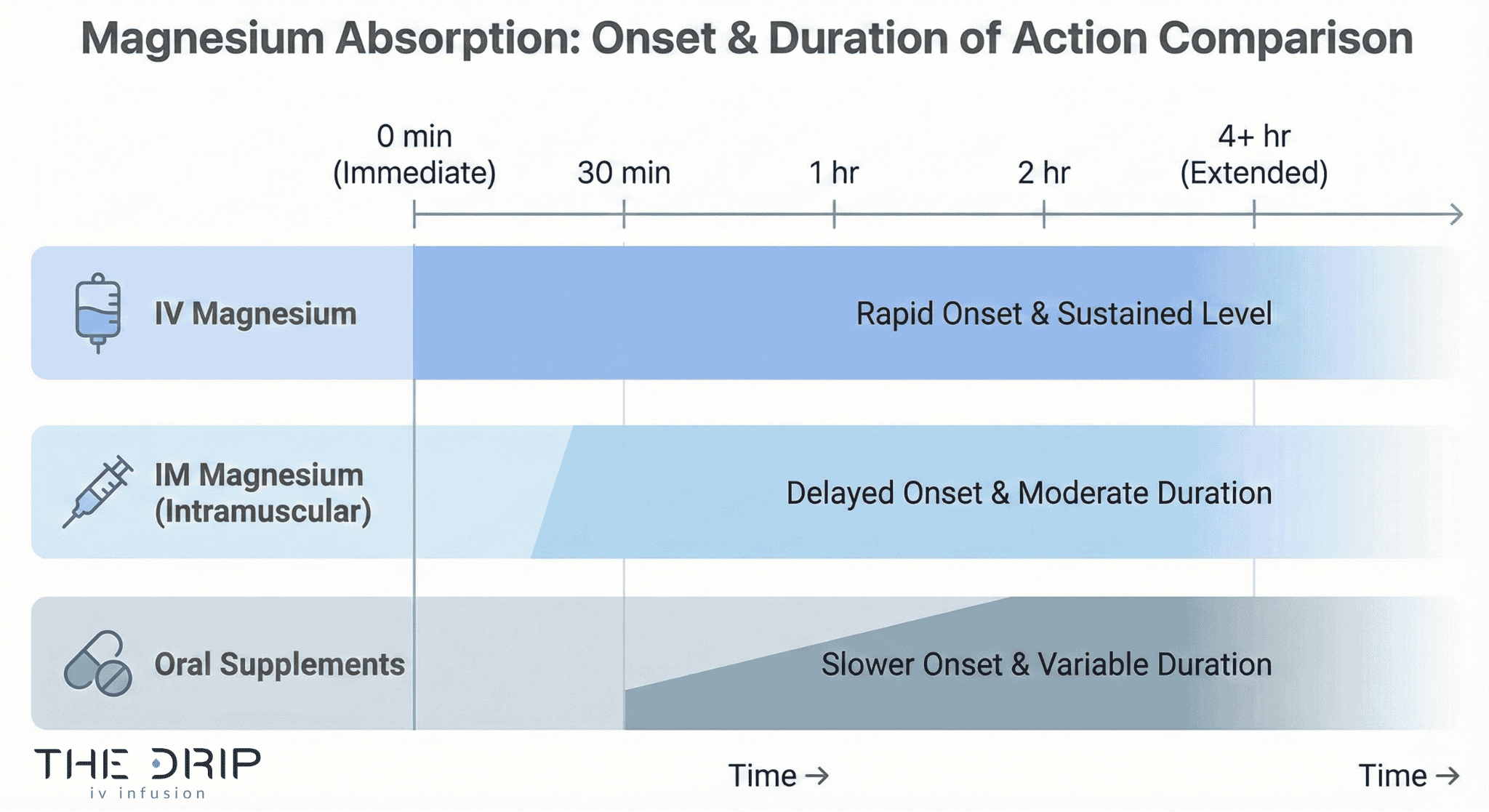
| Therapy / Route | Parameter | Measurement |
| IV magnesium | Onset of action | Immediate |
| IV magnesium | Duration (anticonvulsant) | 30 minutes |
| IM magnesium | Onset of action | 1 hour |
| IM magnesium | Duration | 3–4 hours |
| Oral magnesium | Intestinal absorption | 30% |
| Kidney | Magnesium reabsorption | 95% |
Some types of magnesium pills work better than others – the ones made from organic salts get absorbed better than the basic stuff. Your kidneys are really good at hanging onto magnesium, keeping tight control over how much you have floating around.
What Symptoms or Conditions Can Magnesium IV Help Address?
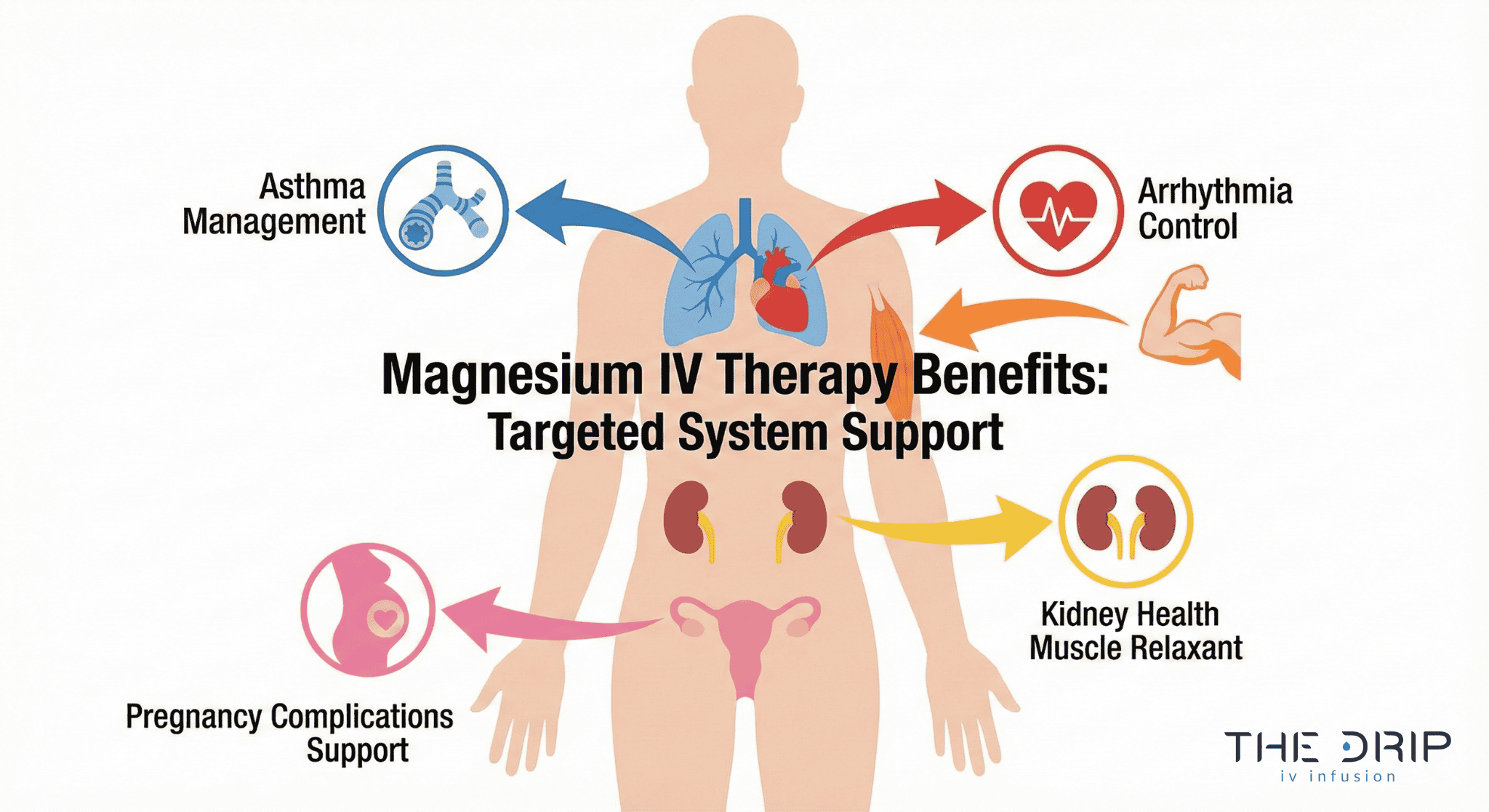
Magnesium IV therapy is used across both emergency and chronic care settings. Its FDA-approved uses and widely accepted clinical applications include the following conditions:
- Clinically low magnesium levels
- Seizure prevention in pregnancy (eclampsia/preeclampsia)
- Kidney-related metabolic issues
- Correcting arrhythmias caused by low magnesium
- Severe asthma attacks
- Certain acute cardiac emergencies
The research shows some pretty impressive results:
- Kids with severe asthma are 85% less likely to need the hospital (that’s a huge difference)
- Doctors give it their top rating for treating dangerous pregnancy complications
- It gets their highest recommendation for fixing certain deadly heart rhythms
- Good evidence shows it helps with kidney stone pain and pelvic pain from endometriosis
These uses show how versatile magnesium IV can be – it handles both emergency situations and ongoing problems, which brings us to the everyday benefits most people care about.
What are the Most Common Health Benefits of Magnesium IV Therapy?
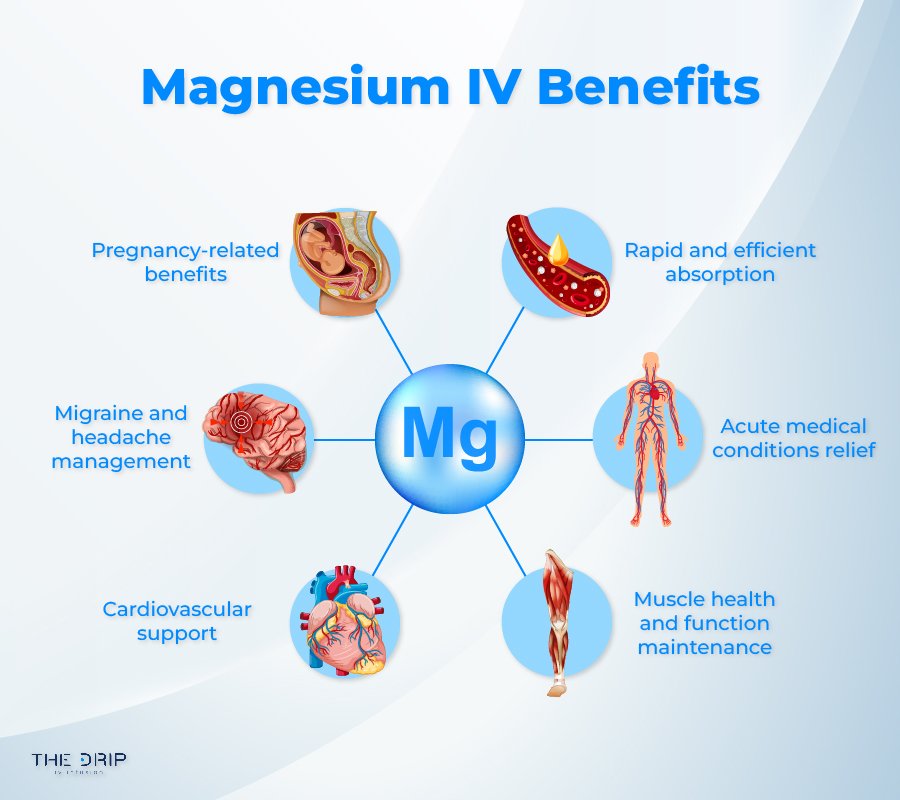
The biggest benefits people notice from magnesium IV therapy are better muscle and nerve function, headache relief, heart support, and less stress. Since IV magnesium gets to work immediately instead of making you wait around like pills do, you can feel better within minutes whether you’re dealing with a pounding headache or your heart acting up.
How Can Magnesium IV Therapy Improve Muscle and Nerve Function?
Magnesium influences the communication between nerves and muscles more directly than most nutrients. Several mechanisms explain why IV therapy improves function so quickly:
- Regulates nerve-to-muscle communication
- Controls calcium flow to prevent spasms
- Reduces muscle hyperexcitability
- Decreases need for muscle relaxants during surgery
- Rapidly stops cramps and spasms
A study from 2021 found that people getting spinal surgery needed way less muscle relaxers when they got IV magnesium. It’s like having a built-in chill pill that keeps your nervous system from getting too wound up. That’s why IV magnesium can stop muscle cramps and those scary muscle spasms so quickly.
Can Magnesium IV Infusions Help Alleviate Migraines or Headaches?
Yes. Research consistently shows that magnesium IV infusions are powerful for migraine relief, especially when oral magnesium hasn’t helped. Clinical studies report several standout results:
- 100% patient improvement with IV magnesium vs. 7% with placebo
- 86.6% complete pain disappearance
- All associated symptoms improved, including nausea and light sensitivity
- Particularly effective for cluster headaches and menstrual-cycle migraine
All the other nasty stuff that comes with migraines – nausea, sensitivity to light, you name it – went away in everyone who got IV magnesium versus only 20% of people who got the placebo. Research shows that people who get cluster headaches and migraines, especially the ones tied to your monthly cycle, tend to be low on magnesium. Even taking magnesium pills every day can cut down on how often you get migraines, but the IV stuff works way faster.

Does Magnesium IV Therapy Support Heart Health?
Yes. Magnesium IV therapy supports heart health by helping regulate electrical rhythm and correcting deficiencies that trigger arrhythmias. Magnesium’s effects on electrical conduction make IV therapy especially useful for heart rhythm issues. The key heart-related benefits include:
- Keeping blood magnesium in the safe 1.5–2.5 mEq/L range
- Correcting rapid atrial fibrillation
- Preventing torsade de pointes, a dangerous arrhythmia
- Reducing post-surgical arrhythmias from 20–50% down to 13.9% with IV
- Stabilizing electrical activity in heart muscle cells
Can Magnesium IV Reduce Stress, Anxiety, or Improve Sleep?
Yes. Magnesium affects the nervous system in ways that calm the brain and reduce stress responses. Its effects on relaxation and sleep come from several mechanisms:
- Activating NMDA and GABA receptors involved in stress regulation
- Reducing post-surgical pain
- Lowering the need for pain medications for up to 24 hours
- Promoting calmer, more stable nerve signaling
- Supporting restful sleep through muscle relaxation
Studies show that surgical patients needed way less pain medication when they got magnesium. Patients could respond better and seemed more alert compared to other treatments. A good-sized dose of IV magnesium (30-50 mg per kilogram of body weight) kept people needing less pain meds for a whole day, which shows it has lasting effects on anxiety and stress.
Understanding all these benefits helps you figure out if magnesium IV therapy makes sense for your health goals and medical situation.
Source: thedripivinfusion.com
Who Should Consider Magnesium IV Therapy?
People who should think about magnesium IV therapy include those with sudden medical problems that need quick magnesium replacement and patients whose magnesium levels are low despite taking pills. This treatment makes sense when you need magnesium to work right now, not in a few hours or days.
Are There Specific Medical Conditions That May Benefit Most from Magnesium IV?
Yes. Several specific medical conditions benefit most from magnesium IV, including severe magnesium deficiency, pregnancy complications, and acute asthma attacks. When your magnesium drops so low that your muscles start spasming like you’re having a calcium problem, you need IV treatment right away. Pregnant women with dangerous blood pressure need IV magnesium to prevent and control seizures.
People getting fed through their veins need IV magnesium to keep their levels normal. A 2018 study on kids with bad asthma found that their breathing improved by almost 27% after getting IV magnesium. Heart problems like dangerous rhythms and super-fast heartbeats respond really well to IV magnesium too. People with kidney stone pain or pelvic pain from endometriosis also get relief from this treatment.
Is Magnesium IV Safe for Everyone?
No. Magnesium IV therapy is not safe for everyone, particularly people with heart block, magnesium allergies, or impaired kidney function. If you’re allergic to magnesium sulfate, this treatment is obviously off the table.
Pregnancy has some special rules for IV magnesium safety. If pregnant women get it for more than 5-7 days straight, it can cause low calcium and bone problems in the baby. Premature babies are especially at risk for aluminum poisoning from IV products.
How well your kidneys work really matters with magnesium IV safety. If your kidneys don’t work well, magnesium can build up to dangerous levels. According to the FDA, patients with kidney problems who get more than 4-5 micrograms of aluminum per kilogram of body weight per day might accumulate toxic levels, so doctors need to watch closely and adjust doses.
What Are Signs of Magnesium Deficiency That May Warrant IV Therapy?
Signs you might need IV magnesium include blood levels below 0.7 mmol/L (1.4 meq/L) and muscle spasms that look like calcium deficiency. Lab tests showing magnesium below 0.7 mmol/L mean you’re clinically deficient and need help. Dietary magnesium intake across the U.S. population consistently falls below recommended levels. The table highlights the gap between required and actual magnesium intake in different demographic groups.
| Group | Actual Intake | RDA / Requirement | Notes |
| General U.S. population | 75% below RDA | — | Widespread deficiency |
| Half of Americans | Less than recommended intake | — | Major shortfall |
| Women | 228 mg/day | 300 mg/day | Strong deficit |
| Men | 266–323 mg/day | 420 mg/day | Consistent deficit |
| General population | 50% borderline deficiency | — | Cellular function impacted |
These dietary gaps, combined with symptoms like muscle spasms similar to calcium deficiency, point to people who could really benefit from IV magnesium therapy to quickly get their levels back to normal and prevent complications.
How Does Magnesium IV Therapy Compare to Other Magnesium Supplementation Methods?
Magnesium IV therapy is different from other ways of getting magnesium because of how fast it works, how much actually gets into your system, and what medical situations it’s used for. IV gives you immediate results, shots take an hour to work, and pills only get about 30% absorbed through your stomach. Understanding these differences helps you know when each method works best.
How Effective Is IV Therapy Versus Oral or Topical Magnesium?
IV therapy beats oral and topical magnesium when it comes to how well and how fast it works. IV magnesium starts working immediately compared to an hour for shots in your muscle. A study looking at absorption found that even the best oral supplement only increased blood magnesium by 6.2% at most, while IV gives you much higher and faster increases.
Research comparing different methods shows some surprising results in certain situations. One study found that taking 1600mg of magnesium oxide pills worked just as well as 2000mg of IV magnesium sulfate for preventing low magnesium after heart surgery. When you give IV magnesium and your body’s magnesium stores get full, you start peeing out the extra immediately, which shows it’s getting distributed throughout your system fast. You can see different absorption patterns in your blood for up to 4 hours after taking oral supplements.
Are There Situations Where IV Magnesium Is Preferred?
Yes. There are several situations where IV magnesium is preferred, especially medical emergencies requiring immediate magnesium correction. Emergency treatment of a dangerous heart rhythm called torsade de pointes needs IV administration to stabilize your heart rhythm right away. In eclampsia, IV should only be used for immediate control of life-threatening seizures.
Sudden, severe conditions respond better to magnesium you inject rather than pills. Severe asthma attacks benefit from injected magnesium, improving breathing and reducing hospital stays. Acute migraine attacks respond to 1g of IV magnesium sulfate with a 100% success rate. Quick correction of low magnesium becomes necessary when patients show signs of muscle spasms. During surgery, when you need immediate effects, IV is the way to go since it works right away versus an hour with a shot.
Are There Risks Associated with Different Forms of Magnesium Supplementation?
The risks with different types of magnesium supplementation depend on how much ends up in your blood and how well your kidneys work..This table outlines the recognized clinical effects at various blood concentrations.
| Plasma Level | Clinical Effect | Risk Category |
| 4 mEq/L | Decreased reflexes | Mild |
| 10 mEq/L | Absent reflexes, respiratory paralysis | Severe |
| 10 mEq/L or below | Heart block | Critical |
| >12 mEq/L | Potentially fatal | Life-threatening |
Aluminum poisoning is a risk with long-term IV use if your kidneys don’t work well. Magnesium toxicity usually doesn’t happen unless you have kidney disease, which is why doctors need to check your kidney function before starting IV therapy. These level-dependent risks show why proper monitoring is so important during magnesium supplementation, especially with IV where changes happen quickly.
What Should You Expect During a Magnesium IV Infusion Session?
A magnesium IV infusion session is pretty straightforward – they put magnesium sulfate directly into your bloodstream through a small tube in your arm. Most people find it comfortable and easy to handle. Knowing what the timing looks like, what you might feel, and what results to expect helps you get ready for your treatment at The Drip IV Infusion.
How Long Does a Magnesium IV Session Usually Last?
A magnesium IV session usually takes anywhere from 15 minutes to an hour, depending on how much you need and why you’re getting it. According to a 2021 review of treatment protocols, 1g of magnesium sulfate typically takes about 15 minutes to give for migraine treatment. The seizure-preventing effects last about 30 minutes after IV administration.
Loading doses of 30-50 mg per kilogram of body weight are standard in surgical protocols. Maintenance doses of 6-20 mg per kilogram may follow the first dose. For eclampsia and preeclampsia management, healthcare providers give 1-2 grams of magnesium sulfate per hour.
Your total session time includes:
• Getting checked and having the IV placed (10-15 minutes)
• The actual magnesium drip (15-60 minutes)
• Watching you after it’s done (5-10 minutes)
• Taking out the IV and giving you instructions (5 minutes)
Most wellness infusions for general health take about 30-45 minutes total.
Does the Infusion Process Cause Any Discomfort or Side Effects?
Yes. Most people tolerate magnesium IV infusions well, but mild side effects can happen, especially with faster drip rates. The most commonly reported sensations include:
- Warm, flushed feeling in the face
- Temporary nausea or vomiting
- Mild muscle weakness
- Slight blood pressure drop
- Pleasant warming sensation due to vessel relaxation
Normal therapeutic doses don’t cause much in the way of side effects. The warm feeling happens because magnesium relaxes your blood vessels, improving circulation. Most people describe this as nice rather than uncomfortable.
How Soon Can Results Be Felt from Magnesium IV Therapy?
You can feel results from magnesium IV therapy immediately to within a few hours, depending on what you’re treating. A 2018 brain study showed that the seizure-preventing action starts immediately with IV administration. In that migraine study, pain completely disappeared in 86.6% of patients right after the 15-minute infusion was done.
The effects from a single IV dose last about 30 minutes for seizure prevention. However, one dose can reduce your need for pain medication after surgery for up to 24 hours according to a 2020 surgical pain review. Your blood magnesium level peaks around 4 mg/dL during surgery The effects of magnesium IV therapy unfold over several hours, with some benefits happening instantly and others lasting days. Here’s the typical response timeline:
- Immediately: Seizure prevention, migraine relief
- 30 minutes: Blood magnesium peaks
- 24 hours: Reduced post-surgical pain and medication needs
- 48–72 hours: Improved metabolism and enzyme activity
Your specific results depend on how low your magnesium was to start with, how much you get, and how your individual body processes it. The immediate availability of IV magnesium allows quick symptom relief compared to oral supplements’ slower absorption timeline.
Are There Any Risks or Side Effects Associated with Magnesium IV Therapy?
Magnesium IV therapy does have some risks and side effects you should know about. The most common ones are mild and don’t last long, while serious problems are rare when it’s done right. Understanding these risks helps make sure your treatment is safe.
What Are the Most Common Side Effects of Magnesium IV?
The most common side effects of magnesium IV are your face getting flushed and feeling warm, which usually go away on their own without needing any treatment. Some people feel sick to their stomach or throw up while getting IV magnesium. You might feel a little weak in your muscles during treatment. Your blood pressure might drop a bit if the magnesium goes in too fast or you get a high dose, because it makes your blood vessels relax.
More serious side effects happen less often but need to be watched for. About 1.6% of patients lose their knee-jerk reflex, though different studies report anywhere from 0-57% depending on how much magnesium they give and how they monitor patients. Breathing problems occur in 1.3% of cases overall, with reports ranging from 0-8.2% across different medical settings. These differences reflect variations in patient groups, dosing schedules, and monitoring methods.
Who Should Avoid Magnesium IV Infusions?
People with heart block should avoid magnesium IV infusions because magnesium makes already slow heart conduction even worse. Having damaged heart muscle is another absolute reason not to get IV magnesium therapy. If you’ve had allergic reactions to magnesium sulfate before, you definitely can’t get this treatment.
Severe kidney problems rule out magnesium IV therapy because of the risk of magnesium poisoning. Your kidneys are the only way magnesium gets out of your body, so if they don’t work well, magnesium can build up dangerously. Pregnant women who need magnesium treatment for more than 5-7 days face risks to their baby including low calcium and bone problems. Premature babies are especially vulnerable to aluminum toxicity from IV magnesium products, requiring special consideration before treatment.
How Are Side Effects Monitored or Managed During Treatment?
During magnesium IV therapy, clinicians monitor several markers to ensure safe blood levels and early detection of toxicity. Standard monitoring includes:
- Serum magnesium checks every 6–8 hours
- Knee-jerk reflex assessment
- Urine output monitoring
- Vital signs, especially breathing rate
- Use of calcium gluconate only if levels become excessive
Calcium gluconate works as the antidote for magnesium toxicity, though it’s rarely needed – less than 0.2% of cases, specifically 17 times among 9,556 women in pregnancy studies. Safe magnesium levels for treating pregnancy complications stay between 2.0-3.5 mmol/L (equivalent to 4-7 meq/L). Your knee reflexes disappear at 4.0-5.0 mmol/L, signaling they need to adjust your dose immediately. Breathing problems emerge at 5.0-7.5 mmol/L, requiring immediate help including possibly giving calcium gluconate and helping you breathe.
Understanding these risks and using proper monitoring makes magnesium IV therapy safe and effective for the right people.
How Can You Approach Magnesium IV Therapy with The Drip IV Infusion?
Magnesium IV therapy with The Drip IV Infusion gives you customized treatments that target your individual magnesium needs through professional IV administration. The Drip IV Infusion offers specialized magnesium infusions as part of complete wellness programs, delivering immediate benefits that beat oral supplements’ limited 30% absorption rate. These treatments target specific health problems like migraines, muscle cramps, and heart concerns while keeping strict safety standards.
Can The Drip IV Infusion Customize Magnesium IV Treatments to Individual Needs?
Yes. The Drip IV Infusion can customize magnesium IV treatments to individual needs through tailored dosing and personalized formulations. Patients often compare the costs of different IV formulations before choosing magnesium therapy. The table organizes current pricing for magnesium-related infusions and shows projected industry growth.
| Treatment / Market Metric | Attribute | Value |
| General IV sessions | Cost range | $100–$500 per session |
| Basic hydration | Cost range | $80–$150 |
| Specialized magnesium treatments | Cost range | $200–$500+ |
| Myers’ Cocktail with magnesium | Cost range | $150–$250 |
| The Drip Bar Vitality infusion | Price | $189 |
| U.S. mobile IV therapy market (2024) | Market value | $568.25 million |
| Projected market value (2034) | Forecast | $1,556.29 million |
Treatment personalization ensures each patient receives the optimal amount of magnesium without unnecessary risk. The Drip IV Infusion offers several customization options, including:
- Adjusting magnesium concentration based on deficiency level
- Combining magnesium with vitamins or minerals that complement its effects
- Tailoring treatment frequency to individual response patterns
- Providing mobile IV services at home or office
What Are the Key Takeaways About the Benefits of Magnesium IV Therapy?
The key things to remember about magnesium IV therapy benefits are that it gets absorbed better, works clinically, and has a good safety record. IV magnesium starts working immediately compared to oral supplements’ 30% absorption rate. The table below organizes the highest-quality evidence and population data supporting its use.
| Category | Attribute | Value |
| Clinical evidence grade | Conditions with Grade A support | Eclampsia, preeclampsia, torsade de pointes, rapid atrial fibrillation |
| Migraine RCT (2019) | Response rate | 100% with 1g IV magnesium vs. 7% placebo |
| Pediatric asthma (2020) | Hospitalization reduction | 85% with IV magnesium |
| Population deficiency (2022 NIH) | % not meeting RDA | 75% |
| Safety profile | Mild side effects | 86.6% without discontinuation |
Reasons you can’t get it are limited to heart block, heart muscle damage, and severe kidney problems. The Drip IV Infusion screens all patients for these conditions before starting treatment, ensuring safe and effective magnesium replacement tailored to your individual therapeutic needs.