People typically feel more hydrated, more energized, or mildly sore at the IV site after IV therapy. If you’re wondering how you’ll feel after IV therapy, you’re not alone. Whether you’re thinking about IV treatment to feel better, get nutrients, or help with health issues, knowing what happens afterward can help you get ready and know what to expect. We’re here to walk you through what thousands of people experience after getting IV therapy, backed by real research and what actually happens.
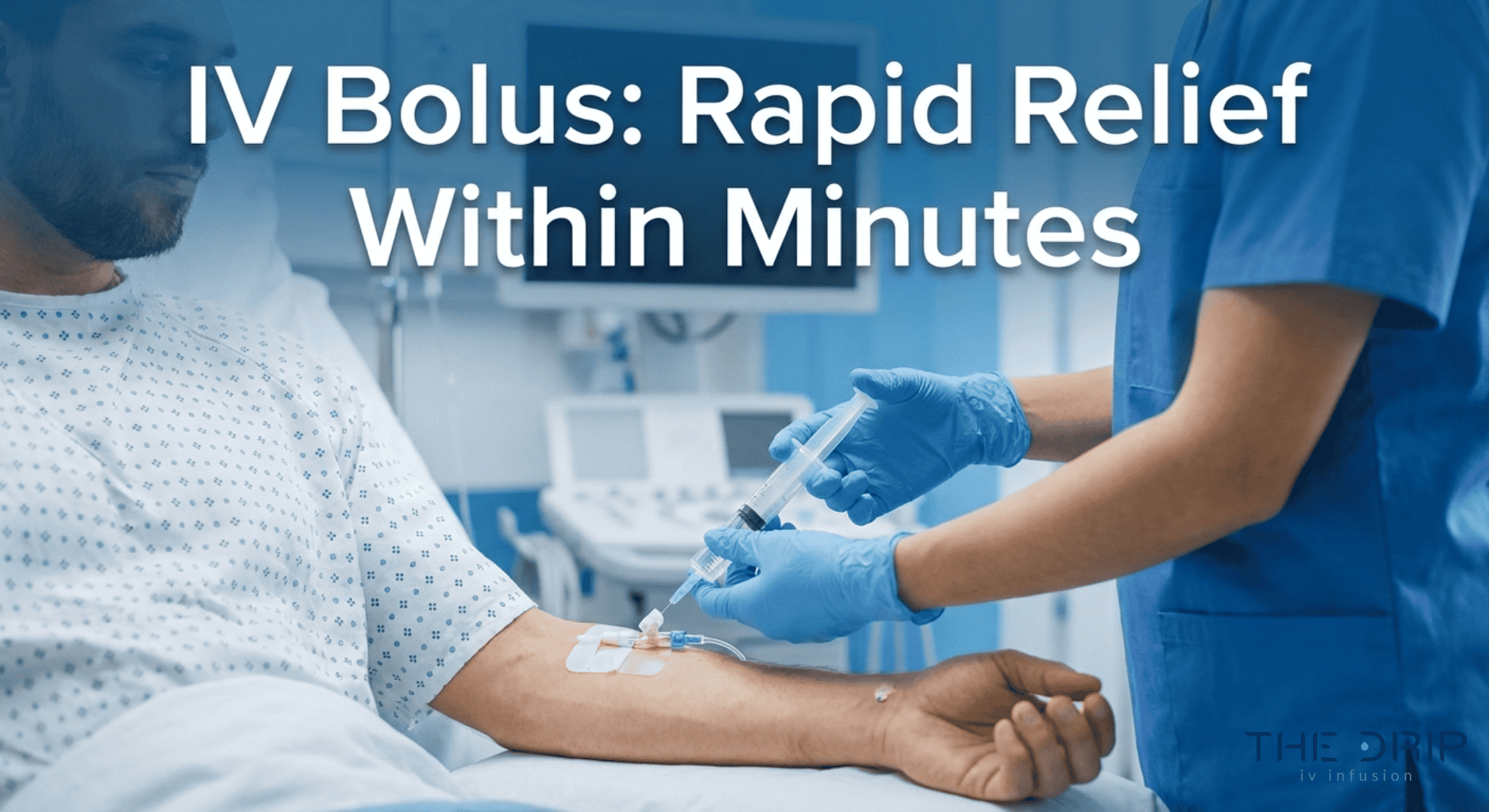
IV therapy is a medical treatment that puts fluids, vitamins, minerals, and medicines straight into your bloodstream through a vein. It’s like taking a shortcut that skips your stomach completely, so your body gets 100% of what’s being given. Unlike pills that have to go through your stomach and might not all get absorbed, IV goes right into your blood, so your body can use it within minutes instead of hours.
TL;DR Summary:
- What you’ll feel right away: Most people feel changes within minutes to hours, like better hydration, more energy, and maybe some mild side effects like bruising or tenderness where the needle went in
- How long it lasts: The good effects usually stick around from a few hours up to a week, depending on what type of therapy you get, with vitamins clearing out of your system within 24 hours
- What makes a difference: How hydrated you are, your health problems, and what’s in your IV all change how you’ll feel and what you’ll get out of it
- Taking care of yourself after: Simple things like pressing on the needle spot and drinking water help you get the most benefits while watching for anything that needs medical attention
- Normal vs. worrying signs: While mild bruising and tiredness are normal, things like infection, bad pain, or allergic reactions mean you need to see a doctor right away
Quick Tip: Drink plenty of water before your IV therapy appointment and plan for 30-60 minutes of treatment time plus some rest afterward. This simple step can make you more comfortable and might help you get better results.
As we dig into the complete IV therapy experience, we’ll talk about both what you might feel right away and what happens later, helping you understand what’s normal and when you should get more help. Understanding these things helps you make smart choices about your treatment and get the most out of your IV therapy session.
What immediate physical sensations might you experience following IV therapy?
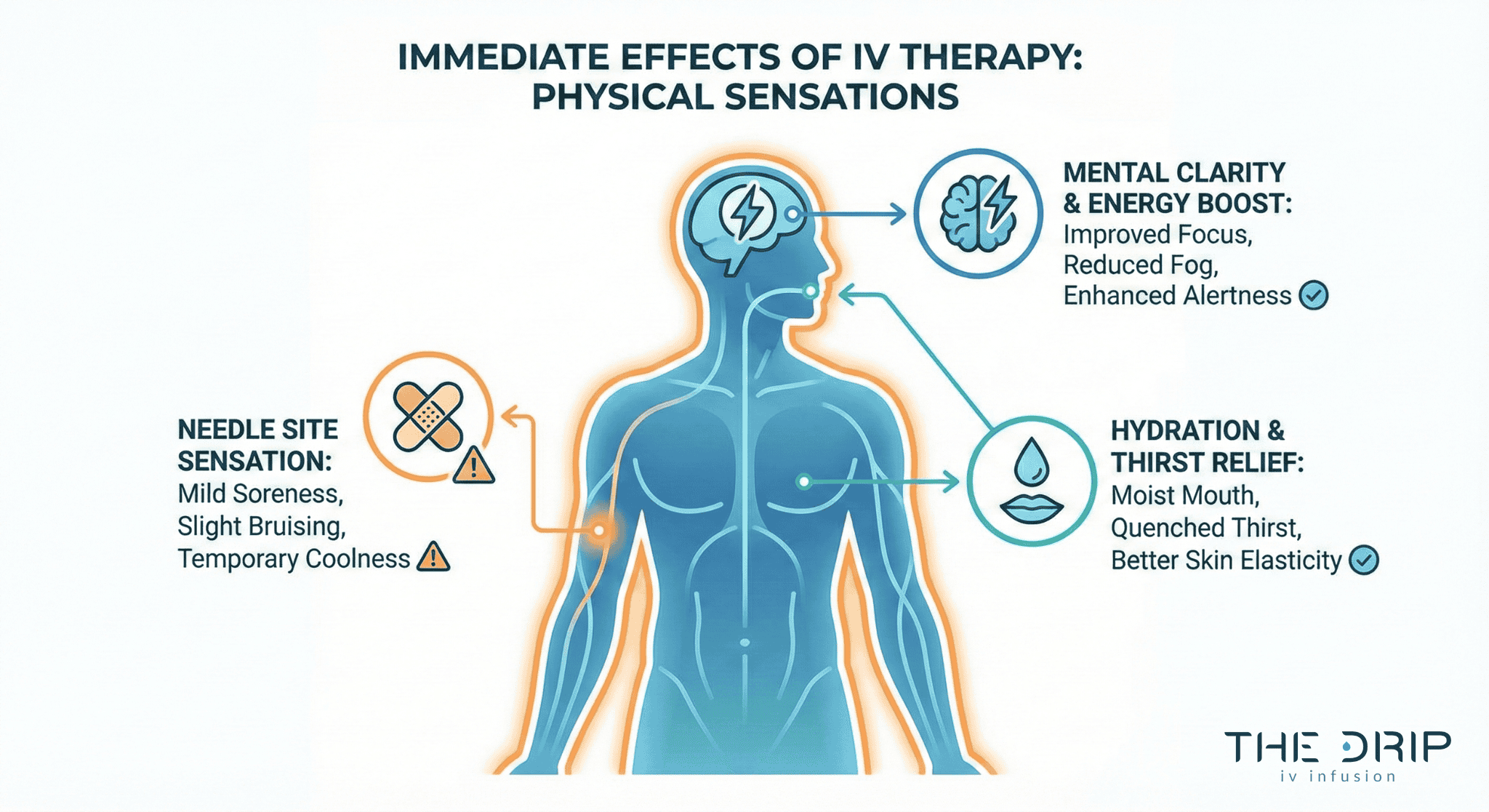
Right after IV therapy, you might feel anything from quick relief to mild discomfort where the needle went in. IV treatment gives your body 100% of what’s being put in because it goes straight into your blood. Your body can start using it right away, so some people feel effects within minutes for pain relief or hours for dehydration. Knowing what these feelings are like helps you get ready for what’s normal after treatment.
How quickly can you notice effects after an IV infusion?
You can notice effects from an IV infusion within minutes to hours depending on what kind of treatment you’re getting. Research shows that pain relief can happen in minutes, while it takes hours for pills to reach their strongest levels. Your body starts using what’s in the IV right away because it goes straight into your blood.
Studies show that vitamin IV therapy can give you an immediate energy boost. Doctors have seen patients start feeling better within hours for serious problems like dehydration. However, some research notes that people might feel effects 4 days to 2 weeks after IV therapy, which shows that everyone responds differently.
Are there common mild side effects right after treatment?
Common mild side effects right after treatment mostly happen where the needle went in and throughout your body. Research shows that bruising, bleeding, and swelling at the needle site happen often. Studies found that redness, pain, and heat showing inflammation happened in about 2.4% of IV sites, while fluid leaking into tissues happened in about 1% of sites.
Side effects throughout your body include:
- Feeling tired after the infusion
- Nausea and blood pressure changes
- Metallic taste in your mouth
- Muscle aches, headache, and fever in 11-81% of people getting certain IV treatments
How do the sensation of hydration and energy manifest post-IV therapy?
The feeling of being hydrated and having energy after IV therapy shows up through physical improvements and how you feel. Better hydration shows up through skin that bounces back better and feeling less thirsty. Studies document that people commonly report an immediate energy boost with vitamin IV therapy.
However, research found that improvements in energy and mental clarity are mostly based on what people say they feel rather than hard scientific evidence. The study noted these improvements don’t have support from large, well-designed studies. Research showed IV therapy effects usually last a few hours after treatment, which suggests temporary rather than long-lasting energy boosts.
These immediate feelings after IV therapy range from helpful effects like quick symptom relief to minor side effects at the needle site, helping you know what to expect as you move into longer-term recovery.
What longer-term results or aftereffects may occur from IV therapy?
The longer-term results from IV therapy vary a lot based on what type of therapy you get, your health, and what nutrients you receive. Effects usually show up over days to weeks after treatment, with both good outcomes and potential problems that need watching.
How long do the positive effects usually last?
The good effects usually last from several hours up to one week depending on the type of therapy and your health. This time range reflects how different people’s bodies process and use nutrients differently. IV therapy effects typically stick around anywhere from a few days to over a week.
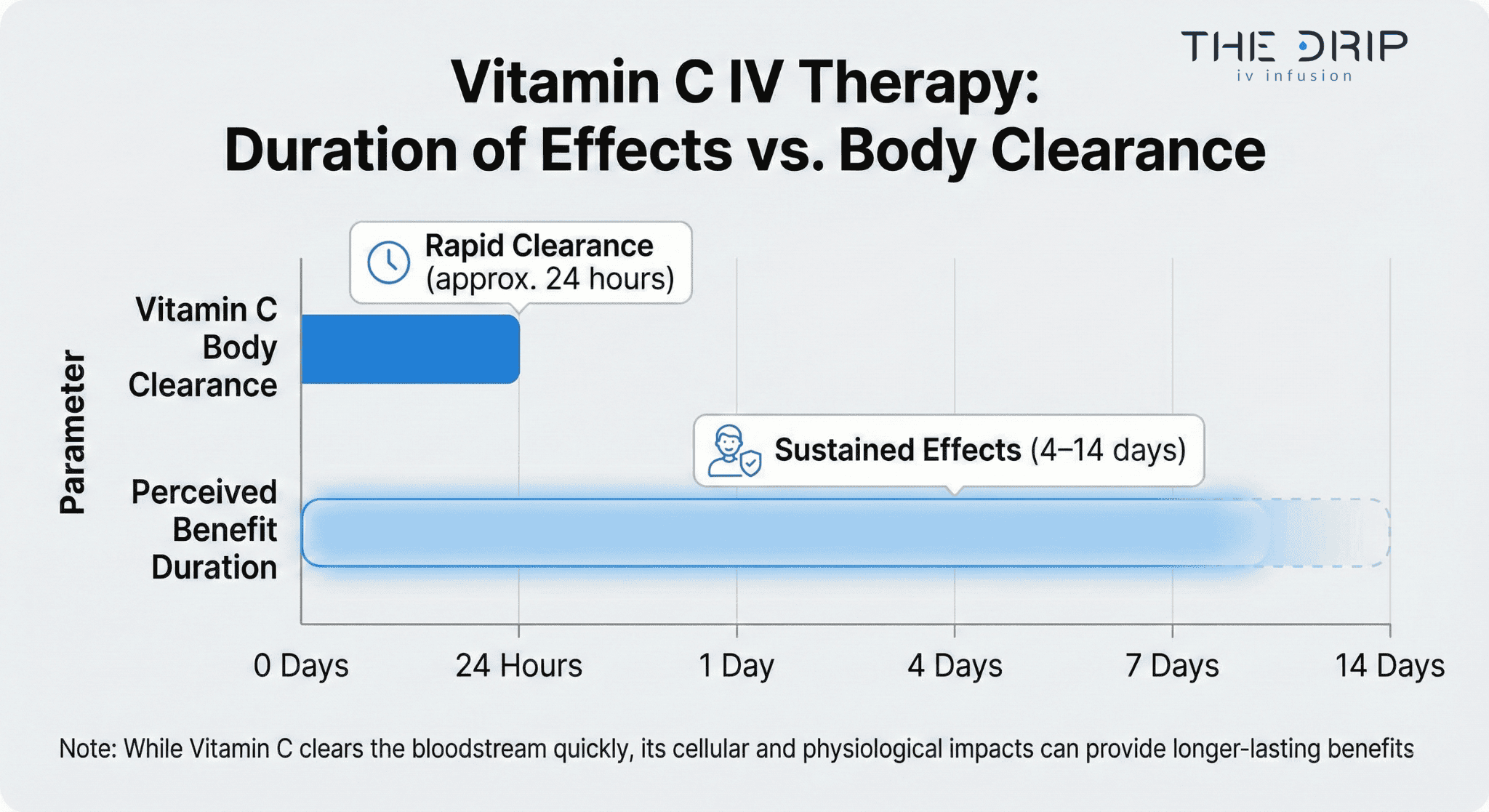
Research shows a clear difference between how quickly nutrients leave the body and how long people feel effects. The table compares clinical clearance times with reported symptom duration.
| Metric | Value |
| Vitamin C clearance time | 24 hours |
| % Excreted in urine | 99% within 24 hours |
| Typical effect duration | Several hours to 1 week |
| Reported maximum duration | 4–14 days |
Are there any delayed side effects or symptoms to watch for?
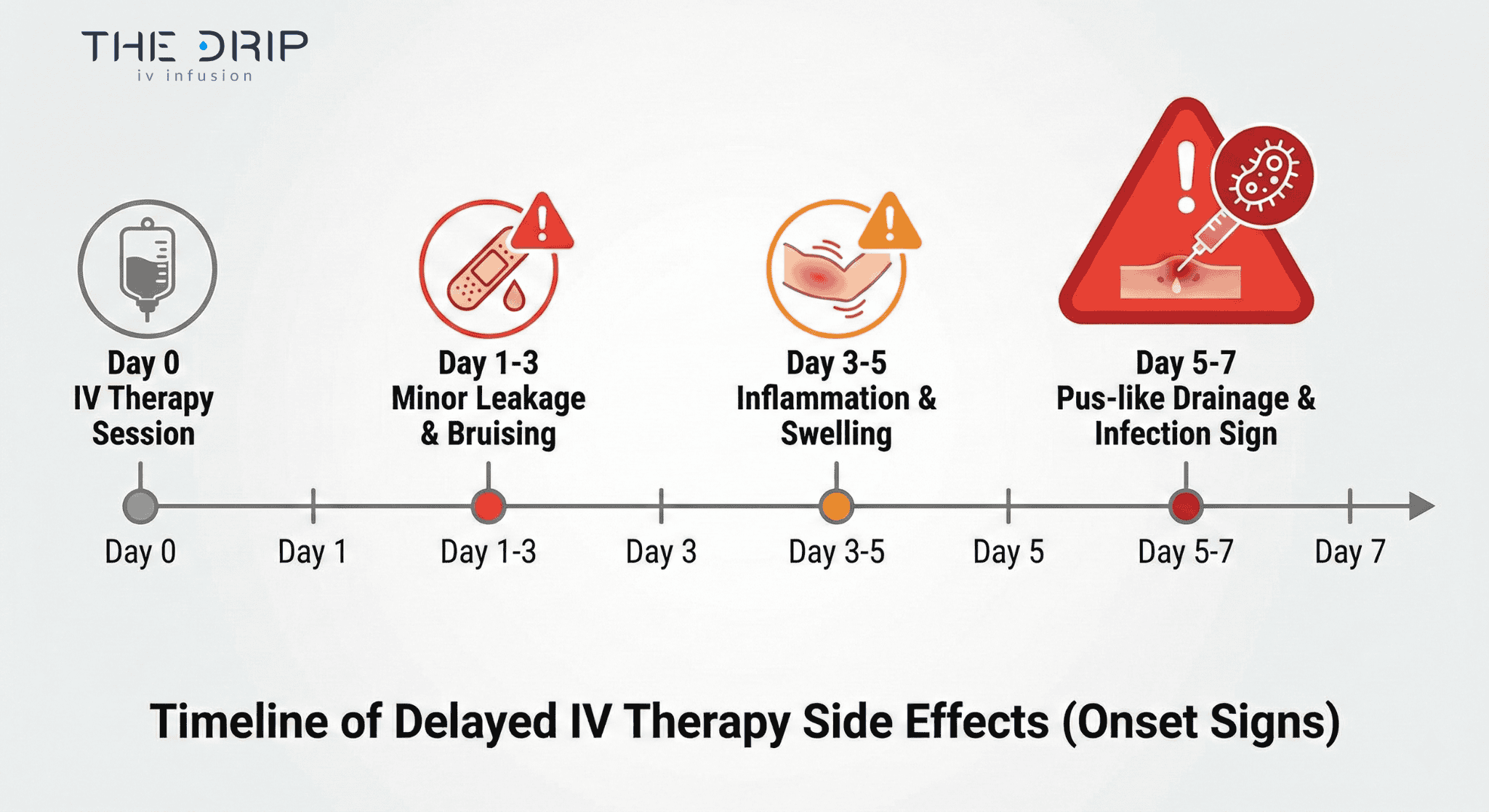
Delayed side effects to watch for include signs of infection, blood vessel problems, and body-wide reactions. The table highlights when each type of complication usually appears.
| Complication | Typical Onset |
| Pus-like drainage | 2–3 days |
| Inflammation risk peak | Day 4 |
| Leakage risk increase | 72+ hours |
| Tissue injury risk | With vesicant leakage |
Allergic reactions may range from mild symptoms to severe, life-threatening reactions. Research documents severe complications including kidney failure, stroke, and heart attack as potential outcomes of certain IV treatments.
Can nutritional IV therapy improve well-being over several days?
Nutritional IV therapy can improve how you feel over several days in certain groups of patients, though the evidence is mixed. Research reported that fibromyalgia patients showed significant improvements in pain, depression, and quality of life after 8 weeks of Myers’ cocktail treatment. However, the fake treatment group also reported significant improvements, making the actual effectiveness uncertain.
IV vitamin C may improve quality of life and reduce illness-related side effects in cancer patients according to some research. Claims about long-lasting well-being improvements don’t have support from large, well-designed studies.
The differences in longer-term IV therapy outcomes show how important medical supervision and individualized treatment plans are based on specific health conditions and treatment goals.
What factors influence how you feel after receiving IV therapy?
Several body and lifestyle factors determine how you respond to IV therapy. How hydrated you are to start with, existing health problems, what’s in your specific IV, and your daily habits all shape how your body processes and benefits from IV treatments.
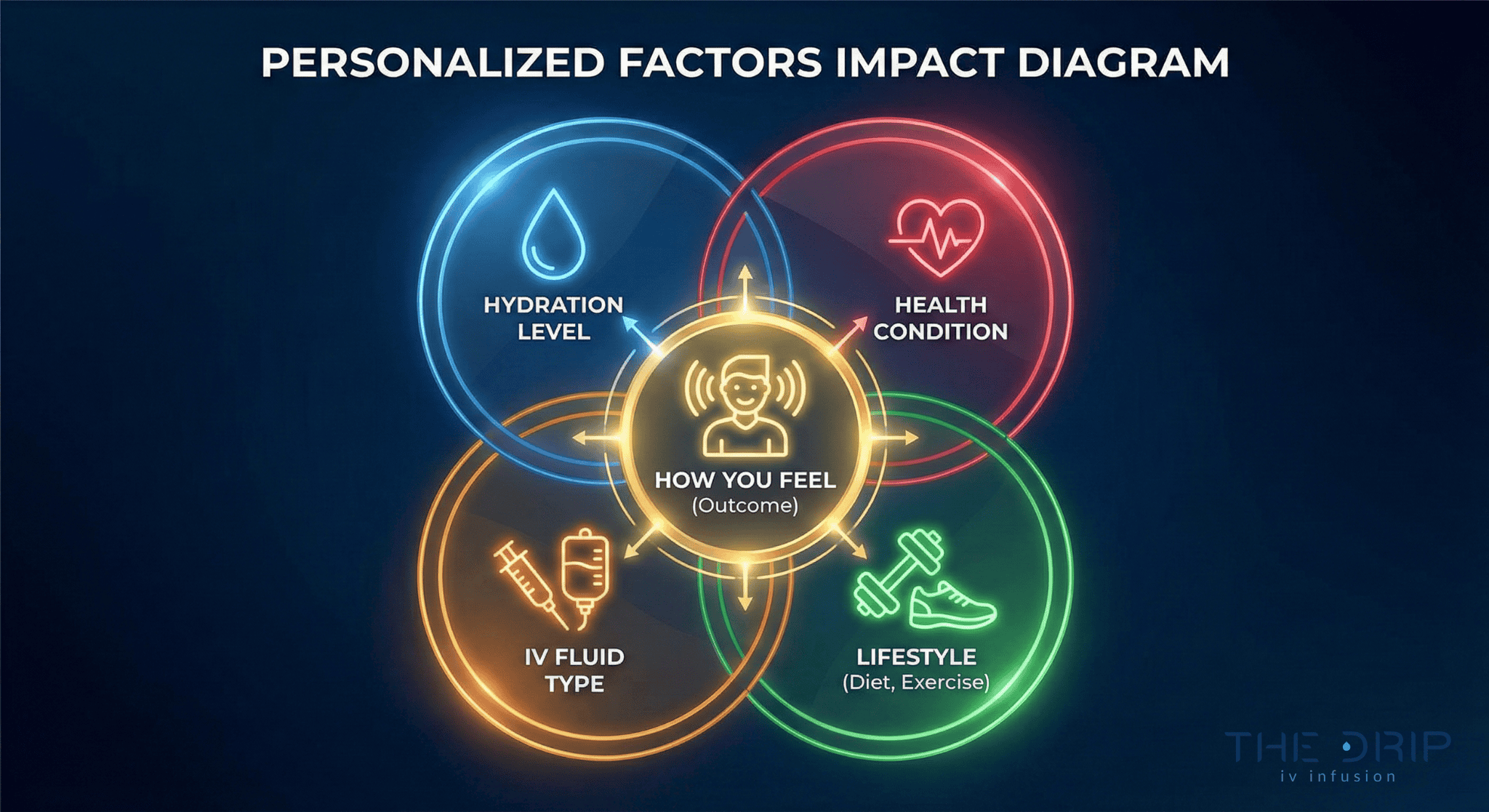
Does your hydration level or health status make a difference?
Different health conditions change how the body handles IV fluids and nutrients. The table summarizes each condition’s effect.
| Health Condition | Impact on IV Therapy |
| Dehydration | Changes how fluids distribute |
| Absorption disorders | Greater improvement |
| Kidney disease | Difficulty processing fluids/nutrients |
| Heart failure | Reduced tolerance for fluids |
| Liver disease | Harder to process IV substances |
Your specific health determines whether IV therapy helps or poses risks.
How do the type of IV fluids or nutrients used affect your outcome?
The type of IV fluids or nutrients used significantly affects your treatment outcome through concentration levels and how your cells interact with them. Research showed that IV vitamin C doses achieve blood concentrations that can be toxic to cells in lab studies. Research found IV doses produce blood concentrations 30-70 times higher than the maximum you can tolerate from pills.
What’s in the solution affects complication risk. Research reported that certain fluids increase leakage risk, while pain medicines in IV solutions relate to complications because they can mask pain responses. Guidelines warn that highly basic, acidic, or concentrated IV solutions raise chemical inflammation risk, and tissue-damaging medications need special IV lines to prevent tissue injury.
Patient satisfaction varies by therapy type. Research found biologic therapies achieve the highest satisfaction scores.
Are there lifestyle considerations that impact your post-IV therapy experience?
Lifestyle factors affect how your body uses nutrients after IV therapy. Research revealed that high-fiber diets bind minerals like zinc, iron, and magnesium, reducing absorption even with IV treatment. Gut imbalance, leaky gut, and long-term antibiotic use hurt nutrient processing.
Medications interact with IV therapy outcomes. Research identified blood thinners, steroids, and water pills as factors affecting complication rates. Research showed daily water intake influences hydration markers and IV therapy response.
Experts recommend optimizing nutrition, daily exercise, mind-body practice, and sleep before IV therapy to get the most benefits. These lifestyle changes create a foundation that helps your body better use IV-delivered nutrients.
Understanding how hydration, health conditions, IV contents, and lifestyle choices influence your response helps predict and improve IV therapy outcomes for your individual needs.
How should you care for yourself after IV therapy to optimize benefits?
Caring for yourself after IV therapy to get the most benefits involves following specific activity guidelines, watching for warning signs, and keeping up proper hydration. Research shows that post-treatment care directly affects treatment outcomes and complication rates.
Are there recommended activities or restrictions following an infusion?
The recommended activities after an infusion include pressing with gauze until bleeding stops if you bleed at the IV site. Research indicates elevating the arm and applying heat for temporary inflammation while watching for 24 hours after insertion.
Avoid bending at IV insertion sites to prevent the tube from moving. Treatment typically takes 30-60 minutes with continued effects afterward. Health reports emphasize keeping up proper hydration through regular fluid intake rather than relying only on IV therapy.
Physical restrictions focus on protecting the insertion site during the first 24 hours. These precautions prevent complications while allowing your body to process the nutrients effectively.
What signs suggest you should contact a healthcare professional?
Signs that suggest you should contact a healthcare professional include pus-like drainage at the IV site, which needs immediate medical attention and testing. Research shows that burning, stinging, blistering, or tissue death indicates leakage needing emergency treatment.
Warning signs needing immediate provider notification:
• Tingling-type pain during or after IV therapy (suggests nerve injury)
• Local redness, pain, heat, swelling going up the vein, feeling a hard vein (inflammation symptoms)
• Infection symptoms at injection site, especially 2-3 days after treatment
• Allergic reaction symptoms ranging from mild to life-threatening
Research documents that any allergic reaction needs immediate medical attention. Research links high vitamin doses to kidney damage, heart rhythm problems, and blood pressure changes needing watching. These complications demand quick medical evaluation to prevent serious consequences.
How can you maintain hydration and wellness after your session?
Hydration and wellness after your session can be maintained by drinking fluids, which is often enough without additional IV therapy. Health publications confirm that mild dehydration responds well to drinking water and consuming fluids with electrolytes.
Reports emphasize that optional IV therapy should not replace daily hydration practices. Guidelines recommend building a strong wellness foundation through:
| Category | Attribute | Value | Source |
| Hydration monitoring | Indicator | Urine specific gravity | Armstrong 2007 |
| Hydration monitoring | Indicator | Urine osmolality | Armstrong 2007 |
| Wellness foundation | Component | Nutrition | Mayo Clinic 2024 |
| Wellness foundation | Component | Exercise | Mayo Clinic 2024 |
| Wellness foundation | Component | Mind-body practice | Mayo Clinic 2024 |
| Wellness foundation | Component | Social connectedness | Mayo Clinic 2024 |
| Wellness foundation | Component | Sleep | Mayo Clinic 2024 |
These wellness practices boost IV therapy benefits while supporting overall health maintenance between treatments.
How can you decide if your IV therapy results are typical or require follow-up?
Deciding if your IV therapy results are normal or need follow-up involves understanding normal responses, recognizing warning signs, and tracking your recovery systematically. Research found that patient satisfaction with treatment and healthcare professionals’ behavior serves as a baseline indicator of normal response. The following sections examine normal versus bad reactions, when to contact providers, and how tracking benefits your health.
What is considered a normal response versus an adverse reaction?
A normal response to IV therapy is improved hydration and energy within hours to days of treatment. According to multiple clinical sources, typical positive effects show up as better hydration and increased energy levels, though these lack validation from well-designed studies. Patient satisfaction with treatment represents another normal response marker.
Bad reactions include infection at the injection site, rashes, vein inflammation, blood clots, and air bubbles in blood vessels. Research found inflammation occurs in 2.4% of IV sites—going beyond acceptable levels. The same research identified fluid leakage in 1% and tissue leakage in 0.6% of IV sites as complications needing intervention.
Reaction differences remain significant across patient groups. Research documented adverse effects ranging from 11% to 81% of patients, showing wide tolerance differences. This variability shows how important individual monitoring and professional oversight are during IV therapy treatments.
When should you reach out to a provider after IV therapy?
You should reach out to a provider if you’ve had any previous bad reactions before getting more IV therapy. Signs of infection, particularly pus-like drainage appearing 2-3 days after IV insertion, need immediate medical attention.
Ongoing inflammation symptoms lasting beyond 24 hours after treatment warrant medical consultation. Guidelines specify that local redness, pain, and heat lasting past this timeframe indicate potential complications. Any unusual symptoms also merit provider contact, given reports of adverse events at IV clinics.
Medication interactions present another reason to call. Recommendations emphasize consulting providers if taking medications that may interact with IV therapy substances, as these interactions can alter both medication effectiveness and IV therapy outcomes.
How can tracking your post-IV therapy experience benefit your health?
Tracking your post-IV therapy experience benefits your health by identifying response patterns and improving future treatments. Data shows patient-reported outcomes demonstrate a 90% therapy completion rate in older adults receiving home-based treatment, highlighting tracking’s role in successful treatment adherence.
Effects typically last from a few hours to one week depending on individual factors. Monitoring these patterns helps predict future response durations. Research established that tracking hydration markers like urine concentration provides objective hydration status assessment.
Documentation helps identify optimal IV therapy types for individual needs. Research found biologics achieved the highest patient satisfaction, demonstrating how tracking assists in therapy selection. Recording symptoms also tells the difference between normal responses and complications needing medical attention. This systematic approach to monitoring creates a personalized health record that informs both patient decisions and provider recommendations for future IV therapy sessions.
How can The Drip IV Infusion support your recovery and wellbeing after IV therapy?
The Drip IV Infusion supports recovery through mobile nursing services and customized treatment plans. Founded in Fall 2022 by professionals with decades of combined experience in nursing, emergency medicine, and home health, the company delivers IV therapy directly to clients’ homes or workplaces. This approach makes things as convenient as possible while maintaining professional standards through proven blends of vitamins, minerals, and medications.
What follow-up services or client care options does The Drip IV Infusion offer?
The follow-up services at The Drip IV Infusion center on personalized partnership and accessibility. The mobile service model ensures nurses provide care in familiar environments, reducing stress and travel requirements. The team partners with each client to address individual health needs through customization options and add-ons tailored to specific wellness goals.
The company’s foundation rests on values of kindness, compassion, and cutting-edge IV therapy options. Their nurses bring emergency medicine and home health expertise to every appointment. This experience enables them to recognize and respond to various client needs during and after treatment.
However, no specific follow-up protocols or quality metrics appear publicly on the company website. Standard post-treatment care typically includes monitoring for adverse reactions and ensuring proper hydration maintenance.
What are the key takeaways about how people feel after IV therapy?
The key takeaways about post-IV therapy experiences reveal both benefits and limitations. IV therapy provides 100% absorption by skipping the stomach for immediate blood circulation. Effects typically last from several hours to one week, depending on therapy type, health status, and nutrients used.
In the end, the key insights into how people feel after IV therapy highlight a mix of short-term benefits, mild side effects, and important safety considerations. These experiences vary widely based on health conditions, therapy type, and provider oversight. Understanding these factors helps you make informed decisions and choose IV therapy approaches that best support your recovery and wellbeing.