If you’re looking into how ozone therapy works, you’re probably trying to figure out this alternative treatment that’s been getting more attention for different health problems. We get it – sorting through all the different ways it’s given and understanding how IV ozone therapy actually does its job can feel overwhelming, especially when you’re seeing conflicting stuff online. You’re in the right spot to get the real facts about how ozone therapy is administered, what safety steps matter, and what the science actually tells us about this treatment.
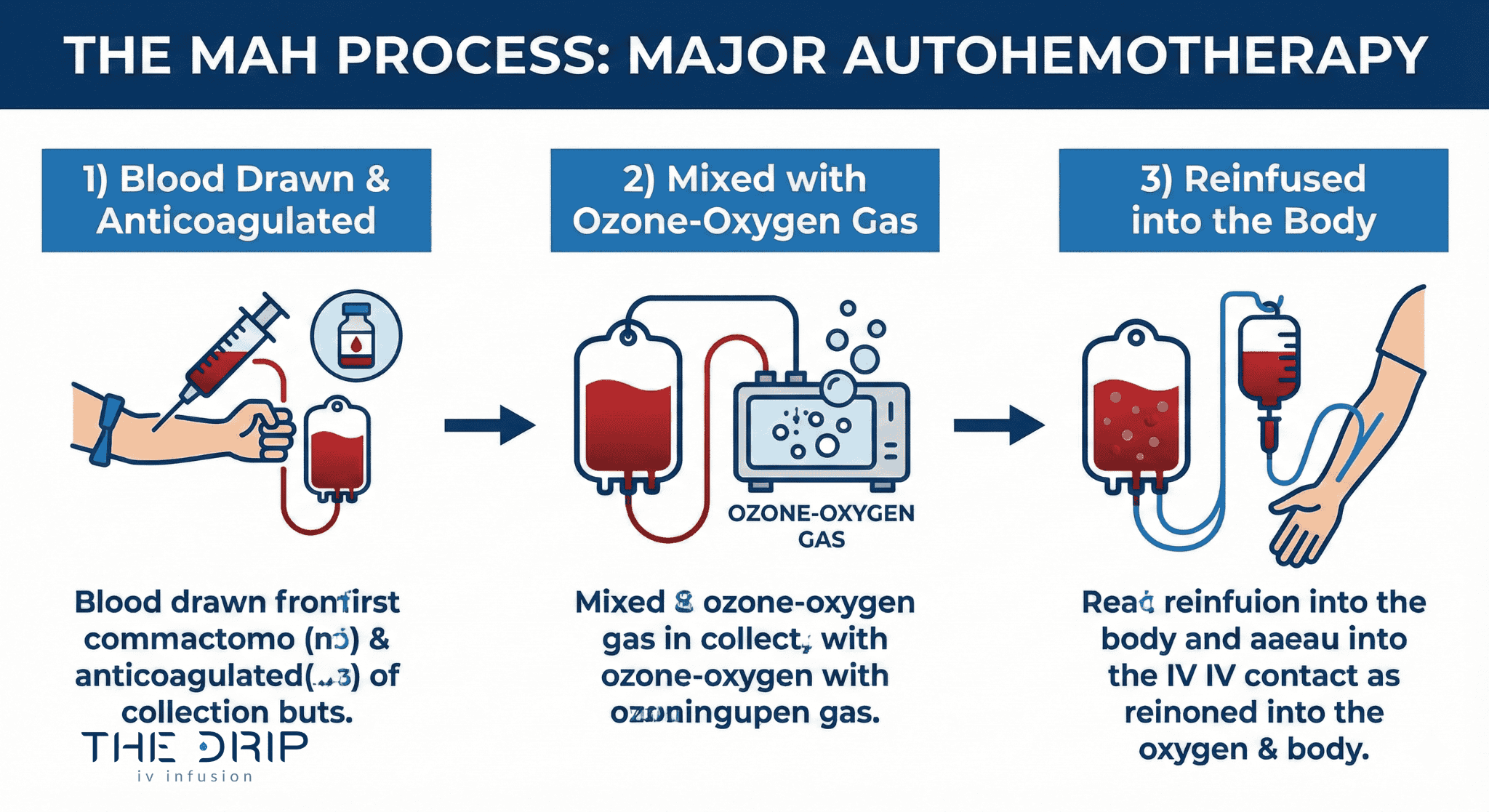
Ozone therapy is when doctors introduce ozone gas (O3) into your body through different routes to treat diseases and conditions. The most common ways to get it into your whole system are Major Autohemotherapy (MAH) and rectal insufflation, but putting ozone directly into your veins is absolutely forbidden because it can cause deadly gas bubbles in your blood.
TL;DR Summary: We’ll walk you through the main ways ozone therapy is given, starting with how Major Autohemotherapy (MAH) takes out your blood, treats it with ozone, then puts it back in. Then we’ll cover rectal insufflation as an easier option. You’ll learn how IV ozone therapy works through your body’s chemistry rather than the ozone doing things directly, and you’ll understand the important steps and safety rules for each session. We’ll look at the possible benefits that clinical studies back up, figure out who’s a good fit versus who should stay away from treatment, and explain what patients can expect during typical sessions. Finally, we’ll talk about how The Drip IV Infusion approaches ozone therapy while following current rules and safety guidelines.
Quick Tip: Always make sure any ozone therapy provider uses medical-grade oxygen (never those oxygen concentrators) and keeps ozone levels within the safe range of 20-80 µg/mL for MAH to avoid problems.
What is ozone therapy and what are its main methods of administration?
Ozone therapy is giving ozone gas (O3) to your body to treat various diseases and conditions. The most common ways to get it throughout your system are Major Autohemotherapy (MAH) and rectal insufflation. There are also other methods like minor autohemotherapy, ozonated saline infusions, and putting it on your skin. According to a 2017 ISCO3 report, injecting ozone gas straight into your veins killed five patients from gas bubbles and is strongly discouraged. What you’re trying to treat determines which method practitioners choose. The sections that follow explain how MAH gets ozone throughout your body, how rectal insufflation works, and what other routes exist for specific problems.
How does major autohemotherapy (MAH) deliver ozone to the body?
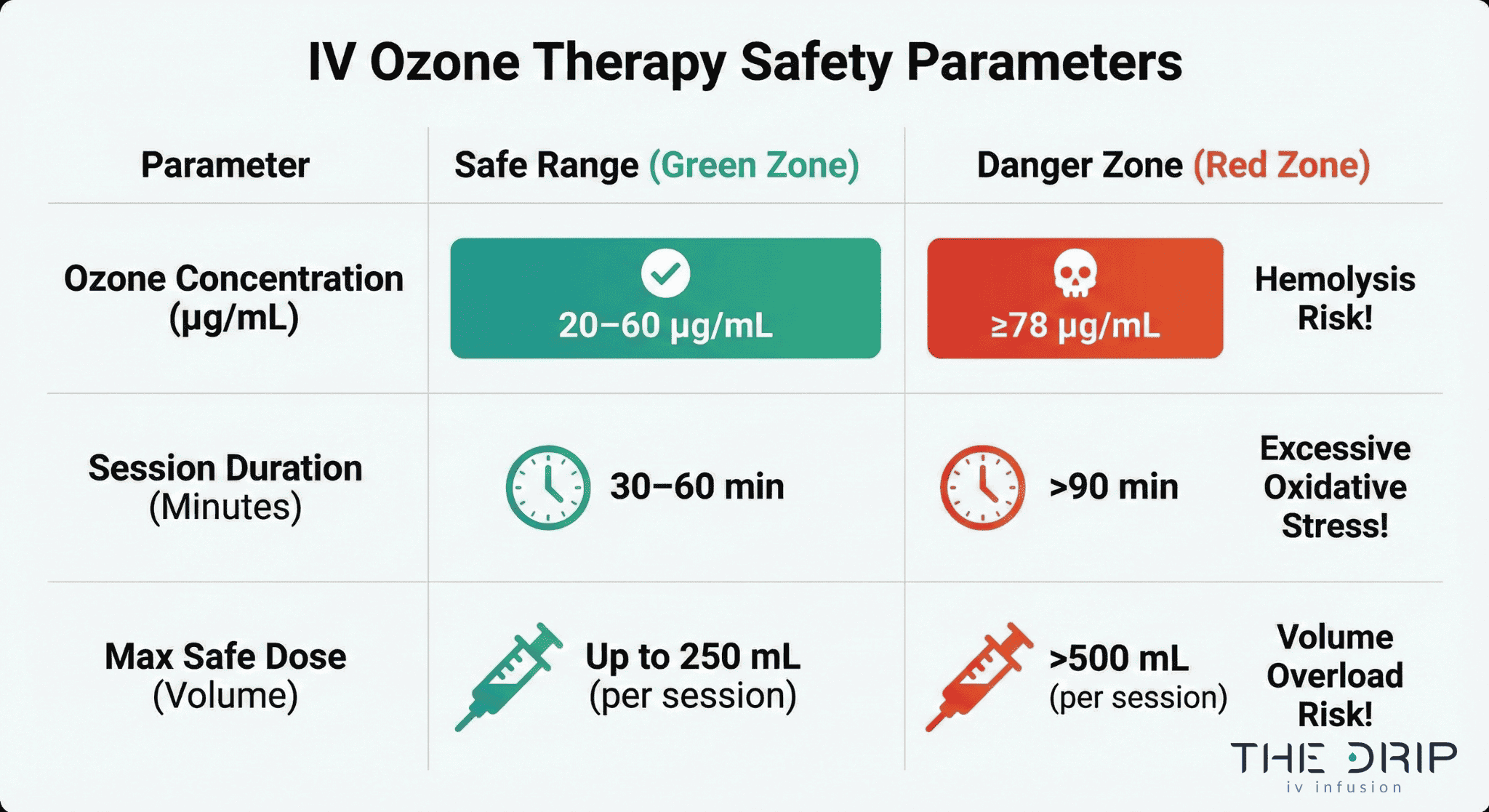
MAH relies on precise clinical parameters to safely ozonate and reinfuse blood. The values below represent standard ranges practitioners must follow to prevent hemolysis and ensure therapeutic effects.
| Parameter | Specification | Clinical Value |
| Ozone concentration | Typical range | 20–80 µg/mL |
| Ozone concentration | Maximum limit | 78 µg/mL |
| Total ozone dose | Per session | 500–4,000 µg |
| Anticoagulant | Type | Heparin (5000 IU/mL) or ACD-A |
| Infusion time | Duration | 30 minutes |
| Treatment frequency | Daily–weekly | Per protocol |
| Standard cycle | Sessions | 10–12 |
Going above 78 µg/mL breaks down your red blood cells. How often you get treatment depends on what condition you’re dealing with.
How does rectal insufflation administer ozone therapy?
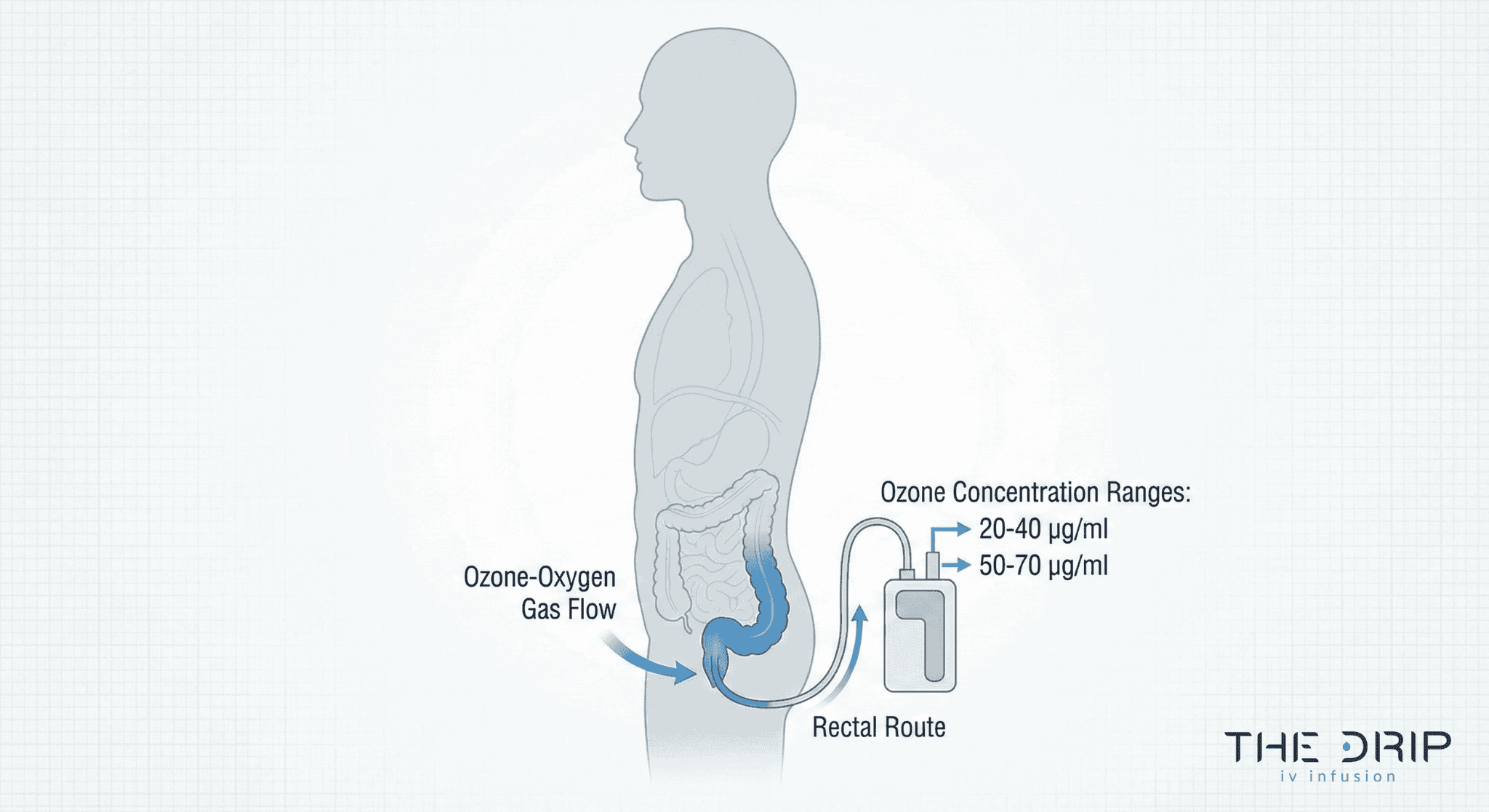
Rectal insufflation gives you ozone therapy by putting 100-200 mL of ozone-oxygen mixture into your rectum. The concentration ranges from 10-35 µg/mL, never going above 40 µg/mL to keep from damaging the delicate tissue inside your rectum. Each session gives you a total dose of 1.0-7.0 mg over about 5 minutes. You hold the gas for 10-15 minutes after it’s given. Treatment happens 2-5 times a week for 15-32 sessions. This method works almost as well as MAH while being less invasive. The lower concentration protects the sensitive tissue while still getting therapeutic effects throughout your body.
What other routes are used to administer ozone therapy?
There are several administration routes used for condition-specific ozone treatments. These methods do not affect the entire body the way MAH or rectal insufflation do, but instead target localized therapeutic needs. The main routes include::
• Minor autohemotherapy: Mixes 3-5 mL of your blood with ozone for a shot into your muscle
• Ozonated saline infusion: Bubbles ozone through saline then puts it in your IV (this method is controversial)
• Topical application: Uses ozonated water or oil for healing wounds and skin infections
• Intramuscular injections: Delivers ozone right into muscles for localized pain
• Intra-articular injections: Injects ozone right into joints for inflammation
Each route serves different therapeutic purposes. Minor autohemotherapy boosts your immune response using smaller amounts of blood. Topical applications treat surface infections without exposing your whole system. Direct injections target specific spots that need localized treatment.
How does IV ozone therapy work?
IV ozone therapy works through chemical reactions between ozone and parts of your blood that create therapeutic messengers. Ozone has a very short life in your blood and doesn’t act directly on your tissues. Instead, ozone instantly reacts with your plasma antioxidants and fatty acids to produce reactive oxygen species (ROS) and lipid ozonation products (LOPs). Think of it like this: the ozone is like a spark that starts a chain reaction in your blood, and those reaction products are what actually help heal your body. These secondary messengers act as controllers in chronic inflammatory diseases. The healing effects come from these reaction products rather than the ozone itself.
What are the steps involved in an IV ozone therapy session?
The steps in an IV ozone therapy session follow a precise medical process. First, medical staff take out 50-200 mL of your blood into a sterile container with anticoagulant. Next, they mix your blood with the same amount of medical-grade ozone-oxygen mixture at concentrations of 20-80 µg/mL. Your ozonated blood then goes back into you through reinfusion over about 30 minutes. Medical ozone generators must stay accurate within ±10% or better and use pure medical-grade oxygen rather than oxygen concentrators. All materials that touch ozone must be ozone-resistant, such as quartz glass or Teflon.
How does ozone interact with blood during IV therapy?
Ozone interacts with your blood during IV therapy by triggering specific chemical cascades. Ozone reacts with parts of your plasma to generate ROS and 4-hydroxynonenal (4-HNE). These molecules activate the Nrf2 pathway, which turns up antioxidant enzymes including SOD, catalase, and glutathione peroxidase. The reaction increases 2,3-diphosphoglycerate in your red blood cells, helping them release oxygen better to your tissues. Ozone also changes cytokine production to influence your immune response. Concentrations below 10 µg/mL don’t do much because antioxidants completely neutralize the ozone, while concentrations at or above 60 µg/mL become toxic to your whole system.
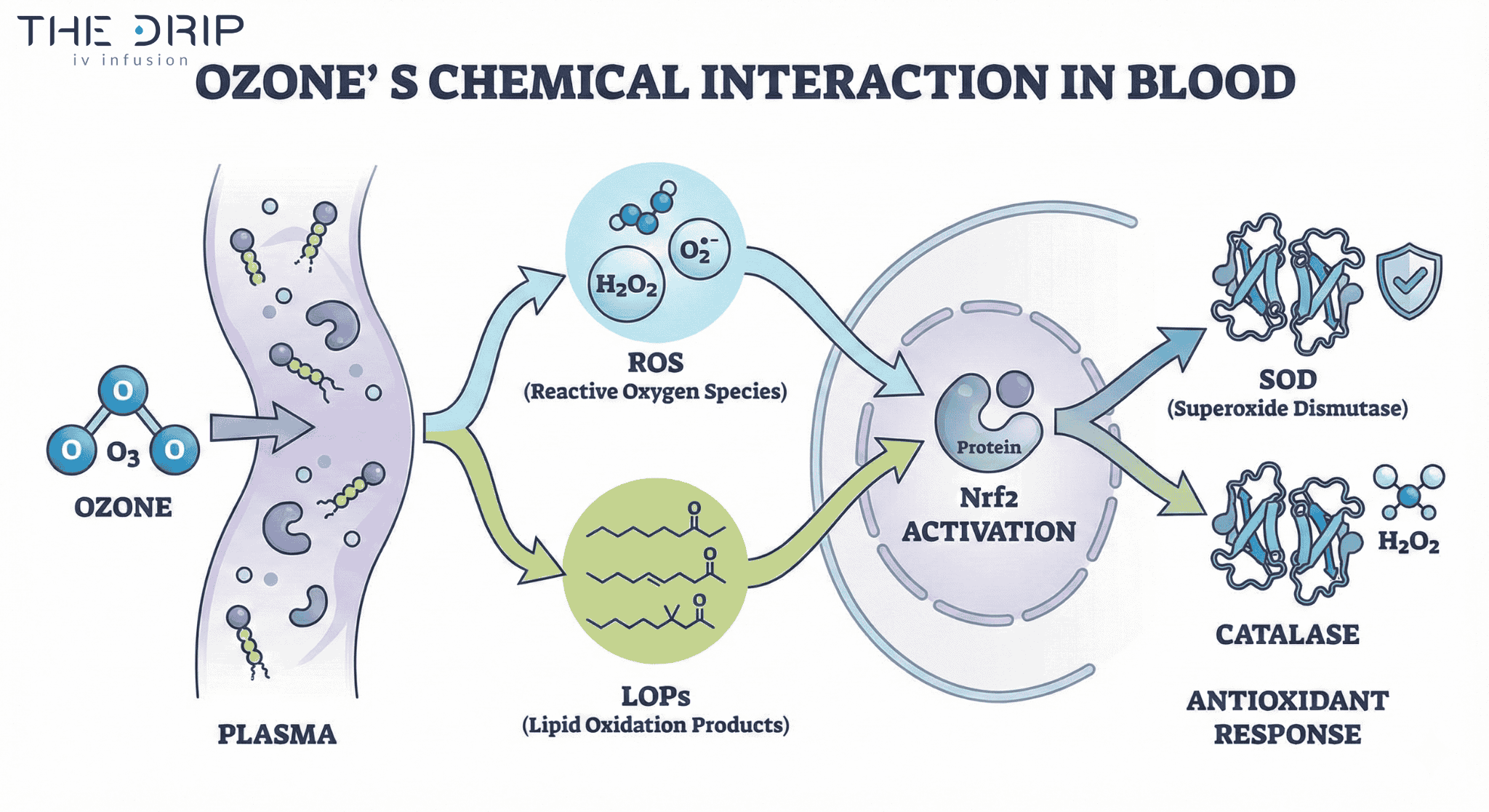
What are the potential benefits of IV ozone therapy?
The potential benefits of IV ozone therapy include better cell function and pain relief. Treatment increases your antioxidant capacity, protecting cells from damage while improving oxygen use and tissue oxygenation. Ozone therapy adjusts your immune system by stimulating certain cytokines in autoimmune diseases and boosting response against infections. A 2019 analysis showed ozone therapy worked better than steroids and placebo for low back pain at 6 months (RR=2.2, 95% CI: 1.87-2.60, p<0.00001). The Bonetti 2005 study showed 75% pain relief with ozone versus 32% with Depomedrol at 6 months, while the Paoloni 2009 study found 61% pain relief with ozone versus 33% with placebo (p<0.01).
Are there any risks or side effects with IV ozone therapy?
Yes. There are risks and side effects with IV ozone therapy that range from minor to serious depending on individual factors and how treatment is administered. The most common MAH side effect is bruising, and specific medical conditions require strict precautions. Favism (G6PD deficiency) is an absolute no-go because it can cause your red blood cells to break down rapidly. Because ozone therapy interacts with blood chemistry, certain medical conditions increase risks. Patients should be screened carefully before treatment. Contraindications include:
- G6PD deficiency (absolute)
- Pregnancy
- Hyperthyroidism
- Severe bleeding disorders
- Thrombocytopenia
- Use of blood-thinning medication
Who is a suitable candidate for ozone therapy?
Good candidates for ozone therapy are patients with chronic inflammatory conditions, pain problems, or wound healing needs who don’t have specific conditions that make it dangerous. According to a 2017 ISCO3 report, ozone therapy shows promise for conditions characterized by oxidative stress and inflammation. You must get screened for G6PD deficiency and bleeding disorders before starting treatment.
What conditions might benefit from ozone therapy?
The conditions that might benefit from ozone therapy include chronic inflammatory diseases, low back pain, and localized infections. A 2019 analysis showed ozone therapy worked better than steroids for treating low back pain and disc herniation, with a relative risk of 2.2 at 6 months. Acute stroke is still being studied as a possible use. Conditions requiring immune system adjustment respond to ozone’s regulating effects through Nrf2 pathway activation. Wound healing and skin infections benefit from topical ozone applications, such as ozonated water or oil.
Who should avoid or consult a doctor before ozone therapy?
Patients who should avoid ozone therapy include those with G6PD deficiency (Favism), which is an absolute no-go due to rapid red blood cell breakdown risk. Pregnant women must avoid treatment completely. People with hyperthyroidism, severe bleeding disorders, or low platelet count need medical consultation before considering ozone therapy. Anyone taking blood-thinning medications needs physician evaluation to assess bleeding risks. These restrictions come from ozone’s oxidative properties and how it interacts with blood components at therapeutic concentrations of 20-80 µg/mL.
What should patients expect during and after an ozone therapy session?
Patients getting ozone therapy should expect a structured medical procedure with specific timelines and sensations depending on how it’s given. Your experience varies between Major Autohemotherapy (MAH) and rectal insufflation, with each method requiring different preparation and retention times.
How long does a typical session last?
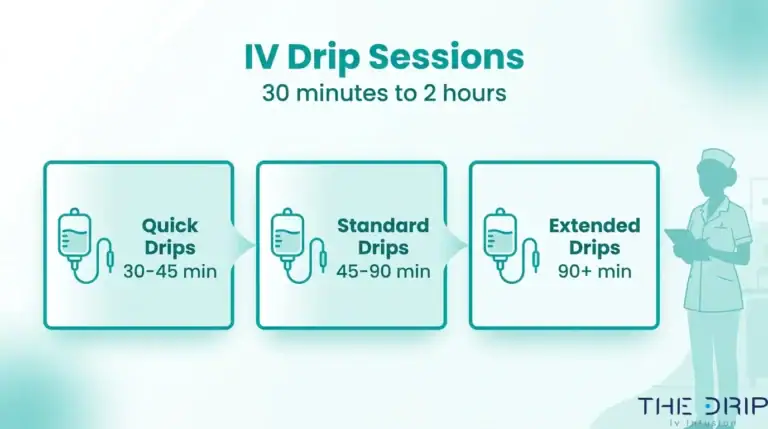
A typical ozone therapy session lasts 45-60 minutes total, including setup and administration. MAH sessions need about 30 minutes for the blood infusion process plus extra preparation time. Rectal insufflation takes 5 minutes for administration followed by 10-15 minutes of holding the gas. Minor autohemotherapy needs less time due to the smaller blood volume of 3-5 mL compared to MAH’s 50-200 mL.
Your appointment time includes getting positioned, preparing equipment, and monitoring after treatment. When you schedule treatment depends on what condition you’re addressing and which administration route you choose.
What can patients feel or experience during treatment?
Patients commonly report several sensations during ozone therapy depending on the method used. These experiences are typically mild and short-lived. Common observations include:
- Brief needle discomfort during MAH
- Mild pressure during reinfusion
- Cramping or bloating with rectal insufflation
- Temporary fatigue or headache afterward
- Occasional immediate energy boost
How many sessions are usually recommended?
The recommended number of sessions follows established clinical guidelines based on how it’s given and how severe your condition is. A standard MAH treatment cycle consists of 10-12 sessions, repeated 2-3 times annually for chronic conditions. How often you get treatment ranges from daily to weekly depending on therapeutic goals.
Rectal insufflation protocols need 15-32 sessions per treatment cycle, given 2-5 times weekly. Acute conditions typically need fewer sessions than chronic inflammatory diseases. Your total treatment time depends on how you respond and your practitioner’s assessment of therapeutic progress.
How should you approach ozone therapy with The Drip IV Infusion?
Approaching ozone therapy with The Drip IV Infusion means understanding regulatory guidelines and safety protocols. The FDA hasn’t approved ozone for any medical use in the United States, while Germany, Russia, and Cuba have established regulatory frameworks. Medical practitioners must follow International Scientific Committee on Ozone Therapy (ISCO3) guidelines for safe administration. Equipment specifications demand ozone generators with ±10% accuracy using pure medical-grade oxygen. Practitioners need certified training in ozone therapy protocols before offering treatments.
Can The Drip IV Infusion help with IV ozone therapy and safe administration?
Yes. The Drip IV Infusion can help with IV ozone therapy and safe administration by following established international protocols. According to ISCO3 guidelines, avoiding direct intravenous ozone injection is critical for safety. Safe administration requires:
- Medical-grade ozone generators with precise concentration control
- Ozone-resistant materials (quartz glass, Teflon) for all equipment
- Anticoagulants (heparin 5000 IU/mL or ACD-A) for blood handling
- Concentration monitoring systems maintaining 20-80 µg/mL for MAH
Germany’s regulatory framework provides clinical protocols that US practitioners can adapt. Russia’s Ministry of Health approved ozone therapy in 2007, offering evidence-based guidelines. Cuba’s National Center for Scientific Research documents standardized procedures for various administration routes.
What are the key takeaways about how ozone therapy is administered and how IV ozone therapy works?
The key takeaways about how ozone therapy is administered and how IV ozone therapy works are that healing effects happen through ozone’s reaction products, not direct ozone action. Safety thresholds differ between administration routes, and exceeding these limits increases risk. The following table summarizes the most critical clinical boundaries.
Critical safety parameters include:
| Parameter | Description | Clinical Value | Parameter |
| MAH dose | Therapeutic range | 20–80 µg/mL | MAH dose |
| Rectal dose | Maximum safe level | 40 µg/mL | Rectal dose |
| Hemolysis threshold | Red-cell breakdown begins | ≥78 µg/mL | Hemolysis threshold |
| G6PD deficiency | Contraindication | Absolute | G6PD deficiency |
In the end, safe and effective IV ozone therapy depends on strict adherence to ISCO3 guidelines, accurate equipment, and well-trained practitioners who understand the chemistry behind ozone’s therapeutic effects.