Common side effects of IV fluids are unwanted physiological responses that occur when intravenous solutions interact with the body’s vascular system, tissues, or electrolyte balance. These reactions range from mild local irritation at the catheter site to systemic complications involving fluid distribution and immune response.
This guide covers the specific complications associated with IV therapy, the physiological causes behind them, vulnerable patient populations, warning signs requiring intervention, and practical strategies for reducing risk.
The most frequently reported side effects include infiltration, phlebitis, bruising, localized infection, fluid overload, allergic reactions, electrolyte imbalances, and nerve damage. Each carries distinct symptoms and severity levels, though the majority resolve quickly once identified and addressed by a trained professional.
Side effects develop through four primary mechanisms: catheter-related issues such as improper placement or vein irritation, infusion rate errors that overwhelm the cardiovascular system, fluid composition mismatches that disrupt osmotic balance, and individual patient vulnerabilities that amplify standard risks.
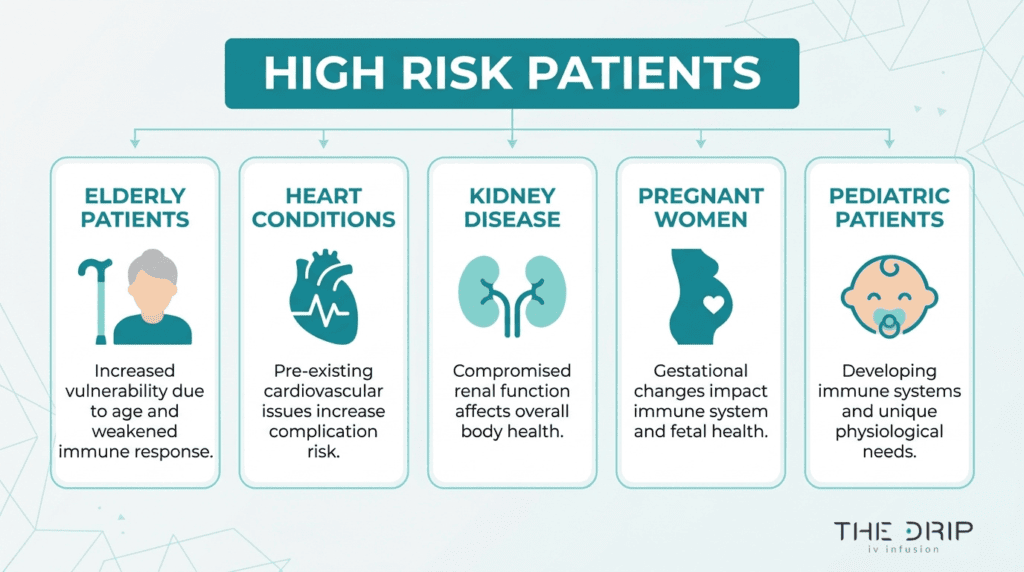
Certain populations face heightened susceptibility. Elderly patients contend with fragile veins and reduced cardiac reserve. Patients with kidney disease struggle to clear excess fluid and electrolytes. Pregnant women experience altered blood volume that complicates fluid tolerance. Pediatric patients require precise weight-based dosing due to limited physiological reserves.
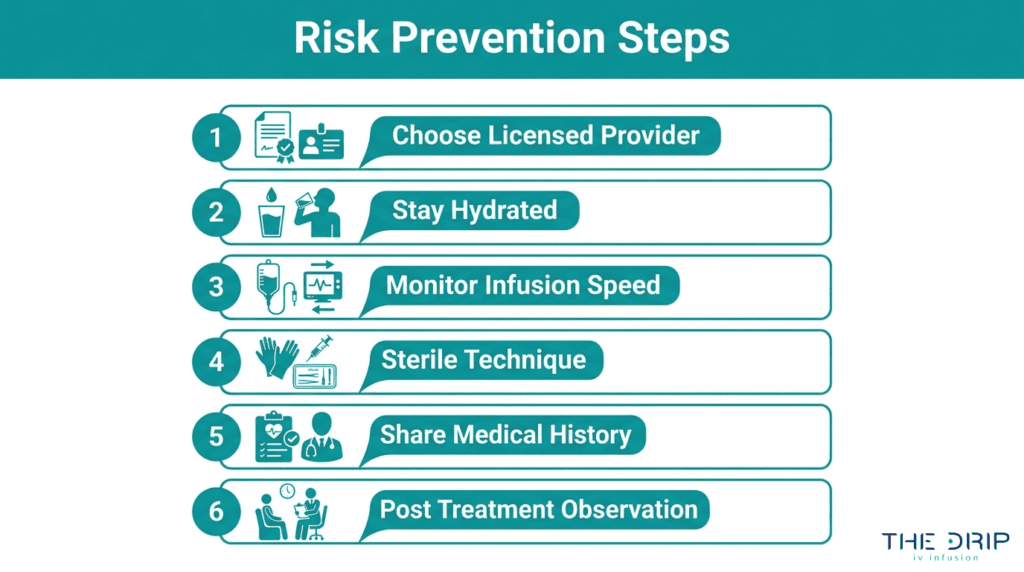
Risk reduction centers on provider selection, pre-infusion hydration, controlled administration rates, strict sterile technique, thorough medical history disclosure, and post-treatment observation. Licensed nursing oversight during the entire session enables early detection of complications before they escalate.
What Are IV Fluid Side Effects and Why Do They Occur?
IV fluid side effects are unwanted physiological responses that occur when intravenous solutions interact with the body’s vascular system, tissues, or electrolyte balance. They occur because IV therapy bypasses the body’s natural digestive safeguards, delivering fluids and substances directly into the bloodstream.
These reactions range from mild local irritation to systemic complications involving fluid distribution, immune response, and vein integrity. According to the Pharmaceutical Journal, safe and effective prescribing of intravenous fluids requires understanding of the physiology of fluid and electrolyte homeostasis, physiological responses to injury and disease, as well as knowledge of the properties of intravenous fluids.
When fluid enters the venous system, it must integrate with the body’s existing volume, osmolarity, and cellular environment. Disruptions at any point, whether from the catheter itself, the infusion rate, or the solution composition, can trigger adverse events. Understanding why these side effects develop is the foundation for preventing them during any IV therapy session.
What Are the Most Common Side Effects of IV Fluids?
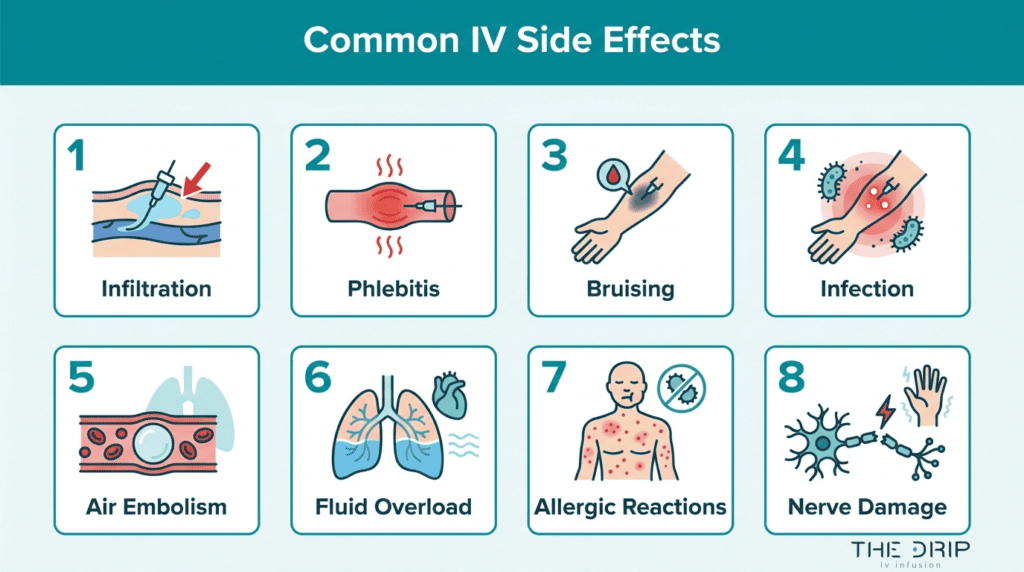
The most common side effects of IV fluids include infiltration, phlebitis, bruising, infection, fluid overload, allergic reactions, electrolyte imbalances, and nerve damage. Each carries distinct symptoms and severity levels.
Infiltration and Swelling at the IV Site
Infiltration occurs when IV fluid leaks from the vein into surrounding tissue. This causes localized swelling, coolness, and discomfort near the catheter insertion point. The area may appear puffy or feel tight compared to the opposite limb. Infiltration typically results from catheter dislodgement, patient movement, or fragile veins that cannot maintain the puncture site. While usually mild and self-resolving once the infusion stops, severe infiltration can damage surrounding tissue if left unaddressed.
Phlebitis and Vein Inflammation
Phlebitis is inflammation of the vein wall, presenting as redness, warmth, tenderness, and a palpable cord along the vein’s path. According to ivWatch’s clinical guide, mechanical phlebitis occurs when the catheter physically irritates or injures the vein wall, with risks increased by large-gauge catheters, improper insertion technique, or excessive movement at the IV site. Chemical phlebitis can also develop when irritating solutions contact the vein lining. This complication, while uncomfortable, typically resolves within days after catheter removal.
Bruising and Hematoma Formation
Bruising and hematoma formation result from blood leaking into tissue surrounding the puncture site. A hematoma appears as a firm, discolored lump where blood has pooled beneath the skin. Contributing factors include difficult vein access, anticoagulant use, and inadvertent vessel puncture during insertion. Most bruises resolve within one to two weeks without intervention. Applying gentle pressure immediately after catheter removal helps minimize blood accumulation.
Infection at the Insertion Site
Infection at the insertion site develops when microorganisms enter through the catheter puncture wound. Symptoms include redness spreading outward from the site, warmth, purulent discharge, and sometimes fever. According to research published via IntechOpen, the most frequent nonmechanical peripheral venous catheterization adverse events include insertion site pain, phlebitis, hematoma formation, and localized infection. Strict aseptic technique during insertion significantly reduces this risk. For practitioners working with patients, proper site assessment and timely catheter changes remain essential infection prevention measures.
Air Embolism
Air embolism occurs when air enters the venous system through an IV line. The estimated incidence ranges from 1 in 47 to 1 in 3,000 catheter insertions or removals, according to a report published in the National Center for Biotechnology Information. Symptoms can include sudden chest pain, shortness of breath, and a drop in blood pressure. Modern IV equipment incorporates safety features that make this complication exceedingly uncommon in standard clinical practice and outpatient settings.
Fluid Overload and Hypervolemia
Fluid overload occurs when the body receives more IV fluid than it can process. Among hospitalized patients receiving IV fluids, the prevalence of fluid overload is estimated at 15 to 25%, according to CIA Medical. In ICU settings, prevalence climbs to approximately 41.5%, where it correlates with increased mortality and delayed acute kidney injury diagnosis. Pregnant women face particular vulnerability; excessive IV fluids can cause peripheral swelling and postpartum breast engorgement that interferes with feeding. Symptoms include shortness of breath, elevated blood pressure, and peripheral edema. Careful volume monitoring prevents this complication in most cases.
Allergic Reactions to IV Solutions or Additives
Allergic reactions to IV solutions or additives range from mild skin flushing to severe anaphylaxis. Common triggers include preservatives, specific vitamins, or medication additives within the infusion. Mild reactions present as itching, hives, or localized redness. More serious responses involve throat tightness, difficulty breathing, or rapid heart rate. Disclosing all known allergies and sensitivities before any infusion allows providers to select appropriate formulations and monitor for early warning signs.
Electrolyte Imbalances
Electrolyte imbalances develop when IV fluids alter the body’s sodium, potassium, chloride, or bicarbonate levels. Isotonic, hypertonic, and hypotonic solutions each shift electrolyte concentrations differently. Symptoms vary by the specific imbalance but may include muscle cramps, irregular heartbeat, confusion, or fatigue. Patients with pre-existing kidney or cardiac conditions face heightened susceptibility. For most healthy individuals receiving properly formulated infusions, clinically significant electrolyte disturbances are uncommon when fluid type and volume are appropriately matched to individual needs.
Nerve Damage Near the IV Site
Nerve damage near the IV site occurs when a needle or catheter contacts or compresses a peripheral nerve during insertion. Symptoms include sharp, shooting pain, tingling, or numbness radiating from the puncture point. According to research published in Anesthesia and Pain Medicine, the estimated annual incidence of nerve injury is 3.38 per 1,000,000 intramuscular injections, though rates vary by catheter type and placement location. Immediate removal of the catheter upon paresthesia-type pain is the standard intervention.
Understanding these common side effects helps set realistic expectations before any infusion, and knowing prevention strategies further reduces the likelihood of complications.
What Causes Side Effects During IV Fluid Administration?
Side effects during IV fluid administration result from catheter-related issues, infusion rate errors, fluid composition mismatches, and individual patient vulnerabilities. Each factor contributes differently to complication risk.

How Does Improper Catheter Placement Cause Complications?
Improper catheter placement causes complications by damaging vessel walls, missing veins entirely, or positioning the catheter tip incorrectly. According to a systematic review published in the International Journal of Nursing Studies, all-cause peripheral intravenous catheter failure before treatment completion occurred in 36.4% of catheters, with an overall incidence of 22.3 per 100 catheter-days.
The three most common complications associated with central venous catheter placement include:
- Placement failure (20.4 events per 1,000 catheters placed)
- Arterial puncture (16.2 events per 1,000 catheters)
- Pneumothorax (1.1 events per 1,000 catheters)
Younger children face an increased risk of complications when peripherally inserted central venous catheters are placed. The CDC recommends ultrasound guidance for central venous catheter placement to reduce cannulation attempts and mechanical complications.
How Does Infusion Rate Affect Side Effect Risk?
Infusion rate affects side effect risk by determining how quickly fluid enters the vascular system. When fluids are administered too rapidly, the circulatory system cannot redistribute the volume efficiently, leading to fluid overload, pulmonary edema, or cardiac strain. Conversely, rates that are too slow may prolong catheter dwell time, increasing infection and phlebitis risk.
Fluids can accumulate into spaces that normally contain minimal fluid volumes, such as the peritoneal or pleural cavities, through a process known as “third spacing.” This occurs when vasodilation and vascular wall leakage, triggered by conditions like sepsis or surgical stress, allow rapid infusions to escape the intended compartment. Controlled, individualized infusion rates remain one of the most practical safeguards against volume-related complications.
How Does Fluid Type Influence Adverse Reactions?
Fluid type influences adverse reactions based on its tonicity, composition, and additive profile. The main IV fluid categories are isotonic, hypertonic, and hypotonic solutions, each exerting different osmotic effects on cells.
Hypertonic solutions can cause vein irritation and cellular dehydration if administered improperly. Hypotonic fluids risk cellular swelling and hyponatremia. Beyond base solutions, additives and specialty infusions carry their own reaction profiles. According to a study published on ResearchGate, immediate adverse events related to intravenous immunoglobulin therapy in children were noted in 14.3% of children and 1.2% of total infusions, with skin reactions such as rash or urticaria being the most common. Matching fluid type to the patient’s clinical needs significantly reduces adverse reaction likelihood.
How Does Patient Health History Increase Vulnerability?
Patient health history increases vulnerability by creating pre-existing conditions that amplify IV therapy risks. Patients with cardiac insufficiency, renal disease, or hepatic dysfunction cannot tolerate standard fluid volumes or electrolyte loads. Chronic illness also weakens vascular integrity, making catheter insertion more difficult.
The current rate of peripheral intravenous catheter failure is described as “unacceptably high” in hospitalized patients, according to a 2018 study in BMJ Open, leading to increased healthcare costs and patient distress. Beyond physical complications, repeated failed cannulation attempts carry psychological impact, and chronic IV therapy patients face long-term vascular health concerns that are frequently underreported. Full disclosure of medical history before any infusion session remains essential for safe, individualized care.
With causative factors identified, recognizing which patients face the greatest risk helps guide appropriate precautions.
Who Is Most at Risk for IV Fluid Side Effects?
Certain populations face heightened vulnerability to IV fluid side effects due to age, organ function, or physiological changes. The groups most at risk include elderly patients, those with heart conditions, patients with kidney disease, pregnant women, and pediatric patients.
What Risks Do Elderly Patients Face with IV Fluids?
Elderly patients face increased risks with IV fluids because of age-related vein fragility, reduced cardiac reserve, and diminished kidney function. Thinner, more fragile veins make successful catheter placement more difficult, raising the likelihood of infiltration and multiple insertion attempts. Older adults also process excess fluid more slowly, which increases their susceptibility to fluid overload. According to Johns Hopkins Medicine, PIVC fail rates reach 45.6% in vulnerable patient populations requiring peripheral intravenous catheters. For elderly patients, careful vein selection and slower infusion rates are essential precautions.
What Risks Do Patients with Heart Conditions Face?
Patients with heart conditions face significant risks with IV fluids because their compromised cardiac function limits the heart’s ability to handle additional fluid volume. Even moderate fluid administration can push a weakened heart toward pulmonary edema or congestive heart failure exacerbation. Key risks include:
- Rapid fluid accumulation in the lungs
- Elevated blood pressure from volume expansion
- Worsening of existing edema in extremities
- Dangerous shifts in electrolyte balance affecting cardiac rhythm
Clinicians must use conservative fluid volumes and closely monitor heart rate, blood pressure, and oxygen saturation throughout any infusion in cardiac patients.
What Risks Do Patients with Kidney Disease Face?
Patients with kidney disease face elevated risks with IV fluids because impaired renal function prevents efficient fluid and electrolyte clearance. According to research published by M. Kanbay via PMC, patients with Chronic Kidney Disease are “prone to fluid and electrolyte imbalances” and require close monitoring because fluid overload is common in this population. Fluid type also matters significantly; normal saline use is associated with an increased incidence of acute kidney injury and a need for renal replacement therapy compared to balanced salt solutions. For kidney disease patients, balanced crystalloids and reduced infusion volumes represent safer choices.
What Risks Do Pregnant Women Face with IV Therapy?
Pregnant women face distinct risks with IV therapy because pregnancy increases blood volume by up to 50%, altering how the body processes additional fluids. Excessive IV fluid administration can lead to peripheral swelling, pulmonary edema, and postpartum complications. All practitioners providing elective IV therapy must be licensed clinical professionals operating within their scope of practice. This requirement is particularly critical during pregnancy, where negligence in monitoring or protocol adherence carries malpractice liability risks. Pregnant women should always disclose their pregnancy status before any infusion and work exclusively with experienced clinical professionals.
What Risks Do Pediatric Patients Face?
Pediatric patients face heightened risks with IV fluids due to smaller veins, lower body weight, and limited physiological reserves. Children are more sensitive to fluid volume errors, meaning even small miscalculations can cause significant electrolyte disturbances or fluid overload. According to JAMA Pediatrics, younger children were found to be at an increased risk of complications when peripherally inserted central venous catheters were placed. Pediatric IV therapy demands weight-based dosing, smaller catheter gauges, and frequent reassessment to prevent adverse outcomes.
Understanding these high-risk populations helps guide the warning signs that require immediate medical attention.
What Are the Warning Signs of Serious IV Complications?
The warning signs of serious IV complications include sudden sharp or burning pain at the insertion site, unexpected swelling, dizziness, headache, and nausea. Recognizing these symptoms early allows for immediate intervention before minor issues escalate.
According to the Mayo Clinic, common side effects of intravenous ascorbic acid include dizziness, feelings of warmth, headache, nausea, and pain or swelling at the injection site. These symptoms can also signal broader complications with any IV infusion, not just vitamin C delivery.
Paresthesia-type pain during venipuncture or while an indwelling IV catheter remains in place can indicate nerve injury. As noted in NCBI clinical nursing resources, this type of pain requires immediate removal of the catheter to prevent lasting damage.
Warning signs that require prompt attention include:
- Sudden burning, tingling, or shooting pain near the IV site.
- Swelling, coolness, or blanching of skin around the catheter.
- Dizziness, lightheadedness, or feelings of unusual warmth.
- Persistent nausea or headache during infusion.
- Shortness of breath or chest tightness suggesting fluid overload.
Any of these symptoms appearing during an IV session warrants stopping the infusion and alerting the administering professional. For most clients, early communication with your infusion specialist is the single most effective way to prevent a minor discomfort from becoming a serious event.
Understanding these warning signs prepares you to take the right preventive steps during any infusion session.
How Can You Minimize the Risks of IV Fluid Side Effects?
You can minimize the risks of IV fluid side effects through provider selection, pre-infusion preparation, controlled administration, sterile protocols, open communication, and post-treatment observation.
How Does Choosing a Qualified Provider Reduce IV Risks?
Choosing a qualified provider reduces IV risks by ensuring that licensed clinical professionals perform IV insertion and monitor the infusion within their scope of practice. Proper training means fewer failed cannulation attempts, correct vein selection, and appropriate fluid choices tailored to individual needs. A qualified nurse recognizes early warning signs of complications and adjusts treatment immediately. For elective wellness infusions, verifying that a provider employs registered nurses with emergency medicine or critical care backgrounds offers an additional layer of safety that unlicensed operators cannot match.
How Does Proper Hydration Before Infusion Help?
Proper hydration before infusion helps by improving vein visibility and elasticity, which makes catheter insertion easier and reduces the likelihood of multiple needle attempts. Well-hydrated veins are plumper and less prone to collapsing during cannulation, lowering the risk of bruising, hematoma, and mechanical phlebitis. Drinking water in the hours before an appointment is a simple step that directly supports a smoother infusion experience. This straightforward preparation is often overlooked in wellness settings, yet it remains one of the most effective client-side actions for reducing insertion-related discomfort.
How Does Monitoring Infusion Speed Prevent Complications?
Monitoring infusion speed prevents complications by ensuring fluids enter the bloodstream at a rate the body can safely process. Administering IV fluids too rapidly increases the risk of fluid overload, electrolyte shifts, and localized vein irritation. A controlled drip rate allows the cardiovascular and renal systems to maintain homeostasis throughout the session. Trained infusion specialists adjust flow rates based on the specific solution, total volume, and the client’s weight and health status, keeping each session within safe physiological limits.
How Does Sterile Technique Lower Infection Risk?
Sterile technique lowers infection risk by eliminating pathogen entry points during catheter insertion and fluid administration. According to CDC injection safety guidelines, aseptic technique requires one-time use of needles and syringes along with limiting the sharing of medication vials to prevent transmission of infectious agents. Key sterile practices include:
- Disinfecting the insertion site with antiseptic solution before puncture.
- Using single-use, sealed catheter equipment for every client.
- Wearing clean gloves and maintaining a no-touch technique on sterile surfaces.
- Applying a secure, clean dressing over the insertion site immediately after placement.
How Does Communicating Your Medical History Help?
Communicating your medical history helps by allowing the infusion specialist to identify contraindications, adjust fluid types, and modify infusion rates before treatment begins. Conditions such as kidney disease, heart failure, and medication use directly influence how the body handles intravenous fluids. Disclosing allergies prevents reactions to specific additives or solution components. Even details that seem minor, like recent illness or current supplements, help the provider tailor a safer, more effective infusion plan.
How Does Post-Infusion Monitoring Reduce Adverse Events?
Post-infusion monitoring reduces adverse events by catching delayed reactions before they escalate. Some complications, including allergic responses and site infections, develop minutes to hours after the catheter is removed. Research published on ResearchGate found that immediate adverse events related to intravenous immunoglobulin therapy occurred in 14.3% of pediatric patients studied, underscoring that reactions can emerge during or shortly after infusion completion. Observing the client for changes in vital signs, swelling, or discomfort provides a critical safety window. IV complications are also frequently underreported in medical records, making real-time clinical observation more reliable than documentation alone.
Understanding these risk-reduction strategies prepares you to recognize when professional intervention becomes necessary.
When Should You Seek Medical Attention for IV Side Effects?
You should seek medical attention for IV side effects when symptoms escalate beyond mild, localized discomfort into signs that suggest systemic complications. Recognizing the difference between expected minor reactions and dangerous warning signs can prevent serious outcomes.
Seek immediate medical care if you experience any of the following during or after an IV infusion:
- Sudden shortness of breath or difficulty breathing
- Chest pain or rapid heartbeat
- Severe swelling that spreads beyond the IV site
- High fever or chills developing after infusion
- Persistent numbness, tingling, or sharp shooting pain near the insertion site
- Swelling in the face, lips, or throat indicating an allergic reaction
- Confusion or sudden dizziness that does not resolve
According to a clinical resource published by NCBI, paresthesia-type pain occurring during venipuncture or during an indwelling IV catheter can indicate nerve injury and requires immediate removal of the catheter. This type of pain should never be dismissed as routine discomfort.
Mild side effects, such as slight bruising, temporary warmth at the site, or brief lightheadedness, typically resolve on their own within hours. However, any symptom that worsens rather than improves warrants professional evaluation. For patients with pre-existing heart or kidney conditions, even moderate swelling or unexpected weight gain after infusion should prompt a call to a healthcare provider, since these may signal early fluid overload.
When in doubt, contacting your infusion provider or visiting urgent care is always safer than waiting. Early intervention consistently produces better outcomes than delayed response when IV complications arise.
How Does Professional At-Home IV Therapy Minimize Risks?
Professional at-home IV therapy minimizes risks through licensed nursing oversight, strict regulatory compliance, and individualized patient monitoring. The following sections cover how The Drip IV Infusion’s expertise reduces side effects and the key takeaways for staying safe.
Can The Drip IV Infusion’s Nursing Expertise Reduce Side Effects?
Yes, The Drip IV Infusion’s nursing expertise can reduce side effects. The company was founded by professionals with decades of experience in nursing, emergency medicine, home health, and IV medical techniques. Every infusion is administered by a licensed nurse who assesses vein health, selects appropriate catheter gauge, and monitors the session from start to finish.
According to OptiMantra, regulations for mobile IV therapy vary by state, but typically IV insertion must be performed by a licensed nurse (RN, LPN in some states), nurse practitioner, or physician. The Drip IV Infusion meets these standards by staffing experienced infusion specialists who operate within their clinical scope of practice.
This level of clinical oversight matters more than most clients realize. Having a trained nurse present throughout the entire session means early detection of complications like infiltration or vein irritation, allowing immediate intervention before minor issues escalate.
What Are the Key Takeaways About Common Side Effects of IV Fluids and How to Minimize Risks?
The key takeaways about common side effects of IV fluids and how to minimize risks center on preparation, provider selection, and awareness:
- Most side effects are mild and temporary, including dizziness, feelings of warmth, headache, nausea, and pain or swelling at the insertion site.
- Choosing a licensed, experienced provider is the single most effective way to reduce complications.
- Communicating your full medical history before infusion helps nurses tailor fluid type and infusion rate to your needs.
- Staying hydrated before your session improves vein accessibility and reduces failed insertion attempts.
- Monitoring during and after infusion catches early warning signs before they become serious.
According to Mayo Clinic data, common side effects of intravenous ascorbic acid include dizziness, feelings of warmth, headache, nausea, and pain or swelling at the injection site. These reactions are generally self-limiting when a qualified professional manages the infusion.
For most wellness clients, the combination of proper hydration, honest health disclosure, and a skilled infusion specialist keeps IV therapy safe and effective. The Drip IV Infusion brings clinical-grade care directly to clients, eliminating the need to navigate unregulated spa settings while ensuring every session follows established safety protocols.