IV magnesium is an intravenously delivered mineral that achieves 100% bioavailability instantly, with a serum half-life of approximately 4 to 5 hours and roughly 70% of the dose excreted through urine within 24 hours in individuals with healthy kidney function.
This guide covers IV magnesium pharmacokinetics, the factors that alter retention time, how the body eliminates magnesium, clinical effect durations, and who benefits most from IV magnesium therapy.
After infusion, magnesium follows a two-compartment model: a rapid distribution phase moves the mineral from blood into tissues, followed by a slower elimination phase controlled by renal filtration. Serum levels return to baseline within about 24 hours, but red blood cells retain magnesium for weeks, and bone stores hold it for months to years.
Several variables determine how long IV magnesium lasts in any individual. Kidney function controls excretion speed through glomerular filtration rate, while dosage size, baseline deficiency level, infusion rate, and concurrent medications each shift retention in measurable ways. Severely deficient individuals retain a greater percentage of each dose because depleted tissues absorb magnesium aggressively before renal excretion increases.
The kidneys handle elimination through a layered reabsorption system, with the thick ascending limb of the Loop of Henle reclaiming approximately 60% of filtered magnesium. Under normal conditions, renal tubules reabsorb 97% of filtered magnesium, but surplus from an IV infusion triggers reduced reabsorption and increased urinary output.
Clinical effects follow distinct timelines: muscle relaxation persists for 4 to 6 hours, cardiovascular benefits last 6 to 12 hours, and neurological calming effects extend up to 24 hours post-infusion. Athletes losing magnesium through intense training, people with chronic deficiency, and those seeking migraine or stress relief gain the most from IV delivery’s direct-to-bloodstream advantage over oral supplementation.
What Happens When Magnesium Is Administered Intravenously?
When magnesium is administered intravenously, it enters the bloodstream directly, achieves full bioavailability instantly, and begins correcting deficiencies within minutes. The following sections cover how IV magnesium reaches circulation, its onset speed, and how its absorption compares to oral supplements.
How Does IV Magnesium Enter the Bloodstream?
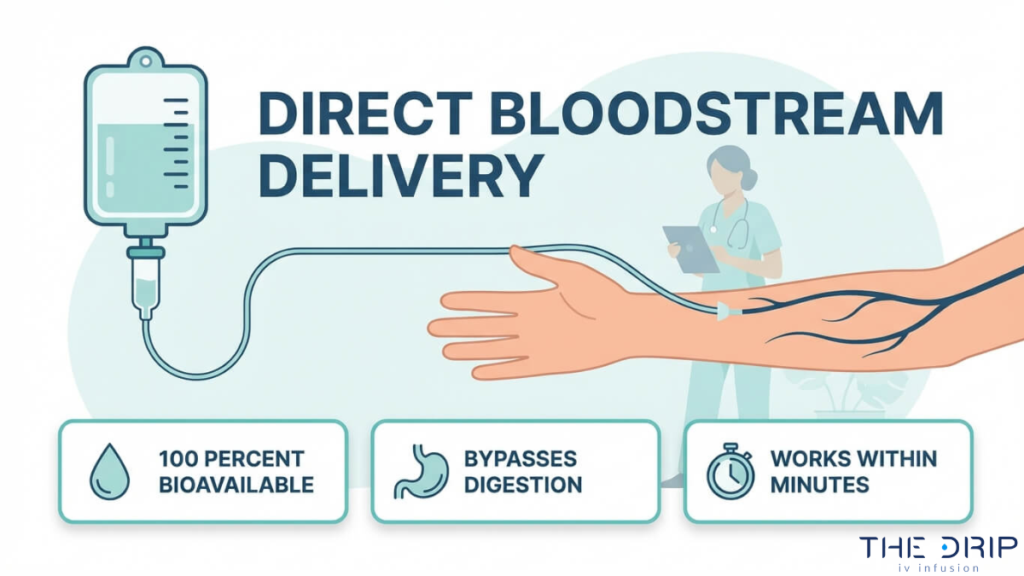
IV magnesium enters the bloodstream through a catheter inserted into a peripheral vein, typically in the arm. Magnesium sulfate, the most common IV formulation, dissolves in saline solution and flows directly into venous circulation. Because it bypasses the gastrointestinal tract entirely, none of the dose is lost to incomplete absorption or first-pass metabolism in the liver.
Once in the bloodstream, magnesium distributes rapidly throughout the body. Intravenous magnesium sulfate is not associated with cardiovascular, liver, or kidney toxicity in adults when administered according to clinical protocols, according to a study published in the Journal of Clinical Pharmacology. This direct-to-blood delivery method is what makes IV administration particularly effective for acute deficiencies where rapid correction matters.
How Quickly Does IV Magnesium Start Working?
IV magnesium starts working within minutes of infusion. Because the mineral enters systemic circulation immediately, cells begin receiving magnesium almost as soon as the infusion begins. Physiological effects, including muscle relaxation and neurological calming, can often be felt during the session itself.
The speed of onset depends partly on infusion rate and dosage. Slower, controlled infusion rates allow the body to distribute magnesium steadily without overwhelming renal filtration. For most wellness applications, noticeable effects typically emerge within 15 to 30 minutes. This rapid action is one reason clinicians prefer the intravenous route when timely correction of magnesium levels is a priority.
What Is the Bioavailability of IV Magnesium Compared to Oral?
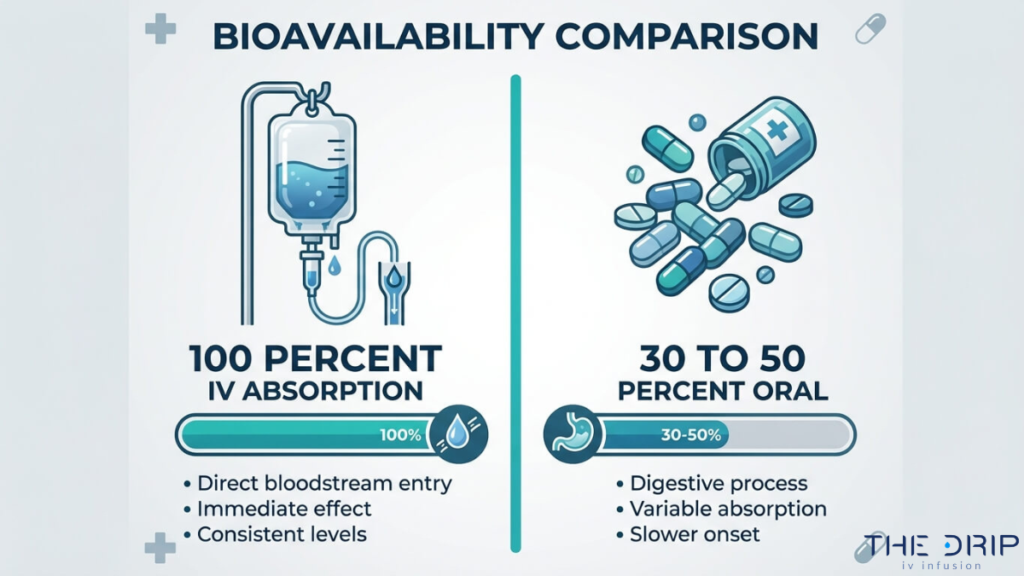
The bioavailability of IV magnesium compared to oral is dramatically higher. According to a 2019 review published in the National Center for Biotechnology Information, intravenous magnesium sulfate achieves 100% bioavailability immediately upon administration, whereas oral magnesium supplements typically exhibit bioavailability ranging from 30% to 50%.
This difference matters in practical terms:
- IV magnesium delivers the entire dose to circulation without gastrointestinal losses.
- Oral magnesium must survive stomach acid, compete with other nutrients for absorption, and pass through intestinal walls before reaching the blood.
- Intravenous administration of electrolytes like magnesium can correct imbalances more rapidly and effectively than oral routes in both clinical and home-based settings.
For anyone with a significant deficiency or acute symptoms, that gap between 100% and 30% to 50% absorption can be the difference between rapid relief and prolonged supplementation. Understanding this bioavailability advantage helps explain why IV magnesium produces effects that oral forms often cannot match in the same timeframe.
How Long Does IV Magnesium Stay In Your Blood?
IV magnesium stays in your blood for varying durations depending on the compartment measured. Serum levels shift within hours, while red blood cells and deeper tissues retain magnesium over days to weeks.
How Long Does IV Magnesium Stay In Serum?
IV magnesium stays in serum for a relatively short window, typically returning to baseline within 24 hours in patients with normal kidney function. Renal reabsorption controls serum concentrations tightly; according to KoreaMed Synapse, only about 20% of filtered magnesium is reabsorbed in the proximal tubule, with the remaining reabsorption occurring deeper in the nephron. Clinical protocols often infuse magnesium at a sustained rate of 0.5 g/h to maintain therapeutic serum levels in hospitalized patients. For acute hypomagnesemia, guidelines recommend an initial IV dose of 1 to 5 grams depending on severity. Because the kidneys rapidly clear circulating magnesium, serum retention without ongoing infusion is brief.
How Long Does IV Magnesium Stay In Red Blood Cells?
IV magnesium stays in red blood cells significantly longer than in serum. Red blood cells accumulate magnesium gradually during their roughly 120-day lifespan, making intracellular levels a more stable indicator of total body status. After an IV infusion, magnesium shifts from blood plasma into red blood cells over hours to days. This intracellular pool does not fluctuate as rapidly as serum, so red blood cell magnesium can remain elevated for weeks following treatment. For this reason, clinicians sometimes measure red blood cell magnesium to assess longer-term magnesium status rather than relying solely on serum tests, which reflect only a small fraction of the body’s total stores.
How Long Does IV Magnesium Stay In Bones and Tissues?
IV magnesium stays in bones and tissues for months to years, depending on metabolic demand. Bone serves as the body’s largest magnesium reservoir, and this deep storage compartment exchanges magnesium slowly with circulating blood. Soft tissues, including skeletal muscle and organs, hold a substantial intracellular pool that turns over more quickly than bone but far slower than serum. When magnesium stores are depleted, IV infusions help replenish these deeper compartments over repeated sessions rather than a single treatment. This slow tissue exchange is why individuals with chronic deficiency often require multiple infusions to achieve meaningful, lasting improvement in total body magnesium levels.
With blood-level dynamics established, the factors influencing how long IV magnesium lasts become clearer.
What Factors Affect How Long IV Magnesium Lasts?
Several factors affect how long IV magnesium lasts, including kidney function, dosage, baseline deficiency level, infusion rate, and concurrent medications. Each variable influences how the body retains or eliminates magnesium after an infusion.
How Does Kidney Function Affect IV Magnesium Duration?
Kidney function affects IV magnesium duration by controlling how quickly the body excretes magnesium through urine. The glomerular filtration rate (GFR) is the primary determinant; as GFR declines in chronic kidney disease, the kidney’s ability to excrete magnesium decreases, leading to prolonged retention. According to a review published in Seminars in Nephrology, renal magnesium excretion depends directly on GFR. Healthy kidneys efficiently clear excess magnesium within hours, while impaired kidneys may retain it significantly longer. Specialized proteins like claudin-16 form magnesium pores in the renal tubules, though their precise physiologic function remains under investigation. For anyone with reduced kidney function, this extended retention makes professional monitoring during IV magnesium therapy especially important.
How Does the Dosage Infused Change Retention Time?
The dosage infused changes retention time because larger doses saturate renal clearance pathways, keeping magnesium elevated in the bloodstream longer. A small supplemental dose may clear within hours, while higher clinical doses take considerably more time for the kidneys to fully process. The body distributes magnesium across multiple compartments, so a larger infusion fills not only serum but also intracellular and bone stores. Once these deeper compartments absorb magnesium, release back into circulation happens gradually. This layered distribution is why a higher dose extends both serum elevation and total-body retention compared to a lower one.
How Does Magnesium Deficiency Level Affect Retention?
Magnesium deficiency level affects retention because depleted tissues absorb and hold infused magnesium more aggressively. When stores in bone, muscle, and intracellular compartments are low, the body prioritizes replenishment over excretion. According to a study published in the International Journal of Vitamin and Nutrition Research, an estimated 2.4 billion people globally, approximately 31% of the population, do not meet recommended dietary magnesium intake levels. Severely deficient individuals often retain a greater percentage of each infused dose, as their kidneys reduce urinary excretion to conserve supply. Mildly deficient patients typically excrete more of the dose. This makes pre-infusion deficiency status one of the strongest predictors of how long IV magnesium benefits persist.
How Does Infusion Rate Influence How Long It Stays?
Infusion rate influences how long IV magnesium stays in the system by affecting how much the kidneys excrete during administration. A rapid bolus floods serum concentrations quickly, triggering the kidneys to excrete a large portion before tissues can absorb it. Slower infusion rates allow more gradual tissue uptake, reducing immediate renal losses and improving overall retention. Clinical protocols for hypomagnesemia commonly use prolonged infusion rates for this reason. The result is a meaningful difference: a slow, controlled drip delivers more magnesium into intracellular and bone stores, extending how long the mineral remains available in the body.
How Do Other Medications Affect Magnesium Clearance?
Other medications affect magnesium clearance by altering renal excretion rates, tubular reabsorption, or competing for elimination pathways. Diuretics such as loop and thiazide types increase urinary magnesium loss, accelerating clearance. Proton pump inhibitors reduce intestinal absorption, compounding depletion over time. According to the FDA, the average half-life and systemic clearance of magnesium sulfate in preeclamptic women is approximately 4 to 5 hours and 4 to 5 liters per hour, respectively, with plasma clearance remaining relatively consistent at 4.28 to 5.00 liters per hour across populations. Despite this consistency in baseline clearance, concurrent medications can shift excretion substantially. Reviewing current prescriptions before an IV magnesium session helps anticipate how long the mineral will remain effective.
Understanding these retention factors helps determine the right approach for your next infusion session.
How Does the Body Eliminate IV Magnesium?
The body eliminates IV magnesium primarily through the kidneys. Renal filtration and tubular reabsorption control how much magnesium is retained versus excreted in urine.
How Do the Kidneys Filter Out Excess Magnesium?
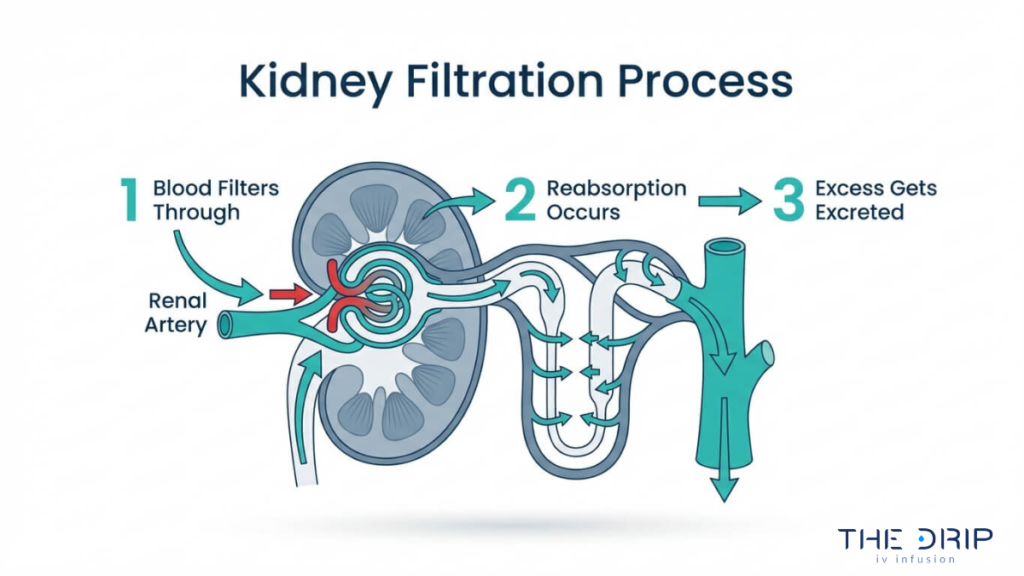
The kidneys filter out excess magnesium through a multi-step process along the renal tubules. Blood passes through the glomerulus, where magnesium enters the filtrate. Most of this filtered magnesium is then selectively reabsorbed at specific points along the nephron before it reaches the collecting duct.
According to a study published in Advances in Chronic Kidney Disease, the thick ascending limb of the Loop of Henle is the primary site of renal magnesium reabsorption, responsible for reabsorbing approximately 60% of the filtered magnesium load. The proximal tubule handles a smaller portion, while the distal convoluted tubule fine-tunes final reabsorption. This layered system allows healthy kidneys to precisely regulate circulating magnesium levels, retaining what the body needs and allowing the rest to pass into urine.
How Much IV Magnesium Is Excreted Through Urine?
Approximately 70% of an intravenous magnesium dose is excreted through urine within 24 hours in patients with normal renal function. This rapid urinary clearance explains why IV magnesium elevates serum levels temporarily rather than indefinitely.
Under normal physiological conditions, the renal tubules reabsorb about 97% of filtered magnesium, leaving only roughly 3% for excretion. However, when an IV infusion suddenly raises serum magnesium above baseline, the kidneys recognize the surplus and reduce reabsorption rates accordingly. The result is a significant increase in urinary magnesium output during the first day after infusion. For individuals with compromised kidney function, this excretion rate drops considerably, which is why renal health is one of the most important variables in magnesium retention.
Understanding renal elimination helps clarify what determines the half-life of IV magnesium.
What Is the Half-Life of IV Magnesium?
The half-life of IV magnesium is approximately 4 to 5 hours in most clinical settings. According to U.S. Food and Drug Administration labeling data, the average half-life and systemic clearance of magnesium sulfate in preeclamptic women is approximately 4 to 5 hours and 4 to 5 liters per hour, respectively. This means serum magnesium concentration drops by roughly half every 4 to 5 hours after infusion stops.
Following intravenous administration, magnesium follows a 2-compartment pharmacokinetic model: a rapid distribution phase moves the mineral from blood into tissues, followed by a slower elimination phase as the kidneys filter and excrete the excess. Plasma clearance remains relatively consistent across populations at approximately 4.28 to 5.00 liters per hour, though individual kidney function can shift this timeline. For anyone considering magnesium as part of a wellness infusion, this pharmacokinetic window is worth understanding because it shapes how long elevated levels persist in circulation before the body rebalances.
How Long Do the Effects of IV Magnesium Last?
The effects of IV magnesium last anywhere from several hours to over 24 hours, depending on the body system involved. Muscle relaxation, cardiovascular support, and neurological calming each follow distinct timelines.
How Long Do Muscle Relaxation Effects Last?
Muscle relaxation effects from IV magnesium typically last 4 to 6 hours after infusion. Magnesium acts as a natural calcium channel blocker at the neuromuscular junction, reducing excessive muscle contraction. Once serum levels begin declining, which aligns with the 4 to 5 hour half-life reported by the FDA for magnesium sulfate, smooth and skeletal muscle tone gradually returns to baseline. Individuals with deeper tissue stores from prior infusions may notice lingering relaxation beyond this window, as intracellular and bone-stored magnesium slowly replenishes circulating levels. For those prone to chronic cramping or spasms, this makes consistent replenishment more valuable than relying on a single session.
How Long Do Cardiovascular Benefits Last?
Cardiovascular benefits from IV magnesium last approximately 6 to 12 hours in most individuals. Magnesium supports healthy heart rhythm by stabilizing cardiac cell membranes and regulating calcium influx into myocardial tissue. These vasodilatory and antiarrhythmic effects persist as long as serum concentrations remain within therapeutic range. Because plasma clearance holds relatively steady at approximately 4.28 to 5.00 liters per hour, according to a pharmacokinetic analysis published in BJOG, circulating magnesium levels decline predictably after infusion ends. Patients with existing deficiency often retain cardiovascular benefits longer, since depleted tissues absorb and hold magnesium more aggressively before renal excretion ramps up. Sustained heart health support typically requires ongoing magnesium optimization rather than isolated treatments.
How Long Do Neurological Calming Effects Last?
Neurological calming effects from IV magnesium last up to 24 hours post-infusion. Magnesium regulates NMDA receptor activity in the central nervous system, reducing neuronal excitability that contributes to anxiety, stress responses, and migraine episodes. According to a study published in the Journal of Clinical Medicine, IV magnesium reduces acute migraine symptoms within 15 to 45 minutes of infusion, with measurable effects persisting at 120 minutes and up to 24 hours post-treatment. This extended duration reflects magnesium’s ability to cross the blood-brain barrier and modulate neurotransmitter release beyond the point where serum levels normalize. For individuals managing stress or migraine frequency, this prolonged neurological window makes IV magnesium a particularly effective option compared to oral supplementation.
With effect durations established, infusion frequency becomes the next practical consideration.
How Often Should You Get IV Magnesium Infusions?
How often you should get IV magnesium infusions depends on your deficiency level, health goals, and how your body retains magnesium. Since the kidneys excrete roughly 70% of an IV magnesium dose within 24 hours in individuals with normal renal function, the benefits of a single session are temporary. Maintenance frequency varies: people with chronic deficiency or high physical demands may benefit from weekly or biweekly sessions, while those seeking general wellness support often find monthly infusions sufficient. A qualified infusion specialist can assess your serum magnesium levels and symptoms to recommend a personalized schedule. Consulting with a healthcare provider before establishing any recurring protocol ensures safe, effective replenishment tailored to your individual needs.
What Are Signs That IV Magnesium Has Left Your System?
Signs that IV magnesium has left your system include the gradual return of symptoms that improved during and after the infusion. Because magnesium is compartmentalized across different body stores, recognizing depletion requires attention to multiple physical and neurological cues.
According to the American Academy of Family Physicians, magnesium distribution is compartmentalized such that approximately 1% resides in extracellular fluid, 31% in intracellular space, and 60-65% in bone and teeth. This means serum levels drop first, while deeper tissue stores deplete more slowly. As circulating magnesium falls, symptoms tend to emerge in a predictable pattern:
- Muscle cramps and spasms return, particularly in the calves and feet, often during rest or at night.
- Fatigue and low energy resurface, since magnesium supports cellular energy production.
- Headaches or migraines reappear, especially in individuals who received IV magnesium for neurological relief.
- Sleep quality declines, with difficulty falling or staying asleep becoming noticeable again.
- Increased anxiety or irritability develops, reflecting magnesium’s role in nervous system regulation.
- Heart palpitations or irregular rhythms occur in some individuals as extracellular magnesium drops.
Because only 1% of total body magnesium circulates in blood, standard serum tests can appear normal even when intracellular and bone stores are depleted. Tracking symptom recurrence often provides a more practical signal than lab work alone. Paying close attention to how your body responds in the days following an infusion helps determine optimal timing for follow-up sessions.
Who Benefits Most From IV Magnesium Therapy?
The people who benefit most from IV magnesium therapy include athletes losing magnesium through intense training, individuals with chronic deficiency, and those seeking fast relief from migraines or stress-related symptoms.
Why Do Athletes Need IV Magnesium Replenishment?
Athletes need IV magnesium replenishment because intense physical training depletes magnesium stores through sweat, muscle contractions, and elevated metabolic demand. Oral supplements often cannot restore levels quickly enough between training sessions or competitions.
The consequences of depletion extend beyond physical performance. According to a study published through the University of Queensland, approximately 41.4% of athletes meet the criteria for one or more common mental disorders, with 31.7% reporting symptoms that may be exacerbated by magnesium depletion. Muscle cramps, prolonged recovery times, and disrupted sleep patterns are also common when levels drop.
IV administration bypasses the digestive system, delivering magnesium directly into the bloodstream for faster cellular uptake. For athletes operating under tight recovery windows, this route offers a practical advantage over oral supplementation alone.
Why Do People With Chronic Deficiency Need IV Magnesium?
People with chronic deficiency need IV magnesium because persistent low levels resist correction through diet and oral supplements alone. Conditions such as malabsorption disorders, kidney dysfunction, and long-term medication use can impair the body’s ability to maintain adequate magnesium stores.
The clinical impact of sustained deficiency is significant. A case-control study of 40 patients published in Anesthesiology and Pain Medicine found complete elimination of headache pain in 80% of patients within 15 minutes of an IV magnesium infusion. For migraine sufferers with aura, IV magnesium provides statistically significant improvement in both pain and associated symptoms such as photophobia and phonophobia.
Beyond neurological benefits, adequate magnesium intake supports kidney health in older adults. Chronic deficiency, when left unaddressed through standard oral routes, often requires the direct correction that IV delivery provides.
Why Is IV Magnesium Used for Migraine and Stress Relief?
IV magnesium is used for migraine and stress relief because magnesium plays a direct role in regulating neurotransmitter activity and vascular tone, both of which influence migraine onset and stress response. When circulating levels fall, the nervous system becomes more susceptible to excitatory signals that trigger headaches and heightened anxiety.
According to a study published in the Journal of the American College of Nutrition, magnesium depletion induced by stress from pain and anxiety is a significant factor in the high incidence of migraines and is frequently observed in young healthy athletes. This creates a cycle where stress depletes magnesium, and low magnesium intensifies the stress response.
IV delivery corrects this imbalance rapidly, often producing relief within minutes rather than the hours or days required by oral forms. For individuals caught in this depletion cycle, IV magnesium represents one of the most efficient interventions available.
With a clear picture of who benefits most, understanding how mobile IV services deliver these treatments adds practical context.
How Can Mobile IV Therapy Optimize Your Magnesium Levels?
Mobile IV therapy can optimize your magnesium levels by delivering infusions directly to your location with registered nurse oversight. The following sections cover how The Drip IV Infusion supports magnesium maintenance and key retention facts to remember.

Can Nurse-Administered IV Infusions From The Drip IV Infusion Help Maintain Magnesium Levels?
Yes, nurse-administered IV infusions from The Drip IV Infusion can help maintain magnesium levels. Registered nurses play a critical role in patient assessment and the safe administration of intravenous electrolytes like magnesium, according to industry reporting on mobile IV therapy practices. The Drip IV Infusion offers magnesium as a customizable add-on to its IV cocktail menu, allowing each session to be tailored to individual wellness needs. Because intravenous delivery bypasses the GI tract entirely, the body absorbs magnesium at full capacity without the limitations of oral supplements. Founded by professionals with decades of nursing and emergency medicine experience, The Drip IV Infusion brings this clinical-grade support directly to homes and workplaces across Arizona.
What Should You Remember About How Long IV Magnesium Stays In Your System?
What you should remember about how long IV magnesium stays in your system comes down to a few essential points:
- IV magnesium achieves full bioavailability instantly, unlike oral forms that absorb only 30% to 50%.
- The serum half-life of magnesium sulfate is approximately 4 to 5 hours after infusion.
- Roughly 70% of an IV magnesium dose is excreted through urine within 24 hours in individuals with healthy kidney function.
- The body stores 60% to 65% of its magnesium in bones and tissues, creating longer-term reserves beyond what serum levels reflect.
Individual factors like kidney health, deficiency severity, and infusion rate all influence how long benefits persist. Consistent sessions, guided by a qualified nurse, offer the most reliable path to sustained magnesium optimization.