If you’re here looking for answers about IV electrolyte therapy, you’re likely experiencing dehydration, recovering from illness, or considering wellness treatments to optimize your health. We understand the confusion surrounding IV drips and their electrolyte content, and we’re here to provide clear, science-backed information to help you make informed decisions about your hydration and wellness needs.
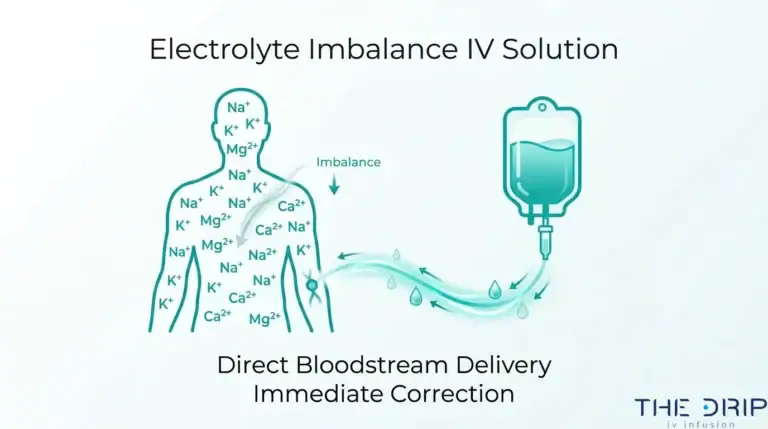
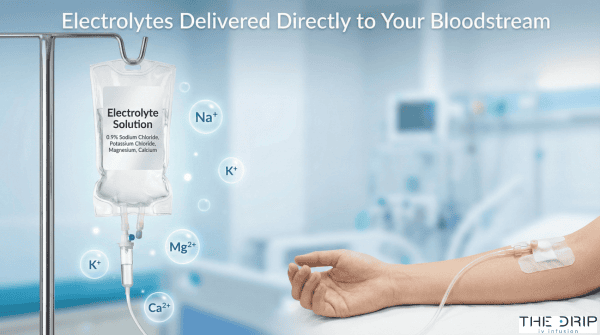
Electrolytes in IV drips are essential minerals dissolved in sterile fluid solutions that directly enter your bloodstream to rapidly restore fluid balance, support cellular function, and maintain vital physiological processes. These carefully formulated solutions contain specific concentrations of sodium, potassium, magnesium, calcium, and chloride that mirror your body’s natural electrolyte composition, allowing for immediate absorption and utilization at the cellular level.
TL;DR Summary: IV electrolyte therapy delivers essential minerals directly into your bloodstream for rapid rehydration and cellular support. Common IV solutions contain sodium (130-154 mmol/L), potassium (4-5 mmol/L), and other vital electrolytes that maintain fluid balance, nerve function, and cellular health. Medical applications range from emergency resuscitation to wellness treatments, with the global IV therapy market reaching $2.71 billion in 2024. While IV therapy offers 100% bioavailability compared to oral supplements, potential risks include infection (20.4% of patients) and electrolyte imbalances (2.6% of patients). The Drip IV Infusion provides personalized electrolyte formulations based on individual health needs and wellness goals.
Quick Tip: When considering IV electrolyte therapy, always ensure your provider assesses your current electrolyte levels and medical history first—proper customization prevents dangerous imbalances and maximizes therapeutic benefits.
Which Electrolytes Are Most Commonly Found in IV Drip Formulas?
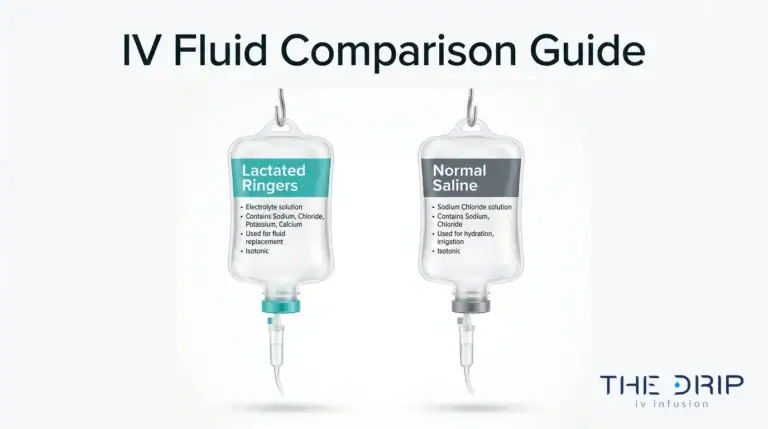
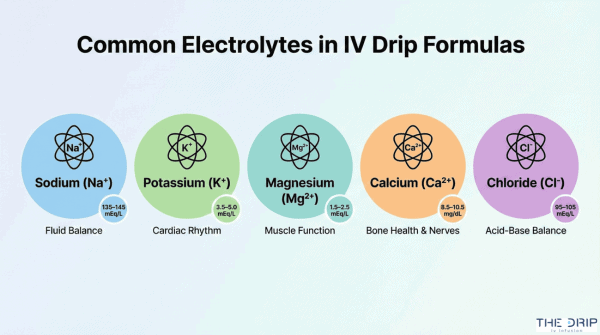
The most commonly found electrolytes in IV drip formulas are sodium, potassium, magnesium, calcium, and chloride. Normal Saline contains 154 mEq/L of sodium and chloride. Ringer’s Lactate provides sodium (130 mmol/L), potassium (4.0 mmol/L), calcium (1.5 mmol/L), chloride (109 mmol/L), and lactate (28 mmol/L). Plasma-Lyte 148 delivers sodium (140 mmol/L), potassium (5 mmol/L), magnesium (1.5 mmol/L), chloride (98 mmol/L), and acetate (27 mmol/L). These electrolyte combinations support fluid balance, nerve function, and cellular metabolism through their specific concentrations and ratios.
What Is the Role of Sodium in IV Drips?
The role of sodium in IV drips is to maintain intravascular volume as the dominant extracellular cation. Normal plasma sodium ranges from 135-145 mEq/L. Severe symptomatic hyponatremia requires treatment with 100-150 mL of 3% NaCl over 10-20 minutes. According to NICE Guidelines, crystalloids containing 130-154 mmol/L sodium with 500 mL bolus over less than 15 minutes are recommended for resuscitation. Hypernatremia (>145 mEq/L) requires correction of both serum sodium and intravascular volume. Sodium’s primary function involves regulating fluid distribution between intracellular and extracellular compartments.
Why Is Potassium Important in IV Therapy?
Potassium is important in IV therapy because it serves as the chief intracellular cation essential for cardiac function and cellular metabolism. Normal serum potassium ranges from 3.5-5.0 mEq/L. Life-threatening hypokalemia (<2.5 mEq/L) requires 10-40 mEq/hr with ECG monitoring and central line access. Severe hypokalemia (2.5-3 mEq/L) needs 10-20 mEq/hr maximum infusion rate. Hyperkalemia represents an absolute contraindication for potassium replacement. Concentrated potassium ampoules must be diluted before IV infusion since direct administration may cause cardiac arrest.
How Does Magnesium Benefit Patients in IV Infusions?
Magnesium benefits patients in IV infusions by supporting cellular function, nerve conduction, and overall well-being. Normal serum magnesium ranges from 1.46-2.68 mg/dL. ICU target magnesium levels exceed 2 mg/dL (0.8 mmol/L). Acute hemodynamically unstable hypomagnesemia requires 1-2g magnesium sulfate over 15 minutes. Non-emergent hypomagnesemia needs 4-8g magnesium sulfate over 12-24 hours. Daily requirement is 0.25-0.5 mEq/kg/day. Renal impairment (CrCl <30 mL/min) requires 50% dose reduction to prevent toxicity.
What Purpose Does Calcium Serve in IV Drips?
The purpose calcium serves in IV drips is to support cardiac function, muscle contraction, and nerve transmission. Acute symptomatic hypocalcemia requires 10-20 mL of 10% calcium gluconate in 50-100 mL glucose 5% over 10 minutes with ECG monitoring. Calcium gluconate 1g provides 93 mg elemental calcium (4.65 mEq). Maximum administration rate should not exceed 200 mg/min. Infiltration of calcium causes severe tissue necrosis, requiring central line placement for safety. Continuous infusion ranges from 5-20 mg/kg/hr of calcium gluconate depending on severity.
Are There Other Trace Electrolytes Occasionally Added to IV Drips?
There are other trace electrolytes occasionally added to IV drips, such as chloride, bicarbonate, and lactate. Chloride normal plasma range spans 94-111 mmol/L. Bicarbonate normal plasma range is 23-27 mmol/L. Normal plasma osmolarity maintains 275-295 mOsml/L through electrolyte balance. These trace electrolytes help maintain acid-base balance and cellular hydration. Understanding electrolyte compositions allows healthcare providers to select appropriate IV solutions for specific patient needs and clinical scenarios.
How Do Electrolytes in IV Drips Support the Body’s Functions?
Electrolytes in IV drips support the body’s functions by maintaining fluid balance, enabling nerve and muscle function, and regulating cellular hydration and pH levels. These charged minerals—including sodium, potassium, magnesium, and calcium—work together to sustain vital physiological processes. According to a 2020 International Fluid Academy consensus, balanced crystalloid solutions containing physiologic electrolyte levels provide superior support for cellular function compared to unbalanced saline solutions. The following subsections explore how electrolytes maintain fluid balance, affect nerve and muscle function, and influence cellular hydration.
How Do Electrolytes Help Maintain Fluid Balance?
Electrolytes help maintain fluid balance through osmotic regulation and intravascular volume control. Routine maintenance requires 25-30 mL/kg/day water and approximately 1 mmol/kg/day each of potassium, sodium, and chloride. Sodium serves as the dominant extracellular cation, essential for intravascular volume maintenance. A 2019 study on fluid overload found that administering more than 2-3L sodium chloride to euvolemic humans causes pulmonary congestion and peripheral swelling. These electrolytes create osmotic gradients that determine fluid distribution between intracellular and extracellular compartments, ensuring proper hydration status throughout the body.
In What Ways Do Electrolytes Affect Nerve and Muscle Function?
Electrolytes affect nerve and muscle function by generating electrical potentials necessary for cellular signaling. Potassium maintains cardiac rhythm, with life-threatening arrhythmias occurring at levels below 2.5 mEq/L. Magnesium enables nerve conduction, with deficiency causing tremors and muscle weakness. Calcium facilitates muscle contraction and nerve transmission through its role in the excitation-contraction coupling process. These electrolytes work synergistically—magnesium regulates calcium channels while potassium establishes the resting membrane potential required for nerve impulse propagation.
How Do Electrolytes Influence Cellular Hydration and pH Balance?
Electrolytes influence cellular hydration and pH balance through their specific ionic compositions and buffering capacities. Balanced crystalloid solutions limit acid-base alterations compared to saline by containing sodium, potassium, and chloride levels closer to extracellular fluid composition. Normal plasma osmolarity of 275-295 mOsml/L depends on precise electrolyte balance. These solutions prevent hyperchloremic acidosis that may occur with unbalanced saline administration. The lactate or acetate components in balanced solutions provide additional buffering capacity, helping maintain physiologic pH while supporting optimal cellular hydration through isotonic fluid delivery.
When Might You Need Electrolyte IV Therapy?
Electrolyte IV therapy becomes necessary when your body cannot maintain proper mineral balance through oral intake alone. Medical emergencies, athletic performance needs, and wellness optimization each create distinct scenarios where intravenous electrolyte replacement offers critical benefits. Understanding these situations helps determine when IV therapy provides advantages over traditional hydration methods.
What Medical Situations Require IV Electrolyte Replacement?
Medical situations requiring IV electrolyte replacement include resuscitation scenarios, septic shock, and prolonged IV maintenance therapy. According to NICE Guidelines, resuscitation scenarios require crystalloids administered as a 500 mL bolus over less than 15 minutes. Septic shock patients receive IV fluid therapy, though a clinical trial found fluid restriction did not reduce 90-day mortality rates.
Patients receiving more than 75% of their daily maintenance fluids through IV routes need electrolyte monitoring at 24-36 hour intervals. The 5 Rs framework guides clinical assessment for IV therapy needs:
- Resuscitation – Emergency fluid replacement
- Routine maintenance – Daily fluid requirements
- Replacement – Correcting existing deficits
- Redistribution – Managing fluid shifts
- Reassessment – Ongoing monitoring
Healthcare providers use this systematic approach to determine when IV electrolyte therapy becomes medically necessary versus when oral replacement suffices.

Can Dehydration or Intense Physical Activity Lead to Needing IV Electrolytes?
Dehydration and intense physical activity may lead to needing IV electrolytes when oral rehydration cannot restore fluid balance quickly enough. IV prehydration and rehydration serve as ergogenic aids for maintaining euhydration in athletes. Athletes using IV therapy report reduced muscle soreness, faster recovery times, and increased endurance compared to oral hydration alone.
Sports medicine practitioners use customized IV blends containing fluids, electrolytes, vitamins, and amino acids tailored to athletic demands. There are specific scenarios where IV therapy benefits athletes, such as multi-day competitions, extreme heat conditions, and rapid weight-cutting sports. The immediate bioavailability of IV electrolytes helps athletes maintain performance when digestive absorption becomes compromised during intense exercise.
Are There Wellness or Preventive Reasons for Electrolyte IV Infusions?
Wellness and preventive reasons for electrolyte IV infusions reflect a market shift from simple hydration to precision wellness approaches. The global IV hydration therapy market reached $2.71 billion in 2024 and projections indicate growth to $5.84 billion by 2034. Personalized IV infusions represent a major trend in preventive health care.
Preventive IV therapy applications include immune support, energy optimization, and recovery enhancement. Wellness-focused IV treatments may help individuals maintain optimal electrolyte balance during travel, stress, or lifestyle demands that challenge normal hydration. These preventive approaches aim to support cellular function before deficiencies develop into clinical symptoms.
How Are Electrolyte Levels Determined and Customized in IV Drip Treatments?
Electrolyte levels in IV drip treatments are determined through clinical assessments and laboratory tests, then customized using evidence-based protocols. The process follows the Four Ds principle: Drug, Dosing, Duration, and De-escalation. Medical providers evaluate individual needs through comprehensive testing before personalizing IV formulas to match specific deficiencies.
How Do Providers Assess Individual Electrolyte Needs?
Providers assess individual electrolyte needs through physical examinations and laboratory tests. Clinical parameters include skin turgor, urinary output, lung sounds, and oxygen requirements. Laboratory tests measure electrolyte levels with follow-up monitoring occurring 24-36 hours after IV initiation. According to emerging research, data-driven clinical decision support using reinforcement learning algorithms helps optimize electrolyte replacement protocols. The assessment process treats IV fluid administration as a pharmacological prescription requiring precise customization.
What Happens If There’s an Imbalance in Electrolyte Levels?
An imbalance in electrolyte levels causes symptoms ranging from mild discomfort to life-threatening emergencies. Excess electrolytes may trigger confusion, irritability, irregular heart rate, breathing difficulties, fatigue, headaches, and muscle cramps. Severe hyponatremia below 125 mmol/L requires immediate treatment to prevent seizures and coma. Life-threatening hypokalemia under 2.5 mEq/L necessitates ECG monitoring and central line access for safe correction. Overcorrection poses additional dangers, making careful monitoring essential throughout treatment.
What Types of IV Drip Solutions Are Available Based on Electrolyte Content?
The types of IV drip solutions available are balanced crystalloids and unbalanced saline formulations. International Fluid Academy consensus recommends balanced solutions over saline to limit acid-base alterations and chloride load. The R.O.S.E. The model guides fluid therapy through four phases: Resuscitation, Optimization, Stabilization, and Evacuation. Growing evidence supports balanced crystalloid solutions for most clinical applications. These formulations contain electrolyte concentrations that closely match the body’s natural fluid composition, providing optimal therapeutic benefits while minimizing complications.
What Are the Benefits and Possible Risks of Electrolyte IV Drips?
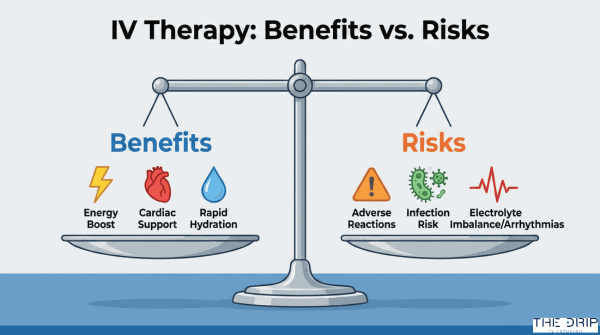
Electrolyte IV drips offer benefits and risks that patients should understand before treatment. The main benefits of receiving electrolytes via IV include 100% bioavailability and rapid correction of dangerous imbalances. The risks of electrolyte IV infusions include infection complications in 20.4% of patients and electrolyte abnormalities in 2.6% of cases. Specific patient populations with kidney disease or hyperkalemia should avoid certain IV therapies entirely.
What Are the Main Benefits of Receiving Electrolytes via IV?
The main benefits of receiving electrolytes via IV are complete bioavailability, rapid correction of imbalances, and improved clinical outcomes. IV therapy delivers 100% bioavailability while oral supplements achieve only partial absorption. Severe electrolyte deficiencies require IV correction to prevent cardiac arrhythmias, seizures, and respiratory failure. A 2021 BaSICS trial at 75 Brazilian ICUs found balanced electrolyte solutions reduced 90-day mortality to 26.4% compared to 27.2% with saline (n=10,520). IV electrolytes restore cellular function faster than oral routes in dehydration, sepsis, and perioperative care.
What Risks or Side Effects Are Associated with Electrolyte IV Infusions?
The risks associated with electrolyte IV infusions include infection, vein damage, and electrolyte disturbances. According to a 2019 systematic review, infection complications affect 20.4% of IV therapy patients. Phlebitis-related bloodstream infections carry a 12-25% mortality rate. Common side effects are:
- Infiltration causing pain and swelling from fluid leaking into tissue
- Extravasation leading to tissue necrosis from damaging medications
- Gastrointestinal disturbances in 6.2% of patients
- Electrolyte abnormalities in 2.6% of treated patients
A 2018 prehospital study found IV fluids showed 4.8% mortality versus 4.5% without IV fluids (P<0.001, n=192,119). IV sites require assessment every 1-2 hours to detect complications early.
Who Should Avoid Electrolyte IV Therapy or Seek Medical Advice First?
Patients who should avoid electrolyte IV therapy include those with hyperkalemia, kidney disease, and inadequate urine output. Hyperkalemia represents an absolute contraindication for potassium-containing IV solutions. Renal impairment with creatinine clearance below 30 mL/min requires 50% magnesium dose reduction. Inadequate urine output contraindicates potassium administration due to accumulation risk. Patients should avoid formulations containing over 100% Daily Value for sodium and minerals. Medical consultation is essential for heart failure, liver disease, and electrolyte disorders before starting IV therapy.
How Can The Drip IV Infusion Help You Choose the Right Electrolyte IV Drip?
The Drip IV Infusion helps you choose the right electrolyte IV drip through personalized assessment and customized formulations based on your specific hydration and wellness needs. Professional providers evaluate your symptoms, activity level, and health goals to match you with the optimal electrolyte blend. The selection process considers factors such as dehydration severity, athletic recovery requirements, and preventive wellness objectives.
What Electrolyte IV Drip Options Does The Drip IV Infusion Offer?
The Drip IV Infusion offers electrolyte IV drip options that align with the rapidly expanding mobile IV therapy market, which reached $568.25 million in 2024 and is projected to grow to $1,556.29 million by 2034. The North America IV therapy market demonstrates similar growth, expanding from $1.35 billion in 2025 to an expected $2.56 billion by 2033. Personalized IV infusions based on individual patient needs represent the industry’s future direction. The Drip IV Infusion provides customized electrolyte formulations that may include sodium, potassium, magnesium, and calcium in precise ratios tailored to your requirements. These personalized blends support hydration, athletic recovery, and overall wellness through mobile service delivery.
What Are the Key Takeaways About Electrolytes in IV Drips and Their Importance?
The key takeaways about electrolytes in IV drips are that maintaining proper electrolyte balance is essential for optimal body function, with normal ranges being sodium 135-145 mmol/L, potassium 4.5-5.0 mmol/L, calcium 2.2-2.6 mmol/L, and magnesium 0.8-1.0 mmol/L. The IV therapy market experiences double-digit growth with the US IV solutions market reaching $2.1 billion in 2024. Large-scale randomized controlled trials comparing oral versus IV electrolyte supplementation are still needed to establish definitive superiority. Safety protocols require monitoring every 1-2 hours and laboratory tests at 24-36 hours for maintenance IV therapy. Electrolytes in IV drips provide 100% bioavailability compared to oral supplementation, enabling rapid correction of imbalances. The choice between balanced and unbalanced solutions affects acid-base status and clinical outcomes. Professional assessment ensures appropriate electrolyte selection and dosing for individual needs.