If you’re searching for information about glutathione IV dosages for skin brightening, you’ve likely encountered conflicting claims about this controversial treatment. We understand your desire for clearer, more even-toned skin and the appeal of what seems like a quick solution. You’re in the right place to get evidence-based answers about what the science actually says versus what marketing materials promise.
Glutathione IV for skin brightening is the practice of administering intravenous infusions of glutathione, a naturally occurring antioxidant, with the goal of reducing melanin production and achieving lighter skin tone. However, it’s crucial to understand that no IV glutathione product is FDA-approved for skin lightening in any major regulatory jurisdiction, and the only placebo-controlled clinical trial showed poor efficacy with serious safety concerns.
TL;DR Summary:
• Industry standard dosing ranges from 600-1,200 mg per session, typically administered 1-3 times weekly for 4-8 weeks, though these protocols lack peer-reviewed evidence support.
• Weight-based calculations suggest 10-20 mg/kg body weight, meaning a 70 kg person would receive 700-1,400 mg per session.
• Initial loading phases involve 6-12 total injections over 4-8 weeks, followed by maintenance every 2-4 weeks indefinitely.
• The only placebo-controlled trial (Zubair et al., 2016) used 1,200 mg twice weekly for 6 weeks, showing only 37.5% completion rate versus 18.7% placebo, with benefits fading by 6 months.
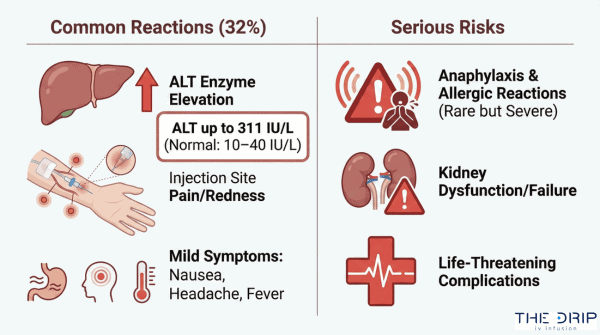
• Common side effects occur in 32% of patients, including liver dysfunction with ALT elevations up to 311 IU/L, anaphylaxis, and acute kidney injury.
• Absolute contraindications include liver disease, kidney disease, G6PD deficiency, pregnancy, and breastfeeding.
• Expert consensus warns against IV glutathione for cosmetic use, with multiple regulatory agencies issuing safety alerts.
• More effective and safer alternatives exist, including oral glutathione (250-500 mg daily) and topical formulations (0.5-2%), which show better safety profiles and sustainable results at a fraction of the cost.
Quick Tip: Before considering any glutathione treatment, request baseline liver and kidney function tests from your healthcare provider. These simple blood tests can identify contraindications that could make IV glutathione dangerous for you, potentially preventing serious complications like liver dysfunction that affects nearly one-third of IV glutathione recipients.
How does Glutathione IV work to promote skin brightening?
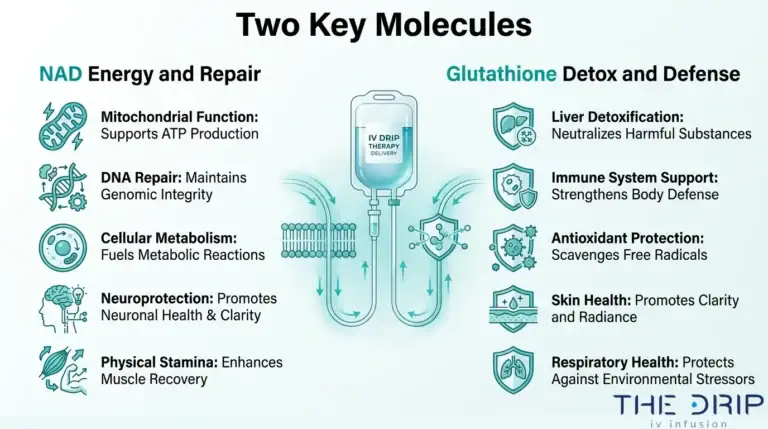
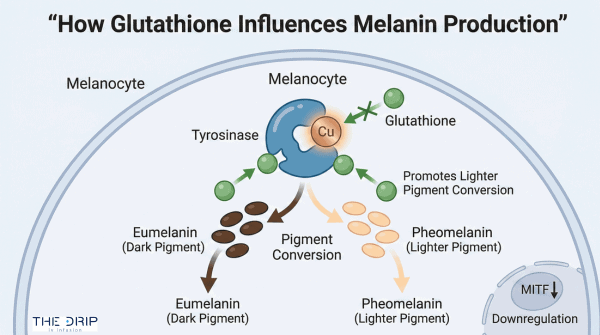
Glutathione IV works to promote skin brightening through multiple biochemical mechanisms that reduce melanin production and alter pigment composition. The primary mechanism involves tyrosinase inhibition, where glutathione binds to copper at the enzyme’s active sites to reduce melanin synthesis. Additionally, glutathione facilitates the conversion from darker eumelanin to lighter pheomelanin through cysteine conjugation with dopaquinone. The compound also downregulates microphthalmia-associated transcription factor (MITF) expression, which decreases both tyrosinase expression and melanocyte proliferation. Through its antioxidant properties, glutathione scavenges reactive oxygen species and may reduce oxidative stress-induced melanogenesis while inhibiting IL-6 and prostaglandins that drive inflammation-induced hyperpigmentation. Understanding these mechanisms helps explain both the potential effects and limitations of glutathione IV therapy for skin brightening purposes.
What mechanisms allow Glutathione to affect skin pigmentation?
The mechanisms that allow glutathione to affect skin pigmentation involve direct enzyme inhibition and cellular signaling pathways. Glutathione inhibits tyrosinase by binding to copper at the enzyme’s active sites, directly reducing melanin synthesis capacity. The compound facilitates conversion from darker eumelanin to lighter pheomelanin through cysteine conjugation with dopaquinone, altering the ratio of pigment types produced. At the genetic level, glutathione downregulates microphthalmia-associated transcription factor (MITF) expression, decreasing both tyrosinase expression and melanocyte proliferation rates. As an antioxidant, glutathione scavenges reactive oxygen species that trigger melanogenesis in response to UV exposure and cellular stress. The compound also inhibits inflammatory mediators such as IL-6 and prostaglandins that drive post-inflammatory hyperpigmentation. These combined mechanisms may produce temporary skin lightening effects when glutathione reaches sufficient concentrations in melanocytes.
How long does it typically take to see results from Glutathione IV therapy?
The time to see results from glutathione IV therapy varies between industry claims and clinical evidence. Industry sources claim initial results appear after 4-6 IV sessions, typically administered over 2-3 weeks at standard frequency. A 2016 trial by Zubair et al. found that 37.5% of participants completed 12 injections compared to 18.7% in the placebo group, suggesting modest efficacy. Visible improvement is commonly reported at 1-3 months with twice-weekly 1,200 mg infusions according to clinical protocols. However, the same clinical trial revealed that only 6.2% of patients maintained any benefit at 6 months post-treatment compared to 0% in the placebo group. These findings indicate that while some individuals may observe changes within weeks, the effects are typically minimal and temporary.
Are the effects of Glutathione IV on skin brightening temporary or permanent?
The effects of glutathione IV on skin brightening are temporary, not permanent, according to clinical trial data. Benefits documented in studies fade significantly by 4-6 months post-treatment regardless of initial response. A 2016 clinical trial showed that at 2 months post-treatment, only 18.7% of patients maintained effect versus 12.5% in the placebo group. By 4 months, 18.7% retained benefits compared to 0% in placebo recipients. At the 6-month mark, merely 6.2% retained any benefit versus 0% in the placebo group. These diminishing results mean patients require indefinite maintenance injections every 2-4 weeks to sustain any lightening effect achieved. The temporary nature of results combined with the need for continuous treatment represents a significant consideration for those evaluating glutathione IV therapy for skin brightening purposes.
What factors determine the optimal Glutathione IV dosage for individuals?
The optimal Glutathione IV dosage for individuals depends on body weight, health status, treatment goals, and session frequency. Weight-based calculations typically range from 10-20 mg/kg, though no FDA-approved guidelines exist for cosmetic use. The Philippine FDA stated in 2025 that “there are no published guidelines for appropriate dosing regimens and duration of treatment” for skin lightening purposes.
How does body weight or health status impact Glutathione IV dosing?
Body weight directly impacts Glutathione IV dosing through standard weight-based calculations of 10-20 mg/kg. A 50 kg patient may receive 500-1,000 mg per session, while a 70 kg patient may receive 700-1,400 mg, and a 100 kg patient may receive 1,000-2,000 mg per session.
Health status creates absolute contraindications for treatment. Liver disease, including cirrhosis, hepatitis, and fatty liver, prohibits Glutathione IV administration. Kidney disease, whether chronic or acute injury, also represents an absolute contraindication. G6PD deficiency poses particular risk, especially when combined with vitamin C. Nutritional deficiency and malnutrition serve as relative contraindications requiring careful evaluation.
These health restrictions exist because Glutathione metabolism occurs primarily in the liver and kidneys, making dysfunction in these organs particularly dangerous for IV administration.
Are there guidelines for adjusting Glutathione IV dosage based on treatment goals?
No published clinical guidelines exist for adjusting Glutathione IV dosage based on treatment goals. The Philippine FDA confirmed in 2025 that appropriate dosing regimens lack published guidelines. No peer-reviewed evidence supports dose adjustments for cosmetic goals.
Industry protocols suggest 600-1,200 mg per session regardless of specific goals, though these lack evidence basis. The absence of dose-response studies means practitioners cannot scientifically tailor dosages to individual cosmetic objectives. The single placebo-controlled trial by Zubair et al. in 2016 used a fixed 1,200 mg dose without variation based on participant goals.
This lack of evidence-based dosing guidelines reflects the broader absence of FDA approval for cosmetic Glutathione IV use.
What role does frequency of IV sessions play in dosage determination?
Frequency of IV sessions influences total glutathione exposure rather than per-session dosage. The Zubair et al. 2016 trial administered 1,200 mg twice weekly for 6 weeks, totaling 12 injections. Industry standards suggest 1-3 times per week initially for 4-8 weeks, though these lack evidence basis.
Parkinson’s disease research used 1,400 mg three times per week for 4 weeks, demonstrating higher frequency protocols in medical applications. Maintenance phases typically occur every 2-4 weeks after initial loading phases.
No evidence-based data demonstrates superior outcomes with increased frequency. The rapid 15-minute half-life of IV glutathione suggests frequent dosing may be necessary to maintain blood levels, yet clinical trials show benefits fade regardless of maintenance frequency.
What are the typical Glutathione IV dosage ranges used for skin brightening?
The typical Glutathione IV dosage ranges for skin brightening are 600-1,200 mg per injection, though these protocols lack evidence-based support. A 2016 clinical trial by Zubair et al. tested 1,200 mg per session in Pakistani women, representing the only placebo-controlled study on IV glutathione for skin lightening. Some clinics administer 1,200-2,000 mg per session despite no FDA-approved IV glutathione products existing for skin lightening at any dose. The Philippine FDA issued warnings in 2025 against all injectable glutathione for skin lightening purposes.
What is considered a safe starting dose for Glutathione IV?
A safe starting dose for Glutathione IV cannot be established due to lack of regulatory approval and safety data. The standard industry range of 600-1,200 mg per injection stems from non-evidence-based protocols rather than clinical research. The 2016 Zubair et al. trial administered 1,200 mg per session but documented adverse events in 32% of participants at this dose. Some providers use 1,200-2,000 mg per session without supporting safety studies. The Philippine FDA explicitly warns against any injectable glutathione dose for skin lightening, stating no products have approval for this indication.
How do maintenance dosages differ from initial loading doses?
Maintenance dosages typically mirror initial loading doses at 600-1,200 mg but with reduced frequency. Initial loading phases involve 1-3 sessions weekly for 4-8 weeks, totaling 6-12 injections. Maintenance phases shift to every 2-4 weeks using the same 600-1,200 mg dosage. No peer-reviewed evidence validates these maintenance protocols. Clinical data shows benefits fade within 2-6 months despite maintenance therapy, with only 6.2% of patients retaining any effect at 6 months in the Zubair et al. trial.
Are higher doses more effective for skin brightening, or do they increase risk?
Higher doses increase risk without demonstrating improved efficacy for skin brightening. No dose-response studies exist examining skin brightening efficacy across different dosage levels. The Zubair et al. trial at 1,200 mg showed poor efficacy with only 37.5% completion rate versus 18.7% placebo. Adverse events occurred in 32% of patients at the 1,200 mg dose, including liver dysfunction in 8 patients with ALT elevations up to 311 IU/L. One case of anaphylactic shock occurred at this dosage. No safety studies exist for doses above 1,400 mg, which was only tested in Parkinson’s disease research, not cosmetic applications.
What are the safety considerations and side effects of Glutathione IV for skin brightening?
The safety considerations and side effects of Glutathione IV for skin brightening include liver dysfunction, anaphylaxis, and kidney injury. A 2016 clinical trial by Zubair et al. documented adverse events in 32% of patients receiving 1,200 mg glutathione injections. The Philippine FDA issued a 2025 advisory warning against toxic effects on the nervous system. Understanding these risks, contraindications, and monitoring requirements is essential before considering treatment.
What are the common mild and serious side effects of Glutathione IV?
The common mild and serious side effects of Glutathione IV range from liver enzyme elevation to life-threatening anaphylaxis. Liver dysfunction occurs in 32% of patients with ALT elevation up to 311 IU/L compared to the normal range of 10-40 IU/L. The 2016 Zubair et al. trial documented one case of anaphylactic shock requiring emergency intervention.
Systemic Inflammatory Response Syndrome (SIRS) presents with shock and hyperpyrexia exceeding 41°C. Stevens-Johnson Syndrome has been reported when glutathione combines with other IV medications. Acute kidney injury manifests through creatinine elevation up to 110 µmol/L versus the normal range of 45-90 µmol/L.
The Philippine FDA’s 2025 advisory specifically warns about toxic effects on the nervous system. The severity of these reactions led to an 18% discontinuation rate in the clinical trial, indicating that nearly one in five patients cannot tolerate the treatment protocol.
Who should avoid Glutathione IV therapy for skin brightening?
Patients who should avoid Glutathione IV therapy include those with liver disease, kidney disease, and G6PD deficiency. Liver disease including cirrhosis, hepatitis, and fatty liver represents an absolute contraindication. Kidney disease, whether chronic or acute, precludes safe administration.
G6PD deficiency poses particular risk when glutathione combines with vitamin C, creating hemolytic crisis potential. Pregnant and breastfeeding women face absolute contraindications due to insufficient safety data. Patients taking GLP-1 agonists such as tirzepatide or semaglutide have documented drug interactions.
| Medical Condition | Safety Classification | Clinical Risk |
| Liver disease | Contraindication type | Absolute |
| Kidney disease | Contraindication type | Absolute |
| G6PD deficiency | Risk with vitamin C | Hemolytic crisis |
| Pregnancy | Safety data | Insufficient |
| GLP-1 agonists | Interaction status | Documented |
Anyone with known allergy to glutathione or injection components must avoid treatment entirely. These contraindications protect patients from potentially fatal complications.
How can side effects be minimized or managed during treatment?
Side effects can be minimized through comprehensive baseline testing and strict monitoring protocols. Baseline liver function tests including AST, ALT, and bilirubin establish pre-treatment values. Kidney function assessment through creatinine and eGFR identifies renal compromise before exposure.
G6PD screening is mandatory for high-risk populations including those of African, Mediterranean, and Asian descent. Infusion duration of 30-60 minutes may reduce reaction risk compared to rapid push administration. Medical supervision with emergency resuscitation equipment must remain available throughout infusion.
Discontinuation criteria protect patients from progressive organ damage:
- AST/ALT exceeding 40 IU/L
- Bilirubin above 21 µmol/L
- Creatinine surpassing 90 µmol/L in females
These safety parameters require immediate cessation of therapy to prevent irreversible organ damage. The monitoring protocols add substantial cost and complexity to what providers market as a simple cosmetic treatment.
What do studies and experts say about Glutathione IV efficacy for skin brightening?
Clinical evidence for glutathione IV skin brightening remains extremely limited. The 2016 Zubair trial with 50 Pakistani women represents the only placebo-controlled study, showing 37.5% completion rate versus 18.7% placebo (p=0.054), which failed to reach statistical significance. The Philippine FDA stated in 2025 that “no published clinical trials have evaluated the use of injectable glutathione for skin lightening.” This section examines available evidence, expert consensus, and patient-reported outcomes.
What clinical evidence supports the use of Glutathione IV for this purpose?
The clinical evidence supporting glutathione IV for skin brightening consists of one placebo-controlled trial. The Zubair 2016 study enrolled 50 Pakistani women and administered 1,200 mg glutathione IV twice weekly for 6 weeks. Results showed 37.5% completion rate versus 18.7% placebo, with p=0.054 indicating no statistical significance. Benefits faded rapidly—only 6.2% maintained any effect at 6 months post-treatment.
Alternative delivery methods show stronger evidence. The Handog 2012 study found 90% of oral glutathione users reported moderate skin lightening. The Watanabe 2012 trial demonstrated statistically significant melanin reduction using topical 2% glutathione formulations.
Regulatory agencies consistently note the absence of supporting data. The Philippine FDA’s 2025 statement confirms no published clinical trials exist evaluating injectable glutathione for skin lightening purposes.
Are there expert recommendations or consensus statements on dosing?
Expert consensus strongly opposes glutathione IV for skin brightening. Dr. Sidharth Sonthalia stated in 2018: “The unbridled and prodigal use of it, especially as a parenteral formulation, seems unjustified.” Dr. Rashmi Sarkar confirmed in 2025 that “there was only one placebo-controlled study on intravenous glutathione.”
Safety concerns dominate expert warnings. Alzahrani and colleagues reported in 2025 that “intravenous glutathione is associated with serious safety concerns like anaphylaxis and hepatotoxicity.”
Regulatory bodies have issued clear warnings:
- Philippine FDA (2025): “The FDA has not approved any injectable products for skin lightening”
- UK Trading Standards (June 2025): Public warning about dangerous glutathione IV drips
No professional dermatology organization endorses IV glutathione for skin lightening purposes.
What do patients typically report about their outcomes?
Patient outcomes reveal significant safety concerns and limited efficacy. The clinical trial data shows 32% experienced adverse events requiring medical attention. Treatment discontinuation occurred in 18% due to adverse event severity.
Benefit duration remains a major concern. Patients report benefits fade within 2-6 months after stopping treatment. The financial burden reaches $2,000-$3,200 for an 8-week course with only transient results.
| Glutathione Delivery Method | Patient Satisfaction | Safety Profile | 8-Week Treatment Cost Range |
| IV Glutathione | 37.5% completion | 32% requiring medical care | $2,000-$3,200 |
| Oral Glutathione | 90% moderate lightening | <5% mild GI symptoms | $30-$240 |
| Topical Glutathione | High satisfaction | No adverse events | $70-$170 |
Oral glutathione users from the Handog study report 90% satisfaction with moderate skin lightening. Topical glutathione users report high satisfaction with no documented adverse events. These alternatives demonstrate superior safety profiles and patient satisfaction compared to IV administration.
The evidence overwhelmingly indicates IV glutathione lacks adequate clinical support for skin brightening, with experts universally cautioning against its use while patients face substantial risks for minimal, temporary benefits.
How does Glutathione IV for skin brightening compare to other methods and alternatives?
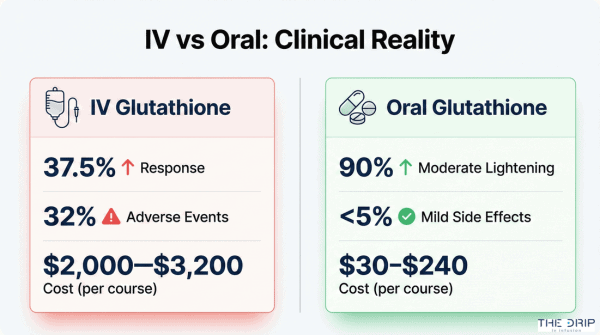
Glutathione IV for skin brightening compares unfavorably to oral and topical alternatives in efficacy, safety, and cost-effectiveness. A 2016 placebo-controlled trial by Zubair et al. found IV glutathione achieved only 37.5% response rate versus 18.7% placebo, with 32% of patients experiencing adverse events including hepatotoxicity. Alternative methods demonstrate superior safety profiles and sustained results at significantly lower costs.
How does IV Glutathione compare to oral supplements for skin lightening?
IV glutathione compares to oral supplements with higher bioavailability but poorer clinical outcomes and safety. IV glutathione achieves 90-100% bioavailability but has a 15-minute half-life, creating only transient effects. Oral glutathione shows 0.7-1% bioavailability for native formulations, increasing to 11.3% with enhanced formulations—a 16.1-fold improvement.
Clinical efficacy differs markedly between routes. The 2016 Zubair et al. trial showed IV glutathione achieved 37.5% response versus 18.7% placebo, with benefits fading completely by 6 months. A 2012 study by Handog et al. found 90% of oral glutathione users reported moderate skin lightening with significant melanin reduction at multiple sites.
Safety profiles strongly favor oral administration. IV glutathione caused adverse events in 32% of patients, including hepatotoxicity and anaphylaxis. Oral glutathione demonstrated excellent tolerance with mild gastrointestinal symptoms in less than 5% of users.
| Glutathione Administration Route & Study Source | Clinical | Outcome | Glutathione Administration Route & Study Source |
| IV Glutathione | Bioavailability | 90-100% | IV Glutathione |
| IV Glutathione | Half-life | 15 minutes | IV Glutathione |
| IV Glutathione | Efficacy rate | 37.5% vs 18.7% placebo | IV Glutathione |
| IV Glutathione | Adverse event rate | 32% | IV Glutathione |
| IV Glutathione | 8-week cost | $2,000-$3,200 | IV Glutathione |
| Oral Glutathione | Native bioavailability | 0.7-1% | Oral Glutathione |
| Oral Glutathione | Enhanced bioavailability | 11.3% | Oral Glutathione |
| Oral Glutathione | Efficacy rate | 90% moderate lightening | Oral Glutathione |
| Oral Glutathione | Adverse event rate | <5% mild GI symptoms | Oral Glutathione |
| Oral Glutathione | 8-week cost | $30-$240 | Oral Glutathione |
Cost differences are substantial, with IV therapy costing $2,000-$3,200 for an 8-week course versus $30-$240 for oral supplements.
What are alternative treatments for skin brightening and how do their dosages differ?
Alternative treatments for skin brightening include topical formulations, combination therapies, and enhanced delivery methods with distinct dosing protocols. Topical glutathione 0.5-2% applied twice daily for 8-12 weeks produces no systemic toxicity. Hydroquinone 2-4%, the gold standard treatment, requires once or twice daily application with direct tyrosinase inhibition.
Additional topical options demonstrate varying mechanisms:
- Kojic acid 1-4%: Daily application with moderate tyrosinase inhibition
- Vitamin C serum 10-20%: Daily application with weak to moderate tyrosinase inhibition
- Tranexamic acid 2-5%: Twice daily application using anti-inflammatory mechanisms
Systematic reviews document superior efficacy with combination therapy using oral plus topical glutathione versus monotherapy. Multiple studies confirm enhanced penetration when combining microneedling with topical glutathione.
| Skin Brightening Treatment Option | Parameter | Outcome |
| Topical glutathione | Concentration | 0.5-2% |
| Topical glutathione | Frequency | Twice daily |
| Topical glutathione | Duration | 8-12 weeks |
| Hydroquinone | Concentration | 2-4% |
| Hydroquinone | Mechanism | Direct tyrosinase inhibition |
| Kojic acid | Concentration | 1-4% |
| Vitamin C serum | Concentration | 10-20% |
| Tranexamic acid | Concentration | 2-5% |
| Combination therapy | Efficacy | Superior to monotherapy |
| Microneedling + topical | Penetration | Enhanced delivery |
These alternatives avoid systemic exposure risks while maintaining or exceeding IV glutathione’s limited efficacy.
Why might patients choose Glutathione IV over other skin brightening options?
Patients might choose glutathione IV over alternatives due to marketing misconceptions rather than clinical evidence. Marketing claims promote “rapid action” despite the 15-minute half-life and poor sustained efficacy documented in trials. The perception of higher bioavailability at 90-100% overlooks rapid clearance that eliminates therapeutic benefit.
Patient awareness gaps drive poor treatment decisions:
- Limited knowledge that no IV glutathione is FDA-approved for skin lightening
- Lack of awareness about the 32% adverse event rate including serious complications
- Aesthetic clinic promotion continues despite regulatory warnings from multiple countries
- Misconception that higher cost ($2,000-$3,200) equals better results
The 2025 Philippine FDA warning states there are no published guidelines for appropriate dosing regimens. UK Trading Standards issued a public warning in June 2025 about dangerous glutathione IV drips. Patients remain unaware that oral and topical combinations demonstrate better safety and sustainability according to systematic reviews.
Understanding these comparative factors helps patients make informed decisions between glutathione IV and safer, more effective alternatives for skin brightening goals.
How should you consider Glutathione IV dosages for skin brightening with The Drip IV Infusion?
Glutathione IV dosages for skin brightening with The Drip IV Infusion require careful consideration of safety data and regulatory warnings. The industry standard ranges from 600-2,000 mg per session without evidence-based support. A 2016 trial by Zubair et al. using 1,200 mg doses showed only 37.5% efficacy versus 18.7% placebo, with 32% of patients experiencing adverse events including liver dysfunction.
Can The Drip IV Infusion help select the right Glutathione IV dosage for your goals?
The Drip IV Infusion’s ability to select appropriate glutathione dosages lacks peer-reviewed clinical validation. No published studies exist in PubMed, Cochrane, or major dermatological journals evaluating The Drip IV Infusion’s specific protocols. The company’s dosing guidelines remain proprietary without medical literature disclosure. Industry standards suggest 600-2,000 mg per session, but these recommendations lack evidence. According to the Philippine FDA in 2025, “there are no published guidelines for appropriate dosing regimens” for glutathione IV skin lightening. Without peer-reviewed publications, The Drip IV Infusion’s efficacy or safety claims cannot undergo independent verification.
What are the key takeaways about Glutathione IV dosages for skin brightening in 2026?
The key takeaways about glutathione IV dosages center on regulatory warnings and limited efficacy data. No IV glutathione product holds FDA approval for skin lightening in any major regulatory jurisdiction. The single placebo-controlled trial by Zubair et al. in 2016 demonstrated poor efficacy at 37.5% versus 18.7% placebo response. Serious adverse events affect 32% of patients, including liver dysfunction with ALT elevation up to 311 IU/L and documented anaphylaxis cases. Treatment benefits fade rapidly, with only 6.2% of patients maintaining effects at 6 months post-treatment. Cost comparisons reveal $2,000-$3,200 for an 8-week IV course versus $70-$340 for oral and topical combination therapy. Multiple regulatory bodies issued warnings: Philippine FDA, UK Trading Standards, and US FDA all advise against IV glutathione for cosmetic use. Dr. Sidharth Sonthalia stated in 2018: “The unbridled use of parenteral formulation seems unjustified.”
Understanding glutathione IV dosing requires recognizing that safer, more cost-effective alternatives exist through oral and topical formulations with better long-term outcomes.