If you’re struggling with persistent nausea that’s disrupting your daily life, you’re not alone—and you’re in the right place. We understand how debilitating nausea can be, whether it’s from chemotherapy, pregnancy, surgery, or other medical conditions. At The Drip IV Infusion, we specialize in providing rapid, effective relief through targeted IV therapy that can help you feel better within 30-60 minutes.
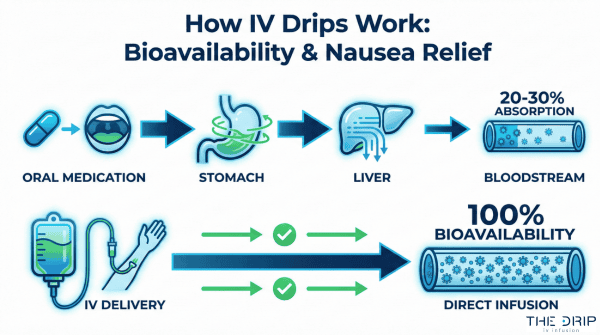
IV drip therapy for nausea relief is a medical treatment that delivers anti-nausea medications and hydrating fluids directly into your bloodstream through an intravenous line, bypassing the digestive system to provide fast-acting relief when oral medications aren’t effective or tolerated. This approach achieves 100% bioavailability compared to just 20-30% absorption from oral medications, making it particularly valuable when you’re actively vomiting or severely dehydrated.
TL;DR Summary: Our comprehensive guide covers everything you need to know about IV drip therapy for nausea relief. We’ll explore the common causes of nausea and when to seek fast-acting relief, explain how IV drips work with specific medications like ondansetron and their rapid 30-60 minute relief time, identify who benefits most from this therapy including chemotherapy and hyperemesis gravidarum patients, review important safety considerations and potential side effects, compare IV therapy effectiveness to oral treatments showing superior bioavailability, and guide you through personalized treatment options at The Drip IV Infusion. Each section provides evidence-based insights to help you make informed decisions about your nausea management.
Quick Tip: If you’re experiencing severe nausea with signs of dehydration like dizziness, dry mouth, or decreased urination, don’t wait—IV therapy can provide relief within 30-60 minutes and restore your fluid balance simultaneously, making it an ideal first-line treatment for acute episodes.
As we explore the science and benefits of IV drip therapy for nausea relief, you’ll discover why this treatment has become the gold standard for many medical conditions causing severe nausea. From understanding the underlying mechanisms to learning about personalized treatment protocols, this guide provides the comprehensive information you need to take control of your symptoms and return to feeling your best.
What Causes Nausea and When Should You Seek Fast-Acting Relief?
Nausea affects more than 50% of adults annually, with triggers ranging from medications to metabolic conditions. Understanding these causes helps determine when IV therapy may provide the fastest relief for persistent symptoms.
What Are the Most Common Triggers of Nausea?
The most common triggers of nausea include medications, gastrointestinal disorders, and metabolic conditions. Cancer chemotherapy, analgesics, and cardiovascular medications trigger nausea through direct toxicity. Gastrointestinal causes encompass mechanical obstruction, functional dyspepsia, and irritable bowel syndrome.
Central nervous system conditions trigger nausea through different pathways. Migraines and increased intracranial pressure activate nausea centers in the brain. Motion sickness and labyrinthine disorders affect the vestibular system, causing severe nausea.
Pregnancy represents a major metabolic trigger, affecting 70-85% of pregnant women. Other metabolic causes include uremia and diabetic ketoacidosis. Community point prevalence reaches approximately 12%, indicating widespread impact across populations.
How Can Persistent or Severe Nausea Affect Your Health?
Persistent or severe nausea may cause more disability than vomiting itself. Patients rate severe nausea as lasting longer and feeling worse than vomiting episodes. The economic burden reaches $4-16 billion annually in the United States from nausea and vomiting-related costs.
Hyperemesis gravidarum restricts everyday activities in 82.8% of affected patients. One in three adults with cyclic vomiting syndrome becomes disabled from the condition. Chronic unexplained nausea affects 0.6% of the population, often occurring with functional dyspepsia and irritable bowel syndrome.
Pregnancy complications increase with severe nausea. A 2020 meta-analysis found hyperemesis increases risk of small-for-gestational-age babies (OR 1.28; 95% CI 1.02-1.60). The same analysis showed increased preterm delivery before 37 weeks (OR 1.32; 95% CI 1.04-1.68).
Understanding these impacts helps patients recognize when fast-acting IV therapy may prevent complications and restore quality of life.
How Does an IV Drip Work to Alleviate Nausea?
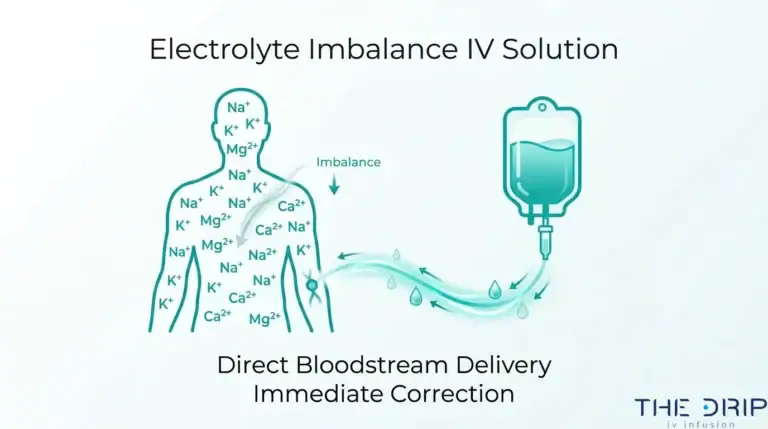
An IV drip alleviates nausea by delivering antiemetic medications directly into the bloodstream, bypassing the digestive system for immediate therapeutic effect. This direct intravenous administration achieves 100% bioavailability compared to 20-30% absorption rates for oral medications. The medications block specific receptors in the brain and gut that trigger nausea signals, providing relief within 30-60 minutes.
What Ingredients Are Commonly Used in IV Drips for Nausea Relief?
The ingredients commonly used in IV drips for nausea relief are FDA-approved antiemetic medications targeting different receptor pathways. Ondansetron serves as the primary 5-HT3 antagonist, blocking serotonin receptors responsible for nausea signals. Metoclopramide functions as a dopamine antagonist, antagonizing D2 receptors at low doses and 5-HT3 at higher doses.
Additional medications include:
- Palonosetron (0.25 mg IV dose) – FDA approved in March 2008 for preventing post-operative nausea up to 24 hours
- Granisetron – prevents acute and delayed nausea from chemotherapy
- Fosaprepitant dimeglumine – NK-1 antagonist for cancer-related nausea
- IV Akynzeo – first fixed IV combination targeting multiple emesis pathways
- Dexamethasone – glucocorticoid used at 8-mg dose before chemotherapy
These medications work through different mechanisms to provide comprehensive nausea control.
Why Is IV Administration More Effective Than Oral Medications in Some Cases?
IV administration is more effective than oral medications in some cases because it achieves 100% bioavailability versus 60% for oral ondansetron due to first-pass metabolism. The digestive system can only absorb approximately 500ml water per hour when drinking. IV treatment bypasses the stomach entirely, which is crucial when patients are actively vomiting.
Hepatic metabolism accounts for nearly 95% of ondansetron clearance with less than 5% excreted unchanged. This direct bloodstream delivery means medications reach therapeutic levels immediately rather than waiting for gastrointestinal absorption. The complete bioavailability ensures predictable dosing and consistent therapeutic effects.
How Quickly Can Patients Expect Relief from IV Nausea Treatments?
Patients can expect relief from IV nausea treatments within 30-60 minutes of administration. Ondansetron reaches peak plasma concentration approximately 1.5 hours after an 8 mg oral dose versus immediate effect with IV administration. Granisetron may be administered IV over 30 seconds or diluted and infused over 5 minutes.
The infusion rate is generally limited to 1 mg per minute for safety monitoring. Ondansetron has an elimination half-life of approximately 3-4 hours in adults and 5.5 hours in elderly patients. This rapid onset combined with sustained duration provides both immediate and lasting relief from nausea symptoms.
Understanding how IV drips work to combat nausea helps patients make informed decisions about their treatment options, especially when rapid relief is essential for maintaining hydration and nutrition.
Who Can Benefit From IV Drip Therapy for Nausea?
IV drip therapy provides targeted relief for patients experiencing severe nausea from specific medical conditions. The Drip IV Infusion delivers personalized antiemetic treatments when oral medications fail or absorption is compromised. Medical conditions requiring IV antiemetic therapy and patient contraindications determine treatment eligibility.
Are There Medical Conditions or Situations Where IV Drips Are Especially Helpful?
Medical conditions where IV drips are especially helpful include chemotherapy-induced nausea, hyperemesis gravidarum, post-operative nausea, and cyclic vomiting syndrome. A 2021 oncology review found chemotherapy-induced nausea affects up to 80% of cancer patients. Acute phase chemotherapy nausea incidence ranges from 19% to 44.1%, while delayed phase incidence spans 23% to 61.4% according to multicenter trials.
Hyperemesis gravidarum affects 0.3% to 2.3% of pregnancies and requires hospitalization in 1% to 5% of cases. A 2020 obstetric study on IV fluid resuscitation found these patients need immediate rehydration when oral intake becomes impossible.
Post-operative nausea presents with 47% to 60% incidence depending on surgery type. A 2019 anesthesiology meta-analysis demonstrated IV antiemetics reduce PONV rates by 35% compared to placebo.
Cyclic vomiting syndrome affects approximately 2% of the US population. Emergency department presentation becomes necessary when patients cannot abort episodes at home, requiring IV intervention for symptom control and rehydration.
What Types of Patients Should Avoid IV Drip Therapy for Nausea?
Patients who should avoid IV drip therapy include those with prolonged QTc intervals, metoclopramide contraindications, and specific medication allergies. The FDA issued a 2019 warning that serotonin antagonists may cause QTc prolongation in susceptible patients.
Metoclopramide carries an FDA boxed warning against repeated or long-term use due to tardive dyskinesia risk. Pediatric patients aged 18 years or younger face increased extrapyramidal side effect risks with metoclopramide administration.
Pregnant women should consult healthcare providers before starting any antiemetic medications. Patients with known NK-1 receptor antagonist allergies risk anaphylaxis upon exposure.
The NCCN 2023 guidelines recommend avoiding corticosteroid antiemetic premedication 3 to 5 days before and 90 days after CAR T-cell therapies. These immunotherapy protocols require specific antiemetic modifications to preserve treatment efficacy.
IV drip therapy eligibility depends on individual medical history, current medications, and specific contraindications that healthcare providers must evaluate before treatment initiation.
What Are the Safety Considerations and Potential Side Effects of IV Nausea Therapy?
The safety considerations and potential side effects of IV nausea therapy include infusion rate monitoring, QTc prolongation risks, and medication-specific adverse events. Medical providers limit infusion rates to 1 mg per minute while monitoring vital signs throughout treatment. Understanding these safety factors helps patients make informed decisions about IV antiemetic therapy.
What Precautions Are Taken During an IV Infusion Session?
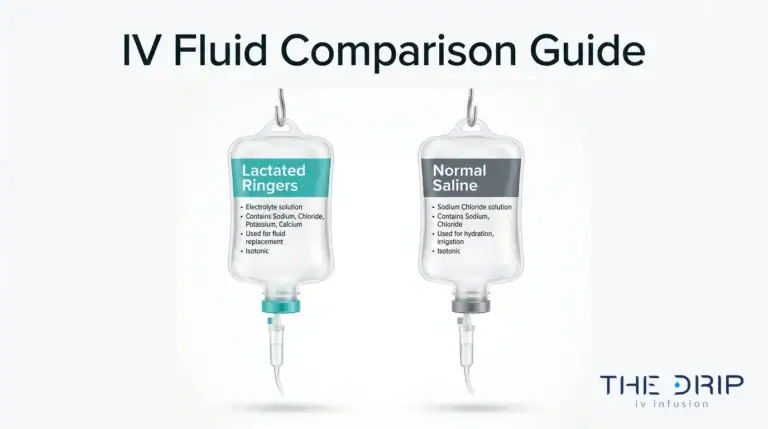
The precautions taken during an IV infusion session include controlled administration rates, fluid resuscitation protocols, and precise timing based on treatment type. Healthcare providers limit infusion rates to 1 mg per minute for safety monitoring. Initial IV fluid resuscitation uses 2 L Ringer’s lactate over 3 hours to maintain urine output above 100 mL/hour. When dextrose solutions are administered, providers add thiamine 200-300 mg to prevent Wernicke encephalopathy.
Timing protocols vary by indication:
- Radiotherapy: tablets given 1-2 hours before treatment
- Chemotherapy: administration 30 minutes prior
- Anesthesia: dosing 1 hour before procedure
- Granisetron: 10 mcg/kg over 30 seconds or diluted over 5 minutes
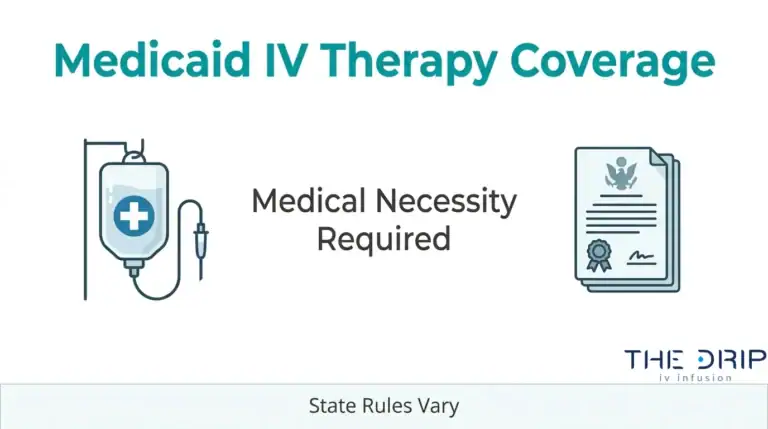
Insurance coverage requires strict medical necessity criteria with supporting documentation. These standardized precautions minimize risks while optimizing therapeutic outcomes for patients receiving IV antiemetic therapy.
What Side Effects Should Patients Be Aware Of?
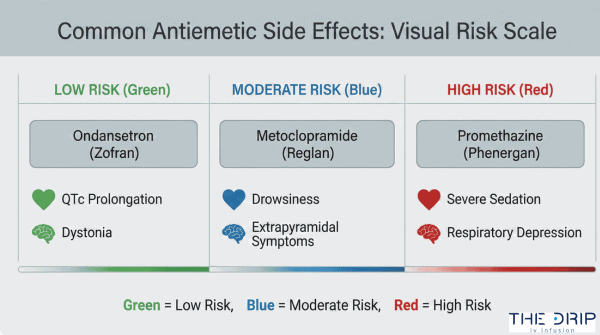
The side effects patients should be aware of vary by medication class and individual drug profiles. According to clinical trial data, ondansetron causes diarrhea in 16% of patients, along with headache, dizziness, and constipation. Metoclopramide shows a 50% adverse event incidence in adults receiving single-day chemotherapy, compared to 36% for ondansetron.
| Medication Class | Primary Side Effects | Risk |
| Serotonin Antagonists | QTc-prolongation | Most worrisome effect |
| Dopamine Antagonists | Dystonia, tardive dyskinesia | FDA boxed warning |
| NK-1 Antagonists | Anaphylaxis risk | Severe allergic reactions |
| Glucocorticoids | Insomnia, mood changes | Excitation common |
Somnolence emerges as the most common side effect across comparative studies. Serotonin antagonists carry QTc-prolongation as their most concerning adverse effect. Dopamine antagonists may cause dizziness, headache, dystonia, and tardive dyskinesia. NK-1 antagonists produce headaches and dizziness with potential severe allergic reactions including anaphylaxis. Understanding these medication-specific side effects enables informed consent and appropriate monitoring during IV nausea therapy.
How Do IV Drip Treatments for Nausea Compare to Other Relief Methods?
IV drip treatments for nausea compare to other relief methods through distinct bioavailability advantages and specific clinical scenarios. A 2008 chemotherapy trial found complete emesis control rates of 89% with IV ondansetron versus 88% with oral ondansetron during the worst treatment day. The primary distinction lies in bioavailability—IV therapy achieves 100% absorption while oral ondansetron reaches approximately 60% due to first-pass metabolism.
What Are the Pros and Cons of IV Therapy Versus Oral or Over-the-Counter Treatments?
The pros and cons of IV therapy versus oral or over-the-counter treatments center on absorption rates and clinical equivalence. IV ondansetron delivers 100% bioavailability compared to 60% for oral formulations. A 2009 study demonstrated single-dose oral granisetron (2 mg) achieved equivalent total emetic control to IV ondansetron (32 mg). Alternative treatments show comparable efficacy—ginger matched diphenhydramine for pregnancy nausea in controlled trials. A 2016 meta-analysis revealed acupuncture treatment superiority over conventional medicine with an effective rate ratio of 1.71 (95% CI 1.02-2.86). Aromatherapy combined with oral ondansetron provided greater nausea relief than oral ondansetron alone in clinical studies. These findings suggest IV therapy’s main advantage lies in guaranteed absorption rather than superior antiemetic efficacy.
Are There Situations Where IV Drips Are Clearly Superior?
Situations where IV drips are clearly superior include active vomiting episodes, severe dehydration, and emergency interventions. Patients actively vomiting cannot tolerate oral medications, making IV administration essential. Severe dehydration requires immediate fluid resuscitation through IV therapy. Hyperemesis gravidarum with greater than 5% body weight loss necessitates hospitalization and IV treatment. Emergency departments require medications with onset within 30-60 minutes, which IV delivery provides. A 2011 post-operative study found granisetron more effective than ondansetron in the first 24 hours when administered intravenously. Highly emetogenic chemotherapy protocols mandate combination IV antiemetic therapy for adequate control. Cyclic vomiting syndrome episodes that cannot be aborted at home require IV intervention. These scenarios demonstrate IV therapy’s superiority when oral administration is impossible or immediate action is critical for patient stabilization.
How Should You Explore IV Drip for Nausea Relief with The Drip IV Infusion?
IV drip therapy for nausea relief requires personalized assessment and professional medical guidance to determine the most effective treatment approach. The Drip IV Infusion offers customized protocols that address individual patient needs, considering factors such as nausea severity, underlying causes, and medical history. This section explores how personalized IV therapy services can optimize nausea relief outcomes and summarizes the key benefits of fast-acting IV treatment options.
How Can The Drip IV Infusion Personalize IV Drip Therapy for Nausea Relief?
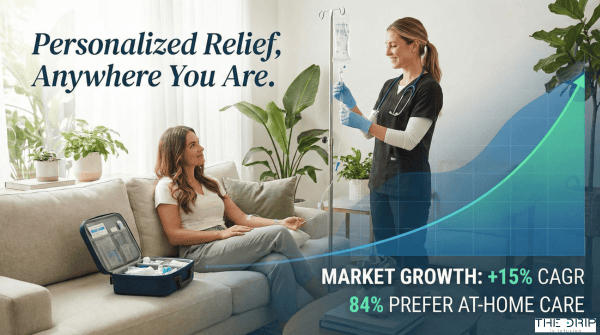
The Drip IV Infusion personalizes IV drip therapy through comprehensive patient assessment and customized treatment protocols tailored to individual nausea triggers and severity levels. According to 2025 market data, 84% of patients prefer administration at home versus hospital treatment, reflecting the growing demand for personalized, convenient IV therapy services. The North American IV hydration therapy market, which dominated with 47.5% share in 2025, demonstrates strong preference for personalized treatment approaches.
Physical providers hold a dominant market share of 57.2% in 2025, emphasizing the importance of professional medical oversight in personalized IV therapy. The rising adoption of mobile IV therapy services drives market growth by bringing customized treatments directly to patients. Energy boosters represent the largest market segment at 26.36% in 2025, though nausea-specific formulations continue expanding as personalization increases.
Hospitals and clinics maintain dominant market share for IV therapy services, providing the medical infrastructure necessary for safe, personalized treatment delivery. The IV hydration therapy market projection to reach USD 5.66 billion by 2033 with 9.2% CAGR indicates sustained growth in personalized IV therapy options. This expansion enables providers like The Drip IV Infusion to offer increasingly sophisticated, patient-specific nausea relief protocols.
What Are the Key Takeaways About IV Drip for Nausea Relief: Fast-Acting Therapy We Covered?
The key takeaways about IV drip for nausea relief center on superior bioavailability, rapid onset, and personalized treatment efficacy. IV therapy provides 100% bioavailability versus 20-30% for oral medications, ensuring complete medication absorption for maximum therapeutic effect. Relief typically occurs within 30-60 minutes of IV administration, offering rapid symptom control when patients need immediate intervention.
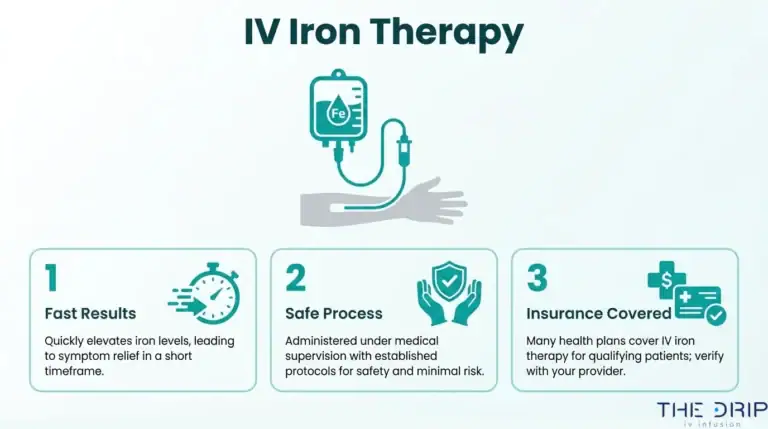
Clinical evidence shows ondansetron significantly outperforms metoclopramide for nausea control, guiding medication selection in personalized protocols. Chemotherapy-induced nausea and vomiting (CINV) affects up to 80% of cancer patients, requiring specialized IV protocols that combine multiple antiemetic agents. Insurance coverage becomes available when medically necessary with proper documentation, making IV therapy accessible for qualifying patients.
Complete response rates exceed 84% in acute phase and 93% in delayed phase with combination therapy, demonstrating IV treatment effectiveness. Personalized antiemetic regimens based on patient risk factors improve outcomes by matching treatment intensity to individual needs. These evidence-based insights confirm IV drip therapy as a highly effective, fast-acting solution for nausea relief when properly personalized and professionally administered through services like The Drip IV Infusion.