If you’re considering IV therapy and wondering about its effects on your heart rate, you’re asking the right question. Whether you’re seeking hydration therapy, nutrient infusions, or medical treatment, understanding how intravenous solutions interact with your cardiovascular system is crucial for making informed health decisions. We’ll address your concerns with evidence-based information to help you understand exactly what happens when IV fluids enter your bloodstream.
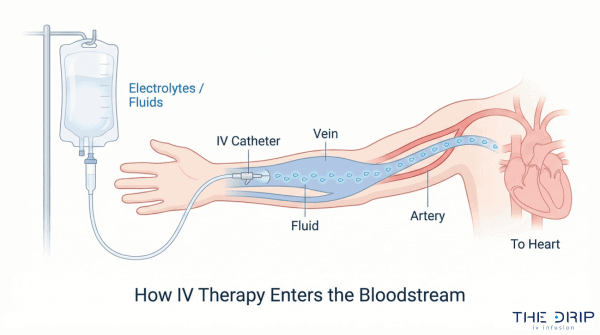
IV therapy is the direct administration of fluids, medications, and nutrients into the bloodstream through a vein, bypassing the digestive system for immediate absorption and effect. This medical procedure can influence heart rate through multiple mechanisms including blood volume changes, electrolyte balance modifications, and autonomic nervous system responses, with effects typically manifesting within minutes of administration.
TL;DR Summary:
• IV therapy types include crystalloid solutions (like normal saline) and colloid solutions (like albumin), each affecting heart rate differently through volume expansion and electrolyte balance
• Normal adult heart rate ranges from 60-100 bpm and responds to IV therapy through sympathetic/parasympathetic nervous system activation and baroreceptor reflexes
• Common IV ingredients like potassium, magnesium, and sodium directly influence cardiac rhythm, with research showing increased stroke volume and cardiac output in conditions like POTS
• Clinical studies demonstrate both benefits (improved hemodynamics in POTS patients) and risks (IVIG-induced bradycardia requiring hospitalization)
• High-risk groups include heart failure patients (contraindicated due to fluid overload), those with hypertrophic cardiomyopathy, and elderly patients with higher complication rates
• The Drip IV Infusion offers personalized protocols using model-informed precision dosing, nutrient selection, and optimized timing based on individual cardiovascular profiles
Quick Tip: Always inform your IV therapy provider about any cardiac medications you’re taking, as drug interactions can significantly affect how your heart responds to IV fluids.
Understanding these cardiovascular effects becomes even more critical when we examine the specific mechanisms and ingredients involved in different IV therapy protocols.
What Is IV Therapy and How Does It Work Within the Body?
IV therapy is the direct administration of fluids, medications, and nutrients into the bloodstream through a vein. This method bypasses the digestive system and delivers substances directly to tissues within minutes. The following subsections explore the types, timing, and common components of IV therapy.
What Are the Main Types of IV Therapy?
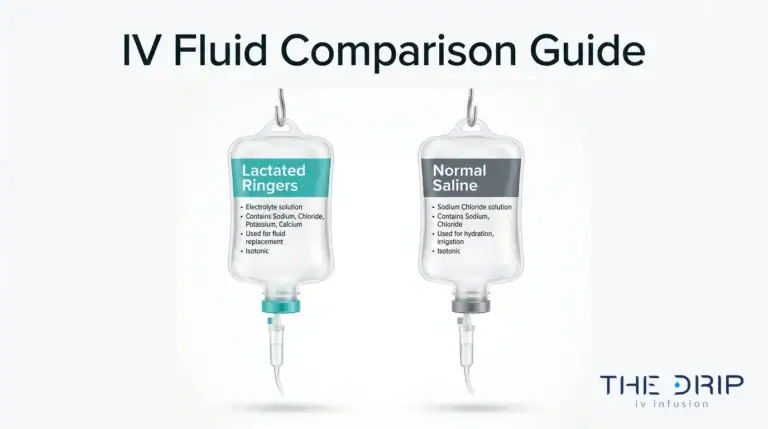
The main types of IV therapy are crystalloid solutions and colloid solutions. Crystalloid solutions, such as 0.9% normal saline and lactated Ringer’s, contain small molecules that pass easily from the bloodstream into tissues. Colloid solutions, including albumin, dextran, and hetastarch, contain larger molecules that remain in the bloodstream longer for volume expansion.
Isotonic solutions maintain 0.9% NaCl concentration matching the body’s natural osmolarity. Solutions with osmolarity greater than 290 mOsm/L may increase the risk of phlebitis and vascular injury.
How Quickly Do the Effects of IV Therapy Begin?
The effects of IV therapy begin within minutes of administration. Cardiovascular effects, including heart rate and blood pressure changes, are measurable almost immediately. A 2023 study found IV fluid administration during CPR significantly increased cardiac output at all measured time points.
In a documented case, IVIG-induced bradycardia occurred 30 minutes after infusion in a 61-year-old patient, requiring 7-day hospitalization. IV saline in POTS patients showed immediate improvement in resting hemodynamic parameters. These rapid responses demonstrate how quickly IV therapy affects cardiovascular function.
Which Nutrients or Medications Are Commonly Used in IV Therapy?
The nutrients and medications commonly used in IV therapy include electrolytes and immunoglobulins. Potassium (K+) is indicated for severe hypokalemia below 2.5 mEq/L or when arrhythmias are present. Magnesium (Mg2+) combined with low potassium is a significant risk factor for severe cardiac arrhythmias.
Normal saline (0.9% NaCl) serves as the standard isotonic crystalloid solution. IV immunoglobulin (IVIG) has been documented to cause symptomatic bradycardia requiring atropine and dopamine. These components directly influence heart rate and rhythm through their effects on cellular electrical activity and fluid balance.
How Does Heart Rate Normally Function and What Influences It?
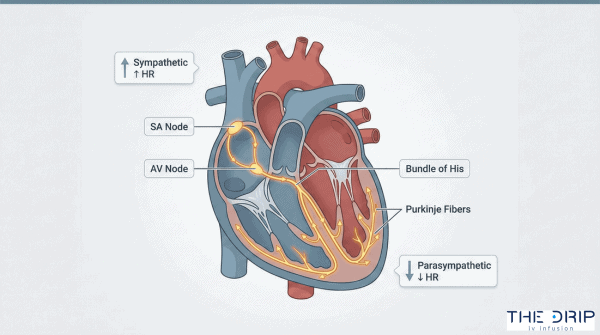
Heart rate represents the number of times the heart beats per minute, regulated by complex interactions between the nervous system, hormones, and cardiovascular reflexes. The cardiac conduction system initiates each heartbeat through electrical impulses that coordinate chamber contractions. Understanding normal heart rate function becomes essential when considering IV therapy effects on cardiovascular parameters.
What Is the Normal Range for Heart Rate?
The normal range for heart rate is 60-100 beats per minute for adults at rest. The American Heart Association defines target heart rates based on age and exercise intensity, with maximum heart rate calculated as 220 minus age. Athletes may have resting rates below 60 bpm due to enhanced cardiac efficiency. Children have higher normal ranges, such as 70-110 bpm for ages 3-6 years.
Which Factors Naturally Raise or Lower Heart Rate?
Factors that naturally raise or lower heart rate include autonomic nervous system activity, hormonal changes, and cardiovascular reflexes. The sympathetic nervous system increases heart rate through catecholamine release acting on adrenergic receptors. The parasympathetic nervous system decreases heart rate via vagal nerve stimulation of muscarinic receptors. The baroreceptor reflex stabilizes blood pressure by modulating heart rate and vascular resistance when detecting pressure changes. Preload and mean systemic filling pressure determine stroke volume and cardiac output, indirectly affecting heart rate through compensatory mechanisms.
How Is Heart Rate Typically Monitored or Measured?
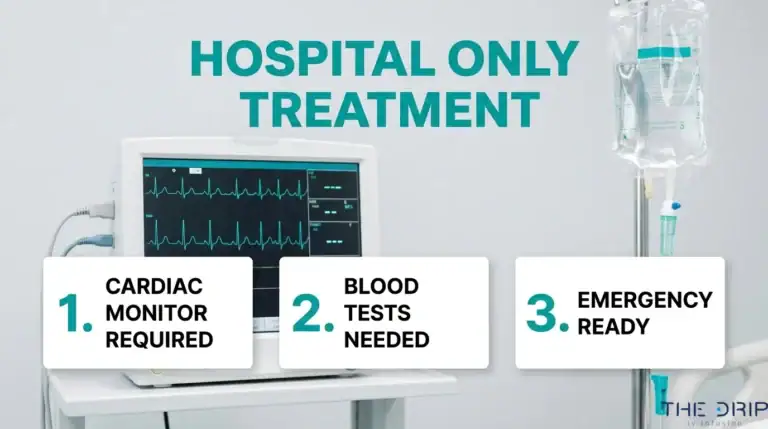
Heart rate is typically monitored through electrocardiography, pulse oximetry, and manual pulse palpation. According to 2024 CDC guidelines, cardiac monitoring during IV therapy administration requires continuous assessment of rhythm and rate. Integrated IV monitoring systems simultaneously track infusion rates, medication concentrations, and heart rate parameters. AI-ECG technology and wearable devices provide real-time cardiovascular event monitoring and prediction capabilities. These monitoring approaches ensure early detection of heart rate changes during medical interventions.
In What Ways Can IV Therapy Influence Heart Rate?
IV therapy influences heart rate through direct electrolyte effects, fluid volume changes, and autonomic nervous system responses. A 2022 study of 3,119 atrial fibrillation episodes found combined IV potassium and magnesium increased spontaneous conversion to normal sinus rhythm. The cardiovascular impact depends on the specific IV solution, infusion rate, and individual patient factors.
Which Ingredients in IV Therapy Might Affect Heart Rate?
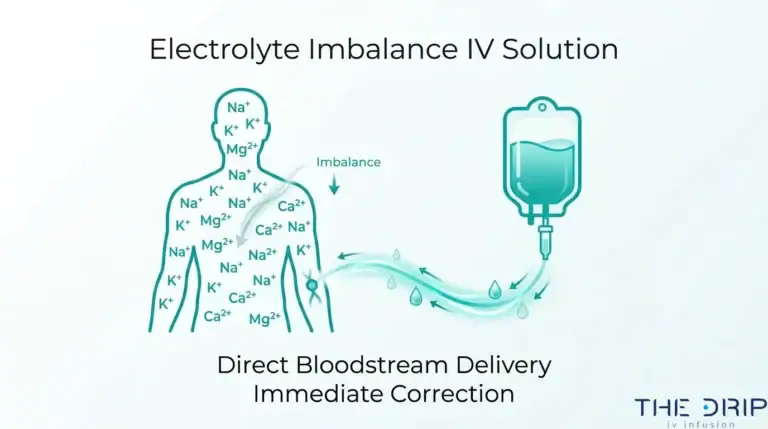
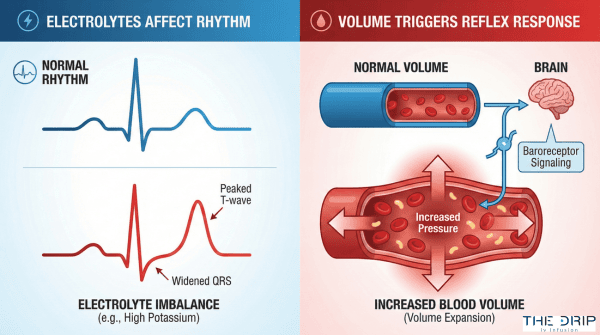
The ingredients in IV therapy that might affect heart rate include electrolytes such as potassium and magnesium, along with the fluid volume itself. Hyperkalemia from IV potassium causes peaked T-waves, prolonged PR interval, and widened QRS complex on ECG. A 2022 study demonstrated combined IV potassium and magnesium increased spontaneous conversion to normal sinus rhythm in 3,119 atrial fibrillation episodes.
Saline infusion increased muscle sympathetic nerve activity from 11.8±1.2 to 22.5±2.6 bursts/min (P<0.001). IV fluids increase intravascular volume by 25-30% “stressed volume” contributing to circulatory pressure. This volume expansion triggers baroreceptor responses that modulate heart rate.
| IV Therapy Ingredient | Cardiovascular Attribute Measured | Documented Clinical Effect |
| IV Potassium | ECG Changes | Peaked T-waves, prolonged PR, widened QRS |
| IV Saline | Sympathetic Activity | 11.8 to 22.5 bursts/min |
| IV Fluids | Volume Increase | 25-30% stressed volume |
| K+ and Mg+ Combined | AF Conversion | 3,119 episodes studied |
These electrolyte and volume effects create immediate cardiovascular responses requiring careful monitoring during IV administration.
Are the Effects on Heart Rate Temporary or Lasting?
The effects on heart rate are temporary, typically lasting hours after IV therapy completion. POTS patients receiving 1-liter IV saline showed temporary improvement in stroke volume (80±8ml vs 64±4ml placebo). Cardiac output increased to 6.9±0.5 L/min vs 5.7±0.2 L/min with placebo (P=0.021) but did not improve exercise capacity.
The baroreceptor reflex triggers compensatory heart rate reduction after blood pressure increase from IV fluids. This physiological response normalizes within hours as the body redistributes and excretes excess fluid. The temporary nature means patients may require repeated IV sessions for sustained benefits.
What Patient Factors Change How IV Therapy Influences Heart Rate?
Patient factors that change how IV therapy influences heart rate include underlying cardiac conditions, age, and volume status. Heart failure patients are contraindicated for IV fluids due to fluid overload risk, with ESC recommending 1.5-2L/day restriction. Hypertrophic cardiomyopathy patients experience worsened left ventricular outflow tract obstruction with IV fluids.
Restrictive cardiomyopathy patients are highly susceptible to fluid overload due to increased myocardial stiffness. Elderly and pediatric patients have higher infiltration (1.01%) and extravasation (0.60%) rates, requiring adjusted protocols. These factors determine whether IV therapy produces beneficial or harmful cardiac effects.
The cardiovascular response varies significantly based on individual physiology and pre-existing conditions, making personalized assessment essential before IV therapy begins.
What Does the Research Say About IV Therapy’s Impact on Heart Rate?
Research on IV therapy’s cardiovascular effects reveals complex interactions between fluid administration and heart rate regulation. A 2014 study of 19 POTS patients demonstrated that IV saline increased stroke volume from 64±4ml to 80±8ml and cardiac output from 5.7±0.2 to 6.9±0.5 L/min while decreasing systemic vascular resistance. Recent studies examine survival outcomes, with a 2025 OHCA trial finding IV fluid resuscitation averaging 866.3mL improved survival only when EMS response exceeded 16 minutes.
What Clinical Studies Have Examined Heart Rate Changes With IV Therapy?
Clinical studies examining heart rate changes with IV therapy show varied cardiovascular responses depending on patient population and fluid type. The 2014 POTS patient study revealed IV saline increased stroke volume and cardiac output while decreasing systemic vascular resistance. A 2023 CPR study demonstrated IV fluids significantly increased cardiac output at all measured time points during resuscitation. The 2022 trial of critically ill adults, cited over 100 times, found fluid boluses did not decrease severe hypotension incidence. A 2025 OHCA study showed IV fluid resuscitation averaging 866.3mL improved survival only when EMS time exceeded 16 minutes. These findings suggest IV therapy’s heart rate impact varies with clinical context and timing.
What Do Healthcare Professionals Say About the Heart Rate Impact?
Healthcare professionals say the heart rate impact requires careful monitoring and conservative fluid management. ILCOR, ERC, and RECOVER ALS recommend reserving IV fluid boluses for documented hypovolemia or distributive shock rather than routine administration. The American Heart Association provides specific frameworks for managing bradycardia and tachycardia during IV therapy administration. The Joint Commission mandates IV fluid bag spiking must begin within one hour unless prepared in an ISO Class 5 environment to ensure sterility. Professional guidelines emphasize individualized assessment, with cardiac monitoring considered essential during IV administration according to multiple medical organizations.
Are There Any Reported Side Effects or Safety Concerns for the Heart?
Reported side effects and safety concerns for the heart include vascular complications and rhythm disturbances. Phlebitis occurs in 0.5% to 59.1% of patients receiving IV crystalloids, analgesic drugs, or high osmolarity solutions. Bloodstream infections carry a 12-25% mortality rate with 65.1 cases per 100,000 catheter days. A documented case showed IVIG induced symptomatic bradycardia in a patient without underlying heart disease, representing the second such report. Acute pulmonary edema absolutely contraindicates IV fluid administration due to cardiac decompensation risk. These safety concerns highlight the importance of proper patient selection and continuous monitoring during IV therapy to prevent cardiac complications.
Who Might Benefit or Be at Risk From Heart Rate Changes With IV Therapy?
Certain patient populations experience pronounced cardiovascular responses to IV therapy based on their underlying conditions and physiological status. Understanding these risk profiles helps healthcare providers determine appropriate monitoring and treatment protocols.
What Groups Are Most Likely to Experience Noticeable Effects?
The groups most likely to experience noticeable effects are patients with autonomic dysfunction, cardiac arrhythmias, and prolonged cardiac arrest. POTS patients with documented blood volume deficits show improved hemodynamic parameters with IV saline. A 2014 study of 19 POTS patients found IV saline increased stroke volume from 64±4ml to 80±8ml and cardiac output to 6.9±0.5 L/min.
Atrial fibrillation and flutter patients benefit from combined IV potassium and magnesium for rhythm conversion. According to a 2022 study analyzing 3,119 atrial fibrillation episodes, combined electrolyte replacement increased spontaneous conversion to normal sinus rhythm.
Cardiac arrest patients benefit from IV fluids only when EMS response time exceeds 16 minutes. A 2025 out-of-hospital cardiac arrest study demonstrated improved survival with average 866.3mL fluid resuscitation when transport delays occurred.
Are There Contraindications or Precautions for Certain Heart Conditions?
There are absolute contraindications for certain heart conditions that require strict avoidance of IV fluid therapy. Heart failure with fluid overload absolutely contraindicates IV fluid administration. The European Society of Cardiology recommends 1.5-2L daily fluid restriction for these patients.
Hypertrophic cardiomyopathy requires IV phenylephrine instead of fluids for acute hypotension. Standard fluid resuscitation worsens left ventricular outflow tract obstruction in these patients.
Restrictive cardiomyopathy requires careful fluid management due to impaired ventricular filling. The increased myocardial stiffness makes these patients highly susceptible to fluid overload complications.
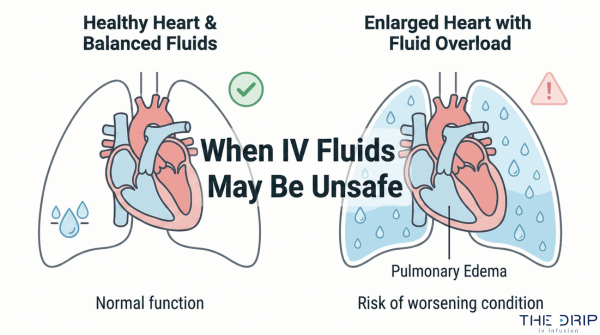
Acute pulmonary edema requires nitrates, non-invasive ventilation, and loop diuretics instead of IV fluids. The 2023 ILCOR guidelines emphasize conservative fluid approaches for distributive shock management.
When Should You Speak With a Healthcare Provider Before Trying IV Therapy?
Patients should speak with a healthcare provider before IV therapy if they have structural heart disease, take cardiac medications, or have special monitoring needs. Patients with any structural heart disease require cardiovascular assessment before IV therapy. This includes evaluation of ejection fraction, valve function, and filling pressures.
Those taking cardiac medications need evaluation for potential drug interactions. Beta-blockers, calcium channel blockers, and antiarrhythmics may interact with IV electrolyte administration.
History of arrhythmias necessitates cardiac monitoring during IV administration. The CDC 2024 guidelines mandate continuous ECG monitoring for high-risk patients receiving IV therapy.
Elderly patients and children require special dosing considerations and monitoring protocols. These populations have higher infiltration rates of 1.01% and extravasation rates of 0.60% according to recent safety data.
Understanding individual risk factors ensures safe IV therapy administration while maximizing therapeutic benefits for appropriate candidates.
How Should You Consider IV Therapy & Heart Rate With The Drip IV Infusion?
IV therapy’s effects on heart rate require careful consideration, particularly when selecting personalized treatment approaches. The Drip IV Infusion addresses cardiovascular concerns through systematic customization protocols that account for individual physiological responses and cardiac health status.
Can The Drip IV Infusion Personalize Your IV Therapy for Heart Health Concerns?
The Drip IV Infusion personalizes IV therapy for heart health concerns through a three-pillar approach: nutrient selection, individualized dosing, and optimized timing. Model-informed precision dosing (MIPD) tailors IV therapy protocols to genetics, renal function, and cardiac output parameters. The HM-TARGET framework enables individualized IV fluid titration based on real-time cardiac response monitoring. Multiscale phenotyping identifies DNA methylation sites and transcripts for personalized cardiovascular therapy optimization.
The personalization process begins with comprehensive health assessment including cardiac history and current medications. Advanced dosing algorithms calculate optimal infusion rates based on body weight, kidney function, and baseline heart rate. Real-time monitoring systems track cardiovascular responses during infusion, allowing immediate adjustments if heart rate changes occur. This systematic approach may reduce adverse cardiac events while maximizing therapeutic benefits.
What Are the Most Important Takeaways About IV Therapy and Heart Rate?
The most important takeaways about IV therapy and heart rate include market growth, safety requirements, technology advances, and cost considerations. The global IV hydration therapy market reached $2.7-2.8 billion valuation in 2024, with projections reaching $5.6-5.8 billion by 2033-2034. The FDA emphasizes the critical importance of sterility assurance for compounded IV drugs to prevent bloodstream infections. Smart IV dosing systems feature remote detection and automated rate adjustments based on patient cardiovascular response.
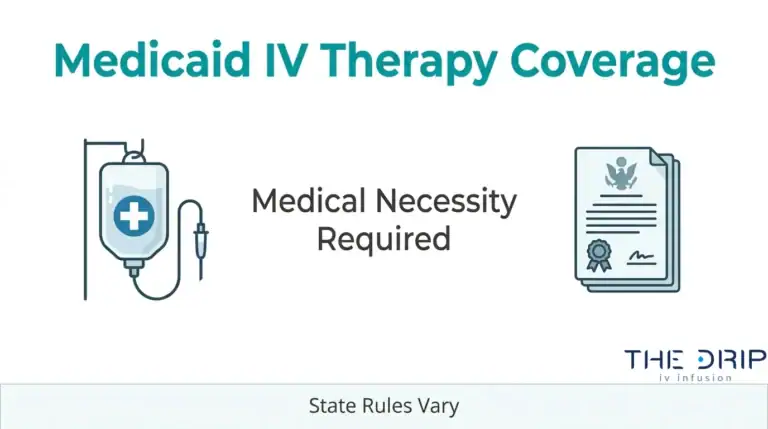
Cost varies significantly across administration settings. Hospital-based infusions represent the most expensive option due to facility fees and monitoring requirements. Home and mobile IV services offer cost-effective alternatives while maintaining safety protocols. Insurance coverage depends on medical necessity documentation and specific cardiovascular indications. Understanding these factors helps patients make informed decisions about IV therapy in relation to their heart health needs and financial considerations.