If you’re exploring IV therapy options for wellness, hydration, or recovery, understanding the ingredients in your IV drip is crucial for making informed decisions about your health. We recognize that navigating the world of IV therapy ingredients can feel overwhelming with various formulations, safety considerations, and provider options available. Rest assured, you’ve come to the right place for comprehensive, evidence-based information about safe IV therapy ingredients.
Safe IV therapy ingredients are pharmaceutical-grade vitamins, minerals, amino acids, and electrolytes delivered directly into the bloodstream through sterile saline or other medically approved solutions, subject to strict quality standards and regulatory oversight.
TL;DR Summary:
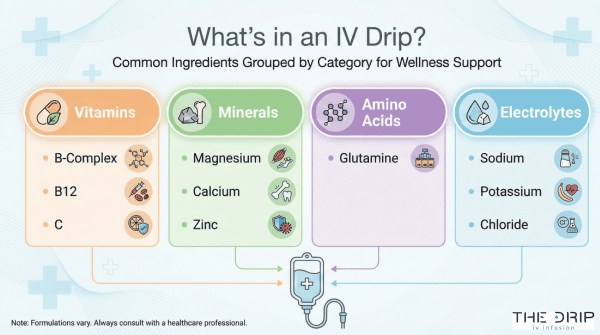
• Common IV therapy ingredients include vitamins (B-complex, C, B12), minerals (magnesium, calcium, zinc), amino acids (glutamine), and electrolytes that function to support hydration, immunity, and cellular health through direct bloodstream delivery.
• Safety standards for IV ingredients are governed by USP General Chapter <797> for sterile compounding, FDA oversight through MedWatch reporting, and state regulatory frameworks, though enforcement varies significantly across jurisdictions.
• Potential risks from IV ingredients range from mild side effects like bruising to serious complications including allergic reactions, with magnesium, thiamine, and high-dose B6 being the most commonly linked to adverse events.
• Choosing appropriate IV ingredients requires matching components to personal health goals through professional assessment, with specific formulations recommended for hydration (electrolytes), immunity (vitamin C, zinc), and recovery (amino acids, B-vitamins).
• Finding a safe IV therapy provider involves verifying proper ingredient sourcing through USP-certified suppliers, confirming sterile compounding practices, checking provider credentials, and ensuring comprehensive patient screening protocols are followed.
• The Drip IV Infusion offers carefully selected, pharmaceutical-grade IV therapy ingredients with transparent sourcing, professional medical oversight, and personalized formulations tailored to individual wellness goals and safety requirements.
Quick Tip: Always request a complete ingredient list with concentrations before any IV therapy session, and ensure your provider screens for allergies and reviews your current medications to prevent potentially dangerous interactions.
As we delve deeper into the specifics of IV therapy ingredients, you’ll discover the critical factors that distinguish safe, effective formulations from potentially risky alternatives, empowering you to make the best choices for your wellness journey.
What Are the Most Common Ingredients Used in IV Therapy?
The most common ingredients used in IV therapy are vitamins, minerals, amino acids, electrolytes, and preservative-free solutions. Standard formulations include the Myers’ cocktail with Vitamin C, B-Complex vitamins, Vitamin B12, calcium, magnesium, zinc, and glutathione in saline solution. IV solutions also contain electrolytes such as sodium, potassium, and chloride for hydration and cellular function. These ingredients bypass the gastrointestinal tract to deliver nutrients directly into the bloodstream for higher bioavailability.
How Do Vitamins and Minerals Function in IV Therapy Solutions?
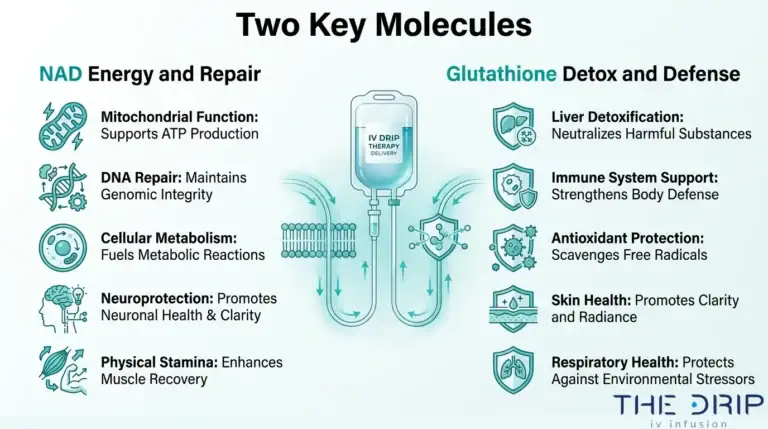
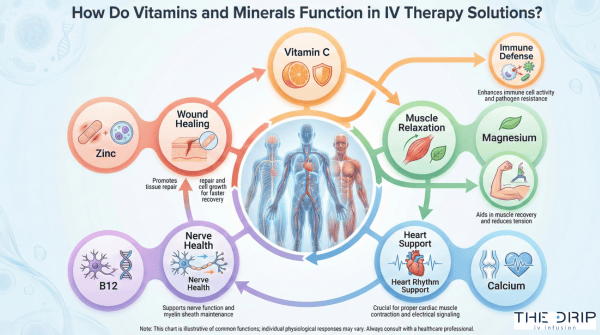
Vitamins and minerals function in IV therapy solutions by delivering therapeutic concentrations directly into the bloodstream. The Myers’ cocktail combines multiple nutrients: calcium aids bone formation and controls irregular heartbeats, magnesium reduces fatigue and migraines, zinc regulates immune function, and glutathione provides antioxidant protection.
| IV Nutrient | Specification | Clinical Amount |
| Vitamin C | Standard dose | 5 mL (500 mg/mL) |
| Vitamin C | High-dose formulation | 25g |
| B-Complex | Volume | 1 mL |
| Magnesium Chloride | Concentration | 30% |
| Calcium Gluconate | Concentration | 10% |
| Hydroxocobalamin | Dose | 0.5 mL (2,000 mcg/mL) |
IV vitamin therapy ensures higher bioavailability by bypassing the GI tract. This direct route results in faster onset of effects and improved outcomes for acutely ill patients. The revised Myers’ cocktail formulation delivers precise therapeutic doses for optimal absorption.
Which Amino Acids Are Typically Included in IV Drips?
Amino acids typically included in IV drips are glutamine and essential amino acids for muscle recovery. Glutamine appears commonly in wellness IV formulations. These amino acids support muscle recovery and growth through direct bloodstream delivery.
What Role Do Electrolytes Play in IV Therapy?
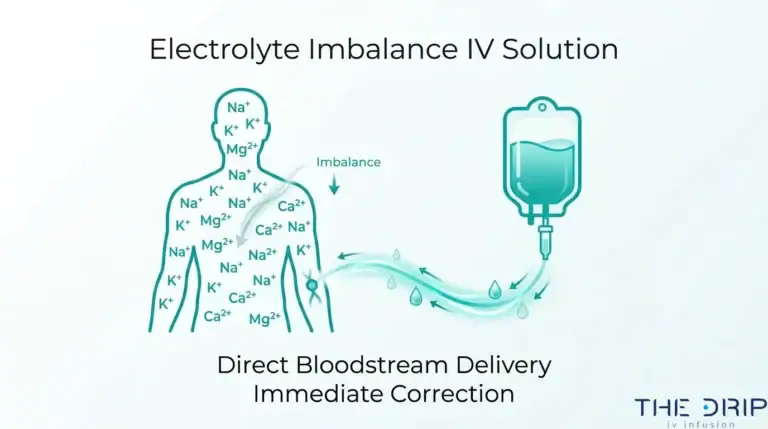
Electrolytes play the role of maintaining hydration and cellular function in IV therapy. IV electrolyte solutions contain sodium 131 mmol, potassium 5 mmol, calcium 2 mmol, bicarbonate 29 mmol, and chloride 111 mmol. Extracellular fluid has higher sodium concentration while intracellular fluid contains more potassium. The main goal of IV fluid administration is guaranteeing adequate tissue perfusion by increasing intravascular volume. Sodium chloride provides essential electrolytes for hydration throughout the body.
Are There Any Preservatives or Additives in IV Solutions?
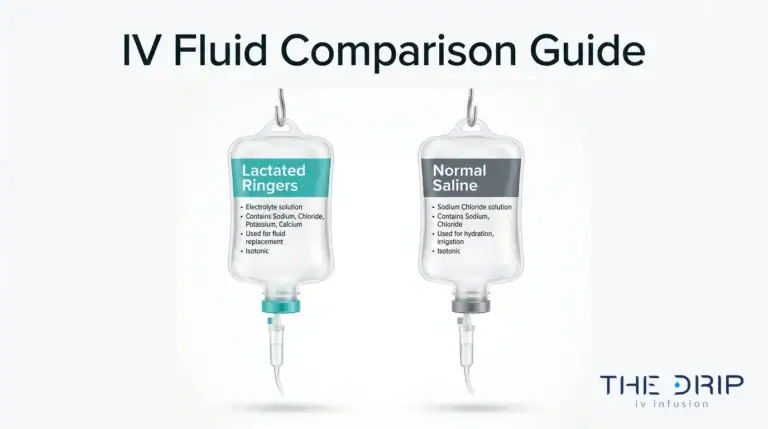
There are preservatives and additives in some IV solutions, though preservative-free options exist. According to USP-NF standards, preservative-free saline must be used within 12 hours of opening. Normal Saline contains 0.9g salt per 100ml solution. D5W contains dextrose in water. Lactated Ringer’s contains sodium, chloride, potassium, calcium, and lactate for aggressive fluid replacement. These additives serve specific therapeutic purposes while maintaining solution stability.
How Is the Safety of IV Therapy Ingredients Determined?
The safety of IV therapy ingredients is determined through strict pharmaceutical standards, regulatory oversight, and comprehensive patient screening protocols. The United States Pharmacopeia establishes multiple testing requirements while federal and state agencies monitor compliance across IV therapy facilities.
What Standards Govern the Selection of IV Ingredients?
The standards governing IV ingredient selection are established by USP General Chapter <797>, which became the official minimum standard for sterile compounding on November 1, 2023. USP <1> covers Injections and Implanted Drug Products quality tests. USP <71> provides sterility test standards while USP <85> addresses bacterial endotoxins testing.
Additional USP standards include <788> for particulate matter in injections and <790> for visible particulates. USP <1231> establishes requirements for pharmaceutical water purity. Sterilization processes must demonstrate a sterility assurance level of 10^-6 or better.
Compounded sterile preparations require preparation in laminar flow hoods meeting ISO Class 5 air quality standards. Only sterile ingredients may be used in these controlled environments. These standards ensure IV therapy ingredients meet pharmaceutical-grade purity and safety requirements before patient administration.
Who Oversees the Quality and Purity of IV Components?
The quality and purity of IV components are overseen by FDA’s MedWatch program, which serves as the primary safety reporting system for healthcare professionals and patients. MedWatch receives reports on prescription medicines, biologics, medical devices, and combination products used in IV therapy.
In October 2021, the FDA issued a compounding risk alert warning about insanitary conditions at IV hydration clinics. The United States Pharmacopeia develops standards to reduce contamination, infection, and dosing errors in compounded sterile medications.
State regulatory oversight remains fragmented. As of June 2024, no state had enacted legislation specifically regulating IV hydration spas. Only four states released guidance covering governance, prescriber credentials, dispensing practices, and compounding standards.
State boards of nursing, medicine, and pharmacy must coordinate inspection efforts for IV hydration businesses. This regulatory gap creates safety concerns as the mobile IV therapy market reached USD 568.25 million in 2024.
How Are Allergies and Sensitivities Accounted For?
Allergies and sensitivities are accounted for through comprehensive patient interviews that document medical history, known allergies, and current medications. Initial screening and patient assessment form the foundation of safe IV therapy administration.
Healthcare providers check and record vital signs before each infusion. Current medical conditions and medications undergo review to identify potential interactions. These screening protocols help identify contraindications before IV therapy begins.
Patient assessment continues throughout the infusion process. Monitoring for adverse reactions allows immediate intervention if sensitivity symptoms develop. This systematic approach to allergy screening and ongoing observation helps prevent serious complications from IV therapy ingredients.
What Are the Potential Risks Associated With IV Therapy Ingredients?
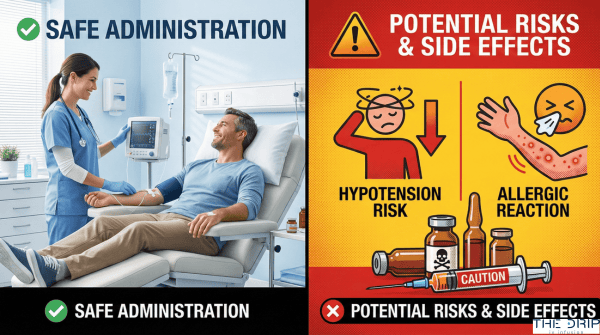
The potential risks associated with IV therapy ingredients range from mild side effects to serious complications requiring immediate medical attention. Air embolism, fluid overload, and allergic reactions represent the most serious risks, while phlebitis and muscle cramps occur more commonly but with less severity. Understanding these risks helps patients make informed decisions about IV therapy treatments.
What Side Effects Can IV Ingredients Cause in Some Individuals?
Side effects from IV ingredients include air embolism, fluid overload, phlebitis, allergic reactions, and nerve damage. Air embolism occurs when IV administration pushes air into veins, creating rare but potentially fatal complications. Fluid overload causes headaches, elevated blood pressure, and breathing difficulties when fluids enter the bloodstream too rapidly.
Phlebitis presents as vein swelling at the injection site. Treatment involves removing the IV line, applying warm compresses, and elevating the affected arm. Muscle cramps, hypotension, warmth sensations, and fainting episodes may occur during infusions.
Specific vitamins pose unique risks at high doses:
- Thiamine (vitamin B1) may trigger anaphylaxis
- Vitamin B6 may cause peripheral neuropathy
- Magnesium may lower blood pressure causing light-headedness
Myers’ cocktail infusions may lead to depression symptoms, insomnia, and gastrointestinal upset in sensitive individuals. These reactions underscore the importance of proper dosing and administration speeds.
How Are Adverse Reactions to IV Ingredients Prevented or Managed?
Adverse reactions to IV ingredients are prevented through physician oversight, sterile techniques, and proper clinical protocols. The ACCP Position Statement requires physician approval and licensed provider administration for all hydration and vitamin infusions. Prevention protocols focus on sterility and proper preparation techniques.
Essential safety measures include:
- Disinfecting rubber vial stoppers with isopropyl alcohol before piercing
- Washing hands thoroughly with soap and water
- Maintaining separation between sterile and non-sterile surfaces
- Having only physicians prepare compounded sterile preparations (CSPs)
Clinical operations require vendor verification, staff training, patient consultation protocols, and emergency response planning. These systematic approaches minimize contamination risks and ensure rapid response to adverse events.
Which Ingredients Are Most Commonly Linked to Complications?
Magnesium, thiamine, vitamin B6, and potassium are most commonly linked to IV therapy complications. Magnesium causes hypotension when infused rapidly, producing light-headedness and syncope. Large thiamine doses may trigger anaphylactic reactions requiring immediate epinephrine administration.
High-dose vitamin B6 damages peripheral nerves through neurotoxic mechanisms. Patients with kidney disease, diuretic use, or excessive alcohol consumption face increased risks from magnesium and potassium infusions, including cardiac arrhythmias and muscle weakness.
| Ingredient | Complication | Risk Factors |
| Magnesium | Hypotension, fainting | Rapid infusion rate |
| Thiamine | Anaphylaxis | Large IV doses |
| Vitamin B6 | Peripheral neuropathy | High doses |
| Potassium | Fatal arrhythmias | Electrolyte imbalances |
These ingredient-specific risks highlight the need for careful patient screening and dose calculations before IV therapy administration.
How Should IV Therapy Ingredients Be Chosen for Different Needs?
IV therapy ingredients are chosen for different needs through personalized assessment of health goals, medical history, and specific conditions. Healthcare providers customize vitamin and mineral concentrations to create targeted treatments that match individual requirements. The selection process involves matching specific nutrients to desired outcomes while screening for contraindications and potential interactions.
How Are the Right Ingredients Matched to Personal Health Goals?
The right ingredients are matched to personal health goals through individualized testing and assessment of body requirements. Healthcare providers adjust vitamin and mineral concentrations by increasing therapeutic nutrients, decreasing problematic compounds, or excluding contraindicated ingredients based on patient objectives.
A 2024 clinical practice report shows personalized IV drips based on biomarker testing outperform standard infusions for achieving specific health outcomes. Genetic testing reveals individual nutrient metabolism patterns that guide ingredient selection. Health data analytics identify optimal nutrient combinations for conditions such as chronic fatigue, athletic recovery, and immune support.
Each IV solution requires customization based on the patient’s medical conditions, current medications, and treatment goals. Modern IV therapy protocols incorporate precision medicine approaches that analyze genetic variants, metabolic profiles, and nutritional status markers. This personalized approach ensures ingredients directly address identified deficiencies while avoiding unnecessary or potentially harmful components.
What Ingredients Are Recommended for Hydration, Immunity, or Recovery?
The ingredients recommended for hydration, immunity, or recovery vary based on the specific therapeutic goal. For hydration, crystalloid solutions containing sodium chloride and balanced electrolytes restore fluid volume effectively. For immunity support, vitamin C, zinc, and B-complex vitamins strengthen immune function. For recovery, amino acids, magnesium, and B vitamins accelerate tissue repair and energy restoration.
Top IV therapy requests in 2025 target four primary outcomes:
- Instant energy boost using B-complex vitamins and magnesium
- Stronger immunity through vitamin C and zinc combinations
- Hydration recovery with crystalloid solutions
- Healthy skin support using biotin and glutathione
Water comprises 60% of body composition, making proper hydration fundamental to all cellular functions. Crystalloids offer advantages including cost-effectiveness, lower allergic reaction risk, and wider availability compared to colloid solutions. B vitamins and magnesium specifically restore metabolic functions disrupted by dehydration or nutrient depletion.
IV vitamin therapy demonstrates particular effectiveness for individuals with malabsorption disorders, chronic illnesses, and those seeking optimal wellness benefits beyond oral supplementation capabilities.
How Does a Practitioner Assess Suitability of Ingredients for a Client?
A practitioner assesses suitability of ingredients for a client through comprehensive medical screening before and during IV therapy administration. Assessment protocols evaluate medical history, current medications, existing conditions, and potential contraindications to determine safe ingredient selection.
Specific populations require ingredient restrictions:
- Pregnant and breastfeeding women must avoid Myers’ cocktail and high-dose vitamin infusions
- Kidney disease patients cannot receive Myers’ cocktail due to electrolyte risks
- High blood pressure patients should exclude Myers’ cocktail components
- Heart condition patients face contraindications with certain mineral combinations
Blood-thinning medications create dangerous interactions with vitamins that may increase bruising or bleeding risks. Practitioners screen for warfarin, aspirin, and antiplatelet drugs before selecting vitamin K or high-dose vitamin E. Assessment continues throughout therapy with vital sign monitoring and adverse reaction surveillance.
Medical evaluation includes laboratory testing for baseline nutrient levels, kidney function markers, and electrolyte status. This data guides ingredient selection while preventing complications from pre-existing imbalances or organ dysfunction that could worsen with certain IV components.
What Should You Look for in a Safe IV Therapy Provider?
Selecting a safe IV therapy provider requires evaluating their sourcing practices, credentials, and facility standards. Federal and state regulators have received complaints and reports of serious adverse events at IV hydration clinics, including deaths from severe infections due to improper sterilization. The IV hydration spa industry operates in a regulatory grey zone—the FDA does not directly regulate these facilities but considers them similar to compounding pharmacies. Understanding what questions to ask and signs to observe helps ensure your IV therapy provider maintains proper safety standards for ingredient handling and administration.
What Questions Should You Ask About Ingredient Sourcing and Safety?
The questions you should ask about ingredient sourcing and safety are those that reveal a provider’s commitment to quality control and patient protection. According to FDA reports, adverse events have occurred at medical offices, clinics, medical spas, and mobile IV infusion services, with severe side effects including death from infections caused by improper equipment sterilization. Only 1 in 4 clinics required medical consultation beforehand, and fewer than 25% warned patients about possible side effects.
Essential questions include asking about the source of their IV solutions, whether they use USP-grade ingredients, and their sterilization protocols. Request information about their adverse event reporting procedures and whether they maintain proper documentation. Inquire about pre-treatment screening processes—a critical safety measure that three-quarters of clinics skip. These inquiries help assess whether a provider prioritizes patient safety over convenience in their IV therapy services.
How Can You Verify the Credentials and Practices of an IV Therapy Provider?
You can verify the credentials and practices of an IV therapy provider by checking their licensing status, staff qualifications, and compliance with state regulations. A July 26, 2023 webinar titled “Intravenous (IV) Hydration Clinics: Federal and State Perspectives” drew over 700 regulators from NABP, FSMB, NCSBN, FDA, and FTC, highlighting widespread regulatory concerns about businesses compounding drugs without meeting Federal Food, Drug, and Cosmetic Act conditions.
In September 2024, Texas passed legislation setting boundaries on who may prescribe, order, and administer elective IV therapy, spurred by the death of a woman who received an IV infusion at a spa. Verify that your provider employs licensed medical professionals and follows state-specific regulations for IV therapy administration. When administered by a trained and responsible clinician, IV therapy can be a safe treatment providing many benefits. Request proof of staff credentials and ask about their emergency response protocols to ensure proper medical oversight.
What Signs Indicate a Provider Uses Quality, Safe Ingredients?
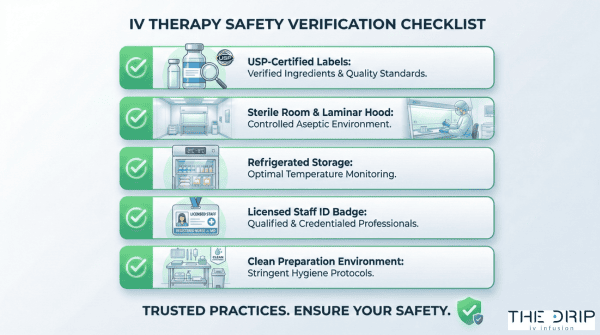
The signs that indicate a provider uses quality, safe ingredients are visible in their preparation environment and storage practices. The IV preparation room must be adequately lit with proper ventilation, including air filters replaced every two months and weekly cleaning schedules. Counter tops for IV preparation should be non-porous surfaces, wiped down with clean wet cloths or paper towels and dried thoroughly at the end of each workday.
Quality indicators include refrigerated injectables maintained at 34-38 degrees Fahrenheit in dedicated refrigerators, separate from food or beverages. Vials of sterile liquids should remain closed and protected from room air, stored in dedicated cabinets or drawers. Needles and syringes must be kept in clean, closed containers in their original manufactured packaging until the moment of use. These observable practices demonstrate a provider’s commitment to maintaining ingredient integrity and preventing contamination throughout the IV therapy preparation process.
How Can The Drip IV Infusion Support Your Search for Safe IV Therapy Ingredients?
The Drip IV Infusion provides medical-grade IV therapy services with comprehensive safety protocols and quality ingredients. Their approach combines professional medical oversight with rigorous ingredient sourcing standards to ensure safe IV therapy administration. The company follows USP compounding guidelines and FDA recommendations for sterile preparation environments. The following sections detail their specific ingredient offerings and key safety considerations for IV therapy.
What Safe IV Therapy Ingredient Options Are Offered by The Drip IV Infusion?
The Drip IV Infusion offers pharmaceutical-grade vitamins, minerals, amino acids, and electrolytes in their IV formulations. Their ingredient selection includes USP-verified components such as B-complex vitamins, vitamin C, magnesium, calcium, zinc, and glutathione. The company sources preservative-free saline solutions and maintains cold-chain custody for temperature-sensitive ingredients at 34-38°F.
Each IV formulation undergoes sterility testing according to USP <71> standards. The Drip IV Infusion compounds their solutions in ISO Class 5 laminar flow hoods using aseptic technique. Their medical team conducts thorough patient assessments before therapy, reviewing allergies, medications, and health conditions to customize safe ingredient combinations.
Available formulations include hydration blends with balanced electrolytes containing sodium 131 mmol and potassium 5 mmol. Recovery drips incorporate amino acids like glutamine for muscle support. Immunity formulations feature vitamin C doses calibrated to individual needs. The company excludes ingredients for patients with documented contraindications such as kidney disease or medication interactions.
What Are the Key Takeaways About Safe IV Therapy Ingredients Covered Here?
The key takeaways about safe IV therapy ingredients are that over 30 million patients receive IV fluids annually in medical settings. Limited evidence exists that IV vitamins provide benefit to people with normal nutritional intake and levels. There is a lack of high-quality evidence to suggest high-dose vitamin infusions are necessary or offer health benefit in absence of specific vitamin deficiency or medical condition.
Robust long-term clinical trials are essential to evaluate both safety and efficacy of IV vitamin therapy in non-hospital settings. The U.S. mobile IV hydration therapy market size was USD 568.25 million in 2024, projected to hit USD 1,556.29 million by 2034. IV therapy costs range from $85-$400 per session depending on formulation complexity and provider credentials.
Safety considerations include potential complications such as phlebitis, fluid overload, and allergic reactions. Magnesium may lower blood pressure if infused too quickly. High doses of vitamin B6 may cause peripheral neuropathy. Professional medical oversight and proper sterile compounding techniques remain critical for safe IV therapy administration.