If you’re considering IV therapy in 2026, you’re likely wondering about the prescription requirements and how they might affect your access to these treatments. We understand that navigating the regulatory landscape of IV therapy can feel overwhelming, especially with recent changes in state laws and varying requirements across the country. Rest assured, you’re in the right place to get clear, evidence-based answers about IV therapy prescriptions, safety considerations, and your options for accessing these services.
Intravenous (IV) therapy is the direct administration of fluids, vitamins, minerals, and medications into your bloodstream through a vein, bypassing your digestive system for immediate absorption and utilization by your body.
TL;DR Summary:
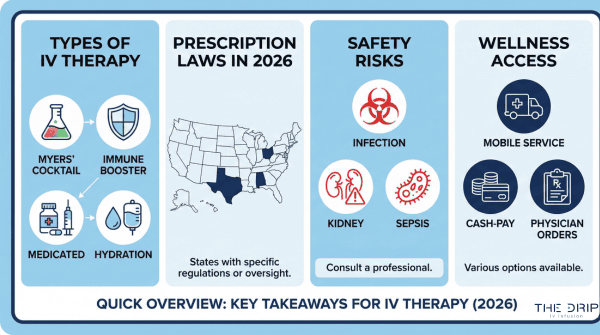
What IV therapy involves: We explain the four main types of IV treatments (Myers’ Cocktail, immune boosters, medicated therapy, and hydration), who can administer them (RNs, NPs, PAs, physicians), and why people seek them (replenishment, rehydration, recovery, prevention, preparation).
Prescription requirements in 2026: We detail how regulations have evolved since Alabama’s 2022 ruling, including Texas’s 2025 Jenifer’s Law, varying state requirements for different IV therapy types, and who can prescribe (physicians, PAs, NPs with state-specific limitations).
Medical safety considerations: We cover conditions requiring prescriptions (kidney disease, heart conditions), documented risks of non-prescribed therapy (24% of facilities don’t disclose risks, documented infections and complications), and proper screening protocols.
Alternatives and access options: We explore cash-pay wellness options ($85-$625 per session), how mobile services handle prescriptions through standing orders, and situations requiring mandatory physician involvement (pregnancy, blood disorders, infections).
The Drip IV Infusion’s role: We explain how this Arizona-based company with locations across Gilbert, Phoenix, Chandler, Mesa, Scottsdale, Tempe, Queen Creek, and San Tan Valley provides mobile IV services with customizable treatments, while emphasizing that their educational content doesn’t replace professional medical advice.
Quick Tip: Before booking any IV therapy appointment, always ask the facility about their medical oversight structure, who provides the prescriptions for their treatments, and what screening process they use—reputable providers will gladly share this information and have clear protocols in place.
As we explore the complexities of IV therapy prescriptions in 2026, we’ll provide you with the comprehensive information you need to make informed decisions about your health and wellness journey, whether you’re seeking treatment through traditional medical facilities or considering mobile IV services like those offered by The Drip IV Infusion.
What Is IV Therapy and How Does It Work?
IV therapy is the direct delivery of fluids, vitamins, minerals, and medications into the bloodstream through an intravenous catheter. This method bypasses the digestive system for 100% bioavailability. Healthcare providers administer IV therapy for medical treatment, wellness optimization, and rapid rehydration. The following sections explore the types, administration protocols, and patient demographics of modern IV therapy services.
What Are the Most Common Types of IV Therapy?
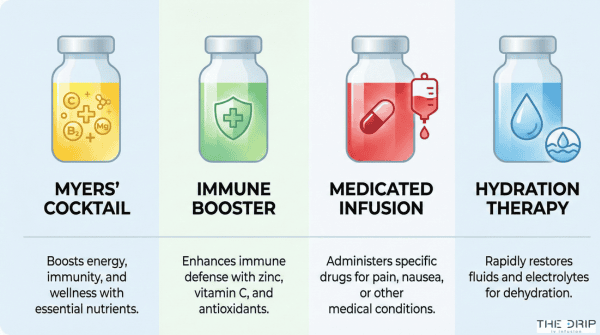
The most common types of IV therapy include Myers’ Cocktail, immune booster drips, medicated infusions, and hydration treatments. Myers’ Cocktail contains magnesium, B-complex vitamins, hydroxo B12, calcium gluconate, and ascorbic acid. Immune booster IV drips represent the largest segment in the mobile IV market. The medicated IV therapy segment holds the largest component of the overall market. IV hydration therapy serves wellness and recovery treatments for athletes, professionals, and patients seeking rapid rehydration.
How Is IV Therapy Administered?
IV therapy is administered by licensed medical professionals following strict protocols and safety guidelines. Licensed professionals who can administer include Registered Nurses (RN), Licensed Practical Nurses (LPN – varies by state), Nurse Practitioners (NP), Physician Assistants (PA), and physicians. Mobile IV services must maintain emergency equipment including oxygen, epinephrine, and IV fluids. Compounding must comply with USP 797 guidelines requiring ISO Class 5 IV Hood for preparing IV bags. Standard assessment includes complete medical history review, vital signs assessment, and informed consent documentation before catheter insertion.
Who Typically Seeks IV Therapy and For What Reasons?
The typical IV therapy patient ranges from young professionals to older adults seeking various health benefits. The primary demographic is the 18-60 age group, dominated by young professionals. Mean patient age for infusion therapy is 59.01 years. According to market data, 86.2% of IV hydration spa sites recommend specific therapies for headache and cold symptoms. Patients seek treatments for five main purposes: replenishment of nutrients, rehydration after illness or exercise, recovery from hangovers or jet lag, prevention of illness, and preparation for athletic events or travel.
Is a Prescription Legally Required for IV Therapy in 2026?
A prescription is legally required for IV therapy in most states as of 2026, with Alabama, Texas, and Ohio leading regulatory enforcement. The regulatory landscape shifted dramatically after a September 2024 death at a Texas medical spa prompted HB 3749, requiring physician orders for all elective IV therapy.
How Have Regulations on IV Therapy Prescriptions Changed Recently?
Regulations on IV therapy prescriptions changed significantly between 2022 and 2025 through state-level enforcement actions. Alabama became the first state in November 2022 to issue a declaratory ruling mandating prescriptions for all IV therapy services. Texas followed in September 2024 with HB 3749, known as Jenifer’s Law, after a patient’s death at a medical spa highlighted safety concerns. Ohio joined in May 2025 with a joint regulatory statement prohibiting protocol-driven care without direct patient evaluation.
According to a June 2024 regulatory analysis, no single state had enacted legislation specifically regulating IV hydration spas until Texas passed HB 3749. This law now requires physician orders or prescriptions for elective IV therapy, including fluids, nutrients, and medications used for temporary symptom relief or wellness improvement.
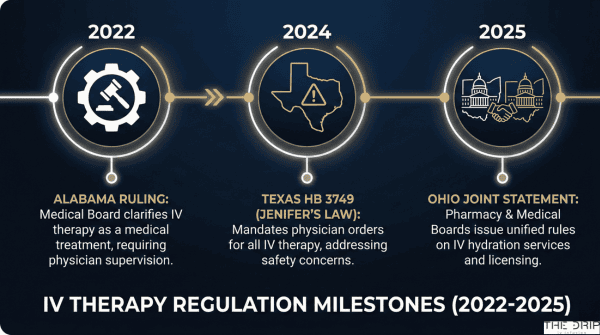
The shift toward stricter prescription requirements reflects growing concerns about patient safety and standardization across the rapidly expanding IV therapy industry.
Are Prescription Requirements Different for Various Types of IV Therapy?
Prescription requirements differ based on IV therapy classification and intended use. The Federal Food, Drug, and Cosmetic Act Section 503A classifies IV therapy as a “compound drug,” subjecting it to federal prescription requirements. Mississippi specifically designates IV fluids as legend drugs requiring a DEA number for dispensing.
Texas HB 3749 distinguishes between elective and medical IV therapy. Elective IV therapy includes wellness treatments such as hydration boosts, vitamin infusions, and recovery drips. Medical-necessity IV therapies may qualify for insurance billing, while wellness therapies typically operate on a cash-pay basis.
| IV Therapy Category | Legal Criteria | Requirement |
| Compound drugs (Section 503A) | Federal classification | Prescription required |
| IV fluids (Mississippi) | Drug status | Legend drug with DEA requirement |
| Elective IV therapy (Texas) | Prescription requirement | Physician order mandatory |
| Medical-necessity IV | Insurance coverage | May be billable |
| Wellness IV therapy | Payment model | Cash-pay only |
These distinctions affect how providers structure their services and determine patient eligibility for different treatment types.
Who Is Authorized to Prescribe IV Therapy in 2026?
Authorization to prescribe IV therapy in 2026 varies by state jurisdiction and provider credentials. Alabama restricts prescriptive authority to physicians, physician assistants (PAs), certified registered nurse practitioners (CRNPs), and certified nurse midwives (CNMs). Texas allows physicians to delegate prescriptive authority to a maximum of seven PAs or advanced practice registered nurses (APRNs). Ohio limits prescribing to physicians, PAs, and APRNs with prescriptive authority.
The fourth DEA telemedicine extension through December 31, 2026, enables providers to prescribe IV therapy via telemedicine without requiring a prior in-person visit. This extension maintains accessibility while preserving prescription oversight requirements.
State-specific variations in prescriptive authority create a complex regulatory environment requiring providers to verify local requirements before offering IV therapy services. The upcoming sections explore medical considerations and safety protocols that complement these prescription requirements.
What Are the Medical and Safety Considerations for Obtaining IV Therapy?
The medical and safety considerations for obtaining IV therapy include evaluating contraindications, understanding infection risks, and ensuring proper medical screening. IV therapy requires careful assessment of existing health conditions and potential complications before administration.
What Medical Conditions Might Necessitate a Prescription for IV Therapy?
Medical conditions that necessitate a prescription for IV therapy include chronic kidney disease, congestive heart failure, fibromyalgia, and cancer. Chronic kidney disease at stage 5 precludes IV therapy entirely due to impaired fluid and electrolyte regulation. Congestive heart failure patients require special monitoring because excess fluid can worsen cardiac function.
A 2009 study on fibromyalgia patients demonstrated significant improvements with IV micronutrient therapy, with similar findings replicated in a 2018 trial. High-dose IV vitamin C administered with chemotherapy doubled survival rates in advanced pancreatic cancer patients according to clinical research. These therapeutic applications require physician oversight and individualized dosing protocols.
Conditions benefiting from prescribed IV therapy extend to severe dehydration, malabsorption disorders, and chemotherapy support. The complexity of these medical conditions demands professional evaluation before initiating treatment.
What Risks Are Associated With Non-Prescribed IV Therapy?
Risks associated with non-prescribed IV therapy include infections, sepsis, vein damage, electrolyte imbalances, and kidney damage. A JAMA study revealed only 24% of IV hydration spa facilities disclosed potential adverse effects when directly asked by researchers.
In February 2021, a 50-year-old female was hospitalized with suspected septic shock following a home IV vitamin infusion, with blood cultures growing Pseudomonas fluorescens bacteria. A 2016 oncology practice incident exposed 38 patients to Exophiala dermitides fungal contamination, resulting in 17 confirmed infections.
High vitamin doses administered intravenously can cause kidney damage through oxalate accumulation and direct nephrotoxicity. Electrolyte imbalances from improper formulations may trigger cardiac arrhythmias or neurological symptoms. Vein damage includes phlebitis, thrombosis, and infiltration requiring medical intervention.
These documented risks underscore the importance of medical supervision and proper sterile technique in IV therapy administration.
How Does Screening and Assessment Work for IV Therapy Clients?
Screening and assessment for IV therapy clients works through medical history review, physical examination, and contraindication evaluation. A JAMA study found only 27% of facilities required consultation with a medical professional before treatment. Standard assessment protocols must include comprehensive medication review to identify drug interactions and allergies.
Alabama mandates a good faith exam (GFE) before IV therapy administration, establishing physician-patient relationships. South Carolina regulations specifically prohibit menu-based selection models, comparing them to “fast-food restaurant” approaches that bypass individualized assessment.
Physical examination components include vital signs monitoring, vein assessment, and hydration status evaluation. Contraindication screening identifies conditions such as heart failure, kidney disease, or active infections that preclude safe IV administration. Documentation requirements encompass informed consent, treatment plans, and adverse event protocols.
Professional screening ensures appropriate patient selection and reduces preventable complications in IV therapy delivery.
What Are the Alternatives to Prescription-Based IV Therapy?
The alternatives to prescription-based IV therapy include wellness-based treatments, at-home services with medical oversight, and oral supplementation. Most IV wellness therapies operate on a cash-pay basis with a median cost of $179 per session, though a 2023 review found no high-quality evidence supporting IV vitamin therapies in healthy adults.
Can You Access Over-the-Counter or Wellness-Based IV Therapy Options?
Over-the-counter IV therapy options do not exist because IV fluids are legend drugs requiring medical oversight. Wellness-based IV therapy services operate outside insurance coverage with typical pricing ranging from $85 to $625 per session depending on treatment type. According to a 2023 review, researchers found no high-quality evidence for IV vitamin therapies in healthy adults. Mayo Clinic reports that oral supplements are generally sufficient for healthy adults without specific deficiencies.
Most IV wellness therapies function as cash-pay services with a median cost of $179 per session. These wellness centers offer various formulations such as hydration drips, vitamin cocktails, and recovery blends without insurance reimbursement.
How Do At-Home IV Therapy Services Handle Prescription Requirements?
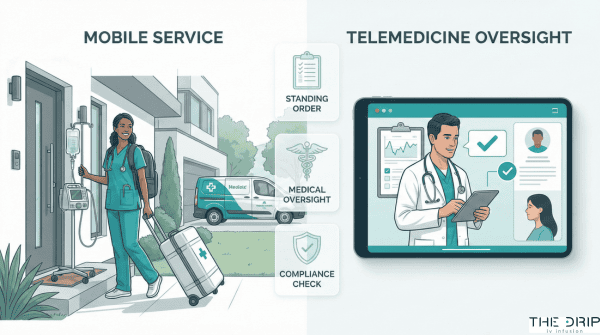
At-home IV therapy services handle prescription requirements through standing orders and protocols with mandatory physician or nurse practitioner oversight. The mobile IV hydration market reached $1.3 billion in 2024 with projections of $2.1 billion by 2030. In 2024, healthcare providers issued over 7 million prescriptions for controlled medications via telemedicine, establishing precedent for remote medical oversight.
Mobile IV services must maintain physician supervision despite operating outside clinical facilities. Standing orders allow nurses to administer predetermined IV formulations under established protocols. However, mobile settings lack the built-in safeguards of clinical facilities such as emergency response systems and sterile preparation areas.
Are There Any Situations Where IV Therapy Is Not Recommended Without a Doctor’s Involvement?
There are multiple situations where IV therapy requires direct physician involvement including pregnancy, infections, and blood disorders. Pregnancy and breastfeeding necessitate medical consultation before any IV therapy administration. Untreated infections and open wounds at potential IV sites contraindicate therapy without physician evaluation.
Blood clotting disorders require physician assessment to determine appropriate anticoagulation management during IV therapy. Sodium deficiency conditions and fluid-restricted diets necessitate medical oversight to prevent fluid overload or electrolyte imbalances. These conditions demand individualized medical evaluation rather than standardized wellness protocols.
Understanding these alternatives helps patients navigate IV therapy options while recognizing when prescription-based medical oversight remains essential for safety and efficacy.
How Should You Navigate IV Therapy Prescription Requirements in 2026 With The Drip IV Infusion?
Navigating IV therapy prescription requirements requires understanding both regulatory compliance and provider capabilities. The Drip IV Infusion operates across Arizona with specialized medical oversight to ensure patients receive appropriate prescriptive guidance for their IV treatments. The following sections detail how this provider helps patients obtain necessary prescriptions and what regulatory changes affect IV therapy access in 2026.
How Can The Drip IV Infusion Help You Understand or Obtain a Prescription for IV Therapy?
The Drip IV Infusion helps patients obtain prescriptions through its network of medical professionals with decades of combined experience in nursing, emergency medicine, home health, and IV medical techniques. The company operates in Gilbert, Phoenix, Chandler, Mesa, Scottsdale, Tempe, Queen Creek, and San Tan Valley throughout Arizona.
Mobile IV services from The Drip IV Infusion deliver treatments directly to homes or workplaces. Patients receive customizable blends containing vitamins, minerals, and medications based on their specific needs. Licensed medical professionals conduct assessments before administering any IV therapy.
The company maintains transparency about medical requirements through its website disclaimer stating it does not provide medical advice and is not a substitute for professional medical diagnosis or treatment. This approach ensures patients understand the medical nature of IV therapy services. The next section examines broader regulatory insights affecting prescription requirements across the industry.
What Are the Main Insights About Needing a Prescription for IV Therapy in 2026?
The main insights about IV therapy prescriptions in 2026 include state-level regulatory variations, market growth projections, and pending federal telemedicine rules. Corporate Practice of Medicine laws affect IV therapy business ownership in 33 states, determining who may legally prescribe and oversee treatments.
Market data reveals significant industry expansion with the global IV hydration therapy market projected to reach $9.7 billion by 2035, growing at 12.9% CAGR. Physical providers maintain dominance with 57.2% market share in 2025, indicating most patients still prefer in-person consultations for IV therapy prescriptions.
Federal telemedicine regulations expected to finalize during 2026 may expand prescription access nationwide. These permanent rules will replace temporary COVID-era allowances and establish long-term frameworks for remote IV therapy consultations. Understanding these regulatory landscapes helps patients navigate prescription requirements whether seeking treatment from The Drip IV Infusion or other providers.