If you’re wondering whether that expensive IV drip is really worth it compared to your trusty sports drink, you’re asking the right question. We’re here to break down the science, costs, and real-world effectiveness of both options so you can make an informed decision about your hydration strategy.
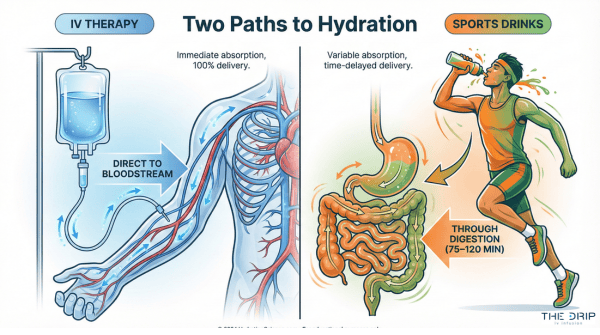
IV therapy versus sports drinks for electrolyte replenishment is a comparison between two fundamentally different approaches to hydration: intravenous infusions deliver fluids and nutrients directly into the bloodstream with 100% bioavailability, while sports drinks rely on intestinal absorption of water, electrolytes, and carbohydrates through the digestive system.
TL;DR Summary:
• Electrolytes like sodium (135-145 mmol/L), potassium (3.6-5.5 mmol/L), and magnesium (>1.46 mg/dL) are essential for athletic performance, with dehydration exceeding 2% body weight loss proven to impair performance
• IV therapy bypasses digestion for 100% bioavailability while sports drinks absorb through intestinal mechanisms within 75 minutes to 2 hours, with hypotonic formulations (≥45 mmol/L sodium, <6% carbs) offering optimal absorption
• Multiple studies including van Rosendal et al. (2010) and Castellani et al. (1997) found only small differences in hydration markers between IV and oral methods, with oral rehydration sometimes showing better performance outcomes
• IV therapy costs $100-$400 per session with documented risks including phlebitis (20-30% incidence), infection, and infusion reactions, while sports drinks cost $2-$5 per bottle with minimal side effects
• Medical guidelines recommend IV therapy only for severe dehydration, heat illness, or inability to drink, while sports drinks are appropriate for exercise lasting over 45 minutes
• WADA prohibits IV infusions exceeding 100mL per 12-hour period for athletes without medical necessity, requiring Therapeutic Use Exemptions for legitimate medical needs
• The Drip IV Infusion offers treatments ranging from $99 hydration to $999 NAD+ infusions at three locations with licensed professionals, though medical literature doesn’t support routine IV use for mild dehydration
Quick Tip: Before reaching for an IV, try this evidence-based hydration strategy: drink 16-24 oz of water 2 hours before exercise, 6-12 oz every 20 minutes during activity, and 16-24 oz per pound of body weight lost within 2 hours after exercise.
What Are Electrolytes and Why Are They Important for Hydration?
Electrolytes are minerals that carry electrical charges when dissolved in body fluids. These charged particles regulate nerve signals, muscle contractions, and fluid balance throughout your cells. Your body maintains precise electrolyte concentrations to ensure proper organ function and cellular metabolism. The following sections examine specific electrolytes and their impact on athletic performance.
Which Key Electrolytes Are Involved in Hydration?
The key electrolytes involved in hydration are sodium, potassium, calcium, magnesium, and chloride. Each electrolyte maintains specific concentration ranges for optimal body function.
| Electrolyte | Normal Range | Low Symptoms | High Symptoms |
| Sodium | 135-145 mmol/L | Headaches, confusion, nausea | Tachypnea, restlessness |
| Potassium | 3.6-5.5 mmol/L | Weakness, muscle twitching, arrhythmias | Cramps, rhabdomyolysis |
| Calcium | 8.8-10.7 mg/dL | Muscle spasms, numbness | Kidney stones, fatigue |
| Magnesium | >1.46 mg/dL | Ventricular arrhythmias | Muscle weakness |
| Chloride | 96-106 mmol/L | Dehydration, alkalosis | Acidosis |
Sodium maintains fluid volume and cell membrane potential. The sodium-potassium ATPase pump regulates potassium as the primary intracellular ion. Calcium supports skeletal mineralization, muscle contraction, nerve transmission, and blood clotting through vitamin D and parathyroid hormone regulation. Magnesium functions as an intracellular cation essential for ATP metabolism and muscle function. Chloride acts as an extracellular anion regulated by kidneys via active and passive transport. These electrolytes work together to maintain cellular hydration and metabolic processes.
How Do Electrolytes Affect Athletic Performance and Recovery?
Electrolytes affect athletic performance and recovery by regulating muscle contractions and fluid balance. According to the Academy of Nutrition & Dietetics, dehydration exceeding 2% body weight loss impairs athletic performance. Johns Hopkins dietitian Rayven Nairn, MS, RDN, LDN, confirms salt is crucial for nerve transmission during athletic activities.
Athletes implement strategic hydration practices at different exercise phases. High school athletes report using hydration strategies 41.1% before exercise, 59.3% during, and 67.0% after, with 84.1% citing rehydration as their primary reason. Elite athletes maintain pre-planned hydration strategies in 93% of cases. Their hydration protocols include water (85%), electrolytes (83%), and carbohydrates (81%). These statistics demonstrate how electrolyte replenishment forms the foundation of athletic recovery and performance maintenance across all competitive levels.
How Do IV Therapy and Sports Drinks Work to Restore Electrolytes?
IV therapy and sports drinks restore electrolytes through fundamentally different mechanisms. IV therapy delivers electrolytes directly into the bloodstream, while sports drinks rely on intestinal absorption. Understanding these processes helps determine which method suits specific hydration needs.
What Is the Process of IV Therapy for Hydration?
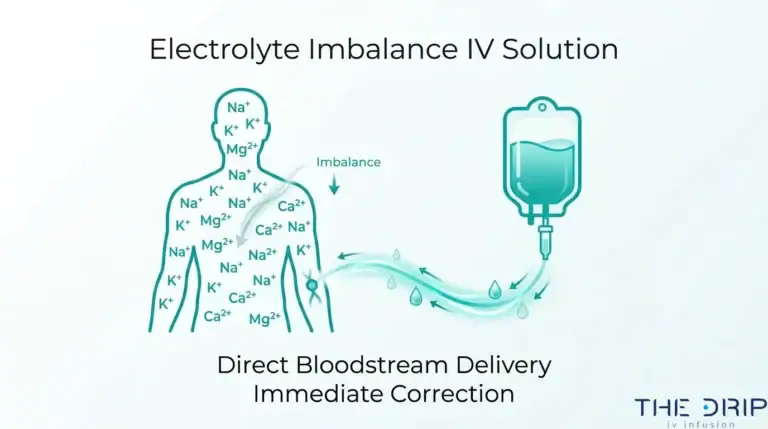
IV therapy for hydration is the direct delivery of fluids and electrolytes into the bloodstream through a vein. The process provides 100% bioavailability by bypassing the digestive system entirely. Nutrients enter circulation immediately through intravenous administration.
The IV rehydration process bypasses oropharyngeal stimulation, which affects thirst and vasodilation responses. This direct bloodstream entry means electrolytes reach cells without intestinal processing delays.
How Do Sports Drinks Provide Electrolytes and Fluids?
Sports drinks provide electrolytes and fluids through intestinal absorption mechanisms. Sodium absorption occurs via glucose co-transport through the SGLT1 pathway. Chloride follows through the paracellular pathway. Potassium and magnesium also utilize the paracellular pathway for absorption.
Complete water absorption in the small intestine occurs within 75 minutes to 2 hours. Hypotonic formulations with at least 45 mmol/L sodium and less than 6% carbohydrates accelerate intestinal water absorption. These formulations maintain plasma volume and improve fluid retention during exercise.
In What Situations Is Each Method Commonly Used?
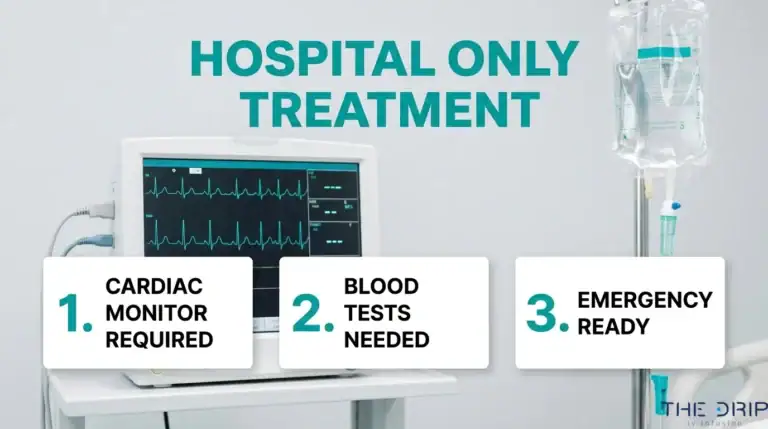
Each method serves different hydration scenarios based on severity and medical necessity. IV therapy is legitimately indicated for severe dehydration as a medical emergency, exertional heat illness, inability to drink due to nausea or vomiting, gastrointestinal distress, and trauma cases.
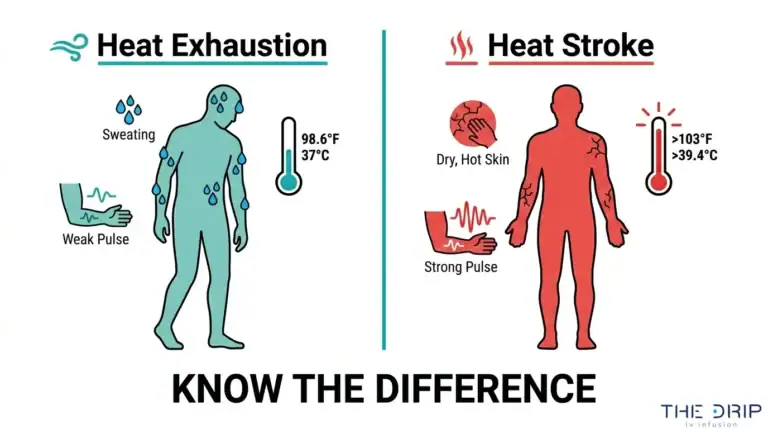
Sports drinks are appropriate for moderate-high intensity exercise lasting more than 1 hour according to the Academy of Nutrition & Dietetics. Medical literature indicates IV therapy is rarely required for heat exhaustion, with oral rehydration being the preferred therapeutic choice.
WADA restricts IV infusions to a maximum 100mL per 12-hour period in or out of competition. Exceptions include hospital admissions, surgical procedures, or clinical investigations. These restrictions prevent plasma volume manipulation in competitive sports.
The choice between IV therapy and sports drinks depends on dehydration severity, medical necessity, and regulatory compliance in athletic contexts.
What Are the Main Differences Between IV Therapy and Sports Drinks for Hydration?
The main differences between IV therapy and sports drinks for hydration are absorption rate, ingredient composition, and sugar content. IV therapy delivers fluids directly into the bloodstream with 100% bioavailability, while sports drinks require intestinal absorption over 75 minutes to 2 hours. The following sections examine these differences in detail.
How Do Absorption Rates and Bioavailability Compare?
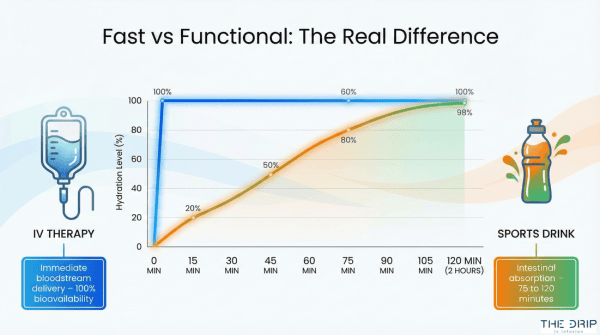
Absorption rates and bioavailability compare with IV therapy providing faster initial rehydration but similar long-term outcomes to oral methods. A 2010 study by Van Rosendal et al. found IV rehydration more rapid but benefits transient with only small differences in hydration markers between IV and oral methods. Castellani et al. in 1997 demonstrated IV and oral rehydration were equally effective post-exercise. Christensen et al. in 2018 found cyclists rode 5 minutes longer after oral versus IV rehydration, though results were not statistically significant (P<.07).
IV therapy achieves 100% bioavailability by bypassing digestive processes entirely. Sports drinks require intestinal absorption, utilizing sodium-glucose co-transport mechanisms that take 75-120 minutes for complete water absorption. Despite faster initial delivery, IV therapy shows minimal performance advantages over oral hydration in athletic contexts.
What Types of Ingredients Are Used in Each Method?
The types of ingredients used in each method differ significantly in complexity and purpose. Sports drinks contain electrolytes and carbohydrates, while IV therapy may include vitamins, minerals, and specialized compounds.
Sports drink ingredients follow established formulations:
- 6-8% carbohydrate concentration for optimal absorption (2023 consensus)
- 200mg sodium per 16oz serving (Johns Hopkins recommendation)
- Potassium, chloride, and magnesium in smaller amounts
- Glucose or sucrose as primary carbohydrate sources
IV therapy ingredients vary by treatment type:
- Myers’ Cocktail ($199): B vitamins, vitamin C, magnesium, calcium
- Athletic Recovery ($249): Electrolytes, amino acids, antioxidants
- NAD+ options ($499-$999): Nicotinamide adenine dinucleotide, B vitamins
The Drip IV Infusion offers these combinations with various vitamin and mineral formulations tailored to specific wellness goals.
Are There Differences in Sugar, Calories, or Additives?
There are substantial differences in sugar, calories, and additives between methods. Sports drinks typically contain 6-8% carbohydrate concentration, translating to 14-19 grams of sugar per 8oz serving. IV therapy solutions may contain dextrose or be sugar-free depending on formulation.
Ketelhut et al. in 2025 found dextrose-based IV solutions offered no performance advantage over water in trained endurance athletes. Sports drinks provide 50-80 calories per 8oz from carbohydrates. Standard IV hydration solutions contain minimal or zero calories unless dextrose is added.
Additive profiles differ markedly. Sports drinks include artificial colors, flavors, and preservatives. IV therapy solutions contain pharmaceutical-grade ingredients without flavor additives but may include preservatives for stability. The choice between methods involves balancing rapid absorption against caloric intake and ingredient preferences.
How Effective Is IV Therapy vs Sports Drinks for Rapid Rehydration?
IV therapy and sports drinks represent two distinct approaches to rapid rehydration, with markedly different effectiveness profiles according to medical research. A 2012 study by Givan and Diehl found limited evidence supporting IV prehydration, with no high-level studies confirming IV therapy prevents dehydration or muscle cramps. The Sports Health journal concluded routine IV therapy cannot be recommended for the majority of athletes. Understanding the comparative effectiveness of these methods requires examining clinical evidence, appropriate use cases, and rehydration timelines.
What Evidence Exists for IV Therapy Effectiveness?
The evidence for IV therapy effectiveness in athletic contexts remains limited according to peer-reviewed research. A 2012 systematic review by Givan and Diehl in Sports Health found no high-level studies confirming IV therapy prevents dehydration or muscle cramps in athletes. Mayo Clinic’s Dr. Brent A. Bauer states there is limited evidence that IV vitamins provide benefit to people with normal nutritional intake. The Sports Health journal explicitly states routine IV therapy cannot be recommended for the majority of athletes based on current evidence. These findings suggest IV therapy’s perceived benefits may exceed its scientifically demonstrated effectiveness for routine athletic hydration.
Are Sports Drinks Effective for Severe Dehydration?
Sports drinks are not effective for severe dehydration, which requires medical intervention. A 2022 study by Yun et al. found oral rehydration solutions and sports drinks more effective than water alone for mild to moderate dehydration. Medical literature indicates oral rehydration is preferred for mild dehydration cases, with IV therapy rarely required except in medical emergencies. Severe dehydration manifests as symptoms requiring immediate medical attention, where sports drinks alone cannot provide adequate rehydration speed. The distinction between mild and severe dehydration determines whether sports drinks represent an appropriate intervention.
How Quickly Can Each Method Restore Fluid Balance?
Each method restores fluid balance at different rates with specific protocols. NATA guidelines recommend consuming 16-24 fl.oz water within 2 hours before exercise for pre-hydration. During exercise, athletes should consume 6-12 fl.oz every 10-20 minutes to maintain hydration. Post-exercise recovery requires 16-24 fl.oz per pound of body weight lost within 2 hours. IV therapy delivers fluids directly into the bloodstream, bypassing absorption time, while oral methods require intestinal absorption over 75 minutes to 2 hours. These timeframes guide selection between IV therapy and sports drinks based on urgency and dehydration severity.
What Are the Benefits and Drawbacks of IV Therapy Compared to Sports Drinks?
The benefits and drawbacks of IV therapy compared to sports drinks involve safety concerns, effectiveness, and appropriate use cases. IV therapy delivers 100% bioavailability but carries significant medical risks, while sports drinks provide safer hydration for most athletic situations. Understanding these differences helps determine the most appropriate hydration method for specific needs.
Are There Safety Concerns or Side Effects for Either Option?
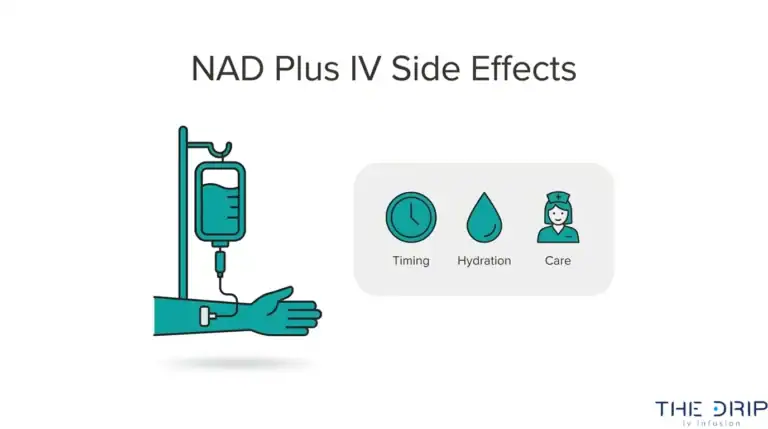
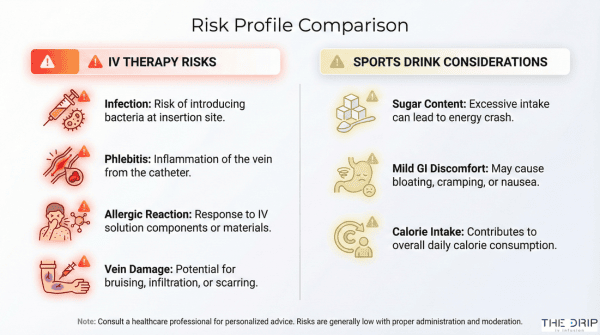
Safety concerns for IV therapy are substantial compared to sports drinks. Phlebitis occurs in 20-30% of IV therapy cases as the most frequent complication, presenting in four types: mechanical, infective/septic, chemical, and post-removal. A 2012 study on IV therapy infusion reactions found fever in 47.1% of cases, headache in 42.2%, flu-like symptoms in 8.8%, and rash in 3.9%, with severe reactions including hypertension, anaphylaxis, and bronchospasm.
High doses of certain vitamins via IV may cause kidney damage, heart rhythm abnormalities, blood pressure changes, GI symptoms, and peripheral nerve damage. According to a Yale University study, IV hydration spas remain generally lightly regulated or unregulated with regard to offerings and oversight.
Sports drinks present minimal safety concerns when used appropriately, with primary risks limited to excessive sugar intake and potential electrolyte imbalances from overconsumption.
What Are the Potential Risks of Overuse?
The potential risks of IV therapy overuse exceed those of sports drinks significantly. USADA Director Laura Lewis states “There is never an appropriate place for an IV outside of a medical intervention” and warns the “quick fix” mentality is more dangerous than IVs themselves.
Documented IV adverse effects include:
- Infection (most critical risk)
- Vein complications including collapse
- Nutrient toxicity from fat-soluble vitamins
- Electrolyte imbalances
- Allergic reactions
Improper IV insertion or lack of oversight may cause thrombophlebitis and air embolisms. Sports drink overuse typically results in gastrointestinal discomfort, temporary electrolyte imbalances, or excess calorie consumption without life-threatening complications.
Who Might Benefit Most from Each Method?
Athletes engaged in moderate-high intensity exercise lasting more than 1 hour may benefit from sports drinks. The Academy of Nutrition & Dietetics recommends sports drinks for these specific exercise durations and intensities.
Medical necessity criteria for IV therapy requires:
- Clear diagnosis
- No non-prohibited alternatives available
- Won’t enhance performance beyond normal health
- Qualified personnel in appropriate setting
- Adequate medical records
IV therapy remains appropriate only for severe dehydration, heat illness emergencies, inability to drink due to nausea or vomiting, gastrointestinal distress, and trauma cases. These strict medical criteria highlight that sports drinks serve most hydration needs safely and effectively.
How Do Cost and Convenience Compare Between IV Therapy and Sports Drinks?
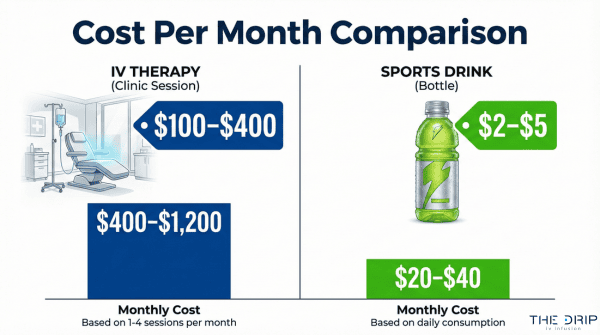
IV therapy costs significantly more than sports drinks. A standard IV hydration session ranges from $100-$300, while a sports drink bottle costs $2-$5. The price difference reflects distinct delivery methods and accessibility between these hydration options.
What Is the Typical Cost of IV Therapy vs Sports Drinks?
IV therapy costs range from $85-$400 per standard session. Hydration treatments cost $100-$300, vitamin infusions run $150-$500, and NAD+ therapies reach $500-$2,000. Insurance rarely covers these elective treatments.
Sports drinks cost $2-$5 per bottle at retail. Premium electrolyte powders like Liquid I.V. cost $23 per serving. A 2019 study found oral rehydration therapy costs $40.50 per case versus IV therapy at $50.14, saving $9.64 with the oral method.
The cost disparity stems from several factors:
- IV therapy requires medical personnel and clinical settings
- Sports drinks use mass production and retail distribution
- IV equipment and sterile supplies add overhead costs
- Sports drinks offer self-administration without medical supervision
Athletes consuming sports drinks during training spend approximately $20-$40 monthly. Comparable IV therapy frequency would cost $400-$1,200 monthly. This 10-30x cost difference makes sports drinks the economical choice for routine hydration needs.
Which Option Is More Accessible in Daily Life or During Sports Events?
The sports drink market valued at $28.07-$32.7 billion in 2024 demonstrates widespread availability. Gatorade holds 61.6% of the US market share. Sports drinks are sold in grocery stores, gas stations, vending machines, and sporting venues nationwide.
The IV therapy market valued at $2.62-$2.71 billion in 2024 remains smaller but growing. Projections estimate the market will reach $4.26-$4.60 billion by 2030. IV therapy requires appointments at specialized clinics or mobile services.
USADA Director Laura Lewis notes IV bars at race sites are “difficult to verify for proper protocols.” This regulatory concern limits IV therapy availability at sporting events. Sports drinks remain the standard hydration option at marathons, triathlons, and athletic competitions.
Accessibility differences include:
- Sports drinks require no medical supervision or appointments
- IV therapy needs 30-60 minutes for administration versus instant consumption
- Athletes can carry sports drinks during activities but cannot self-administer IVs
- Travel teams access sports drinks globally while IV clinics vary by location
The convenience gap favors sports drinks for daily hydration and athletic events. IV therapy serves specific medical needs rather than routine electrolyte replacement.
When Should You Choose IV Therapy Instead of Sports Drinks for Hydration?
IV therapy becomes necessary when oral hydration fails or medical emergencies arise. Medical professionals reserve IV hydration for severe dehydration, heat illness, persistent vomiting, gastrointestinal distress, and trauma cases. Sports drinks remain the standard for most athletic hydration needs.
What Are the Signs You May Need IV Therapy?
The signs you may need IV therapy include severe dehydration symptoms, inability to keep fluids down, and medical emergencies. Severe dehydration manifests as confusion, rapid heartbeat, sunken eyes, and minimal urination. Exertional heat illness requires immediate IV intervention when core temperature exceeds 104°F with altered mental status.
Medical indications for IV therapy include persistent nausea preventing oral intake, severe gastroenteritis with fluid losses exceeding 10% body weight, and trauma with blood loss. Cedars-Sinai Medical Center reports lack of scientific evidence supporting vitamin IV therapy outside these medical necessities.
Athletes experiencing mild fatigue or thirst do not require IV therapy. Oral rehydration resolves most exercise-related dehydration effectively.
Are There Guidelines for Using Sports Drinks Safely?
Guidelines for using sports drinks safely depend on exercise duration and intensity. Before exercise, consume 24 ounces of sports drink 2 hours prior to activity. During exercise lasting over 45 minutes, drink 6-8 ounces every 15-20 minutes. After exercise, replace 16-24 ounces per pound of weight lost.
Sports drinks work best for activities exceeding one hour at moderate-high intensity. Water suffices for shorter, lighter activities. Esther Ellis, MS, RDN, LDN states “Drinking is the only way to rehydrate and cool your body from the inside out.”
Hypotonic formulations with 45 mmol/L sodium and under 6% carbohydrates optimize absorption. Avoid excessive consumption outside exercise contexts to prevent unnecessary calorie intake.
These evidence-based guidelines help athletes maintain proper hydration while avoiding both dehydration and overhydration risks during training and competition.
How Should You Approach Electrolyte Replenishment and Hydration with The Drip IV Infusion?
Electrolyte replenishment through The Drip IV Infusion requires understanding both service options and scientific evidence. The Drip IV Infusion offers professional IV therapy services for hydration and wellness support. The following sections examine their specific offerings and key considerations for IV therapy versus sports drinks.
Can The Drip IV Infusion’s IV Therapy Help with Your Hydration Needs?
The Drip IV Infusion’s IV therapy may help with hydration needs through their professional medical services. The Drip IV Infusion operates three locations in Birmingham, West Bloomfield, and St. Petersburg with licensed professionals administering treatments. Their facilities remain open seven days per week with concierge service available for convenient scheduling.
The Drip IV Infusion pricing includes:
- Booster Shots at $39
- Hydration treatments from $99 to $149
- Therapeutic infusions ranging $199 to $399
- NAD+ protocols between $499 and $999
- Membership discounts for regular clients
Their hydration treatments deliver fluids directly into the bloodstream, bypassing digestive absorption. Licensed medical professionals oversee each infusion session at The Drip IV Infusion locations.
What Are the Key Takeaways About IV Therapy vs Sports Drinks for Electrolytes and Hydration?
The key takeaways about IV therapy versus sports drinks for electrolytes and hydration are that medical evidence favors oral rehydration for most situations. Medical literature does not support IV replacement for mild dehydration cases. Oral rehydration remains the preferred therapeutic choice according to clinical guidelines.
IV therapy provides 100% bioavailability through direct bloodstream delivery. However, research shows only small differences in hydration markers between IV and oral methods in athletic contexts. The rapid absorption advantage proves transient rather than sustained.
The World Anti-Doping Agency (WADA) prohibits IV infusions exceeding 100mL per 12-hour period without Therapeutic Use Exemption. This restriction prevents plasma volume manipulation in competitive sports. Athletes must document medical necessity for IV hydration exceeding these limits.
These evidence-based findings guide appropriate selection between IV therapy at facilities like The Drip IV Infusion and sports drink alternatives for hydration needs.