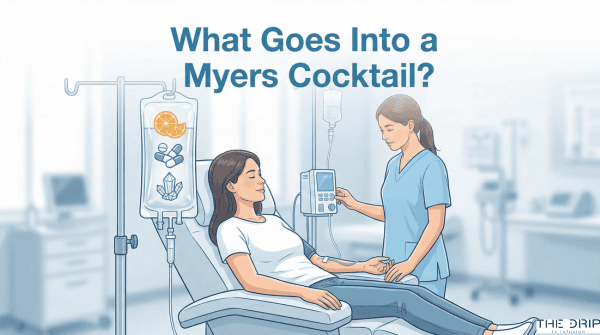
If you’re considering Myers Cocktail IV therapy or have concerns about its safety, we understand your need for clear, evidence-based information. You’ve come to the right place for a comprehensive understanding of what this treatment involves and the potential risks you should carefully consider before proceeding.
The Myers Cocktail is an intravenous vitamin and mineral infusion containing magnesium, calcium, B-complex vitamins, and vitamin C administered directly into the bloodstream over approximately 10 minutes. While marketed for various wellness benefits, this treatment carries risks ranging from mild discomfort to serious complications including kidney damage, severe electrolyte imbalances, and in rare cases, life-threatening reactions.
TL;DR Summary:
- Common side effects include warmth, flushing, nausea, and injection site discomfort that typically resolve shortly after infusion
- Serious risks encompass kidney damage from vitamin C, dangerous electrolyte imbalances, anaphylaxis from thiamine, and infection from improper sterilization
- High-risk individuals include those with kidney disease, heart conditions, abnormal electrolyte levels, and pregnant or breastfeeding women
- Limited scientific evidence supports efficacy in healthy individuals despite costs ranging from $250-$800 per treatment
- As of 2024, regulatory oversight remains minimal with only 1 in 4 clinics requiring medical consultation beforehand
- Safety depends heavily on proper medical screening, sterile technique, and qualified healthcare provider administration
Quick Tip: Before considering any IV vitamin therapy, request a complete medical evaluation including kidney function tests and discuss all current medications with a licensed physician—not just the clinic’s medical director who may not be present during your treatment.
Understanding these risks empowers you to make an informed decision about whether a Myers Cocktail aligns with your health goals and medical history. We’ll guide you through everything from ingredient specifics to warning signs, helping you navigate this increasingly popular but scientifically controversial treatment option.
What Is the Myers Cocktail and How Does It Work?
The Myers Cocktail is an intravenous vitamin and mineral formula containing magnesium, calcium, B vitamins, and vitamin C administered directly into the bloodstream. This IV therapy bypasses the digestive system to deliver nutrients at higher concentrations than oral supplements can achieve. The treatment takes approximately 10 minutes and requires prescription by a licensed medical professional in the United States. The following subsections detail the specific ingredients and administration protocols used in Myers Cocktail therapy.
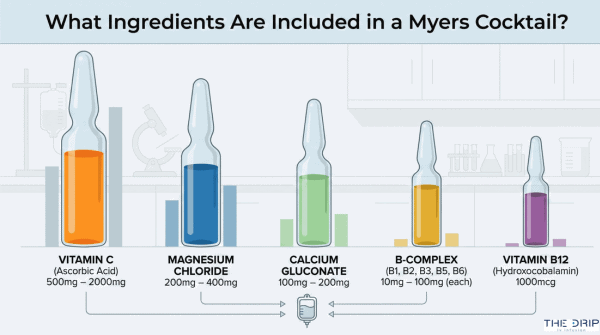
What Ingredients Are Included in a Myers Cocktail?
The standard Myers Cocktail formula contains 5 mL magnesium chloride hexahydrate (20%), 3 mL calcium gluconate (10%), 1 mL hydroxocobalamin (1,000 μg/mL), 1 mL pyridoxine hydrochloride (100 mg/mL), 1 mL dexpanthenol (250 mg/mL), 1 mL B-complex 100, 5 mL vitamin C (500 mg/mL), and 20 mL sterile water for a total volume of 37 mL. Clinical facilities prepare each dose at approximately $18 USD. Some practitioners modify the magnesium concentration by increasing it 10-fold using either 20% magnesium chloride or 50% magnesium sulfate. FDA-registered 503B facilities supply these ingredients following current good manufacturing practices (cGMP) standards.
How Is the Myers Cocktail Administered?
The Myers Cocktail is administered through a slow IV push over 10 minutes via the antecubital fossa using a 25-gauge butterfly needle. The U.S. Food and Drug Administration regulates intravenous hydration solutions containing vitamins and minerals as prescription drugs. Licensed medical professionals must prescribe these treatments. Trained clinicians follow strict stick protocols while maintaining current credentials. Facilities prepare IV infusions on-site using a Pharmacy Compounding Aseptic Isolator that maintains ISO Class 5 clean air through positive pressure and HEPA filtration. These administration protocols ensure sterility and reduce contamination risks during the infusion process.
What Are the Most Common Side Effects of a Myers Cocktail?
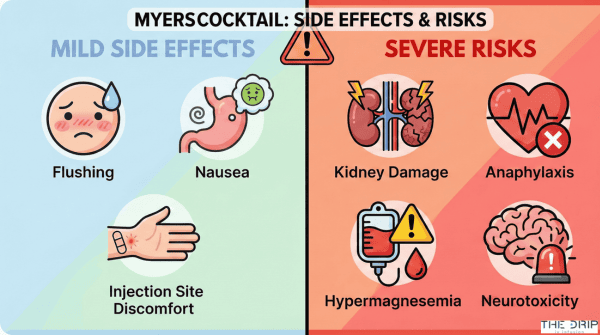
The most common side effects of a Myers Cocktail include warmth during infusion, flushing, injection site discomfort, nausea, and headache. A 2018 fibromyalgia trial documented these reactions in multiple participants receiving the IV treatment. Most patients experience mild symptoms that resolve shortly after treatment completion.
Why Do Some People Experience Mild Reactions After a Myers Cocktail?
Mild reactions after a Myers Cocktail occur due to the rapid infusion of concentrated vitamins and minerals into the bloodstream. The magnesium content causes a sense of warmth during infusion in most patients.
Common mild reactions include:
- Flushed or cool sensations
- Muscle cramps
- Infusion site discomfort
- Nausea and stomach upset
- Headache
- Injection site soreness, burning, and bruising
- Vein inflammation
A 2018 fibromyalgia trial reported one subject experienced dyspepsia, insomnia, depression, and blood pressure elevation over three weeks. These reactions occur as the body adjusts to the sudden influx of nutrients bypassing normal digestive absorption.
How Long Do Typical Side Effects Last?
Typical side effects last from minutes to several days depending on the reaction type. Most mild effects like warmth and flushing resolve within minutes after infusion completion.
Injection site soreness and bruising may persist for 2-4 days. Symptoms that continue beyond the immediate post-infusion period typically ameliorate after voluntary withdrawal from treatment. Patients experiencing persistent reactions should consult their healthcare provider before continuing Myers Cocktail therapy.
What Are the Serious or Rare Side Effects of a Myers Cocktail?
The serious or rare side effects of a Myers Cocktail include electrolyte imbalances, kidney damage, anaphylaxis, and cardiovascular complications. According to a 2024 survey, 95.2% of 188 health professionals perceived commercial IV nutrient therapies as a risk to patients’ health. Life-threatening reactions can occur from improper administration or in patients with underlying conditions. The following sections detail specific risk groups and emergency warning signs.
Who Is Most at Risk for Severe Reactions From a Myers Cocktail?
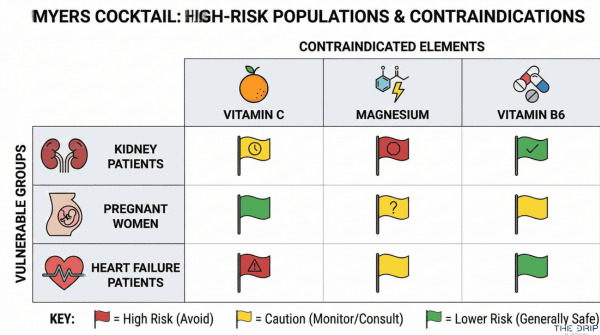
Patients with kidney disease face the highest risk for severe reactions from a Myers Cocktail due to reduced ability to excrete excess vitamins and minerals. Individuals with abnormal magnesium or potassium blood levels from kidney disease, diuretic use, or excessive alcohol consumption require careful monitoring. Those with myasthenia gravis, low calcium levels, or elevated magnesium levels should avoid treatment.
Heart conditions and congestive heart failure increase fluid overload risk during IV therapy. Patients with glucose-6-phosphate dehydrogenase (G-6-PD) deficiency cannot receive high-dose vitamin C due to hemolysis risk. A 2024 health professional survey found 95.2% of 188 respondents identified commercial IV nutrient therapies as potentially harmful to patient health.
What Signs Indicate a Medical Emergency After Receiving a Myers Cocktail?
Signs indicating a medical emergency after a Myers Cocktail include hypotension, fainting, and anaphylaxis from rapid infusion or thiamine sensitivity. Severe hypermagnesemia above 12 mg/dL causes muscle paralysis, decreased breathing, ECG changes, bradycardia, atrioventricular block, and lethargy. Critical hypermagnesemia exceeding 15 mg/dL induces coma and cardiorespiratory arrest.
Improper equipment sterilization has caused deaths from severe infections. A 2024 Texas case documented a 47-year-old woman who died after IV infusion at a med spa, experiencing breathing difficulty, chest tightness, and cardiac arrest. These emergency signs require immediate medical intervention to prevent permanent damage or death.
Are There Any Long-Term Risks or Unknowns Associated With Regular Myers Cocktail Use?
The long-term risks and unknowns associated with regular Myers Cocktail use include limited safety research, potential vitamin toxicity, and insufficient data on adverse events in commercial settings. Current evidence reveals significant gaps in our understanding of repeated IV nutrient therapy effects over extended periods.
Is There Enough Research to Support the Safety of Frequent Myers Cocktail Treatments?
There is not enough research to support the safety of frequent Myers Cocktail treatments. Very few studies have scientifically tested claims around IV therapy for increased immunity, stress relief, and treatment of various illnesses. A fibromyalgia study found no statistically significant differences between Myers Cocktail and placebo at 8 and 16 weeks.
Limited evidence exists that IV vitamins provide benefit to people with normal nutritional intake and levels. Mayo Clinic experts report that many existing studies suffer from poor design. The high placebo effect in clinical trials complicates efficacy assessment.
The lack of high-quality clinical trials extends to most claimed benefits. Research provides minimal data on drug-nutrient interactions in IV context. Commercial settings show insufficient data on adverse event rates.Long-term use of the Myers Cocktail can lead to vitamin toxicity through several mechanisms. High-dose IV vitamin C causes hyperoxaluria through endogenous conversion to oxalate, with 1000 mg/day increasing oxalate excretion by 6-13 mg/day. Oxalate nephropathy has been reported after as few as 2 IV doses in a patient with preexisting kidney dysfunction.
Acute oxalate nephropathy carries a poor prognosis. A 2021 review found that 52% of acute oxalate nephropathy cases develop into chronic kidney disease. Peripheral neuropathy may occur from high doses of vitamin B6.
| Nutrient / Condition | Clinical Risk Factor | Reported Value |
| Vitamin C | Oxalate excretion increase | 6–13 mg/day per 1000 mg |
| Oxalate nephropathy | Minimum doses reported | 2 IV doses |
| Acute oxalate nephropathy | CKD progression rate | 52% |
| Moderate hypermagnesemia | Serum level range | 7–12 mg/dL |
| Critical hypermagnesemia | Serum level threshold | >15 mg/dL |
These research gaps leave practitioners and patients without clear safety guidelines for long-term use.
Can Long-Term Use of the Myers Cocktail Lead to Vitamin Toxicity?
Moderate hypermagnesemia at 7-12 mg/dL causes decreased reflexes, confusion, bladder paralysis, flushing, headache, constipation, and hypotension. No established upper tolerable limit exists for vitamin B12, but the body does not store excess amounts as it’s water-soluble.
Understanding these toxicity risks becomes essential when considering regular Myers Cocktail treatments, particularly for individuals with underlying health conditions that may impair vitamin and mineral excretion.
Who Should Avoid the Myers Cocktail or Use Caution?
Certain medical conditions and life stages make Myers Cocktail therapy unsafe. Individuals with kidney disease, heart conditions, abnormal electrolyte levels, or those taking specific medications face serious health risks from IV vitamin infusions. The following contraindications and precautions determine who should avoid this treatment entirely.
Are There Medical Conditions or Medications That Interact With the Myers Cocktail?
Medical conditions that interact with the Myers Cocktail include kidney disease, high blood pressure, heart failure, myasthenia gravis, and abnormal blood levels of magnesium, potassium, or calcium. These conditions prevent the body from properly processing or eliminating the high doses of vitamins and minerals in the infusion.
Medication interactions pose significant risks:
| Medication Type | Myers Cocktail Component | Interaction Risk |
| Antihypertensives | Magnesium | Dangerously low blood pressure |
| Ceftriaxone | Calcium | Blood binding complications |
| Warfarin | Vitamin C | Reduced anticoagulant effectiveness |
| Diuretics | Magnesium/Potassium | Electrolyte abnormalities |
| Bortezomib | Vitamin C | Reduced anticancer efficacy |
High-dose vitamin C interferes with laboratory tests, particularly strip-based glucose meters, potentially masking critical diagnostic information. Patients on blood-thinning medications face altered drug effectiveness when receiving vitamin C infusions. The combination of diuretics with Myers Cocktail components increases electrolyte imbalance risks significantly.
Should Pregnant or Breastfeeding Individuals Receive a Myers Cocktail?
Pregnant or breastfeeding individuals should not receive a Myers Cocktail due to unstudied safety profiles and documented fetal risks. The FDA specifically warns against magnesium sulfate administration beyond 5-7 days in pregnant women due to fetal bone abnormalities and hypocalcemia risks.
Maternal magnesium sulfate exposure for longer than one week causes skeletal adverse effects in neonates. Breastfeeding mothers must avoid IV vitamin C or discontinue breastfeeding for 12-24 hours post-infusion to prevent infant exposure. Medical experts universally recommend against Myers Cocktail therapy during pregnancy and lactation due to these documented risks and lack of safety data.
The absence of controlled studies on IV vitamin therapy in pregnant and breastfeeding populations makes risk assessment impossible. Healthcare providers cannot guarantee fetal or infant safety with current evidence gaps. These vulnerable populations require alternative supplementation methods with established safety profiles rather than experimental IV vitamin cocktails.
How Does the Myers Cocktail Compare to Other IV Infusions Regarding Side Effects and Risks?
The Myers Cocktail compares to other IV infusions by presenting a similar risk profile for general IV complications while carrying unique vitamin-specific adverse events. IV vitamin therapy bypasses the gastrointestinal tract, achieving higher bioavailability and faster therapeutic concentrations compared to oral supplementation. This direct delivery method eliminates common GI side effects such as osmotic diarrhea that limit high-dose oral vitamin C intake. Standard IV therapy risks apply to all infusions, including the Myers Cocktail. These risks encompass blood clots, air embolism, and infection at the IV placement site. The Myers Cocktail’s specific vitamin and mineral composition introduces additional considerations for electrolyte imbalances and vitamin toxicity not present in simple hydration IVs.
Are Side Effects More or Less Likely With the Myers Cocktail Compared to Other Treatments?
Side effects from the Myers Cocktail are generally comparable to other IV vitamin infusions but may occur less frequently than with high-dose oral vitamins. IV administration avoids the osmotic diarrhea that commonly limits oral vitamin C doses above 2,000 mg daily. A 2018 clinical trial found IV high-dose ascorbic acid was generally well tolerated, though renal failure occurred in patients with preexisting kidney disorders. General IV therapy carries inherent risks regardless of infusion type. Blood clots, air embolism, and catheter-site infections affect all IV treatments equally. Repeated IV administrations increase infection risk and can lead to bloodstream infections or sepsis. According to a 2022 FDA warning, Mycobacterium abscessus infections occurred from improper sterilization at multiple facilities, requiring hospitalization and antibiotic treatment.
What Should You Discuss With a Provider Before Trying a Myers Cocktail?
You should discuss your complete medical history, current medications, and treatment goals with a provider before receiving a Myers Cocktail. Essential topics include kidney function, heart conditions, electrolyte levels, and any history of allergic reactions. A 2018 JAMA study revealed only 1 in 4 IV therapy clinics required medical consultation beforehand. Fewer than 25% of facilities warned patients about possible side effects. According to a 2019 survey, 84% of health professionals cited inadequate patient health screening as a primary risk factor. The American College of Clinical Pharmacy recommends hydration and vitamin infusions receive physician approval for valid medical reasons. Informed consent documentation should detail specific risks, benefits, and alternatives. Cost considerations matter since treatments range $250-$800 per session without insurance coverage. Providers should screen for contraindications including G-6-PD deficiency, myasthenia gravis, and concurrent medications that interact with high-dose vitamins.
How Should You Weigh the Benefits and Risks of the Myers Cocktail With The Drip IV Infusion?
Weighing the benefits and risks of the Myers Cocktail requires evaluating both safety protocols and documented adverse events. The Drip IV Infusion implements specific safety measures while acknowledging the inherent risks of IV vitamin therapy. The following subsections examine personalization capabilities and essential risk factors.
Can The Drip IV Infusion Personalize Myers Cocktail Treatments for Safety?
The Drip IV Infusion personalizes Myers Cocktail treatments through medical oversight and standardized safety protocols. Their national medical director and medical board maintain policies prioritizing sterile technique throughout all procedures.
Staff training follows United States Pharmacopeia standards for sterile compounding procedures with routine refreshers. Quality control occurs at multiple checkpoints:
• Supplier vetting for ingredient sourcing
• Process validation during preparation
• Ingredient testing for identity, strength, and stability
• Pre-infusion equipment checks
• Surface sanitation and hand hygiene protocols
The facility maintains separate areas for preparation, mixing, and service to minimize contamination risk. Licensed nurses, medical directors, and physician assistants with hospital medicine and emergency service backgrounds administer treatments.
Each visit includes systematic safety checks before infusion begins. These personalization measures may reduce but cannot eliminate inherent IV therapy risks.
What Are the Key Takeaways About Myers Cocktail Side Effects and Risks?
The key takeaways about Myers Cocktail side effects include both common reactions and serious medical risks. Common side effects manifest as warmth, flushing, nausea, headache, and injection site discomfort.
Serious risks encompass:
• Electrolyte imbalances requiring medical intervention
• Kidney damage from high-dose vitamin C
• Anaphylaxis from thiamine administration
• Peripheral neuropathy from vitamin B6 excess
A 2023 Texas case resulted in death when a 47-year-old woman received an IV infusion containing total parenteral nutrition, experiencing cardiac arrest at the facility. Limited evidence supports efficacy in healthy individuals with normal nutrient levels despite costs ranging $250-$800 per session.
As of June 2024, no state had enacted legislation specifically regulating IV hydration spas. The FDA has received adverse event reports and warned about products compounded under insanitary conditions. According to Dr. Brent Bauer of Mayo Clinic, “Anything we place in the human body can carry risk, including those things which are thought to be natural.”
Understanding these documented risks enables informed decision-making about Myers Cocktail treatments at any facility, including The Drip IV Infusion.