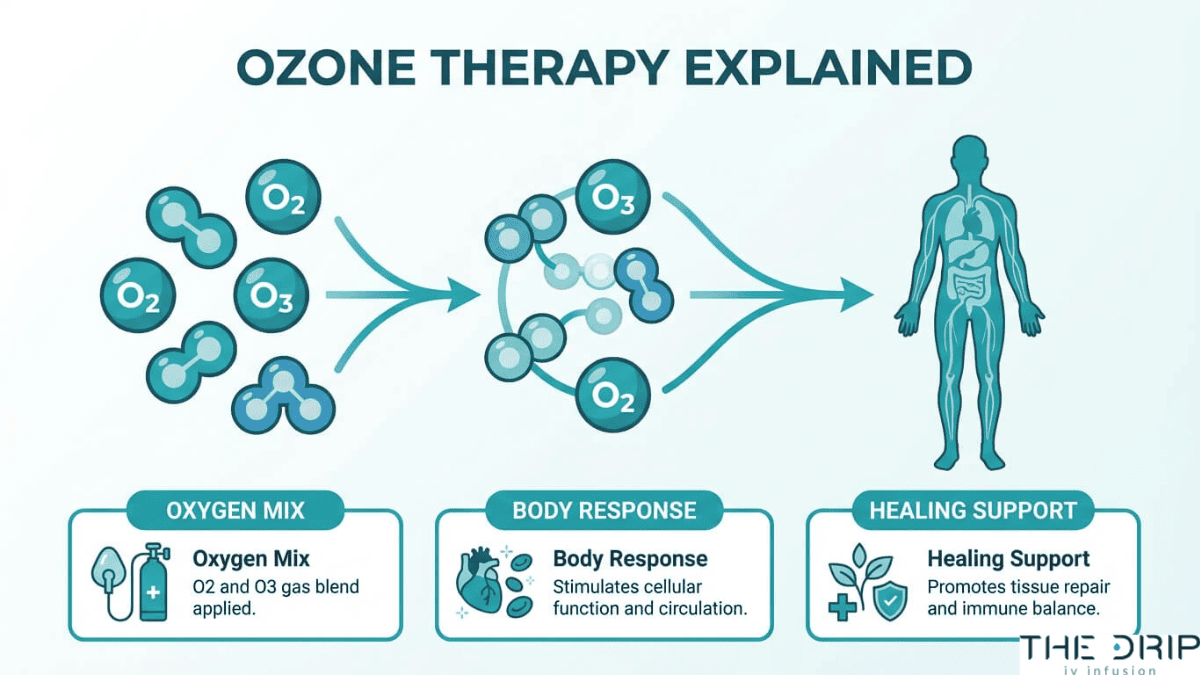
Ozone therapy is a medical treatment that introduces a controlled oxygen-ozone gas mixture into the body to stimulate healing responses, activate antioxidant defenses, and improve how cells deliver and use oxygen. We created this guide to cover its biological mechanisms and history, the different treatment types available, clinical applications and conditions treated, physiological benefits, side effects and safety considerations, the current state of scientific evidence and FDA regulation, how it compares to other oxidative therapies, and what to expect during a session.
Ozone works through a paradoxical mechanism: a brief, controlled oxidative stress triggers the body’s own protective systems, upregulating antioxidant enzymes and increasing red blood cell flexibility for better oxygen delivery through small capillaries. Its medical use dates back over 125 years to Nikola Tesla’s first patented ozone generator in 1896.
Treatment types range from systemic blood-based protocols like major autohemotherapy to localized methods such as direct joint injections, insufflation, ozone saunas, and topical ozonated oils. Each delivery method serves distinct clinical purposes.
Clinical research supports ozone therapy for chronic pain conditions like knee osteoarthritis, periodontal health, wound healing, and immune modulation through macrophage activation and cytokine pathway regulation.
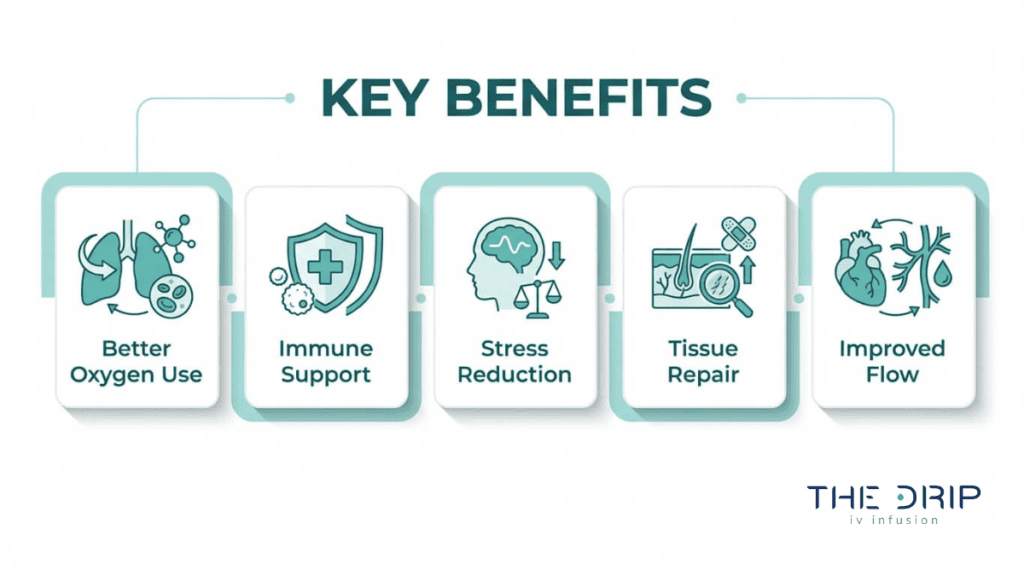
The benefits center on improved oxygen utilization, stronger immune response, activation of the Nrf2 antioxidant signaling pathway, tissue regeneration, and enhanced circulation. Side effects range from mild Herxheimer reactions to serious risks like respiratory damage from direct inhalation, with absolute contraindications for G6PD deficiency and pregnancy.
The FDA classifies ozone as a toxic gas with no approved medical application, creating a gap between regulatory status and growing clinical practice. Complementary IV nutrient therapies, including Vitamin C and glutathione, can support ozone protocols by enhancing oxygen utilization and restoring antioxidant balance.
What Is Ozone Therapy?
Ozone therapy is a medical treatment that introduces a mixture of ozone and oxygen gas into the body to stimulate healing responses. The sections below explain how ozone works at a biological level and how its medical use evolved over more than a century.
How Does Ozone Therapy Work in the Body?
Ozone therapy works in the body by delivering a controlled ozone-oxygen gas mixture, typically containing 1–5% ozone, that triggers beneficial biochemical signaling. When this mixture contacts blood or tissue, it creates a brief, moderate oxidative stress. Rather than causing damage, this controlled stress activates the body’s own protective mechanisms, upregulating antioxidant defenses and improving how cells use oxygen.
The process differs from hyperbaric oxygen therapy (HBOT), which uses pressurized 100% oxygen. Ozone’s mechanism relies on biochemical signaling rather than simply flooding tissues with oxygen under pressure.
It is worth noting that the FDA classifies ozone as a toxic gas with no known useful medical application in specific, adjunctive, or preventive therapy, which restricts its formal medical adoption in the United States. For practitioners who offer it, absolute contraindications include:
- Glucose-6-phosphate dehydrogenase (G6PD) deficiency
- Pregnancy, especially during the first trimester
- Uncompensated toxic hyperthyroidism
This regulatory landscape makes provider selection and medical screening essential for anyone considering ozone therapy.

What Is the History of Ozone Use in Medicine?
The history of ozone use in medicine spans more than 125 years. In September 1896, Nikola Tesla patented his first ozone generator in the United States, then formed the Tesla Ozone Company in 1900 to produce ozonated products for medical applications, according to a historical review published through the National Center for Biotechnology Information.
The theoretical foundation for oxidative therapies expanded further when Otto Warburg, a Nobel Prize winner, reported in Berlin that cancer was fundamentally linked to a lack of oxygen at the cellular level. His work provided early scientific reasoning for exploring oxygen-based interventions, including ozone.
Since those early developments, ozone therapy has been adopted in various forms across Europe and Latin America, while remaining more restricted in the United States. Understanding this trajectory helps contextualize the different types of ozone therapy available today.
What Are the Different Types of Ozone Therapy?
The different types of ozone therapy are methods that vary by how the ozone-oxygen gas mixture enters the body. The main types include major autohemotherapy, minor autohemotherapy, ozone insufflation, ozone sauna or limb bagging, ozonated water and oils, and direct ozone injection.

Major Autohemotherapy
Major autohemotherapy is the most widely used systemic ozone therapy method. A practitioner draws venous blood, mixes it with an ozone-oxygen gas mixture in a sterile container, then re-infuses the ozonated blood intravenously. According to the International Scientific Committee of Ozone Therapy (ISCO3), MAH typically involves extracting 50 mL to 100 mL of venous blood, mixed with ozone at concentrations ranging from 10 μg/mL to 40 μg/mL before reinfusion. This approach allows ozone to interact directly with blood components, making it a preferred choice for whole-body wellness protocols.
Minor Autohemotherapy
Minor autohemotherapy is a smaller-scale version of MAH. A practitioner draws a small volume of blood, typically 5 mL to 10 mL, mixes it with ozone gas, and then re-administers it as an intramuscular injection. Because the volume and ozone concentration are lower, this method is often considered a gentler introduction to ozone-based protocols. Minor autohemotherapy is sometimes used to support immune modulation, though it delivers a less systemic effect compared to its major counterpart.
Ozone Insufflation
Ozone insufflation delivers ozone gas directly into a body cavity, such as the ear, rectum, or vaginal canal. Rectal insufflation is the most common form, where a small volume of ozone-oxygen gas is introduced through a catheter. The mucous membranes absorb the gas, allowing ozone to enter the bloodstream without a needle. Ear insufflation follows a similar principle, directing low-concentration ozone into the ear canal. This method appeals to individuals seeking a non-invasive alternative to blood-based ozone protocols.
Ozone Sauna or Limb Bagging
Ozone sauna or limb bagging applies ozone transdermally through the skin. In an ozone sauna, the body sits in a steam-filled enclosure while ozone gas circulates around the skin. Limb bagging seals an arm or leg inside a bag filled with ozone gas, targeting a localized area. Both methods rely on the skin’s permeability to absorb ozone, which can be enhanced by the warmth and moisture of steam. Practitioners often recommend these approaches for individuals who prefer external application over systemic delivery.
Ozonated Water and Oils
Ozonated water and oils are topical or oral ozone delivery methods. Ozonated water is produced by infusing medical-grade ozone into purified water, which can then be consumed or applied to wounds. Ozonated oils, most commonly olive or sunflower oil, are created by bubbling ozone through the oil until it reaches a gel-like consistency. These products retain ozone’s oxidative properties in a stable form. They are frequently used in skincare protocols and oral hygiene practices due to their ease of application.
Direct Ozone Injection
Direct ozone injection delivers ozone gas precisely into a targeted tissue or joint. Prolozone therapy is a well-known form of this approach. According to the New Jersey Regenerative Institute, prolozone combines procaine, anti-inflammatory medications, vitamins, minerals, and medical-grade ozone gas to stimulate tissue repair in damaged ligaments and joints. Paravertebral injections around the spine represent another common application. Because this method concentrates ozone at a specific site, it is typically reserved for musculoskeletal concerns rather than systemic wellness goals.
With each delivery method offering distinct advantages, the next step is understanding the conditions these approaches are commonly used to address.
What Is Ozone Therapy Used For?
Ozone therapy is used for chronic pain, infectious diseases, autoimmune conditions, wound healing, dental problems, and skin conditions. The following subsections cover each application.
How Is Ozone Therapy Used for Chronic Pain and Inflammation?
Ozone therapy is used for chronic pain and inflammation by delivering an oxygen-ozone gas mixture that modulates inflammatory pathways and promotes tissue repair. An umbrella review of systematic reviews published by NCBI found that ozone therapy is particularly effective for pain control in knee osteoarthritis, demonstrating both beneficial effects and a favorable safety profile.
Major Autohemotherapy (MAH) is a common delivery method for pain management. During MAH, 50 mL to 100 mL of venous blood is extracted, mixed with ozone-oxygen gas at concentrations of 10 to 40 μg/mL, then re-infused. Some patients experience a Herxheimer reaction, characterized by flu-like symptoms, as inflammation subsides and endotoxins are temporarily released. This response typically resolves quickly and often signals that the therapy is actively addressing underlying inflammation.
How Is Ozone Therapy Used for Infectious Diseases?
Ozone therapy is used for infectious diseases by leveraging ozone’s oxidative properties to disrupt the replication cycles of bacteria, viruses, and fungi. The oxygen-ozone gas mixture creates a hostile environment for anaerobic pathogens that thrive in low-oxygen conditions. Practitioners commonly apply systemic methods, such as autohemotherapy, to support the body’s natural immune response during chronic or recurrent infections. While promising, patients should consult a qualified healthcare provider before using ozone therapy for any infectious condition.
How Is Ozone Therapy Used for Autoimmune Conditions?
Ozone therapy is used for autoimmune conditions by modulating immune activity rather than simply suppressing it. Low-dose ozone applications aim to rebalance overactive immune responses, potentially reducing the severity of flare-ups in conditions such as rheumatoid arthritis, lupus, and multiple sclerosis.
It is worth noting that the U.S. Food and Drug Administration (FDA) has issued warning letters to facilities promoting ozone therapy for conditions like COVID-19 without approved new drug applications or investigational device exemptions. This underscores the importance of seeking treatment only from qualified practitioners who understand current regulatory boundaries. Autoimmune applications remain an area of active clinical investigation.
How Is Ozone Therapy Used for Wound Healing?
Ozone therapy is used for wound healing by increasing oxygen delivery to damaged tissues and stimulating cellular repair mechanisms. Improved oxygenation at the wound site accelerates the formation of new tissue and supports the body’s natural healing processes, making it particularly relevant for chronic or non-healing wounds such as diabetic ulcers.
According to research published by Nascent Health, ozone therapy and high-dose intravenous Vitamin C are often used synergistically; ozone improves oxygen delivery to cells while Vitamin C enhances the body’s ability to utilize that oxygen for healing and immune support. This combination approach reflects the broader trend toward integrative protocols for tissue recovery.
How Is Ozone Therapy Used for Dental Problems?
Ozone therapy is used for dental problems by applying ozone gas or ozonated water directly to oral tissues to reduce bacterial load and support healing. Research published by NCBI found that ozone therapy has demonstrated efficacy in improving periodontal health and accelerating the healing of soft tissue following dental implant surgery. Dentists also explore ozone applications for cavity management and gum disease treatment, where its antimicrobial properties help control infection without invasive procedures. For patients seeking minimally invasive oral care, ozone offers a complementary option alongside standard dental treatments.
How Is Ozone Therapy Used for Skin Conditions?
Ozone therapy is used for skin conditions by delivering ozone topically or systemically to improve local oxygenation and reduce microbial activity on affected areas. Conditions such as eczema, psoriasis, and chronic dermatitis may benefit from ozone’s ability to modulate inflammatory responses at the skin level. Topical applications, including ozonated oils, provide a non-invasive method for addressing surface-level infections and promoting healthier skin turnover. For those exploring complementary approaches to persistent skin issues, ozone therapy represents one option worth discussing with a qualified provider. Understanding ozone’s diverse applications sets the stage for exploring its specific physiological benefits.
What Are the Benefits of Ozone Therapy?
The benefits of ozone therapy span improved oxygen delivery, stronger immune response, reduced oxidative stress, tissue repair, and better circulation. The following subsections break down each benefit.
How Does Ozone Therapy Improve Oxygen Utilization?
Ozone therapy improves oxygen utilization by enhancing how red blood cells deliver oxygen throughout the body. Medical oxygen-ozone therapy increases the flexibility of red blood cells, allowing them to travel through smaller capillaries more effectively. This improved deformability means oxygen reaches tissues that might otherwise receive inadequate supply, particularly in areas with compromised microcirculation.
According to a 2024 meta-analysis published in BMC Oral Health, ozone therapy used as an adjuvant in periodontitis treatment significantly reduces inflammatory biomarkers and improves clinical attachment levels compared to standard scaling and root planing alone. These findings suggest that ozone’s oxygen-enhancing properties extend beyond general wellness into measurable clinical outcomes. For anyone dealing with chronic fatigue or sluggish recovery, this mechanism of action is one of the most practical reasons to consider ozone therapy.
How Does Ozone Therapy Support Immune Function?
Ozone therapy supports immune function by activating key cellular defense mechanisms. According to research published by the National Center for Biotechnology Information (NCBI), ozone therapy enhances immune health by modulating macrophage functions, specifically increasing their phagocytic capacity and shifting cytokine activation pathways to reduce systemic inflammation.
Beyond macrophage activation, low-dose ozone therapy supports mitochondrial function by modulating mitochondrial respiration and inhibiting the main sites of reactive oxygen species formation at complexes I and II/III. This dual action, strengthening immune cell activity while protecting cellular energy production, makes ozone therapy particularly relevant for individuals seeking comprehensive immune support. Practitioners often find that patients with recurring infections or persistent low energy respond well to protocols targeting both of these pathways.
How Does Ozone Therapy Reduce Oxidative Stress?
Ozone therapy reduces oxidative stress by triggering the body’s own antioxidant defense systems. The oxygen-ozone gas mixture acts as a bioregulator, inducing a moderate, controlled oxidative stress that activates the Nrf2 signaling pathway. This activation leads to the upregulation of antioxidant enzymes, including:
- Superoxide dismutase
- Catalase
- Glutathione peroxidase
According to research published by the National Center for Biotechnology Information (NCBI), this paradoxical mechanism, where a small controlled stress strengthens overall antioxidant capacity, distinguishes ozone from therapies that simply add external antioxidants. Intravenous glutathione therapy is frequently paired as a post-ozone treatment to further support the body’s antioxidant reserves and manage the oxidative load induced during the session. This combination approach reflects a growing emphasis on sequencing therapies for maximum cellular benefit.
How Does Ozone Therapy Promote Tissue Regeneration?
Ozone therapy promotes tissue regeneration by delivering concentrated oxygen and supportive nutrients directly to damaged structures. Prolozone therapy, a specialized injection technique, combines procaine, anti-inflammatory medications, vitamins, and minerals with medical-grade ozone gas to stimulate tissue repair in damaged ligaments and joints, as described by the New Jersey Regenerative Institute. This approach works particularly well for musculoskeletal injuries where conventional treatments plateau, because the ozone component increases local oxygen tension and supports the healing cascade at the cellular level.
How Does Ozone Therapy Enhance Circulation and Detoxification?
Ozone therapy enhances circulation and detoxification by improving blood flow dynamics and supporting the body’s natural waste-removal processes. When ozone interacts with blood, it increases red blood cell flexibility, which reduces blood viscosity and allows smoother passage through narrow vessels. Improved microcirculation means tissues receive more oxygen and nutrients while metabolic waste products are cleared more efficiently.
This circulatory benefit creates a downstream detoxification effect. As blood flows more freely, the liver, kidneys, and lymphatic system can process and eliminate toxins at a higher rate. For individuals with sluggish circulation or those recovering from illness, this combined mechanism represents one of the most underappreciated advantages of ozone therapy. Understanding these benefits helps clarify what potential side effects may arise during treatment.
What Are the Side Effects of Ozone Therapy?
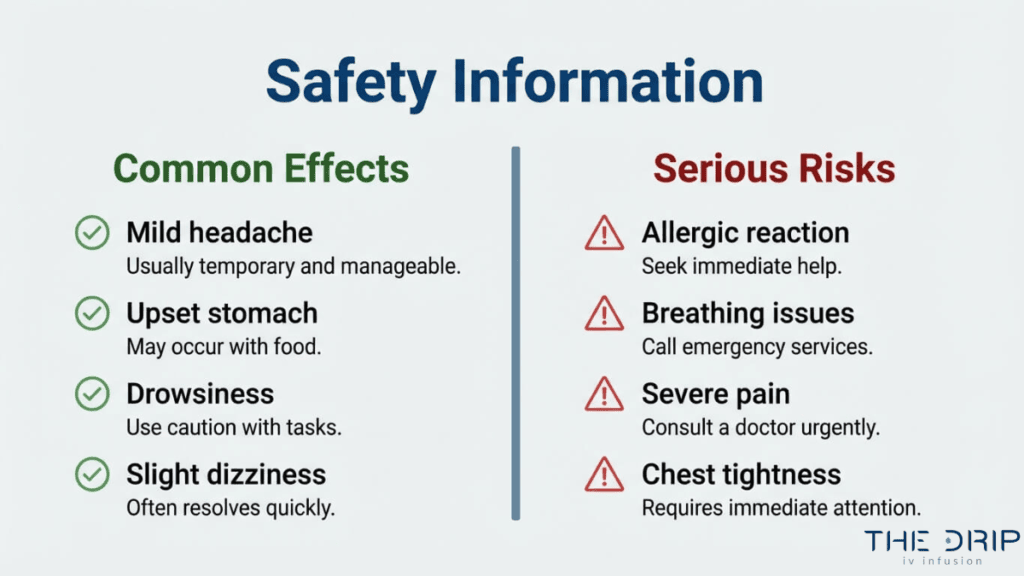
The side effects of ozone therapy range from mild, temporary reactions to serious complications in certain populations. The following subsections cover common short-term effects, serious risks, and key contraindications.
What Are the Common Short-Term Side Effects?
The common short-term side effects of ozone therapy include mild discomfort at the treatment site, fatigue, and temporary flu-like symptoms. According to Cleveland Clinic, patients may experience a Herxheimer reaction, characterized by flu-like symptoms, as ozone therapy relieves inflammation and neutralizes pathogens, leading to a temporary release of endotoxins.
Other short-term reactions include:
- Mild nausea or lightheadedness during or shortly after the session.
- Localized soreness or bruising at the injection or blood draw site.
- Brief episodes of coughing if ozone gas contacts the airways.
These reactions typically resolve within 24 to 48 hours without intervention. For most individuals, short-term side effects are manageable and self-limiting when treatments are administered by a qualified professional.
What Are the Serious Risks and Complications?
The serious risks and complications of ozone therapy involve improper dosing, incorrect administration routes, and uncontrolled oxidative stress. Direct inhalation of ozone gas poses the greatest danger, as it can cause severe respiratory irritation, pulmonary edema, and damage to lung tissue. Even small amounts inhaled directly can trigger coughing, chest tightness, and shortness of breath.
Additional serious complications include:
- Hemolysis, or the destruction of red blood cells, when ozone concentrations exceed safe thresholds.
- Infection risk from improperly sterilized equipment during blood-based protocols.
- Cardiovascular complications in patients with pre-existing heart conditions if oxidative stress is not carefully controlled.
These risks underscore why ozone therapy should only be performed under trained clinical supervision with properly calibrated equipment.
Who Should Avoid Ozone Therapy?
Certain individuals should avoid ozone therapy entirely due to elevated risk of adverse reactions. According to Dr. Fred Bloem’s regulatory overview, absolute contraindications for ozone therapy include Glucose-6-phosphate dehydrogenase (G6PD) deficiency, pregnancy (especially in the first trimester), and uncompensated toxic hyperthyroidism.
Additional groups who should exercise caution or avoid treatment:
- Individuals with severe anemia or active bleeding disorders.
- Patients taking high-dose anticoagulant medications.
- Those with recent organ transplants or who are on immunosuppressive therapy.
A thorough medical screening before any session helps identify these contraindications early. Understanding your individual risk profile is essential before exploring complementary wellness approaches like IV therapy.
What Does the Scientific Evidence Say About Ozone Therapy?
The scientific evidence on ozone therapy shows promising results for specific conditions, though regulatory approval remains limited. The subsections below cover FDA classification and the clinical research supporting ozone therapy’s use.
Is Ozone Therapy Approved by the FDA?
Ozone therapy is not approved by the FDA. In the United States, the FDA classifies ozone as a toxic gas with no known useful medical application in specific, mandatory, or effective therapy, which restricts its formal medical adoption. The agency has issued warning letters to facilities promoting ozone therapy as a treatment for conditions like COVID-19 without approved new drug applications or investigational device exemptions.
Despite this classification, ozone therapy is practiced in integrative and complementary medicine settings across the country. Organizations like the International Scientific Committee of Ozone Therapy (ISCO3) continue to publish clinical guidelines and safety protocols. The gap between regulatory status and clinical practice makes it essential for patients to verify that any provider follows established safety standards.
What Does Current Clinical Research Support?
Current clinical research supports ozone therapy’s effectiveness for pain management and oral health conditions. An umbrella review of systematic reviews published by NCBI found that ozone therapy is particularly effective for pain control in knee osteoarthritis treatment, demonstrating both beneficial effects and a favorable safety profile.
Additional evidence extends to dental applications. Meta-analysis data from 2024 in BMC Oral Health indicates that ozone therapy as an adjuvant in periodontitis treatment significantly reduces inflammatory biomarkers and improves clinical attachment levels compared to standard scaling and root planing alone. While these findings are encouraging, most researchers emphasize the need for larger, multi-center randomized controlled trials before ozone therapy can be considered a standard-of-care intervention.
Understanding the evidence base helps when evaluating how ozone therapy compares to similar treatments.
How Does Ozone Therapy Compare to Other Oxidative Therapies?
Ozone therapy compares to other oxidative therapies by sharing the same core principle of controlled oxidative stress, but it differs in delivery method, mechanism, and clinical evidence. The key comparisons involve hyperbaric oxygen therapy, ultraviolet blood irradiation, and intravenous hydrogen peroxide.
Oxidative therapies emerged from the foundational observation that cellular oxygen levels influence disease. Otto Warburg, a Nobel Prize winner, reported in Berlin that cancer was fundamentally caused by a lack of oxygen at the cellular level, according to Airozon. This finding provided a theoretical basis for developing oxidative therapies, including ozone.
While each therapy targets oxygen utilization and immune modulation, the methods vary significantly:
- Ozone therapy uses a 1–5% ozone gas mixture to trigger biochemical signaling cascades and activate antioxidant pathways.
- Hyperbaric oxygen therapy (HBOT) delivers pressurized 100% oxygen in a sealed chamber, increasing dissolved oxygen in plasma through atmospheric pressure rather than chemical reactivity.
- Ultraviolet blood irradiation (UVBI) exposes drawn blood to UV light before reinfusion, aiming to stimulate immune function through photochemical activation.
- Intravenous hydrogen peroxide introduces dilute hydrogen peroxide directly into the bloodstream to provoke a controlled oxidative response.
Both UVBI and intravenous hydrogen peroxide, like ozone, aim to stimulate the immune system and improve cellular metabolism through controlled oxidative stress. However, ozone therapy carries a stronger body of clinical research for specific conditions. A systematic review and meta-analysis of randomized clinical trials published in NCBI concluded that ozone therapy is more effective than other therapies for providing lumbar pain relief when assessed over a six-month period.
For practitioners weighing these options, ozone therapy’s dual action as both an oxidative stimulus and antioxidant pathway activator makes it uniquely versatile among oxidative approaches. Understanding what to expect during a session can help determine whether ozone therapy fits your wellness plan.
What Should You Expect During an Ozone Therapy Session?
During an ozone therapy session, you should expect a structured process involving preparation, the treatment itself, and a brief recovery period. The following sections cover how to prepare, what happens during treatment, and what recovery looks like.
How Should You Prepare for Ozone Therapy?
You should prepare for ozone therapy by staying well hydrated and eating a light meal before your appointment. Arriving on an empty stomach or dehydrated can increase the likelihood of lightheadedness during treatment.
Key preparation steps include:
- Drinking plenty of water in the 24 hours leading up to your session.
- Eating a small, balanced meal one to two hours beforehand.
- Wearing loose, comfortable clothing with easy access to your arms for blood draws.
- Informing your provider about all current medications and supplements.
- Avoiding alcohol and caffeine on the day of treatment.
Discussing your full health history with your provider beforehand helps ensure the session is tailored safely to your needs.
What Happens During an Ozone Therapy Treatment?
During an ozone therapy treatment, a trained provider draws a small amount of venous blood, mixes it with a precise ozone-oxygen gas concentration, and re-infuses it intravenously. The entire process typically takes 30 to 60 minutes depending on the protocol used.
For standard Major Autohemotherapy, you sit comfortably while the blood draw and re-infusion occur through a single IV line. More intensive protocols, such as 10-pass ozone therapy, involve multiple cycles within the same session and may take longer. Throughout the treatment, mild warmth or a slight metallic taste is occasionally reported, though most patients find the experience comfortable and uneventful.
What Does Recovery After Ozone Therapy Look Like?
Recovery after ozone therapy is generally mild and straightforward. According to Nenergy Boost, patients undergoing high-dose ozone therapy often report feeling more energized within hours or days following a session, though they are advised to avoid overexertion immediately after treatment.
Most people can resume normal activities the same day. Some experience temporary fatigue or mild flu-like symptoms as the body responds to treatment. Staying hydrated and resting for a few hours afterward supports the best outcomes.
From a cost perspective, a single MAH session typically costs between $200 and $250, while 10-pass ozone therapy can range from $750 to $900 per session. For those exploring complementary wellness strategies, IV nutrient infusions can further support recovery and overall health goals.
How Can IV Therapy Complement Your Wellness Goals?
IV therapy can complement your wellness goals by delivering nutrients directly into the bloodstream for faster absorption and targeted support. The sections below cover how mobile IV infusion services support immune health and recovery, followed by the key takeaways from this article.
Can Mobile IV Infusion Services Help With Immune Support and Recovery?
Yes, mobile IV infusion services can help with immune support and recovery by bringing customized nutrient infusions directly to your home or workplace. The Drip IV Infusion offers a range of IV cocktails and add-ons, including Vitamin C, glutathione, and zinc, that support immune function and post-treatment recovery.
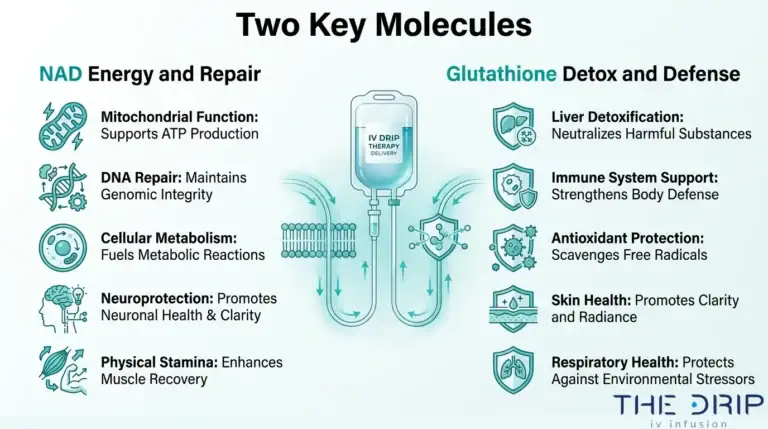
This pairing becomes especially relevant for those exploring oxidative therapies. According to Nascent Health Clinics, ozone therapy and high-dose intravenous Vitamin C work synergistically because ozone improves oxygen delivery to cells while Vitamin C enhances the body’s ability to utilize that oxygen for healing and immune support. Intravenous glutathione is also frequently administered after ozone sessions to restore antioxidant capacity.
For anyone seeking convenient, nurse-administered immune and recovery support, The Drip IV Infusion provides mobile services throughout Arizona with customizable formulations.
What Are the Key Takeaways About Ozone Therapy We Covered?
The key takeaways about ozone therapy we covered span its mechanisms, applications, benefits, risks, and current regulatory status:
- Ozone therapy introduces a controlled oxygen-ozone gas mixture that activates antioxidant pathways and improves cellular oxygen delivery.
- There are several types of ozone therapy, such as major autohemotherapy, insufflation, ozone sauna, and direct injection.
- Clinical research supports its use for chronic pain, wound healing, dental health, and immune modulation.
- Common side effects include Herxheimer reactions, and absolute contraindications exist for G6PD deficiency and pregnancy.
- The FDA classifies ozone as a toxic gas with no approved medical application, so regulatory acceptance remains limited in the United States.
- IV nutrient therapies containing Vitamin C and glutathione can complement ozone protocols by enhancing oxygen utilization and restoring antioxidant balance.
Anyone considering ozone therapy should consult a qualified healthcare provider to evaluate whether it aligns with their individual health needs. For nutrient-based IV support, The Drip IV Infusion offers personalized mobile infusions designed to help you meet your wellness goals.