If you’re living with fibromyalgia, you understand the frustration of widespread pain that seems to resist traditional treatments. You’ve likely tried multiple medications, seen various specialists, and wondered if there’s a more effective approach to managing your symptoms. We understand your search for relief, and you’re in the right place to explore how IV therapy might offer the breakthrough you’ve been seeking.
Fibromyalgia is a chronic pain disorder affecting 2-4% of the global population, characterized by widespread musculoskeletal pain lasting at least three months across all four body quadrants. This complex condition involves central sensitization—where your nervous system amplifies pain signals—along with altered neurotransmitter function affecting serotonin and norepinephrine levels. Beyond the pain, fibromyalgia brings fatigue, cognitive difficulties, and sleep disturbances that can significantly impact your quality of life.
TL;DR Summary: This comprehensive guide explores how IV therapy delivers nutrients and medications directly into your bloodstream with 100% bioavailability, compared to just 10-50% for oral supplements. We examine three primary IV treatments: Myers’ Cocktail (containing magnesium, B vitamins, and vitamin C), ketamine infusions (providing 50-80% pain reduction in studies), and lidocaine therapy (with a 22% responder rate). You’ll learn about the scientific evidence, including how these treatments work through NMDA receptor antagonism and direct cellular delivery. We cover what to expect during treatment sessions lasting 30-90 minutes, potential side effects (generally mild and manageable), and costs ranging from $150-$400 per session. Finally, we discuss how The Drip IV Infusion can create personalized treatment plans and why combining IV therapy with other strategies may offer the most comprehensive relief.
Quick Tip: Before your first IV therapy session, ensure you’re well-hydrated by drinking plenty of water the day before—this makes IV insertion easier and can enhance your overall treatment experience.
As we explore the science and practical applications of IV therapy for fibromyalgia, you’ll discover why this treatment approach is gaining recognition among pain management specialists and how it might fit into your comprehensive care plan.
What Is Fibromyalgia and What Symptoms Does It Cause?
Fibromyalgia is a chronic pain disorder affecting 2-4% of the global population and approximately 4 million US adults. Central sensitization alters pain processing in the central nervous system. Primary symptoms include widespread musculoskeletal pain lasting at least 3 months across all four body quadrants and the axial skeleton. Brain imaging reveals amplified pain responses to experimental stimuli and structural changes in neurotransmitter function. Serotonin and norepinephrine levels show abnormal patterns. Both central and autonomic nervous systems exhibit dysfunction. The following subsections explore diagnosis criteria and management challenges.
How Is Fibromyalgia Diagnosed and Who Is Most Affected?
Fibromyalgia diagnosis requires a Widespread Pain Index score of 7 or higher with a Symptom Severity Score of 5 or higher, or WPI 3-6 with SSS of 9 or higher. Laboratory and imaging tests typically show normal results but help exclude other conditions. Women experience fibromyalgia at a 10:1 ratio compared to men. The condition affects 3.1% of the US population and 2.7% globally, ranging from 0.4% in Greece to 9.3% in Tunisia. Patients wait an average of 6 years for diagnosis. The 2010 American College of Rheumatology revised guidelines emphasize clinical evaluation over laboratory findings.
Why Is Fibromyalgia Pain Often Challenging to Manage?
Fibromyalgia pain management challenges stem from limited medication effectiveness, with only 10% of patients achieving substantial relief lasting 12 weeks or more using FDA-approved drugs. The three approved medications—duloxetine, milnacipran, and pregabalin—provide modest benefits. NSAIDs, acetaminophen, and opioids lack effectiveness and carry potential risks. Pain dysregulation involves genetic, environmental, and neurobiological factors. Tonmya (cyclobenzaprine sublingual) became the first new FDA approval for fibromyalgia in 15 years in August 2025. These treatment limitations drive interest in alternative approaches like IV therapy.
What Is IV Therapy and How Does It Work?
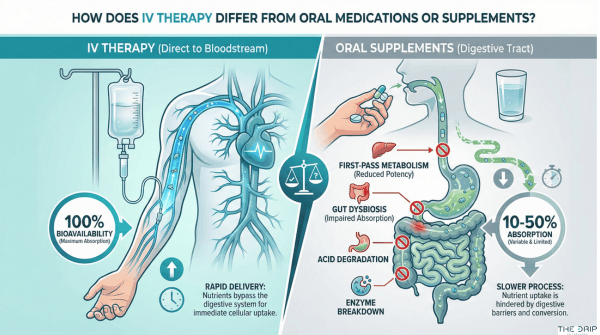
IV therapy is the direct delivery of nutrients and medications into the bloodstream through an intravenous catheter. This method bypasses the digestive system entirely. IV nutrients achieve 100% bioavailability compared to 10-50% for oral supplements.
Administration takes 30-90 minutes depending on the formula complexity. The Myers’ Cocktail preparation costs approximately $18 USD. Session costs range from $150-$300. Most insurance excludes IV vitamin therapy for wellness purposes.
The following sections explore specific ingredients used in pain management protocols and key differences from oral supplementation methods.
Which Ingredients Are Commonly Used in IV Therapy for Pain Management?
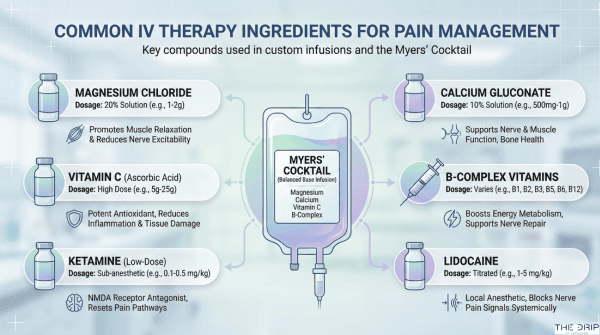
The ingredients commonly used in IV therapy for pain management include magnesium, calcium, B-vitamins, vitamin C, ketamine, and lidocaine. Myers’ Cocktail contains these specific amounts:
| IV Therapy Component | Specification Type | Description |
| Magnesium chloride | Concentration | 20% |
| Magnesium chloride | Volume | 5 mL |
| Calcium gluconate | Concentration | 10% |
| Calcium gluconate | Volume | 3 mL |
| Vitamin C | Concentration | 500 mg/mL |
| Vitamin C | Volume | 5 mL |
| Total solution | Volume | 37 mL |
| Total solution | Appearance | Bright yellow |
| Administration | Needle gauge | 25-gauge butterfly |
Ketamine doses range from 0.1-0.5 mg/kg for short infusions to 240 mg for maintenance. Lidocaine standard dose is 5 mg/kg over 1-2 hours. Magnesium acts as an NMDA receptor antagonist. This mechanism prevents intracellular calcium entry and halts central sensitization.
How Does IV Therapy Differ From Oral Medications or Supplements?
IV therapy differs from oral medications by completely bypassing the gastrointestinal tract and achieving immediate bloodstream availability. Oral supplements face multiple absorption barriers:
• First-pass hepatic metabolism reduces bioavailability
• Atrophic gastritis impairs vitamin C, iron, and B12 absorption
• Calcium and magnesium compete for intestinal transport pathways
• High-fiber diets bind minerals like zinc, iron, and magnesium
• Gut dysbiosis disrupts normal nutrient processing
IV administration eliminates these limitations. Direct bloodstream delivery achieves higher serum concentrations than oral supplementation. This difference enables therapeutic levels impossible through oral routes. The next section examines how IV therapy specifically addresses fibromyalgia symptoms through these enhanced delivery mechanisms.
How Can IV Therapy Help with Fibromyalgia Symptoms?
IV therapy helps with fibromyalgia symptoms through three primary mechanisms. IV ketamine provides NMDA receptor antagonism, preventing wind-up phenomenon and altering pain memory formation. IV lidocaine produces modality-specific effects, reducing spontaneous pain, brush-induced allodynia, and mechanical hyperalgesia. Myers’ Cocktail addresses multiple symptoms simultaneously through combined vitamin and mineral replenishment. Pain relief duration varies by treatment type, with ketamine providing 2-7 days of relief and lidocaine offering a median of 7 weeks (range 1-32 weeks).
What Specific Symptoms of Fibromyalgia May IV Therapy Address?
The specific symptoms that IV therapy may address include widespread pain, fatigue, and cognitive dysfunction. IV ketamine reduces pain scores by 50-80% in documented case studies. IV lidocaine achieves 1-6 point reduction on the Numeric Rating Scale in approximately 60% of patients. Myers’ Cocktail significantly improves tender points, pain, depression, and quality of life scores according to clinical trials. B-complex vitamins and magnesium in IV formulations specifically target fatigue mechanisms through cellular energy production. Patients report improved sleep quality, mental clarity, and increased energy with certain IV formulations.
What Is the Scientific Evidence Supporting IV Therapy for Fibromyalgia?
The scientific evidence supporting IV therapy for fibromyalgia comes from multiple controlled studies. A 2009 pilot study by Ali et al. showed Myers’ Cocktail significantly improved pain, depression, and quality of life (all p ≤ 0.02). The Sörensen study demonstrated >50% pain reduction with 0.3 mg/kg ketamine versus saline (P<0.05). A 2025 study by Liu et al. found 22% of fibromyalgia patients were responders to IV lidocaine, achieving ≥50% pain reduction lasting ≥3 weeks. The Graven-Nielsen study showed 17 of 29 fibromyalgia patients were ketamine responders with progressive VAS score reduction (P<0.05). The UK performs approximately 6,000 IV lidocaine procedures annually for fibromyalgia, demonstrating established clinical acceptance. These studies collectively support IV therapy as a viable treatment option for fibromyalgia symptoms.
What Are the Potential Benefits and Risks of IV Therapy for Fibromyalgia?
The potential benefits and risks of IV therapy for fibromyalgia include rapid symptom relief and precise dosing as benefits, with side effects ranging from minimal to moderate depending on the specific treatment. IV therapy delivers medications directly into the bloodstream, achieving immediate tissue availability compared to oral medications that require weeks to months for effect. Combination IV approaches address multiple fibromyalgia symptoms simultaneously through targeted nutrient and medication delivery.
What Benefits Have Patients Reported After IV Therapy?
Patients have reported increased ambulation, functional capacity improvements, and pain relief lasting days to weeks after IV therapy. A 2009 pilot study by Ali et al. on Myers’ Cocktail showed significant improvements in Fibromyalgia Impact Questionnaire scores with documented reductions in pain and depression (p ≤ 0.02). Pain relief duration varies by modality, such as ketamine providing 2-7 days relief and lidocaine achieving median 7 weeks relief with a range of 1-32 weeks. Patients experience better physical function for daily activities and reduced anxiety scores in multiple clinical assessments.
Are There Any Side Effects or Contraindications for IV Therapy?
Side effects and contraindications for IV therapy vary by treatment type, with ketamine causing dissociation in one-third of patients and lidocaine producing dizziness in 40% of cases. IV lidocaine side effects occur in 0-39.6% of patients including drowsiness (32%), blood pressure increase (21%), and lip tingling (15%). Myers’ Cocktail demonstrates minimal adverse events with only one minor event reported in a 34-patient pilot study. Contraindications include severe cardiovascular disease and impaired liver or renal function for ketamine, while lidocaine requires ECG screening to exclude QTc prolongation >440 ms in men or >460 ms in women.
The benefit-risk profile of IV therapy for fibromyalgia depends on individual patient factors and the specific IV formulation selected, requiring careful medical evaluation before treatment initiation.
How Does IV Therapy Compare to Other Fibromyalgia Treatments?
IV therapy compares to other fibromyalgia treatments by offering faster symptom relief and higher response rates than standard medications, though exercise remains the most effective non-pharmacological approach. The American College of Rheumatology considers exercise the most effective treatment for fibromyalgia, while non-pharmacological options include cognitive behavioral therapy, acupuncture, massage, and stress management. IV therapies demonstrate unique advantages in treatment-resistant cases where conventional approaches fail.
How Effective Is IV Therapy Compared to Medications or Physical Therapy?
IV therapy is more effective than FDA-approved medications, with IV lidocaine achieving a 22% responder rate versus only 10% of patients experiencing substantial relief from standard oral medications. FDA-approved fibromyalgia medications require daily oral dosing, while IV ketamine needs only monthly maintenance infusions. IV ketamine shows a dose-response relationship where higher doses produce more effective pain relief. Myers’ Cocktail requires 1-2 treatments weekly, with beneficial effects often noticeable by the 4th visit.
Can IV Therapy Be Combined with Other Pain Management Strategies?
IV therapy can be combined with other pain management strategies through multidisciplinary protocols that enhance overall treatment outcomes. A Cohen study combined low-dose IV ketamine at 0.1 mg/kg followed by oral dextromethorphan administration. Maintenance protocols increasingly recommend combining IV therapy with behavioral interventions and lifestyle modifications. Some clinics offer options to add supportive therapies or intramuscular shots for targeted benefits. Multidisciplinary approaches incorporating IV therapy show promise for refractory fibromyalgia cases.
These combination strategies allow patients to address multiple symptom dimensions while potentially reducing reliance on any single treatment modality.
What Should You Expect During an IV Therapy Session for Fibromyalgia?
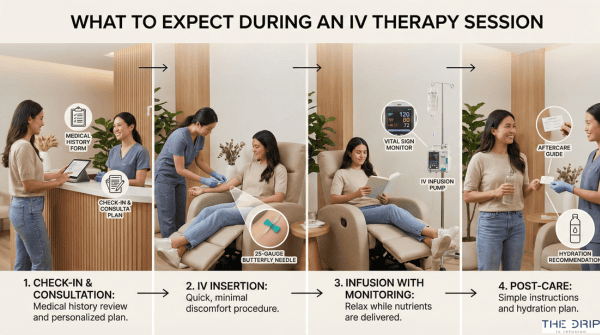
An IV therapy session for fibromyalgia involves an initial assessment, personalized treatment preparation, and monitored infusion lasting 30-90 minutes. Licensed nurses review wellness goals and prepare customized drips based on individual needs. The session format varies depending on whether you receive Myers’ Cocktail, ketamine, or lidocaine infusions.
How Do You Prepare for Your First IV Therapy Appointment?
Preparation for your first IV therapy appointment depends on the specific infusion type. Lidocaine infusions require fasting for at least 6 hours before treatment. Medical staff perform a 12-lead ECG screening before lidocaine administration to exclude cardiac abnormalities such as QTc prolongation above 440ms in men or 460ms in women.
Myers’ Cocktail preparation includes an intradermal injection test to determine thiamine allergy. Standard IV access involves placing a small catheter in your arm. The preparation ensures safe administration and identifies any contraindications before treatment begins.
What Happens During and After an IV Infusion Session?
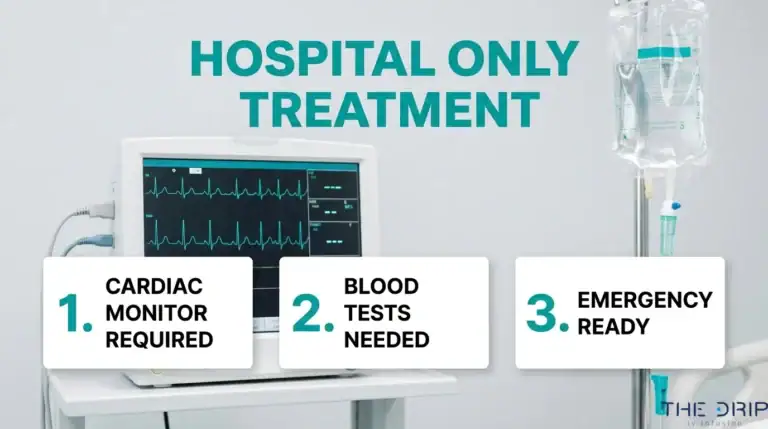
During an IV infusion session, Myers’ Cocktail is administered over approximately 10 minutes via slow-push infusion through a 25-gauge butterfly needle. Ketamine infusions require continuous vital sign monitoring with emergency equipment readily available due to potential dissociation effects. Lidocaine monitoring includes continuous heart rate tracking, 3-lead ECG, oxygen saturation, and blood pressure measurements every 15 minutes.
Post-infusion protocols vary by treatment type. Lidocaine requires 30 minutes of continued monitoring after infusion completion. Side effects may include warmth, flushing, or metallic taste if Myers’ Cocktail infusion proceeds too rapidly. These preparation steps and monitoring protocols ensure patient safety while optimizing treatment effectiveness for fibromyalgia symptom relief.
How Should You Approach IV Therapy for Fibromyalgia with The Drip IV Infusion?
Approaching IV therapy for fibromyalgia requires selecting a specialized pain management center with experience in intravenous nutrient protocols. The Drip IV Infusion provides customized IV formulations specifically designed for fibromyalgia symptoms, offering both Myers’ Cocktail and targeted vitamin combinations. Patient demand has expanded IV therapy availability across the US, with clinics now offering flexible scheduling and member pricing options.
Can The Drip IV Infusion Create a Personalized IV Therapy Plan for Fibromyalgia?
The Drip IV Infusion creates personalized IV therapy plans for fibromyalgia by tailoring vitamin and mineral formulations to individual deficiencies and symptoms. Licensed nurses assess each patient’s specific pain patterns, fatigue levels, and nutritional status before mixing customized drips. Treatment protocols combine magnesium, B-complex vitamins, and vitamin C in precise ratios based on symptom severity.
Member pricing at The Drip IV Infusion ranges from $139-$199 per session, making regular treatments more accessible. The clinic provides superbill documentation that patients can submit to insurance for potential reimbursement consideration. Combination approaches may include adding intramuscular vitamin shots or adjusting mineral concentrations based on treatment response.
What Are the Key Takeaways About IV Therapy for Fibromyalgia: Pain Relief & Benefits We Covered?
The key takeaways about IV therapy for fibromyalgia include its superior bioavailability and documented pain reduction capabilities. IV therapy achieves 100% bioavailability compared to 10-50% for oral supplements, delivering nutrients directly to tissues. Three main therapies demonstrate efficacy: Myers’ Cocktail improving quality of life scores, ketamine achieving 22-80% pain reduction, and lidocaine showing 22% responder rate.
Safety profiles remain favorable when treatments are properly monitored, with side effects typically mild and transient. Treatment costs range from $150-$400 per session with limited insurance coverage currently available. Maintenance protocols may be necessary for sustained benefits, particularly with IV ketamine requiring 1-2 monthly infusions for continued pain relief.