Urgent care IV fluid therapy is a walk-in hydration treatment where a provider assesses your symptoms and, if oral intake is insufficient, administers saline-based fluids through an intravenous line. Not every urgent care center offers this service; availability depends on staffing, equipment, and facility protocols.
This guide covers urgent care IV availability and clinical protocols, the step-by-step patient experience, treatment costs and insurance considerations, conditions treated and clinical limitations, and how mobile IV therapy compares as an alternative.
Many urgent care centers stock standard crystalloid solutions like normal saline and dextrose blends, though custom vitamin cocktails and specialty additives fall outside most formularies. A provider must confirm medical necessity before any infusion begins, meaning you cannot simply request IV fluids without a qualifying clinical finding.
The typical visit follows a triage, assessment, infusion, and discharge sequence. Initial hydration sessions run 31 to 60 minutes, with total visit time extending longer once check-in and monitoring are factored in.
Costs range widely depending on insurance status. Insured patients often pay a copay between $25 and $75, while uninsured visits can reach $150 to $500. Either scenario costs significantly less than an average emergency department visit.
Urgent care treats dehydration, persistent vomiting, migraines, heat exhaustion, flu symptoms, and hangovers with IV fluids, yet it lacks the cardiac monitoring, advanced labs, and critical-care staffing needed for severe or life-threatening presentations. When symptoms include altered mental status, seizures, or signs of shock, the ER is the appropriate setting.
For non-emergency hydration, mobile IV therapy from providers like The Drip IV Infusion offers broader fluid options, flat-rate pricing, and at-home convenience that urgent care cannot match.
Do Urgent Care Centers Offer IV Fluid Treatments?
Yes, many urgent care centers offer IV fluid treatments, though availability varies by facility. According to the Journal of Urgent Care Medicine, IV treatment capability is a defining feature of urgent care, but some centers do not offer IV hydration because of staffing, observation, adverse-event, acuity, or volume constraints. The subsections below cover which fluids are used, when IV therapy is recommended over oral hydration, and how long a typical session lasts.

What Types of IV Fluids Does Urgent Care Administer?
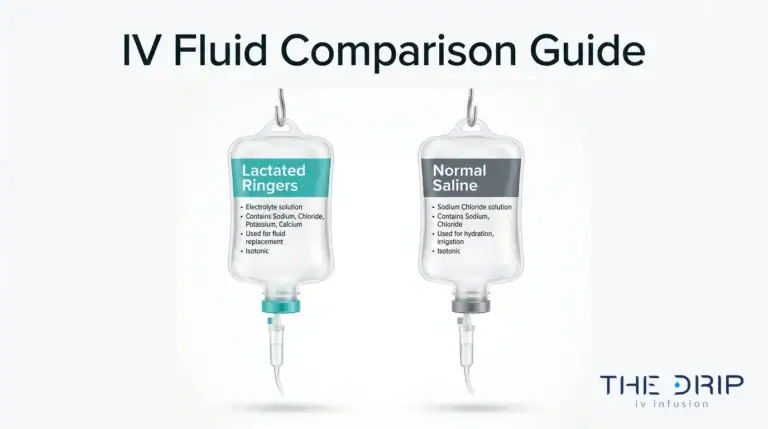
The types of IV fluids urgent care administers are primarily saline-based hydration solutions. Saline rehydration is the most common urgent care IV infusion. Specific options include:
- Normal saline (0.9% sodium chloride)
- D5W (5% dextrose in water)
- Dextrose in half-normal saline
- Dextrose in half-normal saline with potassium
Most urgent care centers stock these crystalloid solutions because they address the majority of acute dehydration cases. Unlike hospital settings or specialized mobile IV services, urgent care locations rarely offer custom vitamin cocktails or advanced additive blends. For patients needing straightforward fluid replacement, these standard formulations are effective and widely available.
When Would Urgent Care Recommend IV Fluids Over Oral Hydration?
Urgent care would recommend IV fluids over oral hydration when a patient cannot tolerate oral intake or shows signs of moderate-to-severe dehydration. According to Sandy Wang, MD, MPH, at the University of Rochester Medical Center, IV fluids are not recommended unless a patient cannot keep anything down, especially water.
Clinical indicators that support IV hydration over oral rehydration include:
- Inability to ingest fluids or contraindication to oral intake
- Persistent vomiting preventing fluid retention
- Confusion, fainting, or lack of urination
- Rapid heartbeat, rapid breathing, or signs of shock
- Abnormal vital signs or abnormal laboratory findings
- Dehydration-triggered migraine with significant malaise
Nausea alone does not necessarily indicate fluid depletion. For mild heat exhaustion, the NHS recommends cooling and oral rehydration first; IV fluids become appropriate only when oral methods fail or symptoms escalate. In my experience, the biggest mistake patients make is waiting too long to seek IV hydration after hours of failed oral attempts.
How Long Does an IV Fluid Session Take at Urgent Care?
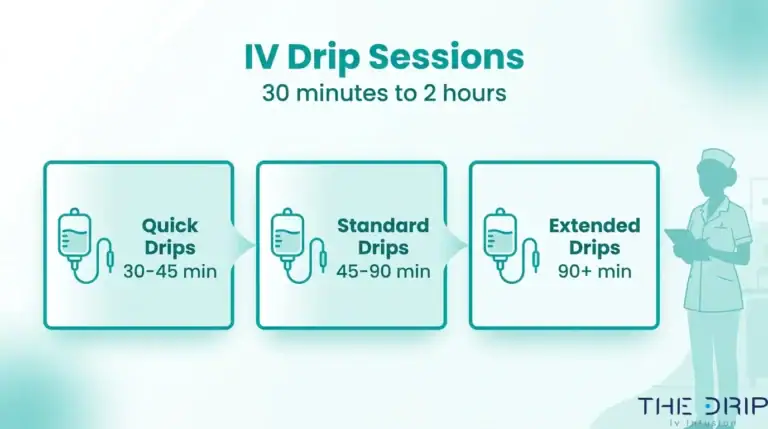
An IV fluid session at urgent care typically takes 31 minutes to one hour for the initial infusion. This timeframe aligns with CPT 96360, which the Centers for Medicare and Medicaid Services defines as initial hydration lasting 31 to 60 minutes. Sessions shorter than 30 minutes are not considered medically necessary for billing purposes. Each additional hour of infusion, when clinically warranted, falls under CPT 96361.
Total visit time extends beyond just the infusion itself. Check-in, triage assessment, IV placement, and post-infusion monitoring all add time. Patients with more severe dehydration or those requiring observation may stay longer, though the fluid delivery window remains relatively consistent.
Understanding session length helps when choosing between urgent care and alternatives like mobile IV therapy, which often follows similar infusion timelines.
What Should You Expect During an Urgent Care IV Visit?
You should expect a three-phase process: check-in and clinical assessment, IV placement with monitoring, and a post-infusion evaluation before discharge.

What Happens During the Check-In and Assessment?
During the check-in and assessment, a triage nurse collects your vital signs, reviews your symptoms, and documents your medical history. A provider then evaluates whether IV fluids are clinically appropriate based on indicators such as dehydration severity, ability to tolerate oral fluids, and abnormal vital signs. According to a simulation published in JMIR Formative Research, a modeled urgent care patient journey follows a sequence of nurse triage, physician evaluation, examination or treatment, and then discharge. This initial assessment determines your fluid type, infusion rate, and whether any medications or electrolytes should be added to the bag.
How Is the IV Line Placed and Monitored?
The IV line is placed by a nurse who inserts a small catheter into a vein, typically in the forearm or hand. Once secured, the catheter connects to tubing and a fluid bag hung on a pole. The infusion rate is set based on the provider’s order. Throughout the session, staff periodically check your vital signs, monitor the insertion site for swelling or infiltration, and adjust the drip rate if needed. Most patients feel only a brief pinch during insertion. For standard hydration, expect to remain seated or reclined for 30 to 60 minutes while the fluids are delivered.
What Happens After the IV Infusion Is Complete?
After the IV infusion is complete, the nurse removes the catheter, applies a small bandage, and checks your vitals one final time. The provider reviews your response to treatment, looking for improvements in blood pressure, heart rate, and overall symptoms. You receive discharge instructions that typically cover oral hydration goals, signs of recurring dehydration, and guidance on when to seek further care. Most patients leave feeling noticeably better within minutes of completing the infusion. For those whose symptoms persist or worsen, understanding IV therapy costs helps with planning the next step in care.
How Much Do IV Fluids Cost at Urgent Care?
IV fluids at urgent care typically cost between $100 and $300, depending on insurance coverage, facility fees, and the type of fluids administered. The sections below break down costs with insurance, without insurance, and compared to ER pricing.

How Much Do IV Fluids Cost With Insurance at Urgent Care?
IV fluids with insurance at urgent care generally cost less out of pocket than most patients expect. A peer-reviewed study of 16,685 visits published in the Journal of Patient Experience reported a mean in-person service cost of $141.96 per urgent care visit. With insurance, copays for urgent care typically range from $25 to $75, though the total billed amount depends on your plan’s deductible status and coinsurance structure.
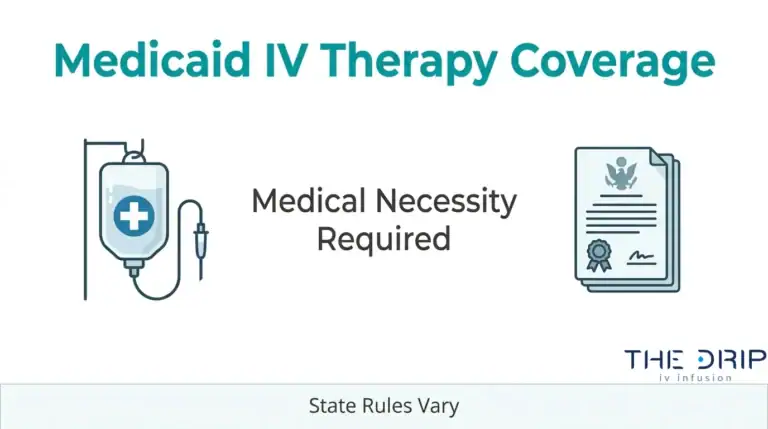
The IV hydration itself adds procedure-specific charges billed under CPT codes 96360 and 96361, which insurance may cover separately. Patients should verify coverage before the visit, since not all plans treat IV hydration as a covered urgent care service. Even with partial coverage, urgent care IV costs remain significantly lower than the same treatment in an emergency department.
How Much Do IV Fluids Cost Without Insurance at Urgent Care?
IV fluids without insurance at urgent care typically range from $150 to $500 or more, depending on the facility and fluids used. This estimate includes the base visit fee, IV administration charges, and any additional medications or electrolytes added to the drip.
The financial burden is real. According to KFF, about half of U.S. adults say they could not pay an unexpected $500 medical bill in full without going into debt. For uninsured patients, calling ahead to confirm pricing is essential, as costs vary widely between clinics. Some urgent care centers offer self-pay discounts or payment plans that can reduce the total expense. Without insurance, patients should also ask whether the quoted price covers the full visit or just the infusion portion, since facility fees and provider charges are often billed separately.
How Much Do IV Fluids Cost at Urgent Care vs the ER?
IV fluids at urgent care cost substantially less than the same treatment at the ER. While urgent care visits average roughly $142, emergency department visits carry a much steeper price tag. According to the Agency for Healthcare Research and Quality, aggregate ED visit costs in 2017 totaled $76.3 billion across 144.8 million visits, with an average cost per visit of $530.
That ER average reflects only the facility and provider charges; IV fluid administration, labs, and monitoring fees push the total higher. Urgent care eliminates many of these layered costs because the setting requires less overhead. For non-emergency dehydration or mild to moderate fluid loss, choosing urgent care over the ER can save hundreds of dollars. When symptoms are severe enough to warrant cardiac monitoring or advanced diagnostics, though, the ER remains the appropriate choice regardless of cost.
Understanding these price differences helps clarify when mobile IV therapy, which offers transparent flat-rate pricing, may provide additional savings for non-emergency hydration needs.
What Conditions Does Urgent Care Treat With IV Fluids?
Urgent care centers treat several conditions with IV fluids, primarily when oral hydration is insufficient. The most common cases include severe dehydration, persistent vomiting, migraines, hangover symptoms, heat exhaustion, and flu-related illness.
Severe Dehydration
Severe dehydration is one of the most common reasons urgent care administers IV fluids. Warning symptoms include confusion, fainting, lack of urination, rapid heartbeat, rapid breathing, and shock, according to MedlinePlus (U.S. National Library of Medicine). When a patient cannot drink enough water to recover, IV saline restores fluid volume and electrolyte balance faster than oral intake alone. Clinicians typically assess vital signs and urine output before deciding on intravenous rehydration. For most adults, severe dehydration that does not respond to sipping fluids over 30 minutes warrants IV intervention rather than continued oral attempts.
Nausea and Vomiting
Nausea and vomiting are treated with IV fluids at urgent care when patients cannot keep oral liquids down. Persistent vomiting creates a cycle: the body loses fluid, yet swallowing replacements triggers more vomiting. IV hydration bypasses the stomach entirely, delivering saline or electrolyte solutions directly into the bloodstream. Anti-nausea medications like ondansetron can also be administered through the IV line for faster relief. It is worth noting, however, that nausea alone does not automatically qualify as medical necessity for IV hydration; clinicians look for signs of actual fluid depletion before starting an infusion.
Migraines and Severe Headaches
Migraines and severe headaches are treated with IV fluids at urgent care to address dehydration and support medication delivery. According to a review in American Family Physician (American Academy of Family Physicians), intravenous fluids may be given during migraine treatment to avoid orthostatic hypotension, and magnesium sulfate infusion is most helpful in patients with low ionized magnesium concentrations. Since dehydration is a recognized migraine trigger, restoring fluid balance can reduce symptom severity. IV access also allows clinicians to administer pain relief and anti-nausea medications simultaneously, which is particularly useful when oral intake worsens nausea.
Hangover Symptoms
Hangover symptoms are treated with IV fluids at urgent care primarily to correct dehydration caused by alcohol’s diuretic effect. Saline infusions replenish lost fluids and electrolytes, often paired with anti-nausea or pain medications through the same IV line. That said, clinical evidence for this application is limited. A randomized controlled trial summarized by Clinical Excellence Queensland (n=144) found that IV 0.9% saline plus observation did not reduce emergency department length of stay for intoxicated patients compared with observation alone. For most people recovering from a night out, IV fluids address the dehydration component but do not eliminate the root cause of hangover symptoms.
Heat Exhaustion
Heat exhaustion is treated with IV fluids at urgent care when cooling measures and oral rehydration prove insufficient. Mild cases often resolve with rest, shade, and drinking water or an oral rehydration solution. However, when symptoms persist beyond 30 minutes of active cooling, or when the patient is too nauseated to drink, IV saline helps restore fluid volume more reliably. Clinicians monitor for signs of progression to heatstroke, such as confusion, seizures, or loss of consciousness, which require emergency care rather than urgent care. Early IV intervention during heat exhaustion can prevent that dangerous escalation.
Flu and Viral Illness Symptoms
Flu and viral illness symptoms are treated with IV fluids at urgent care when fever, vomiting, or diarrhea cause fluid losses that oral intake cannot match. High fevers increase insensible water loss through sweat and respiration, while gastrointestinal symptoms prevent adequate drinking. IV hydration restores volume and can deliver supportive medications simultaneously. As Sandy Wang, MD, MPH, noted through the University of Rochester Medical Center, “IV fluids are not always needed. In fact, it is not recommended to give IV fluids unless a patient cannot keep anything down, especially water.” For most viral illnesses, oral fluids remain the first-line approach; IV therapy steps in only when that pathway fails.
Understanding which conditions qualify for urgent care IV treatment helps clarify when a mobile IV service might be a practical alternative.
Does Urgent Care Require a Doctor’s Order for IV Fluids?
Urgent care does require a provider’s order for IV fluids, though that order does not always come from a physician. The rules vary by state and provider type.
IV fluid administration at urgent care requires a clinical order from a licensed provider, such as a physician, nurse practitioner, or physician assistant. A nurse cannot independently initiate IV therapy without this order. However, the ordering provider does not need to be a physician specifically, and in many states, the provider does not need to be physically present during the infusion.
According to the Texas Board of Nursing, a nurse may carry out physician-assistant orders, and a physician need not be physically present at all times. The same guidance clarifies that LVN IV-therapy competency is not presumed from basic nursing curriculum and requires additional validation or education.
State-level variation shapes how these orders work in practice:
- Some states require nurse practitioners to maintain collaborative agreements with physicians before they can order treatments like IV fluids.
- Other states grant nurse practitioners full practice authority, allowing them to order IV hydration independently.
- Physician-assistant prescriptive authority similarly ranges from mandatory physician supervision to independent practice, depending on the state.
For patients, this means a walk-in visit still triggers a clinical assessment before any IV is started. The provider evaluates symptoms, determines medical necessity, and writes the order. This process protects patients from unnecessary treatment while ensuring appropriate care. Most people will never notice who wrote the order, since the clinical workflow feels the same regardless of provider type.
Understanding who authorizes your IV treatment matters less than knowing that authorization is always required before fluids begin.
Can You Just Walk In and Ask for IV Fluids at Urgent Care?
Yes, you can walk in and ask for IV fluids at urgent care, but receiving them depends on a clinical assessment confirming medical necessity. Urgent care centers are walk-in facilities by design; however, a provider must evaluate your symptoms and determine that oral hydration is insufficient before ordering IV fluids.
The standard process begins with triage, where a nurse checks vital signs and gathers your chief complaint. A physician, nurse practitioner, or physician assistant then examines you and decides whether IV fluids are warranted based on clinical findings. According to the Centers for Medicare & Medicaid Services, hydration coding requires documentation of medical necessity, such as dehydration symptoms, inability to ingest fluids, abnormal vital signs, or abnormal laboratory findings. Simply requesting IV fluids without a clinical indication is unlikely to result in treatment.
Patients who present with clear signs of dehydration, persistent vomiting, or other qualifying symptoms will typically receive IV fluids during the same visit. For those whose symptoms do not meet the clinical threshold, the provider will likely recommend oral rehydration instead. Understanding this distinction before arriving can help set realistic expectations and avoid unnecessary visit costs.
What Are the Limitations of Getting IV Fluids at Urgent Care?
The limitations of getting IV fluids at urgent care center on restricted additive options and an inability to handle complex or prolonged treatments. Below, we cover what urgent care can and cannot include in an IV.

What Additives or Vitamins Can Urgent Care Include in an IV?
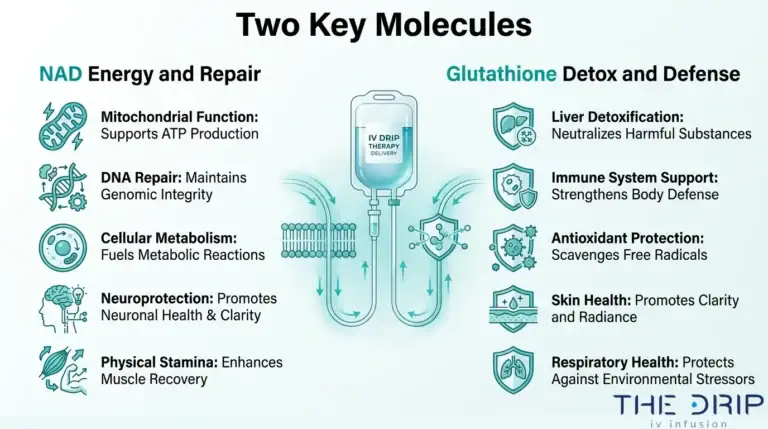
The additives or vitamins urgent care can include in an IV are generally limited to basic electrolytes and medications tied to the presenting complaint. Most urgent care centers stock normal saline with optional potassium or dextrose, plus common medications like anti-nausea drugs or pain relievers. High-dose vitamin infusions, NAD+, glutathione, and custom wellness blends typically fall outside standard urgent care formularies.
According to a 2021 simulation published in JMIR Formative Research, a typical urgent care center operates with minimal staff: two triage nurses, two doctors, one treatment nurse, and one discharge administrator. That lean staffing model leaves little capacity for customized vitamin protocols or extended monitoring that specialty additives require. For patients seeking targeted nutrient combinations, dedicated infusion services offer a significantly broader menu.
What IV Treatments Are Urgent Care Centers Not Equipped For?
The IV treatments urgent care centers are not equipped for include:
- Prolonged multi-hour infusions requiring extended cardiac monitoring or repeat lab draws.
- Blood transfusions and vasopressor drips that demand emergency department resources.
- High-dose specialty nutrient protocols such as NAD+, glutathione pushes, or multi-vitamin wellness cocktails.
- Chemotherapy or biologic infusions that require specialized pharmacology oversight.
- Critical fluid resuscitation for patients in shock, with altered mental status, or needing continuous hemodynamic monitoring.
The Urgent Care Association reports an average visit time of just 56 minutes across more than 15,172 centers nationwide. That tight window makes it impractical to administer treatments needing hours of observation or specialized equipment. When the goal is either emergency stabilization or customized wellness infusions, urgent care occupies a middle ground that serves neither end particularly well.
Understanding these scope limitations helps determine whether a mobile IV therapy provider may better fit your needs.
When Should You Go to the ER Instead of Urgent Care for IV Fluids?
You should go to the ER instead of urgent care for IV fluids when symptoms suggest a life-threatening condition that exceeds urgent care’s monitoring and intervention capabilities. Recognizing these warning signs can prevent dangerous delays in treatment.
The emergency room is the appropriate choice when dehydration or illness presents with severe neurological, cardiovascular, or respiratory symptoms. According to the Society for Academic Emergency Medicine, patients with altered mental status require airway, breathing, and circulation assessment; cardiac monitoring and pulse oximetry; point-of-care glucose testing; IV access; and consideration of point-of-care ultrasound if the patient is in shock, with hypotension prompting an immediate IV fluid bolus and a search for the underlying cause.
Specific emergency warning signs that require ER-level care rather than urgent care include:
- Confusion, inability to be aroused, or altered mental status
- Seizures or loss of consciousness
- Systolic blood pressure below 100 mmHg or signs of shock
- Rapid heartbeat combined with rapid breathing and no urine output
- Persistent chest or abdominal pain or pressure
- Difficulty breathing or shortness of breath
- Severe weakness or unsteadiness
- Symptoms that initially improve but then worsen significantly
Urgent care centers lack the cardiac monitors, laboratory capabilities, and critical-care staffing needed for these presentations. When a patient’s condition requires continuous hemodynamic monitoring or emergency interventions like intubation, the ER provides resources that no urgent care facility can match. For non-emergency dehydration or illness recovery, mobile IV therapy offers a convenient alternative worth considering.
How Does Urgent Care IV Therapy Compare to Mobile IV Therapy?
Urgent care IV therapy and mobile IV therapy differ in convenience, fluid options, and cost structure. The sections below break down each factor to help you choose the right setting.
Is Mobile IV Therapy More Convenient Than Urgent Care IV Visits?
Mobile IV therapy is more convenient than urgent care IV visits for most non-emergency situations. A mobile service sends a licensed nurse directly to your home, office, or hotel, eliminating travel time, waiting rooms, and the clinical triage process that urgent care requires. Urgent care visits involve check-in, assessment, and shared resources with other patients. However, urgent care remains the better choice when symptoms suggest a medical emergency. According to the National Institute for Health and Care Excellence, IV fluid therapy should be reserved for patients whose needs cannot be met by oral routes, with urgent indicators including systolic blood pressure below 100 mmHg, heart rate above 90 per minute, or a NEWS score of 5 or more. If you meet those thresholds, a clinical facility with monitoring equipment is essential. For wellness-focused hydration, recovery support, or symptom relief that does not involve acute warning signs, mobile IV therapy offers a faster, more comfortable experience.
How Do IV Fluid Options Differ Between Urgent Care and Mobile IV Services?
IV fluid options differ significantly between urgent care and mobile IV services. Urgent care centers primarily administer basic hydration solutions, such as normal saline and dextrose blends, and may add limited medications like anti-nausea drugs when medically indicated. Mobile IV services typically offer a broader wellness-focused menu. Customizable IV cocktails can include vitamins, minerals, and specialty add-ons like glutathione, NAC, B-complex vitamins, magnesium, and zinc. This range allows mobile providers to target specific goals, from immune support to recovery and energy. For patients needing straightforward medical rehydration with clinical oversight, urgent care is appropriate. For those seeking targeted nutrient delivery beyond basic saline, mobile IV therapy provides more options.
Is Urgent Care or Mobile IV Therapy More Cost-Effective?
Urgent care or mobile IV therapy cost-effectiveness depends on your insurance status and the treatment you need. Urgent care IV hydration may be partially covered by insurance when documented as medically necessary, potentially lowering out-of-pocket costs. Without insurance, urgent care visits often carry facility fees, provider charges, and separate supply costs that add up quickly. Mobile IV therapy uses transparent, flat-rate pricing with no hidden facility fees. You know the total cost before booking. While mobile sessions are typically paid out of pocket, the predictable pricing and elimination of surprise bills make budgeting straightforward. For anyone weighing both options, the real question is whether insurance coverage offsets urgent care’s layered billing, or whether a single transparent price from a mobile provider delivers better overall value.
Understanding these differences makes it easier to decide which IV therapy model fits your situation and budget.
Can Mobile IV Therapy From The Drip IV Infusion Replace an Urgent Care Visit?
Mobile IV therapy from The Drip IV Infusion can replace an urgent care visit for non-emergency hydration, nutrient replenishment, and symptom relief. The following sections cover available at-home treatments and the key takeaways from this article.
What IV Treatments Does The Drip IV Infusion Offer at Home?
The Drip IV Infusion offers a range of at-home IV treatments administered by licensed RNs under Arizona-licensed physician supervision. Available options include:
- RE:VIVE ($300): Contains Pepcid, Zofran, and Toradol for hangover and nausea recovery.
- Mama Bear ($250): Contains pyridoxine, electrolytes, and nausea-relief medication for expecting mothers.
- Defender ($375): Contains vitamin C, zinc, glutathione, NAC, and fluids for immune support.
Customizable add-ons such as magnesium, B-complex vitamins, and amino blends allow each session to target specific needs. A typical session takes one hour in the comfort of home, with no waiting room, no co-pay uncertainty, and no insurance billing complications. For anyone whose symptoms do not require emergency-level diagnostics, this direct-to-door model often delivers a better experience than sitting in an urgent care lobby.
What Are the Key Takeaways About Getting IV Fluids at Urgent Care?
The key takeaways about getting IV fluids at urgent care are that availability, cost, and clinical scope vary significantly by facility. The most actionable conclusions from this article include:
- Most urgent care centers administer saline-based IV hydration, but not all locations offer the service.
- A clinical assessment determines whether IV fluids are medically necessary; oral hydration is always tried first.
- Costs without insurance typically range from $150 to $500 depending on fluids, additives, and facility fees.
- Urgent care cannot handle emergencies requiring cardiac monitoring, imaging, or advanced interventions.
- Mobile IV therapy provides a convenient, transparent-pricing alternative for non-emergency hydration and wellness support.
For non-emergency situations where you want predictable pricing, personalized nutrient formulas, and the convenience of staying home, The Drip IV Infusion offers a practical solution worth exploring.