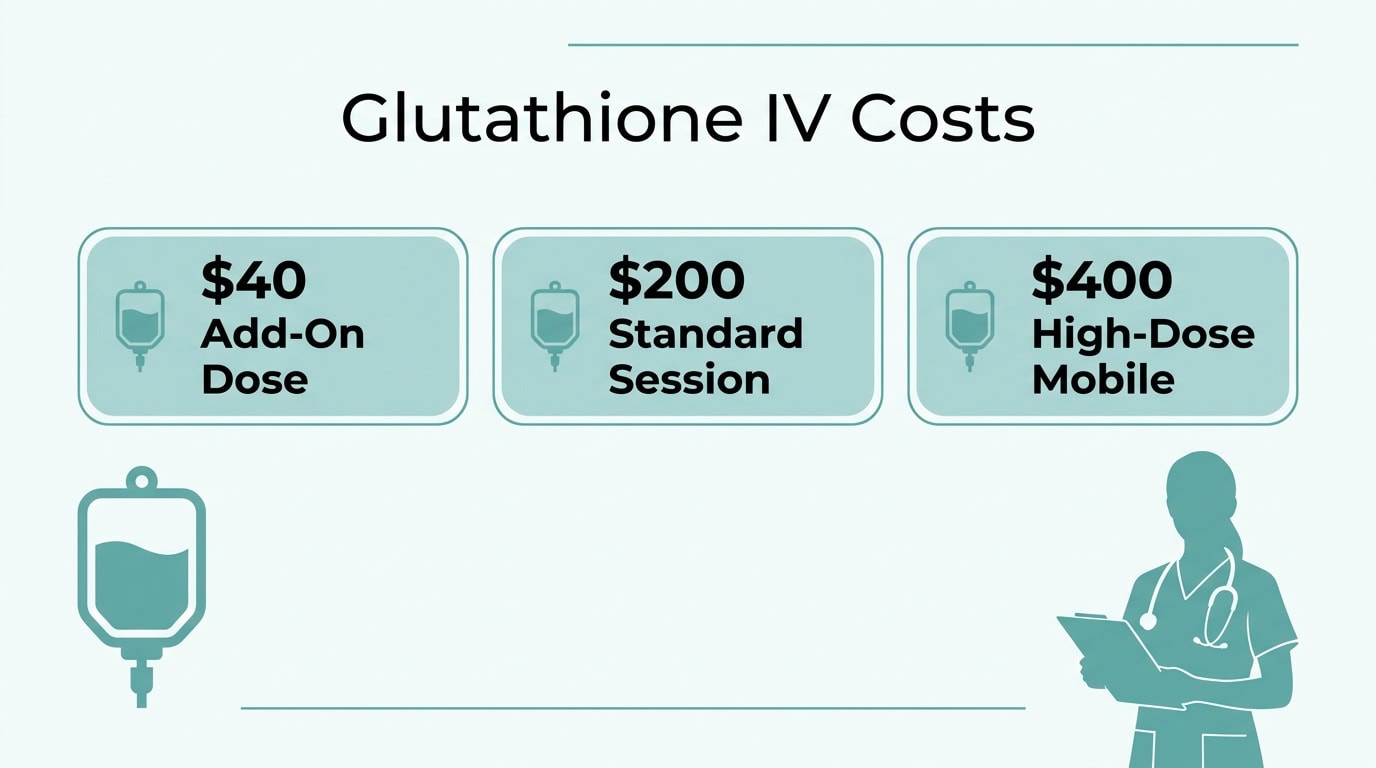
Glutathione IV therapy cost ranges from $40 to over $400 per session, depending on dosage, delivery method, provider type, and whether the treatment is standalone or bundled with other nutrients.
This guide covers single-session and package pricing, the factors that shift cost, provider comparisons, recommended session protocols, insurance options, and strategies for saving money.
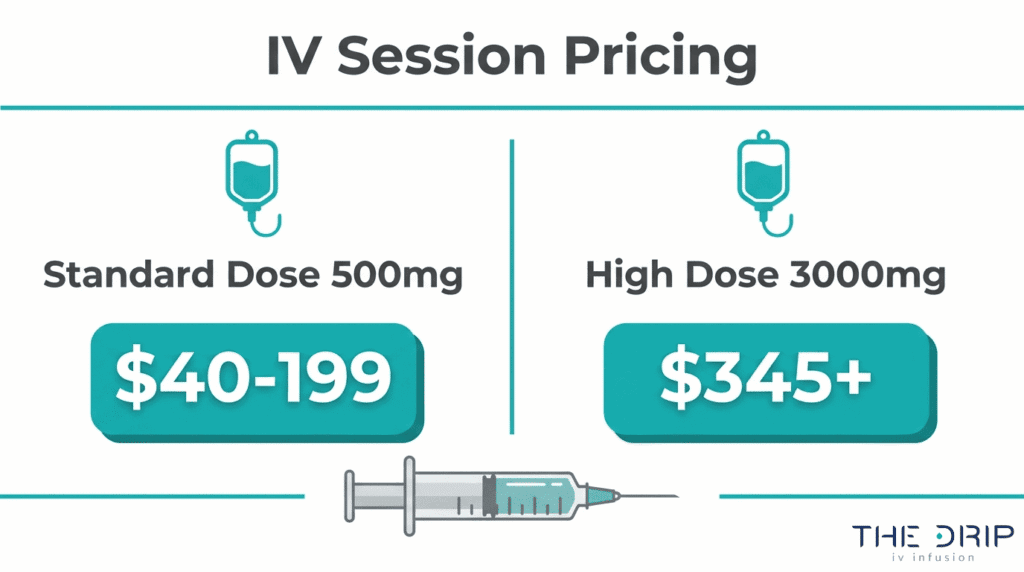
Single glutathione IV sessions span a wide range: a standard 500 mg add-on dose can cost as little as $40, while high-dose infusions of 3,000 mg reach $345 or more. IV push formats deliver glutathione faster and typically cost less than full drip sessions that include saline and supplemental vitamins.
Multi-session packages and monthly memberships offer the steepest per-session discounts. Four-session bundles generally fall between $600 and $1,000, while monthly membership plans start under $100 and provide ongoing access at reduced rates.
Several variables influence what you actually pay. Dosage is the single largest price lever, followed by provider setting, add-on nutrients like vitamin C or B-complex, and whether you choose in-clinic or mobile service. Mobile concierge sessions start around $398 in major markets due to travel and equipment costs.
Session frequency depends on your goal. Skin brightening protocols typically require 10 to 12 sessions over six weeks, while detox and immune support protocols call for weekly infusions during a four-to-six-week loading phase before tapering to monthly maintenance.
Insurance does not cover elective glutathione IVs in most cases, though HSA and FSA accounts may reimburse treatments prescribed for a diagnosed medical condition. Compared to NAD+ IV therapy, glutathione sits in the mid-range; compared to Myers’ Cocktail pricing, it falls within a similar bracket and works well as a cost-effective add-on.
What Is Glutathione IV Therapy and Why Is It Popular?
Glutathione IV therapy is an intravenous treatment that delivers the antioxidant glutathione directly into the bloodstream, bypassing the digestive system for maximum absorption. It is popular because oral glutathione supplements lose nearly all potency during digestion, making IV delivery the most effective route for raising systemic levels.
According to the National Center for Biotechnology Information, the oral bioavailability of glutathione is estimated to be below 1% due to degradation in the gastrointestinal tract, necessitating intravenous delivery for significant systemic elevation. This stark absorption gap explains why wellness-focused consumers increasingly choose IV administration over capsules or tablets.
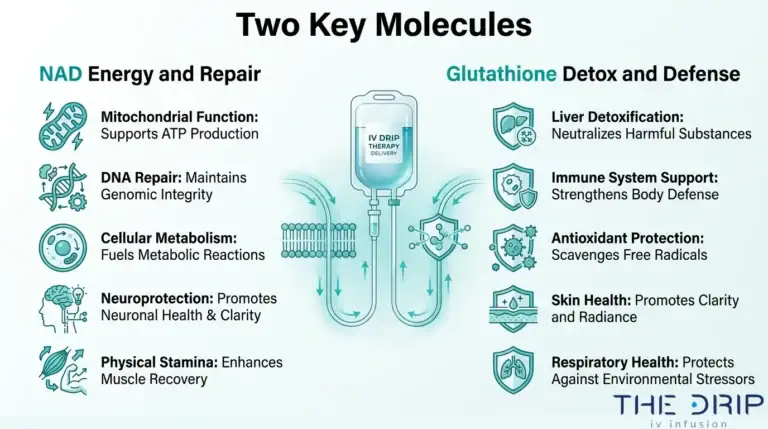
Glutathione, often called the body’s “master antioxidant,” is a tripeptide produced naturally in every cell. It plays a central role in detoxification, immune defense, and cellular repair. When levels become depleted through stress, aging, poor nutrition, or environmental toxin exposure, supplementation can help restore balance. Intravenous glutathione has also been studied for its effectiveness in supporting early-stage Parkinson’s disease management and protecting liver cells during detoxification, as noted by the National Library of Medicine.
The growing demand for glutathione IV therapy reflects broader wellness trends. Consumer interest spans several goals:
- Skin brightening: Glutathione inhibits melanin production, making it widely sought for complexion enhancement.
- Detox support: The antioxidant binds to toxins and heavy metals, facilitating their removal from the body.
- Immune health: Glutathione supports lymphocyte function and overall immune resilience.
- Athletic recovery: Reduced oxidative stress helps accelerate post-exercise repair.
- Anti-aging: Neutralizing free radicals helps protect cells from premature aging.
The global skin lightening market, a major driver for glutathione demand, is estimated to reach $8 billion by 2026 according to research published in Liberty University Digital Commons. This cosmetic application alone has fueled significant growth in IV therapy clinics worldwide.
For anyone evaluating whether glutathione IV therapy fits their wellness routine, understanding the cost landscape is essential. The sections ahead break down pricing by session type, dosage, provider setting, and package options.
How Much Does a Single Glutathione IV Session Cost?
A single glutathione IV session costs between $40 and $400, depending on dosage, delivery method, and provider type. The following sections break down pricing for standard doses, high doses, and push versus drip formats.
How Much Does a Standard-Dose Glutathione IV Cost?
A standard-dose glutathione IV (typically 500 to 600 mg) costs between $40 and $199. Pricing varies significantly based on whether glutathione is administered as a standalone treatment or added onto another IV hydration service. Some clinics offer it as a low-cost enhancement to existing drip protocols, while others price it as a full session.
For most people exploring glutathione IV for general wellness or antioxidant support, a standard dose represents the most accessible entry point. Clinics that bundle glutathione as an add-on tend to offer the lowest per-session pricing, making it a practical starting option before committing to higher doses.
How Much Does a High-Dose Glutathione IV Cost?
A high-dose glutathione IV (1,200 mg to 3,000 mg) costs between $160 and $400 per session. Higher concentrations require more product, longer administration times, and often closer clinical supervision, all of which increase the price.
Practitioners typically recommend high-dose protocols for targeted goals such as skin brightening, detoxification support, or intensive antioxidant replenishment. Because these sessions deliver substantially more glutathione per infusion, fewer total sessions may be needed to reach desired outcomes. That trade-off between higher per-session cost and potentially fewer visits is worth considering when comparing total treatment expenses.
How Much Does a Glutathione IV Push Cost Compared to a Drip?
A glutathione IV push generally costs less per session than a full IV drip because it requires less time and fewer supplies. Push sessions deliver concentrated glutathione directly into the vein over 10 to 20 minutes, while drips infuse slowly over 30 to 60 minutes alongside saline or additional nutrients.
According to Harpal Clinic, specialized glutathione push sessions are tiered by dosage: 600 mg for $140, 1,200 mg for $190, 1,800 mg for $240, 2,400 mg for $290, and 3,000 mg for $345. Drip sessions that combine glutathione with hydration fluids and supplemental vitamins often exceed $300 to $400 at comparable dosages.
For clients who want glutathione alone without added hydration, a push offers a faster, more cost-effective option. With package and membership options available, these single-session costs can decrease significantly over time.
How Much Do Glutathione IV Therapy Packages Cost?
Glutathione IV therapy packages cost between $400 and $2,000 depending on the number of sessions, dosage, and provider. The subsections below break down pricing for 4-session bundles, 6-to-10-session bundles, and monthly memberships.
How Much Does a 4-Session Glutathione IV Package Cost?
A 4-session glutathione IV package typically costs between $600 and $1,000 at most wellness clinics and med spas. Providers commonly discount bundled sessions by 10% to 20% compared to single-visit pricing, which makes a four-session plan one of the most accessible entry points for clients beginning a loading phase.
For someone paying $199 to $279 per standard in-clinic session, a 4-session bundle generally falls in the $700 to $900 range after the discount is applied. Clinics that use higher dosages or include add-on nutrients like vitamin C will price packages closer to $1,000. Committing to four sessions upfront is often the most practical way to test a glutathione protocol before investing in longer plans.
How Much Does a 6-to-10-Session Glutathione IV Package Cost?
A 6-to-10-session glutathione IV package costs between $1,000 and $2,500, with per-session savings increasing as the session count rises. These larger bundles align with clinical protocols that recommend sustained treatment over several weeks for goals like skin brightening or detox support.
Providers typically structure these packages with per-session rates 15% to 25% below single-visit pricing. A 6-session plan at a standard-dose clinic might run $1,000 to $1,400, while a 10-session high-dose package could reach $2,000 to $2,500. Longer commitments deliver the steepest discounts, though they require confidence in both the provider and the treatment plan before purchasing.
How Much Does a Monthly Glutathione IV Membership Cost?
A monthly glutathione IV membership costs between $99 and $350 per month depending on what each plan includes. According to VitaNova Wellness Clinic, monthly memberships for IV therapy often include plans starting at $99.99 per month, which provide discounted rates for glutathione IV and injection combined treatments.
Membership structures vary widely. Some plans cover one full IV session per month at a reduced rate, while others bundle glutathione with complementary services like vitamin C or B12 add-ons. Higher-tier memberships that include weekly sessions or premium dosages can reach $300 to $350 monthly. For anyone planning ongoing maintenance sessions, memberships typically offer the lowest effective per-session cost of any pricing model.
With package and membership pricing established, the next section examines the factors that shift these costs.
What Factors Influence Glutathione IV Therapy Pricing?
Glutathione IV therapy pricing depends on dosage, provider setting, add-on nutrients, and service location. The sections below break down how each factor shifts the total cost.
How Does Dosage Affect Glutathione IV Cost?
Dosage affects glutathione IV cost more than almost any other variable. A standard 500 mg dose can cost as little as $40 when added to an existing hydration session, while a 3,000 mg high-dose push may reach $345 or more. According to Harpal Clinic, glutathione push sessions are tiered by dosage: 600 mg at $140, 1,200 mg at $190, 1,800 mg at $240, 2,400 mg at $290, and 3,000 mg at $345. Each milligram increase raises ingredient costs and infusion time, making dosage the single largest price lever. For most wellness goals, starting at a moderate dose and adjusting based on response is the most cost-effective approach.
How Does the Provider Setting Affect the Price?
he provider setting affects the price through differences in overhead, staffing, and clinical infrastructure. Medical spas and dedicated wellness clinics typically charge between $150 and $300 for a standard glutathione session, reflecting branded environments and amenity costs. Integrative medicine practices with physician oversight may price higher due to consultation fees and diagnostic workups. Standalone IV lounges, which operate with streamlined menus and higher client volume, often land on the lower end of that range. Facilities with licensed physician ownership, as required in states like California, may pass regulatory compliance costs along to clients.
How Do Add-On Nutrients Change the Total Cost?
Add-on nutrients change the total cost by increasing both the ingredient expense and the infusion complexity. Pairing glutathione with high-dose vitamin C, B-complex, NAC, or zinc can add $20 to $100 per nutrient to the base session price. Combination formulas that bundle multiple add-ons into a single cocktail often cost more than standalone glutathione but less than ordering each nutrient individually. According to 61Five Health & Wellness, a standard 500 mg glutathione dose in Nashville is priced at $40 as an add-on to other hydration services. Bundled cocktails generally deliver better per-nutrient value than stacking individual add-ons.
How Does Mobile or At-Home Service Affect Pricing?
Mobile or at-home service affects pricing by adding travel fees, portable equipment costs, and concierge-level convenience charges to the base session rate. These factors typically push mobile glutathione IV sessions $100 to $200 above comparable in-clinic pricing. According to California Infusion Centers, mobile glutathione IV therapy pricing starts around $398 in major urban markets to account for clinician travel, equipment transport, and concierge-level setup. While the premium is significant, mobile service eliminates commute time and offers privacy that many clients find worthwhile. Understanding these pricing factors helps clarify what to expect when comparing specific provider types.
How Much Does Glutathione IV Therapy Cost at Different Providers?
Glutathione IV therapy cost varies significantly by provider type, from med spas and wellness clinics to mobile services and hospital-based practices. Each setting carries distinct pricing structures shaped by overhead, staffing, and regulatory requirements.
How Much Do Med Spas Charge for Glutathione IVs?
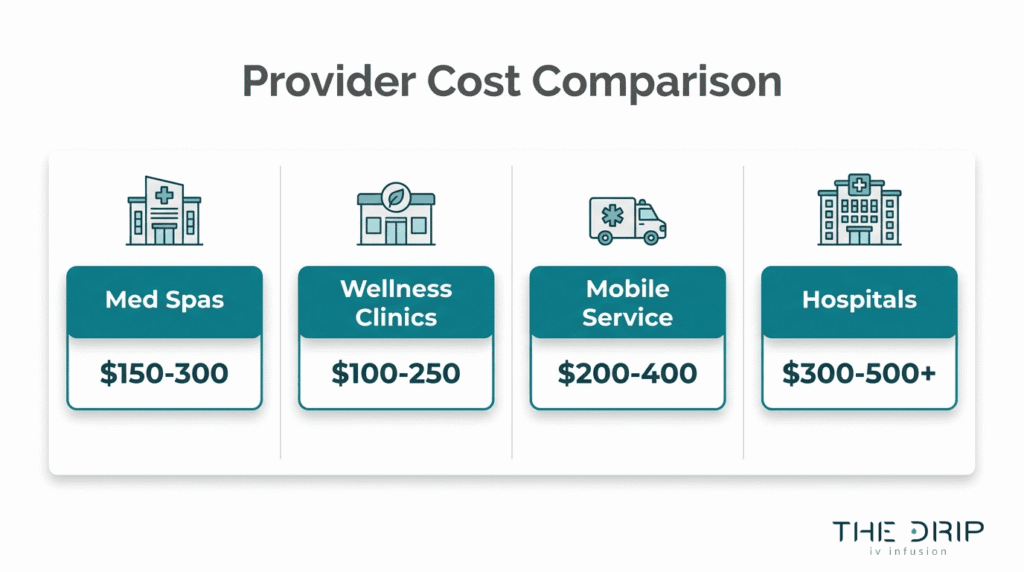
Med spas charge for glutathione IVs typically between $150 and $300 per session, depending on dosage and whether the treatment is standalone or bundled with other aesthetic services. These facilities often position glutathione as a skin-brightening or anti-aging add-on within broader treatment menus. Pricing reflects the premium environment, aesthetic consultation, and amenity-driven experience that med spas provide. Membership plans at med spas frequently reduce per-session costs by 20% to 30%, making them a reasonable option for clients planning ongoing protocols. For those primarily seeking cosmetic benefits, med spas offer a familiar setting, though the same glutathione formulation may cost less at a dedicated wellness clinic.
How Much Do Wellness Clinics Charge for Glutathione IVs?
Wellness clinics charge for glutathione IVs generally between $100 and $250 per session, often positioning themselves as the most cost-effective brick-and-mortar option. These clinics focus specifically on IV therapy and functional wellness, which keeps overhead lower than multi-service med spas. Many wellness clinics offer tiered pricing based on dosage and structured membership programs. According to VitaNova Wellness Clinic, monthly memberships starting at $99.99 per month provide discounted rates for glutathione IV and injection combinations. This subscription model makes wellness clinics particularly attractive for clients on maintenance protocols requiring regular sessions. The focused clinical environment also means shorter wait times and streamlined service compared to larger medical facilities.
How Much Do Mobile IV Services Charge for Glutathione IVs?
Mobile IV services charge for glutathione IVs at a premium that reflects clinician travel, equipment transport, and concierge-level convenience. Standard 500 mg glutathione IV doses are sometimes available as low as $40 when added onto other hydration services, according to pricing data from Nashville-based providers. However, standalone mobile glutathione sessions in major markets typically start higher, often between $200 and $400 or more. The wide price range depends on whether glutathione is the primary treatment or an add-on to a base hydration drip. Mobile services are ideal for clients who value privacy and scheduling flexibility, though per-session costs tend to exceed what brick-and-mortar clinics charge for equivalent dosages.
How Much Do Hospitals or Integrative Doctors Charge?
Hospitals and integrative doctors charge for glutathione IVs at the highest end of the pricing spectrum, often ranging from $300 to $500 or more per session. This reflects facility fees, physician oversight, and comprehensive intake protocols that accompany treatment in medical settings. California regulations mandate that 51% or more of an IV therapy clinic must be owned by a licensed physician, which illustrates the regulatory infrastructure driving costs at medically supervised facilities. Integrative medicine practices may also include diagnostic testing or personalized dosing consultations within the total fee. While hospital-based glutathione IV therapy costs more, it may be the most appropriate choice for individuals managing complex health conditions who need close clinical monitoring.
With provider pricing mapped out, understanding how many sessions you actually need determines total treatment investment.
How Many Glutathione IV Sessions Do You Need?
The number of glutathione IV sessions you need depends on your wellness goal. Skin brightening, detox support, immune health, and athletic recovery each require different protocols and timelines.
How Many Sessions Are Recommended for Skin Brightening?
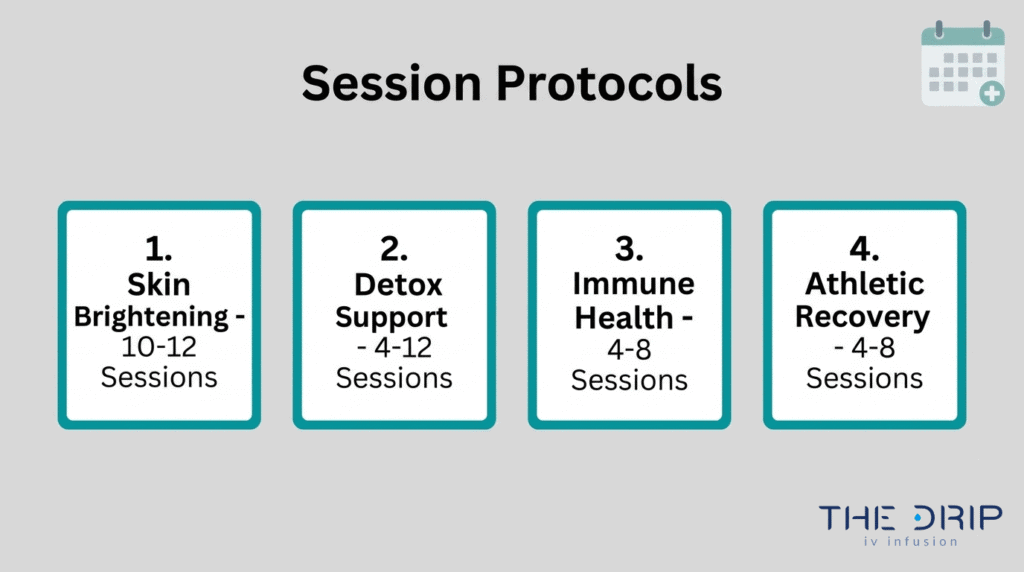
The number of sessions recommended for skin brightening is typically 10 to 12, administered twice weekly over six weeks. A clinical protocol reported in the Cureus Journal of Medical Science used 1,200 mg of IV glutathione administered twice weekly for six weeks to evaluate skin-lightening outcomes. Results tend to appear gradually, with most practitioners advising maintenance sessions every two to four weeks after the initial loading phase to sustain visible improvements. Consistency matters more than dosage escalation for complexion-related goals.
How Many Sessions Are Recommended for Detox Support?
The number of sessions recommended for detox support is typically 4 to 12, spread across a structured loading phase. According to DripGym, practitioners often recommend weekly or twice-weekly glutathione sessions during an initial four-to-six-week loading phase for detoxification support. The frequency depends on toxin exposure levels and baseline glutathione status. After the loading phase, most clients transition to biweekly or monthly sessions to maintain antioxidant levels and support ongoing liver function.
How Many Sessions Are Recommended for Immune Health?
The number of sessions recommended for immune health is generally 4 to 8 during an initial protocol, with frequency tapering afterward. Weekly sessions are common during periods of heightened susceptibility, such as cold and flu season or after travel. Once immune markers stabilize, many practitioners recommend stepping down to biweekly or monthly infusions. Individuals with chronic stress or poor sleep often benefit from maintaining a more frequent schedule, since these factors deplete glutathione reserves faster than normal metabolic demands.
How Many Sessions Are Recommended for Athletic Recovery?
The number of sessions recommended for athletic recovery varies from 4 to 8 sessions, typically scheduled around training cycles. Athletes in heavy training blocks often benefit from one to two sessions per week during peak periods, reducing to monthly maintenance during off-season phases. Glutathione supports recovery by neutralizing exercise-induced oxidative stress and reducing muscle inflammation. For most active individuals, timing sessions within 24 to 48 hours after intense effort maximizes the antioxidant benefit. Understanding session frequency helps clarify what to expect when comparing treatment costs over time.
How Often Should You Get Glutathione IV Treatments?
You should get glutathione IV treatments on a schedule that matches your specific wellness goal, with frequency ranging from multiple times per week during intensive phases to once or twice monthly for maintenance.
The right cadence depends on whether you are pursuing detox support, skin brightening, immune health, or general antioxidant maintenance. Most protocols follow a two-phase structure: a concentrated loading phase followed by a less frequent maintenance phase.
During the loading phase, practitioners typically recommend weekly or twice-weekly glutathione sessions over an initial four-to-six-week period. According to DripGym, this loading frequency is commonly prescribed for detoxification or immune support goals, allowing glutathione levels to build systemically before tapering. Clinical protocols for skin lightening have used even more intensive schedules; a narrative review published in the Cureus Journal of Medical Science documented a protocol involving 1,200 mg of IV glutathione administered twice weekly for six weeks.
Once target levels are reached, most clients transition to a maintenance schedule. Common maintenance frequencies include:
- Weekly sessions for ongoing detox support or chronic oxidative stress.
- Biweekly sessions for sustained skin brightening or immune resilience.
- Monthly sessions for general antioxidant maintenance and wellness.
Individual factors also influence ideal frequency. Higher oxidative stress from intense training, environmental toxin exposure, or demanding travel schedules may warrant more frequent treatments. Clients with lower baseline demands often maintain results with one session per month.
From a practical standpoint, the loading phase represents the largest upfront cost commitment, sometimes requiring eight to twelve sessions within six weeks. Planning this phase around a package or membership can significantly reduce per-session costs. Once you shift to maintenance, the ongoing expense becomes far more manageable. Discussing your goals with a qualified provider ensures the schedule aligns with both your health objectives and your budget.
Is Glutathione IV Therapy Worth the Cost?
Glutathione IV therapy is worth the cost for individuals who prioritize bioavailability and have specific wellness goals that oral supplements cannot adequately support. The value depends on your health objectives, chosen protocol, and how you structure your sessions.
Oral glutathione has an estimated bioavailability below 1% due to degradation in the gastrointestinal tract, according to a study published in the National Center for Biotechnology Information. Intravenous delivery bypasses this limitation entirely, delivering the full dose directly into the bloodstream for immediate cellular use. That bioavailability gap alone shifts the cost-per-effective-milligram calculation dramatically in favor of IV administration.
Several factors determine whether the investment makes sense:
- Individuals with defined therapeutic goals, such as detox support or immune health, benefit most from structured loading phases.
- Package and membership pricing can reduce per-session costs by 20–40% compared to single-session rates.
- Sessions combining glutathione with complementary nutrients like Vitamin C consolidate multiple wellness objectives into one appointment, improving overall value.
- Those seeking cosmetic results like skin brightening typically need multi-week protocols, making cost planning essential before starting.
For someone paying $199 to $279 per standard in-clinic session, the cumulative cost of a four-to-six-week protocol adds up quickly. However, spreading that investment across a membership or multi-session package makes the per-treatment expense far more manageable. The real question is not whether glutathione IV therapy is expensive in absolute terms; it is whether the results you experience justify the spend relative to less effective oral alternatives. For most people committed to a structured protocol with clear goals, the answer tilts toward yes.
Understanding your insurance options and potential HSA or FSA eligibility can further offset these costs.
Does Insurance Cover Glutathione IV Therapy?
Insurance does not cover glutathione IV therapy in most cases. Because glutathione infusions are classified as elective wellness treatments, standard health insurance plans exclude them from covered benefits. However, alternative payment options through tax-advantaged health accounts may help offset costs.
According to Forma, while elective wellness IVs are generally not covered by insurance, they may qualify as HSA or FSA eligible expenses if they meet specific IRS criteria for treating a diagnosed medical condition. This means a glutathione IV prescribed by a licensed provider for a documented health issue could potentially be reimbursed through these accounts.
To determine eligibility, consider the following requirements:
- The treatment must address a specific diagnosed medical condition, not general wellness goals.
- A licensed healthcare provider must prescribe or recommend the infusion as medically necessary.
- Documentation linking the glutathione IV to the diagnosis should be retained for IRS compliance.
- Cosmetic uses, such as skin brightening, typically do not qualify under HSA or FSA rules.
For most people paying out of pocket, exploring package pricing or membership plans remains the most practical way to reduce per-session costs. Understanding how glutathione IV stacks up against other popular infusions can further clarify its value.
How Does Glutathione IV Compare in Cost to Other IV Therapies?
Glutathione IV therapy generally falls in the mid-range compared to other popular IV treatments. The sections below compare glutathione IV pricing against NAD+ IV, vitamin C IV, and Myers’ Cocktail costs.
How Does Glutathione IV Cost Compare to NAD+ IV Cost?
Glutathione IV cost compares favorably to NAD+ IV cost, typically running significantly lower per session. Standard glutathione infusions range from roughly $150 to $300 in most clinic settings, while NAD+ IV therapy sessions commonly start at $250 and can exceed $750 depending on dosage and duration.
NAD+ infusions require longer administration times, often two to four hours per session, which drives the higher pricing. Glutathione pushes, by contrast, can be completed in a fraction of that time. For clients weighing antioxidant support against cellular repair goals, the cost gap between these two therapies is substantial enough to influence treatment planning. Glutathione remains one of the more accessible IV options for budget-conscious wellness seekers.
How Does Glutathione IV Cost Compare to Vitamin C IV Cost?
Glutathione IV cost compares closely to vitamin C IV cost when each is administered as a standalone treatment, though combination protocols raise the total considerably. According to Cienega Medical, a 3,000 mg high-dose glutathione IV push is priced at $160, while a combination treatment featuring 7,500 mg of vitamin C and 3,000 mg of glutathione costs $395.
At the lower end, standalone glutathione injections (500 to 600 mg) are priced at $50 for non-members, with combination upgrades including double vitamin C reaching $90. This pattern holds across providers: pairing glutathione with vitamin C nearly doubles the cost. Clients seeking both antioxidants should compare bundled pricing against booking separate sessions, as packages sometimes offer better value.
How Does Glutathione IV Cost Compare to Myers Cocktail Cost?
Glutathione IV cost compares similarly to Myers’ Cocktail cost at most providers. A standard Myers’ Cocktail, which combines B vitamins, vitamin C, magnesium, and calcium, typically ranges from $150 to $300 per session. Standalone glutathione infusions fall within a comparable range.
The key difference lies in scope. Myers’ Cocktail delivers a broad-spectrum nutrient blend designed for general wellness, energy, and immune support, while glutathione targets antioxidant defense and detoxification specifically. Many providers offer glutathione as an add-on to a Myers’ Cocktail for $25 to $50 extra, making the combined treatment a cost-effective way to get both benefits in a single session. For clients who want targeted antioxidant support alongside comprehensive nutrient replenishment, adding glutathione to a Myers’ Cocktail often proves more economical than scheduling two separate appointments.
Understanding how glutathione stacks up against other IV therapies makes it easier to find savings on your treatment plan.
How Can You Save Money on Glutathione IV Therapy?
You can save money on glutathione IV therapy by choosing multi-session packages, enrolling in memberships, selecting add-on options, and using pre-tax health accounts.
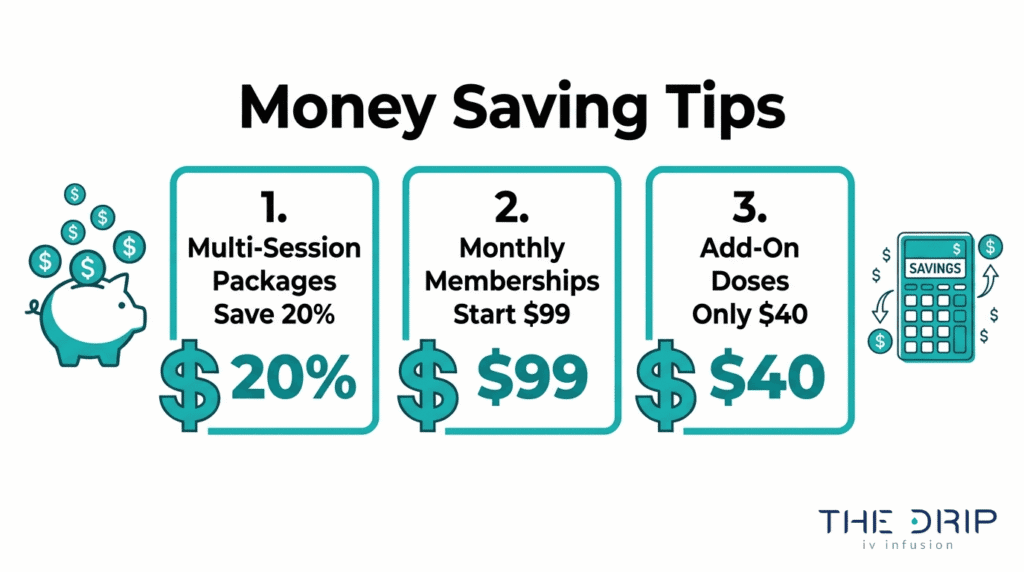
- Buy multi-session packages. Clinics commonly offer 4-session and 6-to-10-session bundles at per-session discounts of 10–20% compared to single-visit pricing.
- Enroll in a monthly membership. According to VitaNova Wellness Clinic, monthly membership plans start at $99.99 per month and provide discounted rates for glutathione IV and injection services combined.
- Add glutathione to an existing IV session. Some clinics price a standard 500 mg glutathione dose as low as $40 when added onto another hydration service, significantly reducing cost versus a standalone session.
- Use HSA or FSA funds. Elective wellness IVs may qualify as HSA or FSA eligible expenses if they meet specific IRS criteria for treating a diagnosed medical condition. A letter of medical necessity from your provider can help establish eligibility.
- Choose in-clinic over mobile service. Mobile glutathione IV sessions carry premiums for clinician travel and concierge setup. Visiting a clinic directly eliminates that surcharge.
- Start with a lower dose. Glutathione push sessions are tiered by dosage, so beginning at 600 mg instead of 3,000 mg keeps initial costs lower while you assess your response.
For most people, the single biggest savings lever is combining a membership with in-clinic visits, which can cut annual glutathione IV costs nearly in half compared to paying per session at mobile rates. Knowing these strategies helps when evaluating which provider best fits your budget.
How Should You Choose a Glutathione IV Therapy Provider?
You should choose a glutathione IV therapy provider based on clinician credentials, pricing transparency, and service format. The sections below cover mobile nurse-administered options and key cost takeaways.
Can Mobile Nurse-Administered IV Therapy Enhance Your Glutathione Experience?
Yes, mobile nurse-administered IV therapy can enhance your glutathione experience by delivering clinical-grade infusions in the comfort of your home or workplace. A registered nurse manages the entire session, from vein access to monitoring, eliminating the need to visit a clinic.
This convenience comes at a premium. According to California Infusion Centers, mobile glutathione IV therapy pricing typically starts around $398 in major urban markets to account for clinician travel, equipment transport, and concierge-level setup. By comparison, in-clinic standard sessions generally fall between $199 and $279.
For anyone managing a busy schedule or following a multi-week loading protocol, the time savings alone often justify the higher per-session cost. The Drip IV Infusion brings this mobile model directly to clients across Arizona, with experienced nurses who specialize in personalized IV protocols.
What Are the Key Takeaways About Glutathione IV Therapy Cost?
The key takeaways about glutathione IV therapy cost center on rising demand, widening price ranges, and the importance of matching your protocol to your budget:
- Single sessions range from roughly $40 for basic add-on doses to over $400 for high-dose or combination infusions.
- Multi-session packages and monthly memberships reduce per-session costs significantly.
- Mobile and concierge services carry a premium over in-clinic visits.
- Dosage, add-on nutrients, and provider setting are the three biggest pricing variables.
According to Coherent Market Insights, the global intravenous hydration therapy market is estimated to reach $3.25 billion in 2026, with projected growth to $6.09 billion by 2033. This expansion, fueled partly by a global skin lightening market estimated at $8 billion by 2026, signals that glutathione IV pricing will remain competitive as more providers enter the space.
The Drip IV Infusion offers glutathione as an add-on within its mobile IV menu, giving clients the flexibility to build a protocol that fits both their wellness goals and their budget.