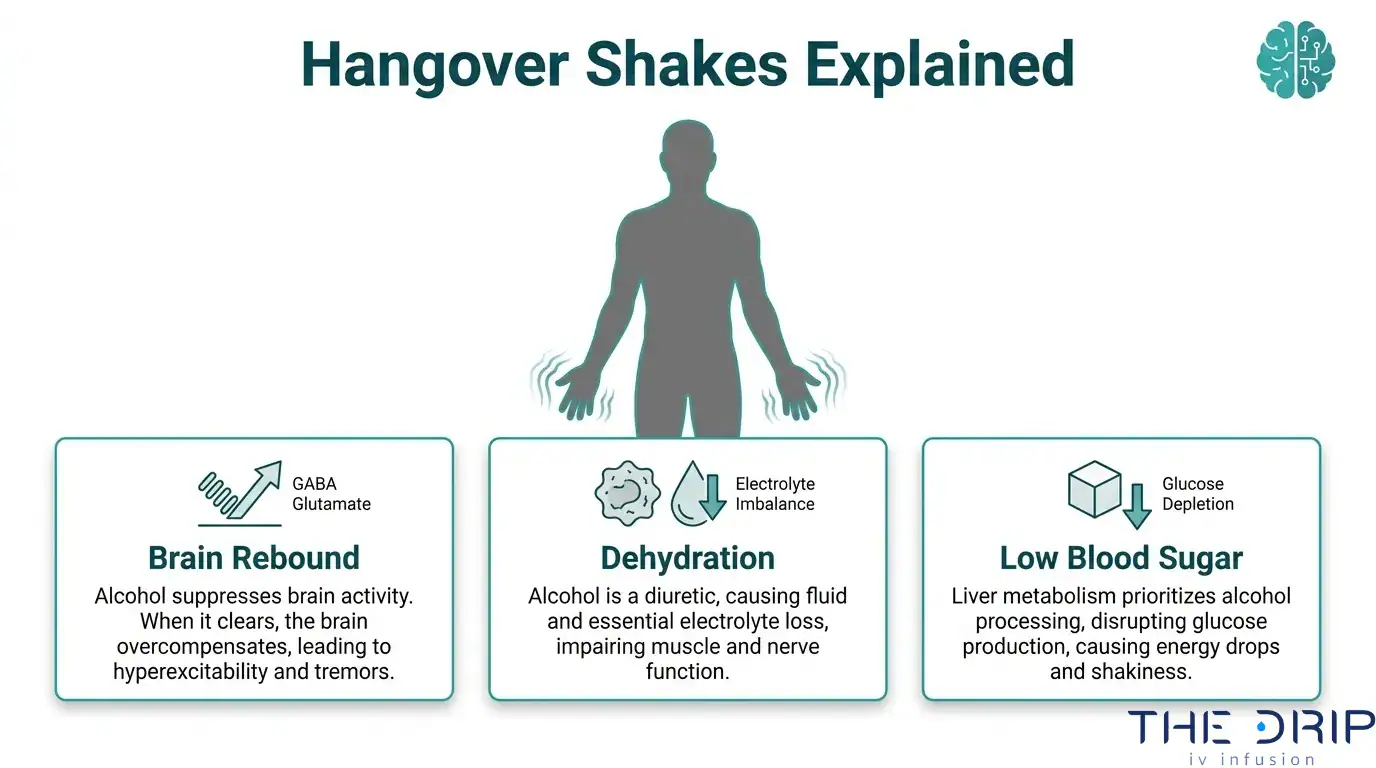
Hangover shakes are involuntary tremors that occur after alcohol leaves the body, driven primarily by nervous system rebound, dehydration, electrolyte shifts, and blood sugar drops. Most episodes resolve within 24 hours, though persistent or worsening tremors can signal alcohol withdrawal rather than a routine hangover.
This guide covers the neurochemical and physiological causes behind post-drinking tremors, how to distinguish normal shaking from warning signs that need medical attention, practical remedies and nutrition strategies, prevention through pacing and lifestyle changes, and what IV hydration therapy can realistically offer for recovery.
When drinking stops, the brain’s compensatory overproduction of glutamate is unmasked, creating CNS excitation that triggers autonomic overactivity and trembling. Dehydration from alcohol’s suppression of vasopressin compounds the problem, though fluid loss alone explains less than 5% of overall hangover variance.
Symptom severity determines whether home care is enough or medical evaluation is necessary. Mild tremors paired with fatigue, nausea, and headache that fade steadily point to a standard hangover. Shaking that escalates, persists beyond 24 hours, or appears alongside confusion, hallucinations, or seizures indicates withdrawal and warrants emergency attention.
Rest, bland carbohydrate-rich foods, oral rehydration, and time remain the most accessible options for mild hangover shakes. No conventional or complementary intervention has strong clinical evidence as a hangover cure, including over-the-counter medications and IV therapy.
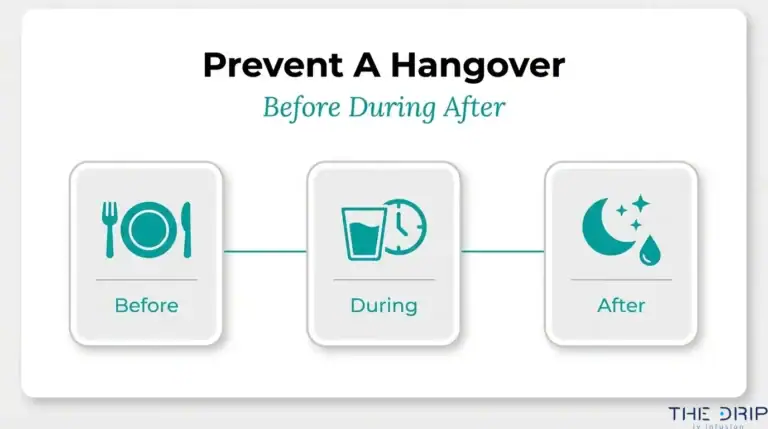
Pacing drinks, alternating with water, eating before alcohol consumption, and following moderate intake guidelines all reduce the likelihood of post-drinking tremors. For those seeking additional support, mobile IV hydration services are available that deliver fluids and nutrients directly, though these complement rather than replace medical guidance when symptoms are severe.
What Causes Tremors and Shaking During a Hangover?
Tremors and shaking during a hangover result from nervous system rebound, fluid loss, electrolyte shifts, and individual genetic factors. The following subsections break down each cause.
How Does Alcohol Withdrawal Lead to Shakiness After Drinking?
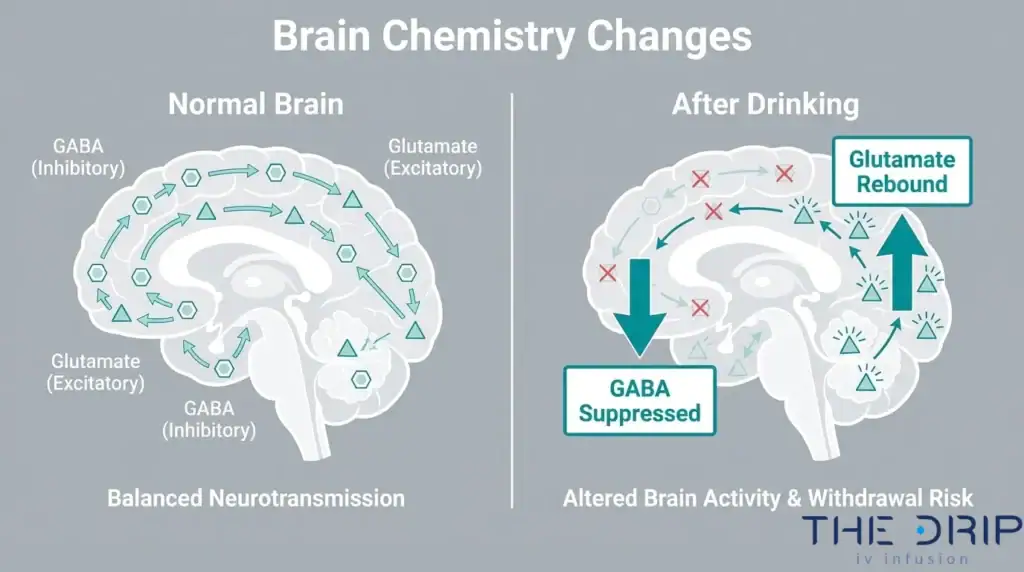
Alcohol withdrawal leads to shakiness after drinking through a neurochemical rebound in the central nervous system. Prolonged alcohol use downregulates GABA receptors and increases NMDA receptor expression, forcing the brain to produce more glutamate to maintain transmitter balance. When drinking stops abruptly, this compensation is unmasked. According to a clinical pathophysiology review published in PMC/NIH on alcohol withdrawal syndrome, the result is glutamate-mediated CNS excitation that triggers autonomic overactivity and neuropsychiatric complications, such as tremor, delirium, and seizures. Withdrawal symptoms can begin within 8 hours of the last drink, peak at 24 to 72 hours, and persist for weeks. Even a single night of heavy drinking can produce a milder version of this rebound excitation, which is why shaky hands the morning after are so common.
What Role Do Electrolyte Imbalances Play in Hangover Shakes?
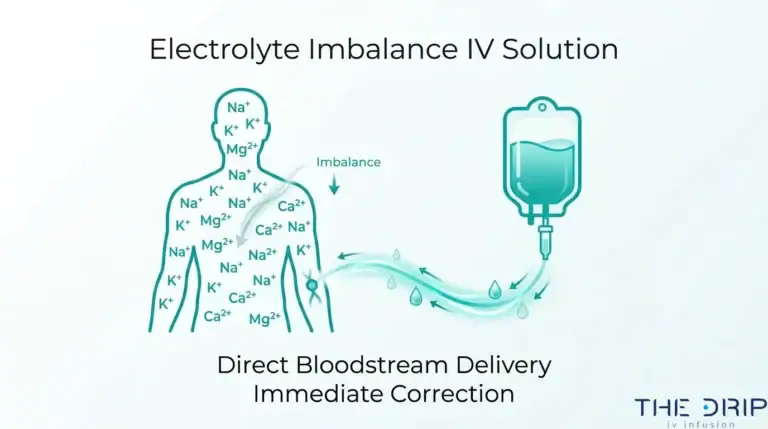
Electrolyte imbalances play a contributing role in hangover shakes by disrupting normal nerve and muscle signaling. Alcohol acts as a diuretic, increasing fluid and mineral excretion. Minerals such as magnesium, potassium, and sodium help regulate neuromuscular function; when their levels drop, involuntary muscle contractions and trembling can follow. However, the relationship is not straightforward. According to the National Institute on Alcohol Abuse and Alcoholism, research has not found a correlation between the extent of electrolyte disruptions and the severity of hangovers, or the impact of added electrolytes on hangover severity. Electrolyte shifts likely contribute to shaking in some individuals, but they are not the sole driver. Restoring balanced nutrition after drinking remains sensible even if electrolytes alone do not resolve every symptom.
Does Dehydration Make Post-Drinking Tremors Worse?
Dehydration can make post-drinking tremors worse by amplifying nervous system stress, though it is not the primary cause. Ethanol suppresses vasopressin (antidiuretic hormone), which increases urine output and accelerates fluid loss. A 1982 controlled physiology experiment published in the American Journal of Physiology confirmed that ethanol inhibits vasopressin release by decreasing osmosodium receptor sensitivity. The resulting dehydration compounds fatigue, dizziness, and muscle tension, all of which can intensify the sensation of trembling. Still, fluid loss alone does not fully explain hangover severity. A 2012 cross-sectional survey of 1,410 students in Alcohol and Alcoholism found that the “disturbed water balance” factor, including dry mouth and thirst, explained less than 5% of overall hangover variance. Dehydration worsens tremors but works alongside CNS rebound and other mechanisms rather than causing shakes independently.
Are Certain People More Prone to Hangover Shakes Than Others?
Yes, certain people are more prone to hangover shakes than others due to genetic, neurological, and lifestyle factors. Key predisposing factors include:
- Pre-existing essential tremor. According to the National Institute of Neurological Disorders and Stroke, essential tremor is inherited in 50 to 70% of cases. Alcohol temporarily suppresses this tremor, so when it wears off, rebound shaking can feel significantly worse.
- Genetic enzyme variants. Variations in alcohol-metabolism genes such as ADH1B and ALDH2 affect how quickly ethanol and acetaldehyde are processed, influencing symptom severity.
- Drinking pattern and frequency. Regular heavy drinkers develop greater neuroadaptation, which produces stronger rebound excitation even after moderate sessions.
- Sleep deprivation and poor nutrition. Both lower the threshold for enhanced physiologic tremor, making post-alcohol shaking more noticeable.
Understanding these risk factors helps distinguish a routine hangover tremor from early signs of alcohol withdrawal syndrome that may need medical attention.
What Symptoms Accompany Hangover Shakes and What Do They Mean?
The symptoms that accompany hangover shakes range from mild discomfort to warning signs of alcohol withdrawal. Distinguishing between a routine hangover and a more serious condition depends on symptom severity, timing, and duration.
How Can You Tell If Your Shakiness Is Due to a Hangover or Something More Serious?
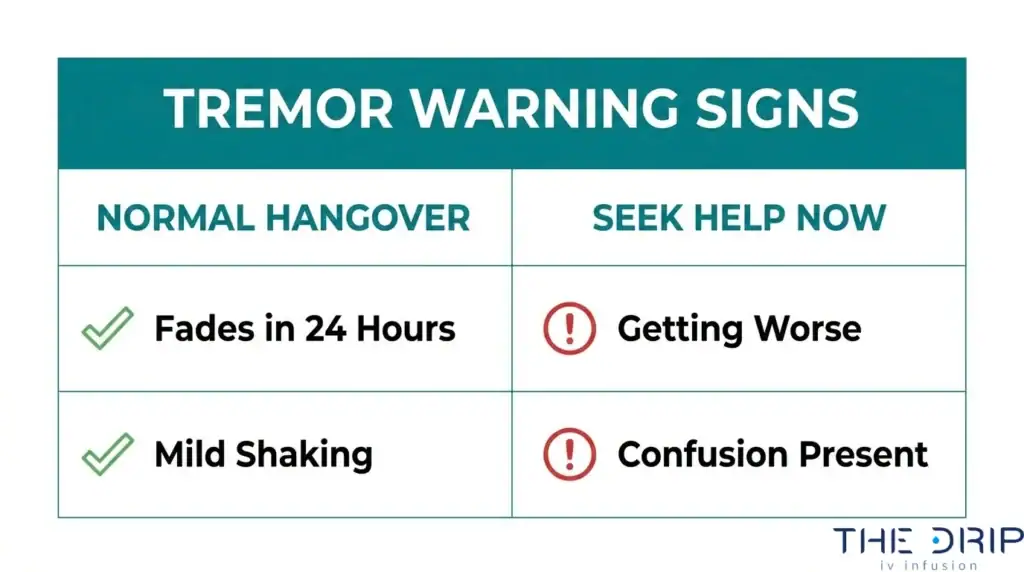
You can tell if your shakiness is due to a hangover or something more serious by evaluating the timeline and accompanying symptoms. A hangover can overlap with withdrawal, but the two are not equivalent conditions. Hangover-related tremors typically appear alongside common symptoms like fatigue, nausea, and headache, then resolve within 24 hours. According to the Mayo Clinic (2024), most hangovers go away on their own, though they can last up to 24 hours. If shakiness intensifies rather than fading, or if confusion, hallucinations, or seizures develop, those signs point toward alcohol withdrawal syndrome rather than a standard hangover. Withdrawal symptoms reflect CNS hyperexcitability and require medical evaluation.
When Should You Be Worried About Tremors After Drinking?
You should be worried about tremors after drinking when they escalate in severity, persist beyond 24 hours, or appear alongside symptoms such as confusion, hallucinations, or seizures. According to the ASAM Clinical Practice Guideline on Alcohol Withdrawal Management (2020), clinicians categorize withdrawal severity using the CIWA-Ar scale:
- Mild (CIWA-Ar below 10): anxiety, sweating, and insomnia without tremor.
- Moderate (CIWA-Ar 10 to 18): anxiety, sweating, insomnia, and mild tremor.
- Severe (CIWA-Ar 19 or above): severe anxiety with moderate to severe tremor.
- Complicated (CIWA-Ar 19 or above with seizure, confusion, or hallucinations).
Any tremor paired with disorientation, rapid heartbeat, or visual disturbances warrants immediate medical attention; these could signal autonomic overactivity that a standard hangover does not produce.
What Other Hangover Symptoms Often Occur with Shaking?
The other hangover symptoms that often occur with shaking include fatigue, thirst, nausea, headache, and sensitivity to light or sound. A 2012 cross-sectional survey published in Alcohol and Alcoholism (n = 1,410 Dutch students) found that fatigue was the most commonly reported hangover symptom at 95.5%, followed by thirst at 89.1%. Alcohol suppresses vasopressin, which contributes to fluid loss and intensifies dry mouth and thirst. Although these symptoms frequently overlap with tremors, the presence of shaking alone does not confirm withdrawal. If shaking resolves as other symptoms fade, a typical hangover is the likely explanation.
Understanding which symptoms pair with hangover shakes helps clarify when home care is enough and when professional support becomes necessary.
How Can You Stop or Reduce Hangover Shakes?
You can stop or reduce hangover shakes through home remedies, targeted nutrition, and time. The following sections cover practical strategies, from calming tremors at home to understanding when shaking resolves on its own.
What Home Remedies Help Calm Hangover Tremors?
Home remedies that help calm hangover tremors include rest, hydration, controlled breathing, and a cool, quiet environment. Lying down reduces the demand on an already-stressed nervous system, while sipping water or an oral rehydration solution addresses fluid loss from alcohol’s diuretic effect.
Slow, deep breathing can lower the sympathetic nervous system activation that contributes to trembling. Avoiding caffeine also helps, since stimulants may amplify shakiness. Some people explore IV hydration as a home option; however, no standalone remedy has been proven to cure a hangover. For most people, combining several low-risk strategies yields the best comfort while the body clears residual alcohol metabolites.
Which Foods and Drinks Ease Hangover Shaking?
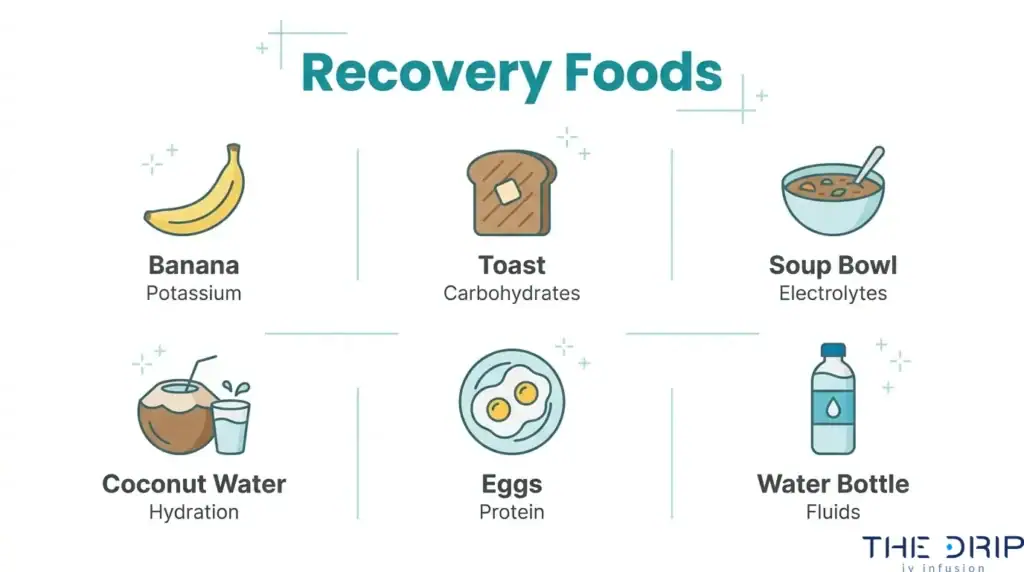
Foods and drinks that ease hangover shaking are those that restore blood sugar, replenish fluids, and provide easily digestible nutrients. Effective options include:
- Bananas, which supply potassium and simple carbohydrates for quick energy.
- Toast or crackers, which raise blood glucose without irritating a sensitive stomach.
- Broth-based soups, which deliver sodium, fluid, and gentle calories simultaneously.
- Coconut water or diluted fruit juice, which provide natural sugars alongside modest electrolytes.
- Eggs, which contain cysteine, an amino acid involved in processing acetaldehyde.
When nausea makes oral intake difficult, some individuals turn to IV therapy to bypass the digestive system entirely. Services like The Drip IV Infusion bring medical-grade hydration and nutrients directly to clients in Arizona, administered by experienced nurses in about one hour, though this approach addresses fluid and nutrient depletion rather than the underlying nervous system mechanisms driving tremors.mselves significantly dehydrated despite preventive measures, mobile IV hydration services can deliver fluids and electrolytes directly. The Drip IV Infusion, operating throughout Arizona’s East Valley and Phoenix, offers in-home sessions that take approximately one hour, though these services work best as part of a broader wellness approach rather than a standalone solution.
Can Over-the-Counter Remedies Alleviate Alcohol-Induced Trembling?
Over-the-counter remedies can address symptoms surrounding alcohol-induced trembling, but none specifically targets the tremor itself. NSAIDs such as ibuprofen reduce headache and inflammation, while antacids settle stomach discomfort. According to a 2005 BMJ systematic review of eight randomized controlled trials, no compelling evidence exists to suggest that any conventional or complementary intervention is effective for preventing or treating alcohol hangover.
Acetaminophen should be used cautiously because alcohol stresses the liver, increasing the risk of hepatotoxicity. Ultimately, OTC options manage adjacent symptoms like pain and nausea rather than the neurological rebound driving the shakes. If trembling persists beyond a typical hangover window, medical evaluation is a safer path than cycling through additional self-treatment.
How Quickly Do Hangover Shakes Usually Go Away?
Hangover shakes usually go away within 24 hours. According to the Mayo Clinic, most hangovers resolve on their own within that timeframe, and mild tremors typically follow the same course. Shaking that starts a few hours after your last drink and gradually fades as the body metabolizes remaining alcohol byproducts falls within this expected pattern.
Tremors lasting beyond 24 hours, or those that intensify rather than diminish, may signal alcohol withdrawal rather than a simple hangover. That distinction matters: withdrawal symptoms can escalate and may require medical attention. If shaking worsens, is accompanied by confusion or rapid heart rate, or does not improve with rest and rehydration, seeking professional evaluation is the appropriate next step.
Understanding recovery timelines sets realistic expectations for when IV hydration or other supportive measures may offer the most benefit.
What Precautions Can Prevent Hangover Shakes in the Future?
Precautions that can prevent hangover shakes in the future include choosing lower-congener drinks, pacing alcohol intake with food and water, and adopting lifestyle habits that support nervous system resilience. The following subsections cover drink selection, pacing and hydration strategies, and broader lifestyle changes.
Can Drinking Certain Types of Alcohol Lower the Risk of Shaking?
Yes, drinking certain types of alcohol can lower the risk of shaking. Congeners, the byproducts of fermentation found in higher concentrations in dark liquors such as bourbon, red wine, and brandy, are associated with more severe hangover symptoms. Lighter-colored options like vodka, gin, and white wine contain fewer congeners. However, the total amount of ethanol consumed matters far more than the type. No drink choice eliminates hangover shakes entirely if overall intake remains high. For anyone prone to post-drinking tremors, selecting lower-congener beverages is a small but practical first step.
How Does Pacing Yourself or Hydrating Help Prevent Tremors After Drinking?
Pacing yourself helps prevent tremors after drinking by slowing the rate at which blood alcohol concentration rises. According to the National Highway Traffic Safety Administration, blood alcohol concentration drops by approximately 0.015 per hour after peaking. For individuals who find themselves significantly dehydrated despite preventive measures, mobile IV hydration services can deliver fluids and electrolytes directly. The Drip IV Infusion, operating throughout Arizona’s East Valley and Phoenix, offers in-home sessions that take approximately one hour, though these services work best as part of a broader wellness approach rather than a standalone solution. Hydration helps, but pacing intake is the more reliable preventive measure.
Are There Lifestyle Changes That Reduce the Likelihood of Hangover Shakes?
Yes, there are lifestyle changes that reduce the likelihood of hangover shakes:
- Follow moderate drinking guidelines. The Dietary Guidelines for Americans 2020–2025 recommend limiting intake to 2 drinks or fewer per day for men and 1 drink or fewer per day for women.
- Eat a balanced meal before drinking. Food slows alcohol absorption, which blunts the spike in blood alcohol concentration that intensifies next-day tremors.
- Prioritize consistent sleep. Sleep deprivation amplifies CNS excitability, making tremor-prone individuals more susceptible after even moderate drinking.
- Manage stress and overall nervous system health. Regular physical activity, adequate magnesium from whole foods, and reduced caffeine intake all support baseline neuromuscular stability.
Reducing total alcohol consumption remains the single most effective lifestyle change for preventing hangover shakes. With these habits established, understanding recovery options can further support well-being after a night out.
How Can The Drip IV Infusion Help with Hangover Shakes and Recovery?
The Drip IV Infusion offers mobile and in-office IV hydration sessions designed for hangover recovery. Below, we cover what IV therapy can and cannot do for hangover shakes, followed by a summary of the most important takeaways from this article.
Can IV Therapy from The Drip IV Infusion Alleviate Hangover Shakes?
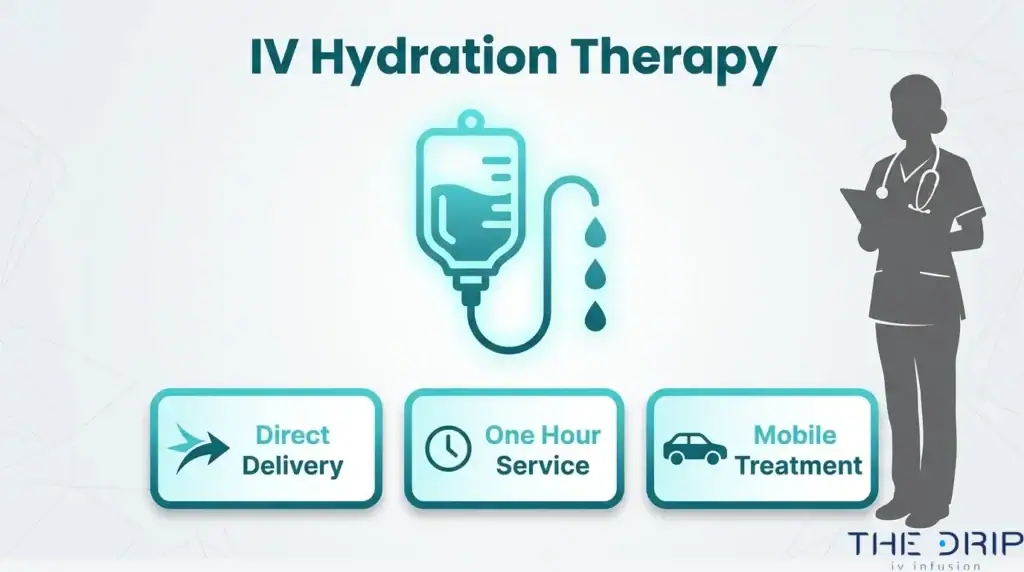
IV therapy from The Drip IV Infusion can deliver fluids, electrolytes, and vitamins directly into the bloodstream, which may help address dehydration and nutrient depletion associated with a hangover. The Drip IV Infusion offers hangover recovery packages, available as a mobile service across Arizona’s East Valley or at in-office locations. A typical session takes about 1 hour.
It is important to set realistic expectations. No authoritative source reviewed for this article supports IV therapy as a cure for hangovers. Rehydration can ease symptoms like thirst and fatigue, but tremors tied to nervous system rebound or alcohol withdrawal require medical evaluation, not a hydration session alone. If shaking persists beyond 24 hours or worsens, consult a healthcare provider before booking any IV appointment.
What Are the Most Important Things to Remember About Hangover Shakes and Effective Remedies?
The most important things to remember about hangover shakes and effective remedies are:
- Hangover shakes result from nervous system hyperexcitability, dehydration, electrolyte shifts, and blood sugar drops after alcohol leaves the body.
- A standard hangover, including mild tremors, typically resolves within 24 hours; shaking that worsens, lasts longer, or accompanies confusion, seizures, or hallucinations may signal alcohol withdrawal and requires emergency care.
- No single remedy, whether oral rehydration, over-the-counter medication, or IV therapy, has strong clinical evidence as a hangover cure.
- Practical steps such as rest, bland carbohydrate-rich foods, water, and time remain the most accessible options for mild symptoms.
- IV hydration from a provider like The Drip IV Infusion can support fluid and nutrient replenishment, though it should complement, not replace, medical guidance when symptoms are severe.
The safest long-term strategy is moderation: pacing drinks, alternating with water, and eating before alcohol consumption reduce the likelihood of hangover shakes in the first place.