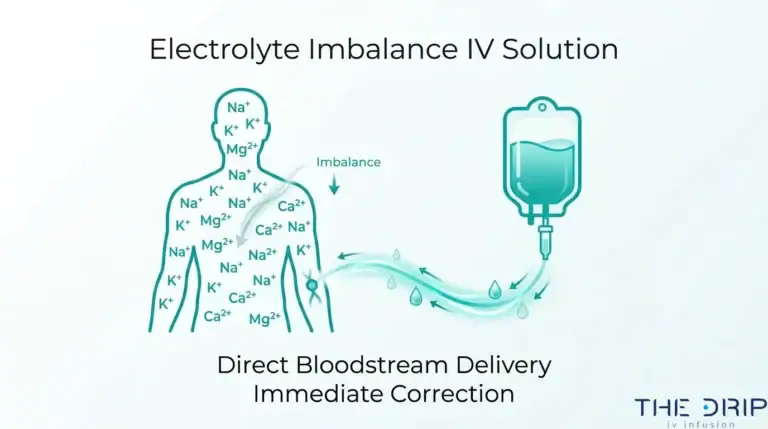
At-home IV therapy is a medical wellness service where a licensed nurse travels to your location and administers intravenous fluids, vitamins, or medications directly into your bloodstream, bypassing the digestive system for immediate cellular absorption and higher bioavailability.
We cover how mobile IV delivery works, who benefits most from this service, available drip formulations, advantages over clinic visits, pricing, provider qualifications, safety standards, and emerging treatments shaping the industry.
Mobile IV delivery in 2026 follows a streamlined process of online booking, nurse arrival, and supervised infusion, with many providers fulfilling same-day requests within an hour. Licensed professionals handle everything from health assessment to IV insertion and real-time monitoring at your chosen location.
The strongest candidates for at-home infusions include athletes seeking rapid post-training recovery, frequent travelers combating dehydration and jet lag, expecting mothers managing nausea, busy professionals who cannot sacrifice productivity, and chronic illness patients facing mobility limitations or infection risks in clinical settings.
Available drip types range from foundational hydration therapy and immune support infusions to specialty treatments like NAD+ for cellular energy, athletic recovery blends, weight management formulations with lipotropic compounds, hangover relief, and broad-spectrum vitamin cocktails.
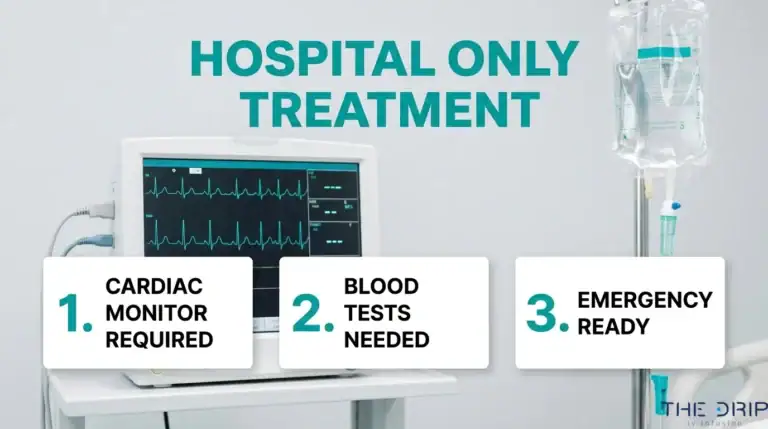
Compared to clinic visits, mobile IV therapy reduces hospital-acquired infection exposure, eliminates travel and waiting room time, and provides dedicated one-on-one nursing care. Patients receiving infusions in hospital outpatient departments face significantly higher costs than those using alternative care sites.
Pricing in 2026 spans $150 for basic hydration to $800 or more for advanced NAD+ protocols, with membership plans reducing per-session costs by 15% to 30%. Provider selection should prioritize active RN licensure, physician oversight, medical-grade ingredients from registered compounding pharmacies, and emergency medicine training.
What Is At-Home IV Therapy?
At-home IV therapy is a medical wellness service where a licensed nurse travels to your location and administers intravenous fluids, vitamins, or medications directly into your bloodstream. Rather than visiting a clinic or hospital, patients receive customized drip formulations in their home, office, or hotel room. This approach bypasses the gastrointestinal tract, allowing nutrients to reach cells with immediate absorption and higher bioavailability. According to a National Library of Medicine publication, intravenous vitamin therapy ensures higher bioavailability by bypassing the gastrointestinal tract, allowing for immediate absorption and utilization by tissues and cells. A licensed healthcare professional handles the entire process, from health assessment to IV insertion and monitoring, making it both a convenient and medically supervised experience.
How Does Mobile IV Therapy Delivery Work in 2026?
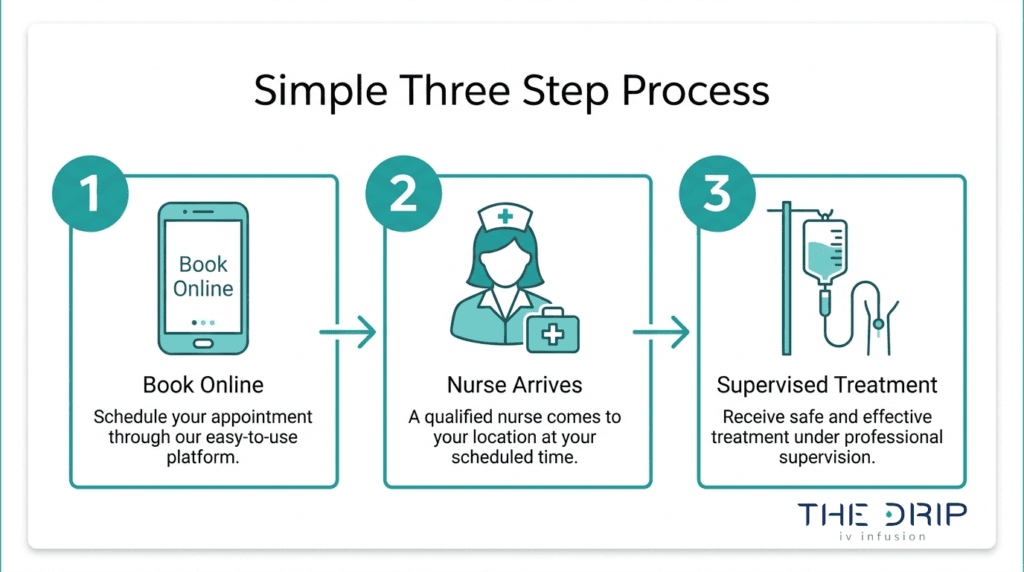
Mobile IV therapy delivery works through a streamlined three-step process: online booking, a nurse visit to your location, and a supervised infusion session. Each step is designed for convenience and clinical safety.
What Happens During the Booking and Scheduling Process?
The booking and scheduling process begins with selecting your desired IV treatment through a provider’s online platform or phone line. You choose a drip formula, preferred date, and location. A licensed provider then reviews your health intake form and approves a patient-specific order before confirming your appointment. According to Forbidden Well, on-demand IV therapy involves a licensed healthcare professional administering an intravenous drip in the comfort of the patient’s home or office, with many same-day requests fulfilled within an hour. Most services offer same-day availability, making the process nearly as simple as ordering any other on-demand wellness service.
What Should You Expect When the Nurse Arrives at Your Home?
You should expect a registered nurse to arrive with all medical-grade supplies needed for your infusion. The nurse performs a brief health assessment, checks vital signs, and confirms your selected treatment aligns with your wellness goals. After verifying your medical history, the nurse prepares the IV line and inserts a small catheter into a vein, typically in the arm. The entire setup takes only a few minutes. Throughout the session, the nurse monitors your comfort, adjusts drip rate as needed, and answers any questions about the nutrients being delivered.
How Long Does a Typical At-Home IV Infusion Session Take?
A typical at-home IV infusion session takes approximately 1 hour from start to finish. This timeframe includes the initial health check, catheter insertion, the drip itself, and post-infusion monitoring. Some specialty treatments, such as NAD+ infusions, may require longer sessions depending on dosage and individual tolerance. Simpler hydration drips can finish in 30 to 45 minutes, while complex formulas need the full hour or slightly more. Your nurse remains present for the entire duration to ensure safe delivery and address any reactions immediately.
Understanding the delivery process helps clarify who benefits most from this service model.
Who Are the Best Candidates for At-Home IV Therapy?
The best candidates for at-home IV therapy include athletes recovering from intense training, frequent travelers, expecting mothers, busy professionals, and chronic illness patients. Each group benefits from the convenience and targeted nutrient delivery that mobile infusions provide.
How Does At-Home IV Therapy Help Athletes With Recovery?
At-home IV therapy helps athletes with recovery by delivering fluids, electrolytes, and performance nutrients directly into the bloodstream immediately after training. On-demand IV therapy involves a licensed healthcare professional administering an intravenous drip in the comfort of the patient’s home, with many same-day requests fulfilled within an hour.
Athletes benefit from rapid rehydration and nutrient replenishment without traveling to a clinic while fatigued. According to a 2025 Nova One Advisor market report, the energy boosters category captured the largest portion of the IV therapy market at a 27% share, reflecting strong demand among performance-focused clients. For athletes training in extreme heat or pushing through intense competition cycles, this immediate access to recovery support can make a meaningful difference in maintaining consistent output.
Why Do Frequent Travelers Choose Mobile IV Drips?
Frequent travelers choose mobile IV drips because travel causes dehydration, jet lag, and immune suppression that oral supplements address too slowly. Cabin air pressure reduces oxygen saturation, while recycled air and disrupted sleep weaken immune defenses.
Mobile IV therapy delivers hydration and immune-supporting nutrients like vitamin C and zinc directly to cells upon arrival. Travelers can book a session at their hotel or home without searching for a local clinic in an unfamiliar city. For those crossing multiple time zones weekly, consistent IV hydration sessions help maintain energy levels and reduce downtime between trips.
How Can Expecting Mothers Benefit From At-Home IV Infusions?
Expecting mothers can benefit from at-home IV infusions by receiving hydration and nausea relief without the discomfort of traveling to a medical facility. Morning sickness, hyperemesis gravidarum, and general pregnancy fatigue make clinic visits physically demanding during the first trimester.
At-home infusions allow expecting mothers to rest comfortably during treatment. IV hydration bypasses the gastrointestinal tract entirely, which is particularly valuable when nausea prevents adequate oral fluid intake. For many pregnant clients, this comfort-centered approach reduces stress and ensures consistent hydration throughout difficult stages of pregnancy.
What Makes At-Home IV Therapy Ideal for Busy Professionals?
At-home IV therapy is ideal for busy professionals because it eliminates travel time and waiting rooms from the treatment process. A session can be scheduled during a lunch break or between meetings at home or office.
According to Nextech, only licensed medical professionals can administer IV therapy in California, such as a Registered Nurse under physician supervision, a Physician Assistant, or a Nurse Practitioner. This clinical-grade care arrives on the professional’s schedule rather than requiring them to rearrange their day. The efficiency of receiving treatment without productivity loss makes mobile IV services a practical wellness tool for high-demand schedules.
How Does Mobile IV Therapy Support Chronic Illness Patients?
Mobile IV therapy supports chronic illness patients by bringing medically supervised infusion treatments to those who face mobility limitations or immune vulnerabilities. According to a 2025 Nova One Advisor report, the medical application segment accounted for the highest share of the U.S. mobile IV hydration therapy market at 48%.
Patients managing conditions that cause chronic fatigue, nutrient malabsorption, or compromised immunity benefit from avoiding exposure to clinical waiting areas. The FY 2026 CMS budget supports expanding telehealth and home infusion therapy for Medicare and hospice beneficiaries. Intravenous vitamin C is also being used in clinical research to investigate its efficacy in patients with various chronic conditions. For patients requiring regular infusions, mobile delivery transforms a burdensome routine into a manageable one.
With ideal candidates identified, understanding which drip formulations match specific goals helps narrow the right treatment choice.
What Types of IV Drips Can Be Delivered to Your Home?
The types of IV drips that can be delivered to your home include hydration therapy, immune support infusions, NAD+ therapy, athletic recovery drips, weight management infusions, hangover recovery drips, and vitamin cocktails.
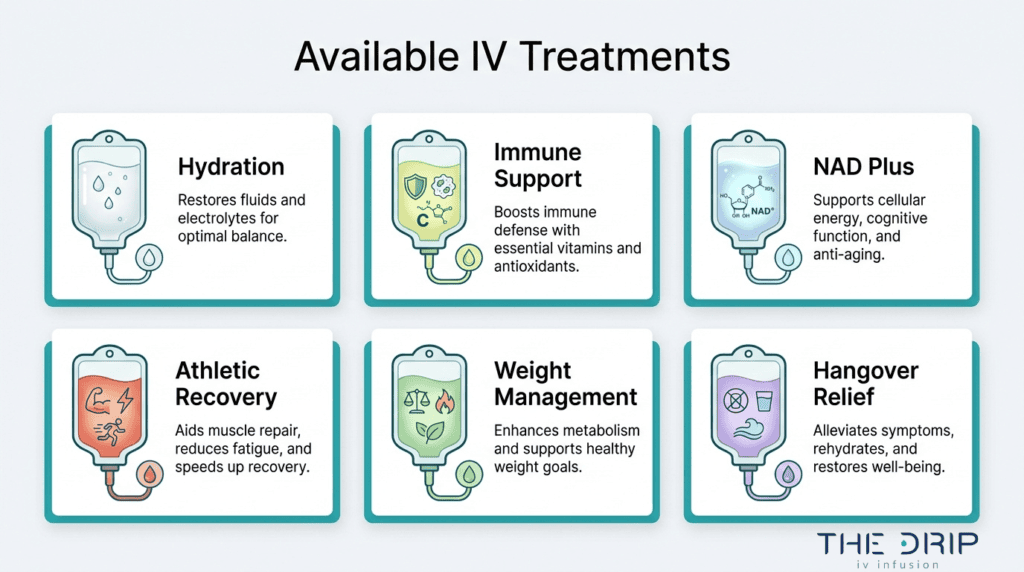
Hydration Therapy
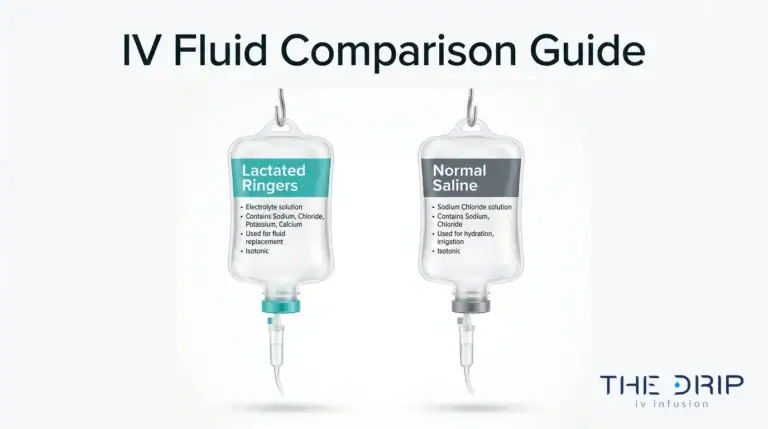
Hydration therapy is the most foundational mobile IV drip, delivering crystalloid solutions directly into the bloodstream for rapid fluid replenishment. This treatment addresses dehydration from illness, heat exposure, or insufficient daily intake. The competitive landscape for this service is well established; according to a 2026 LinkedIn market report, the leading companies in the IV hydration market include Hydralive Therapy, REVIV, Hangover Heaven, The IV Bar, and The Hydration Room. For most clients, hydration therapy serves as either a standalone treatment or the saline base upon which more specialized formulations are built.
Immune Support Infusions
Immune support infusions deliver high-dose vitamin C, zinc, and B vitamins intravenously to bolster the body’s natural defenses. These drips bypass the gastrointestinal tract, allowing nutrients to reach cells at concentrations unachievable through oral supplements alone. Clients typically request immune infusions during cold and flu season, before travel, or when feeling early signs of illness. This proactive approach to immune health makes these drips particularly popular among frequent travelers and professionals who cannot afford downtime.
NAD+ Therapy
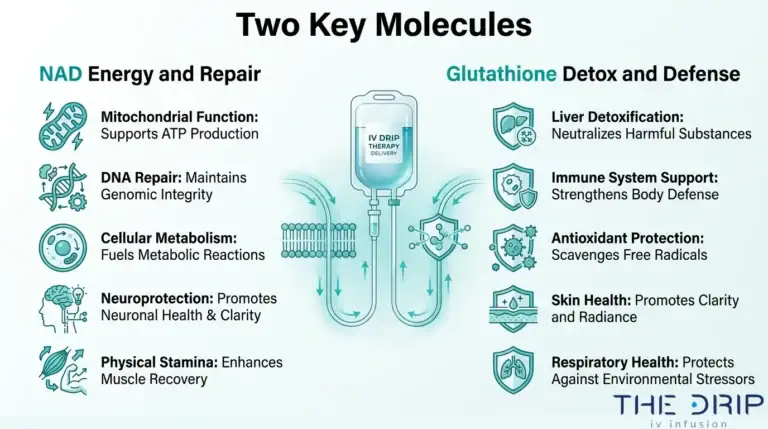
NAD+ therapy delivers nicotinamide adenine dinucleotide directly into the bloodstream to support cellular energy production, mental clarity, and anti-aging processes. Because NAD+ levels decline naturally with age, supplementation through IV delivery has gained significant interest. Sessions tend to run longer than standard drips due to the slower infusion rate NAD+ requires for comfort and tolerability. For clients seeking cognitive restoration or metabolic support, NAD+ remains one of the most sought-after specialty treatments in mobile IV services.
Athletic Performance and Recovery Drips
Athletic performance and recovery drips combine electrolytes, amino acids, and B-complex vitamins to accelerate post-exercise recovery and support endurance. These formulations replenish what intense physical activity depletes, reducing muscle soreness and shortening recovery windows. Athletes training in hot climates or preparing for competitions often schedule these drips as part of their recovery protocols. Given that proper rehydration and nutrient replenishment directly affect performance output, this drip category appeals to both recreational and competitive athletes.
Weight Management Infusions
Weight management infusions support metabolic function through lipotropic compounds such as Lipo-C, L-carnitine, and B12 that help the body process fat more efficiently. These drips complement diet and exercise programs rather than replacing them. Clients pursuing weight management goals often pair IV infusions with treatments like semaglutide or tirzepatide for a comprehensive approach. The direct nutrient delivery ensures that metabolic cofactors reach therapeutic levels without relying on digestive absorption.
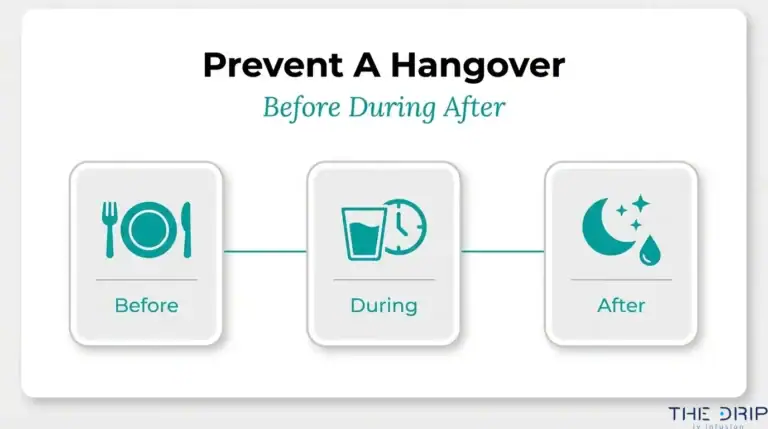
Hangover Recovery Drips
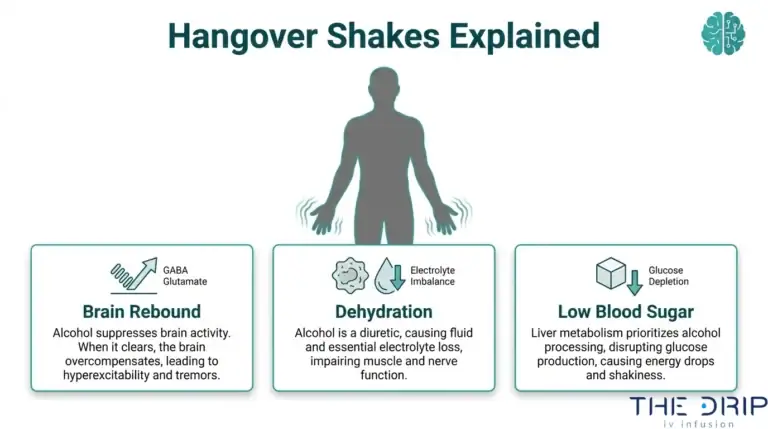
Hangover recovery drips combine rapid hydration with anti-nausea medications like Zofran, pain relief such as Toradol, and B vitamins to alleviate symptoms caused by alcohol’s dehydrating effects. These infusions work quickly because IV delivery addresses the root cause of hangover symptoms: fluid depletion and nutrient loss. Most clients report significant relief within the one-hour session. For anyone who needs to recover quickly without spending the day incapacitated, this remains one of the most requested mobile IV treatments.
Vitamin and Antioxidant Cocktails
Vitamin and antioxidant cocktails deliver combinations of glutathione, vitamin C, B-complex, and other micronutrients to combat oxidative stress and promote overall wellness. These broad-spectrum formulations serve clients who want general health maintenance rather than targeting a specific condition. Glutathione, often called the body’s master antioxidant, pairs especially well with vitamin C to neutralize free radicals at the cellular level. For those prioritizing long-term wellness, scheduling these cocktails regularly provides consistent nutrient support that oral vitamins cannot match.
Understanding available drip types helps narrow which formulation aligns with your specific wellness goals.
What Are the Benefits of At-Home IV Therapy Over Clinic Visits?
The benefits of at-home IV therapy over clinic visits include greater convenience, reduced infection risk, and more personalized care. Each advantage is explored below.
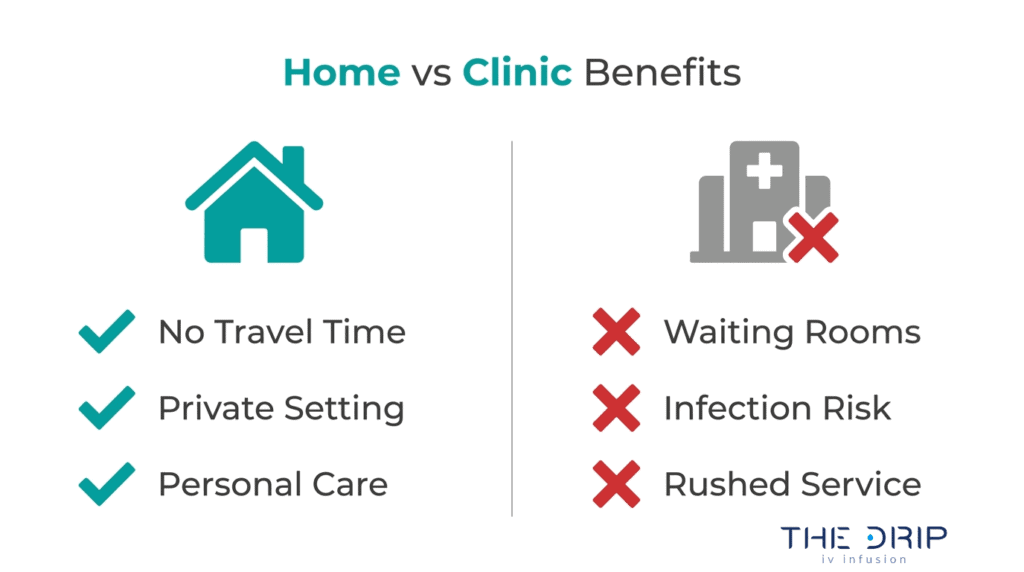
How Does Convenience Compare Between Mobile and In-Clinic IV Therapy?
Convenience with mobile IV therapy surpasses in-clinic visits because treatments happen wherever you are, eliminating travel time, waiting rooms, and rigid scheduling. A licensed nurse arrives at your home or office with all necessary supplies, turning any comfortable space into a private infusion suite.
National surveys show that 90% of patients prefer receiving treatments in the comfort of their home rather than traveling to medical facilities, according to Platinum IV Therapy. This preference reflects the reality that clinic visits often involve commuting, parking, and sitting in shared spaces for extended periods. Mobile services compress the entire experience into a single hour at a location you choose, which is particularly valuable for those managing busy schedules or limited mobility.
Is At-Home IV Therapy Safer Than Visiting an Infusion Center?
At-home IV therapy is safer than visiting an infusion center primarily because it reduces exposure to hospital-acquired infections. According to a Yahoo Finance report on the U.S. home infusion therapy market, home infusion therapy allows patients to maintain higher safety due to less risk of hospital-acquired infections at home.
In most states, an IV therapy business must have a licensed physician serving as its medical director to provide clinical oversight and prescribe treatments. This regulatory requirement ensures that mobile services maintain the same clinical standards as facility-based care. Receiving infusions in a controlled, familiar environment also lowers patient stress, which can support better outcomes during treatment. For those concerned about safety, the combination of professional oversight and a private setting offers meaningful advantages over shared clinical spaces.
Do You Get More Personalized Care With Mobile IV Services?
You get more personalized care with mobile IV services because one-on-one sessions allow nurses to focus entirely on your health goals without competing patient demands. According to the Journal of Managed Care & Specialty Pharmacy, patients receiving infusions in hospital-based outpatient departments had 42% higher outpatient costs compared with those who received infusions in alternative sites of care.
These cost savings partly reflect the streamlined, individualized approach that mobile providers offer. Without the overhead and volume pressures of a hospital setting, mobile nurses can spend more time evaluating your symptoms, adjusting drip formulations, and monitoring your response in real time. The FY 2026 federal budget further emphasizes health promotion and disease prevention in underserved areas, signaling a broader shift toward patient-centered care models that mobile IV services already deliver.
For most wellness-focused clients, the personalized attention of a dedicated nurse in your own space produces a qualitatively different experience than rotating through a busy infusion center.
With these advantages established, understanding pricing helps determine how mobile IV therapy fits your budget.
How Much Does At-Home IV Therapy Cost in 2026?
At-home IV therapy costs in 2026 range from approximately $150 for basic hydration to $800 or more for advanced specialty infusions. Pricing depends on the drip type, add-ons selected, and mobile service fees.
How Much Do Basic Hydration Drips Cost at Home?
Basic hydration drips cost between $150 and $300 per session when delivered to your home in 2026. This price typically covers a standard saline or electrolyte infusion administered by a licensed nurse. Mobile service fees, which often add $100 to $300 on top of the base drip price, account for much of the cost difference compared to in-clinic visits. Factors like geographic location, time of appointment, and any vitamin add-ons such as B-complex or magnesium will shift the final total. For most people seeking simple rehydration after illness or travel, basic drips remain the most budget-friendly mobile IV option.
What Is the Price Range for Specialty Infusions Like NAD+?
The price range for specialty infusions like NAD+ spans $200 to $800 or more per session in 2026. According to a 2026 pricing guide from Alpha IV Therapy, concierge mobile NAD+ services often add $100 to $300 in house-call fees beyond the base infusion cost, bringing total session prices to $800 or higher for custom treatment plans.
Several factors influence where a session falls within this range:
- Dosage level (lower NAD+ doses cost less than high-dose protocols)
- Session duration (NAD+ infusions typically require longer drip times)
- Provider credentials and medical oversight included
- Additional add-ons such as glutathione or amino blends
Specialty infusions carry higher pricing because they involve premium compounded ingredients and extended administration times that demand more clinical attention.
Are Mobile IV Therapy Memberships or Packages More Affordable?
Mobile IV therapy memberships or packages are more affordable per session than single bookings. Most providers offer tiered membership plans that reduce the per-infusion cost by 15% to 30% compared to one-time pricing. Package structures typically include:
- Monthly memberships with one to four included sessions at a locked-in rate
- Multi-session bundles purchased upfront at a discounted total
- Subscription plans that waive or reduce mobile service fees
For clients who schedule infusions regularly, whether for athletic recovery, immune support, or NAD+ protocols, these plans significantly lower the cumulative cost over time. Committing to a package also ensures consistent scheduling, which supports better wellness outcomes than sporadic single treatments.
Understanding what you will spend helps you evaluate which provider and plan structure best fits your health goals.
What Qualifications Should Your Mobile IV Therapy Provider Have?
Your mobile IV therapy provider should have active nursing credentials, use medical-grade ingredients from licensed pharmacies, and ideally bring emergency medicine experience. The following subsections cover each qualification in detail.
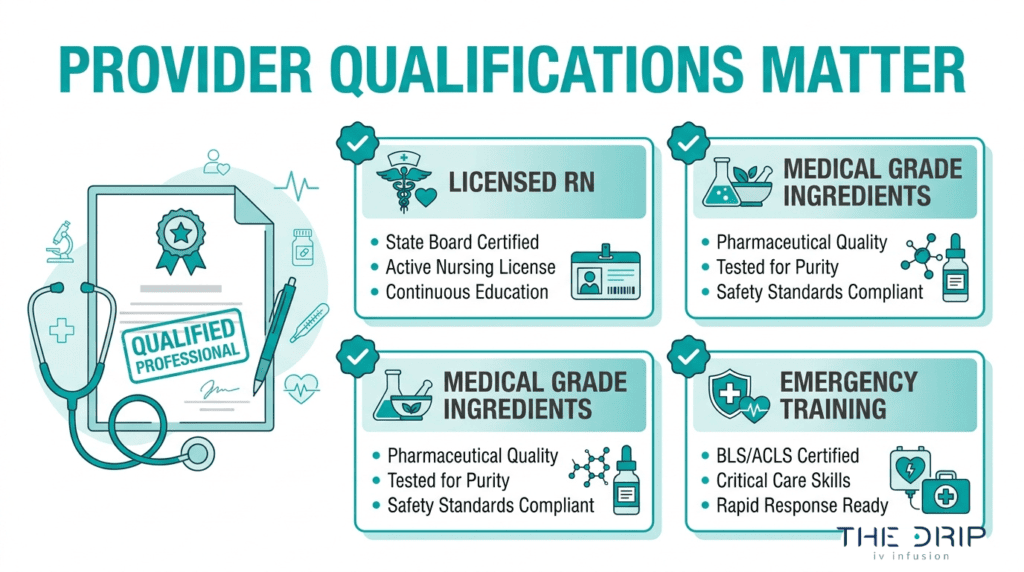
What Nursing Credentials Should You Verify Before Booking?
The nursing credentials you should verify before booking include an active Registered Nurse (RN) license, confirmation of physician oversight, and specialized IV insertion training. According to Nextech, only licensed medical professionals can administer IV therapy in California, such as a Registered Nurse under the supervision of a physician, Physician Assistant, or Nurse Practitioner. Most states follow similar structures.
Before scheduling, confirm the following credentials:
- An active, unencumbered RN license in the state where service is provided.
- A named medical director (licensed physician) who prescribes and oversees treatments.
- Documented IV catheter insertion and infusion management training.
- Current Basic Life Support (BLS) or Advanced Cardiac Life Support (ACLS) certification.
Verifying these credentials protects you from unqualified practitioners operating without proper clinical oversight.
How Do You Confirm a Provider Uses Medical-Grade Ingredients?
You confirm a provider uses medical-grade ingredients by asking whether their formulations come from FDA-registered 503A or 503B compounding pharmacies. Section 503A of the Federal Food, Drug and Cosmetic Act requires that compounded human drug products be prepared by a licensed pharmacist or physician based on a valid patient-specific prescription, as stated by the U.S. Food and Drug Administration.
Key questions to ask any mobile IV provider:
- Does a licensed pharmacist compound your solutions under sterile conditions?
- Can you provide certificates of analysis showing ingredient purity and potency?
- Are your IV bags stored and transported at proper temperatures?
Reputable services openly share sourcing details; providers who hesitate or deflect warrant concern.
Why Does Emergency Medicine Experience Matter in IV Providers?
Emergency medicine experience matters in IV providers because it equips nurses with rapid assessment skills, the ability to recognize adverse reactions immediately, and confidence managing complications such as infiltration or allergic responses. In most states, an IV therapy business must have a licensed physician serving as its medical director to provide clinical oversight and prescribe treatments, according to CIA Medical.
Nurses trained in emergency settings bring critical advantages to mobile infusions:
- Faster recognition of anaphylaxis, vasovagal episodes, or fluid overload.
- Proficiency with difficult venous access in dehydrated or elderly patients.
- Calm, protocol-driven decision-making when unexpected symptoms arise.
For any in-home procedure involving vascular access, this background provides a meaningful safety margin that standard clinical training alone may not match.
With provider qualifications confirmed, understanding how mobile IV therapy is regulated ensures complete confidence in your treatment.
Is At-Home IV Therapy Safe and Regulated?
At-home IV therapy is safe and regulated when administered by licensed professionals operating under proper medical oversight. Federal and state laws govern compounding, prescribing, and administration of intravenous treatments.
At-home IV therapy operates within a multi-layered regulatory framework. Section 503A of the Federal Food, Drug and Cosmetic Act requires that compounded human drug products be prepared by a licensed pharmacist or physician based on a valid patient-specific prescription, according to the U.S. Food and Drug Administration. This means every customized IV blend delivered to your home must originate from a legitimate compounding process tied to your individual health needs.
State-level regulations add further protections. California regulators, for example, require a Patient Specific Order for every single IV treatment, meaning a physician, nurse practitioner, or physician assistant must evaluate the patient before any infusion begins. Most states mandate that an IV therapy business operate under a licensed physician serving as medical director to provide clinical oversight and prescribe treatments.
These layered requirements ensure that mobile IV services cannot operate as unregulated wellness businesses. Licensed professionals, typically Registered Nurses under physician supervision, must perform assessments, verify medical history, and monitor patients throughout the infusion. For anyone considering at-home IV therapy, confirming that a provider meets these federal and state standards is the single most important safety step before booking a session.
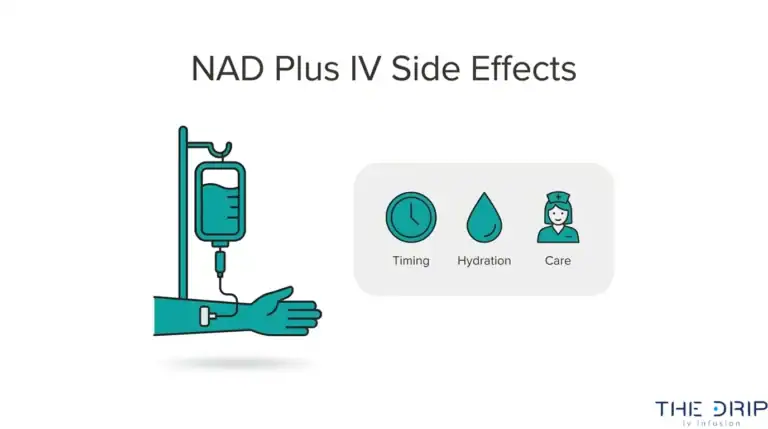
What Are the Most Common Side Effects of Mobile IV Drips?
The most common side effects of mobile IV drips are mild and temporary, including bruising at the insertion site, localized swelling, a cool sensation along the vein, and minor discomfort during needle placement. Some clients experience a slight metallic taste when certain vitamins enter the bloodstream, while others report brief dizziness if the infusion rate is too fast.
These reactions typically resolve within minutes to hours and rarely require medical intervention. Licensed infusion specialists monitor clients throughout the session, adjusting flow rates or pausing treatment if discomfort arises. Proper hydration before an appointment and communicating any allergies or sensitivities to the nurse beforehand significantly reduce the likelihood of adverse reactions.
For most healthy individuals, side effects remain limited to temporary injection-site tenderness. Serious complications are uncommon when treatments are administered by credentialed professionals using medical-grade supplies and following patient-specific protocols. Understanding these potential responses helps clients prepare for a comfortable experience during at-home infusions.
How Often Should You Schedule At-Home IV Therapy Sessions?
You should schedule at-home IV therapy sessions based on your wellness goals, health status, and provider recommendations. Frequency ranges from weekly maintenance to monthly support or as-needed acute care.
Most clients benefit from one of the following schedules:
- Weekly sessions suit athletes in heavy training, chronic fatigue patients, or those on NAD+ protocols requiring consistent replenishment.
- Biweekly sessions work well for busy professionals managing ongoing stress, mild dehydration, or immune maintenance.
- Monthly sessions support general wellness, seasonal immune boosting, and preventive nutrient optimization.
- As-needed sessions address acute events such as hangovers, travel recovery, illness onset, or post-surgical support.
Your provider should reassess frequency after the first few treatments based on how your body responds. Factors like nutrient depletion rates, activity levels, and underlying health conditions all influence the ideal cadence. According to a 2025 Nova One Advisor report, the medical application segment accounted for the highest share of the U.S. mobile IV hydration therapy market at 48%, reflecting how many clients maintain ongoing therapeutic schedules rather than one-time visits.
For most people pursuing general wellness, starting biweekly and adjusting to monthly once optimal levels stabilize represents the most practical approach. Those managing specific conditions or performance demands often require more frequent protocols under clinical guidance.
What New IV Therapy Treatments Are Trending for 2026?
New IV therapy treatments trending for 2026 include exosome infusions, semaglutide administration through IV services, and personalized IV compounding. The national home infusion therapy services rates for 2026 now cover professional services for anti-infective and pain management treatments, reflecting expanded clinical applications.
What Is Exosome Therapy and Why Is It Growing in Popularity?
Exosome therapy is a regenerative treatment that uses cell-derived vesicles to support cellular repair, reduce inflammation, and promote recovery. Intravenous exosomes are being promoted as breakthrough regenerative medicine; however, according to HealthE1 Medical, there are currently zero FDA-approved IV exosome products. This lack of regulatory approval means consumers should approach exosome IV therapy with informed caution. Despite the absence of FDA clearance, demand continues to grow among wellness seekers drawn to its anti-aging and recovery potential.
How Is Semaglutide Being Administered Through IV Services?
Semaglutide is being administered through IV services as part of expanded weight management and metabolic support protocols. Mobile IV providers now incorporate semaglutide into concierge treatment plans, delivering the medication alongside hydration and nutrient support in a single session. Regulatory bodies continue enforcing competency standards; the Board of Occupational Therapy Practice, for example, maintains statutes ensuring ethical, competent healthcare services through 2026. Patients considering semaglutide through IV services should verify their provider holds proper medical oversight and prescribing authority. For most clients seeking weight loss support, combining semaglutide with personalized nutrient infusions offers a more comprehensive metabolic approach than standalone injections.
What Role Does Personalized IV Compounding Play in 2026?
Personalized IV compounding plays a central role in 2026 by enabling formulations tailored to individual patient needs. According to the U.S. Food and Drug Administration, human drug compounding is a practice in which ingredients are combined, mixed, or altered to create medication customized for an individual patient. Under Section 503A of the Federal Food, Drug and Cosmetic Act, compounded IV products must be prepared by a licensed pharmacist or physician based on a valid patient-specific prescription. This requirement ensures safety while allowing providers to adjust vitamin concentrations, amino acid blends, and hydration levels based on lab work or health goals.
With treatment innovation accelerating, selecting a qualified mobile IV provider ensures access to these emerging therapies safely.
How Should You Choose a Mobile IV Service for Your Wellness Goals?
You should choose a mobile IV service by evaluating customization options, provider credentials, and alignment with your specific health objectives. The following sections cover how The Drip IV Infusion addresses individual needs and the essential takeaways for at-home IV therapy in 2026.
Can The Drip IV Infusion’s Customizable Treatments Address Your Needs?
Yes, The Drip IV Infusion’s customizable treatments can address a wide range of wellness needs through personalized IV cocktails and specialty options. The Drip IV Infusion offers an extensive menu of formulations, including hydration therapy, immune support, NAD+, semaglutide, tirzepatide, and exosome treatments. Each infusion can be tailored with add-ons such as Vitamin C, glutathione, magnesium, zinc, B-Complex vitamins, and amino blends.
Founded in Fall 2022 by professionals with decades of experience in nursing and emergency medicine, The Drip IV Infusion delivers treatments directly to homes and workplaces across Arizona. This combination of clinical expertise and a broad customization menu makes it straightforward to match your IV therapy to specific goals, whether that involves athletic recovery, immune defense, or anti-aging support.
What Are the Key Takeaways About At-Home IV Therapy in 2026?
The key takeaways about at-home IV therapy in 2026 center on accessibility, safety standards, and expanding treatment options. Here are the essential points:
- Mobile IV services deliver clinical-grade infusions to your home, eliminating travel to medical facilities while maintaining professional oversight.
- Licensed nurses and medical directors provide the clinical governance that regulatory boards require for safe, compliant treatments.
- Customizable formulations now span hydration, NAD+, exosomes, weight management peptides, and immune-boosting cocktails.
- Costs vary by treatment complexity; basic hydration starts lower while specialty infusions like NAD+ carry premium pricing.
- Verifying provider credentials, medical-grade ingredients, and emergency medicine experience remains the most important step before booking.
For anyone considering mobile IV therapy, the priority should be selecting a provider that combines robust clinical qualifications with flexible treatment customization. The Drip IV Infusion partners with each client to support individual health goals through cutting-edge, nurse-administered infusions delivered where you are.