An IV bar is a walk-in wellness clinic where clients receive intravenous infusions in a lounge setting, while mobile IV therapy sends a licensed nurse to your home, office, or hotel to deliver the same treatments on-site. Both formats use similar drip formulas, licensed staff, and physician-ordered protocols, but the experience differs in meaningful ways.
This guide covers how each service model works, the real differences in comfort and convenience, pricing structures and hidden costs, safety and staff qualifications, and when each option fits best.
IV bars operate as dedicated wellness lounges with reclining chairs, ambient amenities, and walk-in availability. Sessions typically last 30 to 60 minutes, with menus spanning hydration drips, Myers’ Cocktails, NAD+ infusions, and customizable vitamin add-ons. Mobile IV therapy mirrors that same treatment menu but eliminates the commute entirely; a registered nurse arrives at your location with all supplies, performs intake, and monitors the full infusion one-on-one.
Comfort and scheduling create the sharpest divide between the two formats. Research shows patients consistently rank the treatment environment as the most important attribute when choosing where to receive infusions, and the home setting removes travel time, parking, and waiting room delays that can stretch an IV bar visit to two hours.
Pricing overlaps significantly, with sessions generally ranging from $100 to $435 depending on formula complexity. Mobile services often add travel fees of $50 to $125, while IV bar memberships can lower per-session costs but frequently exclude mobile redemption.
Both models operate under identical state medical practice laws requiring physician orders and licensed nursing staff. The critical variable is not the setting; it is verifying that your chosen provider maintains proper oversight, credentialed professionals, and transparent protocols regardless of where the catheter is placed.
What Is an IV Bar and How Does It Work?
An IV bar is a walk-in wellness clinic where clients receive intravenous vitamin and hydration infusions in a lounge-style setting. The sections below cover what a session looks like, which treatments are available, and who typically visits.
What Does a Typical IV Bar Session Look Like?
A typical IV bar session begins with a brief health intake, followed by 30 to 60 minutes of intravenous infusion in a comfortable reclining chair. After checking in, a nurse or licensed provider reviews your health history, selects or confirms your drip formula, and places a small IV catheter in your arm.
The infusion itself flows through standard medical tubing while you relax. Many IV bars offer amenities like individual TVs, music, and light refreshments during the drip. According to UC San Diego Health, infusion therapy delivers medicines or fluids through a flexible catheter usually placed in a vein on the arm. Once the bag is empty, the catheter is removed and you’re free to leave.

What Types of IV Treatments Do IV Bars Offer?
The types of IV treatments IV bars offer include hydration drips, vitamin infusions, and specialty formulas tailored to specific wellness goals. Most menus feature a core set of options:
- Hydration drips: Saline-based solutions for general rehydration and recovery.
- Myers’ Cocktail: A blend of B vitamins, vitamin C, magnesium, and calcium, as described by the Merck Manuals.
- Immune support formulas: Higher doses of vitamin C and zinc aimed at immune function.
- Energy and performance blends: B-complex vitamins and amino acids for fatigue or athletic recovery.
- Beauty and anti-aging drips: Glutathione and biotin combinations targeting skin health.
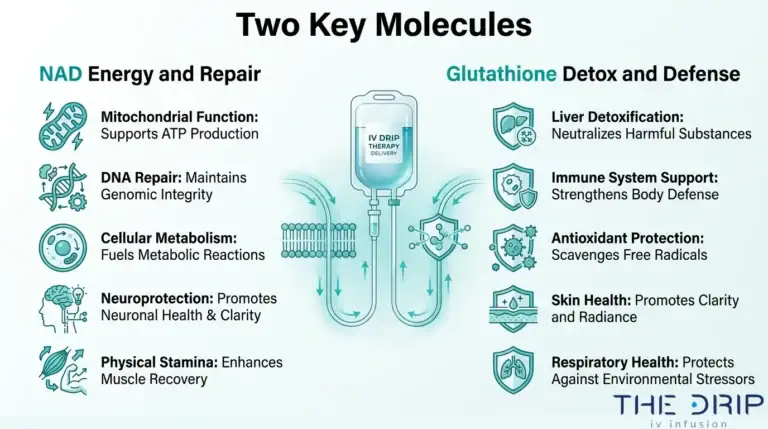
- NAD+ infusions: Focused on cellular restoration and anti-aging support.
Customizable add-ons, such as extra vitamin C, magnesium, or Zofran, let clients tailor a base formula to their specific needs. This menu flexibility is one reason IV bars appeal to a wide range of wellness goals.
Who Typically Visits an IV Bar?
The people who typically visit an IV bar include health-conscious adults seeking hydration, energy boosts, immune support, or recovery from travel and physical exertion. Common visitor profiles include:
- Athletes looking for faster post-workout recovery
- Frequent travelers combating jet lag and dehydration
- Professionals managing fatigue or high-stress schedules
- Individuals preparing for or recovering from social events
- Wellness enthusiasts supplementing their nutrition routine
This demographic skews toward adults comfortable with elective wellness spending. Sessions starting around $100 place IV bars in the self-pay wellness category rather than traditional healthcare, which naturally attracts clients who prioritize preventive health and convenience.
Understanding how IV bars operate provides useful context for comparing them to mobile IV therapy, which brings the same treatments directly to your door.
What Is Mobile IV Therapy and How Does It Work?
Mobile IV therapy is a service where a licensed nurse travels to your home, office, or hotel to administer intravenous infusions on-site. The sections below cover what happens during an appointment, available treatment types, and who benefits most.

What Happens During a Mobile IV Therapy Appointment?
During a mobile IV therapy appointment, a registered nurse arrives at your chosen location with all necessary supplies, performs a brief health screening, inserts a small IV catheter, and monitors the infusion from start to finish. The entire process typically takes about one hour.
Available treatment packages range widely in scope and price. According to Mobile IV Nurses, options include a Purely Saline IV Therapy Package at $115, The Ultimate Myers’ Cocktail at $335, and The Resurrection IV Package at $435, with vitamin add-ins starting at $30. Most providers also offer NAD+ add-ins for clients seeking cellular support. Because the nurse handles setup, administration, and cleanup, clients can relax without any preparation on their end.

What Types of IV Treatments Are Available Through Mobile Services?
The types of IV treatments available through mobile services mirror most of what IV bars offer, including hydration drips, vitamin infusions, Myers’ Cocktails, glutathione pushes, and NAD+ therapy. Custom add-ons such as B-complex vitamins, magnesium, and Zofran allow further personalization.
One key distinction is that some lounge-based membership programs exclude mobile visits entirely. Philly IV, for example, states that memberships are for in-lounge services only and cannot be redeemed for mobile services. This means mobile clients often pay per session rather than through discounted subscription plans. As the American Medical Association’s Code of Medical Ethics notes, physicians providing clinical services through telemedicine must uphold the same standards of professionalism expected in in-person interactions. Reputable mobile providers operate under these same oversight requirements, with a licensed prescriber approving each treatment remotely before the nurse begins.
Who Benefits Most From Mobile IV Therapy?
The people who benefit most from mobile IV therapy include those recovering from illness, athletes needing post-training recovery, busy professionals with limited schedule flexibility, expecting mothers managing morning sickness, and anyone who prefers the privacy of their own space.
According to the University of Colorado Anschutz Medical Campus, direct-access infusion services mostly target consumers’ desires to increase energy and hydration or speed up recovery, with sessions averaging 30 minutes to an hour and pricing starting around $100. The growing demand for this convenience is reflected in market data; Precedence Research calculated the IV hydration therapy market at USD 2.71 billion in 2024, projecting it to surpass USD 5.84 billion by 2034.
For individuals who cannot easily travel to a clinic, whether due to fatigue, mobility limitations, or caregiving responsibilities, mobile IV therapy removes the biggest barrier to access. Understanding who benefits most from mobile service helps clarify how costs and convenience compare across both formats.
How Does the Overall Experience Compare Between IV Bars and Mobile IV?
The overall experience differs primarily in comfort, social setting, and scheduling. IV bars offer a curated lounge atmosphere, while mobile IV therapy brings clinical-grade service to your chosen location. The following sections break down comfort level, social atmosphere, and scheduling flexibility.
How Does the Comfort Level Differ at an IV Bar vs at Home?
The comfort level at an IV bar centers on a designed wellness environment with reclining chairs, ambient lighting, and curated amenities. At home, comfort comes from familiar surroundings, personal furniture, and complete privacy.
Research strongly favors the home setting for most clients. According to a study published in the Journal of Patient Experience (SAGE Publishing), 44.6% of patients reported an overall preference for receiving infusions at home, and 60.9% considered being comfortable with the treatment environment the most important attribute when choosing where to receive care.
That said, some clients find IV bar lounges genuinely relaxing. For anyone who associates home with distractions, a dedicated wellness space can feel more restful than their own couch.
How Does the Social Atmosphere Compare?
The social atmosphere at an IV bar is communal, while mobile IV therapy is private. IV bars create a shared wellness experience where friends, couples, or coworkers can sit together during infusions. Group bookings, ambient music, and lounge-style seating encourage conversation and make sessions feel more like a social outing than a medical appointment.
Mobile IV therapy, by contrast, offers a one-on-one setting. The nurse arrives at your home, office, or hotel, and the session stays between you and the provider. This appeals to clients who prefer discretion or simply want to rest without outside stimulation. Neither format is inherently better; the right choice depends on whether you value shared energy or personal solitude during your infusion.
How Does Scheduling Flexibility Differ?
Scheduling flexibility differs significantly between IV bars and mobile IV services. IV bars operate on fixed business hours at a set location, requiring clients to travel and align their schedules with available appointment slots. Walk-in availability varies, and peak times can mean longer wait periods.
Mobile IV therapy eliminates the commute entirely. Appointments can often be booked for early mornings, evenings, or weekends at your chosen location. For professionals, parents, or anyone managing a tight schedule, this on-demand model removes the logistical friction that makes fixed-location visits harder to maintain consistently.
With the experience factors covered, understanding how costs compare between IV bars and mobile services helps complete the picture.
How Do IV Bar Costs Compare to Mobile IV Therapy Costs?
IV bar costs and mobile IV therapy costs overlap significantly, though mobile services often carry additional fees for travel. The sections below break down typical pricing at IV bars, typical pricing for mobile visits, and hidden costs to watch for with either option.

What Do You Typically Pay at an IV Bar?
You typically pay between $100 and $300 per session at an IV bar, depending on the drip formula selected. Basic hydration with saline starts at the lower end, while vitamin-packed cocktails and specialty infusions climb higher. According to the University of Colorado Anschutz Medical Campus, direct-access infusion businesses usually offer a broad menu of fluids and vitamins mixed with saline, with average pricing starting around $100 and going up from there.
Membership plans can reduce per-session costs. Several IV lounges offer monthly memberships ranging from $119 to $170 that include one infusion plus discounts on add-ons. For clients who infuse regularly, these plans represent meaningful savings over walk-in rates.
What Do You Typically Pay for a Mobile IV Visit?
You typically pay $115 to $435 per session for a mobile IV visit, with the range reflecting drip complexity. A basic saline session sits near the low end, while advanced formulas with NAD+ or multi-vitamin blends push costs higher. Concierge or travel fees often apply on top of the base price.
Some mobile providers charge $50 to $125 in travel fees depending on distance, which can push the total well beyond what the same drip would cost at a walk-in location. Mobile membership plans exist but tend to run higher; one national provider lists plans from $279 to $1,699 per month. For consumers who value convenience over cost, the premium may be worthwhile, but price-sensitive clients should compare total costs carefully before committing.
Are There Hidden Costs With Either Option?
Yes, there are hidden costs with either option that can increase the final price beyond the advertised session rate. Common unexpected charges include:
- Add-on fees: Extra vitamins, glutathione, or anti-nausea medications typically cost $30 or more per ingredient.
- Travel or concierge surcharges: Mobile services may add $50 to $125 based on your location.
- Cancellation penalties: Some memberships impose early termination fees of $40 or more.
- Membership restrictions: Several IV lounge memberships cannot be redeemed for mobile services, forcing separate purchases if you switch formats.
Booking processes can also affect total cost. According to a Chartis national consumer survey, 4 in 10 consumers prefer scheduling online, yet providers without digital booking may require phone calls that make comparing prices less transparent.
Understanding the full pricing structure, including every add-on and policy, prevents surprise charges regardless of which format you choose.
Which Option Is More Convenient for Busy Schedules?
Mobile IV therapy is generally more convenient for busy schedules because it eliminates travel time and waiting rooms. The sections below break down the total time commitment for each option.
How Much Time Does an IV Bar Visit Take From Start to Finish?
An IV bar visit takes roughly 90 minutes to two hours from start to finish when factoring in every step. The infusion itself typically lasts 30 minutes to one hour, but the total commitment extends well beyond that. You need to account for driving to the location, finding parking, checking in, completing intake paperwork, and waiting if the clinic is busy. A required medical screening also adds time, since the Washington State Board of Nursing confirms that a registered nurse cannot start an intravenous line without an order from an authorized health care practitioner.
For professionals juggling tight calendars, that cumulative time cost often becomes the deciding factor against in-clinic visits.
How Much Time Does a Mobile IV Appointment Take?
A mobile IV appointment takes approximately one hour of active time, with no travel required on your part. A nurse arrives at your chosen location, whether that is your home, office, or hotel, and handles intake, the infusion, and cleanup in a single streamlined visit. Because you stay in your own environment, there is no commute, no parking search, and no lobby wait. One client testimonial captured this well: a couple received Myers’ cocktail IVs at their house before their wedding day and described the experience as “super convenient,” “on time,” and seamless.
For anyone managing a packed schedule, mobile IV therapy converts what would be a multi-hour errand into a single, productive hour at home.
With convenience covered, safety and staff qualifications are the next critical factors to evaluate.
How Do Safety and Staff Qualifications Compare?
Safety and staff qualifications compare similarly between IV bars and mobile IV therapy, since both models must follow state medical practice laws. The key differences involve on-site resources, supervision structure, and provider accountability. The subsections below break down medical oversight for each option.
What Level of Medical Oversight Do IV Bars Provide?
IV bars provide medical oversight through a combination of physician orders and licensed nursing staff who administer treatments on-site. Most states classify elective IV hydration as a medical act requiring specific credentials. According to the Texas Medical Board, elective IV hydration must be ordered by a physician (or a PA/APRN under physician supervision), and a licensed professional nurse or higher-level licensee must administer it.
Brick-and-mortar IV bars typically have standardized protocols, emergency supplies, and direct access to supervising medical directors. However, oversight quality varies significantly between businesses. The FDA has reported adverse events following NAD+ injectable drugs, including severe chills, vomiting, and fatigue requiring medical treatment. Before booking, clients should verify that the facility operates under an active physician’s standing orders and employs credentialed nurses.
What Level of Medical Oversight Does Mobile IV Therapy Provide?
Mobile IV therapy provides medical oversight through the same licensure requirements that govern fixed-location IV services. As the Oregon Medical Board states, IV hydration therapy is considered the practice of medicine, meaning all treatments must adhere to the same standards of care as any other medical procedure.
State regulations consistently require licensed prescribers to order IV treatments, regardless of where they are administered. Key staffing requirements across states include:
- Licensed prescribers must diagnose, assess symptoms, and order sterile compounded medications, per the Ohio Board of Pharmacy and Board of Nursing.
- New York’s Nurse Practice Act permits LPNs to provide IV therapy only when appropriately trained and clinically competent.
- Registered nurses in most states cannot initiate an IV line without an authorized practitioner’s order.
Reputable mobile IV providers, including The Drip IV Infusion, dispatch experienced nurses who carry the same supplies and follow identical protocols used in clinical settings. The mobile format actually creates a one-on-one nurse-to-patient ratio that many IV bars cannot consistently match, making individualized monitoring a genuine advantage of the at-home model.
Understanding how safety standards hold up across both settings helps frame the next question: which option delivers more personalized treatment?
Which Option Offers More Personalized Treatment?
Mobile IV therapy offers more personalized treatment than a typical IV bar. The one-on-one format, private setting, and flexible consultation structure give mobile nurses greater ability to tailor each session. Below is how personalization differs across key factors.
Consultation depth. Mobile IV appointments dedicate the nurse’s full attention to one client at a time. Without the shared environment and rotating patient flow of an IV bar, the nurse can spend more time reviewing health history, current symptoms, and wellness goals before selecting a drip formula. IV bars still perform intake assessments, but higher patient volume can compress that interaction.
Formula customization. Both formats draw from similar menus of vitamins, minerals, and hydration blends. However, mobile services often allow real-time adjustments during the consultation, such as adding specific boosters like glutathione, magnesium, or extra vitamin C based on how a client feels that day. IV bars may offer add-ons, though the process tends to follow a more standardized menu workflow.
Environment control. Receiving treatment at home, in an office, or at a hotel means the client controls every comfort variable, from lighting and temperature to noise level. That sense of control often leads to more open communication with the nurse about symptoms or preferences. According to a 2025 study published in the Journal of Patient Experience, patients considered being comfortable with the treatment environment to be the most important attribute when choosing an infusion setting.
Ongoing adjustments. Clients who book mobile IV sessions regularly build a direct relationship with their provider. That continuity makes it easier to track how previous formulas performed and adjust future sessions accordingly. IV bars can offer this continuity too, but only if the same staff member is available during each visit, which is less predictable in a shared clinic.
For anyone who values a treatment plan shaped around their specific needs rather than a fixed menu, mobile IV therapy consistently delivers a more individualized experience. Understanding personalization helps clarify when each format best fits your lifestyle.
When Should You Choose an IV Bar Over Mobile IV Therapy?
You should choose an IV bar over mobile IV therapy when you want on-site clinical infrastructure, in-person guidance, or a shared social experience. The sections below cover two key scenarios: first-time clients and group visits.
When Does an IV Bar Make Sense for First-Time Clients?
An IV bar makes sense for first-time clients when they want hands-on orientation in a dedicated clinical space. Walking into a staffed facility lets newcomers see the equipment, ask questions face-to-face, and observe the process before their catheter is placed. That visible infrastructure, from reclining chairs to supply stations, builds confidence for someone unfamiliar with IV therapy.
According to Medicare.gov, the components needed to perform infusion include the drug, equipment such as a pump, and supplies such as tubing and catheters. Seeing all of this assembled in a professional setting helps first-timers understand exactly what enters their body and why. For anyone feeling uncertain, the structured environment of an IV bar removes much of the guesswork that a home visit cannot fully replicate.
When Does an IV Bar Work Better for Group Experiences?
An IV bar works better for group experiences when friends, coworkers, or event parties want to infuse together in a shared social setting. Dedicated lounges accommodate multiple clients at once, so groups can relax side by side without rearranging living room furniture or coordinating separate home appointments.
Bachelorette parties, pre-wedding prep sessions, and corporate wellness events all benefit from the communal atmosphere an IV bar provides. Staff can serve the entire group simultaneously using on-site inventory, which reduces per-person wait times compared to a single mobile nurse rotating between clients. For anyone prioritizing the social element of their wellness routine, the lounge format turns a standard infusion into a group activity worth planning around.
With the IV bar scenarios covered, understanding when mobile IV therapy is the stronger choice helps complete the comparison.
When Should You Choose Mobile IV Therapy Over an IV Bar?
You should choose mobile IV therapy over an IV bar when illness, physical exhaustion, or scheduling demands make traveling to a clinic impractical. The sections below cover illness recovery and hangovers, post-training athletic needs, and ongoing wellness routines.

When Is Mobile IV Better for Illness Recovery or Hangovers?
Mobile IV is better for illness recovery or hangovers when symptoms like nausea, fatigue, or body aches make leaving home uncomfortable or unsafe. Driving while dehydrated or experiencing severe hangover symptoms adds unnecessary risk to an already miserable situation.
A mobile session brings a registered nurse directly to your bed, couch, or hotel room, so you can rest throughout the entire infusion. Formulas containing saline, B vitamins, and anti-nausea medications like Zofran work to restore hydration while you recover in a familiar environment. According to the University of Rochester Medical Center, IV fluids are not always needed and are generally recommended only when a patient cannot keep anything down, especially water. That context matters: when oral rehydration fails, mobile IV therapy removes the barrier of travel entirely. For most people battling a rough morning after or a stubborn stomach bug, staying home during treatment is the single biggest comfort advantage.
When Is Mobile IV Better for Athletes After Training?
Mobile IV is better for athletes after training when rapid rehydration and nutrient replenishment need to happen without additional physical exertion. Traveling to a clinic after an intense session adds fatigue and delays recovery when muscles are already depleted.
A mobile nurse can arrive at the gym, training facility, or home within a scheduled window and administer electrolyte-rich saline with add-ons such as magnesium, amino blends, or vitamin C. This allows athletes to begin recovery immediately while stretching or resting. For competitive athletes managing tight training calendars, eliminating a round trip to a brick-and-mortar location can save over an hour per session. That recovered time translates directly into additional rest, which is arguably the most underrated performance variable in any training program.
When Is Mobile IV Better for Ongoing Wellness Routines?
Mobile IV is better for ongoing wellness routines when consistency matters more than novelty. Maintaining a regular infusion schedule requires minimal friction; every extra step between booking and treatment increases the chance of skipping a session.
According to the Deloitte Center for Health Solutions, convenience is the main reason consumers opt for virtual health visits, citing more flexible appointment times, elimination of travel, and shorter wait times. Mobile IV therapy applies the same principle to recurring infusions. Clients who book weekly or biweekly sessions can integrate treatments into existing routines at home or the office without rearranging their day. For anyone committed to long-term hydration and nutrient support, the format that fits seamlessly into daily life is the one you will actually maintain.
Understanding when mobile IV therapy fits best helps clarify what to watch for with either option.
What Are the Drawbacks of Each IV Therapy Option?
The drawbacks of each IV therapy option depend on whether you visit an IV bar or book mobile service. IV bars limit flexibility, while mobile IV therapy can involve higher costs and scheduling variables.
What Are the Downsides of Visiting an IV Bar?
The downsides of visiting an IV bar include travel time, fixed operating hours, and a lack of privacy. Clients must drive to the location, find parking, and wait if the facility is busy. For anyone feeling unwell, that commute can feel especially burdensome. Shared lounge spaces also mean limited control over noise, temperature, and overall comfort. According to a 2025 study published in the Journal of Patient Experience, patients considered being comfortable with the treatment environment to be the most important attribute when receiving infusions. Fixed scheduling is another constraint; appointments must fit within the bar’s hours rather than around your day. For people who value discretion, receiving an IV alongside strangers may feel less personal than a private setting.
What Are the Downsides of Booking Mobile IV Therapy?
The downsides of booking mobile IV therapy include higher per-session costs, potential travel fees, and less predictable arrival windows. Many mobile providers charge concierge or travel surcharges on top of the base treatment price. Availability can also vary by location, especially in rural or suburban areas where fewer providers operate. Clients need to prepare a clean, comfortable space at home with adequate lighting and seating for the nurse. Appointment windows may shift depending on traffic or the provider’s prior bookings, which requires some flexibility. Despite these trade-offs, the elimination of your own travel often balances the equation for anyone recovering from illness or managing a packed schedule.
Understanding these limitations helps you choose the format that best fits your priorities.
How Can Mobile IV Therapy From The Drip IV Infusion Fit Your Needs?
Mobile IV therapy from The Drip IV Infusion can fit your needs by delivering nurse-administered infusions directly to your home, office, or hotel. The following sections cover the experience advantage of mobile service and key takeaways from comparing IV bars to mobile IV therapy.
Can Nurse-Administered Mobile IV Service Deliver a Better Experience?
Yes, nurse-administered mobile IV service can deliver a better experience by combining clinical-grade care with the comfort of your chosen setting. As Harvard Health Publishing describes, a nurse or physician’s assistant places an IV catheter in your arm, and you receive IV fluids right at home, in your office, or at your hotel room. This eliminates the commute, waiting room time, and unfamiliar clinical environments associated with IV bars.
The Drip IV Infusion was founded by professionals with decades of experience in nursing and emergency medicine. Every session is overseen by a qualified nurse who stays with you throughout the infusion, monitors your response, and adjusts care as needed. That one-on-one attention in a familiar environment is difficult to replicate in a shared lounge setting where staff rotate between multiple clients.
For anyone weighing convenience against quality, mobile nurse-administered service consistently removes the trade-off.
What Are the Key Takeaways About IV Bar vs Mobile IV Therapy?
The key takeaways about IV bar vs mobile IV therapy center on three factors: convenience, personalization, and comfort.
- IV bars offer a social, walk-in atmosphere suited for first-time clients and group experiences.
- Mobile IV therapy eliminates travel time, waiting rooms, and scheduling rigidity by bringing the session to you.
- Both options use licensed professionals and similar IV formulations, so clinical quality does not depend on location.
- Comfort with the treatment environment matters most to patients, which favors the home setting for ongoing wellness routines.
- Pricing varies widely across both formats; mobile services may include travel fees, while IV bar memberships often exclude mobile redemption.
The Drip IV Infusion combines the personalization of mobile service with the clinical expertise of experienced nurses. Whether you need hydration support, immune boosting, recovery after training, or relief from morning sickness, The Drip IV Infusion brings tailored IV cocktails and specialty treatments directly to you across Arizona. Visit thedripivinfusion.com to explore the full menu and book your session.