An IV drip for food poisoning is an intravenous infusion of fluids, electrolytes, and supportive nutrients used to treat dehydration when vomiting and diarrhea prevent oral fluid intake. Most food poisoning resolves within 48 hours, but severe fluid loss during that window can lead to dangerous complications.
This guide covers how food poisoning causes dehydration, the symptoms that signal you need IV fluids, what a food poisoning IV drip contains and how quickly it works, when to choose the emergency room instead, and how mobile IV therapy supports recovery at home.
Food poisoning triggers fluid loss through two pathways: viruses damage small bowel cells and cause fluid to leak into the intestinal lumen, while bacteria like Salmonella and Campylobacter invade the gut lining, producing bleeding and electrolyte secretion. Both mechanisms can overwhelm oral rehydration efforts rapidly.
Recognizing when dehydration has become dangerous depends on specific clinical signs. Persistent vomiting that prevents any fluid retention, dry mouth, sunken eyes, rapid heart rate, and reduced urine output all indicate that oral hydration is no longer sufficient. Children deteriorate faster than adults due to their higher surface-area-to-weight ratio.
A typical IV drip combines a base fluid (normal saline or Lactated Ringer’s) with supplemental electrolytes, B vitamins, vitamin C, and anti-nausea medication when needed. Most patients notice improvement within 30 to 60 minutes of starting an infusion.
Not every case warrants IV therapy. Blood in vomit or stool, fever above 101°F, confusion, or rapid breathing require emergency room evaluation rather than outpatient infusion. For moderate dehydration without emergency red flags, mobile IV therapy from a licensed provider like The Drip IV Infusion delivers professional rehydration directly to your location.
What Is Food Poisoning and Why Does It Cause Dehydration?
Food poisoning is an illness caused by consuming contaminated food or beverages, and it causes dehydration by triggering vomiting and diarrhea that rapidly deplete fluids and electrolytes. According to CDC estimates, seven major pathogens caused 9.9 million domestically acquired foodborne illnesses, 53,300 hospitalizations, and 931 deaths in 2019.
How Does Food Poisoning Lead to Fluid and Electrolyte Loss?
Food poisoning leads to fluid and electrolyte loss through two primary mechanisms that damage the intestinal lining. Viruses infect enterocytes in the small bowel, causing transudation of fluid and electrolytes into the intestinal lumen. Unabsorbed carbohydrates from malabsorption can then worsen symptoms by triggering osmotic diarrhea.
Bacterial pathogens operate differently. As described by the Merck Manual Professional Edition, mucosal invasion by bacteria such as Salmonella, Campylobacter, and certain E. coli subtypes causes ulceration, bleeding, and secretion of protein-rich fluid along with electrolytes and water.
When vomiting prevents oral fluid replacement, this cycle accelerates. Severe dehydration can cause chemical imbalances in the body and even kidney failure, which is why persistent inability to keep fluids down often requires IV rehydration. For most people, symptoms improve within 48 hours, but those who cannot tolerate oral fluids during that window face the highest risk of dangerous fluid deficits.

What Are the Most Common Causes of Food Poisoning?
The most common causes of food poisoning include bacterial, viral, and parasitic pathogens transmitted through contaminated food. According to the World Health Organization, as many as 600 million people worldwide, nearly 1 in 10, fall ill each year after consuming contaminated food, with diarrheal diseases alone causing 550 million illnesses and 230,000 deaths annually.
Key pathogens responsible for most cases include:
- Salmonella, commonly found in undercooked poultry, eggs, and raw produce.
- Campylobacter, often linked to raw or undercooked chicken and unpasteurized milk.
- E. coli subtypes, frequently associated with undercooked ground beef and contaminated water.
- Norovirus, the leading viral cause, spread through contaminated food, surfaces, and person-to-person contact.
- Listeria, particularly dangerous in deli meats, soft cheeses, and ready-to-eat foods.
Each pathogen triggers different levels of intestinal damage, but all share the potential to cause fluid loss severe enough to require rehydration support. Understanding which symptoms signal dehydration helps determine when oral fluids are no longer sufficient.
What Are the Symptoms That Indicate You Need an IV Drip?
The symptoms that indicate you need an IV drip include persistent vomiting that prevents fluid intake, watery diarrhea with signs of dehydration, and clinical warning signs such as dry mouth, sunken eyes, or rapid heart rate. The sections below break down these indicators by trigger and age group.

When Does Vomiting Become Severe Enough for IV Fluids?
Vomiting becomes severe enough for IV fluids when you cannot keep any liquids down and dehydration symptoms begin to appear. Occasional vomiting that still allows small sips of water can often be managed at home. However, frequent vomiting that prevents retaining oral fluids crosses a clinical threshold.
According to Valleywise Health, emergency attention is advised for frequent vomiting that prevents keeping liquids down, blood in vomit, fever above 101°F, or severe dehydration symptoms such as extreme thirst, dizziness, and clamminess. Watch for these escalation signs:
- Vomiting more than three times in a few hours
- Inability to hold down even small sips for several hours
- Dry mouth, headache, or dark urine developing alongside vomiting
- Cool, discolored hands and feet or excessive sleepiness
When vomiting reaches this intensity, oral rehydration becomes unreliable, and intravenous fluids offer the most direct path to restoring fluid balance.
How Do You Know If Diarrhea Has Caused Dangerous Dehydration?
Diarrhea has caused dangerous dehydration when physical symptoms move beyond simple thirst into measurable clinical changes. Mild cases may only show reduced urine output, which is easy to overlook. As fluid losses mount, the body produces clearer warning signals.
Key signs that diarrhea-related dehydration has become dangerous include:
- Markedly decreased or absent urine output over several hours
- Dry oral mucosa and cracked lips
- Skin that stays “tented” when pinched (decreased turgor)
- Dizziness or lightheadedness upon standing
- Rapid heart rate at rest
These indicators suggest the body’s compensatory mechanisms are straining. For anyone experiencing multiple signs simultaneously, especially alongside ongoing watery stools, IV fluid replacement should be considered before the situation deteriorates further.
What Signs of Dehydration Should You Watch for in Adults?
The signs of dehydration to watch for in adults are dry mouth, decreased urine output, dark-colored urine, fatigue, dizziness, and rapid heartbeat. Adults often underestimate early dehydration because initial symptoms feel minor.
The Infectious Diseases Society of America states that people of all ages with acute diarrhea should be evaluated for dehydration, which increases the risk of life-threatening illness and death, especially among the young and older adults. Adults at elevated risk include those who are pregnant, over age 65, immunocompromised, or currently taking antibiotics.
Moderate to severe adult dehydration presents with:
- Sunken eyes and very dry skin
- Confusion or unusual irritability
- Rapid, weak pulse
- Little to no urination for eight or more hours
In my experience, adults tend to delay seeking help longer than they should. By the time confusion or a racing pulse develops, oral rehydration alone is often insufficient, and IV fluids become the faster, safer intervention.
What Signs of Dehydration Should You Watch for in Children?
The signs of dehydration to watch for in children progress through three distinct severity levels, and recognizing them early is critical. According to The Royal Children’s Hospital Melbourne, children with mild dehydration may show only increased thirst or reduced urine output with no other clinical signs; moderate dehydration (5–9% fluid loss) is characterized by lethargy, sunken eyes, dry mucous membranes, and prolonged capillary refill time; severe dehydration (10% or greater) presents with reduced consciousness, deeply sunken eyes, and markedly prolonged capillary refill.
Additional warning signs by severity:
- Mild: Slightly decreased wet diapers, mild thirst
- Moderate: Irritability, no tears when crying, dry mouth
- Severe: Skin mottling, rapid breathing, weak pulse, extreme lethargy
Children deteriorate faster than adults because of their higher surface-area-to-weight ratio. Any child showing moderate dehydration signs alongside persistent vomiting or diarrhea warrants prompt evaluation for IV fluid therapy.
Recognizing these symptom thresholds helps determine whether oral fluids are enough or whether professional IV rehydration is the safer choice.
When Should You Get an IV Drip Instead of Drinking Fluids?
You should get an IV drip instead of drinking fluids when oral intake fails, symptoms persist beyond 24 hours, or an underlying condition increases your dehydration risk. The scenarios below clarify when IV rehydration becomes the better choice.
What If You Cannot Keep Oral Fluids Down?
If you cannot keep oral fluids down, IV rehydration bypasses the stomach entirely and delivers saline and electrolytes directly into the bloodstream. Persistent vomiting creates a cycle where every sip triggers more fluid loss, accelerating dehydration rather than reversing it. When small, frequent sips of water or oral rehydration solution come back up within minutes, the gastrointestinal tract is no longer a reliable delivery route. IV therapy breaks this cycle by restoring fluid volume without requiring the digestive system to cooperate. For anyone experiencing repeated vomiting from food poisoning, this is often the clearest signal that oral hydration alone is insufficient.
What If Symptoms Have Lasted More Than 24 Hours?
If symptoms have lasted more than 24 hours, the risk of clinically significant dehydration rises sharply. Prolonged diarrhea and vomiting deplete fluid reserves faster than most people can replace them by mouth, especially when appetite is suppressed.
According to the National Institute of Diabetes and Digestive and Kidney Diseases, adults should contact a doctor immediately if diarrhea lasts more than two days, produces six or more loose stools daily, or is accompanied by high fever. Certain groups face elevated risk:
- Pregnant individuals
- Adults over age 65
- People currently taking antibiotics
- Anyone with a weakened immune system
When symptoms push past the 24-hour mark without improvement, IV fluid therapy can correct deficits that oral rehydration simply cannot keep pace with.
What If You Have a Chronic Condition That Raises Your Risk?
If you have a chronic condition that raises your risk, IV fluids may be necessary sooner than for otherwise healthy adults. Conditions such as diabetes, kidney disease, heart failure, and autoimmune disorders reduce the body’s ability to tolerate fluid loss and recover through oral intake alone.
As reported by the National Association of Boards of Pharmacy, federal and state regulators have received complaints about serious adverse events at IV hydration clinics, which underscores the importance of choosing a provider that conducts thorough health screenings before any infusion. Patients with chronic conditions should disclose all medications and diagnoses so the infusion specialist can adjust the fluid type and volume accordingly. Skipping this step introduces unnecessary risk, particularly for individuals on blood pressure or cardiac medications.
Understanding when to choose IV rehydration sets the stage for knowing exactly what goes into the drip itself.
What Does an IV Drip for Food Poisoning Contain?
An IV drip for food poisoning typically contains a sterile base fluid, supplemental electrolytes, vitamins, and sometimes anti-nausea medication. The sections below cover each component and its role in recovery.

Why Is Normal Saline or Lactated Ringer’s Used for Rehydration?
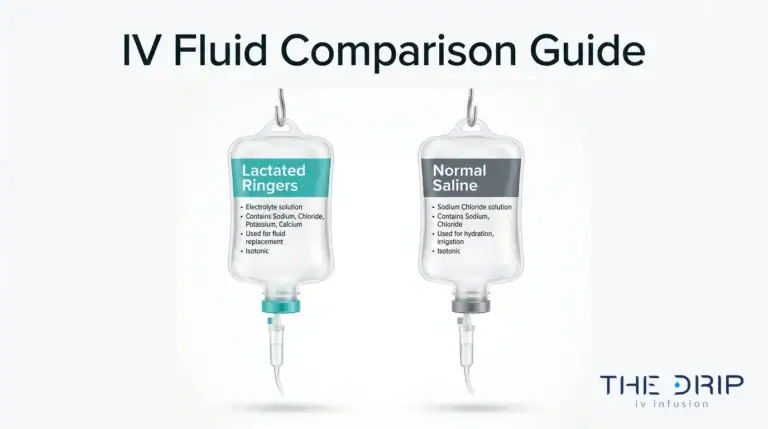
Normal saline or Lactated Ringer’s is used for rehydration because both solutions replace lost fluid volume and restore electrolyte balance quickly through intravenous delivery. Normal saline (0.9% sodium chloride) contains a sodium concentration of 154 mmol/L, making it effective for rapid volume expansion. Lactated Ringer’s takes a more balanced approach. According to University of Pittsburgh Medical Center Physician Resources, balanced solutions like Lactated Ringer’s contain a buffering agent such as lactate, variable amounts of potassium, calcium, and magnesium, and a lower sodium concentration of 130 mmol/L compared to normal saline. This composition more closely mirrors the body’s natural plasma, which can be beneficial when prolonged vomiting and diarrhea have disrupted multiple electrolyte levels simultaneously.
How Do Added Electrolytes Help During Food Poisoning Recovery?
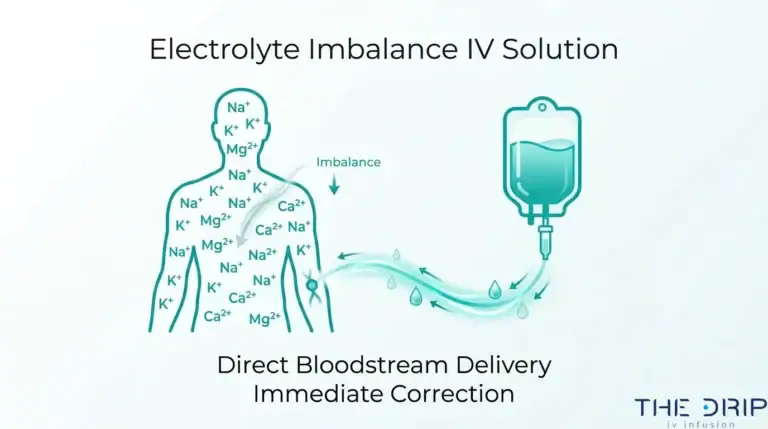
Added electrolytes help during food poisoning recovery by replacing the sodium, potassium, magnesium, and calcium lost through vomiting and diarrhea. These minerals regulate nerve signaling, muscle contraction, and fluid balance between cells. When food poisoning depletes them rapidly, the body struggles to maintain normal heart rhythm, blood pressure, and hydration status. Supplementing electrolytes directly through an IV bypasses the compromised gut, ensuring absorption even when oral intake is impossible. For most people recovering from food poisoning, restoring electrolyte levels is just as important as restoring fluid volume; one without the other leaves recovery incomplete.
Why Are B Vitamins and Vitamin C Included in Recovery Drips?
B vitamins and vitamin C are included in recovery drips because food poisoning depletes water-soluble nutrients that the body cannot store in large reserves. According to MedlinePlus (National Library of Medicine), the B vitamins, including B1, B2, B3, B5, B6, B7, B12, and folic acid, help the body convert food into energy and form red blood cells; a lack of B12 or B6 can cause anemia. Vitamin C supports immune function and acts as an antioxidant during the inflammatory stress that accompanies infection. Since these vitamins are water-soluble, repeated vomiting and diarrhea accelerate their loss. Adding them to an IV drip helps restore levels that oral supplements cannot reliably deliver while the gut remains irritated.
When Are Anti-Nausea Medications Added to the IV?
Anti-nausea medications are added to the IV when persistent vomiting prevents a patient from tolerating any oral fluids or food. Ondansetron (commonly known by the brand name Zofran) is one of the most frequently used anti-emetics in IV drips for food poisoning. It works by blocking serotonin receptors in the gut and brain that trigger the vomiting reflex. Controlling nausea early in the infusion allows the body to retain fluids and begin absorbing nutrients again. Not every food poisoning IV requires anti-nausea medication; it is typically reserved for cases where vomiting is frequent or unrelenting. Once nausea is managed, rehydration and nutrient replenishment become far more effective.
Understanding what goes into a food poisoning IV clarifies how quickly each component targets recovery.
How Quickly Does an IV Drip Work for Food Poisoning?
An IV drip for food poisoning typically begins restoring hydration within minutes of insertion, with most patients feeling noticeable improvement within 30 to 60 minutes. A standard session at The Drip IV Infusion takes about one hour, during which fluids, electrolytes, and optional add-ons like Zofran for nausea enter the bloodstream directly. According to a study published in Pediatrics (American Academy of Pediatrics), half of patients receiving IV fluids were rehydrated successfully at the four-hour mark. Because IV delivery bypasses the GI tract entirely, relief often arrives faster than oral methods for individuals who cannot keep liquids down. Most food poisoning symptoms resolve within 48 hours, and early IV intervention during that window can shorten the period of acute discomfort considerably.
What Is the Difference Between an IV Drip and Oral Rehydration?
The difference between an IV drip and oral rehydration is the delivery route: IV drips infuse fluids directly into the bloodstream, while oral rehydration delivers fluids through the digestive tract. Both methods restore hydration, but they suit different severity levels and clinical situations.
An IV drip bypasses the gastrointestinal system entirely. Fluid, electrolytes, and any added nutrients enter the bloodstream through a vein, making absorption immediate. Oral rehydration therapy (ORT) relies on the gut’s sodium-glucose co-transport mechanism to pull water across the intestinal lining. When the gut is functioning normally, this process is highly effective. However, persistent vomiting or severe diarrhea from food poisoning can make oral intake unreliable, which is precisely when intravenous delivery becomes necessary.
A 2005 study published in Pediatrics (American Academy of Pediatrics) found that half of both the ORT and IV fluid groups were rehydrated successfully at four hours, with no difference in dehydration score improvement at two hours. Notably, hospitalization occurred in 30.6% of the ORT group versus 48.7% of the IV fluid group. These findings suggest oral rehydration is comparable in effectiveness for mild to moderate cases, while IV therapy tends to be reserved for patients who cannot tolerate oral fluids or who present with severe fluid loss.
The practical differences between these two approaches include:
- Absorption speed: IV fluids reach the bloodstream instantly; oral solutions require 30 to 60 minutes for intestinal absorption.
- Gut tolerance required: ORT demands a functioning digestive tract; IV therapy does not.
- Setting and supervision: Oral rehydration can be self-administered at home; IV drips require a trained professional, such as a registered nurse.
- Nutrient delivery: IV drips can include electrolytes, B vitamins, vitamin C, and anti-nausea medications in a single bag; oral solutions are typically limited to water, glucose, and basic electrolytes.
- Cost and accessibility: ORT is inexpensive and widely available; IV therapy involves higher costs and either a clinic visit or mobile service.
For most food poisoning episodes, oral rehydration is the appropriate first-line treatment. IV drips become the better option when vomiting prevents fluid retention, when dehydration progresses to moderate or severe levels, or when a patient’s underlying health conditions increase the risk of complications. Choosing between the two is ultimately a question of severity, not superiority.
Understanding when oral rehydration falls short helps clarify who should avoid IV therapy altogether.
Who Should Avoid Getting an IV Drip for Food Poisoning?
People who should avoid getting an IV drip for food poisoning include those with certain cardiac conditions, specific medication interactions, or symptoms severe enough to require emergency care rather than outpatient infusion.
IV drip therapy for food poisoning is not appropriate for everyone. Individuals with congenital long QT syndrome should avoid IV drips that include ondansetron (Zofran), a common anti-nausea add-on. According to the U.S. Food and Drug Administration, Zofran is contraindicated in patients with congenital long QT syndrome, and ECG monitoring is recommended for those with electrolyte abnormalities such as hypokalemia or hypomagnesemia, congestive heart failure, or bradyarrhythmias.
Additional groups who should consult a physician before pursuing outpatient IV therapy include:
- People with congestive heart failure, since rapid fluid administration can worsen fluid overload.
- Patients with kidney disease, because impaired renal function affects electrolyte clearance.
- Individuals currently taking medications that prolong QT intervals, which may interact with IV anti-nausea drugs.
- Anyone showing emergency red flags, such as blood in vomit or stool, fever above 101°F, confusion, or rapid breathing, who needs emergency room evaluation instead.
Food poisoning that produces only mild symptoms typically resolves with oral rehydration and rest. An IV drip adds the most value when dehydration is moderate and oral intake has failed, not as a default first step. For anyone uncertain about their eligibility, a pre-infusion health screening helps identify whether IV therapy is safe or whether a higher level of care is needed.
Understanding who should skip an IV drip is just as important as knowing when emergency care is necessary.
When Should You Go to the Emergency Room Instead?
You should go to the emergency room instead of seeking IV therapy when food poisoning symptoms signal a potentially life-threatening complication. The following scenarios require immediate emergency care.
What If You Notice Blood in Your Vomit or Stool?
Blood in your vomit or stool indicates a serious complication that requires emergency medical attention. Vomit that appears bright red or resembles dark coffee grounds suggests internal bleeding in the upper digestive tract. Similarly, bloody or black, tarry stools point to bleeding lower in the gastrointestinal system. According to the Health Service Executive of Ireland, emergency action is required if you vomit blood or have vomit that looks like ground coffee. These symptoms can result from bacterial pathogens that invade the intestinal lining and cause ulceration. An IV therapy session cannot address active internal bleeding; this situation demands emergency diagnostic imaging, lab work, and potential surgical intervention that only a hospital can provide.
What If You Develop a High Fever Alongside Food Poisoning?
A high fever alongside food poisoning suggests the infection may be spreading beyond the gut and potentially into the bloodstream. A temperature above 101°F during a foodborne illness warrants immediate medical evaluation, particularly when combined with a stiff neck, severe headache, or sensitivity to bright lights. These neurological symptoms can indicate invasive infections such as listeriosis or early signs of sepsis. Pregnant individuals, adults over 65, immunocompromised patients, and young children face elevated risk from fever-producing foodborne pathogens. Emergency departments can run blood cultures, administer targeted antibiotics, and monitor for systemic infection in ways that outpatient IV hydration cannot replicate.
What If You Experience Confusion or Rapid Heart Rate?
Confusion or rapid heart rate during food poisoning signals severe dehydration or systemic infection requiring emergency care. Altered mental status, slurred speech, or unresponsiveness can indicate dangerously low blood volume or sepsis. Tachycardia is the body’s attempt to compensate for depleted fluid levels, and when paired with confusion, it suggests organ perfusion is compromised. According to the State Medical Board of Ohio, Ohio Board of Pharmacy, and Ohio Board of Nursing, IV therapy providers conduct precursory evaluations including pulse oximetry, heart rate, and blood pressure; however, these screenings are designed to identify patients who need hospital-level care rather than outpatient infusion. If confusion or rapid heart rate is present, skip the clinic and call 911.
With emergency red flags ruled out, mobile IV therapy offers a practical recovery option for less severe cases.
How Can Mobile IV Therapy Help With Food Poisoning Recovery?
Mobile IV therapy helps with food poisoning recovery by delivering rehydration fluids, electrolytes, and supportive medications directly to a patient’s location, eliminating the need to travel while symptomatic. Below, the subsections cover how The Drip IV Infusion brings this service to your home and the key takeaways for using IV drips during food poisoning.

Can The Drip IV Infusion Deliver Rehydration to Your Home?
Yes, The Drip IV Infusion can deliver rehydration to your home. The Drip IV Infusion provides nurse-led mobile IV therapy across Arizona, bringing hydration and recovery treatments directly to clients wherever they are. This model is especially valuable during food poisoning, when nausea, weakness, and dizziness make driving to a clinic difficult or unsafe.
According to the National Home Infusion Association, home infusion involves administering medication through a needle or catheter outside a hospital, with specially trained nurses and pharmacists performing a thorough patient assessment before initiating therapy. The Drip IV Infusion follows a similar approach: licensed infusion specialists evaluate each client’s condition on-site before beginning treatment. For someone struggling to keep oral fluids down, having professional rehydration arrive at your door can be the difference between a manageable recovery and worsening dehydration.
What Are the Key Takeaways About IV Drips for Food Poisoning?
The key takeaways about IV drips for food poisoning center on timing, appropriateness, and realistic expectations:
- Food poisoning causes rapid fluid and electrolyte loss through vomiting and diarrhea, making rehydration the top clinical priority.
- IV fluids become necessary when oral rehydration fails, particularly if you cannot keep liquids down for several hours.
- IV drips typically contain saline or lactated Ringer’s solution, often supplemented with electrolytes, B vitamins, vitamin C, and anti-nausea medications like Zofran.
- IV therapy supports recovery but does not cure the underlying infection; most food poisoning resolves within 48 hours.
- Severe symptoms, such as blood in vomit, high fever, or confusion, require emergency medical attention rather than at-home IV therapy.
For most people experiencing moderate dehydration from food poisoning, mobile IV therapy offers a practical middle ground between suffering through symptoms at home and visiting an emergency room.