Postural orthostatic tachycardia syndrome (POTS) is a chronic autonomic nervous system disorder that causes an excessive heart rate increase upon standing, driven largely by low blood volume and impaired venous return. IV saline helps by delivering fluid directly into the bloodstream, bypassing the gastrointestinal limitations that make oral hydration insufficient for many patients.
This guide covers how POTS disrupts the body, why dehydration is central to symptom severity, how IV saline restores blood volume, which fluid types clinicians use, what the research supports, and how IV therapy compares to other treatments.
POTS affects an estimated 1 to 3 million people in the U.S., predominantly young women, and produces symptoms ranging from rapid heart rate and lightheadedness to chronic fatigue and brain fog. Blood volume is reduced in up to 70% of patients, forcing the sympathetic nervous system into constant overdrive.
Oral hydration often falls short because gastrointestinal dysmotility, nausea, and gastroparesis limit fluid absorption. IV saline bypasses these barriers entirely, expanding plasma volume within one hour of infusion. Studies show a single liter can reduce orthostatic tachycardia by more than half and increase cardiac output measurably.
Normal saline, Lactated Ringer’s solution, and hypertonic saline each offer distinct electrolyte profiles suited to different clinical situations. Infusion frequency ranges from occasional use in mild cases to weekly sessions in severe, medication-refractory patients.
Relief from IV saline is temporary, typically lasting hours to two days, which is why it works best alongside daily oral fluids, salt intake, compression garments, exercise, and physician-guided medications. Understanding the benefits, limitations, and safety considerations of IV therapy helps patients and providers build a sustainable POTS management plan.
What Is POTS and How Does It Affect the Body?
POTS is a chronic autonomic nervous system disorder that causes an excessive heart rate increase when standing upright. The following sections explain what the diagnosis means, how it disrupts blood flow, and which symptoms patients experience most often.
What Does Postural Orthostatic Tachycardia Syndrome Mean?
Postural orthostatic tachycardia syndrome means a sustained heart rate increase of at least 30 beats per minute within 10 minutes of standing or head-up tilt, without a corresponding drop in blood pressure. For adolescents aged 12 to 19, the threshold rises to 40 beats per minute. This condition reflects a disturbance in the autonomic nervous system, the network that regulates involuntary functions such as heart rate, blood pressure, and digestion.
According to a 2021 consensus review published in Autonomic Neuroscience: Basic and Clinical, estimated prevalence ranges from 0.2% to 1% of the U.S. population, suggesting approximately 1 to 3 million affected persons. POTS predominantly affects young women during their peak educational and early working years. Gastrointestinal dysmotility is also frequently diagnosed alongside the condition, compounding daily functional limitations.
What Happens to Blood Flow and Heart Rate in POTS?
Blood flow in POTS is compromised by low blood volume and excessive venous pooling in the lower body. When a person with POTS stands, impaired sympathetic tone reduces venoconstriction, allowing blood to pool in the abdomen and legs instead of returning efficiently to the heart. The brain compensates by driving the heart to beat harder and faster, yet this mechanism cannot overcome the underlying volume deficit.
According to the Heart Rhythm Society Expert Consensus Statement, blood volume is reduced in up to 70% of POTS patients. A low-flow subtype involves inappropriately high angiotensin II levels, further disrupting circulatory balance. This cascade of hypovolemia, venous pooling, and sympathetic activation produces the hallmark orthostatic tachycardia that defines the condition. For most patients, addressing the volume deficit is the most direct way to interrupt this cycle.

What Are the Most Common Symptoms of POTS?
The most common symptoms of POTS include:
- Rapid heart rate and heart palpitations upon standing
- Lightheadedness, dizziness, and presyncope
- Chronic fatigue that worsens with upright posture
- Brain fog and difficulty concentrating
- Nausea, bloating, and other gastrointestinal complaints
- Exercise intolerance
- Headaches
- Tremulousness and visible shaking
These symptoms often overlap with other conditions, which delays accurate diagnosis. As Dr. Phil Fischer of Mayo Clinic stated, POTS “causes a whole cascade of symptoms from fatigue to stomach upset that are often mistaken for depression.” Recognizing this broad symptom profile is essential, because targeted volume-restoration strategies can address many of these complaints simultaneously.
Understanding how POTS disrupts the body sets the stage for exploring why dehydration plays such a central role in symptom severity.
Why Do POTS Patients Struggle With Dehydration?
POTS patients struggle with dehydration because their bodies cannot maintain adequate blood volume, and oral fluid intake often fails to compensate. The sections below explain how hypovolemia drives symptoms and why drinking water alone falls short.
How Does Blood Volume Deficiency Drive POTS Symptoms?
Blood volume deficiency drives POTS symptoms by reducing the amount of blood available to return to the heart when standing. This forces the sympathetic nervous system into overdrive, triggering rapid heart rate, lightheadedness, and fatigue. According to Dysautonomia International, POTS patients often have hypovolemia and high levels of plasma norepinephrine while standing, reflecting increased sympathetic nervous system activation. Recommended baseline management includes fluid intake of 2 to 3 liters per day and salt intake of 8,000 to 10,000 mg per day. Even with these aggressive targets, many patients remain chronically volume-depleted. When the vascular system lacks sufficient fluid, every postural change becomes a challenge the body cannot adequately compensate for.
Why Is Oral Hydration Often Insufficient for POTS?
Oral hydration is often insufficient for POTS because gastrointestinal dysfunction limits how effectively the gut absorbs fluids. Gastrointestinal dysmotility is frequently diagnosed alongside POTS, slowing gastric emptying and reducing the speed at which water and electrolytes reach the bloodstream. Several factors compound this absorption barrier:
- Nausea and gastroparesis make it difficult to consume the recommended 2 to 3 liters of fluid daily.
- Isotonic oral solutions face slightly delayed absorption because no osmotic concentration gradient accelerates movement from the intestine into the bloodstream.
- Vomiting during symptom flares causes additional fluid loss that oral intake cannot quickly replace.
For patients whose gut reliably undermines their hydration efforts, intravenous delivery bypasses the digestive system entirely. Understanding these absorption limitations helps explain why IV saline plays a role in POTS management.
How Does IV Saline Help Manage POTS Symptoms?
IV saline helps manage POTS symptoms by directly expanding blood volume, increasing stroke volume, and reducing the excessive heart rate response triggered by standing. The following subsections cover the mechanism of volume expansion, how quickly relief begins, and how long benefits typically last.
How Does Normal Saline Expand Blood Volume in POTS?
Normal saline expands blood volume in POTS by delivering 154 mmol/L of both sodium and chloride directly into the extracellular compartment, counteracting the plasma volume deficit that drives orthostatic tachycardia. POTS patients commonly present with hypovolemia averaging a 13.4% deficit below ideal blood volume, equivalent to roughly 557 mL. When isotonic saline enters the bloodstream, it increases the circulating volume available to fill the heart during each beat.
According to a Vanderbilt Autonomic Dysfunction Center study published in the Journal of Applied Physiology, one liter of 0.9% saline increased resting stroke volume from 64 to 80 mL and cardiac output from 5.7 to 6.9 L/min in 19 POTS patients. This improved cardiac filling reduces the compensatory tachycardia the brain triggers when it detects insufficient venous return. For patients with medication-refractory POTS, this direct volume correction addresses the root hemodynamic problem rather than masking symptoms pharmacologically.

How Quickly Do POTS Patients Feel Relief After IV Saline?
POTS patients feel relief after IV saline within approximately one hour of infusion. Because saline bypasses the gastrointestinal tract entirely, fluid reaches the bloodstream immediately during administration, and hemodynamic improvements become measurable before the infusion is complete.
A trial published in The Journal of Pediatrics found that normalized orthostatic tolerance improved from a baseline of 100 to 134.5 within one hour after IV saline in subjects with POTS. This rapid onset makes IV saline particularly valuable during acute symptom flares when oral hydration cannot keep pace with the body’s fluid demands. For patients experiencing presyncope, severe brain fog, or debilitating fatigue, that one-hour window can mean the difference between a lost day and functional recovery.
How Long Do the Benefits of IV Saline Last for POTS?
The benefits of IV saline for POTS last from several hours to approximately two days, depending on the individual’s baseline blood volume deficit, kidney function, and daily fluid losses. The kidneys begin filtering and excreting the additional volume shortly after infusion, so the expanded blood volume is temporary rather than sustained.
Expert centers referenced in the Heart Rhythm Society Expert Consensus Statement describe one liter of normal saline infused over one hour as improving symptoms for this several-hours-to-two-day range. An observational study of 57 medication-refractory POTS patients, published in the Journal of Interventional Cardiac Electrophysiology, found that patients required infusions at a mean frequency of every 11.3 days to maintain clinically meaningful improvement. This relatively short duration of benefit is precisely why IV saline works best as one component within a broader POTS management plan that includes daily oral fluid intake, salt supplementation, and compression strategies.
What Types of IV Fluids Are Used for POTS?
The types of IV fluids used for POTS include normal saline, Lactated Ringer’s solution, and hypertonic saline. Each fluid differs in electrolyte composition, osmolarity, and clinical application.
Normal Saline (0.9% Sodium Chloride)
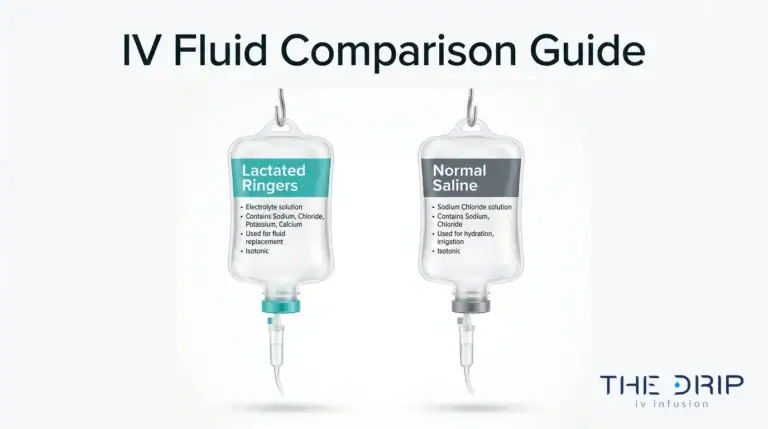
Normal saline is the most commonly referenced IV fluid for POTS management. It contains 154 mmol/L of both sodium and chloride with an osmolarity of 308 mOsm/L, making it slightly hypertonic relative to plasma. As an isotonic crystalloid, normal saline distributes through the extracellular compartment, directly expanding plasma volume to counteract the hypovolemia that drives orthostatic tachycardia.
According to a StatPearls review published on the NCBI Bookshelf, large volumes of normal saline may cause hyperchloremic metabolic acidosis due to its supraphysiologic chloride concentration. Despite this limitation, normal saline remains the default fluid in most POTS research and clinical protocols because its high sodium content supports sustained intravascular volume expansion.

Lactated Ringer’s Solution
Lactated Ringer’s solution is a balanced crystalloid containing sodium 130 mEq/L, potassium 4 mEq/L, calcium 3 mEq/L, chloride 109 mEq/L, and lactate 28 mEq/L per liter. Its osmolarity of 273 mOsm/L sits closer to physiologic plasma levels than normal saline, which reduces the risk of chloride overload.
The lower chloride concentration makes Lactated Ringer’s a gentler option for patients needing repeated infusions. According to the DailyMed label from the National Library of Medicine, potential adverse reactions include infection at the injection site, venous thrombosis, and hypervolemia. For POTS patients who experience gastrointestinal sensitivity or require frequent volume support, balanced crystalloids like Lactated Ringer’s can offer effective hydration with a more physiologically compatible electrolyte profile.
Hypertonic Saline
Hypertonic saline contains 3 g of sodium chloride per 100 mL, producing an osmolarity of approximately 1,026 mOsm/L. Unlike isotonic fluids that distribute across the extracellular space, hypertonic saline draws water from the intracellular compartment into the vasculature through osmotic gradients. This mechanism achieves rapid plasma volume expansion using smaller infusion volumes.
Because of its potent osmotic effect, hypertonic saline is typically reserved for acute clinical scenarios rather than routine POTS maintenance. Careful monitoring of serum sodium levels is essential to prevent overcorrection. For most POTS patients, hypertonic saline serves as a targeted intervention when standard isotonic options prove insufficient.
Understanding which fluid best fits an individual case helps determine appropriate infusion frequency and volume.
How Often Do POTS Patients Need IV Fluid Infusions?
POTS patients need IV fluid infusions at varying frequencies depending on symptom severity and treatment response. No standardized schedule exists across mild, moderate, or severe classifications, so frequency is individualized under medical guidance.
How Often Is IV Saline Needed for Mild POTS?
IV saline is rarely needed for mild POTS on a recurring basis. Patients with mild symptoms typically manage orthostatic intolerance through oral fluid intake of 2 to 3 liters daily, increased sodium consumption, compression garments, and structured exercise. IV saline may serve as an occasional intervention during acute flare-ups or periods when oral hydration falls short, such as during illness or gastrointestinal distress. For most mild cases, consistent lifestyle and dietary strategies reduce the need for intravenous support. Reserving IV saline for situational relief rather than scheduled infusions helps avoid unnecessary venous access while keeping the option available when symptoms temporarily worsen.
How Often Is IV Saline Needed for Moderate POTS?
IV saline is needed for moderate POTS at intervals that depend on individual symptom burden and response to first-line therapies. Patients whose symptoms persist despite oral hydration, salt loading, and medications may benefit from periodic infusions. According to an observational study published in the Journal of Interventional Cardiac Electrophysiology, saline infusions among 57 medication-refractory POTS patients occurred with a mean frequency of 11.3 ± 8.5 days at a mean volume of 1.5 ± 0.6 liters per infusion, with statistically significant improvements in quality-of-life scores. This roughly biweekly pattern reflects real-world clinical practice for patients who have not responded adequately to conservative measures alone. A physician familiar with dysautonomia should determine exact timing.
How Often Is IV Saline Needed for Severe POTS?
IV saline is needed for severe POTS more frequently, though exact schedules remain highly individualized. Patients with disabling symptoms that resist oral hydration, medications, and compression may require weekly or even twice-weekly infusions during acute decompensation periods. The Heart Rhythm Society Expert Consensus Statement recommends acute IV saline up to 2 liters for short-term clinical decompensation as a Class IIa intervention, while also noting that chronic or repeated cannulation is potentially harmful. Balancing symptom relief against infection risk and vein damage is essential. Long-term randomized evidence for specific severe-POTS infusion schedules does not yet exist, making close physician oversight critical for adjusting frequency over time.
With infusion frequency established across severity levels, understanding the broader research landscape clarifies what the evidence supports.
What Does the Research Say About IV Fluids for POTS?
The research on IV fluids for POTS shows promising short-term symptom relief, but long-term randomized evidence remains limited. Current studies focus on hemodynamic improvements, observational outcomes in medication-refractory patients, and comparisons with oral rehydration.
One of the most cited findings comes from a study published in Circulation, which reported that 1 liter of normal saline infused over 1 hour reduced orthostatic tachycardia from 33±5 to 15±3 beats per minute in POTS patients with a plasma volume deficit of almost 13%. A Vanderbilt Autonomic Dysfunction Center study of 19 POTS patients found blood volume deficits averaging 13.4 ± 1.4% of ideal volume, and saline infusion increased resting stroke volume from 64 ± 4 to 80 ± 8 mL while raising cardiac output from 5.7 ± 0.2 to 6.9 ± 0.5 L/min.
For medication-refractory cases, an observational study published in the Journal of Interventional Cardiac Electrophysiology tracked 57 POTS patients receiving saline infusions at a mean frequency of 11.3 ± 8.5 days and a mean volume of 1.5 ± 0.6 liters per infusion. Both Orthostatic Hypotension Questionnaire scores and SF-36 quality of life scores improved significantly.
However, the evidence has clear boundaries. The same Vanderbilt research group found that acute saline “does not increase semirecumbent maximal exercise capacity in patients with POTS,” and the 2015 Heart Rhythm Society Expert Consensus Statement classified acute IV saline (up to 2 liters) for short-term clinical decompensation as Class IIa, Level C, meaning the recommendation is based on limited evidence and expert opinion rather than large randomized trials. The statement also noted that chronic or repeated cannulation is potentially harmful.
A trial published in The Journal of Pediatrics compared IV saline to oral rehydration solution in 10 POTS subjects and 15 controls, finding that normalized orthostatic tolerance improved from 100 ± 9.7 to 134.5 ± 17.4 after IV saline and from 100 ± 9.7 to 155.6 ± 15.7 after oral rehydration solution, concluding that ORS is “a convenient, safe, and effective therapy for short-term relief of orthostatic intolerance.”
What stands out across these studies is a consistent pattern: IV saline reliably improves hemodynamic markers in the short term, yet no large-scale randomized controlled trial has established optimal infusion schedules for mild, moderate, or severe POTS. Long-term randomized IV fluid evidence remains one of the biggest gaps in dysautonomia research. For patients and clinicians weighing IV fluids as part of a POTS management plan, the existing data supports short-term use during clinical decompensation while underscoring the need for individualized medical guidance.
Understanding what the research supports helps clarify the potential risks involved with this approach.
What Are the Risks or Side Effects of IV Fluids for POTS?
The risks or side effects of IV fluids for POTS include infection at the access site, vein damage from repeated cannulation, fluid overload, and electrolyte imbalances. Local complications, systemic reactions, and long-term vascular access concerns each carry distinct considerations.
What Are the Local Side Effects of IV Access for POTS?
The local side effects of IV access for POTS involve reactions at or near the insertion site. According to the official Lactated Ringer’s label published on DailyMed (National Library of Medicine), possible adverse reactions include infection at the injection site, venous thrombosis or phlebitis, and extravasation.
Common local side effects include:
- Redness, swelling, or warmth around the catheter insertion point.
- Pain or tenderness during or after infusion.
- Phlebitis, which is inflammation of the vein wall from repeated punctures.
- Extravasation, where fluid leaks into surrounding tissue instead of entering the vein.
These reactions are generally mild when caught early, but repeated cannulation increases their likelihood over time.
Can Repeated IV Infusions Cause Vein Damage?
Yes, repeated IV infusions can cause vein damage. The Heart Rhythm Society Expert Consensus Statement on POTS specifically states that chronic or repeated cannulation is “potentially harmful.” Frequent needle insertions stress the same peripheral veins, gradually causing scarring and narrowing that makes future access more difficult.
This risk is especially relevant for POTS patients receiving infusions every one to two weeks over months or years. Rotating insertion sites and using skilled infusion specialists help reduce cumulative vein trauma. For patients requiring long-term therapy, some physicians consider implanted ports, though these carry their own infection risks. Vein preservation should factor into every treatment plan that involves ongoing IV saline.
What Are the Systemic Risks of IV Saline for POTS?
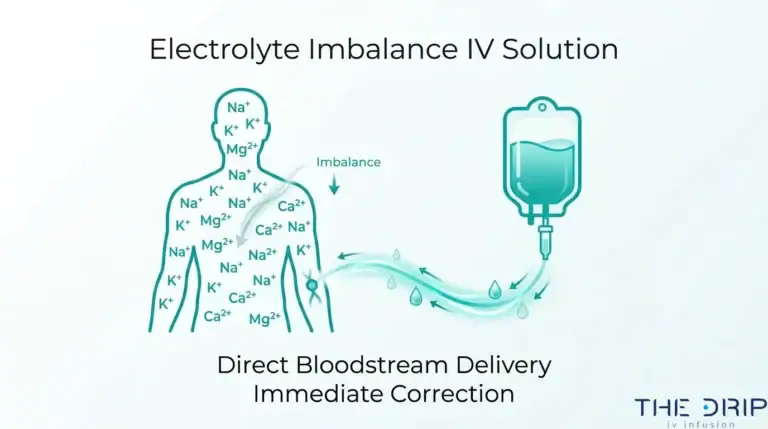
The systemic risks of IV saline for POTS involve fluid and electrolyte disturbances that affect the body beyond the infusion site. Hypervolemia (fluid overload) is a recognized adverse reaction listed on the official Lactated Ringer’s label, and it poses particular concern for patients with underlying cardiac or renal conditions.
Key systemic risks include:
- Hyperchloremic metabolic acidosis from large volumes of 0.9% normal saline, which delivers supraphysiologic chloride concentrations.
- Sodium retention, which the Lactated Ringer’s label warns about in patients with congestive heart failure or severe renal insufficiency.
- Potassium retention when using potassium-containing solutions in patients with hyperkalemia or severe renal failure.
Proper volume selection and medical supervision minimize these risks considerably. For most POTS patients without cardiac or kidney disease, a single liter infused over one hour carries a low systemic risk profile, but ongoing monitoring remains essential.
How Can POTS Patients Reduce IV Therapy Risks?
POTS patients can reduce IV therapy risks through proper clinical oversight and infection-prevention practices. The CDC states that its core infection-prevention standards apply to all healthcare settings, including homes, and require hand hygiene before invasive-device tasks, aseptic technique, and one-patient-only use of needles, syringes, and IV tubing.
Practical steps to minimize complications include:
- Working only with licensed, trained infusion specialists for every session.
- Rotating vein access sites to prevent cumulative damage.
- Reporting any redness, swelling, warmth, or discharge at the infusion site immediately.
- Discussing medical history, allergies, and current medications with a healthcare provider before each infusion cycle.
Risk reduction is ultimately a shared responsibility between patient and provider. Staying informed about warning signs turns a manageable therapy into a safer long-term option for symptom control.
How Do IV Fluids Compare to Other POTS Treatments?
IV fluids compare to other POTS treatments by addressing hypovolemia directly through rapid intravascular expansion, while oral electrolytes, medications, and compression garments each target different aspects of the condition. The following subsections compare IV fluids to these three treatment categories.
How Do IV Fluids Compare to Oral Electrolytes for POTS?
IV fluids compare to oral electrolytes for POTS primarily in absorption speed and delivery reliability. IV saline bypasses the gastrointestinal tract entirely, delivering sodium and fluid directly into the bloodstream within minutes. Oral electrolyte solutions depend on intestinal absorption, which can be compromised in POTS patients who frequently experience gastrointestinal dysmotility, nausea, or gastroparesis.
That said, oral rehydration remains the preferred daily maintenance strategy. For patients whose GI function tolerates it, oral electrolytes offer a practical, low-risk option that avoids repeated venous access. IV fluids serve a different role: acute symptom rescue when oral intake fails or during clinical decompensation. Most dysautonomia specialists reserve IV saline for situations where oral strategies prove insufficient.
How Do IV Fluids Compare to Medications for POTS?
IV fluids compare to medications for POTS by targeting blood volume directly, whereas pharmacologic therapies modulate heart rate, vascular tone, or aldosterone pathways. Medications such as midodrine, beta-blockers, fludrocortisone, and pyridostigmine each address specific physiological mechanisms contributing to orthostatic intolerance.
According to the Oregon Medical Board, IV hydration therapy is considered the practice of medicine, requiring the same standards of care as other medical treatments, including proper diagnosis, informed consent, and administration by qualified licensed personnel. This regulatory framework underscores that IV fluids are not a casual alternative to medications; they occupy a distinct clinical role. Medications offer sustained daily symptom control, while IV saline provides acute volume repletion. In practice, many POTS patients use both approaches together rather than choosing one over the other.
How Do IV Fluids Compare to Compression Garments for POTS?
IV fluids compare to compression garments for POTS by expanding circulating blood volume, while compression garments mechanically reduce venous pooling in the lower extremities and abdomen. These two approaches address different contributors to orthostatic intolerance and are frequently used together.
According to a 2022 American Family Physician review, initial nonpharmacologic management of orthostatic hypotension includes compression garments, dietary modifications, and physical maneuvers as foundational interventions. Compression stockings and abdominal binders work passively throughout the day without any invasive access, making them among the safest long-term options. IV fluids, by contrast, require venous cannulation and carry infection risk with repeated use. Compression garments complement IV therapy well; garments maintain venous return daily while IV saline addresses acute volume deficits that compression alone cannot correct.
Understanding how IV fluids fit within the broader POTS treatment landscape clarifies when they may benefit other forms of dysautonomia.
Can IV Fluids Help Other Types of Dysautonomia?
IV fluids can help other types of dysautonomia when volume depletion contributes to symptoms, though routine IV saline is not established for most non-POTS autonomic disorders. Conditions involving orthostatic hypotension, autonomic neuropathy, and syncope share overlapping mechanisms that respond to volume expansion strategies.
According to the National Institute for Health and Care Excellence (NICE), orthostatic hypotension may result from Parkinson’s disease, multiple-system atrophy, diabetic autonomic neuropathy, loss of blood volume, dehydration, or medications. NICE lists management options that include increased water and salt ingestion, elastic stockings, abdominal compression bands, exercise, fludrocortisone, and midodrine. While this supports the applicability of volume-based strategies for selected orthostatic hypotension and autonomic neuropathy patients, it does not establish routine IV saline for those disorders.
The common thread across these conditions is impaired autonomic regulation of blood pressure during posture changes. When dehydration or blood volume loss worsens orthostatic symptoms, acute IV hydration may offer temporary stabilization, much as it does in POTS. However, the underlying pathology in conditions like multiple-system atrophy involves progressive neurodegeneration rather than the functional hypovolemia typical of POTS, which limits how much fluid therapy alone can achieve.
For anyone managing a non-POTS dysautonomia, IV fluids are best viewed as one supportive tool within a broader treatment plan rather than a standalone solution. Understanding how mobile IV therapy fits into POTS management specifically offers a clearer picture of its practical role.
How Can Mobile IV Hydration Therapy Support POTS Management?
Mobile IV hydration therapy can support POTS management by delivering saline infusions directly to patients at home, eliminating the physical stress of traveling to a clinic. The subsections below cover how The Drip IV Infusion approaches at-home POTS support and the key takeaways about IV fluids for this condition.
Can At-Home IV Infusions From The Drip IV Infusion Help POTS?
At-home IV infusions from The Drip IV Infusion can help POTS patients by providing convenient access to hydration therapy without the orthostatic stress of clinic visits. Standing, walking through parking lots, and sitting in waiting rooms can trigger symptom flares for individuals with orthostatic intolerance, making mobile service especially practical.
The Drip IV Infusion sends licensed nurses directly to the patient’s home, where infusions are administered following proper clinical standards. According to a joint regulator summary from the National Association of Boards of Pharmacy, the FDA has received reports of adverse events at IV hydration clinics and mobile IV infusion services, reinforcing that such products must be prescribed and administered by a licensed healthcare professional.
The Drip IV Infusion was founded by professionals with decades of experience in nursing, emergency medicine, and IV medical techniques. Patients considering IV saline for POTS should always coordinate with their treating physician to determine whether infusions are appropriate for their specific case.

What Are the Key Takeaways About IV Fluids for POTS?
The key takeaways about IV fluids for POTS center on three practical points:
- Hypovolemia drives symptoms. Low blood volume affects up to 70% of POTS patients, making volume expansion a logical therapeutic target.
- IV saline provides rapid, temporary relief. A one-liter infusion over one hour can reduce orthostatic tachycardia and improve quality-of-life scores, though benefits typically last hours to two days.
- IV fluids complement other strategies. Saline infusions work best alongside oral fluid and salt intake, compression garments, graded exercise, and any medications prescribed by a physician.
Long-term randomized evidence on IV fluid protocols for POTS remains limited. For most patients, IV saline serves as a short-term intervention during symptom flares rather than a standalone treatment. Coordinating with a healthcare provider ensures infusions fit safely within a broader POTS management plan.