Liquid I.V. powder is an oral electrolyte supplement that uses sodium-glucose cotransport to enhance water absorption through the gut, while a real IV drip delivers sterile fluids and nutrients directly into the bloodstream at 100% bioavailability. Both serve hydration needs, but they operate through fundamentally different mechanisms and suit different situations.
This guide covers ingredient and delivery differences, the benefits and limitations of each option, cost and accessibility considerations, effectiveness for specific recovery scenarios, and how to choose the right method for your wellness goals.
Liquid I.V. and IV drips differ in formulation, absorption pathway, and bioavailability. The powder pairs 500 mg sodium with 11 g of sugar to activate intestinal cotransporters, while IV solutions like normal saline, Lactated Ringer’s, and Myers’ Cocktail use pharmaceutical-grade compounds that skip digestion entirely. Oral vitamin B₁₂ absorption can drop to 1–2% through passive diffusion; IV delivery eliminates that ceiling.
Each option carries distinct trade-offs. Liquid I.V. offers portability, low cost, and effective mild hydration support, but its added sugar content and oral absorption limits cap its clinical usefulness. Real IV drips provide customizable, high-dose nutrient delivery under medical supervision, yet require licensed professionals, sterile conditions, and higher per-session investment.
Practical factors shape the decision as much as science does. Powder packets cost roughly $1–2 each and need no appointment; IV sessions typically range from $150–300 and may qualify for HSA or FSA reimbursement. Mobile services have expanded IV accessibility, though anti-doping rules restrict IV use for competitive athletes.
Severity determines which option performs better. Oral rehydration handles everyday fluid loss, travel, and moderate exercise recovery effectively. IV drips earn their place when the gut is compromised, nutrient deficiencies limit oral absorption, or rapid clinical-grade recovery is the goal.
What Are the Main Differences Between Liquid I.V. Powder and a Real IV Drip?
The main differences between Liquid I.V. powder and a real IV drip come down to ingredients, delivery method, and how efficiently your body absorbs what it receives. The sections below break down each factor.

How Do Their Ingredients and Formulations Differ?
Liquid I.V. powder and a real IV drip differ significantly in their ingredients and formulations. One stick of Liquid I.V. Hydration Multiplier contains 500 mg sodium, 370 mg potassium, 11 g of added sugars, and modest B-vitamin doses, all designed around oral rehydration science. The sodium-glucose cotransporter SGLT1 actively pumps two sodium ions and one glucose molecule across the intestinal membrane, which is why the powder pairs salt with sugar.
A real IV drip, by contrast, uses sterile pharmaceutical-grade solutions. Standard options include:
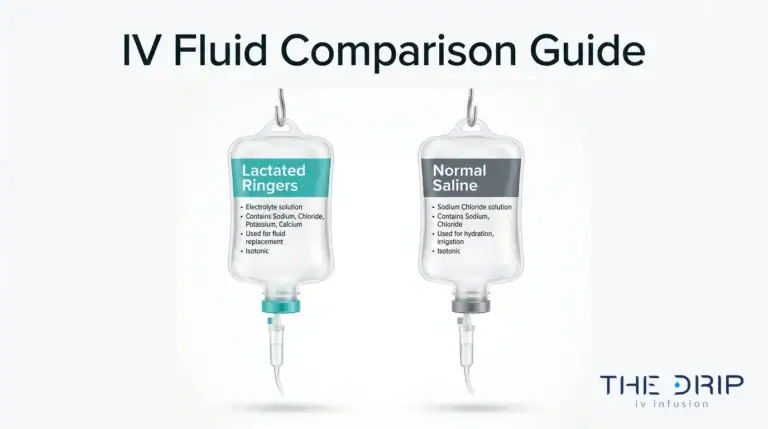
- 0.9% Normal Saline: 154 mEq sodium and 154 mEq chloride per liter, at 308 mOsmol/L.
- Lactated Ringer’s: sodium, potassium, calcium, chloride, and lactate in an isotonic 273 mOsmol/L solution.
- Myers’ Cocktail: high-dose B vitamins, vitamin C, magnesium, and calcium mixed with sterile water.
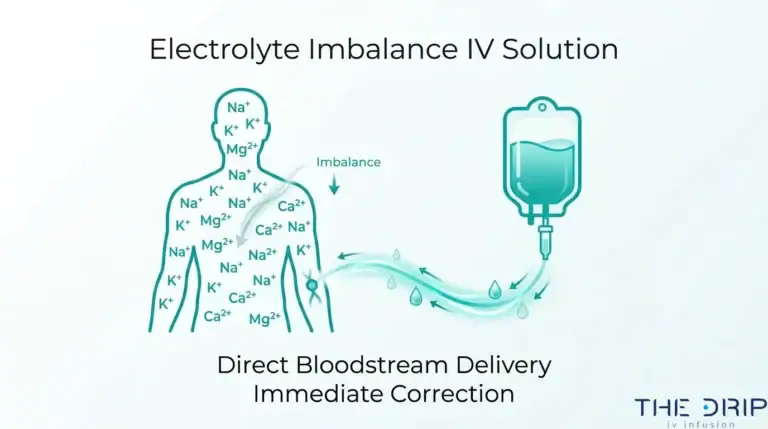
Because IV formulations bypass digestion entirely, they can deliver therapeutic concentrations of nutrients that oral products simply cannot match at comparable doses.
What Are the Key Methods of Delivery and How Do They Work?
The key methods of delivery are oral ingestion for Liquid I.V. powder and intravenous infusion for a real IV drip, and they work through fundamentally different physiological pathways. Liquid I.V. dissolves in water and enters the gastrointestinal tract, where absorption depends on gut health, transit time, and sodium-glucose cotransport efficiency.
A real IV drip delivers fluids and nutrients directly into the bloodstream through a catheter placed in a peripheral vein. According to the University of Rochester Medical Center, IV fluids are not always needed and are generally not recommended unless a patient cannot keep anything down, especially water. This distinction matters: oral hydration works well for most everyday situations, while intravenous delivery addresses scenarios where the GI tract is compromised or rapid correction is critical.
How Are Absorption Rates and Bioavailability Compared?
Absorption rates and bioavailability are compared by measuring how much of a substance reaches systemic circulation. According to OpenStax Pharmacology, IV medications are immediately 100% bioavailable because there are no barriers to absorption. Oral supplements face a different reality. Vitamin C absorption ranges from 70% to 90% at moderate intakes of 30 to 180 mg per day, but falls below 50% at doses above 1 gram. Vitamin B₁₂ absorbed through passive diffusion is limited to roughly 1% to 2% of the oral dose.
Ingested water itself appears in plasma within 5 minutes, with complete absorption taking 75 to 120 minutes. An IV drip achieves full fluid delivery in the time it takes the infusion to run. For someone who is mildly dehydrated and eating normally, this gap may not matter much in practice. For someone with a compromised gut or severe nutrient deficiency, the bioavailability difference becomes clinically meaningful.
With ingredients, delivery, and absorption clarified, the next step is understanding each option’s specific benefits and limitations.
What Are the Benefits and Limitations of Liquid I.V. Powder?
The benefits of Liquid I.V. powder include portability, affordability, and effective mild hydration support. The limitations involve added sugar content, capped nutrient absorption, and unverified wellness claims. The sections below cover ideal users, marketing claims, and potential drawbacks.
Who Is Liquid I.V. Powder Best Suited For?
Liquid I.V. powder is best suited for generally healthy individuals managing mild, everyday dehydration. Its oral rehydration salt (ORS) formula works well for travelers, light exercisers, and people recovering from minor fluid loss due to heat or busy schedules. The stick-pack format fits easily into a gym bag, carry-on, or desk drawer, making it practical for on-the-go use.
However, it is not a clinical-grade solution. Anyone experiencing moderate to severe dehydration, persistent vomiting, or diagnosed nutrient deficiencies will likely need medical-grade intervention rather than an over-the-counter powder. For routine daily hydration in otherwise healthy adults, it serves as a reasonable convenience product.
What Wellness Claims Does Liquid I.V. Powder Make?
The wellness claims Liquid I.V. powder makes center on faster hydration, enhanced energy, and immune support through added B vitamins and vitamin C. The product label lists 280% daily value of vitamin B12 and 140% each of niacin and vitamin B6 per stick, positioning itself as more than a simple electrolyte mix.
These claims deserve scrutiny. Liquid I.V. is classified as a dietary supplement, not an FDA-approved drug, so its marketing language is not held to the same evidentiary standard as pharmaceutical products. The TSA permits travelers to carry liquid medications in quantities exceeding 3.4 ounces when declared at checkpoints, according to the Transportation Security Administration. Liquid I.V. powder, being a dry supplement, faces no such screening restriction; still, its wellness promises should not be confused with medically validated treatments.
Are There Drawbacks or Side Effects to Using Liquid I.V. Powder?
The drawbacks of using Liquid I.V. powder include notable sugar and sodium levels. Each 16-gram stick contains 11 grams of added sugars (22% daily value) and 500 milligrams of sodium (22% daily value). The American Heart Association recommends limiting added sugars to no more than 6% of daily calories, so consuming multiple sticks per day can push intake beyond healthy thresholds quickly.
Additional considerations include:
- Stevia leaf extract is used as a supplementary sweetener; FDA safety reviews found no evidence these sweeteners cause cancer or other harms, according to the National Cancer Institute.
- Overconsumption of any electrolyte drink carries hyponatremia risk when paired with excessive water intake.
- Oral absorption of vitamins like B12 is inherently limited; passive absorption captures only about 1 to 2% of the oral dose.
For individuals needing precise, high-dose nutrient delivery, these oral absorption ceilings represent a meaningful limitation that IV therapy bypasses entirely.
What Are the Benefits and Limitations of a Real IV Drip?
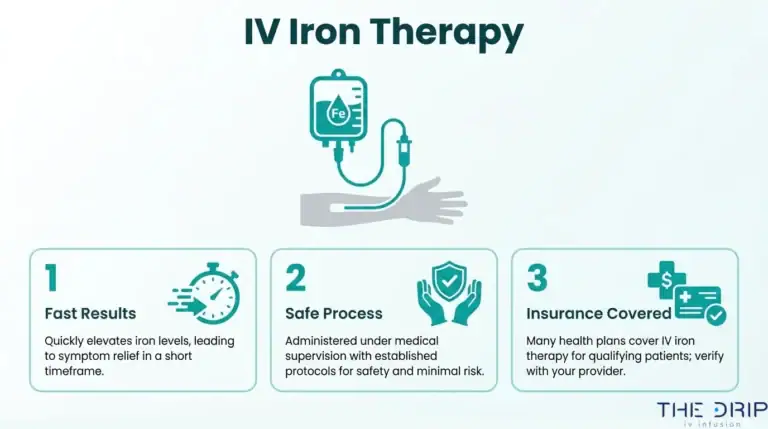
The benefits of a real IV drip include 100% bioavailability, customizable nutrient formulations, and rapid delivery for clinical and wellness needs. The limitations involve medical oversight requirements, potential side effects, and higher cost. Below, each factor is broken down by candidate profile, infusion types, and risk considerations.

Who Is a Real IV Drip Recommended For?
A real IV drip is recommended for individuals who need rapid fluid or nutrient delivery that oral intake cannot adequately provide. This includes people experiencing moderate to severe dehydration, those with documented vitamin or mineral deficiencies, patients unable to tolerate oral supplementation due to nausea or GI conditions, and athletes seeking fast post-event recovery.
Candidates who benefit most typically fall into specific categories:
- Individuals recovering from illness where vomiting prevents oral rehydration
- People with clinically confirmed nutrient malabsorption
- Athletes or performers needing rapid electrolyte restoration after prolonged exertion
- Wellness clients seeking higher-dose vitamins that lose bioavailability when taken orally
Pre-screening by a qualified provider is essential before any infusion session. Not everyone requires IV therapy; for mild dehydration, oral solutions remain the practical first step.
What Types of IV Drip Infusions Are Commonly Offered?
The types of IV drip infusions commonly offered span hydration bases, vitamin cocktails, and targeted wellness formulations. Most providers build treatments from a few standard fluid foundations combined with nutrient add-ons.
Common infusion categories include:
- Normal saline (0.9% sodium chloride): The most widely used isotonic base for general rehydration
- Lactated Ringer’s solution: A balanced electrolyte fluid containing sodium, potassium, calcium, and lactate
- Myers’ Cocktail: A well-known formulation combining B vitamins, vitamin C, magnesium, and calcium in sterile water
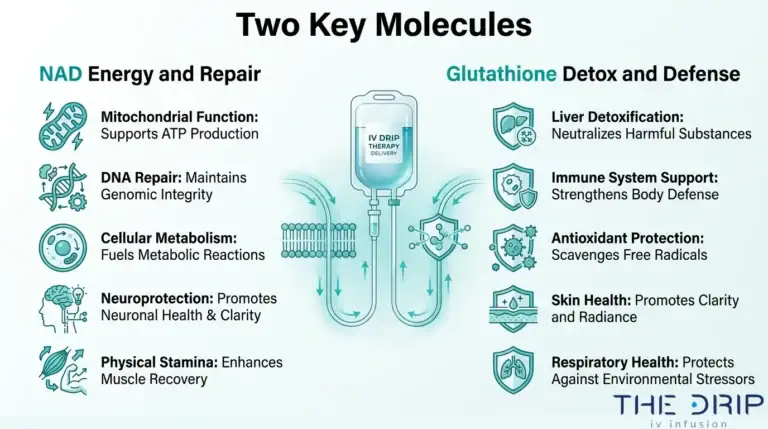
- NAD+ infusions: Targeted toward cellular energy, anti-aging support, and recovery
- Custom blends: Provider-tailored combinations with add-ons such as glutathione, zinc, or amino acids
The flexibility to adjust dosages and ingredients per session makes IV drips far more customizable than any fixed-formula oral product.
Are There Risks, Side Effects, or Contraindications with IV Drips?
The risks, side effects, and contraindications with IV drips range from mild injection-site reactions to rare but serious complications that require pre-screening. Because IV therapy bypasses the digestive system entirely, any substance enters the bloodstream immediately, which means errors or contraindications carry greater consequence than with oral supplements.
Common and serious risks include:
- Phlebitis: Warmth, tenderness, or redness at the catheter site
- Infiltration/extravasation: Fluid leaking into surrounding tissue, potentially causing short- or long-term damage
- Fluid overload: A particular concern for patients with heart or kidney conditions
- Oxalate nephropathy and hemolysis: According to a 2025 systematic review published in the Journal of Medicine and Life, high-dose intravenous vitamin C poses major risks including oxalate nephropathy and hemolysis in patients with glucose-6-phosphate dehydrogenase deficiency, particularly with very large or repeated doses
These risks underscore why reputable providers require a health intake, review medical history, and have a licensed prescriber authorize each treatment. For most healthy adults receiving standard wellness doses, serious complications remain uncommon, but skipping the screening step is never worth the convenience.
Understanding these trade-offs helps clarify when IV therapy justifies the cost and clinical commitment compared to simpler oral options.
How Do Cost, Convenience, and Accessibility Compare Between the Two Options?
Cost, convenience, and accessibility differ significantly between Liquid I.V. powder and a real IV drip. The sections below break down everyday convenience, long-term value, and lifestyle accessibility for each option.

Which Option Is More Convenient for Everyday Use?
Liquid I.V. powder is more convenient for everyday use. A single stick packet dissolves in water within seconds, requires no appointment, and fits in a pocket, gym bag, or carry-on. The TSA allows medically necessary liquids in reasonable quantities for travel, and a dry powder packet avoids liquid restrictions entirely.
A real IV drip, by contrast, requires a licensed professional, a sterile environment, and roughly one hour per session. That makes IV therapy impractical as a daily routine. For someone simply maintaining hydration through a busy workday or a long flight, powder packets offer unmatched portability and zero planning overhead. IV drips earn their place when the situation demands clinical-grade delivery, not when convenience is the priority.
How Do the Costs and Long-Term Value Stack Up?
The costs of Liquid I.V. powder and a real IV drip reflect fundamentally different value propositions. A box of Liquid I.V. typically runs $1 to $2 per stick, making daily use affordable at roughly $30 to $60 per month.
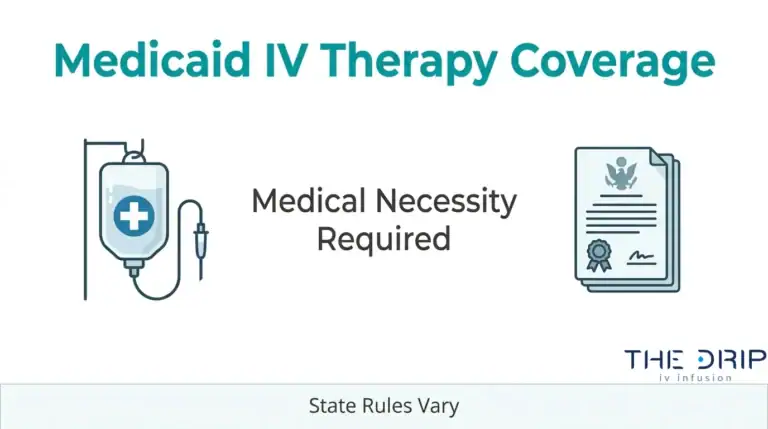
IV drip sessions generally range from $150 to $300 or more per visit, depending on the infusion formula and provider. According to IRS Publication 969, qualified medical expenses paid through a Health Savings Account (HSA) are tax-free distributions, which may offset some IV therapy costs when medically indicated. Health Care Flexible Spending Accounts (HCFSAs) can also cover eligible expenses.
Long-term value depends on the goal:
- Daily hydration maintenance: Powder packets deliver strong cost efficiency.
- Targeted nutrient repletion or recovery: IV drips provide 100% bioavailability per session, potentially requiring fewer interventions overall.
- Chronic wellness support: Combining occasional IV sessions with daily oral hydration often balances cost and clinical benefit.
What About Accessibility and Availability for Different Lifestyles?
Accessibility and availability for different lifestyles favor Liquid I.V. powder in most everyday scenarios. Powder packets are sold at grocery stores, pharmacies, gas stations, and online retailers with no prescription needed. Anyone can purchase and use them immediately.
IV drip accessibility depends on clinical infrastructure. Mobile IV services have expanded availability considerably, with some providers bringing treatments directly to homes and workplaces, eliminating the need to visit a clinic.. However, IV therapy still requires a licensed prescriber’s order and a qualified nurse to administer the infusion, per state medical board regulations.
For athletes subject to anti-doping rules, the World Anti-Doping Agency prohibits IV infusions exceeding 100 mL per 12-hour period outside legitimate hospital care. Powder packets carry no such restriction.
Choosing between the two ultimately comes down to whether your lifestyle demands clinical-grade nutrient delivery or simple daily hydration support.
Which Option Is More Effective for Specific Needs Like Hangovers, Illness, or Athletic Recovery?
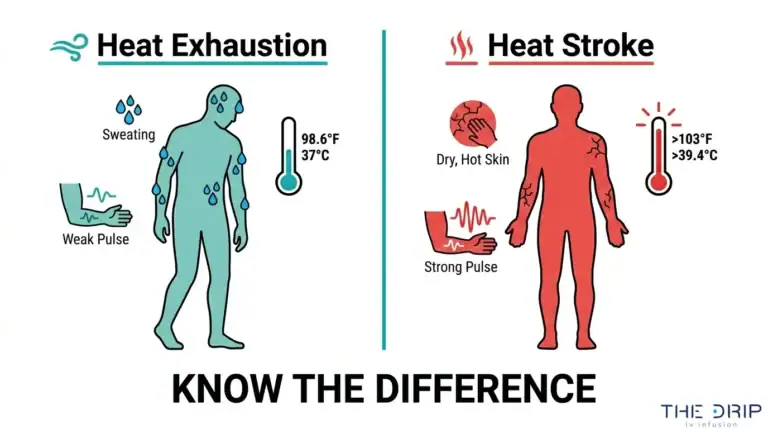
The more effective option depends on the severity of your condition. Oral rehydration handles mild to moderate cases, while IV drips address severe dehydration and nutrient deficiency faster. The following subsections compare outcomes for hydration, recovery speed, and situational preference.

How Do Outcomes Differ for Hydration and Nutrient Deficiency?
Outcomes differ for hydration and nutrient deficiency based on how each method delivers fluids and micronutrients into the body. Oral electrolyte powders like Liquid I.V. rely on the sodium-glucose cotransport mechanism to pull water through intestinal walls, which works well for mild to moderate fluid loss. IV drips bypass digestion entirely, delivering fluids and nutrients at 100% bioavailability directly into the bloodstream.
For nutrient deficiency, the gap widens. Oral vitamin B₁₂ absorption can be as low as 1–2% through passive diffusion, and oral magnesium absorption drops from 65% at low intakes to 11% at high intakes. IV nutrient therapies eliminate these absorption barriers. According to the North Carolina Board of Nursing, RNs and LPNs may administer IV hydration, nutrient therapies, and medications under a valid prescriber’s order, ensuring clinical oversight during these infusions.
Is One Better for Rapid Recovery or Preventive Wellness?
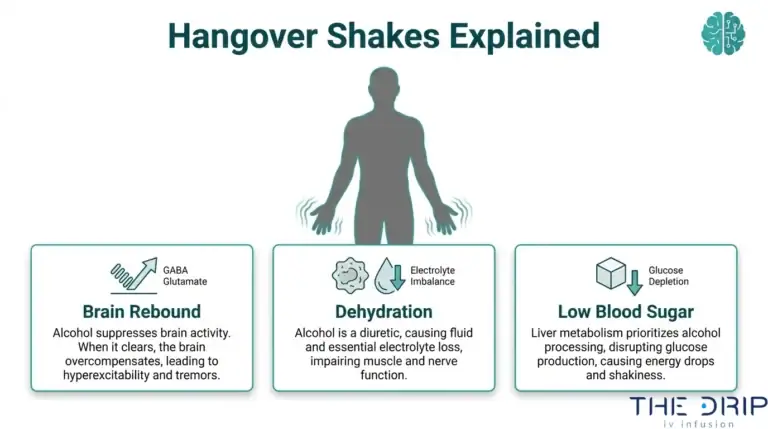
One is better than the other depending on whether your goal is rapid recovery or preventive wellness. For rapid recovery from hangovers, acute illness, or intense athletic exertion, IV drips deliver results faster because fluids reach circulation immediately without waiting for gastrointestinal processing. Ingested water takes approximately 75 to 120 minutes for complete absorption, while IV fluids are available the moment they enter the vein.
For preventive wellness, oral electrolyte powders are the more practical choice. Daily use before, during, or after moderate activity maintains baseline hydration without clinical visits. UNICEF considers oral rehydration salts one of the most significant medical innovations of the twentieth century for treating dehydration from diarrhea, heat stroke, and other fluid-loss conditions. Routine prevention rarely requires IV-level intervention; reserve that for acute situations.
Are There Situations Where One Is Clearly Preferred Over the Other?
There are situations where one is clearly preferred over the other:
- Severe vomiting or inability to keep fluids down: IV drips are necessary when the oral route fails entirely.
- Mild exercise recovery or travel dehydration: Liquid I.V. powder provides sufficient electrolyte replenishment without clinical costs.
- Documented nutrient deficiencies requiring therapeutic doses: IV infusions deliver concentrations that oral supplements cannot match due to absorption ceilings.
- Competitive athletes under anti-doping rules: The World Anti-Doping Agency prohibits IV infusions exceeding 100 mL per 12-hour period outside hospital settings, making oral hydration the only compliant option.
- Budget-conscious preventive care: A Health Care FSA can cover eligible medical expenses including qualifying IV therapy, though oral powders cost far less per use.
For most people navigating everyday hydration, oral solutions handle the job. IV therapy earns its place when the body cannot absorb orally or when clinical-grade nutrient delivery is the goal.
With effectiveness matched to your specific situation, choosing the right option for your wellness goals becomes straightforward.
How Should You Decide Between Liquid I.V. Powder and a Real IV Drip for Your Wellness Goals?
You should decide between Liquid I.V. powder and a real IV drip by matching each option to your specific health situation, lifestyle, and recovery timeline. The sections below cover how The Drip IV Infusion can help guide that choice and the key takeaways from this comparison.
Can The Drip IV Infusion Help You Choose or Provide Customized IV Therapy?
Yes, The Drip IV Infusion can help you choose and provide customized IV therapy tailored to your individual wellness goals. The Drip IV Infusion offers a full menu of IV cocktails, specialty treatments, and add-ons, including vitamin C, B-complex vitamins, magnesium, zinc, glutathione, and NAD+. Each session is administered by an infusion specialist who comes directly to your home or workplace in Arizona, removing the need to visit a clinic. Because The Drip IV Infusion bypasses the GI tract entirely, nutrients reach the bloodstream at 100% bioavailability. For travelers, Liquid I.V. powder remains a practical daily option since TSA allows medically necessary liquids in reasonable quantities when declared at the checkpoint, according to the Transportation Security Administration.
What Are the Key Takeaways About Comparing Liquid I.V. Powder and Real IV Drips?
The key takeaways about comparing Liquid I.V. powder and real IV drips center on matching the method to the need:
- Liquid I.V. powder suits everyday mild hydration support, travel, exercise under four hours, and situations where convenience and low cost matter most.
- Real IV drips deliver 100% bioavailability, making them the stronger choice for moderate to severe dehydration, nutrient deficiencies that limit oral absorption, and rapid recovery after illness or intense physical demand.
- Neither option replaces medical evaluation; oral rehydration should be tried first for mild cases, with IV therapy reserved for when oral intake is insufficient or a faster response is needed.
- Cost, accessibility, and health status all factor into the decision. Powder costs a few dollars per stick; professional IV sessions carry a higher price but deliver results that oral supplements cannot replicate.
For most people, using Liquid I.V. powder as a daily baseline and reserving customized IV therapy for targeted recovery or wellness goals provides the most practical, evidence-informed approach.