Medicaid covers IV therapy when a physician documents medical necessity for a diagnosed condition, but it excludes wellness, lifestyle, and elective infusions that lack clinical evidence.
This guide covers how Medicaid evaluates IV therapy claims, which medical conditions qualify for coverage, how rules vary by state and treatment setting, which IV treatments Medicaid excludes, and how to navigate approvals or pay out of pocket.
Medicaid’s coverage decisions rest on a federal-state partnership where each state defines its own medical necessity standards, eligibility thresholds, and prior authorization requirements. Conditions like severe dehydration, chronic autoimmune diseases, bacterial infections requiring parenteral antibiotics, cancer, malnutrition, and pregnancy complications commonly qualify when supported by clinical documentation.
Coverage rules shift significantly depending on where you live. Each state structures its home infusion and outpatient infusion benefits differently, from which providers can administer treatment to what reimbursement codes apply. Some states bundle home infusion into per-diem rates covering nursing, equipment, and pharmacy services, while others require separate authorization for each component.
Medicaid consistently excludes IV vitamin drips for general wellness, athletic recovery infusions, weight loss treatments, and NAD+ therapy. These services lack the clinical evidence or FDA-approved indications that medical necessity determinations require.
Prior authorization is standard for most covered infusions, and the process involves provider documentation, federally mandated decision timelines, and formal appeal rights when claims are denied. For treatments Medicaid does not cover, options like HSA or FSA funds, provider payment plans, and mobile IV services offer accessible alternatives.
What Is IV Therapy and Why Is It Prescribed?
IV therapy is intravenous treatment that delivers fluids, medications, or nutrients directly into a vein. Physicians prescribe it when oral intake is insufficient, ineffective, or impossible. The subsections below cover how IV therapy works, the common medical conditions it treats, and the key distinction between medically necessary and elective infusions.
How Does IV Therapy Work?
IV therapy works by introducing substances directly into the bloodstream through a catheter placed in a vein. This delivery method bypasses the gastrointestinal tract, allowing near-complete absorption. According to the National Cancer Institute, intravenous chemotherapy uses this route so anticancer drugs “travel through the blood to kill cancer cells in the body.” The same principle applies to hydration fluids, antibiotics, and nutritional formulas. Because the infusion enters circulation immediately, onset of therapeutic effects is faster than with oral alternatives. This directness makes IV therapy essential when patients cannot absorb medication by mouth or when rapid drug delivery is clinically required.

What Medical Conditions Require IV Therapy?
The medical conditions that require IV therapy span acute emergencies, chronic diseases, infections, nutritional deficiencies, and pregnancy complications. Common indications include:
- Severe dehydration: MedlinePlus notes that severe cases “may be treated with intravenous fluids with salt in a hospital.”
- Infections unresponsive to oral antibiotics: Conditions such as osteomyelitis or endocarditis often need weeks of IV antimicrobials.
- Cancer: Chemotherapy drugs are frequently administered intravenously to reach tumors throughout the body.
- Malnutrition with GI impairment: Total parenteral nutrition sustains patients whose gastrointestinal function is compromised.
- Autoimmune and chronic inflammatory diseases: Multiple sclerosis, Crohn’s disease, lupus, and rheumatoid arthritis may require IV biologics.
- Pregnancy-related complications: Hyperemesis gravidarum and severe anemia can necessitate IV fluids or iron infusions.
Each condition involves clinical circumstances where oral treatment alone cannot achieve adequate results.
What Is the Difference Between Medical IV Therapy and Elective IV Therapy?
The difference between medical IV therapy and elective IV therapy is clinical necessity. Medical IV therapy treats a diagnosed condition, is ordered by a physician, and typically qualifies for insurance reimbursement. Elective IV therapy, by contrast, targets general wellness goals such as hydration boosts, energy enhancement, or anti-aging support without a specific medical diagnosis driving the treatment.
This distinction matters for Medicaid coverage. As the Drug and Therapeutics Bulletin (BMJ) states, intravenous vitamins are clinically indicated for “a few serious medical conditions” like malabsorption syndromes or Wernicke’s encephalopathy, yet there is “a lack of high-quality evidence” that high-dose vitamin infusions offer health benefits absent a specific deficiency. Medicaid programs rely on medical necessity determinations, so treatments lacking clinical evidence generally fall outside covered benefits.
Understanding where a specific IV treatment falls on this spectrum is the first step in determining whether Medicaid will pay for it.
How Does Medicaid Decide What Treatments to Cover?
Medicaid decides what treatments to cover through a combination of federal guidelines, state-level authority, and medical necessity determinations. The subsections below explain the federal-state structure, how medical necessity is defined, and why prior authorization plays a central role.
What Is the Federal-State Structure of Medicaid?
The federal-state structure of Medicaid is a partnership in which the federal government sets broad requirements and each state administers its own program. According to the Centers for Disease Control and Prevention’s National Center for Health Statistics, “Medicaid is a state-federal partnership jointly funded by the states and federal government and administered by the states according to federal requirements,” with each state establishing its own eligibility standards, service scope, and payment rates.
This decentralized design means no two state Medicaid programs are identical. Coverage decisions for IV therapy, including which conditions qualify, depend heavily on where the beneficiary lives.
What Does Medical Necessity Mean for Medicaid Coverage?
Medical necessity for Medicaid coverage means a treatment must be clinically appropriate and required to diagnose, prevent, or treat a patient’s condition. According to the National Academy for State Health Policy, “the federal statute does not define ‘medical necessity’ but rather describes a broad standard for coverage without providing a prescriptive formula for ascertaining necessity,” allowing states to set their own parameters as long as they remain no more restrictive than federal law.
In practice, this means each state applies its own criteria when evaluating whether a specific IV therapy qualifies. Treatments lacking clinical evidence of necessity for a diagnosed condition are typically excluded.
Why Does Prior Authorization Matter for IV Therapy?
Prior authorization matters for IV therapy because it is the mechanism Medicaid uses to verify medical necessity before approving coverage. Most state Medicaid programs and managed care organizations require providers to submit clinical documentation proving the treatment is warranted for the patient’s specific diagnosis.
Without prior authorization approval, even medically appropriate IV therapies can be denied reimbursement. Understanding how medical necessity and prior authorization interact at the state level is essential when evaluating whether specific IV treatments qualify for Medicaid coverage.
Does Medicaid Cover IV Therapy for Medical Conditions?
Medicaid covers IV therapy for medical conditions when the treatment meets medical necessity criteria established by each state’s program. Coverage spans dehydration, chronic illnesses, infections, chemotherapy, malnutrition, and pregnancy-related needs.

Does Medicaid Cover IV Therapy for Dehydration?
Medicaid covers IV therapy for dehydration when a physician determines that oral rehydration is insufficient and intravenous fluids are medically necessary. Severe dehydration caused by illness, surgery, or gastrointestinal conditions typically qualifies. According to the National Library of Medicine (MedlinePlus), severe dehydration cases “may be treated with intravenous (IV) fluids with salt in a hospital.” Emergency department visits for acute dehydration are generally covered without prior authorization, while outpatient IV hydration may require advance approval depending on the state. Documentation of failed oral intake or clinical instability strengthens the case for coverage.
Does Medicaid Cover IV Infusion for Chronic Illnesses?
Medicaid covers IV infusion for chronic illnesses, including Crohn’s disease, rheumatoid arthritis, multiple sclerosis, and lupus, when prior authorization requirements are met. Each state sets specific clinical criteria that patients must satisfy before approval. According to Louisiana’s Medicaid clinical policy, infliximab coverage for Crohn’s disease requires a gastroenterologist consultation, age six or older, and documented failure of a three-month immunomodulator trial. Rheumatoid arthritis approval requires a rheumatology consult and failure or intolerance of methotrexate or another disease-modifying antirheumatic drug. Because biologic infusions carry high costs, most state Medicaid programs mandate step therapy, meaning patients must first try and fail less expensive treatments before IV biologics are authorized.
Does Medicaid Cover IV Antibiotics for Infections?
Medicaid covers IV antibiotics for infections when the bacterial infection does not respond to oral antibiotic therapy. Conditions such as osteomyelitis, endocarditis, and complicated skin infections frequently require parenteral antimicrobial administration. Outpatient parenteral antimicrobial therapy, commonly known as OPAT, allows patients to receive IV antibiotics across multiple days without hospitalization. Coverage typically requires a physician order documenting why oral alternatives are inadequate, along with culture and sensitivity results supporting the chosen antibiotic. Prior authorization timelines vary by state, so confirming requirements with the specific Medicaid plan before treatment begins is essential.
Does Medicaid Cover IV Chemotherapy Treatments?
Medicaid covers IV chemotherapy treatments for cancer when prescribed by an oncologist and administered in an approved clinical setting. Intravenous chemotherapy delivers anticancer drugs through a vein, allowing them to travel through the bloodstream to target cancer cells throughout the body. Most state programs classify chemotherapy drugs as clinician-administered drugs, which are reimbursable as a medical benefit rather than a pharmacy benefit. Prior authorization is standard. For patients navigating complex oncology treatment plans, working closely with the treatment facility’s billing department helps ensure claims are submitted correctly and delays are minimized.
Does Medicaid Cover IV Nutrition for Malnutrition?
Medicaid covers IV nutrition for malnutrition through total parenteral nutrition (TPN) when the gastrointestinal tract cannot absorb nutrients adequately. TPN is indicated when impaired gastrointestinal function creates a contraindication to enteral nutrition. Conditions such as short bowel syndrome, severe Crohn’s disease flares, and bowel obstruction commonly qualify. According to MassHealth guidelines, prior authorization is required for all enteral nutrition, with requests reviewed on the basis of medical necessity. Clinical documentation must demonstrate that the patient cannot maintain nutritional status through oral or tube feeding alone, making TPN the only viable option.
Does Medicaid Cover IV Therapy During Pregnancy?
Medicaid covers IV therapy during pregnancy for conditions such as hyperemesis gravidarum, severe dehydration, and preeclampsia management. Pregnancy-related Medicaid eligibility is often broader than standard adult coverage, with many states extending benefits to individuals who would not otherwise qualify. IV fluids and antiemetics administered in emergency or outpatient settings for pregnancy complications are generally covered under the medical necessity standard. Since each state defines its own scope of pregnancy-related services, confirming specific coverage with the local Medicaid office before scheduled infusions prevents unexpected billing issues.
Understanding which conditions qualify for Medicaid IV therapy coverage is only part of the picture; coverage rules also shift significantly from state to state.
Does Medicaid Coverage for IV Therapy Vary by State?
Medicaid coverage for IV therapy does vary by state. Because Medicaid operates as a state-federal partnership, each state sets its own rules for eligibility, covered services, and payment rates. The sections below explain why these differences exist, how specific states handle IV therapy coverage, and what falls outside coverage in certain programs.
According to the Centers for Disease Control and Prevention’s National Center for Health Statistics, “Medicaid is a state-federal partnership jointly funded by the states and federal government and administered by the states according to federal requirements,” and “within broad federal guidelines, each state establishes its own eligibility standards; determines the type, amount, duration, and scope of services; sets the rate of payment for services; and administers its own program.” This structure means a treatment covered in one state may require different documentation, face stricter limits, or carry different reimbursement rates in another.
The practical result is that no two state Medicaid programs handle IV therapy identically. Eligibility thresholds, prior authorization requirements, approved provider types, and exclusion lists all differ. Patients who relocate or receive care across state lines should verify coverage with their specific state Medicaid agency before scheduling IV therapy.
For patients navigating state-specific rules, understanding how each program defines its exclusions is equally important. With home infusion policies differing even further, confirming your state’s specific benefits is the most reliable next step.

Does Medicaid Cover Home Infusion Therapy?
Medicaid covers home infusion therapy in many states when the treatment is medically necessary and administered by an enrolled provider. Coverage components, eligible conditions, and reimbursement structures vary by state program.
Home infusion therapy is a comprehensive treatment program that delivers pharmaceutical products and clinical support services to patients living at home, in a nursing facility, or in any setting outside a hospital. According to the Centers for Medicare & Medicaid Services, home infusion therapy involves the intravenous or subcutaneous administration of drugs or biologicals to an individual at home, with covered components including the drug itself, equipment such as a pump, supplies such as tubing and catheters, nursing services, training, education, and monitoring.
Conditions commonly requiring home infusion include:
- Infections unresponsive to oral antibiotics
- Cancer and cancer-related pain
- Dehydration
- Gastrointestinal diseases preventing normal GI function
- Immune system diseases such as Crohn’s disease, rheumatoid arthritis, and multiple sclerosis
- Malnutrition requiring total parenteral nutrition
State Medicaid programs structure their home infusion benefits differently. Minnesota MHCP covers home infusion therapy for eligible recipients through enrolled HIT pharmacies, bundling patient assessment, professional pharmacy services, equipment, supplies, teaching, coordination of care, and delivery into per-diem codes. Washington Apple Health requires eligible providers to evaluate the client alongside a physician, pharmacist, or nurse, confirm that therapy can be safely administered at home, and obtain a written physician order. New Hampshire excludes experimental or investigational pharmaceuticals not approved by the FDA and medications not part of a medical treatment for a specific illness, injury, or disease; nutritional supplements are only covered when needed to sustain life.
A systematic review published in PubMed found that home infusion costs were significantly lower than medical setting infusion costs, with savings between $1,928 and $2,974 per treatment course. For patients managing long-term conditions that require repeated infusions, home-based delivery is often the most practical and cost-effective pathway, provided the state Medicaid plan includes it as an eligible benefit.
Understanding outpatient clinic coverage helps complete the picture of where Medicaid-covered infusions can take place.
Does Medicaid Cover IV Therapy in Outpatient Settings?
Medicaid covers IV therapy in outpatient settings when the treatment is medically necessary and administered through an eligible provider. Coverage applies to physician offices, outpatient clinics, and infusion centers, though specific rules vary by state.
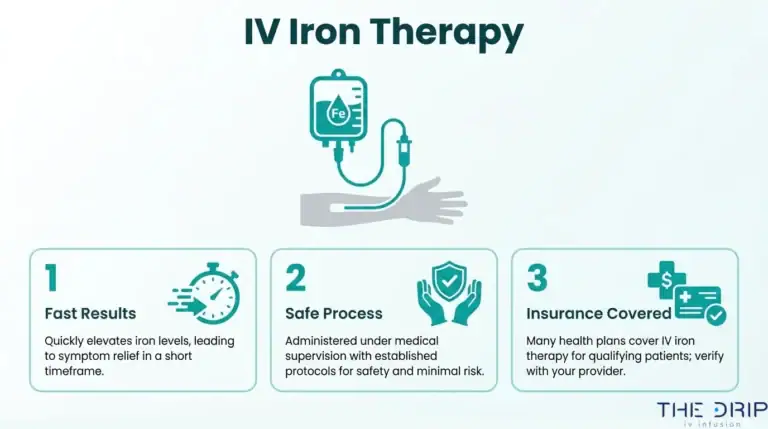
Outpatient IV therapy includes treatments such as IV antibiotics, chemotherapy drugs, and iron infusions delivered outside of a hospital. According to the Infectious Diseases Society of America, outpatient parenteral antimicrobial therapy (OPAT) is defined as the administration of parenteral antimicrobial therapy in at least two doses on different days without intervening hospitalization. This model allows patients to receive medically necessary IV treatments in lower-cost clinical settings rather than requiring inpatient admission.
State Medicaid programs handle outpatient IV drug coverage through different mechanisms. North Carolina Medicaid, for example, covers injectable drugs purchased and administered in a physician’s office or outpatient clinic setting through its Physician’s Drug Program, including IV iron solutions. Other states use clinician-administered drug programs or outpatient pharmacy benefits to reimburse for IV medications given in these settings.
Eligibility for outpatient IV coverage typically requires:
- A documented medical diagnosis supporting the treatment.
- A prescribing provider enrolled in the state’s Medicaid program.
- Prior authorization for many injectable and infusion drugs.
- Administration in an approved outpatient facility or provider office.
Not all outpatient IV services qualify automatically. Treatments considered experimental, investigational, or lacking FDA approval are generally excluded. Elective wellness infusions, such as vitamin drips without a diagnosed deficiency, fall outside the scope of most outpatient Medicaid benefits.
For patients whose needed treatments are not covered by Medicaid, or who prefer wellness-focused options, private-pay providers offer an accessible alternative.
What Types of IV Therapy Does Medicaid Not Cover?
Medicaid does not cover IV therapy used for general wellness, lifestyle enhancement, or elective purposes without a diagnosed medical condition. The following sections cover specific non-covered categories, including vitamin infusions, athletic recovery, weight loss, and NAD+ therapy.

Does Medicaid Cover IV Vitamin Infusions for Wellness?
No, Medicaid does not cover IV vitamin infusions for wellness. Medicaid requires medical necessity for coverage, and elective vitamin drips administered without a diagnosed deficiency or underlying condition fall outside that standard. According to the Drug and Therapeutics Bulletin (BMJ), intravenous vitamins are used for a few serious medical conditions such as malabsorption syndromes with severe vitamin depletion, Wernicke’s encephalopathy, or critical illness, and there is “a lack of high-quality evidence to suggest that high-dose vitamin infusions are necessary or offer any health benefit in the absence of a specific vitamin deficiency or medical condition.” Without a clinical diagnosis driving the prescription, these infusions are classified as elective and remain a self-pay service.
Does Medicaid Cover IV Therapy for Athletic Recovery?
No, Medicaid does not cover IV therapy for athletic recovery. Medicaid funds treatments tied to medical necessity for a specific illness, injury, or disease. Athletic recovery infusions, typically containing fluids, electrolytes, and vitamins for rehydration after exercise, do not meet that threshold. Medicaid’s coverage framework under federal guidelines focuses on clinically indicated services; the SUPPORT Act Section 1003, for example, expanded Medicaid treatment capacity specifically for substance use disorder recovery services, not general performance or lifestyle recovery. Sports rehydration and muscle recovery remain outside Medicaid’s scope regardless of the state program.
Does Medicaid Cover IV Therapy for Weight Loss?
No, Medicaid does not cover IV therapy for weight loss. Weight loss IV infusions, which often include lipotropic compounds or metabolism-boosting vitamins, are considered elective wellness services. Medicaid limits coverage to treatments that address a diagnosed medical condition through established clinical protocols. Since IV therapy for weight loss lacks FDA-approved indications and is not prescribed to treat a specific disease, it does not satisfy medical necessity criteria. Patients seeking these treatments typically pay out of pocket.
Does Medicaid Cover NAD+ IV Therapy?
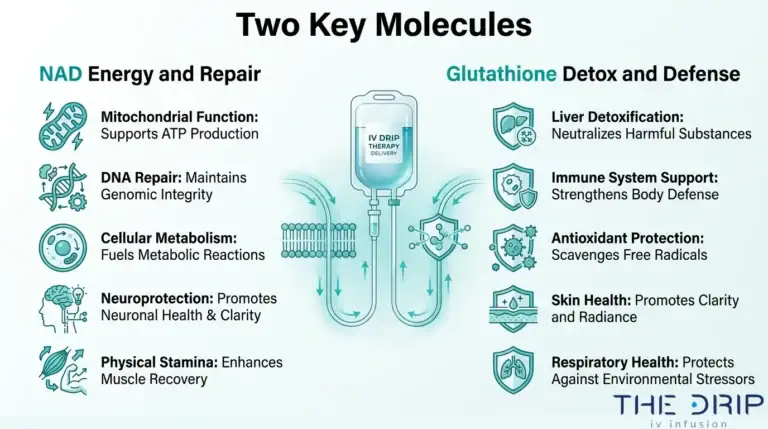
No, Medicaid does not cover NAD+ IV therapy. NAD+ infusions are marketed for anti-aging, energy enhancement, and cognitive support, but clinical evidence supporting these wellness claims remains insufficient. According to a review published in Ageing Research Reviews (Elsevier), no eligible outcomes trials evaluated intravenous NAD+ itself for anti-aging or wellness indications, and “clinical effectiveness for anti-aging or wellness outcomes remains inconclusive.” Without proven medical indications or FDA approval for these uses, NAD+ IV therapy falls outside Medicaid’s coverage scope.
Understanding which IV therapies Medicaid excludes helps clarify what alternative payment options may be worth exploring.
What Is the Prior Authorization Process for IV Therapy?
The prior authorization process for IV therapy is a review step where your Medicaid plan evaluates whether the requested infusion is medically necessary before approving coverage. This process involves documentation from your provider, a decision timeline set by federal rules, and an appeals pathway if the request is denied.
The prior authorization process for IV therapy typically follows these steps:
- Your prescribing provider submits a request to your Medicaid managed care organization, including clinical documentation such as diagnosis, treatment history, and medical justification.
- The plan reviews the request against its coverage criteria for the specific IV medication or infusion service.
- A decision is issued within the federally mandated timeframe. According to 42 CFR § 438.210, standard authorization decisions may not exceed 14 calendar days for rating periods beginning before January 1, 2026, and may not exceed 7 calendar days for periods beginning on or after that date.
- If approved, treatment proceeds under the plan’s terms. If denied, you have the right to appeal.
Denials are not uncommon. All state Medicaid agencies are required to offer state fair hearings as an appeal option, giving beneficiaries a formal pathway to challenge coverage decisions. Organizations like the Patient Advocate Foundation provide expert case managers who work on behalf of patients to secure necessary prior authorizations and resolve insurance denials.
For anyone navigating this process, starting the prior authorization request early is critical. Delays in documentation or incomplete submissions are among the most common reasons approvals stall, and understanding your plan’s specific requirements can prevent unnecessary gaps in treatment.
How Can You Find Out if Your Medicaid Plan Covers IV Therapy?
You can find out if your Medicaid plan covers IV therapy by contacting your state Medicaid office, calling the number on your member ID card, or reviewing your plan’s covered benefits online.
Because Medicaid operates as 56 separate programs with distinct benefit packages, confirming your specific plan’s IV therapy coverage requires direct verification. The steps below outline how to check eligibility, request documentation, and use additional resources.
Call Your State Medicaid Office or Managed Care Plan
Calling your state Medicaid office or managed care plan is the most reliable way to confirm IV therapy coverage. The member services number printed on the back of your Medicaid ID card connects you directly to representatives who can verify whether a specific IV treatment requires prior authorization and whether your plan classifies it as a covered benefit.
Before calling, gather the following details:
- Your Medicaid member ID number and date of birth.
- The specific IV treatment name, diagnosis code, and prescribing provider’s information.
- Whether the infusion will occur in a hospital, outpatient clinic, or home setting.
Ask the representative for a reference number documenting the coverage confirmation. Verbal assurances without documentation can be difficult to enforce if a claim is later denied.
Review Your Medicaid Benefits Handbook Online
Reviewing your Medicaid benefits handbook online provides written confirmation of covered services. Most state Medicaid programs publish member handbooks, formulary lists, and prior authorization requirements on their official websites. These documents specify which IV therapies qualify as covered benefits, what medical necessity criteria apply, and which settings are approved for reimbursement.
According to the Medicaid and CHIP Payment and Access Commission, states establish their own eligibility standards, benefit packages, and provider payment policies under broad federal guidelines, effectively creating 56 different Medicaid programs. This means the handbook for your specific state is the only accurate reference for your plan.
Search your state’s Medicaid website for terms like “infusion therapy,” “injectable drugs,” or “home infusion” to locate relevant policy sections.
Ask Your Doctor to Verify Coverage Before Treatment
Asking your doctor to verify coverage before treatment helps prevent unexpected denials. Physicians and their billing staff routinely submit pre-treatment benefit verification requests to Medicaid on behalf of patients. Because many IV therapies require prior authorization, your provider’s office can confirm approval before scheduling the infusion.
Your doctor’s office can assist with these key steps:
- Submitting prior authorization requests with supporting clinical documentation.
- Confirming the correct billing codes for your specific IV treatment and infusion setting.
- Providing medical necessity letters that strengthen approval chances.
For patients managing complex conditions, coordinating between the prescribing physician and the Medicaid plan early reduces the risk of claim denials and treatment delays. Understanding your coverage options also helps when exploring alternative payment methods.
What Are Other Ways to Pay for IV Therapy Without Insurance?
Other ways to pay for IV therapy without insurance include HSA or FSA funds, provider payment plans, and direct out-of-pocket pricing. These alternatives help cover treatments that Medicaid denies or does not include in its benefit package.
Can You Use HSA or FSA Funds for IV Therapy?
Yes, you can use HSA or FSA funds for IV therapy when the treatment qualifies as a medical expense. According to IRS Publication 969 (2025), distributions from an HSA used to pay qualified medical expenses are not taxed, and the same tax-free treatment applies to FSA reimbursements. IV treatments prescribed by a healthcare provider for a diagnosed condition, such as dehydration or nutrient deficiency, generally qualify. Elective wellness infusions without a medical diagnosis may not meet IRS requirements. Confirming eligibility with your plan administrator before scheduling treatment is the most practical step to avoid unexpected costs.
Do IV Therapy Providers Offer Payment Plans?
Yes, many IV therapy providers offer payment plans to make treatments more accessible. Monthly installment options, membership pricing, and bundled session packages are common structures that reduce per-visit costs. These arrangements become especially relevant when insurance coverage falls short. A 2023 report from the U.S. Department of Health and Human Services Office of Inspector General found that Medicaid managed care organizations denied one out of every eight prior authorization requests in 2019, leaving many patients responsible for costs they expected to be covered. Asking providers directly about financing options before starting a treatment series helps avoid surprise bills.
Understanding all available payment options makes it easier to access IV therapy on your terms.
How Can Mobile IV Therapy Help When Medicaid Falls Short?
Mobile IV therapy can help when Medicaid falls short by providing direct access to wellness-focused infusions that fall outside Medicaid’s medical necessity requirements. The sections below cover what The Drip IV Infusion offers and the key takeaways about Medicaid and IV therapy.
Can The Drip IV Infusion Provide Treatments Medicaid Won’t?
Yes, The Drip IV Infusion can provide treatments Medicaid won’t cover. Medicaid programs focus exclusively on medically necessary services, and according to the Medicaid and CHIP Payment and Access Commission, there are effectively 56 different Medicaid programs across states and territories, each with its own benefit packages and eligibility standards. Wellness IV infusions, such as vitamin drips for hydration, immune support, NAD+ therapy, and athletic recovery, consistently fall outside those covered benefits.
The Drip IV Infusion delivers these treatments directly to clients at home or work, eliminating the prior authorization delays and clinic scheduling that Medicaid-covered infusions require. For anyone whose Medicaid plan excludes a desired IV treatment, paying out of pocket through a mobile provider offers a straightforward alternative.
What Are the Key Takeaways About Medicaid and IV Therapy?
The key takeaways about Medicaid and IV therapy center on coverage limitations, state variability, and alternative payment options:
- Medicaid covers IV therapy only when a provider documents medical necessity for a diagnosed condition, such as chemotherapy, IV antibiotics, or TPN.
- Coverage rules differ across all 50 states, territories, and the District of Columbia, so benefits available in one state may not exist in another.
- Wellness IV treatments, including vitamin infusions, athletic recovery drips, and NAD+ therapy, are not covered by Medicaid.
- Prior authorization is required for most Medicaid-covered infusions, and denials can add significant delays.
- HSA and FSA funds may help offset costs for qualifying IV treatments not covered by Medicaid.
- Mobile IV providers like The Drip IV Infusion offer a convenient, out-of-pocket option for treatments that Medicaid excludes.
For anyone navigating Medicaid’s limitations, understanding these distinctions makes it easier to choose the right path for each specific IV therapy need.