Mobile IV therapy costs between $100 and $1,000+ per session. Basic hydration drips start around $135 to $250, mid-range wellness formulas run $185 to $399, and specialty infusions like NAD+ reach $290 to $1,100 depending on dosage, provider, and delivery setting.
This guide covers pricing by drip category, the factors that shift your final bill, how mobile costs compare to in-clinic rates, insurance realities, and practical ways to save.
Drip-by-drip pricing varies more than most people expect. Basic hydration sessions use standardized electrolyte solutions and sit at the low end, while immune support, hangover recovery, athletic performance, illness recovery, beauty, weight loss, and NAD+ formulas each carry distinct price points based on ingredient complexity, fluid volume, and included medications.
Several cost factors stack on top of the base drip price. Add-on nutrients like glutathione, zinc, and extra vitamin C run $20 to $45 each. Travel and concierge fees range from $0 to $199 depending on the provider and distance. Provider credentials, geographic location, and group size all influence the total as well.
Mobile sessions consistently cost more than identical in-clinic treatments. Published provider data shows mobile premiums of $50 to $199 per visit, reflecting dedicated nurse travel time and one-on-one care at your location.
Insurance does not typically cover elective IV therapy. Major insurers classify vitamin infusions as experimental or unproven, leaving most sessions as out-of-pocket expenses. Memberships, multi-session packages, group discounts, and first-time client offers provide the most reliable path to lower per-session costs.
What Is Mobile IV Therapy and Why Does It Have a Cost Range?
Mobile IV therapy is a wellness service where a registered nurse travels to your home, office, or hotel to administer intravenous fluids, vitamins, and minerals. It has a cost range because pricing varies based on drip formulation, add-on nutrients, travel fees, and provider credentials.
Basic mobile treatments typically start around $199 for simple hydration and can reach $399 for comprehensive wellness packages, with individual add-ins commonly running $20 to $25 each. Several factors widen this range further: the specific vitamins and medications in each drip, the distance a nurse must travel, and whether you book a standard session or a specialty infusion like NAD+. Because mobile IV therapy is typically an elective, out-of-pocket service, no single flat rate applies across providers. The sections below break down exact pricing by drip category, the key factors that shift your final bill, and practical ways to reduce what you pay.

How Much Does a Basic Hydration IV Cost?
A basic hydration IV costs between $135 and $229 in most markets, though the median price sits closer to $179. Pricing depends on fluid volume, included electrolytes, and whether the service is mobile or in-clinic.
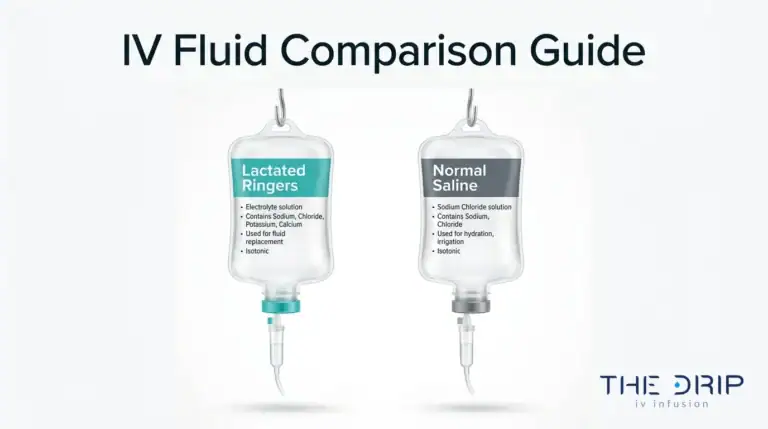
A basic hydration IV delivers a balanced electrolyte solution, typically Lactated Ringer’s, directly into the bloodstream. According to the U.S. National Library of Medicine’s DailyMed database, each 100 mL of Lactated Ringer’s contains sodium chloride (0.6 g), sodium lactate (0.31 g), potassium chloride (0.03 g), and calcium chloride (0.02 g) in sterile water. This standardized fluid forms the foundation of most entry-level hydration drips.
Actual prices vary by provider and city. In Los Angeles, basic hydration starts at $229 through mobile services. In New York City, hydration-only drips begin at $150 to $190 before concierge fees of $100 to $125 are added. A JAMA-referenced study found that IV hydration spa treatments cost a median of $179 each and are generally not covered by insurance because they are not considered medically necessary.
For anyone comparing options, the base fluid itself is inexpensive; what drives the price is the registered nurse visit, medical oversight, and convenience of delivery. A plain saline drip at the lower end still provides rapid rehydration, making it one of the most cost-effective entry points into mobile IV therapy before specialized vitamins or medications are added.
How Much Does an Immune Support IV Cost?
An immune support IV costs between $185 and $350 for most mobile providers. Pricing depends on vitamin concentration, fluid volume, and included ingredients like high-dose vitamin C, zinc, and glutathione.
Immune-focused formulas typically contain fluids, electrolytes, high-dose vitamin C, zinc, B12, magnesium, and B-complex vitamins. According to Luxe Mobile IV in Chicago, a premium Luxe Immunity+ drip with this full ingredient profile runs $350 for a 90-minute session, while a standard Immunity Drip costs $185 for 60 minutes. Fluid volume also shifts the price; Express Med Spas lists a 500ml mini-hydration starting at $145 and blended immunity drips at 1,000ml starting from $195.
Zinc-specific immune formulas carry higher price tags. The IV Doc in Boston charges $299 for a Zinc Boost treatment that includes up to 1,000ml of Lactated Ringer’s or normal saline solution. For clients weighing whether the premium is justified, the ingredient list matters more than the brand name on the bag.
One important consideration: the Merck Manual notes that the Myers’ formula, which forms the basis of many immune drips, consists of high doses of B vitamins, vitamin C, and minerals mixed with sterile water, but there are no data to support the immunity claims often made at medical spas and no regulatory oversight of its administration. The National Cancer Institute reports that intravenous high-dose ascorbic acid has been generally well tolerated in clinical trials, though renal failure has been reported in patients with preexisting renal disorders. Clients with kidney conditions should consult a healthcare provider before booking a high-dose vitamin C infusion.
For most people seeking seasonal immune support, a mid-range drip in the $185 to $250 range delivers the core vitamins without overpaying for maximum dosing that lacks strong clinical backing. The Drip IV Infusion’s Immune Boost cocktail is specifically formulated with vitamins and minerals to support immune function, and mobile delivery throughout Arizona eliminates the need to visit a clinic when you’re trying to stay healthy. Understanding what drives hangover recovery IV pricing reveals similar ingredient-based cost structures.
How Much Does a Hangover Recovery IV Cost?
A hangover recovery IV costs between $249 and $335, depending on the provider and whether the session is mobile or in-clinic. Pricing varies by city, included medications, and after-hours scheduling.
Hangover-specific drips typically include 1,000 mL of normal saline, B-complex vitamins, vitamin B12, vitamin C, magnesium, and anti-nausea and pain medications such as ondansetron (Zofran) and ketorolac (Toradol). These bundled formulas cost more than basic hydration because they address multiple symptoms simultaneously.
According to Las Vegas Mobile IV Therapy, a hangover IV in Las Vegas costs $250 per session and includes 1,000 cc of normal saline, B-complex, B12, vitamin C, magnesium, Zofran, and Toradol, with RN visit, setup, and disposal included. Overnight visits add a $99 after-hours fee, and individual add-ons cost $35 each.
Miami pricing falls in a similar range, though specific inclusions and fee structures differ between providers:
- Key Basis IV charges $249 for non-members and $125 for members, with membership at $80 per month and no travel fee. New clients pay a separate $39 telehealth exam once a year, which members receive at no charge.
- TrufaMED Urgent Care prices the hangover IV at $285 in-clinic and $335 for mobile delivery. That price covers the medical evaluation, all medications, the IV nurse, and discreet delivery.
The $50 to $85 gap between in-clinic and mobile hangover IVs reflects the convenience premium rather than a difference in treatment quality. For someone dealing with severe nausea or headache after a night out, paying that premium to avoid driving to a clinic is often the most practical choice. Comparing what each provider bundles into the base price, especially anti-nausea medication, matters more than the headline number alone.
Understanding hangover IV pricing sets the stage for how performance-focused drips are priced differently.
How Much Does an Athletic Performance IV Cost?
An athletic performance IV costs between $269 and $349 per session, depending on the formula’s complexity. Pricing reflects ingredient density, with basic amino acid blends at the lower end and comprehensive multi-nutrient drips at the higher end.
Athletic performance drips typically contain ingredients targeted at muscle recovery, energy production, and endurance support. According to Fluid Revival’s published Austin menu, a Performance IV containing 1L Lactated Ringer’s, B12, B-Complex, and amino acids costs $269, while an Ultimate Myers’ IV with added vitamin C, glutathione, magnesium, taurine, zinc, and carnitine costs $349. More specialized formulations command higher prices because they include a greater number of active compounds per session.
Before booking, it is worth noting that Cleveland Clinic’s Melissa Young, MD, states there is “limited scientific evidence that shows a direct general wellness benefit from getting IV vitamins.” The same source lists potential risks, including infection at the needle site, vitamin toxicity, blood vessel blockage from the injection, and negative medication interactions. For athletes considering these drips, weighing the cost against documented evidence remains essential; consulting a healthcare provider before starting any IV regimen is the most practical first step.
How Much Does an Illness Recovery IV Cost?
An illness recovery IV costs between $99 and $399, depending on formula complexity and provider. Pricing spans basic hydration fluids through high-dose vitamin and mineral blends designed for cold, flu, and stomach illness support.
Illness recovery drips target symptoms like nausea, fatigue, and dehydration that accompany viral infections. Budget options deliver IV fluids alone, while premium formulas add immune-supporting nutrients. The following breakdown covers what providers charge across this spectrum.
Basic illness recovery hydration starts at the lowest end. According to Seattle Mobile IV Therapy, plain IV hydration fluids range from $99 for 250 mL to $149 for a full liter, with signature drips like the Immune Boost priced at $249. Mid-tier options typically include electrolytes, B vitamins, zinc, and vitamin C. A stomach flu recovery drip from Concierge Nurse Services in Seattle costs $275, which includes electrolytes, B12, B-complex, magnesium, and nausea or pain medications as needed. Specialty illness recovery formulas push pricing higher. In San Francisco, Infinite Health Zone charges $350 for an Immune Boost IV with extra vitamin C and zinc, and $350 for a higher-dose vitamin C infusion of up to 50 grams.
Add-on boosters can raise the total. Individual vitamin add-ons typically cost $25 each, while premium options like glutathione run $45. Some providers also enforce visit minimums; Concierge Nurse Services requires a $200 minimum per in-home nurse visit regardless of the drip selected.
One important distinction applies here: antibiotics do not work against viruses. The CDC notes that viral infections like the common cold require supportive care, not antibacterial treatment. Illness recovery IVs focus on hydration and nutrient support rather than treating the underlying virus. For more severe dehydration, MedlinePlus states that hospital-administered IV fluids may be medically necessary, with the provider treating the underlying cause directly.
For most people battling a routine cold or stomach bug, a mid-range illness recovery IV in the $250 to $300 range delivers the most practical combination of hydration, electrolytes, and symptom-relief medications. The Drip IV Infusion offers mobile illness recovery infusions throughout Arizona, bringing professional nurse-administered care directly to your home when you’re feeling under the weather. Understanding insurance options and membership plans can further offset these costs.
How Much Does a Beauty and Anti-Aging IV Cost?
A beauty and anti-aging IV costs between $159 and $332, depending on the formula and provider membership status. Pricing varies by glutathione dose, included vitamins, and whether the session is mobile or in-studio.
Beauty and anti-aging IV formulas typically combine glutathione with vitamins and amino acids that support skin, hair, and nail health. According to Restore Hyper Wellness in Atlanta, an Amplified Beauty IV containing glutathione, magnesium, B12, biotin, lysine, glutamine, proline, double-dose vitamin C, and B complex costs $332 at retail or $237 for members; a standalone high-dose glutathione infusion (1,200 mg) runs $164 retail and $104 for members. Some providers, such as Somenek + Pittman MD in Washington, D.C., pair an intramuscular biotin injection with a Myers’ Cocktail and high-dose glutathione to target cellular detoxification alongside hair and nail growth.
For anyone prioritizing skin health, the beauty IV category offers one of the best ingredient-to-value ratios in mobile IV therapy because glutathione and biotin work synergistically rather than requiring separate appointments. The Drip IV Infusion’s Fountain of Youth infusion includes glutathione and biotin among its anti-aging ingredients, and can be customized with additional glutathione or vitamin add-ons based on individual skin health goals. With weight loss support IVs using a different nutrient profile, understanding that distinction helps you choose the right drip for your goals.
How Much Does a Weight Loss Support IV Cost?
A weight loss support IV typically costs between $179 and $319 per session. Pricing depends on the formula’s ingredients, whether the service is mobile or in-clinic, and optional add-ons.
A mobile weight loss IV drip from Mobile IV Medics costs $319 and includes IV fluid, vitamin B complex, vitamin B12, MIC (methionine, inositol, choline), vitamin C, and taurine, with add-ins available at $20 per selection. That price includes in-home service and travel fees. For a clinic-based alternative, Quench IV Studio in Humble, Texas, offers “The Skinny” fat-burning drip at $179, which contains 1L normal saline, L-arginine, B complex, and carnitine. Individual intramuscular injections, such as B12 or MIC/lipo shots, are often available at $30 each, with package discounts bringing the per-shot price down. Coastal Wellness, for example, sells 30 MIC/B12 injections for $229, approximately $7.63 per injection.
Common add-ons that increase the total cost of a weight loss IV include:
- Zinc at $25 per session
- Carnitine at $30 per session
- Glutathione at $30 per session
For anyone pursuing weight loss support through IV therapy, the combination of a full drip with targeted add-ons represents a higher upfront cost than standalone injections. However, the complete nutrient profile delivered in a single session offers a more comprehensive approach. Pairing a weight loss IV with injectable packages can also reduce long-term per-session spending for clients committed to ongoing support. Specialty infusions like NAD+ carry an even wider price range.
How Much Do Specialty Infusions Like NAD+ Cost?
Specialty infusions like NAD+ cost between $290 and $1,100 per session, depending on dosage, setting, and provider. Prices vary significantly between clinic and mobile appointments, with multi-session protocols increasing total investment.
NAD+ infusion pricing scales directly with dosage. A 250 mg session starts around $290 in-clinic, while a 1,000 mg session can reach $1,100 for mobile delivery. According to The Recovery Room in Scottsdale, a 250 mg “Anti-Aging Dose” runs $290 in-clinic or $340 mobile, with a recommended four-day protocol priced at $990. Their 500 mg “Neurogenerative Dose” costs $470 in-clinic or $520 mobile, with a four-day protocol at $1,700.
Higher dosages at other providers reflect similar escalation. Prana IV Therapy in the Phoenix Valley lists 250 mg at 400in-clinic(500 mobile), 500 mg at 600in-clinic(750 mobile), and 1,000 mg at 880in-clinic(1,100 mobile). Each session includes 1L alkalizing IV fluids, electrolytes, B complex, B12, vitamin C, magnesium, zinc, and glutathione.
NAD+ sessions also require significantly longer drip times than standard infusions; a 250 mg session takes approximately 1.5 to 2 hours, while 500 mg sessions run 3 to 4 hours. This extended chair time is one reason NAD+ commands premium pricing compared to a typical one-hour IV session.
Safety deserves careful attention with NAD+ infusions. The U.S. Food and Drug Administration has received adverse event reports following use of NAD+ injectable drugs, including severe chills, shaking, vomiting, and fatigue, with some cases requiring medical treatment. The FDA also warns that food-grade ingredients are not suitable for compounding sterile drugs without appropriate processing due to high contamination risk from microbes and endotoxins. Choosing a provider that sources pharmaceutical-grade NAD+ and employs qualified nurses is essential for minimizing these risks.
For anyone considering NAD+ therapy, the total cost often extends beyond a single session. Multi-session protocols are commonly recommended, which means budgeting $700 to $1,700 or more for a full course. Understanding the factors that influence total mobile IV pricing helps contextualize these specialty costs.
What Factors Influence the Total Price of Mobile IV Therapy?
The total price of mobile IV therapy depends on add-on nutrients, travel fees, provider credentials, geographic location, and group size. The following subsections break down each factor.

How Do IV Add-Ons and Boosters Affect the Final Cost?
IV add-ons and boosters increase the final cost by $20 to $45 per item, depending on the nutrient. Most mobile IV providers offer a base drip at a set price, then charge separately for extras such as glutathione, vitamin C, zinc, B12, and magnesium. Selecting multiple add-ons can raise the total bill by $60 to $100 or more beyond the base package. For clients who want comprehensive nutrient support, choosing a bundled drip that already includes several vitamins is often more cost-effective than stacking individual boosters onto a basic hydration bag.
How Does the Travel or Convenience Fee Impact Pricing?
The travel or convenience fee impacts pricing by adding $25 to $150 on top of the base drip cost. Some providers include this fee in a flat per-visit price, while others charge it separately based on distance. In the Baltimore area, for example, THRIVE Solutions charges $25 to $75 for locations outside the city’s core beltway zone. Mileage-based models also exist; one Ann Arbor provider charges a minimum of $30 or $3 per mile from its home base. Not every company adds a travel fee. House Call Hydration in Jackson Hole, Wyoming, charges the same price whether clients visit the studio or book a mobile session.
Does the Type of Registered Nurse or Provider Change Cost?
The type of registered nurse or provider can change cost because higher-credentialed professionals command higher rates. Every mobile IV drip is placed and monitored by an experienced registered nurse who reviews the client’s health history first, with medical oversight from a licensed physician. In states like Arizona, nurse practitioners practice independently without physician supervision, according to the Arizona State Board of Nursing. That regulatory flexibility can reduce overhead for the provider, which sometimes translates to lower client pricing. Conversely, in states requiring formal physician collaboration, the added supervision layer may increase operational costs passed along to the consumer.
How Does Geographic Location Affect Mobile IV Pricing?
Geographic location affects mobile IV pricing through differences in cost of living, local demand, and provider density. Major metro areas like Los Angeles and New York City tend to carry higher base prices plus separate concierge fees, while smaller markets sometimes offer flat-rate pricing with no additional travel charge. Scottsdale providers list standard drips around $189 to $225, whereas a provider in Jackson Hole prices a basic session at $135 to $150 with no mobile surcharge. Rural or underserved areas with fewer providers may see higher per-session costs due to longer drive times and limited competition.
Does Group Booking or Party Pricing Lower the Per-Person Cost?
Group booking and party pricing lower the per-person cost through tiered discounts that grow with headcount. According to Pure IV’s published rates, groups of 4 to 9 guests receive 10% off, 10 to 19 guests receive 15% off, and groups of 20 or more receive 20% off. Not all providers offer the same structure. Reset IV prices every package the same for 1 or 50 people, though volume discounts may be available for groups over 20 by phone request. Because IV therapy is an elective, out-of-pocket treatment, splitting a group booking among friends or coworkers is one of the most practical ways to reduce individual cost.
Understanding these pricing factors makes it easier to compare quotes and identify where savings are possible when choosing between mobile IV providers.
How Does Mobile IV Therapy Cost Compare to In-Clinic IV Therapy?
Mobile IV therapy cost compares to in-clinic IV therapy by running roughly $100 to $250 higher per session. In-clinic IV therapy typically ranges from $100 to $250, while at-home mobile IV therapy ranges from $200 to $500. The premium covers travel, convenience, and dedicated nurse time at your location.
This price gap becomes clearer when examining real provider data side by side. According to a Los Angeles provider listed on Express Med Spas, the difference is consistent across treatment tiers:
| Treatment | In-Clinic Price | Mobile Price | Mobile Premium |
| AminoMultiPlex IV Therapy | $199 | $398 | +$199 |
| Rise and Shine IV Therapy | $229 | $428 | +$199 |
| Liquilift IV Therapy | $279 | $478 | +$199 |
In this case, the mobile convenience fee adds a flat $199 regardless of treatment complexity. Other providers structure it differently; concierge fees in New York City start at $100 for Manhattan and Chicago, rising to $125 for Brooklyn and Queens, on top of drip prices starting at $135. A Miami provider charges $285 in-clinic and $335 mobile for a hangover IV, a more modest $50 gap.
Whether the premium is worth paying depends on what you value most. Clinic visits require driving, parking, and sitting in a shared space. Mobile sessions eliminate that friction entirely, which matters most when you are feeling unwell, recovering, or short on time. For someone booking a single basic hydration drip, the in-clinic option saves meaningful money. For higher-value treatments or situations where leaving home is impractical, the mobile premium often justifies itself through convenience and personalized one-on-one care.
With pricing differences clarified, the next consideration is whether insurance offsets any of these costs.

Does Insurance Cover Mobile IV Therapy?
Insurance does not typically cover mobile IV therapy. Most wellness-focused infusions are classified as elective, placing the full cost on the client. Below, the key reasons, insurer positions, and alternative payment options explain why.
Mobile IV therapy falls outside standard insurance coverage because insurers distinguish between medically necessary treatments and elective wellness services. IV vitamin drips, Myers’ Cocktails, and hydration infusions ordered for general wellness lack the medical necessity designation that triggers reimbursement.
According to Evernorth Coverage Policy EN0086, coverage for complementary or alternative therapies varies across plans, and the policy identifies megavitamin therapy, including Myers’ Cocktail, as experimental, investigational, or unproven, stating there is a lack of evidence that megavitamin therapy improves health outcomes. Aetna’s clinical policy bulletin reaches a similar conclusion, listing both intravenous micronutrient therapy and intravenous vitamin C infusion as experimental and investigational due to inadequate peer-reviewed evidence.
Medicare does cover home infusion therapy services, equipment, and supplies for certain approved drugs and biologicals administered intravenously. However, this benefit, effective January 1, 2021, applies to specific prescribed medications delivered via durable medical equipment, not to elective vitamin or hydration drips ordered for wellness purposes.
Because mobile IV therapy is considered an elective treatment, the expense is out-of-pocket for most clients. Some clients explore Health Savings Accounts (HSA) or Flexible Spending Accounts (FSA) as a workaround, but the IRS requires that medical expenses must primarily alleviate or prevent a physical or mental disability or illness; expenses merely beneficial to general health do not qualify. A provider’s letter of medical necessity can sometimes support an FSA claim, though approval is never guaranteed.
For anyone budgeting for regular sessions, this out-of-pocket reality makes membership plans and package pricing especially valuable as cost-reduction strategies.

Are There Ways to Save Money on Mobile IV Therapy?
There are several ways to save money on mobile IV therapy, including memberships, package deals, and first-time client discounts. Each option reduces per-session costs differently.

Do Mobile IV Companies Offer Membership or Subscription Plans?
Yes, mobile IV companies offer membership or subscription plans that lock in lower per-drip pricing in exchange for a monthly commitment. According to ASAP IVs, their NAD+ Membership costs $300 per month and provides $350 in monthly credit, ideal for a 500 mg NAD+ infusion. Other providers, such as Drip Hydration, structure tiered memberships ranging from one to eight treatments per month with escalating per-IV savings.
For anyone booking mobile IV therapy more than once a month, a membership almost always pays for itself within the first session or two.
Can Package Deals or Bundled Sessions Reduce Costs?
Yes, package deals or bundled sessions can reduce costs by lowering the per-treatment price when you prepay for multiple visits. Providers commonly offer multi-session packs for high-cost specialty infusions like NAD+, where individual sessions run $350 to $1,100 each. Bundling three to five sessions into a single purchase often yields 10% to 20% savings compared to booking each visit individually.
Bundled packages work best for clients who already know they want recurring treatments, since most packs carry expiration windows of 60 to 120 days.
Do First-Time Client Discounts Lower the Initial Price?
Yes, first-time client discounts lower the initial price of mobile IV therapy. According to Mobile IV Nurses, new clients receive a free $30 add-in with their first IV treatment. Other providers may waive the telehealth exam fee or offer a percentage off the first drip.
These introductory offers make it easier to try mobile IV therapy without committing to a full-price session. Stacking a first-time discount with a lower-cost base drip is one of the most practical ways to keep an initial appointment affordable.
With cost-saving strategies identified, the next step is evaluating whether mobile IV therapy delivers enough value to justify the investment.
How Do You Know If Mobile IV Therapy Is Worth the Cost?
Mobile IV therapy is worth the cost when the convenience, professional oversight, and personalized formulation align with your specific health goals and budget. The following sections cover the value of nurse-administered care and key pricing takeaways.
What Value Does Nurse-Administered Mobile IV Care Offer?
Nurse-administered mobile IV care offers clinical-grade infusion delivery in your home, supervised by licensed professionals who review your health history before starting any drip. This eliminates waiting rooms, travel time, and the scheduling friction of clinic visits.
A registered nurse monitors your session from start to finish, adjusting drip rates and watching for adverse reactions in real time. That level of individualized attention is difficult to replicate with oral supplements or self-administered wellness routines.
The market reflects this perceived value. According to TechSci Research, the global mobile IV hydration services market was valued at USD 1.42 billion in 2024 and is expected to reach USD 2.51 billion by 2030 with a CAGR of 9.91%. For anyone weighing cost against convenience and safety, nurse-administered mobile care consistently delivers a combination that clinic-only or DIY alternatives cannot match.
What Are the Key Takeaways About Mobile IV Therapy Cost?
The key takeaways about mobile IV therapy cost are:
- Basic hydration drips start around $135 to $250, while specialty formulations like NAD+ can exceed $1,000 per session.
- Mobile sessions typically cost $100 to $200 more than identical in-clinic treatments due to travel fees and concierge convenience.
- Add-ons, boosters, and after-hours fees increase the final price by $20 to $99 per item or visit.
- Memberships, packages, and group bookings offer the most reliable savings, with discounts ranging from 10% to 50%.
- Insurance rarely covers elective IV therapy, so most sessions are paid out of pocket.
- Provider credentials, geographic location, and formulation complexity are the three biggest variables that shift pricing.
For most people, the smartest approach is comparing total session cost (drip plus fees plus add-ons) across two or three providers before committing. The Drip IV Infusion can help you identify the right formulation and frequency for your goals without overspending on ingredients you do not need.