Potassium IV therapy is a hospital-only medical intervention that delivers potassium chloride directly into the bloodstream to treat severe hypokalemia when oral replacement cannot be absorbed, tolerated, or administered fast enough. This treatment corrects life-threatening electrolyte deficits under continuous cardiac monitoring and strict dosing controls.
This guide covers the conditions that require IV potassium, how it works physiologically, the risks and side effects of infusion, why hospitals are the only safe setting for administration, and the alternatives available for milder deficiency.
Severe hypokalemia below 2.5 mEq/L, along with ECG abnormalities, neuromuscular symptoms, or inability to take oral medication, triggers the need for IV potassium. Renal losses, prolonged vomiting, refeeding syndrome, and concurrent magnesium depletion are among the most common clinical drivers.
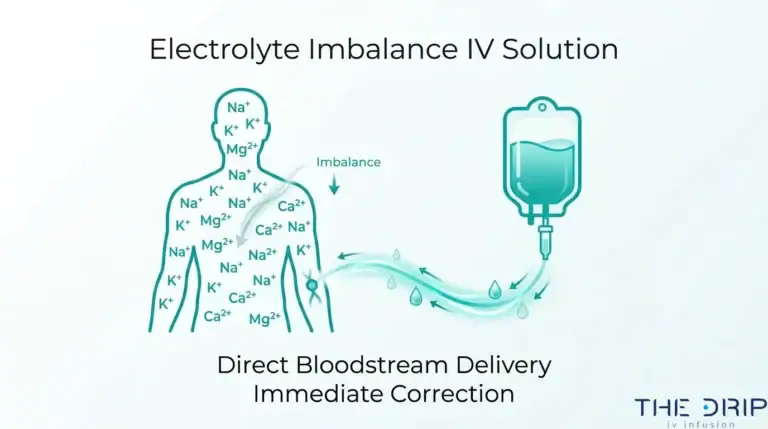
IV potassium bypasses the gastrointestinal tract entirely, placing ions directly into circulation where they stabilize cardiac rhythm, restore muscle contractility, and normalize nerve signaling within minutes. This speed separates it from oral supplements that depend on gut absorption.
The risks are severe. Concentrated potassium infused too quickly or without proper dilution causes fatal cardiac arrhythmias; even modest dosing errors can elevate serum levels past the point of intervention. Patients with impaired kidney function or pre-existing heart conditions face the highest danger.
Hospital restriction exists because safe administration requires continuous ECG, serial blood draws, smart infusion pumps with hard dosing limits, and premixed solutions. No outpatient or mobile IV setting can replicate this infrastructure. For mild to moderate deficiency, oral supplements and potassium-rich foods remain the preferred first-line approach, while wellness IV services support general hydration and nutrient balance without replacing clinical potassium therapy.
What Conditions or Deficiencies Require Potassium IV Therapy?
Potassium IV therapy is required when hypokalemia is severe, symptomatic, or when oral replacement cannot be absorbed or tolerated. The situations that call for intravenous potassium and the clinical thresholds that determine when oral supplementation falls short are covered below.

When Is Oral Potassium Not Sufficient for Treatment?
Oral potassium is not sufficient for treatment when serum levels drop below critical thresholds, gastrointestinal absorption is compromised, or the clinical situation demands immediate correction. According to the 2024 NHS Specialist Pharmacy Service guideline on treating acute hypokalemia in adults, IV potassium chloride should be given in a hospital setting for severe hypokalemia below 2.5 mmol/L, with an initial dose of 40 mmol/L.
Oral replacement becomes inadequate in specific circumstances:
- Serum potassium falls to 2.5 mEq/L or below, with ECG abnormalities or neuromuscular symptoms present.
- The patient is nil by mouth or has limited gastrointestinal absorption.
- Oral medications cannot be tolerated due to vomiting or surgical restrictions.
- Immediate correction is needed to prevent cardiac or respiratory complications.
When levels remain above 2.5 mEq/L, standard infusion rates should not exceed 10 mEq per hour or 200 mEq over 24 hours. This distinction between oral-eligible and IV-mandatory cases is one of the most underappreciated decision points in acute electrolyte management.
What Medical Situations Commonly Lead to Low Potassium Needing IV Intervention?
Medical situations that commonly lead to low potassium needing IV intervention include renal losses, gastrointestinal losses, transcellular shifts, and conditions where concurrent electrolyte imbalances complicate oral correction. Hypokalemia is caused by decreased dietary intake, diuretic use, prolonged vomiting or diarrhea, and intracellular shifts triggered by refeeding syndrome, alkalosis, insulin administration, or beta agonists such as epinephrine and bronchodilators.
According to the Sydney Children’s Hospitals Network potassium management guideline, hypokalemia is frequently associated with hypomagnesemia, and serum magnesium should be measured and corrected because potassium repletion can be refractory until magnesium is replaced. Renal function must also be monitored throughout IV replacement, including urine output assessment at minimum every six hours.
Clinicians who encounter falling urine output or deteriorating renal function during infusion must slow or stop potassium delivery and reassess urgently. Understanding these interconnected metabolic triggers clarifies why potassium IV protocols require continuous hospital-based oversight.
How Does Potassium IV Work Within the Body?
Potassium IV works within the body by delivering potassium ions directly into the bloodstream, bypassing the gastrointestinal tract entirely. The subsections below explain how IV absorption compares to oral supplements and what physiological effects intravenous potassium produces.
How Is Potassium Absorbed and Utilized Compared to Oral Supplements?
Potassium absorbed via IV enters the bloodstream immediately, while oral supplements must pass through the gastrointestinal tract before reaching circulation. Oral potassium is absorbed primarily in the small intestine, a process that depends on gut motility, mucosal integrity, and the patient’s ability to swallow and tolerate tablets or liquids.
According to the NIH Office of Dietary Supplements, adults ages 19 to 50 require an adequate intake of 3,400 mg daily for males and 2,600 mg for females. Oral supplementation can meet these needs effectively when the GI tract functions normally. However, when absorption is impaired or levels are critically low, the oral route simply cannot deliver potassium fast enough. IV administration eliminates that bottleneck by placing the electrolyte directly where it is needed. For most patients with functional digestion, oral potassium remains the safer, preferred first-line approach.
What Are the Physiological Effects of Potassium Given Intravenously?
The physiological effects of potassium given intravenously center on restoring the electrochemical gradient that drives muscle contraction, nerve signaling, and cardiac rhythm. Potassium is the primary intracellular cation; even small shifts in serum concentration affect cell membrane potential.
Once infused, potassium ions:
- Stabilize cardiac myocyte membranes, correcting dangerous ECG abnormalities such as flattened T waves and ST depression.
- Restore skeletal muscle contractility, reversing weakness or paralysis caused by severe depletion.
- Support normal nerve impulse transmission across both voluntary and autonomic pathways.
- Help regulate acid-base balance by facilitating hydrogen ion exchange in the kidneys.
Because these effects begin within minutes of infusion, IV potassium can reverse life-threatening arrhythmias faster than any oral formulation. This speed is precisely what makes continuous cardiac monitoring non-negotiable during administration.
Understanding these mechanisms clarifies why potassium IV carries strict safety protocols in clinical settings.
What Are the Potential Risks and Side Effects of Potassium IV Therapy?
The potential risks and side effects of potassium IV therapy include hyperkalemia, cardiac arrest, and fatal dosing errors. Because IV potassium therapy is legally classified as the practice of medicine, strict safety standards govern every step of the process. The sections below explain why this treatment is dangerous without careful administration, what overdose symptoms look like, and which patients face the highest risk.

Why Is Potassium IV Considered Dangerous if Not Administered Carefully?
Potassium IV is considered dangerous if not administered carefully because concentrated potassium solutions can cause fatal cardiac arrhythmias when infused too quickly or without proper dilution. According to the U.S. National Library of Medicine’s DailyMed labeling, Potassium Acetate Injection must not be administered undiluted, and the infusion rate should not exceed 1 mEq/kg/hr. The narrow margin between a therapeutic dose and a lethal dose is what makes this electrolyte uniquely hazardous among IV medications. Adult daily requirements range from only 40 to 80 mEq/24 hr, meaning even modest calculation errors can push levels into a dangerous range.
What Are the Symptoms of Potassium Overdose or Rapid Infusion?
The symptoms of potassium overdose or rapid infusion reflect the progressive disruption of cardiac and neuromuscular function as serum potassium rises. Recognizable warning signs include:
- Peaked T waves on ECG, often the earliest detectable change.
- Flattened P waves and prolonged PR interval indicating conduction delays.
- Widened QRS complex progressing toward a sine-wave pattern.
- Muscle weakness and ascending paralysis.
- Respiratory failure in severe cases.
- Ventricular fibrillation and cardiac arrest at critically elevated levels.
This progression can unfold rapidly, which is why regulatory bodies such as Australia’s Therapeutic Goods Administration have restricted injectable potassium salts to Schedule 4 prescription-only status. Even small deviations in concentration or infusion speed can accelerate these symptoms beyond the point of intervention.
Who Is Most at Risk for Complications from Potassium IV?
The patients most at risk for complications from potassium IV are those with impaired renal function, pre-existing cardiac conditions, or electrolyte imbalances that mask true potassium levels. Individuals with reduced kidney clearance cannot excrete excess potassium efficiently, so even standard doses may accumulate to dangerous concentrations. According to the WHO Collaborating Centre for Patient Safety Solutions, ten patient deaths from misadministration of concentrated potassium chloride solution were reported to the Joint Commission in just the first two years of its sentinel event reporting program (1996 to 1997). That finding led the WHO to recommend removing concentrated electrolyte solutions from patient care units entirely and using only premixed parenteral solutions.
Understanding who faces the greatest risk reinforces why potassium IV requires hospital-level oversight and continuous monitoring.
Why Is Potassium IV Therapy Restricted to Hospital Settings?
Potassium IV therapy is restricted to hospital settings because it requires continuous cardiac monitoring, frequent lab checks, and immediate access to emergency resuscitation equipment. The subsections below cover required monitoring, safety protocols, and limited exceptions.
What Monitoring Is Required During Potassium IV Administration?
The monitoring required during potassium IV administration includes continuous electrocardiography (ECG), serial serum potassium measurements, and regular assessment of renal function. According to the FDA’s 2022 Potassium Chloride Injection prescribing information, urgent cases with serum potassium below 2.0 mEq/L require rates up to 40 mEq per hour guided by continuous ECG monitoring and frequent serum potassium determinations to avoid hyperkalemia and cardiac arrest.
Urine output must be tracked at minimum every six hours, and plasma urea and creatinine levels require repeated measurement. If renal function deteriorates, the infusion must be slowed or stopped immediately. Serum magnesium should also be checked, since hypokalemia frequently coexists with hypomagnesemia that can make potassium correction ineffective until magnesium is replaced. Patients with advanced chronic kidney disease rarely need potassium supplementation at all; when they do, only small doses with immediate rechecking are considered safe.

What Safety Protocols Must Be Followed When Giving Potassium IV?
The safety protocols that must be followed when giving potassium IV include concentration limits, rate-controlled infusion, smart pump guardrails, and use of premixed solutions. Concentrated potassium chloride must never be administered undiluted. Peripheral IV lines are limited to 10 mEq per hour, while central lines with continuous cardiac monitoring permit up to 20 mEq per hour.
Key required protocols include:
- Using only premixed parenteral potassium solutions to prevent fatal dilution errors.
- Programming infusion pumps with facility-customized dose-error reduction software (DERS) that enforces hard limits preventing unsafe rates.
- Restricting concentrated potassium stock from general patient care areas.
- Requiring physician or advanced-practice provider evaluation, a written prescription, and documented informed consent before any infusion begins.
These layered safeguards exist because even small deviations in potassium infusion rate can trigger fatal cardiac arrhythmias within minutes. No outpatient or mobile setting can replicate this level of real-time oversight.
Are There Any Exceptions or Outpatient Scenarios for Potassium IV?
Exceptions for outpatient potassium IV are extremely limited. Most correction of mild to moderate hypokalemia occurs through oral or enteral routes, which carry far less cardiac risk and do not demand continuous monitoring.
A 2017 prospective randomized equivalence trial published in BMJ Open compared enteral versus intravenous potassium replacement in pediatric ICU patients after cardiac surgery. The study found no statistically significant difference in potassium level changes between the two routes (enteral: 0.86 mmol/L vs. intravenous: 0.82 mmol/L; p=0.86), concluding that enteral replacement may serve as an equally effective first-line alternative in select patients.
This evidence reinforces that oral or enteral potassium handles most clinical scenarios without requiring IV delivery. True IV potassium administration remains a hospital-only intervention because the narrow margin between therapeutic and lethal doses demands infrastructure no outpatient environment can safely provide.
With hospital-only restrictions clarified, understanding what alternatives exist helps frame safer approaches to potassium correction.
What Alternatives Exist to Potassium IV for Treating Deficiency?
The alternatives to potassium IV for treating deficiency include oral potassium supplements, dietary potassium intake, and general wellness IV therapies that support hydration and electrolyte balance. The following sections cover when oral or food-based options are preferred and whether other IV therapies can replicate potassium IV benefits.
When Are Oral or Dietary Potassium Options Preferred?
Oral or dietary potassium options are preferred when hypokalemia is mild to moderate and the patient can swallow and absorb nutrients normally. For adults ages 19 to 50 years, the adequate intake is 3,400 mg for males and 2,600 mg for females, according to the NIH Office of Dietary Supplements. Whole foods offer substantial amounts; a single medium baked potato with skin provides 926 mg of potassium. Oral supplements in tablet or liquid form work well when serum levels sit between 3.0 and 3.5 mmol/L and no acute symptoms are present. Dietary correction is the safest first step for most people, and it avoids the cardiac monitoring requirements that IV potassium demands.

Can Other IV Therapies Mimic the Benefits of Potassium IV?
No, other IV therapies cannot fully mimic the benefits of potassium IV. Potassium chloride infusions deliver a precise electrolyte dose directly into the bloodstream under cardiac monitoring, targeting a specific and measurable deficiency. General wellness IV drips that contain saline, B vitamins, magnesium, or vitamin C support hydration and nutrient status, yet they do not replace clinically significant potassium deficits. Magnesium IV can complement potassium correction because hypomagnesemia often makes hypokalemia resistant to treatment, but magnesium alone does not raise serum potassium levels. For anyone diagnosed with true hypokalemia, no wellness infusion substitutes for medically supervised potassium replacement.
Understanding these alternatives helps clarify when professional IV potassium therapy is truly necessary.
How Should You Approach Potassium IV Therapy and Related IV Services?
You should approach potassium IV therapy as a hospital-only medical intervention that requires physician oversight, cardiac monitoring, and strict dosing protocols. The following sections cover how The Drip IV Infusion relates to this topic and the key takeaways to remember.
Can The Drip IV Infusion Provide Support or Advice Regarding Potassium and Related IV Therapies?
The Drip IV Infusion can provide support through wellness-focused IV hydration and nutrient infusions, but potassium IV replacement therapy falls outside the scope of mobile or outpatient IV services. Potassium chloride infusions demand continuous cardiac monitoring, laboratory-verified dosing adjustments, and hospital-grade safety systems that only inpatient facilities maintain. According to the Institute for Safe Medication Practices, facility-customized dose error reduction software generates hard limits that physically prevent infusions from being programmed outside established safety parameters, a safeguard unavailable in non-hospital environments.
The Drip IV Infusion is a mobile IV therapy service that provides hydration, vitamin, and wellness infusions administered by nurses. For anyone experiencing symptoms of potassium deficiency, consult a medical professional for proper blood work and diagnosis before pursuing any treatment.
What Are the Main Points to Remember About Potassium IV Uses, Safety, and Hospital-Only Status?
The main points to remember about potassium IV uses, safety, and hospital-only status are:
- Potassium IV therapy treats severe hypokalemia (below 2.5 mEq/L) when oral replacement is not feasible due to vomiting, impaired absorption, or critical urgency.
- Infusion rates must stay within strict limits, typically 10 mEq/hour through peripheral access or 20 mEq/hour through a central line with continuous cardiac monitoring.
- Hyperkalemia from excessive potassium infusion causes peaked T waves, widened QRS complexes, and cardiac arrest, making real-time ECG monitoring non-negotiable.
- Hospitals use premixed solutions, smart pump technology, and serial blood draws to keep potassium levels within a safe range throughout treatment.
- Wellness IV clinics do not administer potassium chloride infusions because the required monitoring infrastructure exists only in hospital settings.
For general hydration and nutrient support outside of medical emergencies, The Drip IV Infusion offers a safe, nurse-administered alternative worth exploring.