Book Now

Category: Blog

  • How to prepare for an iv therapy

    How to prepare for an iv therapy

    IV therapy is a method of delivering fluids, vitamins, or nutrients directly into the bloodstream through a vein, bypassing the digestive tract for immediate absorption. Proper preparation directly influences vein accessibility, comfort during the infusion, and how effectively your body responds to treatment.

    This guide covers pre-session nutrition and hydration, medication and medical history disclosure, mental and physical readiness, what to expect during your first session, treatment-specific preparation, and post-session recovery.

    Hydration and nutrition form the foundation of effective IV preparation. Drinking water consistently the day before and morning of your appointment improves vein visibility for catheter placement, while eating lean protein and complex carbohydrates stabilizes blood sugar and prevents lightheadedness during infusion. Caffeine and alcohol should be eliminated at least 24 hours beforehand, as both dehydrate the body and complicate vein access.

    Disclosing every medication, supplement, and allergy to your provider is essential for safety. Supplements like vitamin E and fish oil can increase bleeding risk at the injection site, and conditions involving the kidneys, liver, or heart may require adjusted drip rates or modified formulations.

    Mental preparation plays a meaningful role, especially for those with needle anxiety. Techniques like applied tension and deep breathing reduce the physical stress response, while planning adequate time for the session prevents feeling rushed.

    Session expectations vary by treatment type. Standard vitamin and hydration drips run 30 to 60 minutes, while specialized infusions like NAD+ may take up to 90 minutes and require additional meal timing adjustments. Post-session care, including continued hydration and rest, helps your body fully absorb the infused nutrients.

    What Is IV Therapy and Why Does Preparation Matter?

    IV therapy is a method of administering fluids, medications, or nutrients directly into the circulatory system via a vein, bypassing the digestive tract for 100% bioavailability and immediate therapeutic effect. Also known as infusion therapy or drip therapy, this parenteral delivery method eliminates the absorption barriers of the gastrointestinal system, providing an efficient pathway for essential vitamins and minerals to reach the bloodstream.

    Preparation matters because physiological factors like hydration status and blood sugar levels directly influence vein visibility, patient tolerance to the needle, and the body’s response to rapid nutrient infusion. According to nursing clinical guidelines from Nicolet College, these variables affect both the efficacy and safety of the procedure. When patients arrive dehydrated or with unstable blood sugar, healthcare providers face greater difficulty locating suitable veins, and the risk of discomfort during the session increases.

    For anyone considering their first infusion or looking to optimize results from regular sessions, understanding what IV therapy involves sets the foundation for every preparation step that follows, from hydration and nutrition timing to medication disclosure and mental readiness.

    IV therapy benefits infographic showing 100 percent bioavailability, direct bloodstream absorption, and immediate nutrient effects

    What Should You Do the Day Before Your IV Therapy?

    You should hydrate thoroughly, eat balanced meals, and avoid certain substances the day before your IV therapy. The following subsections cover water intake targets, ideal pre-infusion foods, and items to skip.

    How Much Water Should You Drink Before IV Therapy?

    You should drink at least 8 to 12 glasses of water throughout the day before your IV therapy. Proper hydration plumps your veins, making catheter insertion smoother and reducing discomfort during the session. Sipping water consistently is more effective than drinking large amounts at once, since steady intake maintains fluid balance without overloading your system.

    Starting your hydration effort the day before, rather than the morning of, gives your body adequate time to distribute fluids evenly. For anyone who struggles with plain water, adding a squeeze of lemon or choosing an electrolyte-enhanced option can help. Adequate pre-session hydration is one of the simplest steps that yields the most noticeable difference in comfort.

    IV therapy hydration schedule with recommended water intake before, evening after treatment, and morning recovery guidelines

    What Foods Should You Eat Before an IV Infusion?

    The foods you should eat before an IV infusion include lean proteins, complex carbohydrates, and nutrient-dense whole foods. Grilled chicken, brown rice, sweet potatoes, oatmeal, and leafy greens all provide sustained energy without causing blood sugar spikes. According to Puur Health and Wellness, foods rich in lean protein and complex carbohydrates maintain satiety and provide a stable energy source, improving overall patient tolerance to the procedure.

    A balanced dinner the night before and a light snack closer to your appointment prevent lightheadedness during the infusion. Fruits like bananas and berries add natural electrolytes and antioxidants. Prioritizing whole, unprocessed foods over heavy or greasy meals keeps digestion comfortable and your body receptive to IV nutrients.

    Which Foods and Beverages Should You Avoid Before IV Therapy?

    The foods and beverages you should avoid before IV therapy include:

    • Caffeine, such as coffee, energy drinks, and certain teas, because it acts as a diuretic and promotes fluid loss.
    • Alcohol, which dehydrates the body and can constrict veins, complicating catheter placement.
    • High-sodium processed foods, like chips and fast food, which contribute to water retention imbalances.
    • Sugary snacks and drinks that cause blood sugar fluctuations and may increase nausea risk.
    • Heavy, greasy meals that slow digestion and can cause stomach discomfort during infusion.

    Eliminating these items at least 24 hours before your appointment helps maintain optimal hydration and stable blood sugar. For most people, swapping a morning coffee for herbal tea the day before is the single hardest adjustment, but it makes a meaningful difference in vein accessibility and overall session comfort.

    Understanding what to avoid sets the foundation for how you prepare on the actual day of your appointment.

    How Should You Prepare on the Day of Your IV Therapy?

    You should prepare on the day of your IV therapy by eating a balanced morning meal, hydrating steadily in the hours before your appointment, and wearing accessible clothing. The following subsections cover each step.

    What Should You Eat the Morning of Your IV Session?

    You should eat a light, balanced meal the morning of your IV session to keep blood sugar stable and prevent nausea during the infusion. Complex carbohydrates paired with lean protein provide steady energy without weighing you down.

    Good options include:

    • Oatmeal with fruit
    • Whole-grain toast with eggs
    • A granola bar with nut butter
    • Yogurt with berries

    Proper hydration that morning also matters. According to Smart Infusion Therapy Services, adequate morning hydration makes it significantly easier for healthcare providers to locate a suitable vein and helps patients tolerate the infusion more comfortably. Skipping breakfast is one of the most common preparation mistakes; even a small snack makes a noticeable difference in how you feel during treatment.

    How Should You Hydrate in the Hours Before Your Infusion?

    You should hydrate in the hours before your infusion by drinking water consistently rather than consuming large amounts all at once. Steady sipping throughout the morning keeps veins plump and accessible for the IV catheter.

    A few key guidelines help:

    • Eat a light snack 1 to 2 hours before the session, such as a granola bar or complex carbohydrates, to stabilize blood sugar and prevent lightheadedness.
    • Avoid caffeine and alcohol for at least 24 hours before your appointment, as both act as diuretics that dehydrate the body and make vein access more difficult.
    • Aim for 16 to 20 ounces of water in the two hours leading up to your session.

    Arriving well-hydrated is arguably the single most impactful thing you can do to ensure a smooth, comfortable infusion experience.

    What Clothing Should You Wear to an IV Therapy Appointment?

    You should wear comfortable, loose-fitting clothing to an IV therapy appointment. Sleeves that roll up easily above the elbow allow your provider to access the inner arm efficiently for the IV catheter, reducing setup time and unnecessary adjustments.

    Short-sleeve shirts, tank tops, or wide-sleeve blouses all work well. Avoid tight long sleeves, compression garments, or bulky layers that restrict access to the forearm area. According to the Ventura Center for Advanced Therapeutics, wearing accessible clothing facilitates efficient catheter placement on the day of the appointment. Comfortable clothing also helps you relax during the 30 to 90 minutes the session may last.

    With nutrition, hydration, and clothing handled, the next step is reviewing your medications and supplements with your provider.

    What Medications and Supplements Should You Disclose Before IV Therapy?

    You should disclose all current medications and supplements before IV therapy, including prescription drugs, over-the-counter products, and herbal formulations. The subsections below cover supplements, blood thinners, and prescription medication adjustments.

    Should You Stop Taking Supplements Before an IV Infusion?

    You should consult your provider before stopping any supplements prior to an IV infusion. Certain supplements carry specific risks when combined with intravenous nutrient delivery. According to GoodRx, full disclosure of current medications is critical, as supplements like vitamin E and fish oil can increase the risk of bleeding or hematoma formation at the injection site.

    Supplements that warrant discussion with your provider include:

    • Vitamin E, which has blood-thinning properties that may complicate venipuncture.
    • Fish oil, which can similarly affect clotting at the IV catheter site.
    • Herbal products such as ginkgo biloba, garlic extract, and ginseng, which may alter bleeding time or interact with infused nutrients.
    • High-dose vitamin C or B-complex supplements that could overlap with your IV formulation.

    Rather than stopping supplements on your own, let your infusion specialist determine which ones to pause and when. This personalized approach prevents both unnecessary interactions and gaps in your nutritional routine.

    How Do Blood Thinners Affect IV Therapy Preparation?

    Blood thinners affect IV therapy preparation by increasing the likelihood of bruising, prolonged bleeding, and hematoma development at the catheter insertion site. Drugs like warfarin and aspirin alter your blood’s clotting ability, which means even routine venipuncture requires extra precaution.

    As noted by Nursing Skills at Nicolet College, physiological factors directly influence vein visibility, patient tolerance to the needle, and the body’s response to rapid nutrient infusion. When blood thinners are part of that equation, providers may need to:

    • Apply extended pressure after catheter placement.
    • Select smaller-gauge needles to minimize tissue trauma.
    • Monitor the insertion site more closely for signs of infiltration.

    Never discontinue a prescribed blood thinner without your doctor’s explicit guidance. Instead, inform your IV therapy provider about the specific anticoagulant, its dosage, and when you last took it so they can plan accordingly.

    Should You Adjust Prescription Medications Before an IV Session?

    You should not adjust prescription medications before an IV session without direct guidance from your prescribing physician. Because IV therapy delivers nutrients and fluids with 100% bioavailability by bypassing the digestive tract, interactions between infused compounds and your existing prescriptions can behave differently than oral combinations.

    Medications that require special attention include:

    • Diuretics, which may compound the fluid shifts introduced by IV hydration.
    • Blood pressure medications, since rapid fluid delivery can temporarily alter cardiovascular dynamics.
    • Diabetes medications, because IV formulations containing dextrose or certain vitamins may influence blood sugar levels.
    • Immunosuppressants, which may interact with immune-boosting IV additives like zinc or vitamin C.

    For most patients, the safest approach is continuing medications on their normal schedule while providing your infusion provider with a complete, current medication list. Sharing your full medical history before any IV session protects both safety and treatment efficacy.

    What Medical History Should You Share Before Getting IV Therapy?

    The medical history you should share before getting IV therapy includes kidney and liver function, heart conditions, and any known allergies. These details help your provider customize a safe infusion plan.

    Why Does Your Provider Need to Know About Kidney Conditions?

    Your provider needs to know about kidney conditions because the kidneys filter vitamins, minerals, and fluids delivered during IV therapy. Compromised kidney function can impair the body’s ability to process high-dose nutrients, increasing the risk of fluid overload or electrolyte imbalances.

    According to Mobile IV Medics, pre-treatment screening must include a comprehensive medical history review, specifically assessing for kidney and liver function, heart conditions, and allergies to preservatives such as sodium metabisulfite. Failing to disclose reduced kidney or liver capacity could lead to dangerous accumulation of substances the body cannot efficiently clear. Even mild renal impairment may require adjusted drip rates or modified formulations. Sharing recent lab work, if available, gives your provider the clearest picture for dosing decisions.

    Should You Disclose Allergies Before an IV Infusion?

    Yes, you should disclose allergies before an IV infusion. IV solutions may contain preservatives, vitamins, or additives that trigger reactions in sensitive individuals. Sodium metabisulfite, a common preservative in certain IV formulations, poses a particular risk for those with sulfite sensitivities.

    Beyond preservatives, allergies to specific nutrients like B vitamins or certain medications added to custom drips must be flagged. Even latex allergies matter, since some IV supplies contain latex components. Providing a complete allergy list, including drug allergies, food sensitivities, and environmental triggers, allows your provider to select formulations that avoid known reactions. When in doubt, mention it; a seemingly unrelated allergy can sometimes indicate cross-reactivity with IV ingredients.

    How Do Heart Conditions Affect Your IV Therapy Plan?

    Heart conditions affect your IV therapy plan because rapid fluid administration can strain cardiovascular function. Patients with congestive heart failure, hypertension, or arrhythmias require carefully controlled drip rates to prevent fluid overload, which may worsen symptoms like edema or shortness of breath.

    Certain IV additives, such as high-dose magnesium or potassium, directly influence heart rhythm and blood pressure. Your provider needs to know about any cardiac diagnosis, medications like beta-blockers or ACE inhibitors, and whether you have an implanted device such as a pacemaker. This information determines both the infusion speed and the specific nutrient concentrations used. For most cardiac patients, IV therapy remains a viable option when the protocol is properly adjusted to individual tolerance levels.

    Understanding your full medical background sets the stage for discussing how to mentally and physically prepare for the session itself.

    How Should You Mentally and Physically Prepare for IV Therapy?

    You should mentally and physically prepare for IV therapy by managing needle anxiety, scheduling adequate time, and resting beforehand. The following subsections cover strategies for needle fear, session planning, and pre-appointment rest.

    What Can You Do If You Have a Fear of Needles?

    You can manage a fear of needles through several proven techniques that reduce anxiety before and during IV insertion. Applied tension is one of the most effective methods. According to Cedars-Sinai, applied tension is a research-proven technique where patients tense their muscles to increase blood pressure, helping prevent fainting and reduce anxiety during needle procedures.

    Other practical strategies include:

    • Practicing slow, deep breathing exercises to calm the nervous system before your appointment.
    • Using distraction techniques, such as listening to music, watching a video, or engaging in conversation during insertion.
    • Communicating your fear to your IV nurse so they can adjust their approach and pace.
    • Looking away from the insertion site to avoid visual triggers.

    Most patients find that the anticipation feels far worse than the actual needle stick, which typically lasts only a few seconds.

    How Should You Plan Your Schedule Around an IV Session?

    You should plan your schedule around an IV session by blocking enough time for the full appointment, including arrival, infusion, and a brief recovery period. Standard vitamin and hydration drips typically run 30 to 60 minutes, while specialized treatments like NAD+ infusions may require 60 to 90 minutes.

    Avoid scheduling strenuous activities, intense workouts, or high-stress meetings immediately after your session. Instead, allow at least 30 minutes of downtime following infusion so your body can adjust. Arriving a few minutes early also helps; it gives you time to settle in, complete any intake forms, and relax before the IV starts. Planning this buffer prevents feeling rushed, which can elevate anxiety and tighten veins.

    Why Is Rest Important Before an IV Therapy Appointment?

    Rest is important before an IV therapy appointment because adequate sleep supports stable blood pressure, healthy circulation, and calmer nerves during the infusion process. When you arrive well-rested, your veins are more relaxed and accessible, which makes catheter insertion smoother for both you and your provider.

    Sleep deprivation can elevate cortisol levels, increase sensitivity to discomfort, and raise the likelihood of feeling lightheaded during treatment. Aiming for seven to eight hours of quality sleep the night before your session creates the best conditions for a comfortable experience. For those combining mental and physical readiness, pairing a good night’s rest with proper hydration gives your body the strongest foundation for responding well to IV therapy.

    What Should You Expect During Your First IV Therapy Session?

    During your first IV therapy session, you should expect a straightforward process involving intake paperwork, IV insertion, and a monitored infusion period. The subsections below cover session duration, what insertion feels like, and potential side effects.

    How Long Does a Typical IV Infusion Take?

    A typical IV infusion takes between 30 to 60 minutes for standard vitamin and hydration drips. More complex infusions, such as NAD+ or specialized athletic recovery drips, can take 60 to 90 minutes, according to Restore Hyper Wellness. The exact duration depends on the drip formula, drip rate, and your body’s tolerance. Your provider will set the flow rate based on the specific nutrients being administered. For most first-time clients, planning for about an hour covers the infusion itself plus initial intake and post-session observation. Bringing a book or phone helps pass the time comfortably while the IV delivers nutrients directly into your bloodstream.

    What Does the IV Insertion Process Feel Like?

    The IV insertion process feels like a brief pinch or slight sting lasting one to two seconds as the catheter enters the vein. Most clients describe the sensation as milder than a standard blood draw. Once the needle is removed and the flexible catheter remains in place, discomfort typically fades. A small amount of pressure or coolness may follow as the infusion fluid begins flowing. Experienced nurses select veins in the inner forearm or back of the hand for easier access. Staying well-hydrated beforehand plumps the veins, which often makes insertion smoother and less noticeable. Any lingering nervousness usually subsides within the first few minutes of the session.

    What Side Effects Should You Watch for During the Infusion?

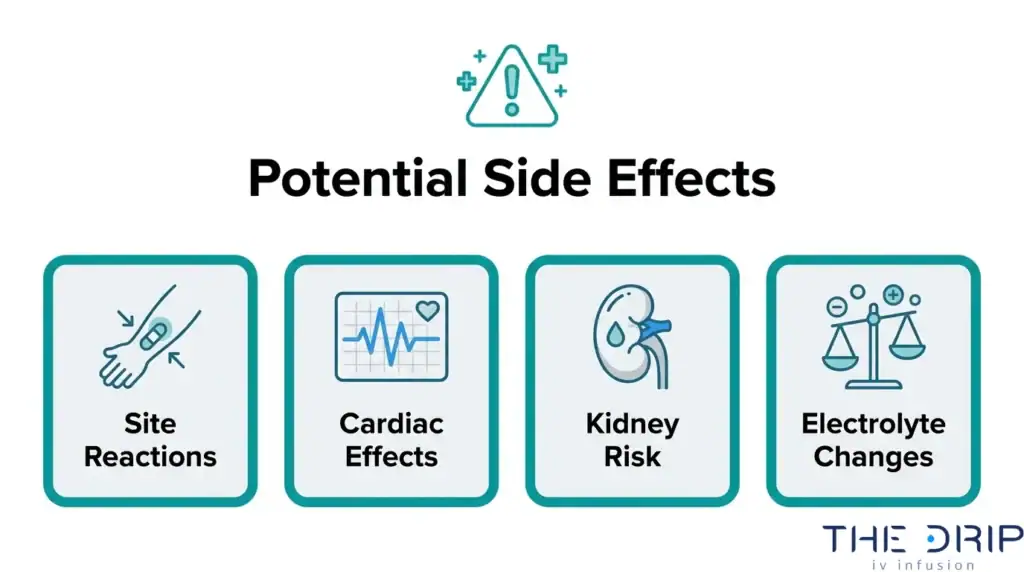
    The side effects you should watch for during the infusion include coolness at the injection site, mild lightheadedness, and localized discomfort. A 2024 study published in PubMed Central found that phlebitis occurs in approximately 2.41% of peripheral IV sites, while infiltration is reported at a rate of 1.01%. More serious complications, such as air embolism, occur in fewer than 0.1% of cases. Common signs to monitor include:

    • Redness, swelling, or warmth near the catheter site, which may indicate phlebitis.
    • A tight or puffy feeling around the IV, suggesting possible infiltration.
    • Dizziness or nausea, often related to infusion speed or low blood sugar.

    Alert your provider immediately if any symptom worsens. With proper site monitoring and an experienced nurse managing your drip rate, most sessions proceed without complications. Understanding these possibilities beforehand helps you prepare for an IV therapy session with greater confidence.

    IV therapy aftercare monitoring guide highlighting injection site changes, comfort level tracking, and blood sugar status management

    How Should You Prepare Differently Based on Your IV Treatment?

    You should prepare differently based on your IV treatment because each infusion type places unique demands on your body. Specific adjustments for hydration drips, vitamin infusions, NAD+ therapy, and athletic recovery IVs are outlined below.

    How Should You Prepare for a Hydration IV Drip?

    You should prepare for a hydration IV drip by focusing on baseline fluid intake in the 24 hours before your session. Although it may seem counterintuitive to hydrate before a hydration drip, pre-session fluid intake improves vein visibility and helps your body distribute the infused saline more efficiently.

    Key preparation steps include:

    • Drink water consistently throughout the day before your appointment.
    • Eat a light meal containing complex carbohydrates 1 to 2 hours beforehand to stabilize blood sugar.
    • Avoid caffeine and alcohol, which act as diuretics and counteract the drip’s purpose.

    Hydration IVs typically use isotonic saline solutions, so arriving even mildly dehydrated can slow the infusion process and reduce comfort during catheter placement.

    How Should You Prepare for a Vitamin or Immune Boost IV?

    You should prepare for a vitamin or immune boost IV by eating a nutrient-balanced meal and disclosing all supplements you currently take. These infusions deliver concentrated micronutrients like vitamin C, zinc, and B-complex vitamins directly into your bloodstream, so overlapping with oral supplements can push certain nutrient levels higher than intended.

    Preparation priorities include:

    • Eat lean protein and complex carbohydrates to maintain stable energy during the session.
    • List every supplement and multivitamin you take so your provider can adjust the formulation.
    • Stay well hydrated, as proper hydration improves both vein access and nutrient distribution.

    For most people, vitamin and immune boost IVs are the easiest infusions to prepare for, provided supplement disclosure is thorough.

    How Should You Prepare for NAD+ IV Therapy?

    You should prepare for NAD+ IV therapy by allowing extra time and adjusting your meal timing. According to Restore Hyper Wellness, complex infusions like NAD+ can take 60 to 90 minutes, significantly longer than standard vitamin drips.

    Because NAD+ infusions involve a slower drip rate to minimize side effects such as nausea or chest tightness, preparation requires additional steps:

    • Eat a substantial but easily digestible meal 2 hours before your appointment.
    • Hydrate thoroughly the morning of your session.
    • Clear your schedule for at least 2 hours to account for the extended infusion time.
    • Bring entertainment or relaxation materials since you will be seated for an extended period.

    NAD+ therapy is one of the most preparation-intensive IV treatments, and skipping meals beforehand is a common mistake that worsens side effects.

    How Should You Prepare for an Athletic Recovery IV Infusion?

    You should prepare for an athletic recovery IV infusion by timing your session strategically around your training schedule. These drips typically contain amino acids, electrolytes, magnesium, and anti-inflammatory compounds designed to accelerate muscle repair and reduce soreness.

    Essential preparation steps include:

    • Schedule your infusion within a few hours after intense training for maximum benefit.
    • Consume a post-workout snack with protein and carbohydrates before arriving.
    • Hydrate with water or an electrolyte drink, as exercise-induced dehydration makes vein access harder.
    • Disclose any anti-inflammatory medications like ibuprofen or naproxen, since the drip may already include similar agents.

    Athletic recovery IVs work best when the body is already in its natural repair phase, making session timing just as important as nutritional preparation. With treatment-specific preparation covered, understanding post-session care completes the process.

    What Should You Do After Your IV Therapy Session?

    After your IV therapy session, you should focus on continued hydration, light nutrition, rest, and monitoring the injection site. These steps help your body absorb the infused nutrients and reduce the chance of minor side effects.

    • Continue drinking water. Staying hydrated after your infusion supports circulation and helps your kidneys process the vitamins and minerals delivered during the session.
    • Eat a balanced meal. A meal with lean protein, complex carbohydrates, and vegetables provides sustained energy and complements the nutrients from your drip.
    • Rest for 15 to 30 minutes. Giving your body a brief recovery window, especially after longer infusions, allows you to notice how you feel before resuming activity.
    • Keep the bandage on the injection site. Leave the adhesive bandage in place for at least 30 minutes to minimize bruising or minor bleeding at the puncture point.
    • Avoid alcohol and intense exercise. Both can strain your body shortly after an infusion; light activity like walking is fine, but save strenuous workouts for the following day.
    • Monitor for unusual symptoms. Mild soreness at the IV site or slight coolness in the arm is normal. Contact your provider if you notice prolonged swelling, warmth, or redness, which could indicate phlebitis.

    For most people, the benefits of IV therapy, such as improved energy and hydration, become noticeable within hours. Tracking how you feel over the next 24 to 48 hours can help you and your provider fine-tune future sessions for better results.

    IV therapy post-care checklist showing hydration, healthy eating, resting 30 minutes, and monitoring injection site for safe recovery

    How Can Mobile IV Therapy Simplify Your Preparation?

    Mobile IV therapy simplifies preparation by eliminating travel logistics and allowing you to complete every pre-session step at home. The subsections below cover The Drip IV Infusion’s at-home service and key preparation takeaways.

    Can The Drip IV Infusion’s At-Home Service Help You Prepare More Comfortably?

    Yes, The Drip IV Infusion’s at-home service can help you prepare more comfortably by bringing licensed nurses directly to your home or workplace. According to PA Consulting, mobile IV therapy offers logistical advantages by eliminating travel time and costs, reducing the risk of hospital-acquired infections, and allowing patients to receive treatment in a familiar environment.

    This convenience means you can hydrate, eat your pre-session meal, and change into loose-fitting clothing without rushing to an appointment. The Drip IV Infusion, founded in Fall 2022 by professionals with decades of experience in nursing and emergency medicine, provides personalized mobile IV infusions across Arizona. Staying in your own space also helps reduce needle anxiety, since familiar surroundings naturally lower stress levels.

    What Are the Key Takeaways About How to Prepare for an IV Therapy Session?

    The key takeaways about how to prepare for an IV therapy session center on hydration, nutrition, disclosure, and mindset. Following these steps ensures a safer, more comfortable infusion:

    • Hydrate consistently the day before and morning of your session to improve vein visibility.
    • Eat a light meal with lean protein and complex carbohydrates one to two hours before your appointment.
    • Avoid caffeine and alcohol for at least 24 hours prior, as both act as diuretics.
    • Wear loose-fitting clothing with sleeves that roll above the elbow.
    • Disclose all medications, supplements, and allergies to your provider before treatment begins.
    • Share relevant medical history, including kidney, liver, and heart conditions.
    • Practice calming techniques like applied tension or deep breathing if needles cause anxiety.
    • Schedule your session when you can rest afterward for optimal recovery.

    Thorough preparation is the single most controllable factor in how well your body responds to IV therapy. With these steps in place, The Drip IV Infusion can help you experience every benefit of your chosen IV cocktail from the comfort of home.

  • IV Therapy & Wound Healing: Benefits & Nutrients

    IV Therapy & Wound Healing: Benefits & Nutrients

    If you’re recovering from surgery, managing a chronic wound, or simply concerned about optimal healing, you’re likely exploring every option to speed up recovery and minimize complications. We understand that wound healing can be a frustrating, lengthy process that impacts your quality of life, and you’re searching for evidence-based solutions that actually work. You’re in the right place—we’ll show you exactly how IV nutrient therapy can accelerate your healing journey through direct, scientifically-proven methods.

    IV therapy for wound healing is a medical treatment that delivers essential nutrients—including vitamin C, zinc, amino acids, and B-complex vitamins—directly into the bloodstream through an intravenous catheter, bypassing the digestive system to achieve nearly 100% bioavailability and support all four phases of wound healing: hemostasis, inflammation, proliferation, and maturation.

    TL;DR Summary: We’ll explore the key differences between acute wounds (like surgical incisions) and chronic wounds (such as diabetic ulcers), explaining why malnourished patients and those with digestive disorders particularly benefit from IV therapy’s superior bioavailability compared to oral supplements. You’ll learn about specific IV formulations like the Myers’ Cocktail and specialized wound healing blends containing critical nutrients like arginine for collagen synthesis, glutamine for infection reduction, and vitamin C for tissue repair. We’ll present clinical evidence showing IV nutrition can increase wound healing markers by 158% and reduce healing time to 48 days, while also covering the core benefits of accelerated recovery, enhanced immune response, and reduced complications. Finally, we’ll address important safety considerations, potential side effects ranging from mild bruising to serious complications in at-risk patients, and provide practical guidance on accessing IV therapy through The Drip IV Infusion, including cost comparisons ($150-$400 per session versus $50-$200/month for oral supplements) and what to expect from treatment protocols.

    Quick Tip: If you’re considering IV therapy for wound healing, schedule your consultation during the pre-operative period rather than waiting until after surgery—research shows preoperative IV nutrition produces significantly better healing outcomes than post-operative administration.

    What Are the Main Types of Wounds That May Benefit From IV Therapy?

    The main types of wounds that may benefit from IV therapy are acute wounds such as surgical incisions and chronic wounds including pressure ulcers, diabetic foot ulcers, and venous leg ulcers. Acute wounds follow predictable healing through four phases: hemostasis for bleeding control, inflammation during days 1-4, proliferation from days 4-21 with granulation tissue formation, and maturation for tissue strengthening. Chronic wounds require higher nutritional support, including 30-35 kcal/kg/day energy, 1.25-1.5 g/kg/day protein, and 30 mL/kg water for pressure injuries. The following sections examine how different wound types respond to IV nutritional support and which patient conditions affect healing outcomes.

    How Do Acute and Chronic Wounds Differ in Their Healing Needs?

    Acute and chronic wounds differ in their healing needs through duration, nutritional demands, and micronutrient requirements. Acute wounds like surgical incisions progress through hemostasis, inflammation (days 1-4), proliferation (days 4-21), and maturation phases sequentially. Chronic wounds such as pressure ulcers, diabetic ulcers, and venous leg ulcers remain stuck in the inflammatory phase and require 30-35 kcal/kg/day energy, 1.25-1.5 g/kg/day protein, and 30 mL/kg water intake.

    Essential micronutrients vary by healing phase. Calcium, vitamin K, vitamin A, vitamin E, and zinc support the inflammation phase of wound healing. During proliferation, collagen synthesis demands increased vitamin C and amino acids. The maturation phase requires sustained protein intake for tissue remodeling. These distinct nutritional requirements determine whether IV therapy protocols emphasize rapid micronutrient delivery for acute wounds or sustained supplementation for chronic conditions.

    Infographic comparing healing stages of acute wounds and chronic wounds.

    Which Patient Conditions Typically Affect Wound Healing Outcomes?

    Patient conditions that typically affect wound healing outcomes include malnutrition, protein deficiency, and malabsorptive disorders. Malnourished patients experience higher rates of impaired healing, skin breakdown, and wound dehiscence. Protein malnutrition specifically impairs collagen synthesis and immune function during recovery.

    Gastrointestinal conditions drastically reduce oral supplementation efficacy. Patients with Crohn’s disease, celiac disease, IBS, and other malabsorptive disorders may absorb less than 20% of oral nutrients. Preoperative nutritional support correlates with reduced hospital stays and fewer complications. These conditions create scenarios where IV therapy bypasses compromised digestive systems to deliver nutrients directly for wound healing support.

    What Is IV Therapy and How Does It Deliver Nutrients for Healing?

    IV therapy is the direct administration of fluids, vitamins, minerals, and medications into the bloodstream through an intravenous catheter. This medical technique bypasses the digestive system entirely, delivering nutrients directly to cells and tissues that need them for wound repair and recovery. The process involves inserting a small catheter into a vein, typically in the arm, and infusing a customized solution over 30-60 minutes while monitoring vital signs throughout the session.

    The key advantage of IV therapy lies in its ability to achieve nearly 100% bioavailability compared to oral supplementation’s limited absorption rates. When nutrients enter directly into circulation, they reach therapeutic levels immediately without loss through digestive processes or liver metabolism. This direct delivery method proves especially valuable for wound healing, where rapid nutrient availability can significantly impact recovery outcomes.

    How Does IV Therapy Work Compared to Oral Supplements for Wound Care?

    IV therapy achieves nearly 100% bioavailability with nutrients entering the bloodstream directly without digestive processes. This complete absorption contrasts sharply with oral supplementation, which typically achieves only 20-50% bioavailability depending on the nutrient. Factors limiting oral absorption include gastric acidity, digestive enzymes, and individual gut health variations.

    IV vitamin C administration achieves plasma levels up to 100 times higher than oral intake. When taken orally, vitamin C absorption becomes saturated at relatively low doses—oral intake exceeding 1 gram shows significantly diminished absorption rates. The digestive system simply cannot process higher amounts efficiently, leading to waste and potential gastrointestinal discomfort.

    IV administration circumvents hepatic first-pass metabolism where oral nutrients lose potency through liver processing. This metabolic bypass means nutrients maintain their full therapeutic strength when reaching target tissues. The difference proves critical for wound healing, where high concentrations of specific nutrients like vitamin C, zinc, and amino acids directly influence collagen synthesis and tissue repair rates.

    Diagram comparing nutrient absorption from oral supplements and IV therapy.

    What Types of IV Formulations Are Used in Wound Healing?

    The types of IV formulations used in wound healing are specialized nutrient combinations designed to support tissue repair and immune function. Myers’ Cocktail contains customized vitamins and minerals originally developed for chronic fatigue, migraines, and stress management. This foundational formula often serves as a base for more targeted wound healing protocols.

    Wound Healing IV formulations include specific nutrients such as Vitamin C, Magnesium, Zinc, Proline, Taurine, Glutathione, and B-Complex vitamins. Each component plays distinct roles: Vitamin C supports collagen synthesis, Zinc facilitates re-epithelialization, Proline provides building blocks for new tissue, and Glutathione offers antioxidant protection during the inflammatory phase.

    Standard IV infusion sessions last 30-60 minutes depending on the volume and complexity of the solution. The process includes an initial consultation for medical history assessment, followed by solution customization tailored to individual needs. Healthcare providers insert the catheter using sterile technique and monitor vital signs throughout the infusion to ensure safety and comfort.

    These specialized formulations can be adjusted based on wound type, healing phase, and individual patient factors to optimize recovery outcomes.

    Which Key Nutrients in IV Therapy Benefit Wound Healing Most?

    IV therapy delivers essential nutrients directly into the bloodstream to support wound healing. The key nutrients include amino acids like arginine and glutamine, vitamins C and A, B-complex vitamins, and minerals such as zinc and copper. These nutrients work together to enhance collagen synthesis, reduce inflammation, and accelerate tissue repair processes.

    How Do Amino Acids, Vitamins, and Minerals Assist Tissue Repair?

    Amino acids, vitamins, and minerals assist tissue repair through multiple biochemical pathways that support collagen formation, immune function, and cellular regeneration. Arginine supports collagen synthesis, growth hormone production, and T cell activation. Glutamine reduces infection and inflammation while serving as a glutathione precursor.

    Vitamin C enables collagen synthesis, provides antioxidant protection, and supports angiogenesis. Vitamin A promotes epithelial cell growth and fibroblast stimulation. B-complex vitamins support leukocyte generation and collagen synthesis. Vitamin D upregulates immune system function.

    Essential Healing NutrientPrimary Biological FunctionWound Healing Phase Supported
    ZincRe-epithelialization, immune responseProliferation
    CopperGrowth factor modulationAll stages
    IronOxygen transport, tissue perfusionMaturation
    MagnesiumCRP reduction, antioxidant capacityInflammation

    A 12-week magnesium regimen may improve ulcer size and glucose metabolism. These minerals work synergistically to facilitate wound closure and tissue regeneration.

    Diagram showing key vitamins and amino acids that support wound healing.

    What Role Do Antioxidants and Hydration Play in the Healing Process?

    Antioxidants and hydration play critical roles in the healing process by reducing oxidative stress and maintaining optimal cellular function. Glutathione facilitates enzymatic reactions and cell membrane reinforcement. According to trauma patient studies, antioxidant and glutamine supplementation shortened wound closure time to 29 and 58 days respectively.

    Hydration therapy effects from IV administration last several days with results noticeable within hours. Proper hydration maintains tissue perfusion and nutrient delivery to wound sites. The combination of antioxidants and adequate hydration creates an optimal environment for cellular repair and regeneration.

    What Are the Core Benefits of IV Therapy for Wound Recovery?

    The core benefits of IV therapy for wound recovery are accelerated healing time, reduced complications, and strengthened immune response. IV nutritional support delivers essential nutrients directly to tissues, bypassing digestive limitations that affect wound patients. These benefits manifest through improved collagen synthesis and enhanced cellular repair mechanisms.

    Does IV Therapy Accelerate Healing Time and Reduce Complications?

    IV therapy accelerates healing time by increasing collagen production markers and reducing overall recovery periods. A 1987 study by Haydock & Hill examining 90 surgical patients found IV nutrition increased hydroxyproline levels from 0.34±0.23 μg/cm to 0.88±0.62 μg/cm (p<0.005). Hydroxyproline serves as a direct marker of collagen synthesis in wound tissue.

    The timing of IV administration affects outcomes significantly. Week 1 of IV therapy yielded 0.36±0.24 μg/cm hydroxyproline, while week 2 reached 0.78±0.67 μg/cm (p<0.005). Preoperative IV nutrition proved more effective than postoperative administration (p<0.02).

    Aggressive wound care protocols incorporating nutritional support achieve superior healing rates. Studies demonstrate 92% one-year healing rates with aggressive care versus 80% with standard care. Mean healing time reduced to 48 days with comprehensive IV nutritional support.

    Clinical cases support these findings. A 45-year-old female post-abdominal surgery showed marked improvement in energy and accelerated wound healing when IV therapy combined with hyperbaric oxygen treatment. The dual approach addresses both nutritional deficits and tissue oxygenation simultaneously.

    Can IV Therapy Strengthen Immune Response During Recovery?

    IV therapy strengthens immune response during recovery through targeted immunonutrition delivery. Immunonutrition decreases wound complications and improves the healing process in specific clinical circumstances. The rapid onset distinguishes IV therapy from oral supplementation methods.

    Recovery-focused IV therapy benefits manifest quickly with sustained effects. Benefits last 1-2 days with onset of effects within hours of administration. This rapid response proves crucial for post-surgical patients requiring immediate immune support.

    Clinical evidence demonstrates immune enhancement through IV therapy. A 32-year-old male with chronic fatigue syndrome experienced substantial energy increase and symptom reduction with IV therapy plus hyperbaric oxygen. The combination therapy addresses both immune dysfunction and cellular energy production.

    These core benefits position IV therapy as an effective intervention for wound recovery when administered under proper medical supervision at facilities like The Drip IV Infusion.

    Are There Risks, Contraindications, or Side Effects of IV Therapy for Wounds?

    IV therapy for wounds carries specific risks and contraindications that patients should understand before treatment. Medical providers assess individual risk factors to determine suitability for intravenous nutrient administration during wound recovery.

    The following sections detail contraindications for specific patient populations and potential side effects from IV wound therapy.

    Who Should Avoid or Take Precautions With IV Therapy in Wound Care?

    Patients receiving intravenous antibiotics face elevated complication risks. A clinical analysis found intravenous antibiotics are a strong risk factor for infiltration/occlusion (HR 1.40, 95% CI 1.27-1.53) and phlebitis (HR 1.36, 95% CI 1.18-1.56).

    There are specific patient groups requiring precautions:

    • Patients with fluid overload risk (hypervolemia)
    • Individuals with documented allergic reactions
    • Those prone to anaphylaxis from IV components

    Medical screening identifies contraindications before initiating IV wound therapy protocols.

    What Side Effects or Interactions Might Patients Experience?

    Side effects from IV wound therapy fall into two categories: local complications and systemic reactions.

    Local complications occur at the insertion site:

    • Pain, swelling, and redness
    • Bruising around catheter area
    • Phlebitis (vein inflammation)
    • Infiltration (fluid leaking into tissue)
    • Extravasation (tissue damage from leaked medication)

    Systemic complications affect the entire body:

    • Infection or sepsis risk
    • Fluid overload symptoms
    • Mineral toxicity from excessive doses

    Mild effects may include headache, nausea, fatigue, chills, low-grade fever, and metallic taste. These symptoms typically resolve within hours after infusion completion.

    Understanding potential risks enables patients to make informed decisions about IV therapy for wound healing with their healthcare providers at The Drip IV Infusion.

    How Should You Approach IV Therapy for Wound Healing With The Drip IV Infusion?

    IV therapy for wound healing requires careful consideration of nutrient formulations, cost factors, and provider expertise. The Drip IV Infusion offers specialized wound healing protocols that deliver essential nutrients directly to tissues needing repair. Treatment approaches vary based on wound type, patient health status, and specific nutritional deficiencies identified during consultation.

    Can The Drip IV Infusion’s Services Help With Nutrient Support For Wound Healing?

    The Drip IV Infusion’s services may help with nutrient support for wound healing through customized IV formulations and flexible pricing options. Basic hydration IV costs $100-$150, while Vitamin C infusions range $125-$435 and Myers’ Cocktail runs $190. Specialized wound healing treatments cost $115-$400+ depending on nutrient complexity.

    Cost comparison reveals oral supplements cost $50-$200 monthly versus $150-$400 per IV session. Membership programs at $150 monthly include one standard IV drip valued up to $200, showing 30-50% higher retention rates. Package deals reduce per-session costs by 15-30%.

    Location affects pricing with urban clinics charging 20-30% more than rural locations. Mobile IV services add $50-$100 to base prices. The Drip IV Infusion’s wound healing protocols may include vitamin C, zinc, glutathione, and amino acids tailored to individual recovery needs.

    What Are the Key Takeaways About IV Therapy and Wound Healing Benefits and Nutrients We Covered?

    The key takeaways about IV therapy and wound healing benefits include market growth, treatment categories, and regulatory standards. The IV hydration therapy market shows projected CAGR of 7.98% from 2025-2034 with North America dominating market share.

    Energy and focus formulations containing NAD+ and B12 capture 25-28% market share. Longevity and skin health treatments featuring glutathione and vitamin C demonstrate fastest growth rates. Regular IV therapy may reduce illness frequency, productivity loss, and reactive medical care costs.

    FDA Section 503A regulates IV compounding practices. USP Chapter 797 sterile compounding standards became effective November 1, 2023. These regulations ensure safety and quality in IV therapy preparations for wound healing applications at facilities like The Drip IV Infusion.

  • Glutathione IV vs Oral: Which is Best for You?

    Glutathione IV vs Oral: Which is Best for You?

    If you’re exploring glutathione supplementation to boost your antioxidant levels, improve skin health, or support your body’s detoxification processes, you’ve likely encountered two main options: intravenous (IV) infusions and oral supplements. We understand the confusion surrounding which method delivers better results for your specific health goals and budget. The good news is that both forms of glutathione can provide benefits—the key is understanding which approach aligns with your needs, lifestyle, and risk tolerance.

    Glutathione (GSH) is a tripeptide molecule that acts as your body’s master antioxidant, redox buffer, and enzyme cofactor, maintaining a critical GSH/GSSG ratio of approximately 100:1 under normal conditions. This powerful antioxidant protects your cells from oxidative damage, supports Phase II detoxification, and regulates the metabolism of vitamins D, E, and C. Low glutathione levels are associated with numerous health conditions including metabolic syndrome, cardiovascular disease, chronic kidney disease, NAFLD/NASH, Parkinson’s disease, Alzheimer’s disease, autoimmune conditions, HIV infection, and cancer.

    TL;DR Summary

    Here’s what you need to know about choosing between glutathione IV and oral supplementation:

    Bioavailability differences are dramatic: IV glutathione achieves 90-100% absorption directly into your bloodstream, while standard oral glutathione has only 0.7% bioavailability due to enzymatic degradation in the digestive tract—though liposomal oral formulations can reach 50-90% bioavailability.

    Safety profiles vary significantly: IV administration carries serious risks including anaphylaxis, hepatotoxicity, and potential endotoxin contamination, while oral supplements typically cause only mild gastrointestinal effects like flatulence or loose stools.

    Cost considerations favor oral supplements: IV therapy runs $199-$400+ per session with typical protocols requiring 1-3 sessions weekly ($800-$4800+ monthly), whereas oral supplements offer a more budget-friendly option with the convenience of home administration.

    Clinical effectiveness depends on your health goals: IV glutathione is FDA-approved only as an adjunct to cisplatin chemotherapy, while studies show oral glutathione at 300 mg/day effectively treats NAFLD/NASH and liposomal formulations at 500-1000 mg/day improve immune markers and skin health.

    Duration of benefits differs between methods: IV glutathione provides immediate peak plasma concentrations but benefits typically fade within 6 months of discontinuation, while oral supplementation offers sustained effects with regular daily dosing.

    Professional guidance is essential: The Drip IV Infusion’s qualified healthcare professionals can assess your individual health status, goals, and risk factors to determine whether IV protocols or oral supplementation—or a combination approach—best suits your needs.

    Quick Tip: If you’re new to glutathione supplementation and have no urgent medical needs, start with high-quality liposomal oral glutathione at 500-1000 mg daily for 4 weeks to assess your response before considering the higher cost and risks of IV therapy.

    Understanding these key differences empowers you to make an informed decision about glutathione supplementation. We’ll explore each aspect in detail throughout this guide, examining the science behind both delivery methods, their specific benefits and limitations, and how to determine which approach aligns with your health objectives and lifestyle at The Drip IV Infusion.

    What Is Glutathione and Why Is It Important for Health?

    Glutathione (GSH) acts as a redox buffer, antioxidant, and enzyme cofactor throughout the body. The GSH/GSSG ratio maintains ~100:1 at steady state but decreases to 10:1 or less under oxidative stress. Low GSH levels associate with metabolic syndrome, cardiovascular disease, chronic kidney disease, NAFLD/NASH, Parkinson’s disease, Alzheimer’s disease, autoimmune conditions, HIV infection, and cancer. Glutathione regulates metabolism of vitamins D, E, and C, earning its designation as the “master antioxidant.” Age-related GSH decline occurs commonly in advanced age, with defective renal glutathione metabolism marking renal aging. Adequate glutathione availability remains critical for maintaining health and promoting longevity. Understanding glutathione’s cellular mechanisms, detoxification pathways, and immune-regulatory functions reveals why supplementation strategies matter for wellness optimization.

    How Does Glutathione Work in the Body?

    Glutathione works in the body by facilitating Phase II detoxification for excretion of xenobiotic and endogenous compounds. GSH prevents protein oxidation through S-glutathionylation mechanisms. The molecule serves as the rate-limiting step for regenerating NADPH in the glutathione-ascorbate cycle. This pathway neutralizes hydrogen peroxide radicals from metabolism. Without adequate GSH, low NADPH results in increased reactive oxygen species (ROS). Intracellular redox changes affect cell signaling, gene transcription, proliferation, and apoptosis. These molecular interactions position glutathione as essential for cellular health and systemic detoxification processes.

    What Are the Main Roles of Glutathione in Wellness?

    The main roles of glutathione in wellness include diverse effects on immune system function, stimulating or inhibiting response as needed. The immune system shows sensitivity to both GSH deficiency and excess. GSH regulates immunity and synthesis of leukotrienes and prostaglandins. Glutathione protects high-metabolic tissues including renal cells, hepatocytes, endocrine cells, endothelial cells, and neurons. The molecule possesses antiaging and antimelanogenic properties. Clinical studies demonstrate effectiveness in reducing photo-induced aging of skin when supplemented at 500 mg/day. These multifaceted roles establish glutathione as fundamental for immune balance, tissue protection, and skin health maintenance.

    How Do Glutathione IV and Oral Supplements Differ?

    Glutathione IV and oral supplements differ primarily in bioavailability and absorption pathways. IV glutathione achieves 90-100% bioavailability compared to 0.7% for standard oral glutathione. The IV route delivers glutathione directly into the bloodstream, bypassing enzymatic degradation in the gastrointestinal tract. Oral glutathione undergoes extensive breakdown by digestive enzymes, resulting in minimal absorption. IV administration can deliver doses up to 10 times higher than oral supplements. Advanced oral formulations show improved results—liposomal glutathione achieves 50-90% bioavailability depending on formulation quality, while N-methylated glutathione analogues demonstrate a 16.1-fold increase in oral bioavailability compared to native GSH.

    Side-by-side comparison of IV drip and oral capsule showing bioavailability differences.

    What Is the Process of Administering Glutathione IV?

    The process of administering glutathione IV requires strict sterile compounding protocols and professional healthcare oversight. An ISO Class 5 IV Hood is mandatory for IV bag preparation per USP 797 sterile compounding standards. Healthcare providers must have professional IV certification and hands-on training. Physical compatibility testing is required before Y-site co-administration with other drugs—glutathione shows compatibility with 33 of 44 tested IV drugs (75% compatibility rate). Only pharmaceutical-grade glutathione in sterile, regulated environments meets safety standards. Common dosing ranges from 600-1200 mg per dose, typically administered 1-3 times weekly for 4-8 weeks.

    Healthcare professional preparing and administering glutathione IV in sterile clinic setting.

    How Are Oral Glutathione Supplements Taken?

    Oral glutathione supplements are taken through various administration methods with different dosing recommendations. Standard oral glutathione recommendation is 50 mg twice daily. Liposomal formulations require 500-1000 mg daily, with effects visible as early as 1 week. Dermatologists prefer 250 mg twice daily on an empty stomach for 4 weeks. Sublingual administration achieves 55% penetration after 10 minutes and approximately 70% after 30 minutes through oral epithelium. The supplements are generally well-tolerated at doses up to 500 mg daily for up to 2 months. Treatment duration typically spans 4 weeks for oral supplementation protocols.

    What Are the Active Ingredients in Each Form?

    The active ingredients in each form share similar molecular structures but differ in stability and formulation. Native GSH maintains a half-life of 2-3 hours in plasma for both IV and oral forms. Liposomal formulations demonstrate a 16.8-fold increase in half-life compared to native GSH (33.6 minutes versus 2.0 minutes). N-methylation decreases enzymatic degradation and increases intestinal epithelium transport. Some topical formulations use oxidized glutathione (GSSG) at 2% concentration. Glutathione holds “Generally Recognized As Safe” (GRAS) status for food products. These formulation differences determine absorption efficiency and therapeutic effectiveness between IV and oral delivery methods.

    What Are the Benefits and Drawbacks of Glutathione IV?

    The benefits and drawbacks of glutathione IV include rapid peak concentration within minutes, skin improvement in 37.5% of participants versus 18.7% placebo, and FDA approval as chemotherapy adjunct, while risks encompass adverse events in 32% of users, lack of FDA approval for skin lightening, and benefits fading after 6 months of discontinuation. IV glutathione delivers immediate systemic circulation with 90-100% bioavailability but carries serious risks including anaphylaxis and hepatotoxicity. The following sections examine the speed of action, health benefits, and safety concerns associated with IV glutathione administration.

    How Quickly Does Glutathione IV Work Compared to Oral Supplements?

    Glutathione IV achieves peak plasma concentration within minutes, while oral liposomal glutathione shows effects as early as 1 week at 500-1000 mg daily doses. IV administration provides immediate systemic circulation versus gradual absorption with oral supplements. Both IV and oral native GSH share a 2-3 hour plasma half-life. Liposomal oral formulations extend half-life 16.8-fold compared to native GSH, offering sustained release despite slower initial absorption.

    What Health and Beauty Benefits Are Associated With Glutathione IV?

    The health and beauty benefits associated with glutathione IV include skin lightening, chemotherapy protection, and liver enzyme reduction. A clinical trial demonstrated skin lightening with 1200 mg IV glutathione administered twice weekly for 6 weeks. A double-blind study showed GSH reduced cisplatin toxicity and improved quality of life in ovarian cancer patients. Animal models demonstrated improved neurological outcomes in Parkinson’s disease. Daily 1000 mg doses protect kidney and nerve cells from chemotherapy toxicity. A 30-day IV/IM GSH study reduced transaminases, GGT, and malondialdehyde in early NAFLD patients.

    Are There Any Risks or Side Effects of IV Glutathione?

    The risks and side effects of IV glutathione include anaphylaxis, hepatotoxicity, and potential Stevens-Johnson Syndrome as documented by FDA concerns. In 2019, seven patients experienced adverse events from endotoxin-contaminated IV glutathione. Endotoxin symptoms include fever, chills, myalgia, headache, nausea, vomiting, hypotension, shock, and death. Unregulated IV glutathione may cause life-threatening systemic inflammatory response syndrome (SIRS). Non-sterile facility administration poses HIV, hepatitis C, and hepatitis B transmission risks. These severe complications underscore the importance of proper medical supervision and sterile compounding standards when considering IV glutathione therapy.

    What Are the Benefits and Drawbacks of Oral Glutathione?

    The benefits and drawbacks of oral glutathione depend on formulation type and dosing. Liposomal glutathione achieves 50-90% bioavailability at 500-1000 mg daily doses. Standard oral glutathione shows only 0.7% bioavailability due to gastrointestinal degradation. A 2019 clinical study found 300 mg daily oral glutathione prevented NASH progression from NAFLD. A 2022 meta-analysis revealed 300 mg daily was more effective than 600 mg for Parkinson’s disease symptoms. Despite these benefits, a 2023 meta-analysis found glutathione supplementation does not significantly increase erythrocyte or plasma levels. Oral supplements offer convenience, availability, gradual absorption, and cost-effectiveness compared to IV administration.

    How Is Oral Glutathione Absorbed in the Body?

    Oral glutathione absorption varies dramatically by formulation type. Native oral GSH absorption measures 0.7 ± 0.1% due to enzymatic degradation in the gastrointestinal tract. Liposomal formulations achieve 11.3 ± 1.2% oral bioavailability, representing a 16.1-fold improvement over standard forms. Sublingual administration bypasses GI tract degradation, achieving higher absorption rates than standard oral delivery. N-methylated glutathione analogues demonstrate a 16.1-fold increase in oral bioavailability compared to native GSH. The half-life for standard oral GSH remains 2-3 hours in plasma. These absorption variations directly impact clinical effectiveness and dosing requirements.

    Illustration showing standard, liposomal, and sublingual glutathione absorption pathways.

    What Are the Advantages of Oral Glutathione Supplements?

    The advantages of oral glutathione supplements include tolerability, affordability, and convenience. Oral glutathione is generally well-tolerated with only mild side effects reported. Cost advantages are significant, with IV therapy ranging $800-$4800+ monthly versus lower-priced oral supplements. Daily home dosing eliminates clinic visits required for IV administration. A 2021 study showed liposomal glutathione achieved 14-20% reduction in oxidized/reduced GSH ratio. The same formulation produced 210-400% increase in lymphocyte lysis after two weeks. Regular oral dosing provides sustained effects without medical supervision requirements.

    Are There Limitations or Side Effects to Oral Glutathione?

    The limitations of oral glutathione include absorption challenges and mild adverse effects. Common side effects include flatulence and loose stools from gastrointestinal processing. Standard oral formulations achieve only 0.7% bioavailability, limiting blood level increases compared to IV delivery. Rare effects include allergic reactions, rash, and difficulty breathing from bronchial spasms. Higher doses and longer treatment durations may be necessary to achieve therapeutic glutathione levels. A 2020 oncology review noted excessive glutathione intake may contribute to chemotherapy resistance in breast cancer patients. These limitations require careful consideration when selecting supplementation strategies for specific health goals.

    What Factors Should You Consider When Choosing Between IV and Oral Glutathione?

    The factors to consider when choosing between IV and oral glutathione include bioavailability differences, cost implications, convenience requirements, and safety profiles. IV glutathione achieves 90-100% bioavailability compared to standard oral’s 0.7% and liposomal oral’s 50-90%. Treatment costs range from $800-$4800+ monthly for IV therapy versus lower-cost oral supplements. The following analysis examines effectiveness for specific health goals, patient preferences, and cost-convenience trade-offs.

    Which Method Is More Effective for Different Health Goals?

    The most effective method depends on your specific health condition and treatment objectives. IV or high-dose oral glutathione may benefit neurological conditions like Parkinson’s disease according to clinical protocols. A 2019 study on NAFLD/NASH found oral supplementation at 300 mg daily effectively prevented disease progression. IV glutathione has FDA approval as an adjunct for cisplatin chemotherapy protection in cancer treatment.

    Liposomal oral formulations demonstrate immune marker improvements in immunocompromised patients through enhanced bioavailability. For skin-lightening goals, oral supplementation at 500 mg daily shows measurable results. Research indicates combining topical 2% glutathione with oral supplementation produces superior outcomes compared to monotherapy.

    Health GoalMethodDosageEvidence
    Parkinson’sIV/High-dose oralVariableClinical protocols
    NAFLD/NASHOral300 mg/day2019 study
    Chemotherapy protectionIVPer protocolFDA-approved
    Immune supportLiposomal oral500-1000 mg/dayClinical data
    Skin lighteningOral500 mg/dayDermatology studies

    Your treatment selection should align with evidence-based protocols for your specific condition.

    Who Might Prefer IV Over Oral Glutathione and Vice Versa?

    Patient populations show distinct preferences based on medical needs and risk factors. Cancer patients may require IV glutathione for chemotherapy protection protocols. NAFLD patients can effectively use oral supplementation at 300 mg daily without IV administration. Older adults demonstrate positive responses to oral GlyNAC supplementation in aging studies.

    Patients with nutritional compromise face increased risk for systemic inflammatory response syndrome (SIRS) with IV administration. Glutathione is not recommended for pregnant or breastfeeding women or during active chemotherapy cycles. A 2021 survey found 52.11% of dermatologists routinely prescribe glutathione, with most choosing the oral route for patient safety and convenience.

    These patient-specific factors guide whether IV’s rapid delivery or oral’s safety profile better serves individual needs.

    How Do Cost and Convenience Compare Between the Two Forms?

    Cost and convenience differences are substantial between administration methods. IV therapy costs $199-$400+ per session with typical protocols requiring 1-3 weekly visits, totaling $800-$4800+ monthly. Beauty IV drips specifically range from $250-$350 per session. Adding glutathione to a base IV incurs $30-$100 additional cost per treatment.

    Oral supplements offer significant cost savings with home administration convenience. The global glutathione market is projected to reach US$ 652 million by 2032, growing at 8.8% CAGR. The supplement market shows 6.8-12.87% annual growth, reflecting consumer preference for accessible options.

    Treatment convenience directly impacts patient adherence and satisfaction rates, making oral supplementation more sustainable for long-term use while IV therapy suits acute interventions requiring rapid systemic delivery.

    How Should You Decide Between Glutathione IV and Oral Options With The Drip IV Infusion?

    Choosing between IV and oral glutathione requires weighing bioavailability against safety, cost, and convenience factors. IV protocols vary by clinic since IV glutathione lacks FDA approval for wellness uses. Patient satisfaction correlates most strongly with treatment compliance regardless of administration route. A 2023 dermatology survey found 54% of practitioners cite insufficient safety data for glutathione supplementation. Real-world effectiveness often differs significantly from controlled trial results.

    The decision framework should prioritize individual health status, specific therapeutic goals, and risk tolerance. Consider that IV achieves 90-100% bioavailability but requires clinical visits and carries anaphylaxis risk. Liposomal oral formulations offer 50-90% bioavailability with convenient home administration. Standard oral supplements provide only 0.7% bioavailability but cost significantly less than IV therapy.

    Can The Drip IV Infusion Help You Choose the Right Glutathione Approach?

    The Drip IV Infusion can help determine the optimal glutathione approach through professional assessment of individual health status and treatment goals. Qualified healthcare professionals evaluate patient history, current medications, and specific wellness objectives before recommending IV versus oral administration. The clinic ensures professional IV certification and proper training for all practitioners administering glutathione infusions.

    Safe IV glutathione administration requires several critical steps:

    • Verify glutathione powder meets USP standards for sterile compounding
    • Conduct physical compatibility testing before combining with other IV medications
    • Assess patient age, metabolism, and medical conditions
    • Monitor for adverse reactions during and after infusion
    • Document treatment response and adjust protocols accordingly

    The Drip IV Infusion provides personalized consultations to match patients with appropriate glutathione delivery methods based on bioavailability needs, budget constraints, and lifestyle factors.

    What Are the Key Takeaways About Glutathione IV vs Oral: Which Is Best for You?

    The key takeaways about glutathione IV versus oral supplementation center on bioavailability, safety profile, cost, and regulatory status. IV glutathione offers 90-100% bioavailability but may cause serious adverse events including anaphylaxis and hepatotoxicity. Liposomal oral formulations achieve 50-90% bioavailability with good safety profiles and convenient home administration. Standard oral glutathione has only 0.7% bioavailability but remains generally well-tolerated at recommended doses.

    Cost differences are substantial between administration routes:

    • IV therapy: $800-$4800+ monthly
    • Liposomal oral: $50-150 monthly
    • Standard oral: $20-50 monthly

    The FDA has not approved any injectable glutathione products for skin lightening or general wellness purposes. Choice depends on specific health goals, risk tolerance, budget constraints, and convenience preferences. Patients seeking chemotherapy support may require IV administration, while those targeting liver health may achieve results with oral supplementation at 300 mg daily.

  • Glutathione IV: Dosage for Skin Brightening (2026)

    Glutathione IV: Dosage for Skin Brightening (2026)

    If you’re searching for information about glutathione IV dosages for skin brightening, you’ve likely encountered conflicting claims about this controversial treatment. We understand your desire for clearer, more even-toned skin and the appeal of what seems like a quick solution. You’re in the right place to get evidence-based answers about what the science actually says versus what marketing materials promise.

    Glutathione IV for skin brightening is the practice of administering intravenous infusions of glutathione, a naturally occurring antioxidant, with the goal of reducing melanin production and achieving lighter skin tone. However, it’s crucial to understand that no IV glutathione product is FDA-approved for skin lightening in any major regulatory jurisdiction, and the only placebo-controlled clinical trial showed poor efficacy with serious safety concerns.

    TL;DR Summary:

    • Industry standard dosing ranges from 600-1,200 mg per session, typically administered 1-3 times weekly for 4-8 weeks, though these protocols lack peer-reviewed evidence support.

    • Weight-based calculations suggest 10-20 mg/kg body weight, meaning a 70 kg person would receive 700-1,400 mg per session.

    • Initial loading phases involve 6-12 total injections over 4-8 weeks, followed by maintenance every 2-4 weeks indefinitely.

    • The only placebo-controlled trial (Zubair et al., 2016) used 1,200 mg twice weekly for 6 weeks, showing only 37.5% completion rate versus 18.7% placebo, with benefits fading by 6 months.

    • Common side effects occur in 32% of patients, including liver dysfunction with ALT elevations up to 311 IU/L, anaphylaxis, and acute kidney injury.

    • Absolute contraindications include liver disease, kidney disease, G6PD deficiency, pregnancy, and breastfeeding.

    • Expert consensus warns against IV glutathione for cosmetic use, with multiple regulatory agencies issuing safety alerts.

    • More effective and safer alternatives exist, including oral glutathione (250-500 mg daily) and topical formulations (0.5-2%), which show better safety profiles and sustainable results at a fraction of the cost.

    Quick Tip: Before considering any glutathione treatment, request baseline liver and kidney function tests from your healthcare provider. These simple blood tests can identify contraindications that could make IV glutathione dangerous for you, potentially preventing serious complications like liver dysfunction that affects nearly one-third of IV glutathione recipients.

    How does Glutathione IV work to promote skin brightening?

    Glutathione IV works to promote skin brightening through multiple biochemical mechanisms that reduce melanin production and alter pigment composition. The primary mechanism involves tyrosinase inhibition, where glutathione binds to copper at the enzyme’s active sites to reduce melanin synthesis. Additionally, glutathione facilitates the conversion from darker eumelanin to lighter pheomelanin through cysteine conjugation with dopaquinone. The compound also downregulates microphthalmia-associated transcription factor (MITF) expression, which decreases both tyrosinase expression and melanocyte proliferation. Through its antioxidant properties, glutathione scavenges reactive oxygen species and may reduce oxidative stress-induced melanogenesis while inhibiting IL-6 and prostaglandins that drive inflammation-induced hyperpigmentation. Understanding these mechanisms helps explain both the potential effects and limitations of glutathione IV therapy for skin brightening purposes.

    Diagram of glutathione interacting with melanin production pathways inside a skin cell.

    What mechanisms allow Glutathione to affect skin pigmentation?

    The mechanisms that allow glutathione to affect skin pigmentation involve direct enzyme inhibition and cellular signaling pathways. Glutathione inhibits tyrosinase by binding to copper at the enzyme’s active sites, directly reducing melanin synthesis capacity. The compound facilitates conversion from darker eumelanin to lighter pheomelanin through cysteine conjugation with dopaquinone, altering the ratio of pigment types produced. At the genetic level, glutathione downregulates microphthalmia-associated transcription factor (MITF) expression, decreasing both tyrosinase expression and melanocyte proliferation rates. As an antioxidant, glutathione scavenges reactive oxygen species that trigger melanogenesis in response to UV exposure and cellular stress. The compound also inhibits inflammatory mediators such as IL-6 and prostaglandins that drive post-inflammatory hyperpigmentation. These combined mechanisms may produce temporary skin lightening effects when glutathione reaches sufficient concentrations in melanocytes.

    How long does it typically take to see results from Glutathione IV therapy?

    The time to see results from glutathione IV therapy varies between industry claims and clinical evidence. Industry sources claim initial results appear after 4-6 IV sessions, typically administered over 2-3 weeks at standard frequency. A 2016 trial by Zubair et al. found that 37.5% of participants completed 12 injections compared to 18.7% in the placebo group, suggesting modest efficacy. Visible improvement is commonly reported at 1-3 months with twice-weekly 1,200 mg infusions according to clinical protocols. However, the same clinical trial revealed that only 6.2% of patients maintained any benefit at 6 months post-treatment compared to 0% in the placebo group. These findings indicate that while some individuals may observe changes within weeks, the effects are typically minimal and temporary.

    Are the effects of Glutathione IV on skin brightening temporary or permanent?

    The effects of glutathione IV on skin brightening are temporary, not permanent, according to clinical trial data. Benefits documented in studies fade significantly by 4-6 months post-treatment regardless of initial response. A 2016 clinical trial showed that at 2 months post-treatment, only 18.7% of patients maintained effect versus 12.5% in the placebo group. By 4 months, 18.7% retained benefits compared to 0% in placebo recipients. At the 6-month mark, merely 6.2% retained any benefit versus 0% in the placebo group. These diminishing results mean patients require indefinite maintenance injections every 2-4 weeks to sustain any lightening effect achieved. The temporary nature of results combined with the need for continuous treatment represents a significant consideration for those evaluating glutathione IV therapy for skin brightening purposes.

    What factors determine the optimal Glutathione IV dosage for individuals?

    The optimal Glutathione IV dosage for individuals depends on body weight, health status, treatment goals, and session frequency. Weight-based calculations typically range from 10-20 mg/kg, though no FDA-approved guidelines exist for cosmetic use. The Philippine FDA stated in 2025 that “there are no published guidelines for appropriate dosing regimens and duration of treatment” for skin lightening purposes.

    How does body weight or health status impact Glutathione IV dosing?

    Body weight directly impacts Glutathione IV dosing through standard weight-based calculations of 10-20 mg/kg. A 50 kg patient may receive 500-1,000 mg per session, while a 70 kg patient may receive 700-1,400 mg, and a 100 kg patient may receive 1,000-2,000 mg per session.

    Health status creates absolute contraindications for treatment. Liver disease, including cirrhosis, hepatitis, and fatty liver, prohibits Glutathione IV administration. Kidney disease, whether chronic or acute injury, also represents an absolute contraindication. G6PD deficiency poses particular risk, especially when combined with vitamin C. Nutritional deficiency and malnutrition serve as relative contraindications requiring careful evaluation.

    These health restrictions exist because Glutathione metabolism occurs primarily in the liver and kidneys, making dysfunction in these organs particularly dangerous for IV administration.

    Are there guidelines for adjusting Glutathione IV dosage based on treatment goals?

    No published clinical guidelines exist for adjusting Glutathione IV dosage based on treatment goals. The Philippine FDA confirmed in 2025 that appropriate dosing regimens lack published guidelines. No peer-reviewed evidence supports dose adjustments for cosmetic goals.

    Industry protocols suggest 600-1,200 mg per session regardless of specific goals, though these lack evidence basis. The absence of dose-response studies means practitioners cannot scientifically tailor dosages to individual cosmetic objectives. The single placebo-controlled trial by Zubair et al. in 2016 used a fixed 1,200 mg dose without variation based on participant goals.

    This lack of evidence-based dosing guidelines reflects the broader absence of FDA approval for cosmetic Glutathione IV use.

    What role does frequency of IV sessions play in dosage determination?

    Frequency of IV sessions influences total glutathione exposure rather than per-session dosage. The Zubair et al. 2016 trial administered 1,200 mg twice weekly for 6 weeks, totaling 12 injections. Industry standards suggest 1-3 times per week initially for 4-8 weeks, though these lack evidence basis.

    Parkinson’s disease research used 1,400 mg three times per week for 4 weeks, demonstrating higher frequency protocols in medical applications. Maintenance phases typically occur every 2-4 weeks after initial loading phases.

    No evidence-based data demonstrates superior outcomes with increased frequency. The rapid 15-minute half-life of IV glutathione suggests frequent dosing may be necessary to maintain blood levels, yet clinical trials show benefits fade regardless of maintenance frequency.

    What are the typical Glutathione IV dosage ranges used for skin brightening?

    The typical Glutathione IV dosage ranges for skin brightening are 600-1,200 mg per injection, though these protocols lack evidence-based support. A 2016 clinical trial by Zubair et al. tested 1,200 mg per session in Pakistani women, representing the only placebo-controlled study on IV glutathione for skin lightening. Some clinics administer 1,200-2,000 mg per session despite no FDA-approved IV glutathione products existing for skin lightening at any dose. The Philippine FDA issued warnings in 2025 against all injectable glutathione for skin lightening purposes.

    What is considered a safe starting dose for Glutathione IV?

    A safe starting dose for Glutathione IV cannot be established due to lack of regulatory approval and safety data. The standard industry range of 600-1,200 mg per injection stems from non-evidence-based protocols rather than clinical research. The 2016 Zubair et al. trial administered 1,200 mg per session but documented adverse events in 32% of participants at this dose. Some providers use 1,200-2,000 mg per session without supporting safety studies. The Philippine FDA explicitly warns against any injectable glutathione dose for skin lightening, stating no products have approval for this indication.

    How do maintenance dosages differ from initial loading doses?

    Maintenance dosages typically mirror initial loading doses at 600-1,200 mg but with reduced frequency. Initial loading phases involve 1-3 sessions weekly for 4-8 weeks, totaling 6-12 injections. Maintenance phases shift to every 2-4 weeks using the same 600-1,200 mg dosage. No peer-reviewed evidence validates these maintenance protocols. Clinical data shows benefits fade within 2-6 months despite maintenance therapy, with only 6.2% of patients retaining any effect at 6 months in the Zubair et al. trial.

    Are higher doses more effective for skin brightening, or do they increase risk?

    Higher doses increase risk without demonstrating improved efficacy for skin brightening. No dose-response studies exist examining skin brightening efficacy across different dosage levels. The Zubair et al. trial at 1,200 mg showed poor efficacy with only 37.5% completion rate versus 18.7% placebo. Adverse events occurred in 32% of patients at the 1,200 mg dose, including liver dysfunction in 8 patients with ALT elevations up to 311 IU/L. One case of anaphylactic shock occurred at this dosage. No safety studies exist for doses above 1,400 mg, which was only tested in Parkinson’s disease research, not cosmetic applications.

    What are the safety considerations and side effects of Glutathione IV for skin brightening?

    The safety considerations and side effects of Glutathione IV for skin brightening include liver dysfunction, anaphylaxis, and kidney injury. A 2016 clinical trial by Zubair et al. documented adverse events in 32% of patients receiving 1,200 mg glutathione injections. The Philippine FDA issued a 2025 advisory warning against toxic effects on the nervous system. Understanding these risks, contraindications, and monitoring requirements is essential before considering treatment.

    What are the common mild and serious side effects of Glutathione IV?

    The common mild and serious side effects of Glutathione IV range from liver enzyme elevation to life-threatening anaphylaxis. Liver dysfunction occurs in 32% of patients with ALT elevation up to 311 IU/L compared to the normal range of 10-40 IU/L. The 2016 Zubair et al. trial documented one case of anaphylactic shock requiring emergency intervention.

    Systemic Inflammatory Response Syndrome (SIRS) presents with shock and hyperpyrexia exceeding 41°C. Stevens-Johnson Syndrome has been reported when glutathione combines with other IV medications. Acute kidney injury manifests through creatinine elevation up to 110 µmol/L versus the normal range of 45-90 µmol/L.

    The Philippine FDA’s 2025 advisory specifically warns about toxic effects on the nervous system. The severity of these reactions led to an 18% discontinuation rate in the clinical trial, indicating that nearly one in five patients cannot tolerate the treatment protocol.

    Medical infographic showing common and serious side effects associated with glutathione IV therapy.

    Who should avoid Glutathione IV therapy for skin brightening?

    Patients who should avoid Glutathione IV therapy include those with liver disease, kidney disease, and G6PD deficiency. Liver disease including cirrhosis, hepatitis, and fatty liver represents an absolute contraindication. Kidney disease, whether chronic or acute, precludes safe administration.

    G6PD deficiency poses particular risk when glutathione combines with vitamin C, creating hemolytic crisis potential. Pregnant and breastfeeding women face absolute contraindications due to insufficient safety data. Patients taking GLP-1 agonists such as tirzepatide or semaglutide have documented drug interactions.

    Medical Condition Safety ClassificationClinical Risk
    Liver diseaseContraindication typeAbsolute
    Kidney diseaseContraindication typeAbsolute
    G6PD deficiencyRisk with vitamin CHemolytic crisis
    PregnancySafety dataInsufficient
    GLP-1 agonistsInteraction statusDocumented

    Anyone with known allergy to glutathione or injection components must avoid treatment entirely. These contraindications protect patients from potentially fatal complications.

    How can side effects be minimized or managed during treatment?

    Side effects can be minimized through comprehensive baseline testing and strict monitoring protocols. Baseline liver function tests including AST, ALT, and bilirubin establish pre-treatment values. Kidney function assessment through creatinine and eGFR identifies renal compromise before exposure.

    G6PD screening is mandatory for high-risk populations including those of African, Mediterranean, and Asian descent. Infusion duration of 30-60 minutes may reduce reaction risk compared to rapid push administration. Medical supervision with emergency resuscitation equipment must remain available throughout infusion.

    Discontinuation criteria protect patients from progressive organ damage:

    • AST/ALT exceeding 40 IU/L
    • Bilirubin above 21 µmol/L
    • Creatinine surpassing 90 µmol/L in females

    These safety parameters require immediate cessation of therapy to prevent irreversible organ damage. The monitoring protocols add substantial cost and complexity to what providers market as a simple cosmetic treatment.

    What do studies and experts say about Glutathione IV efficacy for skin brightening?

    Clinical evidence for glutathione IV skin brightening remains extremely limited. The 2016 Zubair trial with 50 Pakistani women represents the only placebo-controlled study, showing 37.5% completion rate versus 18.7% placebo (p=0.054), which failed to reach statistical significance. The Philippine FDA stated in 2025 that “no published clinical trials have evaluated the use of injectable glutathione for skin lightening.” This section examines available evidence, expert consensus, and patient-reported outcomes.

    What clinical evidence supports the use of Glutathione IV for this purpose?

    The clinical evidence supporting glutathione IV for skin brightening consists of one placebo-controlled trial. The Zubair 2016 study enrolled 50 Pakistani women and administered 1,200 mg glutathione IV twice weekly for 6 weeks. Results showed 37.5% completion rate versus 18.7% placebo, with p=0.054 indicating no statistical significance. Benefits faded rapidly—only 6.2% maintained any effect at 6 months post-treatment.

    Alternative delivery methods show stronger evidence. The Handog 2012 study found 90% of oral glutathione users reported moderate skin lightening. The Watanabe 2012 trial demonstrated statistically significant melanin reduction using topical 2% glutathione formulations.

    Regulatory agencies consistently note the absence of supporting data. The Philippine FDA’s 2025 statement confirms no published clinical trials exist evaluating injectable glutathione for skin lightening purposes.

    Are there expert recommendations or consensus statements on dosing?

    Expert consensus strongly opposes glutathione IV for skin brightening. Dr. Sidharth Sonthalia stated in 2018: “The unbridled and prodigal use of it, especially as a parenteral formulation, seems unjustified.” Dr. Rashmi Sarkar confirmed in 2025 that “there was only one placebo-controlled study on intravenous glutathione.”

    Safety concerns dominate expert warnings. Alzahrani and colleagues reported in 2025 that “intravenous glutathione is associated with serious safety concerns like anaphylaxis and hepatotoxicity.”

    Regulatory bodies have issued clear warnings:

    • Philippine FDA (2025): “The FDA has not approved any injectable products for skin lightening”
    • UK Trading Standards (June 2025): Public warning about dangerous glutathione IV drips

    No professional dermatology organization endorses IV glutathione for skin lightening purposes.

    What do patients typically report about their outcomes?

    Patient outcomes reveal significant safety concerns and limited efficacy. The clinical trial data shows 32% experienced adverse events requiring medical attention. Treatment discontinuation occurred in 18% due to adverse event severity.

    Benefit duration remains a major concern. Patients report benefits fade within 2-6 months after stopping treatment. The financial burden reaches $2,000-$3,200 for an 8-week course with only transient results.

    Glutathione Delivery MethodPatient SatisfactionSafety Profile8-Week Treatment Cost Range
    IV Glutathione37.5% completion32% requiring medical care$2,000-$3,200
    Oral Glutathione90% moderate lightening<5% mild GI symptoms$30-$240
    Topical GlutathioneHigh satisfactionNo adverse events$70-$170

    Oral glutathione users from the Handog study report 90% satisfaction with moderate skin lightening. Topical glutathione users report high satisfaction with no documented adverse events. These alternatives demonstrate superior safety profiles and patient satisfaction compared to IV administration.

    The evidence overwhelmingly indicates IV glutathione lacks adequate clinical support for skin brightening, with experts universally cautioning against its use while patients face substantial risks for minimal, temporary benefits.

    How does Glutathione IV for skin brightening compare to other methods and alternatives?

    Glutathione IV for skin brightening compares unfavorably to oral and topical alternatives in efficacy, safety, and cost-effectiveness. A 2016 placebo-controlled trial by Zubair et al. found IV glutathione achieved only 37.5% response rate versus 18.7% placebo, with 32% of patients experiencing adverse events including hepatotoxicity. Alternative methods demonstrate superior safety profiles and sustained results at significantly lower costs.

    How does IV Glutathione compare to oral supplements for skin lightening?

    IV glutathione compares to oral supplements with higher bioavailability but poorer clinical outcomes and safety. IV glutathione achieves 90-100% bioavailability but has a 15-minute half-life, creating only transient effects. Oral glutathione shows 0.7-1% bioavailability for native formulations, increasing to 11.3% with enhanced formulations—a 16.1-fold improvement.

    Clinical efficacy differs markedly between routes. The 2016 Zubair et al. trial showed IV glutathione achieved 37.5% response versus 18.7% placebo, with benefits fading completely by 6 months. A 2012 study by Handog et al. found 90% of oral glutathione users reported moderate skin lightening with significant melanin reduction at multiple sites.

    Safety profiles strongly favor oral administration. IV glutathione caused adverse events in 32% of patients, including hepatotoxicity and anaphylaxis. Oral glutathione demonstrated excellent tolerance with mild gastrointestinal symptoms in less than 5% of users.

    Glutathione Administration Route & Study SourceClinicalOutcomeGlutathione Administration Route & Study Source
    IV GlutathioneBioavailability90-100%IV Glutathione
    IV GlutathioneHalf-life15 minutesIV Glutathione
    IV GlutathioneEfficacy rate37.5% vs 18.7% placeboIV Glutathione
    IV GlutathioneAdverse event rate32%IV Glutathione
    IV Glutathione8-week cost$2,000-$3,200IV Glutathione
    Oral GlutathioneNative bioavailability0.7-1%Oral Glutathione
    Oral GlutathioneEnhanced bioavailability11.3%Oral Glutathione
    Oral GlutathioneEfficacy rate90% moderate lighteningOral Glutathione
    Oral GlutathioneAdverse event rate<5% mild GI symptomsOral Glutathione
    Oral Glutathione8-week cost$30-$240Oral Glutathione

    Cost differences are substantial, with IV therapy costing $2,000-$3,200 for an 8-week course versus $30-$240 for oral supplements.

    Side-by-side comparison chart of IV and oral glutathione showing differences in cost, safety, and efficacy.

    What are alternative treatments for skin brightening and how do their dosages differ?

    Alternative treatments for skin brightening include topical formulations, combination therapies, and enhanced delivery methods with distinct dosing protocols. Topical glutathione 0.5-2% applied twice daily for 8-12 weeks produces no systemic toxicity. Hydroquinone 2-4%, the gold standard treatment, requires once or twice daily application with direct tyrosinase inhibition.

    Additional topical options demonstrate varying mechanisms:

    • Kojic acid 1-4%: Daily application with moderate tyrosinase inhibition
    • Vitamin C serum 10-20%: Daily application with weak to moderate tyrosinase inhibition
    • Tranexamic acid 2-5%: Twice daily application using anti-inflammatory mechanisms

    Systematic reviews document superior efficacy with combination therapy using oral plus topical glutathione versus monotherapy. Multiple studies confirm enhanced penetration when combining microneedling with topical glutathione.

    Skin Brightening Treatment OptionParameterOutcome
    Topical glutathioneConcentration0.5-2%
    Topical glutathioneFrequencyTwice daily
    Topical glutathioneDuration8-12 weeks
    HydroquinoneConcentration2-4%
    HydroquinoneMechanismDirect tyrosinase inhibition
    Kojic acidConcentration1-4%
    Vitamin C serumConcentration10-20%
    Tranexamic acidConcentration2-5%
    Combination therapyEfficacySuperior to monotherapy
    Microneedling + topicalPenetrationEnhanced delivery

    These alternatives avoid systemic exposure risks while maintaining or exceeding IV glutathione’s limited efficacy.

    Why might patients choose Glutathione IV over other skin brightening options?

    Patients might choose glutathione IV over alternatives due to marketing misconceptions rather than clinical evidence. Marketing claims promote “rapid action” despite the 15-minute half-life and poor sustained efficacy documented in trials. The perception of higher bioavailability at 90-100% overlooks rapid clearance that eliminates therapeutic benefit.

    Patient awareness gaps drive poor treatment decisions:

    • Limited knowledge that no IV glutathione is FDA-approved for skin lightening
    • Lack of awareness about the 32% adverse event rate including serious complications
    • Aesthetic clinic promotion continues despite regulatory warnings from multiple countries
    • Misconception that higher cost ($2,000-$3,200) equals better results

    The 2025 Philippine FDA warning states there are no published guidelines for appropriate dosing regimens. UK Trading Standards issued a public warning in June 2025 about dangerous glutathione IV drips. Patients remain unaware that oral and topical combinations demonstrate better safety and sustainability according to systematic reviews.

    Understanding these comparative factors helps patients make informed decisions between glutathione IV and safer, more effective alternatives for skin brightening goals.

    How should you consider Glutathione IV dosages for skin brightening with The Drip IV Infusion?

    Glutathione IV dosages for skin brightening with The Drip IV Infusion require careful consideration of safety data and regulatory warnings. The industry standard ranges from 600-2,000 mg per session without evidence-based support. A 2016 trial by Zubair et al. using 1,200 mg doses showed only 37.5% efficacy versus 18.7% placebo, with 32% of patients experiencing adverse events including liver dysfunction.

    Can The Drip IV Infusion help select the right Glutathione IV dosage for your goals?

    The Drip IV Infusion’s ability to select appropriate glutathione dosages lacks peer-reviewed clinical validation. No published studies exist in PubMed, Cochrane, or major dermatological journals evaluating The Drip IV Infusion’s specific protocols. The company’s dosing guidelines remain proprietary without medical literature disclosure. Industry standards suggest 600-2,000 mg per session, but these recommendations lack evidence. According to the Philippine FDA in 2025, “there are no published guidelines for appropriate dosing regimens” for glutathione IV skin lightening. Without peer-reviewed publications, The Drip IV Infusion’s efficacy or safety claims cannot undergo independent verification.

    What are the key takeaways about Glutathione IV dosages for skin brightening in 2026?

    The key takeaways about glutathione IV dosages center on regulatory warnings and limited efficacy data. No IV glutathione product holds FDA approval for skin lightening in any major regulatory jurisdiction. The single placebo-controlled trial by Zubair et al. in 2016 demonstrated poor efficacy at 37.5% versus 18.7% placebo response. Serious adverse events affect 32% of patients, including liver dysfunction with ALT elevation up to 311 IU/L and documented anaphylaxis cases. Treatment benefits fade rapidly, with only 6.2% of patients maintaining effects at 6 months post-treatment. Cost comparisons reveal $2,000-$3,200 for an 8-week IV course versus $70-$340 for oral and topical combination therapy. Multiple regulatory bodies issued warnings: Philippine FDA, UK Trading Standards, and US FDA all advise against IV glutathione for cosmetic use. Dr. Sidharth Sonthalia stated in 2018: “The unbridled use of parenteral formulation seems unjustified.”

    Understanding glutathione IV dosing requires recognizing that safer, more cost-effective alternatives exist through oral and topical formulations with better long-term outcomes.

  • IV Therapy & Heart Rate: What Impact Can You Expect?

    IV Therapy & Heart Rate: What Impact Can You Expect?

    If you’re considering IV therapy and wondering about its effects on your heart rate, you’re asking the right question. Whether you’re seeking hydration therapy, nutrient infusions, or medical treatment, understanding how intravenous solutions interact with your cardiovascular system is crucial for making informed health decisions. We’ll address your concerns with evidence-based information to help you understand exactly what happens when IV fluids enter your bloodstream.

    IV therapy is the direct administration of fluids, medications, and nutrients into the bloodstream through a vein, bypassing the digestive system for immediate absorption and effect. This medical procedure can influence heart rate through multiple mechanisms including blood volume changes, electrolyte balance modifications, and autonomic nervous system responses, with effects typically manifesting within minutes of administration.

    TL;DR Summary:
    • IV therapy types include crystalloid solutions (like normal saline) and colloid solutions (like albumin), each affecting heart rate differently through volume expansion and electrolyte balance
    • Normal adult heart rate ranges from 60-100 bpm and responds to IV therapy through sympathetic/parasympathetic nervous system activation and baroreceptor reflexes
    • Common IV ingredients like potassium, magnesium, and sodium directly influence cardiac rhythm, with research showing increased stroke volume and cardiac output in conditions like POTS
    • Clinical studies demonstrate both benefits (improved hemodynamics in POTS patients) and risks (IVIG-induced bradycardia requiring hospitalization)
    • High-risk groups include heart failure patients (contraindicated due to fluid overload), those with hypertrophic cardiomyopathy, and elderly patients with higher complication rates
    • The Drip IV Infusion offers personalized protocols using model-informed precision dosing, nutrient selection, and optimized timing based on individual cardiovascular profiles

    Quick Tip: Always inform your IV therapy provider about any cardiac medications you’re taking, as drug interactions can significantly affect how your heart responds to IV fluids.

    Understanding these cardiovascular effects becomes even more critical when we examine the specific mechanisms and ingredients involved in different IV therapy protocols.

    What Is IV Therapy and How Does It Work Within the Body?

    IV therapy is the direct administration of fluids, medications, and nutrients into the bloodstream through a vein. This method bypasses the digestive system and delivers substances directly to tissues within minutes. The following subsections explore the types, timing, and common components of IV therapy.

    What Are the Main Types of IV Therapy?

    The main types of IV therapy are crystalloid solutions and colloid solutions. Crystalloid solutions, such as 0.9% normal saline and lactated Ringer’s, contain small molecules that pass easily from the bloodstream into tissues. Colloid solutions, including albumin, dextran, and hetastarch, contain larger molecules that remain in the bloodstream longer for volume expansion.

    Isotonic solutions maintain 0.9% NaCl concentration matching the body’s natural osmolarity. Solutions with osmolarity greater than 290 mOsm/L may increase the risk of phlebitis and vascular injury.

    How Quickly Do the Effects of IV Therapy Begin?

    The effects of IV therapy begin within minutes of administration. Cardiovascular effects, including heart rate and blood pressure changes, are measurable almost immediately. A 2023 study found IV fluid administration during CPR significantly increased cardiac output at all measured time points.

    In a documented case, IVIG-induced bradycardia occurred 30 minutes after infusion in a 61-year-old patient, requiring 7-day hospitalization. IV saline in POTS patients showed immediate improvement in resting hemodynamic parameters. These rapid responses demonstrate how quickly IV therapy affects cardiovascular function.

    Which Nutrients or Medications Are Commonly Used in IV Therapy?

    The nutrients and medications commonly used in IV therapy include electrolytes and immunoglobulins. Potassium (K+) is indicated for severe hypokalemia below 2.5 mEq/L or when arrhythmias are present. Magnesium (Mg2+) combined with low potassium is a significant risk factor for severe cardiac arrhythmias.

    Normal saline (0.9% NaCl) serves as the standard isotonic crystalloid solution. IV immunoglobulin (IVIG) has been documented to cause symptomatic bradycardia requiring atropine and dopamine. These components directly influence heart rate and rhythm through their effects on cellular electrical activity and fluid balance.

    How Does Heart Rate Normally Function and What Influences It?

    Heart rate represents the number of times the heart beats per minute, regulated by complex interactions between the nervous system, hormones, and cardiovascular reflexes. The cardiac conduction system initiates each heartbeat through electrical impulses that coordinate chamber contractions. Understanding normal heart rate function becomes essential when considering IV therapy effects on cardiovascular parameters.

    Diagram of the heart showing electrical conduction pathways and autonomic regulation.

    What Is the Normal Range for Heart Rate?

    The normal range for heart rate is 60-100 beats per minute for adults at rest. The American Heart Association defines target heart rates based on age and exercise intensity, with maximum heart rate calculated as 220 minus age. Athletes may have resting rates below 60 bpm due to enhanced cardiac efficiency. Children have higher normal ranges, such as 70-110 bpm for ages 3-6 years.

    Which Factors Naturally Raise or Lower Heart Rate?

    Factors that naturally raise or lower heart rate include autonomic nervous system activity, hormonal changes, and cardiovascular reflexes. The sympathetic nervous system increases heart rate through catecholamine release acting on adrenergic receptors. The parasympathetic nervous system decreases heart rate via vagal nerve stimulation of muscarinic receptors. The baroreceptor reflex stabilizes blood pressure by modulating heart rate and vascular resistance when detecting pressure changes. Preload and mean systemic filling pressure determine stroke volume and cardiac output, indirectly affecting heart rate through compensatory mechanisms.

    How Is Heart Rate Typically Monitored or Measured?

    Heart rate is typically monitored through electrocardiography, pulse oximetry, and manual pulse palpation. According to 2024 CDC guidelines, cardiac monitoring during IV therapy administration requires continuous assessment of rhythm and rate. Integrated IV monitoring systems simultaneously track infusion rates, medication concentrations, and heart rate parameters. AI-ECG technology and wearable devices provide real-time cardiovascular event monitoring and prediction capabilities. These monitoring approaches ensure early detection of heart rate changes during medical interventions.

    In What Ways Can IV Therapy Influence Heart Rate?

    IV therapy influences heart rate through direct electrolyte effects, fluid volume changes, and autonomic nervous system responses. A 2022 study of 3,119 atrial fibrillation episodes found combined IV potassium and magnesium increased spontaneous conversion to normal sinus rhythm. The cardiovascular impact depends on the specific IV solution, infusion rate, and individual patient factors.

    Which Ingredients in IV Therapy Might Affect Heart Rate?

    The ingredients in IV therapy that might affect heart rate include electrolytes such as potassium and magnesium, along with the fluid volume itself. Hyperkalemia from IV potassium causes peaked T-waves, prolonged PR interval, and widened QRS complex on ECG. A 2022 study demonstrated combined IV potassium and magnesium increased spontaneous conversion to normal sinus rhythm in 3,119 atrial fibrillation episodes.

    Saline infusion increased muscle sympathetic nerve activity from 11.8±1.2 to 22.5±2.6 bursts/min (P<0.001). IV fluids increase intravascular volume by 25-30% “stressed volume” contributing to circulatory pressure. This volume expansion triggers baroreceptor responses that modulate heart rate.

    IV Therapy Ingredient Cardiovascular Attribute MeasuredDocumented Clinical Effect
    IV PotassiumECG ChangesPeaked T-waves, prolonged PR, widened QRS
    IV SalineSympathetic Activity11.8 to 22.5 bursts/min
    IV FluidsVolume Increase25-30% stressed volume
    K+ and Mg+ CombinedAF Conversion3,119 episodes studied

    These electrolyte and volume effects create immediate cardiovascular responses requiring careful monitoring during IV administration.

    Infographic showing ECG rhythm changes and increased blood volume effects on heart rate.

    Are the Effects on Heart Rate Temporary or Lasting?

    The effects on heart rate are temporary, typically lasting hours after IV therapy completion. POTS patients receiving 1-liter IV saline showed temporary improvement in stroke volume (80±8ml vs 64±4ml placebo). Cardiac output increased to 6.9±0.5 L/min vs 5.7±0.2 L/min with placebo (P=0.021) but did not improve exercise capacity.

    The baroreceptor reflex triggers compensatory heart rate reduction after blood pressure increase from IV fluids. This physiological response normalizes within hours as the body redistributes and excretes excess fluid. The temporary nature means patients may require repeated IV sessions for sustained benefits.

    What Patient Factors Change How IV Therapy Influences Heart Rate?

    Patient factors that change how IV therapy influences heart rate include underlying cardiac conditions, age, and volume status. Heart failure patients are contraindicated for IV fluids due to fluid overload risk, with ESC recommending 1.5-2L/day restriction. Hypertrophic cardiomyopathy patients experience worsened left ventricular outflow tract obstruction with IV fluids.

    Restrictive cardiomyopathy patients are highly susceptible to fluid overload due to increased myocardial stiffness. Elderly and pediatric patients have higher infiltration (1.01%) and extravasation (0.60%) rates, requiring adjusted protocols. These factors determine whether IV therapy produces beneficial or harmful cardiac effects.

    The cardiovascular response varies significantly based on individual physiology and pre-existing conditions, making personalized assessment essential before IV therapy begins.

    What Does the Research Say About IV Therapy’s Impact on Heart Rate?

    Research on IV therapy’s cardiovascular effects reveals complex interactions between fluid administration and heart rate regulation. A 2014 study of 19 POTS patients demonstrated that IV saline increased stroke volume from 64±4ml to 80±8ml and cardiac output from 5.7±0.2 to 6.9±0.5 L/min while decreasing systemic vascular resistance. Recent studies examine survival outcomes, with a 2025 OHCA trial finding IV fluid resuscitation averaging 866.3mL improved survival only when EMS response exceeded 16 minutes.

    What Clinical Studies Have Examined Heart Rate Changes With IV Therapy?

    Clinical studies examining heart rate changes with IV therapy show varied cardiovascular responses depending on patient population and fluid type. The 2014 POTS patient study revealed IV saline increased stroke volume and cardiac output while decreasing systemic vascular resistance. A 2023 CPR study demonstrated IV fluids significantly increased cardiac output at all measured time points during resuscitation. The 2022 trial of critically ill adults, cited over 100 times, found fluid boluses did not decrease severe hypotension incidence. A 2025 OHCA study showed IV fluid resuscitation averaging 866.3mL improved survival only when EMS time exceeded 16 minutes. These findings suggest IV therapy’s heart rate impact varies with clinical context and timing.

    What Do Healthcare Professionals Say About the Heart Rate Impact?

    Healthcare professionals say the heart rate impact requires careful monitoring and conservative fluid management. ILCOR, ERC, and RECOVER ALS recommend reserving IV fluid boluses for documented hypovolemia or distributive shock rather than routine administration. The American Heart Association provides specific frameworks for managing bradycardia and tachycardia during IV therapy administration. The Joint Commission mandates IV fluid bag spiking must begin within one hour unless prepared in an ISO Class 5 environment to ensure sterility. Professional guidelines emphasize individualized assessment, with cardiac monitoring considered essential during IV administration according to multiple medical organizations.

    Are There Any Reported Side Effects or Safety Concerns for the Heart?

    Reported side effects and safety concerns for the heart include vascular complications and rhythm disturbances. Phlebitis occurs in 0.5% to 59.1% of patients receiving IV crystalloids, analgesic drugs, or high osmolarity solutions. Bloodstream infections carry a 12-25% mortality rate with 65.1 cases per 100,000 catheter days. A documented case showed IVIG induced symptomatic bradycardia in a patient without underlying heart disease, representing the second such report. Acute pulmonary edema absolutely contraindicates IV fluid administration due to cardiac decompensation risk. These safety concerns highlight the importance of proper patient selection and continuous monitoring during IV therapy to prevent cardiac complications.

    Who Might Benefit or Be at Risk From Heart Rate Changes With IV Therapy?

    Certain patient populations experience pronounced cardiovascular responses to IV therapy based on their underlying conditions and physiological status. Understanding these risk profiles helps healthcare providers determine appropriate monitoring and treatment protocols.

    What Groups Are Most Likely to Experience Noticeable Effects?

    The groups most likely to experience noticeable effects are patients with autonomic dysfunction, cardiac arrhythmias, and prolonged cardiac arrest. POTS patients with documented blood volume deficits show improved hemodynamic parameters with IV saline. A 2014 study of 19 POTS patients found IV saline increased stroke volume from 64±4ml to 80±8ml and cardiac output to 6.9±0.5 L/min.

    Atrial fibrillation and flutter patients benefit from combined IV potassium and magnesium for rhythm conversion. According to a 2022 study analyzing 3,119 atrial fibrillation episodes, combined electrolyte replacement increased spontaneous conversion to normal sinus rhythm.

    Cardiac arrest patients benefit from IV fluids only when EMS response time exceeds 16 minutes. A 2025 out-of-hospital cardiac arrest study demonstrated improved survival with average 866.3mL fluid resuscitation when transport delays occurred.

    Are There Contraindications or Precautions for Certain Heart Conditions?

    There are absolute contraindications for certain heart conditions that require strict avoidance of IV fluid therapy. Heart failure with fluid overload absolutely contraindicates IV fluid administration. The European Society of Cardiology recommends 1.5-2L daily fluid restriction for these patients.

    Hypertrophic cardiomyopathy requires IV phenylephrine instead of fluids for acute hypotension. Standard fluid resuscitation worsens left ventricular outflow tract obstruction in these patients.

    Restrictive cardiomyopathy requires careful fluid management due to impaired ventricular filling. The increased myocardial stiffness makes these patients highly susceptible to fluid overload complications.

    Comparison of healthy heart and heart affected by fluid overload.

    Acute pulmonary edema requires nitrates, non-invasive ventilation, and loop diuretics instead of IV fluids. The 2023 ILCOR guidelines emphasize conservative fluid approaches for distributive shock management.

    When Should You Speak With a Healthcare Provider Before Trying IV Therapy?

    Patients should speak with a healthcare provider before IV therapy if they have structural heart disease, take cardiac medications, or have special monitoring needs. Patients with any structural heart disease require cardiovascular assessment before IV therapy. This includes evaluation of ejection fraction, valve function, and filling pressures.

    Those taking cardiac medications need evaluation for potential drug interactions. Beta-blockers, calcium channel blockers, and antiarrhythmics may interact with IV electrolyte administration.

    History of arrhythmias necessitates cardiac monitoring during IV administration. The CDC 2024 guidelines mandate continuous ECG monitoring for high-risk patients receiving IV therapy.

    Elderly patients and children require special dosing considerations and monitoring protocols. These populations have higher infiltration rates of 1.01% and extravasation rates of 0.60% according to recent safety data.

    Understanding individual risk factors ensures safe IV therapy administration while maximizing therapeutic benefits for appropriate candidates.

    How Should You Consider IV Therapy & Heart Rate With The Drip IV Infusion?

    IV therapy’s effects on heart rate require careful consideration, particularly when selecting personalized treatment approaches. The Drip IV Infusion addresses cardiovascular concerns through systematic customization protocols that account for individual physiological responses and cardiac health status.

    Can The Drip IV Infusion Personalize Your IV Therapy for Heart Health Concerns?

    The Drip IV Infusion personalizes IV therapy for heart health concerns through a three-pillar approach: nutrient selection, individualized dosing, and optimized timing. Model-informed precision dosing (MIPD) tailors IV therapy protocols to genetics, renal function, and cardiac output parameters. The HM-TARGET framework enables individualized IV fluid titration based on real-time cardiac response monitoring. Multiscale phenotyping identifies DNA methylation sites and transcripts for personalized cardiovascular therapy optimization.

    The personalization process begins with comprehensive health assessment including cardiac history and current medications. Advanced dosing algorithms calculate optimal infusion rates based on body weight, kidney function, and baseline heart rate. Real-time monitoring systems track cardiovascular responses during infusion, allowing immediate adjustments if heart rate changes occur. This systematic approach may reduce adverse cardiac events while maximizing therapeutic benefits.

    What Are the Most Important Takeaways About IV Therapy and Heart Rate?

    The most important takeaways about IV therapy and heart rate include market growth, safety requirements, technology advances, and cost considerations. The global IV hydration therapy market reached $2.7-2.8 billion valuation in 2024, with projections reaching $5.6-5.8 billion by 2033-2034. The FDA emphasizes the critical importance of sterility assurance for compounded IV drugs to prevent bloodstream infections. Smart IV dosing systems feature remote detection and automated rate adjustments based on patient cardiovascular response.

    Cost varies significantly across administration settings. Hospital-based infusions represent the most expensive option due to facility fees and monitoring requirements. Home and mobile IV services offer cost-effective alternatives while maintaining safety protocols. Insurance coverage depends on medical necessity documentation and specific cardiovascular indications. Understanding these factors helps patients make informed decisions about IV therapy in relation to their heart health needs and financial considerations.

  • Is IV Therapy Sterile? Safety & Infection Control

    Is IV Therapy Sterile? Safety & Infection Control

    If you’re considering IV therapy or have concerns about its safety, you’re asking the right questions. Whether you’re a patient preparing for treatment, a healthcare professional seeking current standards, or someone caring for a loved one, understanding IV therapy sterility is crucial for making informed decisions. We’ll address your concerns about infection risks, safety protocols, and what separates sterile medical procedures from potentially dangerous practices.

    IV therapy sterility is the complete absence of viable microorganisms in all equipment, solutions, and procedures used during intravenous treatment, achieved through strict sterilization protocols, aseptic techniques, and regulatory compliance to prevent bloodstream infections that affect approximately 250,000 hospital patients annually in the United States.

    TL;DR Summary: We explain how healthcare providers maintain sterility through USP <797> standards, autoclaving equipment, and specialized training in aseptic techniques. You’ll learn about infection risks including CLABSIs with 12-25% mortality rates, safety protocols like hand hygiene and antiseptic dressings, and regulatory oversight from CDC, WHO, and The Joint Commission. We cover warning signs of unsafe practices, questions to ask providers, and how professional IV therapy services reduce infection risks through specialized teams and emerging technologies like smart infusion pumps.

    Quick Tip: Always verify that your IV therapy provider follows CDC hand hygiene protocols – they should wash or sanitize hands both before and after touching any catheter site, as this simple step significantly reduces infection risk.

    How Is Sterility Maintained During IV Therapy?

    Sterility in IV therapy is maintained through standardized sterilization practices, contamination prevention protocols, and comprehensive healthcare provider training. Medical facilities use autoclaving for heat-resistant equipment and specialized sterilants for sensitive items. The following subsections detail specific sterility maintenance methods.

    What Are the Standard Sterilization Practices for IV Equipment?

    The standard sterilization practices for IV equipment include steam sterilization, gas sterilization, and liquid chemical methods. Steam sterilization through autoclaving remains the most common method for sterilizing heat-resistant medical devices. Heat-sensitive items require alternative methods such as ethylene oxide gas, hydrogen peroxide gas plasma, and liquid chemical sterilants.

    USP Chapter 797 provides comprehensive standards for compounding sterile preparations to prevent microbial contamination. These standards specify requirements for cleanroom environments, personnel training, and quality assurance protocols.

    IV Equipment Sterilization MethodTechnical Parameter or ApplicationOperating Standard
    Steam sterilizationTemperature121-134°C
    Ethylene oxideApplicationHeat-sensitive items
    USP Chapter 797PurposeSterile compounding standards
    Hydrogen peroxide plasmaMethod typeLow-temperature sterilization

    Healthcare facilities must validate their sterilization processes and maintain documentation to ensure consistent sterility achievement.

    Autoclave sterilizing medical instruments next to packaged sterile IV supplies.

    How Are IV Solutions Kept Free From Contaminants?

    IV solutions are kept free from contaminants through FDA manufacturing regulations and USP 797 cleanroom requirements. The FDA regulates IV solution manufacturing to ensure sterility and safety throughout production and distribution. Manufacturing facilities must maintain controlled environments with filtered air systems and validated sterilization processes.

    USP 797 requirements mandate specific cleanroom design and maintenance standards for compounding facilities. These include:

    • ISO Class 5 primary engineering controls
    • ISO Class 7 buffer areas
    • ISO Class 8 ante-areas
    • Regular environmental monitoring
    • Personnel garbing protocols

    Contamination during compounding has been linked to Serratia marcescens bloodstream infection outbreaks resulting in multiple patient deaths. These incidents underscore the critical importance of maintaining sterile compounding environments and following established protocols without deviation.

    How Are Healthcare Providers Trained in Aseptic Techniques for IV Therapy?

    Healthcare providers are trained in aseptic techniques through structured certification courses covering anatomy, physiology, and sterile procedures. IV certification courses typically include venipuncture techniques, aseptic practices, and complication management modules. Training programs emphasize hand hygiene, proper gloving techniques, and site preparation protocols.

    Some states require 30-hour courses for licensed practical nurses to administer IV therapy. These mandatory programs ensure standardized competency levels across healthcare providers. The CDC recommends periodic assessment of healthcare personnel’s knowledge and adherence to aseptic technique guidelines.

    Training components include:

    • Sterile field maintenance
    • Catheter insertion techniques
    • Solution preparation methods
    • Contamination prevention strategies
    • Emergency response protocols

    Regular competency assessments verify that healthcare providers maintain proficiency in aseptic techniques throughout their practice. This systematic approach to training and evaluation helps prevent contamination events that could compromise patient safety during IV therapy administration.

    What Are the Main Infection Risks Associated With IV Therapy?

    The main infection risks associated with IV therapy are bloodstream infections, particularly central line-associated bloodstream infections (CLABSIs), which affect approximately 250,000 US hospital patients annually. These infections carry mortality rates of 12% to 25% per infection. Understanding infection types, risk factors, and development timelines helps patients and providers implement effective prevention strategies.

    What Types of Infections Can Occur From IV Therapy?

    The types of infections that can occur from IV therapy include bloodstream infections, catheter-site infections, and sepsis. Central line-associated bloodstream infections represent the most serious complication, with approximately 250,000 cases occurring in US hospitals annually. The most common pathogens are coagulase-negative staphylococci, Staphylococcus aureus, aerobic gram-negative bacilli, and Candida albicans.

    CLABSIs have associated mortality rates of 12% to 25% per infection. These infections develop when bacteria or fungi enter the bloodstream through the catheter insertion site or contaminated equipment. Peripheral IV catheters may cause phlebitis and local infections, though these typically present lower severity than central line infections.

    Medical diagram showing how bacteria can enter the bloodstream through an IV catheter.

    Who Is Most at Risk for IV-Related Infections?

    The patients most at risk for IV-related infections are immunocompromised individuals, elderly patients, and those requiring prolonged catheterization. On any given day, about 1 in 31 hospital patients has at least one healthcare-associated infection. Immunocompromised patients face elevated infection risks due to weakened immune responses.

    Risk increases with duration of catheterization for central lines. Additional risk factors include:

    • Patients receiving chemotherapy
    • Individuals with diabetes or chronic kidney disease
    • Critically ill patients in intensive care units
    • Neonates and premature infants

    Patients with multiple IV access points or frequent catheter manipulations also experience higher infection rates.

    How Quickly Can Infections Develop After IV Therapy?

    Infections can develop at varying rates after IV therapy, with the median time from peripheral IV catheter insertion to bacteremia diagnosis being 6 days. Central line infection risk increases progressively with catheterization duration. Early-onset infections may appear within 48-72 hours of insertion, particularly with contaminated equipment or poor insertion technique.

    Catheter TypeMedian Time to InfectionRisk Pattern
    Peripheral IV6 daysStable initially, increases after day 3
    Central LineVariableProgressive increase with duration
    PICC Line14-21 daysGradual increase over weeks

    The development timeline depends on factors such as insertion site care, patient immune status, and adherence to sterile protocols. Regular monitoring helps detect early infection signs before systemic complications develop. Healthcare providers at The Drip IV Infusion follow strict protocols to minimize infection risks through proper catheter management and timely removal when IV therapy concludes.

    What Safety Protocols Are Followed to Prevent Infections in IV Therapy?

    Safety protocols for preventing infections in IV therapy are comprehensive measures including equipment replacement schedules, hand hygiene requirements, and antiseptic dressing applications. Healthcare facilities follow CDC guidelines that mandate specific replacement intervals for IV catheters based on clinical indication rather than routine schedules. These protocols significantly reduce central line-associated bloodstream infections (CLABSIs) when properly implemented.

    How Often Is IV Equipment Replaced or Disinfected?

    IV equipment replacement follows evidence-based CDC recommendations that prioritize clinical indication over routine schedules. Peripheral IV catheters require replacement only when clinically indicated, such as when signs of phlebitis, infiltration, or infection appear. Central venous catheters similarly should not undergo routine replacement, as unnecessary manipulation may increase infection risk.

    The CDC recommends prompt removal of any intravascular catheter once it is no longer essential for patient care. This approach reduces both infection risk and healthcare costs while maintaining patient safety standards.

    Healthcare facilities implement these protocols through systematic monitoring and documentation of catheter necessity during daily rounds.

    What Role Does Hand Hygiene Play in Preventing Infections?

    Hand hygiene serves as the primary defense against IV-related infections in healthcare settings. Healthcare providers must perform hand hygiene before and after palpating catheter insertion sites, even when wearing gloves. This requirement extends to all catheter interactions including inserting, replacing, accessing, repairing, or dressing intravascular catheters.

    The CDC provides specific training materials and resources for hand hygiene in healthcare settings, emphasizing alcohol-based hand rubs or soap and water depending on the situation. Compliance monitoring programs track adherence rates, with many facilities achieving over 90% compliance through targeted education and feedback systems.

    These hand hygiene protocols form the foundation of infection prevention bundles that have demonstrated measurable reductions in CLABSI rates across healthcare facilities.

    Healthcare worker sanitizing hands before IV procedure.

    Are Antiseptic Dressings Used During IV Therapy?

    Antiseptic dressings are standard components of IV therapy infection prevention protocols. Chlorhexidine-impregnated dressings have demonstrated significant effectiveness in reducing CLABSI incidence through continuous antimicrobial action at the insertion site. Clinical trials show these specialized dressings reduce both catheter colonization and bloodstream infections compared to standard gauze and tape.

    Evidence-based infection prevention bundles incorporate antiseptic-impregnated dressings as essential elements. These dressings release chlorhexidine continuously, maintaining antimicrobial activity between dressing changes. Healthcare facilities using these dressings report measurable decreases in infection rates, particularly for high-risk patients with central venous catheters.

    The combination of antiseptic dressings with other prevention measures creates multiple barriers against infection, ensuring safer IV therapy outcomes.

    How Do Regulations and Guidelines Influence IV Therapy Sterility?

    Regulations and guidelines from health authorities establish mandatory sterility standards that healthcare facilities must follow during IV therapy administration. These frameworks create accountability systems through specific protocols, oversight mechanisms, and enforcement actions to protect patient safety.

    What Are the CDC and WHO Guidelines for IV Therapy Sterility?

    The CDC and WHO guidelines for IV therapy sterility are comprehensive frameworks that mandate specific insertion techniques, barrier precautions, and monitoring systems. The CDC recommends using the subclavian site for non-tunneled central venous catheters in adults to minimize infection risk. CDC guidelines require healthcare providers to implement maximal sterile barrier precautions during CVC insertion, including sterile gloves, gowns, caps, masks, and full-body drapes.

    In May 2024, the WHO released updated guidance emphasizing three core components: healthcare worker education programs, standardized insertion and maintenance checklists, and patient empowerment initiatives. The 2024 National HAI Progress Report demonstrates these guidelines’ effectiveness with a 9% decrease in CLABSIs in acute care hospitals between 2022 and 2023.

    These international standards shape how healthcare facilities train staff and monitor compliance with sterility protocols.

    How Do Local Health Authorities Oversee IV Therapy Safety?

    Local health authorities oversee IV therapy safety through accreditation requirements, state-level regulations, and FDA enforcement powers. The Joint Commission requires healthcare organizations to implement evidence-based practices specifically targeting HAI prevention, including CLABSIs. Organizations must demonstrate compliance through documented protocols, staff training records, and infection rate monitoring.

    State governments regulate IV hydration clinics with significant variation in licensing and administration requirements across jurisdictions. Some states mandate specific training hours while others have minimal oversight structures. The FDA maintains enforcement authority including the power to issue recalls of contaminated products from compounding pharmacies when sterility breaches occur.

    This multi-tiered regulatory system creates accountability at federal, state, and facility levels.

    Are There Legal Consequences for Failing Sterility Standards in IV Therapy?

    Legal consequences for failing sterility standards in IV therapy include FDA enforcement actions, financial penalties, and potential civil liability. The FDA has taken enforcement actions against compounding facilities with insanitary conditions, issuing warning letters, product seizures, and facility closures. Healthcare facilities face significant financial impacts as each CLABSI case costs an estimated $46,000 to treat according to healthcare economic studies.

    Beyond regulatory penalties, facilities may face civil lawsuits from patients who develop infections due to sterility breaches. Insurance reimbursement denials for preventable infections create additional financial pressure on facilities to maintain strict sterility standards.

    These regulatory frameworks and their enforcement mechanisms establish the foundation for safe IV therapy practices across all healthcare settings.

    What Should Patients Ask or Look For to Ensure Safe and Sterile IV Therapy?

    Patients should verify provider credentials, sterile practices, and safety protocols to ensure safe and sterile IV therapy. Healthcare facilities with specialized IV teams reduce central line-associated bloodstream infection rates by up to 50%, according to a 2019 CDC report. Key indicators of safe IV therapy include Joint Commission accreditation, visible sterile technique protocols, and trained healthcare personnel.

    How Can Patients Identify a Safe IV Therapy Provider?

    Safe IV therapy providers demonstrate specialized training and accreditation standards. Specialized IV teams have been shown to be highly effective in reducing catheter-related bloodstream infection (CRBSI) incidence by implementing standardized protocols. Healthcare facilities with Joint Commission accreditation meet established infection prevention standards including hand hygiene compliance, sterile barrier precautions, and catheter site care protocols.

    Patients should verify three essential provider qualifications: current medical licenses, IV therapy certifications, and facility accreditation status. Professional IV therapy providers display these credentials prominently and maintain clean, organized treatment areas with visible safety equipment such as hand sanitizer stations, sterile supplies, and proper waste disposal systems.

    What Questions Should Patients Ask Before Undergoing IV Therapy?

    Patients should ask specific questions about sterility protocols, staff training, and infection prevention measures before undergoing IV therapy. Essential questions include:

    • What sterilization methods do you use for IV equipment?
    • Are your healthcare providers certified in IV therapy administration?
    • How do you prevent contamination of IV solutions?
    • What is your facility’s infection rate for IV procedures?
    • Do you follow CDC guidelines for catheter insertion and maintenance?
    • How often do you replace IV catheters and tubing?
    • What type of antiseptic do you use for skin preparation?

    Documentation requests should include infection prevention policies, staff training records, and recent health inspection reports. Providers should explain their aseptic technique procedures, including hand hygiene protocols, skin antisepsis methods, and sterile barrier use during catheter insertion.

    What Are Signs That an IV Procedure May Not Be Sterile or Safe?

    Warning signs of unsafe IV procedures include improper hand hygiene, reused equipment, and unclean environments. A December 2023 NBC News report highlighted infections from IV therapy administered by untrained personnel in non-sterile environments at unregulated med spas, resulting in bacterial infections requiring hospitalization.

    Red flags indicating potential sterility breaches:

    • Staff not washing hands or using gloves before the procedure
    • Visible contamination on equipment or supplies
    • Reuse of single-use items such as needles or tubing
    • Lack of proper skin antisepsis before catheter insertion
    • Unclean treatment areas or storage facilities
    • Missing expiration dates on IV solutions or medications
    • Staff unable to answer questions about sterility protocols

    Patients should immediately report pain, redness, swelling, or discharge at the IV site, as these symptoms may indicate infection. Temperature above 100.4°F, chills, or unexplained fatigue following IV therapy requires prompt medical evaluation for potential bloodstream infection.

    Understanding these safety indicators empowers patients to make informed decisions about IV therapy providers and recognize potential risks before complications develop.

    How Can You Choose a Trusted Provider for Safe and Sterile IV Therapy?

    You can choose a trusted provider for safe and sterile IV therapy by verifying their accreditation, infection control protocols, and staff training certifications. Look for facilities with Joint Commission accreditation, documented CLABSI prevention bundles, and specialized IV teams. Professional providers demonstrate transparent safety metrics and use evidence-based protocols to minimize infection risks.

    Can Professional IV Therapy Services Help Reduce Infection Risks?

    Professional IV therapy services can help reduce infection risks through standardized protocols and specialized teams. Multidisciplinary teams using insertion and maintenance bundles have successfully reduced central line-associated bloodstream infections (CLABSIs). Organizations empowering nurses to stop procedures for protocol breaches show measurably improved patient outcomes.

    Smart infusion technology enhances safety monitoring during treatment. Dose error reduction software in smart pumps may prevent medication errors, while ivWatch technology uses near-infrared light to continuously monitor IV sites. This optical monitoring enables early detection of infiltration and extravasation before tissue damage occurs.

    Professional services implement multiple safety layers simultaneously. Bundled interventions combining hand hygiene, maximal barrier precautions, and chlorhexidine skin antisepsis create redundant protection against contamination. These comprehensive approaches reduce CLABSI rates more effectively than single interventions alone.

    What Are the Key Takeaways About IV Therapy Sterility, Safety, and Infection Control?

    The key takeaways about IV therapy sterility center on industry standardization and evidence-based practices. The American IV Association (AIVA) is establishing best practices to promote consistent safety standards across providers. Their guidelines address training requirements, sterile technique protocols, and quality monitoring systems.

    Bundled interventions prove highly effective for infection prevention. Multiple evidence-based practices applied together—including antiseptic dressings, proper site selection, and daily necessity assessments—create synergistic protection. Healthcare facilities implementing comprehensive bundles report CLABSI reductions exceeding single-intervention outcomes.

    Catheter technology continues advancing with antimicrobial innovations. New designs incorporate antimicrobial-impregnated materials such as chlorhexidine and silver sulfadiazine coatings. Improved securement devices reduce catheter movement and dislodgement, minimizing mechanical irritation that may increase infection risk.

    Choosing a trusted IV therapy provider requires evaluating their commitment to sterility through verifiable safety practices, professional certifications, and transparent infection control metrics.

  • IV Fluids for High BUN Levels: Treatment Guide

    IV Fluids for High BUN Levels: Treatment Guide

    If you’re concerned about elevated blood urea nitrogen (BUN) levels, you’re likely seeking clear information about how IV fluid therapy can help restore kidney function and improve your health outcomes. We understand the anxiety that comes with abnormal lab results, and we’re here to provide you with comprehensive, evidence-based guidance on this important treatment option.

    Elevated BUN levels indicate that your kidneys may not be functioning optimally to filter waste products from your blood. Blood urea nitrogen is a waste product created when your body breaks down proteins, and when levels rise above the normal range of 8-20 mg/dL, it signals potential kidney dysfunction or dehydration that requires medical attention.

    TL;DR Summary: This guide covers everything you need to know about IV fluid therapy for high BUN levels. We explain how different IV fluids work to restore kidney function through improved blood flow and filtration. We detail when IV therapy is indicated based on specific lab values and symptoms, particularly when the BUN/creatinine ratio exceeds 20:1. We discuss the types of fluids used, with balanced crystalloids showing superior outcomes compared to normal saline. We outline what to expect during treatment, including typical dosing of 10-20 mL/kg administered as a bolus and monitoring parameters like urine output targets of >30 mL/hour. We address potential complications like fluid overload and when IV therapy should be avoided. Finally, we explore alternatives including diuretic therapy and renal replacement options, plus lifestyle strategies for maintaining healthy BUN levels long-term.

    Quick Tip: If you’re experiencing symptoms of dehydration along with elevated BUN levels, drinking water alone may not be sufficient—IV fluids can restore your body’s fluid balance within 24 hours when administered properly, potentially preventing the need for more intensive treatments like dialysis.

    What Causes High BUN Levels and Why Is It a Concern?

    High BUN levels occur when kidneys cannot effectively filter waste products from blood. Blood urea nitrogen (BUN) measures the amount of nitrogen in blood from urea, a waste product of protein metabolism. According to Medscape clinical guidelines, normal BUN range is 8-20 mg/dL. Values above this threshold indicate impaired kidney function or increased protein breakdown.

    The primary causes of elevated BUN include dehydration, kidney disease, heart failure, gastrointestinal bleeding, and high protein intake. Prerenal causes account for most cases, particularly when the BUN/Creatinine ratio exceeds 20:1, indicating reduced blood flow to kidneys or increased protein catabolism. The following sections examine specific risk factors and health impacts of elevated BUN.

    What Are the Most Common Risk Factors for Elevated BUN Levels?

    The most common risk factors for elevated BUN levels are dehydration, chronic kidney disease, heart failure, and acute kidney injury. A 2013 global burden study found acute kidney injury reached 13.3 million cases worldwide, with 85% occurring in low-income or lower-middle-income countries.

    Azotemia, the medical term for elevated BUN, accounts for up to 16% of hospitalized patients globally. Risk factors include:

    • Advanced age and diabetes mellitus
    • Hypertension and cardiovascular disease
    • Nephrotoxic medications such as NSAIDs, aminoglycosides, and contrast agents
    • Severe infections and sepsis
    • Volume depletion from vomiting, diarrhea, or burns

    A BUN/Creatinine ratio greater than 20:1 indicates prerenal causes or increased protein catabolism. This ratio helps distinguish between prerenal azotemia (reduced kidney perfusion) and intrinsic kidney disease.

    How Does High BUN Affect the Body’s Health?

    High BUN affects the body’s health by increasing mortality risk and indicating kidney dysfunction. Patients with BUN ≥7.30 mmol/L show higher in-hospital mortality rates of 3.3% versus 0.5% (P<0.001) compared to those with normal levels.

    Critically ill patients in the top BUN quartile (>27 mg/dL) have nearly 70% higher 30-day mortality. Elevated BUN constitutes an independent predictor of mortality in ICU patients, separate from other kidney function markers.

    Patient GroupBUN LevelMortality Impact
    Acute Ischemic StrokeElevated45% higher 90-day mortality
    Acute Ischemic StrokeElevated36% higher 180-day mortality
    ICU Patients>27 mg/dL70% higher 30-day mortality
    Hospitalized≥7.30 mmol/L3.3% vs 0.5% in-hospital

    High BUN levels may cause uremic symptoms including nausea, fatigue, confusion, and metallic taste. These symptoms result from accumulation of toxic waste products normally cleared by healthy kidneys. Understanding these health impacts guides treatment decisions for IV fluid therapy and other interventions.

    How Do IV Fluids Work to Lower High BUN Levels?

    IV fluids work to lower high BUN levels by restoring intravascular volume, improving kidney perfusion, and enhancing the glomerular filtration rate. When dehydration or volume depletion causes prerenal azotemia, crystalloid solutions rapidly expand blood volume and trigger the release of atrial natriuretic peptide. According to a 2021 AAFP clinical guideline, fluid resuscitation reverses prerenal azotemia within 24 hours in dehydration cases. The following subsections detail the specific fluid types, kidney function improvements, and mechanisms through which IV therapy reduces elevated BUN.

    Diagram showing IV fluids increasing blood flow to kidneys and improving filtration.

    What Types of IV Fluids Are Used for High BUN Reduction?

    The types of IV fluids used for high BUN reduction are isotonic crystalloids, with balanced solutions preferred over normal saline. Normal saline (0.9% NaCl) contains 154 mEq/L sodium and 154 mEq/L chloride. Balanced crystalloids such as Lactated Ringer’s and Plasma-Lyte A demonstrate superior renal outcomes compared to normal saline.

    According to 2022 AAFP guidelines, isotonic crystalloids are recommended over colloids as initial therapy. A 2020 meta-analysis found no significant difference in AKI incidence between crystalloids and colloids (OR 1.03, 95% CI 0.89-1.18). Albumin may be reserved for refractory cases when hypoalbuminemia contributes to volume instability.

    Clean comparison infographic, medical-fintech hybrid style, white background with blue and green highlights.

    The selection between fluid types depends on patient-specific factors and chloride content considerations for optimal kidney protection.

    How Does IV Fluid Therapy Improve Kidney Function?

    IV fluid therapy improves kidney function through acute intravascular volume expansion and enhanced renal perfusion. Bolus infusion triggers release of atrial natriuretic peptide, which increases renal blood flow and promotes natriuresis. A 2018 study on chloride-restrictive strategies found balanced crystalloids showed lower AKI incidence and reduced need for renal replacement therapy.

    According to a 2019 trial on critically ill patients, balanced crystalloids demonstrated improved composite renal outcomes with absolute risk reduction of 1.1% (NNT=91). The mechanism involves restoration of effective circulating volume, which directly enhances glomerular filtration.

    These physiological improvements occur rapidly when appropriate fluid selection and administration protocols are followed.

    What Is the Mechanism by Which IV Fluids Remove Excess BUN?

    The mechanism by which IV fluids remove excess BUN involves restoration of circulating volume and improved glomerular filtration rate. Crystalloids administered in boluses (300 mL every 2 hours) show better outcomes in acute tubular necrosis compared to slow hydration. A 2020 study on ATN management confirmed bolus infusion is preferred over continuous slow hydration.

    IV fluids restore kidney perfusion by expanding intravascular volume and reducing renal vasoconstriction. According to 2021 clinical data, fluid resuscitation reverses prerenal azotemia within 24 hours in dehydration cases. The enhanced filtration allows kidneys to clear accumulated urea nitrogen more effectively.

    Understanding these mechanisms helps healthcare providers optimize fluid therapy protocols for patients with elevated BUN levels requiring immediate intervention.

    When Is IV Fluid Therapy Indicated for High BUN Levels?

    IV fluid therapy is indicated for high BUN levels when volume depletion, prerenal azotemia, or shock causes kidney dysfunction. Healthcare providers assess specific symptoms, laboratory markers, and clinical findings to determine fluid resuscitation needs while screening for contraindications like heart failure or fluid overload.

    What Symptoms or Lab Results Signal the Need for IV Fluids?

    The need for IV fluids is signaled by a BUN/creatinine ratio ≥15 in acute ischemic stroke patients requiring saline hydration. Oliguria or anuria from shock requires immediate crystalloid bolus therapy. Volume depletion with elevated BUN/Cr ratio >20:1 suggests prerenal azotemia that responds to fluid resuscitation. Mean arterial pressure below 65 mm Hg serves as the acceptable threshold for initiating fluid therapy. These laboratory and clinical markers guide healthcare providers in identifying patients who may benefit from IV fluid administration for elevated BUN levels.

    Who Should Not Receive IV Fluid Treatment for High BUN?

    Patients who should not receive IV fluid treatment include those with heart failure requiring fluid restriction rather than additional fluids. Cardiorenal disease with existing fluid overload contraindicates IV fluid therapy. Pulmonary edema risk prevents aggressive fluid resuscitation in susceptible patients. Severe hypoalbuminemia may require colloids rather than standard crystalloids for volume expansion. These contraindications highlight the importance of individualized assessment before initiating IV fluid therapy for high BUN levels.

    How Is the Need for IV Fluids Determined by Healthcare Providers?

    The need for IV fluids is determined through NICE guidelines’ ABCDE approach for assessing hypovolemia and fluid resuscitation requirements. Healthcare providers apply the KDIGO 2012 AKI guidelines’ risk stratification approach to guide therapy decisions. Integration of kidney function measures including BUN, creatinine, and urine output provides comprehensive assessment data. Early nephrology consultation within 48 hours benefits complex cases requiring specialized management. This systematic evaluation ensures appropriate patient selection for IV fluid therapy while avoiding unnecessary treatment in those who may not benefit or could experience harm from fluid administration.

    What Are the Risks, Side Effects, and Alternatives to IV Fluids for High BUN?

    The risks, side effects, and alternatives to IV fluids for high BUN include fluid overload complications, diuretic therapies, and renal replacement options. IV fluid therapy carries risks of pulmonary edema and electrolyte imbalances while alternatives like furosemide or continuous renal replacement therapy offer different approaches for managing elevated BUN levels.

    What Potential Complications Are Associated with IV Fluid Therapy?

    The potential complications associated with IV fluid therapy are fluid overload, pulmonary edema, cardiovascular strain, interstitial edema, and chloride-related acid-base disturbances. Fluid overload leads to endothelial dysfunction through inflammation and ischemia-reperfusion injury. Pulmonary edema and cardiovascular overload represent major complications of excessive IV fluid administration.

    Interstitial edema impairs oxygen and metabolite diffusion while increasing tissue pressure. Excess chloride from normal saline may worsen renal function and cause acid-base disturbances. A 2014 meta-analysis on early goal-directed therapy (EGDT) found longer ICU stays versus usual care with a mean difference of 2.81 days (95% CI 0.21-5.41).

    What Other Treatments Can Help Lower High BUN Without IV Fluids?

    Other treatments that can help lower high BUN without IV fluids are high-dose furosemide, the “tank and blast” approach, continuous renal replacement therapy, ultrafiltration, and oral rehydration. High-dose IV furosemide (100-160 mg) may be administered after 2L fluids with no urine output improvement. The “tank and blast” approach combines continuous noradrenaline (0.06-0.12 μg/kg/min) plus furosemide (10-30 mg/hr).

    Continuous renal replacement therapy (CRRT) decreases BUN from 127 to 74 mg/dL according to clinical studies. Ultrafiltration serves as a safe alternative to diuretics in heart failure and cardiorenal syndrome patients. Oral rehydration is non-inferior to IV hydration in moderate CKD patients, offering a less invasive option.

    How Do the Benefits of IV Fluids Compare to Other Methods?

    The benefits of IV fluids compared to other methods show no difference in 90-day mortality between early versus delayed renal replacement therapy in septic shock. A study comparing early RRT (within 12 hours) versus delayed RRT (48 hours) found no mortality difference in septic shock patients. Diuretics are not recommended for AKI treatment or prevention except for volume overload management.

    The RenalGuard system, which uses furosemide-induced diuresis with matched hydration, shows the best outcomes with a SUCRA score of 0.974. Hemodynamic guided hydration ranks second best for contrast-induced AKI prevention with a SUCRA score of 0.849. These specialized systems may offer advantages over standard IV fluid protocols in specific clinical scenarios.

    What Should You Expect During and After IV Fluid Treatment for High BUN?

    IV fluid treatment for elevated BUN levels involves precise administration protocols and careful monitoring. The treatment process follows established clinical guidelines with specific dosing, timing, and assessment parameters. Healthcare providers track multiple indicators to evaluate treatment response and adjust therapy accordingly.

    What Happens During an IV Fluid Infusion Session?

    An IV fluid infusion session begins with the administration of crystalloid solutions at calculated doses based on body weight and clinical condition. The standard fluid resuscitation dose is 10-20 mL/kg administered as a bolus. According to NICE guidelines, healthcare providers administer a 500 mL crystalloid bolus over less than 15 minutes for acute resuscitation needs.

    Hemorrhagic shock patients receive larger volumes, with crystalloids given as 1-2 liter boluses to restore circulating volume rapidly. For ongoing fluid needs, maintenance fluids follow the Holliday-Segar formula: 4 mL/kg/hr for the first 10 kg of body weight, allowing precise fluid replacement tailored to individual metabolic requirements.

    Patient receiving IV fluids in a monitored clinical setting.

    How Soon Will BUN Levels Respond to IV Fluids?

    BUN levels typically show measurable changes within hours of initiating IV fluid therapy. Resolution of azotemia is expected within 24 hours from fluid therapy initiation in dehydration cases. However, rapid BUN decreases may indicate severe kidney dysfunction—a decrease of more than 33% in the first 12 hours associated with a twofold elevated risk of dialysis or death.

    Treatment response guides further interventions. If no response occurs to the “tank and blast” approach within 6 hours, dialysis or continuous renal replacement therapy (CRRT) should be considered. In stroke patients, BUN/creatinine ratio improvements correlate with better functional outcomes at 72 hours, demonstrating the prognostic value of early response patterns.

    How Is Progress Monitored After IV Fluid Therapy?

    Progress monitoring after IV fluid therapy relies on multiple clinical parameters to assess treatment effectiveness. Urine output serves as the primary indicator, with targets of greater than 30 mL/h in shock resuscitation and 30-50 mL/hour in burn resuscitation. Healthcare teams monitor serum BUN, creatinine levels, and the BUN/creatinine ratio through serial blood tests.

    Volume status assessment includes tracking weight changes, blood pressure measurements, and capillary refill time. Follow-up scheduling depends on recovery speed: patients with renal function recovered to 90% or more from baseline require follow-up at 3 months. Slower recovery cases need earlier follow-up at 3 weeks, then again at 3 months to ensure continued improvement and detect any complications.

    These monitoring protocols ensure safe, effective treatment while identifying patients who may need alternative therapies or specialist consultation for optimal outcomes.

    How Can Lifestyle, Diet, and Hydration Affect BUN Levels?

    Lifestyle, diet, and hydration directly affect BUN levels through their impact on kidney function and protein metabolism. Proper hydration maintains glomerular filtration rate while dietary protein intake determines nitrogen waste production. Managing these factors prevents BUN elevation and supports kidney health long-term.

    What Dietary Changes Help Manage BUN Levels?

    Dietary changes that help manage BUN levels include reducing protein intake, limiting sodium, and increasing plant-based foods. High protein diets increase nitrogen waste production, raising BUN levels through increased urea generation. Limiting protein to 0.8-1.0 grams per kilogram body weight reduces kidney workload.

    Sodium restriction below 2,300 mg daily improves kidney function by reducing fluid retention and blood pressure. Plant-based proteins produce less nitrogen waste than animal proteins. Foods supporting kidney health include berries, leafy greens, whole grains, and omega-3 rich fish.

    Avoiding processed meats, excess dairy, and high-phosphorus foods protects kidney function. Balanced nutrition with adequate calories prevents muscle breakdown that elevates BUN.

    How Important Is Hydration in Reducing High BUN?

    Hydration is essential in reducing high BUN because adequate fluid intake directly improves kidney filtration and urea excretion. Oral rehydration proves non-inferior to IV hydration in moderate chronic kidney disease patients. Pre-procedure hydration with 0.9% sodium chloride at 3 mL/kg/hour for one hour reduces contrast-induced acute kidney injury risk.

    Continuing hydration 6-8 hours post-procedure prevents acute kidney injury development. Medical protocols recommend at least 500 cc fluid within 3 hours prior to contrast procedures. Daily water intake of 2-3 liters maintains optimal kidney function in healthy adults.

    Dehydration concentrates BUN by reducing kidney perfusion and filtration capacity. The relationship between hydration and BUN levels determines treatment approaches for elevated values.

    Are There Long-Term Strategies for Keeping BUN Within a Healthy Range?

    Long-term strategies for keeping BUN within a healthy range include protocol-based monitoring, staged fluid management, and regular nephrology follow-up. Protocol-based strategies benefit high-risk patients including postoperative and septic shock cases. Four stages of IV fluid therapy encompass resuscitation, replacement, maintenance, and redistribution phases.

    Nephrology consultation becomes necessary when eGFR drops below 60 mL/min/1.73m² at follow-up visits. Integration of acute kidney injury clinical decision support tools into electronic medical records shows statistically significant improved outcomes. Regular monitoring includes quarterly BUN checks for at-risk patients.

    Exercise improves kidney perfusion through enhanced cardiovascular health. Weight management reduces kidney stress from metabolic demands. These integrated approaches maintain BUN levels within the normal 8-20 mg/dL range while preventing kidney disease progression.

    How Can IV Fluid Therapy from The Drip IV Infusion Help With High BUN Levels?

    IV fluid therapy from The Drip IV Infusion addresses high BUN levels through targeted hydration protocols that restore kidney function. Elevated BUN levels above 20 mg/dL signal dehydration or kidney stress requiring medical intervention. The Drip IV Infusion provides crystalloid solutions that increase renal blood flow and glomerular filtration rate. According to AAFP guidelines, isotonic crystalloids serve as first-line therapy for prerenal azotemia. Professional IV administration ensures proper fluid balance while monitoring for complications such as fluid overload or electrolyte imbalances.

    What IV Fluid Options Does The Drip IV Infusion Offer for High BUN?

    The Drip IV Infusion offers balanced crystalloid solutions specifically formulated for kidney support and BUN reduction. Normal saline (0.9% NaCl) containing 154 mEq/L sodium provides basic hydration for mild elevations. Lactated Ringer’s solution delivers superior kidney protection through balanced electrolytes that minimize chloride exposure. A 2018 clinical trial at Vanderbilt University on balanced crystalloids found 1.1% absolute risk reduction in composite renal outcomes compared to normal saline. The Drip IV Infusion administers bolus infusions of 10-20 mL/kg following NICE guidelines for optimal kidney perfusion. Specialized protocols include pre-procedure hydration at 3 mL/kg/hr for contrast exposure prevention. Each treatment plan incorporates monitoring parameters including urine output targets above 30 mL/hr and serial BUN measurements.

    What Are the Key Takeaways About IV Fluids for High BUN Levels from This Guide?

    The key takeaways about IV fluids for high BUN levels are that normal BUN range is 8-20 mg/dL with elevations indicating potential kidney dysfunction requiring prompt assessment. Balanced crystalloids demonstrate superior outcomes compared to normal saline for kidney protection through reduced chloride burden. Early fluid resuscitation within appropriate protocols can reverse prerenal azotemia within 24 hours in dehydration cases. Monitoring protocols include urine output >30 mL/hr, serial BUN/creatinine measurements every 6-12 hours, and volume status assessment through weight and vital signs. Contraindications encompass heart failure, existing fluid overload, and pulmonary edema risk requiring alternative management strategies. The Drip IV Infusion provides professional IV therapy services with medical oversight ensuring safe, effective BUN reduction through evidence-based hydration protocols tailored to individual kidney function needs.

  • What Happens During IV Infusion Therapy?

    What Happens During IV Infusion Therapy?

    If you’re searching for information about IV infusion therapy, you’re likely considering treatment for yourself or a loved one, wondering about safety and effectiveness, or perhaps exploring wellness options beyond traditional supplements. We understand these concerns, and you’ve come to the right place for comprehensive, evidence-based answers about modern IV therapy practices.

    IV infusion therapy is the direct administration of fluids, medications, nutrients, or blood products into a vein through a catheter, allowing substances to bypass the digestive system and enter the bloodstream immediately for nearly 100% bioavailability. This medical procedure, once limited to hospitals, has evolved into a precision wellness treatment offering personalized, clinician-led protocols that support everything from basic hydration to complex nutrient replenishment, with sessions typically lasting 30-60 minutes and utilizing AI-powered smart pumps that reduce medication errors by up to 95%.

    TL;DR Summary: This comprehensive guide covers the complete IV infusion therapy process, from initial consultation through post-treatment care. We explain how IV therapy works by delivering nutrients directly to your bloodstream, achieving nearly 100% bioavailability compared to oral supplements’ 50% absorption rate. You’ll learn about eligibility criteria, including necessary pre-treatment blood tests for sodium, potassium, and kidney function. We detail what to expect during your 30-60 minute session, from IV catheter insertion to real-time monitoring with smart infusion pumps. The guide addresses both benefits (immediate hydration, enhanced nutrient absorption) and risks (potential complications, contraindications for certain conditions). We explore 2026’s technological advances, including AI-powered dose adjustments and telehealth integration, compare IV therapy to oral supplements, and provide essential criteria for choosing a reputable provider with proper CLIA certification and medical oversight.

    Quick Tip: Before scheduling IV therapy, always verify your provider displays a current CLIA certificate and employs licensed medical professionals (physicians, NPs, PAs, or RNs) – this single check can help ensure you receive safe, regulated care rather than treatment from unqualified practitioners.

    As we enter 2026, IV therapy represents a $2.83 billion market that’s no longer viewed as a trend but as standard care, with treatments ranging from $200-$1,000 per session. Whether you’re seeking energy enhancement through NAD+ protocols, immune support via high-dose vitamin C, or recovery from chronic conditions, understanding the complete IV infusion process – from pre-treatment assessments to post-infusion monitoring – empowers you to make informed decisions about this increasingly popular wellness modality. Let’s explore exactly what happens when you receive IV therapy and how The Drip IV Infusion can support your health goals with evidence-based, professionally administered treatments.

    What is IV infusion therapy and how does it work?

    IV infusion therapy is the medical practice of delivering fluids, medications, and nutrients directly into a vein through an intravenous catheter. This treatment bypasses the digestive system to achieve nearly 100% bioavailability, compared to oral supplements which typically reach only 50% absorption. Healthcare providers use IV therapy for hydration, nutrient replenishment, and medication administration in both clinical and wellness settings. The following sections detail the key components of modern IV infusion therapy sessions.

    What are the main steps involved in an IV infusion session?

    The main steps in an IV infusion session are catheter insertion, flow rate adjustment, continuous monitoring, and session completion. Healthcare providers begin by inserting a catheter into a vein, which rarely causes trauma, bleeding, or infection. Nurses adjust infusion rates using manual clamps or electric pumps, counting drops per minute or setting specific parameters.

    Most IV therapy sessions last 30-60 minutes, with specialized treatments requiring longer duration. According to a 2024 hospital technology report, 89.5% of US hospitals have implemented smart pump technology, with full implementation standard in hospitals with 600+ beds. Healthcare providers monitor solution, dosage, and duration throughout the session to prevent complications.

    Four-step visual guide showing catheter insertion, infusion monitoring, and completion.

    What types of fluids and nutrients are commonly used in IV infusion therapy?

    The types of fluids and nutrients commonly used in IV infusion therapy are crystalloid solutions, vitamin cocktails, amino acids, and antioxidants. Myers’ Cocktail contains vitamins and minerals to improve fatigue and immunity. NAD+ IV therapy supports longevity, cognitive function, and burnout recovery.

    IV Infusion NutrientFunctionClinical Value 
    Vitamin C (IV)Blood concentration50-100x higher than oral
    B12 dripsFunctionEnergy support
    MagnesiumBenefitsStress and muscle recovery
    GlutathioneRoleMaster antioxidant
    Beauty dripsComponentsGlutathione, vitamin C, biotin
    Amino acidsPurposePerformance and repair

    The 5 R’s guide IV fluid prescribing: Resuscitation, Routine maintenance, Replacement, Redistribution, and Reassessment.

    How does the body absorb and utilize infused substances?

    The body absorbs infused substances through direct bloodstream delivery, achieving nearly 100% bioavailability. IV infusion bypasses the digestive system and avoids first-pass metabolism in the liver, maintaining nutrient bioavailability intact. Oral supplements achieve 50% or less absorption due to digestive breakdown.

    Hydration effects occur immediately while nutrient benefits develop over following days. Some benefits become noticeable within hours and last several days. This direct delivery method ensures maximum utilization of infused substances.

    Comparison showing IV nutrients entering bloodstream directly versus oral digestion pathway.

    What is the difference between IV infusion and other hydration methods?

    The difference between IV infusion and other hydration methods is direct bloodstream delivery versus digestive system processing. IV therapy delivers nutrients directly for immediate utilization, while oral vitamin bioavailability typically remains limited to about 50%. IV administration provides immediate hydration compared to oral rehydration methods.

    IV therapy particularly benefits patients with poor gut health or malabsorption issues. Vitamin B12 IV injections serve as the medically accepted standard for patients with pernicious anemia who cannot absorb B12 through the gut. This section has covered the fundamental mechanisms of IV infusion therapy, preparing you to understand eligibility criteria and specific conditions that may benefit from this treatment approach.

    Who is eligible for IV infusion therapy and what conditions can it address?

    IV infusion therapy eligibility depends on comprehensive medical assessment and specific health conditions. Healthcare providers evaluate kidney function, electrolyte levels, and medical history to determine suitability. The following sections detail candidate assessment, treatable conditions, and important contraindications.

    How do you determine if a patient is a good candidate for IV infusion?

    A patient is a good candidate for IV infusion when blood tests confirm normal sodium and potassium levels and adequate kidney function. Healthcare professionals require comprehensive initial evaluations including medical history review, current medications assessment, and supplement documentation. Lifestyle factors such as dietary habits and physical activity levels influence treatment protocols. Allergy identification remains essential for patient safety.

    Pre-treatment laboratory testing forms the foundation of candidate screening. Assessment protocols identify special conditions that may affect treatment response. Health goal discussions guide personalized therapy selection.

    What medical conditions and symptoms may benefit from IV infusion therapy?

    Medical conditions that may benefit from IV infusion therapy include nutrient deficiencies, chronic fatigue, and digestive disorders such as IBS. IV vitamin therapy proves effective for patients unable to maintain adequate nutrition due to serious medical conditions or eating difficulties. Malabsorption issues and chronic illnesses respond particularly well to direct nutrient delivery.

    A 2009 fibromyalgia study revealed that 34 adults receiving Myers cocktail experienced significant improvements in pain, depression, and quality of life after 8 weeks. Research indicates IV vitamin C may improve quality of life and reduce illness-related side effects in cancer patients. IV therapy supports recovery from intense workouts and treats dehydration and infections effectively.

    Benefits extend to individuals with compromised digestive systems who cannot absorb oral supplements adequately.

    Are there any contraindications or risks to be aware of before starting therapy?

    Contraindications for IV therapy include heart disease, kidney disease, diabetes, and electrolyte abnormalities. Pregnant and breastfeeding women should avoid Myers’ cocktail and other IV therapy types. Patients with high blood pressure face increased risks from IV therapy.

    Low magnesium or potassium levels increase likelihood of abnormal heart rhythms during treatment. High doses of certain vitamins and minerals link to kidney damage, heart rhythm abnormalities, and blood pressure changes. Risk assessment requires careful evaluation of existing conditions.

    Understanding these eligibility criteria and contraindications helps determine appropriate candidates for IV infusion therapy while ensuring patient safety throughout treatment protocols.

    What should you expect before, during, and after an IV infusion appointment?

    Understanding what happens during an IV infusion appointment helps ensure a safe and comfortable experience. The process involves three distinct phases: preparation, the actual infusion, and post-treatment care.

    How should you prepare for your first IV infusion session?

    Preparing for your first IV infusion session requires comprehensive medical evaluation and consultation. Healthcare professionals conduct detailed consultations about medical history to identify potential contraindications. Blood tests measure sodium levels, potassium levels, and kidney function before treatment begins. Medical providers assess current medications and supplements to identify interactions that could affect treatment safety.

    Lifestyle factors play a crucial role in treatment planning. Healthcare teams review dietary habits and physical activity levels to customize infusion protocols. Patients discuss health goals and expected outcomes with their medical provider to establish realistic expectations. This thorough preparation ensures the IV therapy aligns with individual health needs and minimizes potential risks.

    What happens when you arrive at the clinic for IV infusion therapy?

    IV infusion therapy at the clinic begins with verification and professional medical care. Licensed medical professionals perform services, including medical doctors, physician’s assistants, nurse practitioners, and registered nurses. Comprehensive intake processes review health history upon arrival to confirm current health status.

    Healthcare providers verify patient identity and prescribed treatment protocol before proceeding. Qualified medical staff perform IV catheter insertion using sterile technique. Many facilities use smart infusion pumps with real-time monitoring for automated dose adjustments. These pumps reduce medication errors by up to 95% through continuous parameter tracking. The combination of professional oversight and advanced technology ensures treatment safety throughout the session.

    How long does the procedure usually take and what does it feel like?

    Most IV therapy sessions last between 30 and 60 minutes. Standard hydration and vitamin infusions typically complete within this timeframe. Specialized treatments like NAD+ may require longer durations due to slower infusion rates necessary for patient comfort.

    The physical experience varies throughout the session. IV placement may cause minor discomfort during insertion, similar to a brief pinch. Patients rest comfortably in chairs or beds during infusion while medical staff monitor their condition. Some patients report feeling a cool sensation as fluids enter the bloodstream. This sensation is normal and indicates proper fluid delivery. Most patients find the experience relaxing once the initial insertion is complete.

    What aftercare or post-infusion instructions are typically given to patients?

    Post-infusion care begins before leaving the facility with immediate monitoring. Healthcare providers observe patients for adverse reactions such as allergic responses or infusion site complications. Staff provide instructions to maintain hydration following treatment to support nutrient distribution.

    Patients receive guidance about when benefits may become noticeable. Effects range from hours to days depending on the specific treatment received. Providers give information about potential side effects to watch for, including headache, nausea, or injection site irritation. Medical teams provide recommendations for follow-up treatments based on individual response and health goals. These instructions help patients maximize treatment benefits while maintaining safety between sessions.

    What are the potential benefits and risks of IV infusion therapy in 2026?

    The potential benefits and risks of IV infusion therapy in 2026 include enhanced hydration and nutrient delivery balanced against possible complications such as vitamin toxicity and kidney stress. Advanced AI-powered technology has improved safety monitoring while evidence for wellness claims remains limited according to medical experts. This section examines effectiveness data, side effect management, and technological advances shaping modern IV therapy.

    How effective is IV infusion therapy for rehydration, wellness, and recovery?

    IV infusion therapy for rehydration, wellness, and recovery shows mixed effectiveness depending on the patient’s baseline health status. Mayo Clinic’s Dr. Brent A. Bauer states evidence for many wellness claims is limited. A 2009 fibromyalgia study revealed both treatment and placebo groups reported significant improvements, indicating a high placebo effect.

    Limited evidence exists that IV vitamins provide benefit to people with normal nutritional intake and levels. The FDA has not approved IV vitamin C therapy as treatment for cancer side effects. The energy booster category held the largest market share at 25-28% during 2023-2024.

    Providers making IV therapy part of membership programs see 30-50% higher retention rates compared to session-based clinics. This business metric suggests patient satisfaction despite limited clinical evidence for wellness applications in healthy individuals.

    What are the most common side effects and how are they managed?

    The most common side effects of IV infusion therapy include vitamin toxicity, kidney complications, and electrolyte imbalances. Vitamin toxicity can occur from bypassing the body’s natural gatekeeping functions. High-dose vitamin C may cause kidney stone development due to increased oxalate production.

    Potassium overdose can cause potentially fatal arrhythmias. Overhydration symptoms include nausea, headaches, and confusion. Excessive thiamin administration may trigger anaphylaxis in sensitive individuals.

    Management strategies include:

    • Pre-treatment blood tests for electrolyte levels
    • Controlled infusion rates using smart pumps
    • Continuous vital sign monitoring
    • Immediate access to emergency protocols
    • Limiting treatment frequency to prevent nutritional imbalances

    Using IV therapy too frequently may result in kidney overload and long-term complications requiring medical intervention.

    Has IV infusion therapy changed or improved with new technology in 2026?

    IV infusion therapy has significantly improved with new technology in 2026 through AI integration and smart device connectivity. AI-powered smart pumps enable automated dose adjustments based on real-time physiological data, reducing human error by up to 95%. These systems provide continuous monitoring with secure data transmission to healthcare providers.

    Predictive analytics streamline day-of operations by optimizing patient assignment and drug premixing. The smart infusion pump market is growing from $6.1 billion in 2024 to a projected $11.5 billion by 2033, representing a 7.3% CAGR.

    Technology TypeKey FeatureClinical ImpactMarket Growth
    Smart PumpsTwo-way EMR connectivityAutomated prescription verification7.3% CAGR
    AI MonitoringReal-time dose adjustment95% error reductionExpanding rapidly
    Telehealth PlatformsRemote patient monitoringContinuous data transmissionIndustry standard
    Mobile IV ServicesAt-home treatment deliveryImproved accessibility$568M to $1.56B by 2034

    The mobile IV therapy market expanded from $568.25 million in 2024 to a projected $1.56 billion by 2034, demonstrating a 10.6% CAGR. These technological advances have transformed IV therapy from manual processes to precision-guided treatments with enhanced safety profiles and improved patient outcomes.

    How does IV infusion therapy compare to oral supplements and other treatments?

    IV infusion therapy delivers nutrients directly into the bloodstream, bypassing the digestive system entirely. This fundamental difference creates distinct advantages and limitations compared to oral supplements and traditional treatments. The choice between IV and oral administration depends on specific medical conditions, absorption capabilities, and treatment urgency.

    What are the advantages and disadvantages of IV therapy versus oral intake?

    The advantages and disadvantages of IV therapy versus oral intake center on bioavailability, cost, and clinical applications. IV therapy achieves nearly 100% bioavailability compared to oral supplements at approximately 50% absorption. Vitamin C administered intravenously reaches blood concentrations 50-100 times higher than oral ingestion.

    Cost represents a significant disadvantage. IV therapy ranges from $250 to $800 per single treatment, while oral supplements cost substantially less. Most insurance companies do not cover IV vitamin therapy for wellness purposes.

    IV Therapy IngredientHealth Benefit CategoryMeasurable Clinical Impact
    Vitamin C (IV)Blood concentration50-100x higher than oral
    B12 dripsFunctionEnergy support
    MagnesiumBenefitsStress and muscle recovery
    GlutathioneRoleMaster antioxidant
    Beauty dripsComponentsGlutathione, vitamin C, biotin

    IV therapy provides rapid replenishment for patients with absorption issues and critical care situations. Oral supplements remain preferred for daily nutritional support and maintenance therapy due to convenience and lower cost.

    When might a doctor recommend IV infusion over traditional treatments?

    Doctors recommend IV infusion over traditional treatments when oral administration proves insufficient or impossible. Patients unable to take adequate nutrition due to inability to eat or serious medical conditions require IV therapy. Individuals with pernicious anemia who cannot absorb B12 through the gut need IV administration.

    Acute care medicine and emergency treatment situations demand IV therapy’s rapid delivery. There are specific clinical scenarios requiring IV administration, such as severe dehydration when oral rehydration remains insufficient, patients recovering from surgery, and those suffering from chronic malabsorption syndromes.

    Medical professionals prioritize IV therapy when speed and complete absorption matter most. The direct bloodstream delivery bypasses digestive barriers that may compromise treatment effectiveness in critically ill patients.

    What research or evidence supports the use of IV infusion therapy?

    Research supporting IV infusion therapy shows mixed results between clinical applications and wellness claims. A 2025 Cureus journal study confirms IV therapy offers enhanced bioavailability and targeted nutrient replenishment. The Journal of Parenteral and Enteral Nutrition documents nearly 100% absorption rates for IV therapy.

    Evidence for wellness applications remains limited. Most wellness claims rely on self-reported experiences rather than clinical evidence. Limited large-scale, randomized controlled trials exist for wellness applications. Researchers acknowledge the need for comparative effectiveness studies against oral supplementation.

    The medical community recognizes IV therapy’s established role in specific conditions while questioning broader wellness applications. Strong empirical support remains lacking for many marketed benefits in otherwise healthy individuals. This evidence gap between medical necessity and wellness optimization continues to shape professional recommendations and insurance coverage decisions.

    How should you choose a reputable IV infusion provider?

    Choosing a reputable IV infusion provider requires evaluating certifications, safety standards, and medical oversight. The ACCP public policy committee raised concerns about low oversight levels for wellness centers. Reports document unqualified individuals administering infusions without proper credentials.

    What certifications or credentials should you look for in an IV infusion clinic?

    The certifications and credentials required for IV infusion clinics include CLIA certificates, professional licenses, and accreditation standards. All providers performing laboratory testing must display CLIA certificates. Beginning March 1, 2026, CLIA requires email registration for critical communications.

    ACHC holds “deemed status” for home infusion therapy approved by Centers for Medicare and Medicaid Services. Licensed medical professionals required on staff include physicians, nurse practitioners, physician assistants, or registered nurses. The Infusion Nurses Society provides Infusion Therapy Standards of Practice, 9th edition, establishing industry benchmarks.

    State licensing requirements vary significantly. Some states require physician ownership while others allow anyone to own IV clinics. This regulatory variation creates inconsistent oversight standards across locations.

    The following credentials indicate quality IV infusion providers:

    IV Clinic Certification or CredentialCompliance CategoryRegulatory 
    CLIA CertificateRequirementMandatory for laboratory testing
    CLIA RegistrationDeadlineMarch 1, 2026
    ACHC AccreditationStatusDeemed status by CMS
    Medical StaffMinimum CredentialsMD, NP, PA, or RN
    INS StandardsCurrent Edition9th edition
    Medical professional in clinic with visible certification displayed on wall.

    These certifications ensure providers meet federal standards and maintain professional competency for safe IV administration.

    How do you know if an IV infusion provider follows safety and quality standards?

    An IV infusion provider follows safety and quality standards through medical oversight, professional environments, and transparent protocols. Clear medical oversight requires a licensed physician serving as medical director. Professional clinic environments differ from “drip bar” models lacking medical supervision.

    Transparent intake processes review complete health histories before treatment. Clear protocols reflect precision wellness approaches rather than one-size-fits-all treatments. Verification becomes challenging in wellness settings compared to hospital environments.

    Quality indicators include:
    • Licensed physician medical directors overseeing all treatments
    • Professional clinical settings with proper medical equipment
    • Comprehensive health history reviews before infusion
    • Written protocols for emergency management
    • Required blood tests matching hospital standards

    The ACCP public policy committee identified oversight gaps in wellness centers. Hospital settings maintain stricter requirements for blood tests including sodium, potassium, and kidney function assessments. These safety standards protect patients from adverse reactions and complications.

    What questions should you ask your IV provider before starting treatment?

    The questions you should ask your IV provider before starting treatment cover supervision, testing requirements, and emergency protocols. Dr. Kennedy emphasizes: “Clinics need clear protocols, proper training, and meaningful medical oversight to ensure treatments are not only effective but safe.”

    Essential questions for providers include:
    • What supervision requirements exist for practitioners in this state?
    • Which pre-treatment blood tests do you require?
    • What ingredient transparency and dosing protocols do you follow?
    • How do you manage adverse reactions and emergencies?
    • What HIPAA compliance and cybersecurity standards protect patient data?

    Pre-treatment blood tests should assess sodium, potassium, and kidney function. Ingredient transparency ensures patients understand exact substances and doses administered. Emergency protocols must address potential reactions including anaphylaxis or electrolyte imbalances.

    State supervision requirements vary significantly, affecting practitioner autonomy and patient safety. Some states mandate direct physician supervision while others permit independent practice. HIPAA compliance and cybersecurity standards protect sensitive medical information from breaches.

    These questions help patients evaluate whether providers maintain appropriate safety standards and medical oversight for IV infusion therapy.

    How can The Drip IV Infusion help with your IV infusion therapy needs in 2026?

    The Drip IV Infusion provides comprehensive IV therapy services designed to meet diverse wellness and medical needs in 2026. Their approach combines traditional IV treatments with modern technology to deliver personalized care. The clinic specializes in both medical and wellness applications of IV therapy.

    What services and therapies does The Drip IV Infusion offer for IV infusion therapy?

    The Drip IV Infusion offers multiple IV therapy categories including hydration, vitamin infusions, and specialized wellness treatments. Their service menu includes Myers’ Cocktail for immune support, NAD+ therapy for cognitive enhancement, and glutathione infusions for antioxidant benefits. The clinic provides B12 energy drips, high-dose vitamin C treatments, and amino acid performance blends. Custom formulations address specific health goals such as athletic recovery, immune support, and aesthetic enhancement. Licensed medical professionals administer all treatments following comprehensive health assessments. The facility uses smart infusion pumps with real-time monitoring for precise dosing and safety.

    What are the key takeaways about what happens during IV infusion therapy in 2026?

    The key takeaways about IV infusion therapy in 2026 are its evolution into precision wellness and significant market growth. The IV Vitamin Therapy Market reached $1,531 million in 2025 and will grow to $2,472 million by 2034. AI-driven innovations have transformed traditional practices through smart pumps that reduce human error by up to 95%. Treatment costs range from $200 to $1,000 per session, with most insurance excluding wellness IV therapy coverage. According to IMED University, IV therapy has become standard of care in 2025 rather than a trend. Home infusion therapy represents the fastest-growing segment, expanding from $39.84 billion in 2024 to a projected $92.23 billion by 2032.

  • IV vs Oral Antibiotics: Which is Best?

    IV vs Oral Antibiotics: Which is Best?

    If you’re wondering whether IV or oral antibiotics are better for your infection, you’re asking a critical question that could significantly impact your recovery, comfort, and healthcare costs. We understand the uncertainty and concern that comes with making medical decisions, especially when traditional medical wisdom seems to conflict with emerging evidence. This comprehensive guide addresses your concerns with the latest 2026 research and clinical data to help you make an informed choice alongside your healthcare provider.

    IV versus oral antibiotics represents a fundamental shift in how we approach infection treatment, challenging decades of medical dogma with compelling new evidence. The growing body of research from 2023-2026 demonstrates that for many stable patients, oral antibiotics with high bioavailability (≥90%) achieve therapeutic outcomes equivalent to or better than intravenous administration, while offering improved safety profiles, reduced healthcare costs, and enhanced quality of life—a paradigm shift that infectious disease experts now describe as “oral is the new IV.”

    TL;DR Summary:
    IV antibiotics work by achieving 100% bioavailability through direct bloodstream delivery, traditionally reserved for serious infections, though recent evidence challenges the necessity of this approach for many conditions.
    Oral antibiotics with ≥90% bioavailability (including fluoroquinolones, linezolid, and metronidazole) can achieve serum concentrations comparable to IV administration while avoiding catheter-related complications.
    Effectiveness comparison studies from 2025-2026 show no difference in treatment failure rates between oral and IV antibiotics for bone infections, bacteremia, and selected endocarditis cases, with oral therapy actually reducing mortality in gram-negative bacteremia.
    Practical considerations favor oral antibiotics with 9-fold lower daily costs ($7 vs $65), 4-day shorter hospital stays, and significantly improved patient mobility and quality of life.
    Overuse risks and resistance concerns make IV-to-oral switch programs a CDC-recommended core element of antimicrobial stewardship, with interventions reducing overall antibiotic use by up to 32%.
    Decision-making should prioritize patient stability, infection severity, and oral antibiotic bioavailability (≥70% minimum), with patients encouraged to ask about early switch opportunities.
    The Drip IV Infusion and emerging technologies leverage AI-driven approaches and nanotechnology to optimize antibiotic selection and delivery, supporting personalized treatment decisions in 2026.

    Quick Tip: When discussing antibiotic options with your provider, always ask about the bioavailability percentage of any proposed oral antibiotic—if it’s above 90%, you’re likely getting the same therapeutic benefit as IV administration without the associated risks and inconvenience of catheter placement.

    The evidence overwhelmingly supports a fundamental reconsideration of how we approach antibiotic administration, moving away from the reflexive use of IV therapy toward a more nuanced, patient-centered approach that recognizes oral antibiotics as the preferred option for many infections when clinically appropriate.

    What Are IV Antibiotics and How Do They Work?

    IV antibiotics are medications delivered directly into the bloodstream through a vein. These drugs achieve 100% bioavailability by bypassing the gastrointestinal absorption process. Intravenous administration has been the traditional standard for serious infections based on decades of clinical practice, though evidence now challenges this approach. The following subsections explore administration methods, suitable infections, advantages, and potential risks of IV antibiotic therapy.

    How Are IV Antibiotics Administered?

    IV antibiotics are administered through catheter insertion into a peripheral or central vein. This process requires skilled nursing care and sterile technique. According to a 2024 cost analysis study, administration costs for outpatient parenteral antibiotic therapy (OPAT) average $65 per day compared to $7 per day for oral therapy. IV administration carries risks of line-related complications, such as catheter-related bloodstream infections, thrombophlebitis, and deep vein thrombosis. Peripheral IV catheters typically require replacement every 72-96 hours to minimize infection risk.

    What Types of Infections Are Commonly Treated with IV Antibiotics?

    The types of infections commonly treated with IV antibiotics are bacteremia, osteomyelitis, endocarditis, and other serious systemic infections. Healthcare providers have traditionally preferred IV therapy for these conditions based on historical practice patterns. A 2022 systematic review of 21 prospective controlled trials found no studies showing superior efficacy for IV-only therapy compared to oral step-down for these conditions. Severe pneumonia, meningitis, and sepsis may still require initial IV treatment. The choice depends on infection severity, pathogen susceptibility, and patient stability.

    What Are the Main Advantages of IV Antibiotics?

    The main advantages of IV antibiotics are guaranteed 100% drug bioavailability and immediate systemic circulation. This route ensures predictable drug levels regardless of gastrointestinal function. IV antibiotics may be necessary for patients unable to take oral medications due to vomiting, unconsciousness, or nil-by-mouth status. Patients with severe gastrointestinal malabsorption disorders benefit from IV administration. Critical illness with hemodynamic instability may require IV therapy for rapid therapeutic levels.

    What Are the Potential Risks or Side Effects of IV Antibiotics?

    The potential risks of IV antibiotics are line-related complications and increased adverse events. The COPAT trial (2026) found IV-only therapy had more than double the rate of adverse events compared to early oral transition. Line-related complications include:

    • Infiltration and extravasation causing tissue damage
    • Catheter malfunction requiring replacement
    • Phlebitis at insertion sites
    • Air embolism from improper administration

    IV administration does not significantly reduce antibiotic-associated diarrhea or Clostridioides difficile infection rates compared to oral therapy for most broad-spectrum agents. These gastrointestinal complications occur regardless of administration route.

    What Are Oral Antibiotics and How Do They Function?

    Oral antibiotics are antimicrobial medications taken by mouth that achieve therapeutic blood levels through gastrointestinal absorption. Fluoroquinolones such as levofloxacin and moxifloxacin achieve bioavailability of 90% or higher. Linezolid, metronidazole, clindamycin, trimethoprim-sulfamethoxazole, and doxycycline also demonstrate excellent oral bioavailability exceeding 90%. These high-bioavailability oral antibiotics can achieve serum concentrations comparable to intravenous administration. The following sections examine absorption mechanisms, suitable conditions, benefits, and limitations of oral antibiotic therapy.

    How Are Oral Antibiotics Taken and Absorbed?

    Oral antibiotics are taken as tablets, capsules, or liquid formulations that require gastrointestinal absorption to reach systemic circulation. Bioavailability ranges from less than 40% for most cephalosporins and beta-lactams to 90% or higher for fluoroquinolones and linezolid. Experts recommend selecting oral antibiotics with at least 70% bioavailability for serious infections. Antibiotics with bioavailability exceeding 90% enable seamless IV-to-oral transitions. The absorption process depends on factors such as gastric pH, intestinal motility, and drug formulation.

    Diagram showing oral antibiotic absorption from stomach into bloodstream.

    What Conditions Are Most Suitable for Oral Antibiotics?

    The conditions most suitable for oral antibiotics include pyelonephritis, cellulitis, bone and joint infections, gram-negative bacteremia, and selected endocarditis cases. A 7-day course of oral ciprofloxacin provides safe and successful treatment for pyelonephritis. Oral therapy for cellulitis reduces hospital admission by 2.6 days compared to IV therapy. Stable patients with bone and joint infections respond equally well to oral antibiotics as IV treatment. Gram-negative bacteremia and certain infective endocarditis cases show equivalent outcomes with oral therapy.

    What Benefits Do Oral Antibiotics Offer?

    The benefits of oral antibiotics are convenience, independence, earlier hospital discharge, and quicker return to normal activities. Patients prefer oral antibiotics because they eliminate the need for IV catheters and allow greater mobility. Oral therapy reduces nursing workload and healthcare resource utilization compared to IV administration. Freedom from IV lines significantly improves patient quality of life. The cost savings from oral therapy average $58 per day compared to outpatient parenteral therapy.

    What Limitations or Side Effects Come with Oral Antibiotics?

    The limitations of oral antibiotics include poor bioavailability for certain drug classes and gastrointestinal side effects. Most cephalosporins and beta-lactams have bioavailability below 40%, making them unsuitable for serious systemic infections. Gastrointestinal side effects such as diarrhea represent the primary adverse events with oral antibiotics. Azithromycin and ciprofloxacin demonstrate moderate bioavailability between 40-90% and may require dose adjustments. Patients with severe nausea, vomiting, or malabsorption disorders may not tolerate oral antibiotics effectively. Understanding these limitations helps clinicians select appropriate candidates for oral antibiotic therapy while optimizing treatment outcomes.

    How Do IV and Oral Antibiotics Compare in Terms of Effectiveness?

    IV and oral antibiotics compare in terms of effectiveness with no significant difference in treatment outcomes for most serious infections when appropriate oral agents are selected. A 2025 meta-analysis of 9 randomized controlled trials found no difference in treatment failure rates between oral and IV antibiotics for bone and joint infections. Early switch to oral therapy for gram-negative bacteremia was associated with lower mortality (6.9% vs 14.3%) compared to prolonged IV treatment in a 2024 study. The following sections examine specific scenarios where one route may offer advantages over the other.

    In Which Situations Are IV Antibiotics More Effective Than Oral?

    IV antibiotics are more effective than oral in patients who cannot tolerate oral medications or have severe malabsorption disorders. In a 2025 study of emergency department-discharged community-acquired pneumonia patients, IV antibiotics showed lower 30-day revisit rates, though the IV group had more severe initial presentations. IV therapy remains necessary for critically unstable patients and those with documented gastrointestinal absorption issues.

    When Is Oral Therapy Sufficiently Effective?

    Oral therapy is sufficiently effective for most clinically stable patients with infections caused by susceptible organisms. The Therapeutics Letter (May 2025) recommends oral antibiotics as standard of care for most stable patients. Switching to partial oral treatment is as effective as traditional 4-6 weeks of IV therapy for selected infective endocarditis patients. High-bioavailability oral antibiotics achieve therapeutic concentrations comparable to IV administration.

    Are There Conditions Where Both Methods Are Equally Effective?

    There are conditions where both methods are equally effective, including osteomyelitis, bacteremia, and endocarditis in stable patients. According to 21 prospective controlled trials, oral step-down therapy was at least as effective as IV-only for these serious infections. For clinically stable patients with infections caused by organisms susceptible to high-bioavailability oral antibiotics, both routes show equivalent outcomes. The key determinant is selecting oral antibiotics with bioavailability exceeding 70%.

    What Does the Latest Research Say About IV vs Oral Antibiotics in 2026?

    The latest research about IV vs oral antibiotics in 2026 demonstrates superior safety profiles for oral therapy. The COPAT trial (January 2026) demonstrated early IV-to-oral transition resulted in two-fold reduction in total adverse events compared to IV-only therapy. Dr. Brad Spellberg’s 2022 systematic review concluded oral antibiotics are at least as effective, safer, and lead to shorter hospitalizations than IV-only therapy. These findings challenge decades of clinical practice favoring IV administration for serious infections.

    Bar chart comparing treatment failure and adverse event rates for IV and oral antibiotics.

    What Are the Practical Considerations When Choosing Between IV and Oral Antibiotics?

    The practical considerations when choosing between IV and oral antibiotics include cost differences, hospital stay length, and patient factors. Drug acquisition and administration costs show a 9-fold difference between outpatient parenteral antibiotic therapy (OPAT) at $65 per day and oral therapy at $7 per day. Early IV-to-oral switch reduces hospital length of stay by up to 4 days. Patient tolerance, lifestyle needs, and clinical guidelines shape the final treatment decision.

    How Do Patient Factors Influence the Choice of Antibiotic Route?

    Patient factors influencing antibiotic route choice include medication tolerance, gastrointestinal function, and treatment preferences. A 2025 patient perception study reveals that while many patients initially believe IV antibiotics are more effective, the majority prefer oral routes for convenience and independence. The patient’s ability to tolerate oral medications determines route feasibility. Gastrointestinal absorption issues may necessitate IV administration. Healthcare providers must balance clinical needs with patient preferences when selecting the optimal delivery method.

    What Role Do Cost and Accessibility Play in the Decision?

    Cost and accessibility play decisive roles through drug expenses, hospital resources, and healthcare system savings. Oral antibiotics offer substantial economic benefits including reduced drug costs, shorter hospital stays, and lower resource utilization. The 9-fold cost difference between OPAT and oral therapy creates significant budget implications for healthcare systems. Antimicrobial stewardship programs promoting IV-to-oral switch demonstrate measurable healthcare cost savings. Resource availability and insurance coverage may influence route selection in different healthcare settings.

    Are There Legal or Medical Guidelines Shaping This Choice in 2026?

    Legal and medical guidelines shaping antibiotic route choice in 2026 include CDC recommendations and updated clinical protocols. The CDC recommends automatic IV-to-oral switch programs as a core element of hospital antibiotic stewardship. Recent clinical guidelines increasingly support oral antibiotics as standard care for stable patients with appropriate drug selection. Healthcare facilities implement evidence-based protocols for early transition from IV to oral therapy. These guidelines reflect growing evidence supporting oral antibiotic efficacy for serious infections.

    How Does Patient Lifestyle Affect IV vs Oral Selection?

    Patient lifestyle affects IV versus oral selection through mobility needs, work schedules, and quality of life considerations. Oral therapy allows earlier hospital discharge and faster return to normal activities. Patients on oral antibiotics maintain greater mobility and independence compared to those requiring IV access. Work obligations and family responsibilities favor oral administration when clinically appropriate. The freedom from IV lines and medical appointments significantly improves daily functioning and treatment adherence.

    What Are the Potential Risks of Overusing IV or Oral Antibiotics?

    The potential risks of overusing IV or oral antibiotics include antimicrobial resistance development and increased adverse events. Overuse of IV antibiotics drives antimicrobial resistance emergence. A 2025 systematic review found antimicrobial stewardship interventions reduced overall antibiotic use by up to 32%. Both administration routes contribute to resistance when used inappropriately. The following subsections explore resistance impacts, adverse reactions, and risk minimization strategies.

    How Does Antibiotic Resistance Impact the Selection of Administration Route?

    Antibiotic resistance impacts the selection of administration routes by favoring oral therapy to reduce overall exposure. IV-to-oral switch programs slow resistant pathogen emergence by reducing IV therapy duration and total antibiotic exposure. Pharmacist-led interventions promote safe conversion from IV to oral therapy. These programs decrease selection pressure for resistance while maintaining treatment efficacy. Early oral transition reduces healthcare-associated infection risks that contribute to resistance spread.

    What Are the Risks of Adverse Reactions or Complications for Each Method?

    The risks of adverse reactions for each method differ in type but not severity. IV therapy complications include catheter-related bloodstream infections, thrombophlebitis, infiltration, and extravasation. Oral antibiotics primarily cause gastrointestinal side effects such as nausea, diarrhea, and abdominal discomfort. Both routes show similar rates of C. difficile infection for broad-spectrum agents. IV administration carries additional mechanical risks from catheter placement and maintenance.

    How Can Patients Minimize Risks When Using Antibiotics?

    Patients can minimize risks when using antibiotics through careful drug selection and monitoring. Selection of oral antibiotics with high bioavailability (≥90%) minimizes treatment failure risk while avoiding IV-related complications. Examples include linezolid, levofloxacin, and metronidazole. Therapeutic drug monitoring advances allow individualized antibiotic dosing to enhance safety and efficacy. Patients should complete prescribed courses and report adverse effects promptly. Understanding these risk reduction strategies helps optimize antibiotic therapy outcomes while limiting resistance development.

    How Should You Decide Between IV and Oral Antibiotics?

    The decision between IV and oral antibiotics requires evaluating patient stability, infection severity, pathogen susceptibility, and oral drug bioavailability. Recent evidence demonstrates oral antibiotics with bioavailability above 70% achieve therapeutic outcomes comparable to IV therapy for many serious infections. This section explores the key questions patients should ask, factors clinicians must consider, and the critical role of patient education in making informed treatment choices.

    Doctor and patient reviewing antibiotic treatment options on a tablet during consultation.

    What Questions Should Patients Ask Their Provider When Choosing?

    Patients should inquire about the bioavailability of proposed oral antibiotics and whether they exceed the 70% threshold recommended for serious infections. Bioavailability determines how much medication reaches systemic circulation—IV antibiotics achieve 100% bioavailability while oral options range from less than 40% to over 90%. Understanding expected therapy duration and potential for early IV-to-oral switch helps patients anticipate treatment timelines and recovery expectations.

    Additional questions include asking about line-related complication risks versus gastrointestinal tolerance concerns. Patients should request specific data comparing outcomes for their infection type, as a 2022 systematic review of 21 prospective controlled trials found no studies showing superior efficacy for IV-only therapy compared to oral step-down for bacteremia, osteomyelitis, and endocarditis.

    What Factors Should Clinicians Consider Before Recommending a Route?

    Clinicians should evaluate patient stability, infection severity, pathogen susceptibility, and oral antibiotic bioavailability when selecting administration route. The evidence shows “oral is the new IV” for many infections, challenging decades of clinical dogma according to infectious disease experts. Key considerations include:

    • Patient’s ability to tolerate oral medications
    • Availability of high-bioavailability oral options (≥90% preferred)
    • Infection site and organism susceptibility patterns
    • Healthcare setting and monitoring capabilities

    A 2026 COPAT trial demonstrated early IV-to-oral transition resulted in two-fold reduction in total adverse events compared to IV-only therapy. Cost differences averaging $65 per day for outpatient parenteral therapy versus $7 for oral therapy may influence decisions in resource-limited settings.

    How Important Is Patient Education in the Decision-Making Process?

    Patient education is crucial as many initially believe IV antibiotics are more effective despite evidence showing equivalent or superior outcomes with oral therapy. A 2025 patient perception study revealed this misconception persists even when presented with clinical data. Understanding the safety profile and convenience benefits of oral antibiotics helps patients make informed treatment choices aligned with their lifestyle needs.

    Education should address specific concerns about oral absorption, emphasizing that fluoroquinolones, linezolid, and metronidazole achieve over 90% bioavailability. Patients benefit from learning that oral therapy reduces catheter-related bloodstream infection risks while allowing earlier hospital discharge and faster return to normal activities.

    Healthcare providers should present outcome data showing a 2024 study found early switch to oral therapy for gram-negative bacteremia was associated with lower mortality (6.9% vs 14.3%) compared to prolonged IV treatment. This evidence-based approach to patient education supports shared decision-making and improves treatment adherence while challenging outdated assumptions about antibiotic administration routes.

    How Can The Drip IV Infusion Help Guide Your Antibiotic Treatment Choice?

    The Drip IV Infusion helps guide antibiotic treatment choices through evidence-based protocols that prioritize patient outcomes and safety. Modern antibiotic selection requires balancing efficacy, bioavailability, and individual patient factors. Healthcare providers at The Drip IV Infusion evaluate clinical stability, infection severity, and oral medication tolerance to determine optimal administration routes. The following personalized guidance and key takeaways inform treatment decisions in 2026.

    Can The Drip IV Infusion Provide Personalized Guidance on IV vs Oral Antibiotics?

    The Drip IV Infusion provides personalized guidance on IV versus oral antibiotics by utilizing AI-driven drug discovery systems that predict resistance patterns. These systems accelerate new antibiotic design while matching patients to optimal treatments based on pathogen susceptibility profiles. Advanced drug delivery systems using nanotechnology improve oral bioavailability of existing antibiotics, expanding oral therapy options for serious infections. Clinical pharmacists assess individual absorption capacity, drug interactions, and infection characteristics to recommend appropriate routes. Therapeutic drug monitoring ensures precise dosing adjustments for both IV and oral regimens. The Drip IV Infusion’s protocols incorporate the latest 2026 evidence showing oral antibiotics achieve equivalent outcomes for stable patients with high-bioavailability options.

    What Are the Key Takeaways About Choosing IV vs Oral Antibiotics in 2026?

    The key takeaways about choosing IV versus oral antibiotics in 2026 center on evidence supporting oral therapy for clinically stable patients. Studies from 2023-2026 demonstrate that transitioning from routine IV antibiotics to oral therapy reduces adverse events by 50% while maintaining treatment efficacy. Oral antibiotics with bioavailability exceeding 90%, such as linezolid, fluoroquinolones, and metronidazole, offer equivalent therapeutic outcomes for susceptible organisms. Cost analysis reveals oral therapy at $7 per day versus $65 for outpatient IV administration. Patient quality of life improves significantly with oral antibiotics through increased mobility and earlier hospital discharge. The paradigm shift toward oral antibiotics addresses antimicrobial resistance by reducing unnecessary IV exposure while optimizing clinical outcomes and healthcare resource utilization.

  • Electrolytes in IV Drips: What’s Included & Why

    Electrolytes in IV Drips: What’s Included & Why

    If you’re here looking for answers about IV electrolyte therapy, you’re likely experiencing dehydration, recovering from illness, or considering wellness treatments to optimize your health. We understand the confusion surrounding IV drips and their electrolyte content, and we’re here to provide clear, science-backed information to help you make informed decisions about your hydration and wellness needs.

    Electrolytes in IV drips are essential minerals dissolved in sterile fluid solutions that directly enter your bloodstream to rapidly restore fluid balance, support cellular function, and maintain vital physiological processes. These carefully formulated solutions contain specific concentrations of sodium, potassium, magnesium, calcium, and chloride that mirror your body’s natural electrolyte composition, allowing for immediate absorption and utilization at the cellular level.

    TL;DR Summary: IV electrolyte therapy delivers essential minerals directly into your bloodstream for rapid rehydration and cellular support. Common IV solutions contain sodium (130-154 mmol/L), potassium (4-5 mmol/L), and other vital electrolytes that maintain fluid balance, nerve function, and cellular health. Medical applications range from emergency resuscitation to wellness treatments, with the global IV therapy market reaching $2.71 billion in 2024. While IV therapy offers 100% bioavailability compared to oral supplements, potential risks include infection (20.4% of patients) and electrolyte imbalances (2.6% of patients). The Drip IV Infusion provides personalized electrolyte formulations based on individual health needs and wellness goals.

    Quick Tip: When considering IV electrolyte therapy, always ensure your provider assesses your current electrolyte levels and medical history first—proper customization prevents dangerous imbalances and maximizes therapeutic benefits.

    Which Electrolytes Are Most Commonly Found in IV Drip Formulas?

    The most commonly found electrolytes in IV drip formulas are sodium, potassium, magnesium, calcium, and chloride. Normal Saline contains 154 mEq/L of sodium and chloride. Ringer’s Lactate provides sodium (130 mmol/L), potassium (4.0 mmol/L), calcium (1.5 mmol/L), chloride (109 mmol/L), and lactate (28 mmol/L). Plasma-Lyte 148 delivers sodium (140 mmol/L), potassium (5 mmol/L), magnesium (1.5 mmol/L), chloride (98 mmol/L), and acetate (27 mmol/L). These electrolyte combinations support fluid balance, nerve function, and cellular metabolism through their specific concentrations and ratios.

    Infographic showing sodium, potassium, magnesium, calcium, and chloride in IV therapy.

    What Is the Role of Sodium in IV Drips?

    The role of sodium in IV drips is to maintain intravascular volume as the dominant extracellular cation. Normal plasma sodium ranges from 135-145 mEq/L. Severe symptomatic hyponatremia requires treatment with 100-150 mL of 3% NaCl over 10-20 minutes. According to NICE Guidelines, crystalloids containing 130-154 mmol/L sodium with 500 mL bolus over less than 15 minutes are recommended for resuscitation. Hypernatremia (>145 mEq/L) requires correction of both serum sodium and intravascular volume. Sodium’s primary function involves regulating fluid distribution between intracellular and extracellular compartments.

    Why Is Potassium Important in IV Therapy?

    Potassium is important in IV therapy because it serves as the chief intracellular cation essential for cardiac function and cellular metabolism. Normal serum potassium ranges from 3.5-5.0 mEq/L. Life-threatening hypokalemia (<2.5 mEq/L) requires 10-40 mEq/hr with ECG monitoring and central line access. Severe hypokalemia (2.5-3 mEq/L) needs 10-20 mEq/hr maximum infusion rate. Hyperkalemia represents an absolute contraindication for potassium replacement. Concentrated potassium ampoules must be diluted before IV infusion since direct administration may cause cardiac arrest.

    How Does Magnesium Benefit Patients in IV Infusions?

    Magnesium benefits patients in IV infusions by supporting cellular function, nerve conduction, and overall well-being. Normal serum magnesium ranges from 1.46-2.68 mg/dL. ICU target magnesium levels exceed 2 mg/dL (0.8 mmol/L). Acute hemodynamically unstable hypomagnesemia requires 1-2g magnesium sulfate over 15 minutes. Non-emergent hypomagnesemia needs 4-8g magnesium sulfate over 12-24 hours. Daily requirement is 0.25-0.5 mEq/kg/day. Renal impairment (CrCl <30 mL/min) requires 50% dose reduction to prevent toxicity.

    What Purpose Does Calcium Serve in IV Drips?

    The purpose calcium serves in IV drips is to support cardiac function, muscle contraction, and nerve transmission. Acute symptomatic hypocalcemia requires 10-20 mL of 10% calcium gluconate in 50-100 mL glucose 5% over 10 minutes with ECG monitoring. Calcium gluconate 1g provides 93 mg elemental calcium (4.65 mEq). Maximum administration rate should not exceed 200 mg/min. Infiltration of calcium causes severe tissue necrosis, requiring central line placement for safety. Continuous infusion ranges from 5-20 mg/kg/hr of calcium gluconate depending on severity.

    Are There Other Trace Electrolytes Occasionally Added to IV Drips?

    There are other trace electrolytes occasionally added to IV drips, such as chloride, bicarbonate, and lactate. Chloride normal plasma range spans 94-111 mmol/L. Bicarbonate normal plasma range is 23-27 mmol/L. Normal plasma osmolarity maintains 275-295 mOsml/L through electrolyte balance. These trace electrolytes help maintain acid-base balance and cellular hydration. Understanding electrolyte compositions allows healthcare providers to select appropriate IV solutions for specific patient needs and clinical scenarios.

    How Do Electrolytes in IV Drips Support the Body’s Functions?

    Electrolytes in IV drips support the body’s functions by maintaining fluid balance, enabling nerve and muscle function, and regulating cellular hydration and pH levels. These charged minerals—including sodium, potassium, magnesium, and calcium—work together to sustain vital physiological processes. According to a 2020 International Fluid Academy consensus, balanced crystalloid solutions containing physiologic electrolyte levels provide superior support for cellular function compared to unbalanced saline solutions. The following subsections explore how electrolytes maintain fluid balance, affect nerve and muscle function, and influence cellular hydration.

    How Do Electrolytes Help Maintain Fluid Balance?

    Electrolytes help maintain fluid balance through osmotic regulation and intravascular volume control. Routine maintenance requires 25-30 mL/kg/day water and approximately 1 mmol/kg/day each of potassium, sodium, and chloride. Sodium serves as the dominant extracellular cation, essential for intravascular volume maintenance. A 2019 study on fluid overload found that administering more than 2-3L sodium chloride to euvolemic humans causes pulmonary congestion and peripheral swelling. These electrolytes create osmotic gradients that determine fluid distribution between intracellular and extracellular compartments, ensuring proper hydration status throughout the body.

    In What Ways Do Electrolytes Affect Nerve and Muscle Function?

    Electrolytes affect nerve and muscle function by generating electrical potentials necessary for cellular signaling. Potassium maintains cardiac rhythm, with life-threatening arrhythmias occurring at levels below 2.5 mEq/L. Magnesium enables nerve conduction, with deficiency causing tremors and muscle weakness. Calcium facilitates muscle contraction and nerve transmission through its role in the excitation-contraction coupling process. These electrolytes work synergistically—magnesium regulates calcium channels while potassium establishes the resting membrane potential required for nerve impulse propagation.

    How Do Electrolytes Influence Cellular Hydration and pH Balance?

    Electrolytes influence cellular hydration and pH balance through their specific ionic compositions and buffering capacities. Balanced crystalloid solutions limit acid-base alterations compared to saline by containing sodium, potassium, and chloride levels closer to extracellular fluid composition. Normal plasma osmolarity of 275-295 mOsml/L depends on precise electrolyte balance. These solutions prevent hyperchloremic acidosis that may occur with unbalanced saline administration. The lactate or acetate components in balanced solutions provide additional buffering capacity, helping maintain physiologic pH while supporting optimal cellular hydration through isotonic fluid delivery.

    When Might You Need Electrolyte IV Therapy?

    Electrolyte IV therapy becomes necessary when your body cannot maintain proper mineral balance through oral intake alone. Medical emergencies, athletic performance needs, and wellness optimization each create distinct scenarios where intravenous electrolyte replacement offers critical benefits. Understanding these situations helps determine when IV therapy provides advantages over traditional hydration methods.

    What Medical Situations Require IV Electrolyte Replacement?

    Medical situations requiring IV electrolyte replacement include resuscitation scenarios, septic shock, and prolonged IV maintenance therapy. According to NICE Guidelines, resuscitation scenarios require crystalloids administered as a 500 mL bolus over less than 15 minutes. Septic shock patients receive IV fluid therapy, though a clinical trial found fluid restriction did not reduce 90-day mortality rates.

    Patients receiving more than 75% of their daily maintenance fluids through IV routes need electrolyte monitoring at 24-36 hour intervals. The 5 Rs framework guides clinical assessment for IV therapy needs:

    • Resuscitation – Emergency fluid replacement
    • Routine maintenance – Daily fluid requirements
    • Replacement – Correcting existing deficits
    • Redistribution – Managing fluid shifts
    • Reassessment – Ongoing monitoring

    Healthcare providers use this systematic approach to determine when IV electrolyte therapy becomes medically necessary versus when oral replacement suffices.

    Split image of athlete and hospital patient both receiving IV therapy.

    Can Dehydration or Intense Physical Activity Lead to Needing IV Electrolytes?

    Dehydration and intense physical activity may lead to needing IV electrolytes when oral rehydration cannot restore fluid balance quickly enough. IV prehydration and rehydration serve as ergogenic aids for maintaining euhydration in athletes. Athletes using IV therapy report reduced muscle soreness, faster recovery times, and increased endurance compared to oral hydration alone.

    Sports medicine practitioners use customized IV blends containing fluids, electrolytes, vitamins, and amino acids tailored to athletic demands. There are specific scenarios where IV therapy benefits athletes, such as multi-day competitions, extreme heat conditions, and rapid weight-cutting sports. The immediate bioavailability of IV electrolytes helps athletes maintain performance when digestive absorption becomes compromised during intense exercise.

    Are There Wellness or Preventive Reasons for Electrolyte IV Infusions?

    Wellness and preventive reasons for electrolyte IV infusions reflect a market shift from simple hydration to precision wellness approaches. The global IV hydration therapy market reached $2.71 billion in 2024 and projections indicate growth to $5.84 billion by 2034. Personalized IV infusions represent a major trend in preventive health care.

    Preventive IV therapy applications include immune support, energy optimization, and recovery enhancement. Wellness-focused IV treatments may help individuals maintain optimal electrolyte balance during travel, stress, or lifestyle demands that challenge normal hydration. These preventive approaches aim to support cellular function before deficiencies develop into clinical symptoms.

    How Are Electrolyte Levels Determined and Customized in IV Drip Treatments?

    Electrolyte levels in IV drip treatments are determined through clinical assessments and laboratory tests, then customized using evidence-based protocols. The process follows the Four Ds principle: Drug, Dosing, Duration, and De-escalation. Medical providers evaluate individual needs through comprehensive testing before personalizing IV formulas to match specific deficiencies.

    How Do Providers Assess Individual Electrolyte Needs?

    Providers assess individual electrolyte needs through physical examinations and laboratory tests. Clinical parameters include skin turgor, urinary output, lung sounds, and oxygen requirements. Laboratory tests measure electrolyte levels with follow-up monitoring occurring 24-36 hours after IV initiation. According to emerging research, data-driven clinical decision support using reinforcement learning algorithms helps optimize electrolyte replacement protocols. The assessment process treats IV fluid administration as a pharmacological prescription requiring precise customization.

    What Happens If There’s an Imbalance in Electrolyte Levels?

    An imbalance in electrolyte levels causes symptoms ranging from mild discomfort to life-threatening emergencies. Excess electrolytes may trigger confusion, irritability, irregular heart rate, breathing difficulties, fatigue, headaches, and muscle cramps. Severe hyponatremia below 125 mmol/L requires immediate treatment to prevent seizures and coma. Life-threatening hypokalemia under 2.5 mEq/L necessitates ECG monitoring and central line access for safe correction. Overcorrection poses additional dangers, making careful monitoring essential throughout treatment.

    What Types of IV Drip Solutions Are Available Based on Electrolyte Content?

    The types of IV drip solutions available are balanced crystalloids and unbalanced saline formulations. International Fluid Academy consensus recommends balanced solutions over saline to limit acid-base alterations and chloride load. The R.O.S.E. The model guides fluid therapy through four phases: Resuscitation, Optimization, Stabilization, and Evacuation. Growing evidence supports balanced crystalloid solutions for most clinical applications. These formulations contain electrolyte concentrations that closely match the body’s natural fluid composition, providing optimal therapeutic benefits while minimizing complications.

    What Are the Benefits and Possible Risks of Electrolyte IV Drips?

    Electrolyte IV drips offer benefits and risks that patients should understand before treatment. The main benefits of receiving electrolytes via IV include 100% bioavailability and rapid correction of dangerous imbalances. The risks of electrolyte IV infusions include infection complications in 20.4% of patients and electrolyte abnormalities in 2.6% of cases. Specific patient populations with kidney disease or hyperkalemia should avoid certain IV therapies entirely.

    What Are the Main Benefits of Receiving Electrolytes via IV?

    The main benefits of receiving electrolytes via IV are complete bioavailability, rapid correction of imbalances, and improved clinical outcomes. IV therapy delivers 100% bioavailability while oral supplements achieve only partial absorption. Severe electrolyte deficiencies require IV correction to prevent cardiac arrhythmias, seizures, and respiratory failure. A 2021 BaSICS trial at 75 Brazilian ICUs found balanced electrolyte solutions reduced 90-day mortality to 26.4% compared to 27.2% with saline (n=10,520). IV electrolytes restore cellular function faster than oral routes in dehydration, sepsis, and perioperative care.

    What Risks or Side Effects Are Associated with Electrolyte IV Infusions?

    The risks associated with electrolyte IV infusions include infection, vein damage, and electrolyte disturbances. According to a 2019 systematic review, infection complications affect 20.4% of IV therapy patients. Phlebitis-related bloodstream infections carry a 12-25% mortality rate. Common side effects are:

    • Infiltration causing pain and swelling from fluid leaking into tissue
    • Extravasation leading to tissue necrosis from damaging medications
    • Gastrointestinal disturbances in 6.2% of patients
    • Electrolyte abnormalities in 2.6% of treated patients

    A 2018 prehospital study found IV fluids showed 4.8% mortality versus 4.5% without IV fluids (P<0.001, n=192,119). IV sites require assessment every 1-2 hours to detect complications early.

    iv-therapy-benefits-vs-risks

    Who Should Avoid Electrolyte IV Therapy or Seek Medical Advice First?

    Patients who should avoid electrolyte IV therapy include those with hyperkalemia, kidney disease, and inadequate urine output. Hyperkalemia represents an absolute contraindication for potassium-containing IV solutions. Renal impairment with creatinine clearance below 30 mL/min requires 50% magnesium dose reduction. Inadequate urine output contraindicates potassium administration due to accumulation risk. Patients should avoid formulations containing over 100% Daily Value for sodium and minerals. Medical consultation is essential for heart failure, liver disease, and electrolyte disorders before starting IV therapy.

    How Can The Drip IV Infusion Help You Choose the Right Electrolyte IV Drip?

    The Drip IV Infusion helps you choose the right electrolyte IV drip through personalized assessment and customized formulations based on your specific hydration and wellness needs. Professional providers evaluate your symptoms, activity level, and health goals to match you with the optimal electrolyte blend. The selection process considers factors such as dehydration severity, athletic recovery requirements, and preventive wellness objectives.

    What Electrolyte IV Drip Options Does The Drip IV Infusion Offer?

    The Drip IV Infusion offers electrolyte IV drip options that align with the rapidly expanding mobile IV therapy market, which reached $568.25 million in 2024 and is projected to grow to $1,556.29 million by 2034. The North America IV therapy market demonstrates similar growth, expanding from $1.35 billion in 2025 to an expected $2.56 billion by 2033. Personalized IV infusions based on individual patient needs represent the industry’s future direction. The Drip IV Infusion provides customized electrolyte formulations that may include sodium, potassium, magnesium, and calcium in precise ratios tailored to your requirements. These personalized blends support hydration, athletic recovery, and overall wellness through mobile service delivery.

    What Are the Key Takeaways About Electrolytes in IV Drips and Their Importance?

    The key takeaways about electrolytes in IV drips are that maintaining proper electrolyte balance is essential for optimal body function, with normal ranges being sodium 135-145 mmol/L, potassium 4.5-5.0 mmol/L, calcium 2.2-2.6 mmol/L, and magnesium 0.8-1.0 mmol/L. The IV therapy market experiences double-digit growth with the US IV solutions market reaching $2.1 billion in 2024. Large-scale randomized controlled trials comparing oral versus IV electrolyte supplementation are still needed to establish definitive superiority. Safety protocols require monitoring every 1-2 hours and laboratory tests at 24-36 hours for maintenance IV therapy. Electrolytes in IV drips provide 100% bioavailability compared to oral supplementation, enabling rapid correction of imbalances. The choice between balanced and unbalanced solutions affects acid-base status and clinical outcomes. Professional assessment ensures appropriate electrolyte selection and dosing for individual needs.