IV therapy before and after travel is a hydration and nutrient delivery strategy designed to counteract the dehydration, fatigue, and circadian disruption that air travel causes. Pre-travel sessions build fluid and vitamin reserves; post-travel sessions restore what the flight depleted.
This guide covers the physiology behind travel dehydration and jet lag, the symptoms travelers should recognize, how IV therapy works at a mechanical level, optimal timing for pre-flight versus post-flight sessions, what each type of infusion should contain, which travelers benefit most, and how mobile IV services simplify the process.
Low cabin humidity and pressurized altitude accelerate fluid loss through skin and airways, while crossing time zones forces the body’s internal clock out of sync with local light cycles. These two stresses compound each other, worsening shared symptoms like brain fog, headaches, and fatigue.
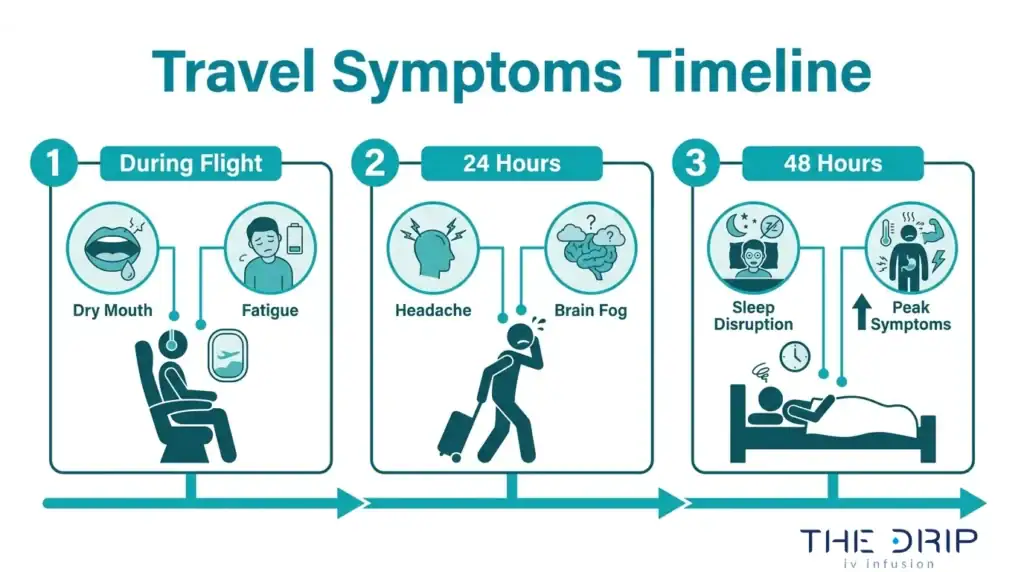
Physical signs of in-flight dehydration include dry mouth, muscle cramping, and dark urine, while jet lag produces fragmented sleep, impaired concentration, and gastrointestinal discomfort. Symptoms typically peak within 24 to 48 hours after landing.
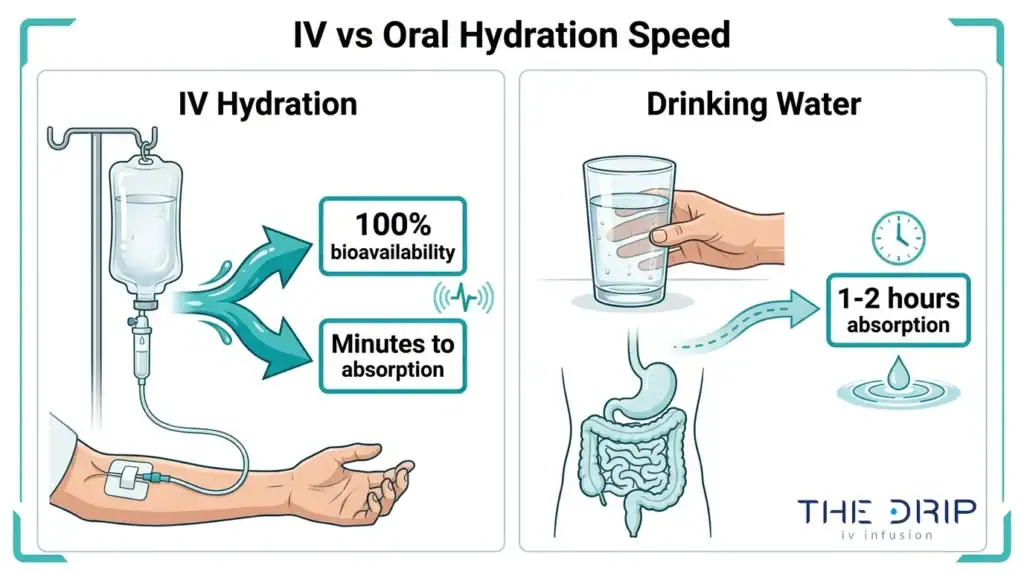
IV hydration delivers saline, electrolytes, and vitamins directly into the bloodstream at full bioavailability, bypassing digestive absorption delays. A single session can begin restoring hydration within minutes rather than the hours oral intake requires.
Pre-travel infusions focus on prevention by loading the body with fluids and immune-supporting nutrients before cabin exposure. Post-travel infusions prioritize rapid recovery from deficits that have already accumulated. Combining both offers the broadest protection, though even one well-timed session can shorten recovery significantly.
Frequent business flyers, long-haul international travelers, athletes competing abroad, and older or immunocompromised adults each face distinct risks that targeted IV protocols can address. Choosing a provider with licensed medical staff and proper compounding compliance remains essential for safe, effective treatment.
Why Does Travel Cause Dehydration and Jet Lag?
Travel causes dehydration and jet lag through two simultaneous physiological stresses: low cabin humidity strips moisture from your body, while crossing time zones disrupts your internal clock. The following sections explain each mechanism and how they intensify one another.
How Does Cabin Pressure and Low Humidity Dehydrate You?
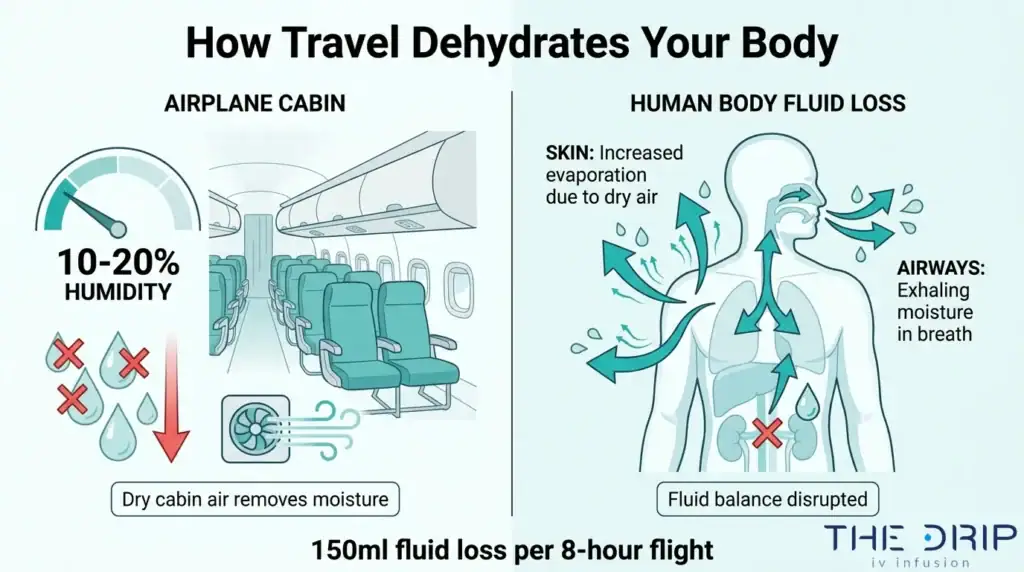
Cabin pressure and low humidity dehydrate you by accelerating insensible fluid loss through your skin, eyes, and respiratory tract. Commercial aircraft cabins are pressurized to an altitude between 5,000 and 7,500 feet, which significantly reduces moisture in the air.
According to the UK Civil Aviation Authority, cabin humidity drops to just 10–20%, compared to the 40–50% found in typical buildings. This difference contributes to an additional insensible fluid loss of approximately 150ml over an 8-hour flight. Because this moisture escapes without triggering thirst, most passengers underestimate how much fluid they actually lose.
For anyone already boarding a flight mildly dehydrated, these cabin conditions can push fluid deficits into symptomatic territory well before landing.
Why Does Crossing Time Zones Disrupt Your Circadian Rhythm?
Crossing time zones disrupts your circadian rhythm by creating a mismatch between your internal body clock and the external light-dark cycle at your destination. Your suprachiasmatic nucleus, the brain’s master clock, relies on light cues to regulate sleep, hormone release, and core body temperature. When those cues shift abruptly, every downstream process falls out of sync.
According to a review published in PubMed Central, jet lag symptoms typically last from a few days to one week when more than eight time zones are crossed, with recovery averaging approximately one day per time zone. Eastbound travel tends to be harder because it forces the body to advance its clock, which humans naturally resist. This misalignment affects not only sleep quality but also digestion, mood, and mental sharpness during the first days at a new destination.
How Do Dehydration and Jet Lag Compound Each Other?
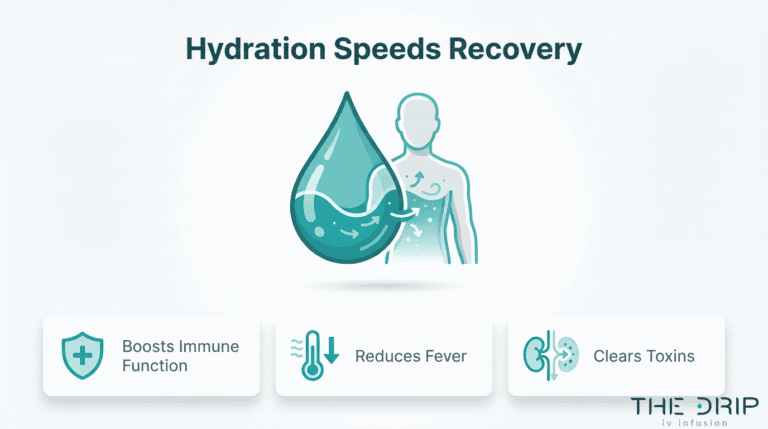
Dehydration and jet lag compound each other by worsening shared symptoms and slowing the body’s recovery from both conditions simultaneously. Dehydration impairs circulation, reduces cognitive function, and triggers headaches. Jet lag independently causes fatigue, poor concentration, and disrupted sleep. When both occur together, overlapping symptoms like brain fog, irritability, and exhaustion become more severe than either condition would produce alone.
Fluid balance also plays a direct role in circadian adjustment. Adequate hydration supports melatonin production and cortisol regulation, both of which are essential for resetting your internal clock. A dehydrated body struggles to recalibrate these hormones efficiently, which can extend jet lag recovery time. Addressing hydration proactively is one of the most practical ways to give your circadian system the support it needs during adjustment.
Understanding these compounding effects helps clarify why targeted interventions, such as IV therapy, aim to address both dehydration and nutrient depletion before symptoms escalate.
What Are the Symptoms of Travel-Related Dehydration and Jet Lag?
The symptoms of travel-related dehydration and jet lag range from physical discomfort during the flight to cognitive and sleep disruptions that persist for days after landing. Below, each symptom category and its typical timeline are covered.
What Are the Physical Symptoms of In-Flight Dehydration?
The physical symptoms of in-flight dehydration include dry mouth, cracked lips, headaches, dizziness, and dark-colored urine. Low cabin humidity pulls moisture from skin and respiratory passages, so dry nasal passages and scratchy throat are also common. Muscle cramping and fatigue set in as electrolyte balance shifts, particularly on flights exceeding four hours. Swollen ankles and feet often accompany these symptoms because prolonged sitting combined with fluid loss impairs normal circulation. Recognizing these signs early matters; by the time obvious thirst develops, the body is already meaningfully depleted. For travelers who notice several of these symptoms simultaneously, oral fluids alone may struggle to keep pace with ongoing losses at altitude.
What Are the Cognitive and Sleep Symptoms of Jet Lag?
The cognitive and sleep symptoms of jet lag include difficulty falling asleep, fragmented nighttime rest, daytime sleepiness, brain fog, impaired concentration, and irritability. Gastrointestinal disturbances such as nausea or irregular appetite frequently accompany these mental symptoms. According to the CDC, approximately 68% of international business travelers experience these negative symptoms regularly, including sleep disturbances, cognitive impairment, daytime sleepiness, malaise, and gastrointestinal disturbances. Mood changes and reduced decision-making ability are often underestimated, yet they can derail the first two or three days of a business trip. This combination of mental and physical disruption is what makes jet lag more than simple tiredness; it is a circadian misalignment affecting nearly every system.
When Do Symptoms Typically Peak After a Long Flight?
Symptoms typically peak within 24 to 48 hours after a long flight. Dehydration effects, such as headache and fatigue, often hit hardest during the first day, while circadian disruption intensifies on the second night when the body’s internal clock conflicts most sharply with the new time zone. According to a study published by MDPI, long-haul flights promote fluid shifts to the lower extremities and induce changes in blood viscosity that may accelerate dehydration. The general recovery rate follows roughly one day per time zone crossed, meaning an eight-zone trip can disrupt sleep patterns for a full week. Addressing both fluid loss and circadian stress early shortens this peak considerably.
Understanding when and how these symptoms emerge helps travelers plan targeted interventions, including IV hydration, before the worst effects take hold.
How Does IV Therapy Work to Combat Travel Fatigue?
IV therapy works to combat travel fatigue by delivering fluids, electrolytes, and vitamins directly into the bloodstream, bypassing the digestive system entirely. The following subsections cover what a travel IV contains, which nutrients target jet lag specifically, and how IV hydration speed compares to oral intake.
What Fluids and Electrolytes Are Delivered During a Travel IV?
The fluids and electrolytes delivered during a travel IV typically include isotonic saline combined with key minerals. Normal saline, the most common base fluid, contains 15.4 mEq of sodium and 15.4 mEq of chloride per 100 mL, creating an osmolarity of 308 mOsmol/L, according to NCBI StatPearls. This composition closely mirrors the body’s natural fluid balance, making it effective for rapid rehydration.
Additional electrolytes frequently included are:
- Magnesium, which supports muscle relaxation and sleep quality.
- Calcium, which aids nerve function and reduces cramping.
- Potassium, which helps restore cellular hydration after prolonged fluid loss.
Because flight-related dehydration depletes multiple electrolytes simultaneously, a balanced IV solution addresses these deficits faster than oral rehydration alone.
Which Vitamins and Nutrients Target Jet Lag Recovery?
The vitamins and nutrients that target jet lag recovery include B-complex vitamins, vitamin C, magnesium, and glutathione. B vitamins play a central role in energy metabolism and neurotransmitter production, both of which are disrupted when circadian rhythms shift. Vitamin C supports immune defense during the vulnerable post-travel window, while magnesium promotes deeper, more restorative sleep.
According to the Merck Manuals, the Myers’ formula combines high doses of B vitamins, vitamin C, magnesium, and calcium mixed with sterile water, forming one of the most widely recognized formulations for travel recovery. Glutathione, a powerful antioxidant, can be added to reduce oxidative stress that accumulates during long-haul flights. For most travelers crossing multiple time zones, this combination of energy support, immune protection, and antioxidant defense addresses the broadest range of jet lag symptoms in a single session.
How Fast Does IV Hydration Work Compared to Drinking Water?
IV hydration works significantly faster than drinking water because fluids enter the bloodstream immediately, bypassing the gastrointestinal tract. Oral hydration requires absorption through the stomach and intestines, a process that can take one to two hours depending on gut motility and what else has been consumed. Intravenous delivery, by contrast, achieves virtually 100% bioavailability, as noted in a PubMed Central review, meaning the body utilizes the full volume without digestive losses.
This speed difference matters most when dehydration is already present. A traveler stepping off a long flight with headaches and fatigue can begin feeling relief within minutes of starting an IV session, whereas drinking the equivalent volume of water would take considerably longer to produce the same cellular rehydration.
With the mechanics of IV therapy clarified, the next consideration is whether to schedule a session before or after your flight.
Should You Get IV Therapy Before Travel or After Travel?
The best timing depends on your travel goals. Pre-travel IV therapy focuses on prevention, while post-travel IV therapy targets recovery. Many travelers benefit from both.
What Are the Benefits of Pre-Travel IV Therapy?
The benefits of pre-travel IV therapy center on prevention and preparation. Starting a flight fully hydrated and nutrient-loaded helps the body resist the dehydrating effects of cabin air and the immune challenges of crowded airports. According to Warner Plaza Urgent Care, hydrating the body in advance and ensuring it has the nutrients, vitamins, and fluids needed can help minimize or even prevent many jet lag symptoms.
Key pre-travel benefits include:
- Building a hydration buffer before exposure to low-humidity cabin environments.
- Strengthening immune defenses with vitamins B and C before contact with airborne pathogens.
- Reducing the severity of circadian disruption by ensuring optimal nutrient stores.
For travelers heading into high-stakes trips, such as business conferences or destination events, this preventive approach offers a practical advantage over reactive recovery alone.
What Are the Benefits of Post-Travel IV Therapy?
The benefits of post-travel IV therapy focus on rapid recovery from dehydration, fatigue, and circadian disruption. After a long flight, the body has already lost fluids and depleted key nutrients. IV therapy replenishes fluids and nutrients faster than drinking water and taking supplements because the nutrients and fluids in an IV drip go directly into the bloodstream, where the body absorbs them completely and quickly.
Post-travel benefits include:
- Restoring hydration levels that oral intake alone may take hours to match.
- Delivering electrolytes and B vitamins directly to counteract fatigue and brain fog.
- Supporting faster circadian adjustment by replenishing magnesium and other sleep-regulating minerals.
Post-travel sessions are especially valuable when symptoms have already set in and quick turnaround matters.
Is Getting IV Therapy Both Before and After Travel Worth It?
Yes, getting IV therapy both before and after travel is worth it for travelers crossing multiple time zones or flying longer than six hours. Pre-travel sessions build a physiological buffer; post-travel sessions address the deficit that accumulates despite preparation. However, evidence for IV prehydration specifically remains limited. A 2012 review published in PubMed Central noted that while intravenous prehydration has been proposed as an ergogenic aid to achieve euhydration more effectively, high-level studies confirming that IV prehydration prevents dehydration are still lacking.
For most frequent flyers, combining both sessions represents the most comprehensive approach to maintaining performance across trips.
What Should a Pre-Travel IV Infusion Include?
A pre-travel IV infusion should include a saline base with electrolytes, immune-supporting vitamins like B-complex and vitamin C, and optional add-ons such as zinc or glutathione. The following sections break down each component.
Why Is Saline With Electrolytes Essential Before Flying?
Saline with electrolytes is essential before flying because it restores fluid balance and prepares the body to withstand the dehydrating cabin environment. Normal saline delivers sodium and chloride directly into the bloodstream, counteracting the fluid losses that begin as soon as cabin humidity drops.
According to NCBI StatPearls, normal saline contains 15.4 mEq of sodium and 15.4 mEq of chloride per 100 mL, creating an osmolarity of 308 mOsmol/L. This isotonic composition closely matches the body’s own plasma concentration, allowing rapid cellular absorption without the delays of oral hydration. For travelers facing hours of low-humidity air, starting a flight already fully hydrated at the cellular level is one of the most effective ways to reduce fatigue and headaches upon landing.
How Do B Vitamins and Vitamin C Prepare Your Immune System?
B vitamins and vitamin C prepare your immune system by supporting energy metabolism and strengthening immune cell function before exposure to recirculated cabin air. The Myers’ formula, a widely used IV protocol, combines high doses of B vitamins, vitamin C, magnesium, and calcium mixed with sterile water, as described by the Merck Manuals.
Intravenous delivery achieves virtually 100% bioavailability because nutrients enter systemic circulation directly, bypassing digestive processes entirely. Oral high-dose vitamin C exceeding approximately one gram, by contrast, results in significantly diminished absorption. This bioavailability advantage makes IV vitamin delivery particularly valuable when the goal is to saturate immune defenses quickly before travel. Properly compounded IV therapies must also comply with USP Chapter 797 and Section 503A regulations, so choosing a qualified provider matters.
Should You Add Zinc or Glutathione Before International Travel?
Yes, you should consider adding zinc or glutathione before international travel, especially when crossing multiple time zones or visiting regions with elevated exposure risks. Zinc supports immune cell signaling and helps the body mount a faster response to pathogens commonly encountered in airports and aircraft. Glutathione, a powerful antioxidant, neutralizes oxidative stress that intensifies during long-haul flights due to cabin pressure changes and disrupted sleep cycles.
Both nutrients complement a saline and vitamin base by addressing different protective pathways. While saline handles hydration and B vitamins fuel energy production, zinc and glutathione add targeted immune and antioxidant layers. For most international travelers, this combination creates a more comprehensive pre-flight protocol than hydration alone.
With the right pre-travel formula established, understanding what a post-travel IV should contain helps complete the recovery strategy.
What Should a Post-Travel IV Infusion Include?
A post-travel IV infusion should include aggressive saline rehydration, anti-inflammatory and antioxidant additives, and immune-supporting nutrients. The sections below cover why rapid fluid replacement matters, which recovery-focused additives help most, and when to schedule your session.
Why Is Aggressive Rehydration Critical After Long Flights?
Aggressive rehydration is critical after long flights because cabin conditions cause significant fluid loss that oral intake alone struggles to reverse quickly. According to the UK Civil Aviation Authority, cabin humidity drops to 10–20% compared to 40–50% in typical buildings, contributing to approximately 150 ml of additional insensible fluid loss over an 8-hour flight. That deficit compounds when travelers skip water during sleep or consume alcohol and caffeine en route.
Post-flight, the body needs rapid fluid and electrolyte restoration to support circulation, cognitive clarity, and muscle function. Normal saline delivers sodium and chloride directly into the bloodstream, bypassing the slower absorption rate of the digestive tract. For travelers who crossed multiple time zones, restoring hydration status quickly can shorten the window of compounded fatigue and brain fog.
How Do Anti-Inflammatory and Antioxidant Additives Aid Recovery?
Anti-inflammatory and antioxidant additives aid recovery by neutralizing oxidative stress and calming the systemic inflammation that long-haul travel triggers. Prolonged cabin pressure exposure, disrupted sleep, and circadian misalignment all elevate inflammatory markers in the body.
Key additives commonly included in a post-travel IV drip are:
- Glutathione supports detoxification and reduces oxidative damage accumulated during flight.
- Vitamin C strengthens immune defenses during the vulnerable post-travel window when pathogen exposure peaks.
- Magnesium promotes muscle relaxation and supports quality sleep after circadian disruption.
- B-complex vitamins replenish energy metabolism cofactors depleted by stress and poor in-flight nutrition.
- Zinc reinforces immune cell function, which is especially valuable after hours in a recirculated air environment.
Because IV administration achieves virtually 100% bioavailability, these nutrients reach therapeutic levels faster than oral supplements can deliver.
When Should You Schedule a Post-Travel IV Session?
You should schedule a post-travel IV session within the first 24 hours after landing for the best recovery results. This window matters because dehydration and nutrient depletion are at their peak immediately after disembarking, and early intervention prevents symptoms from compounding into multi-day fatigue.
A same-day session works well for travelers arriving in the morning or afternoon, while those landing late at night benefit from booking first thing the following morning. Waiting beyond 48 hours reduces the advantage IV therapy offers over standard oral rehydration.
Prioritizing that first-day window is one of the simplest ways to reclaim energy and mental sharpness before jet lag settles in fully.
Who Benefits Most From Travel IV Therapy?
Travel IV therapy benefits frequent business travelers, long-haul international flyers, athletes competing abroad, and older adults or immunocompromised travelers. Each group faces distinct travel-related stressors that IV hydration and nutrient delivery can address.
How Does IV Therapy Help Frequent Business Travelers?
IV therapy helps frequent business travelers by rapidly restoring hydration and cognitive sharpness between flights. Executives on tight schedules often cannot afford the multi-day recovery that jet lag demands; arriving dehydrated and mentally foggy before a presentation or negotiation carries real professional consequences.
A pre-flight or post-arrival infusion with B vitamins, magnesium, and saline can compress that recovery window significantly. Because frequent flyers accumulate sleep debt and nutrient depletion across repeated trips, consistent IV support between travel legs helps maintain baseline energy levels. For professionals who fly weekly, this kind of proactive recovery is less a luxury and more a performance strategy.
Why Should Long-Haul International Flyers Consider IV Therapy?
Long-haul international flyers should consider IV therapy because extended flights impose severe dehydration and prolonged circadian disruption simultaneously. Flights exceeding eight hours expose passengers to extremely low cabin humidity and sustained immobility, both of which accelerate fluid loss and electrolyte imbalance.
According to a 2020 study published in the Multidisciplinary Digital Publishing Institute (MDPI), long-haul flights promote fluid shifts to the lower extremities and induce changes in blood viscosity that may accelerate dehydration. IV infusions deliver isotonic fluids directly into the bloodstream, bypassing the slower gastrointestinal absorption that oral rehydration requires. For anyone crossing six or more time zones, pairing IV hydration with targeted vitamins offers a more efficient recovery foundation than water and supplements alone.
Can Athletes Use Travel IV Therapy Before Competitions Abroad?
Yes, athletes can use travel IV therapy before competitions abroad, though they should verify compliance with their sport’s governing body. The World Anti-Doping Agency restricts IV infusions exceeding 100 mL per 12-hour period unless medically justified, so athletes must confirm volume limits before scheduling treatment.
Within those guidelines, a pre-competition infusion containing electrolytes, B vitamins, and vitamin C can help offset the dehydration and immune suppression that international travel causes. Traveler’s diarrhea, which affects roughly 60% of international athletes, poses an additional fluid-loss risk that pre-travel hydration can help mitigate. For athletes, the margin between peak and subpar performance is razor-thin, making proactive hydration a worthwhile consideration.
How Does Travel IV Therapy Help Older Adults or Immunocompromised Travelers?
Travel IV therapy helps older adults and immunocompromised travelers by addressing their heightened vulnerability to dehydration and infection during air travel. Aging reduces the body’s thirst response and kidney concentrating ability, meaning older adults often become dehydrated before recognizing symptoms. Immunocompromised individuals face elevated infection risk in recirculated cabin air and crowded airports.
A pre-travel IV infusion fortified with vitamin C, zinc, and glutathione provides immune support at full bioavailability. Compounded IV therapies prepared under Section 503A of the Federal Food, Drug, and Cosmetic Act must be prepared by a licensed pharmacist or physician pursuant to a valid prescription, according to Hendershot Cowart P.C., ensuring proper oversight for medically vulnerable populations. For these travelers especially, working with a qualified provider is essential rather than optional.
With these populations in mind, choosing a reputable travel IV therapy provider becomes the next critical step.
How Does Travel IV Therapy Compare to Other Jet Lag Remedies?
Travel IV therapy compares to other jet lag remedies by addressing hydration and nutrient depletion directly, while most alternatives focus solely on circadian rhythm adjustment. The key differences involve speed of absorption, symptom coverage, and mechanism of action.
| Remedy | Primary Mechanism | Jet Lag Symptom Coverage | Speed of Effect |
| Travel IV therapy | Fluid, electrolyte, and nutrient delivery to bloodstream | Dehydration, fatigue, cognitive fog, immune suppression | 30–60 minutes |
| Light therapy | Circadian rhythm resynchronization | Sleep-wake cycle disruption | Days of consistent use |
| Melatonin supplements | Hormonal sleep signaling | Sleep onset timing only | 30–60 minutes per dose |
| Oral hydration | Gradual fluid absorption through GI tract | Mild dehydration | Hours to fully absorb |
| Caffeine | Temporary adenosine receptor blocking | Daytime sleepiness only | 15–45 minutes, then crash |
According to a 2011 review published in PubMed Central, light therapy serves as the strongest non-pharmacological zeitgeber for jet lag recovery, allowing for a phase delay of up to 1.5 hours per day and a phase advance of up to 1 hour per day. This makes light exposure the most effective tool specifically for resetting the body’s internal clock.
However, circadian resynchronization does not resolve the dehydration, nutrient depletion, or immune vulnerability that long flights create simultaneously. Light therapy and melatonin target only the sleep-wake cycle, while caffeine merely masks fatigue without restoring fluid balance or replenishing vitamins lost during cabin exposure.
Travel IV therapy fills this gap by delivering saline, electrolytes, B vitamins, vitamin C, and antioxidants at virtually 100% bioavailability. Oral supplements and water, though accessible, are limited by digestive absorption rates that drop significantly at higher doses. For travelers dealing with multiple overlapping symptoms, IV hydration offers the broadest coverage in a single session.
The most practical approach for frequent travelers combines IV therapy with timed light exposure: IV hydration corrects the physiological deficit while strategic bright light resets the circadian clock. Neither remedy alone addresses every dimension of jet lag, but together they cover both the metabolic and neurological components of travel recovery.
With the right remedy combination identified, choosing a qualified provider ensures these treatments are administered safely.
What Should You Look for in a Travel IV Therapy Provider?
You should look for a travel IV therapy provider that prioritizes medical oversight, proper compounding standards, and transparent ingredient sourcing. Safety varies significantly between providers, making credential verification essential before any infusion.
A qualified travel IV therapy provider meets several key criteria:
- Licensed medical professionals on staff. Registered nurses or physicians should administer every infusion, not unlicensed technicians.
- Compliance with compounding regulations. IV formulations should follow Section 503A of the Federal Food, Drug, and Cosmetic Act and USP Chapter 797 standards for sterile compounding.
- Customizable formulations. Providers should tailor hydration, vitamins, and electrolytes to your specific travel needs rather than offering only generic packages.
- Transparent ingredient sourcing. Every component in your IV should be clearly disclosed, including saline base, vitamin concentrations, and any additives.
- Availability around your travel schedule. Mobile or flexible scheduling options ensure you can receive infusions before departure or shortly after landing.
As a 2024 NPR report emphasized, IV hydration therapy safety depends completely on who administers it, noting there are no federal regulations specifically governing med spas. This gap makes personal due diligence non-negotiable. Choosing a provider staffed by experienced nurses with verifiable credentials is the single most important step in ensuring both safety and effectiveness from any travel IV session.
With provider standards clear, mobile IV services can simplify fitting these sessions into tight travel itineraries.
How Can Mobile IV Therapy Make Pre and Post Travel Recovery Easier?
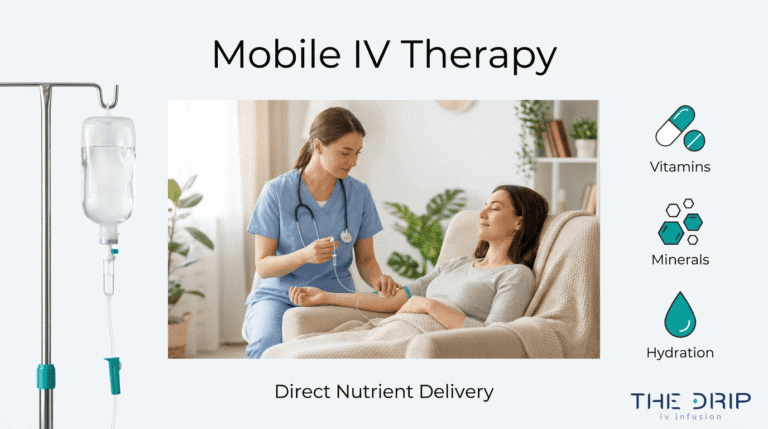
Mobile IV therapy can make pre and post travel recovery easier by delivering hydration, vitamins, and electrolytes at your home or hotel, eliminating clinic visits during tight travel windows. Below, learn how The Drip IV Infusion’s mobile service fits your schedule and the key takeaways for timing IV therapy around trips.
Can The Drip IV Infusion’s Mobile Service Fit Your Travel Schedule?
Yes, The Drip IV Infusion’s mobile service can fit your travel schedule. Founded in Fall 2022 by professionals with decades of experience in nursing and emergency medicine, The Drip IV Infusion sends a licensed infusion specialist directly to your home, hotel, or office. A typical session takes about one hour, making it easy to book a pre-flight infusion the morning of departure or a post-landing session the evening you arrive. Because mobile IV therapy removes the need to drive to a clinic while jet-lagged or rushing to catch a flight, it pairs naturally with light therapy, which according to a PubMed Central review serves as the strongest non-pharmacological zeitgeber for circadian realignment. Combining both strategies at home creates a practical recovery routine that fits around packed itineraries rather than competing with them.
What Are the Key Takeaways About IV Therapy Before vs After Travel?
The key takeaways about IV therapy before vs after travel center on timing, nutrient delivery, and provider safety.
- Pre-travel IV sessions focus on building hydration reserves and loading immune-supporting nutrients before cabin conditions deplete them.
- Post-travel IV sessions prioritize rapid rehydration and recovery from jet lag symptoms that have already set in.
- IV administration achieves much higher blood levels of vitamin C than oral supplements, which, according to Family Medicine Austin, have limited effectiveness for preventing colds in the general population.
- Safety depends entirely on who administers the infusion; always choose a provider staffed by licensed nurses who follow proper compounding and sterile protocols.
- Combining pre-flight and post-flight sessions offers the most comprehensive coverage, though even a single well-timed infusion can meaningfully support recovery.
For travelers who want both convenience and professional care, The Drip IV Infusion brings these treatments directly to you across Arizona, so recovery starts the moment you need it.