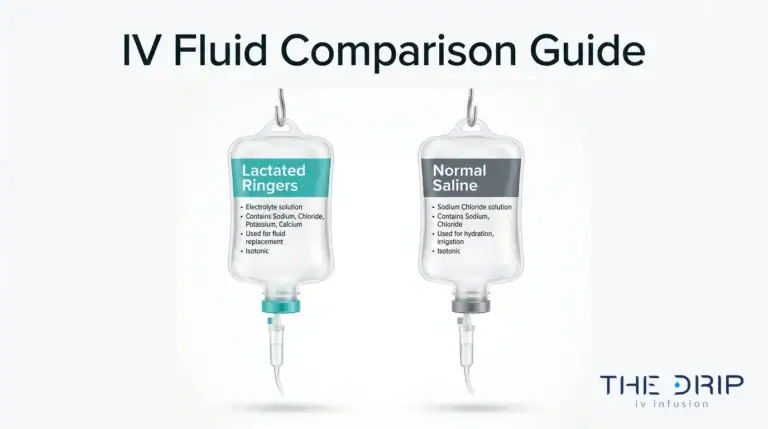
Mobile IV therapy and in-clinic IV therapy use the same intravenous technique to deliver fluids, vitamins, and minerals directly into the bloodstream at 100% bioavailability. The core treatment is identical; the difference lies in where and how you receive it.
We cover the fundamentals of IV therapy and how each delivery model works, the practical differences between mobile and in-clinic sessions, who benefits most from each option, how to evaluate provider quality and safety, and the types of treatments available through mobile service.
IV therapy basics are straightforward: a licensed nurse inserts a catheter, connects an IV line, and monitors the infusion for about one hour. Both mobile and clinic settings use the same pharmaceutical-grade supplies and formulations, from simple hydration drips to specialized vitamin cocktails.
The practical differences between these two models come down to convenience, cost, wait times, treatment quality, and privacy. Mobile nurses arrive at your location and begin treatment almost immediately, while clinic visits involve commuting, check-in, and shared infusion rooms. Treatment quality remains equivalent when proper infection prevention protocols are followed in either setting.
Choosing the right option depends on your circumstances. Busy professionals, athletes, expecting mothers dealing with morning sickness, and groups recovering from events gain the most from mobile service. First-time patients and those managing complex medical conditions often benefit from the structured oversight a clinic provides.
Provider credentials matter more than location. Licensed nursing staff, personalized IV formulations, and strict safety protocols are the non-negotiable standards that determine treatment quality, whether care is delivered in your living room or a dedicated facility.
What Is IV Therapy and How Does It Work?
IV therapy is a medical technique that delivers fluids, vitamins, minerals, and medications directly into the bloodstream through a vein. Understanding how this process works is essential before comparing mobile and in-clinic delivery options.
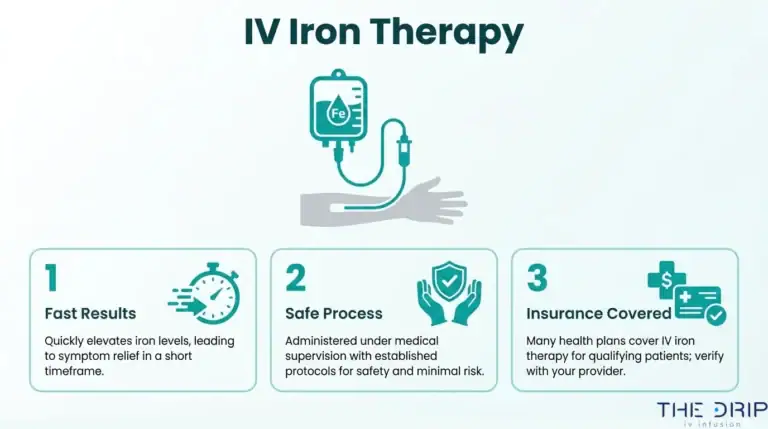
A healthcare professional inserts a small catheter into a vein, typically in the arm, and connects it to an IV line. Fluids then drip from a bag through the tubing at a controlled rate, bypassing the digestive system entirely. This direct delivery method is what sets IV therapy apart from oral supplements.
According to the National Center for Biotechnology Information (NCBI) StatPearls resource, drugs administered intravenously achieve 100% bioavailability because they reach systemic circulation without the absorption process. Oral supplements, by contrast, lose potency as they pass through the stomach and liver before entering the bloodstream.
A typical IV therapy session takes about one hour. During that time, a nurse monitors the infusion rate and watches for any adverse reactions. Common IV formulations include saline for hydration, B-complex vitamins for energy, vitamin C for immune support, and specialized blends like the Myers’ Cocktail.
IV therapy supports a range of wellness goals:
- Rapid rehydration after illness, exercise, or travel
- Nutrient replenishment for individuals with absorption difficulties
- Immune support during cold and flu season
- Recovery assistance for athletes and active individuals
- Morning sickness relief for expecting mothers
Because IV therapy delivers nutrients at full potency directly to cells, many people experience benefits faster than they would with oral alternatives. This efficiency explains the growing demand for both mobile and in-clinic IV services, each offering a distinct way to access the same core treatment.
What Is Mobile IV Therapy?
Mobile IV therapy is a healthcare service that delivers intravenous treatments directly to a client’s home, office, or other non-clinical location. Instead of visiting a medical facility, a licensed nurse travels to the client with all necessary supplies and administers the infusion on-site.
This model eliminates travel time and waiting rooms while providing the same nutrient delivery and hydration benefits associated with traditional IV treatment. According to the National Home Infusion Association, home infusion involves medication administration through a needle or catheter in a setting other than a hospital, with support from specially trained nurses and pharmacists.
Clients typically book an appointment online or by phone, and a provider arrives within a scheduled window. The session itself usually takes about one hour, during which the nurse monitors the infusion from start to finish. Common treatments available through mobile service include hydration drips, vitamin infusions, immune support blends, and recovery formulas.
For anyone weighing the differences between receiving care at home versus in a clinic, understanding how mobile IV therapy works is the essential first step.
What Is In-Clinic IV Therapy?
In-clinic IV therapy is intravenous treatment administered at a dedicated medical facility, such as an IV lounge, wellness clinic, or infusion center. Patients visit the location, receive their infusion under direct supervision, and leave once the session is complete. This model offers access to controlled clinical environments and on-site medical equipment. The sections below cover how in-clinic sessions work, what treatments are typically available, and the advantages and limitations of this setting.
What Are the Key Differences Between Mobile and In-Clinic IV Therapy?
The key differences between mobile and in-clinic IV therapy span convenience, cost, treatment quality, wait times, and privacy. Each factor affects the overall experience differently depending on individual needs.
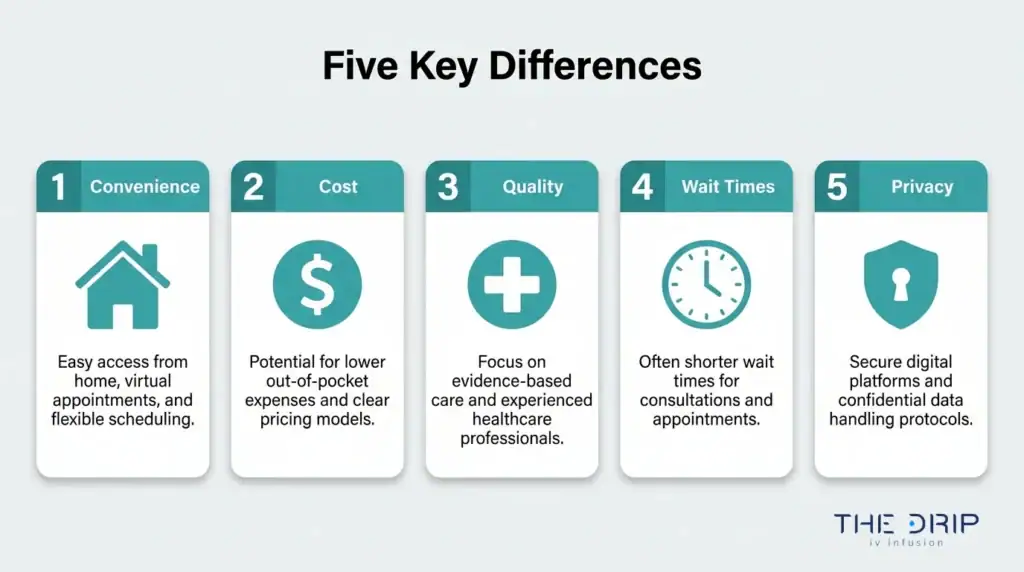
How Does Convenience Compare Between Mobile and In-Clinic IV Therapy?
Convenience differs significantly between mobile and in-clinic IV therapy. Mobile IV therapy sends a licensed nurse directly to a client’s home, office, or hotel, eliminating travel entirely. In-clinic sessions require scheduling an appointment, commuting, and sitting in a waiting area before treatment begins.
For anyone managing a packed schedule or feeling too unwell to drive, mobile service removes the biggest barrier to receiving care. According to a 2025 review in Cureus, individual IV vitamin therapy sessions often cost between $100 and over $300, so the investment of time on top of that cost makes convenience a deciding factor for many clients. Mobile service turns what would be a half-day errand into a simple at-home appointment.
How Does the Cost of Mobile IV Therapy Compare to In-Clinic?
The cost of mobile IV therapy is generally comparable to or slightly higher than in-clinic pricing. Mobile providers factor in travel, equipment transport, and one-on-one nurse time, which can add a modest premium over clinic-based sessions. In-clinic providers offset overhead costs like rent and utilities across multiple patients treated simultaneously.
That said, hidden costs often narrow the gap. Clinic visits involve fuel, parking fees, and lost productivity during transit. When those indirect expenses are considered alongside the personalized, door-to-door nature of mobile service, the price difference becomes less significant for most clients.
How Does Treatment Quality Differ Between Mobile and In-Clinic Settings?
Treatment quality between mobile and in-clinic settings remains equivalent when proper safety protocols are followed. Both settings use the same pharmaceutical-grade IV fluids, vitamins, and equipment administered by licensed nurses.
The CDC states that adherence to infection prevention and control practices is essential to providing safe, high-quality patient care across all settings where healthcare is delivered. Standard precautions apply universally:
- Hand hygiene before and during treatment
- Environmental cleaning and disinfection of supplies
- Injection and medication safety procedures
- Risk assessment with appropriate personal protective equipment
- Reprocessing of reusable medical equipment between patients
Reputable mobile providers carry sterile, single-use supplies identical to clinic inventory. The setting changes; the clinical standard should not.
How Do Wait Times Compare for Mobile vs. In-Clinic IV Therapy?
Wait times for mobile IV therapy are typically shorter than in-clinic visits. Mobile providers generally arrive within 30 to 45 minutes of booking, and treatment begins almost immediately upon arrival.
Clinic wait times tend to run longer. According to a 2020 study published in JCO Oncology Practice, baseline wait times for infusion patients averaged 1 hour and 33 minutes, even before the actual treatment started. After process improvements, that average dropped to 1 hour and 12 minutes, a 23% decrease that still exceeded most mobile response windows.
The difference comes down to shared resources. Clinics serve multiple patients simultaneously, creating bottlenecks. Mobile nurses dedicate their full attention to one client at a time, which compresses the entire experience into a predictable timeframe.
How Does Privacy Differ Between Mobile and In-Clinic IV Therapy?
Privacy differs substantially between mobile and in-clinic IV therapy. Mobile sessions take place in the client’s chosen environment, whether that is a bedroom, living room, or private office. No shared waiting rooms, no semi-open infusion bays, and no interactions with other patients are involved.
In-clinic settings typically use communal infusion rooms where several clients receive treatment simultaneously, separated only by curtains or partitions. While comfortable, these spaces offer limited personal privacy.
For clients who value discretion, particularly those receiving treatments for hangover recovery, wellness optimization, or morning sickness, mobile IV therapy provides a level of confidentiality that most clinics cannot match. With these comparisons in mind, the next step is identifying which option fits specific lifestyles.
Who Should Choose Mobile IV Therapy Over In-Clinic?
Mobile IV therapy is the stronger choice for anyone who values time, comfort, or privacy during treatment. The following scenarios highlight when at-home service makes the most practical sense.
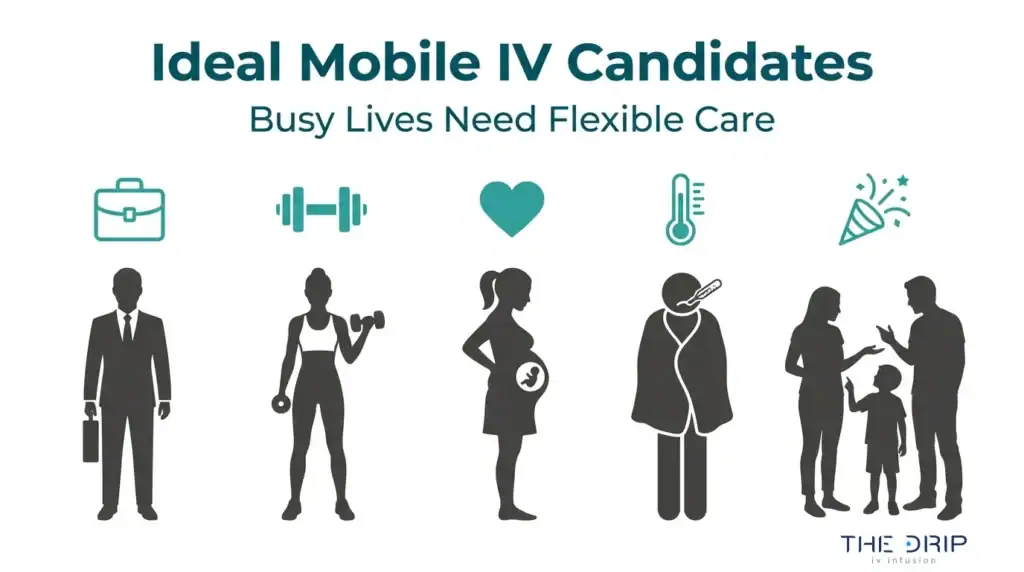
Is Mobile IV Therapy Better for Busy Professionals?
Mobile IV therapy is better for busy professionals who cannot afford to lose hours traveling to a clinic and sitting in a waiting room. According to the National Home Infusion Association, home infusion involves medication administration through a needle or catheter outside a hospital, supported by specially trained nurses and pharmacists. This model lets professionals schedule sessions around meetings, receive treatment at the office or home, and return to work almost immediately. For anyone balancing tight deadlines, eliminating commute and wait time makes mobile service the more efficient option.
Is Mobile IV Therapy Better for Athletes Recovering After Training?
Mobile IV therapy is better for athletes recovering after training because it delivers fluids, electrolytes, and vitamins directly to the bloodstream while the athlete rests. Post-training recovery benefits from minimal physical exertion; traveling to a clinic works against that goal. A mobile nurse arrives at the gym, hotel, or home, allowing the athlete to begin rehydrating without delay. This convenience is especially valuable during tournament weekends or multi-day training camps when recovery windows are short.
Is Mobile IV Therapy Better for Expecting Mothers With Morning Sickness?
Mobile IV therapy is better for expecting mothers with morning sickness because it eliminates the physical strain of traveling while nauseous. Severe morning sickness, known as hyperemesis gravidarum, often requires IV fluids to correct dehydration. Receiving treatment at home reduces exposure to clinical environments and allows mothers to rest comfortably. However, safety screening matters: a 2024 review published in Cureus noted that IV vitamin therapy carries potential risks, including phlebitis, electrolyte imbalances, and allergic reactions. Pregnant women should always consult their healthcare provider before booking any IV session.
Is Mobile IV Therapy Better for People Recovering From Illness at Home?
Mobile IV therapy is better for people recovering from illness at home because it removes the burden of leaving bed when symptoms are at their worst. Dehydration from flu, food poisoning, or viral infections responds quickly to IV hydration delivered bedside. According to the NHIA Infusion Journal, the cost per day for home infusion was $122 compared to $798 for inpatient care, with estimated savings ranging from $646,000 to $871,000 across 66 therapy courses. Home-based treatment keeps recovering patients comfortable and avoids unnecessary exposure to other illnesses in shared clinical spaces.
Is Mobile IV Therapy Better for Groups or Event Recovery?
Mobile IV therapy is better for groups or event recovery because a single provider can treat multiple people at the same location in one visit. Wedding parties, corporate retreats, and post-event gatherings benefit from on-site hydration without coordinating separate clinic appointments. The group setting also reduces per-person scheduling complexity, since the nurse sets up once and rotates between clients. For anyone planning a group wellness session, mobile service turns recovery into a shared, low-effort experience.
With the ideal mobile candidates covered, some situations still call for the clinical setting instead.
Who Should Choose In-Clinic IV Therapy Instead of Mobile?
In-clinic IV therapy is the better choice for individuals who need closer medical oversight or are unfamiliar with the infusion process. The following sections cover when complex conditions and first-time experiences benefit from a clinic setting.
Is In-Clinic IV Therapy Better for Complex Medical Conditions?
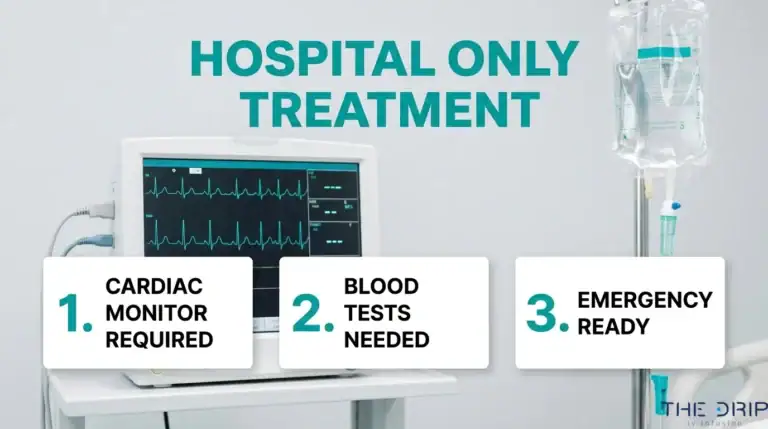
In-clinic IV therapy is better for complex medical conditions that require continuous monitoring and immediate access to emergency equipment. Conditions involving multi-day infusion protocols, higher-dose formulations, or treatments that carry elevated risk of adverse reactions benefit from a controlled clinical environment.
Clinic settings provide on-site resources that are difficult to replicate in a home or office, including:
- Advanced vital sign monitoring throughout the session
- Immediate access to resuscitation equipment if allergic reactions occur
- Availability of additional medical staff for rapid intervention
- Controlled temperature and sterile conditions optimized for sensitive formulations
For patients managing serious health concerns, the structured oversight of a clinic reduces risk during treatment. Standard wellness infusions, by contrast, rarely demand this level of infrastructure. Anyone uncertain about which setting fits their needs should consult a healthcare provider before booking.
Is In-Clinic IV Therapy Better for First-Time IV Therapy Patients?
In-clinic IV therapy is generally better for first-time IV therapy patients who want supervised guidance throughout the process. A clinical setting allows nurses to assess individual responses in real time, explain each step, and address concerns as they arise.
First-time patients may not know how their body reacts to specific nutrients or hydration rates. According to a study published in Pharmaceuticals (Basel), intravenous infusion of 25 mg NADH daily for 10 to 14 days produced a greater than 30% improvement in disability for 61.7% of Parkinson’s disease patients, illustrating how potent and variable IV responses can be.
Starting in a clinic builds confidence. Once patients understand how their body responds, transitioning to mobile IV therapy for routine sessions becomes a comfortable next step. With the right provider selected, both settings can deliver safe, effective results.
What Should You Look for in a Mobile IV Therapy Provider?
You should look for licensed nursing staff, personalized treatment options, and strict safety protocols. The sections below cover each essential criterion.
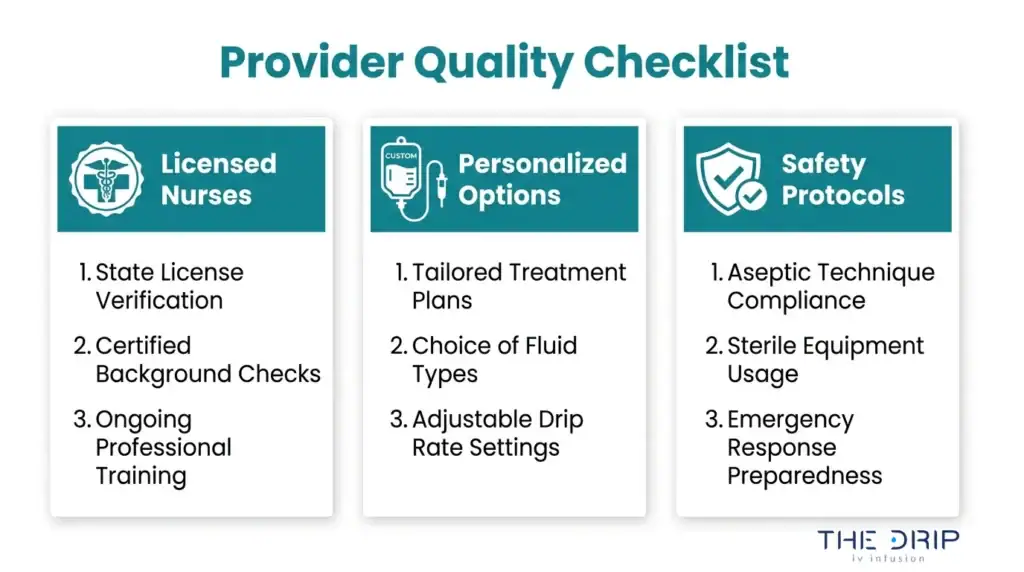
Are the Nurses Licensed and Experienced in IV Administration?
The nurses should be licensed, registered professionals with direct experience in IV administration. Mobile IV therapy removes the clinical infrastructure of a hospital, so the individual provider’s skill becomes the primary safeguard for your care.
Key qualifications to verify include:
- Active registered nurse (RN) or advanced practice licensure in your state.
- Hands-on experience with venipuncture, catheter insertion, and infusion monitoring.
- Training in emergency response for allergic reactions or complications.
- Background in emergency medicine, home health, or infusion-specific practice.
According to JAMA Internal Medicine, a review of 255 IV hydration facility websites found that staffing practices varied widely, with only 4 state policies addressing prescriber credentials. This inconsistency makes it essential to ask providers directly about their team’s credentials before booking.
Does the Provider Offer Personalized IV Cocktail Options?
The provider should offer personalized IV cocktail options tailored to individual health goals. A one-size-fits-all drip may not address your specific needs, whether that involves hydration, immune support, recovery, or nausea relief.
Look for these personalization indicators:
- A menu with multiple formulations targeting different concerns, such as energy, immunity, and recovery.
- Available add-ons like vitamin C, glutathione, B-complex vitamins, zinc, or magnesium.
- A pre-infusion health intake or consultation to match the cocktail to your symptoms.
Formulations like the Myers’ Cocktail contain specific high-dose combinations of water-soluble vitamins and minerals, as documented in the Journal of Alternative and Complementary Medicine. Providers who can adjust ingredient concentrations or add targeted supplements demonstrate a higher standard of individualized care.
What Safety Protocols Should a Mobile IV Provider Follow?
A mobile IV provider should follow the same infection prevention and safety standards required in any clinical setting. Without a sterile facility environment, these protocols become even more critical during home or on-site infusions.
According to the CDC, standard precautions essential to safe care across all healthcare settings include:
- Hand hygiene before and after every patient contact.
- Environmental cleaning and disinfection of all work surfaces.
- Injection and medication safety, including single-use supplies.
- Risk assessment with appropriate personal protective equipment.
- Proper disposal of sharps and biohazard materials.
Providers should also conduct a brief health screening before each session and carry emergency supplies for potential adverse reactions. The absence of dedicated facility oversight means that a reputable mobile provider must be self-sufficient in maintaining these safeguards at every visit.
With provider standards clearly defined, the next question is whether mobile IV therapy matches in-clinic safety overall.
Is Mobile IV Therapy as Safe as In-Clinic IV Therapy?
Mobile IV therapy is as safe as in-clinic IV therapy when a licensed nurse follows proper clinical protocols. Safety depends on provider qualifications and adherence to standard precautions, not the physical setting.
Regardless of location, nurses must continually monitor a patient’s skin turgor, urinary output, lung sounds, and oxygen requirements during infusion. Assessment for potential complications, such as infiltration, extravasation, phlebitis, or infection, remains essential in both mobile and clinical environments. According to NCBI Bookshelf’s Chapter 23 on IV Therapy Management, infusion therapy is provided with attention to quality and patient safety across all care settings, and assessing for new edema offers important insight into fluid volume status.
What makes the safety conversation more nuanced is the regulatory landscape. As of June 2024, no state had enacted legislation specifically regulating IV hydration spas, according to a 2024 JAMA report. That gap closed partially in September 2024, when Texas passed legislation setting boundaries on who may prescribe, order, and administer elective IV therapy, prompted by a patient death at a Texas spa.
This regulatory inconsistency means the burden of ensuring safety falls heavily on the individual provider. A reputable mobile IV service staffed by experienced, licensed nurses who carry proper supplies and follow infection control standards delivers care equivalent to what patients receive in a brick-and-mortar clinic. The setting changes; the clinical standard should not.
For most clients, the key differentiator is not mobile versus in-clinic. It is whether the provider employs qualified professionals who maintain strict protocols wherever they practice. Choosing a provider with transparent credentials and consistent safety practices matters far more than the treatment location itself.
What Types of IV Treatments Can You Get With Mobile Service?
Mobile IV services deliver the same treatment categories available in clinical settings. Common options include hydration drips, vitamin cocktails, immune support blends, and specialty infusions.
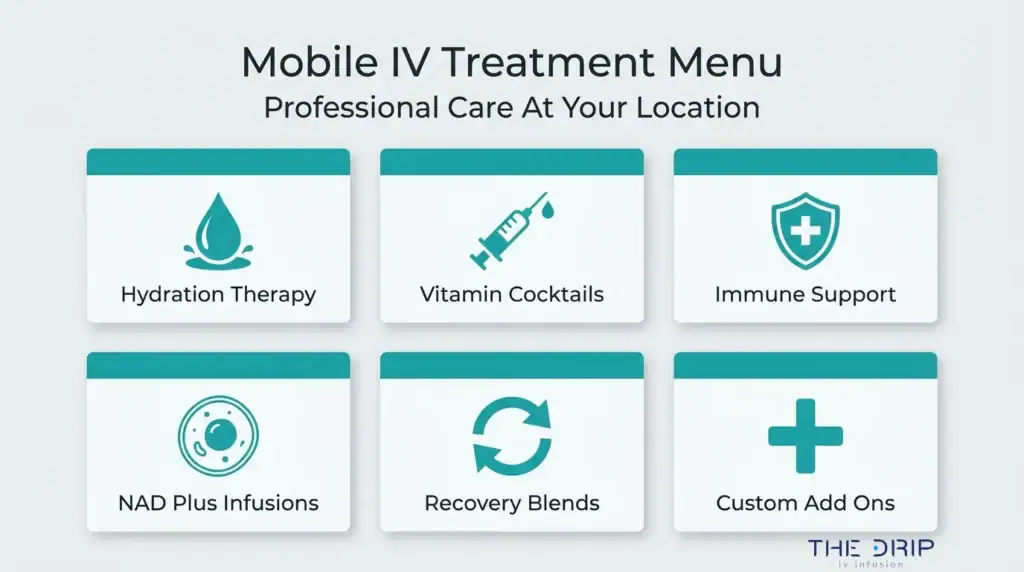
The types of IV treatments you can get with mobile service span several wellness and recovery categories:
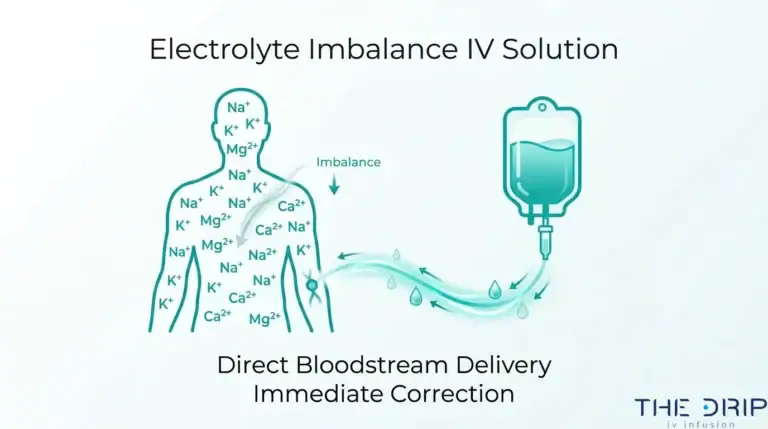
- Hydration therapy replenishes fluids and electrolytes for dehydration from illness, travel, or physical exertion.
- Vitamin cocktails, such as formulations containing B-complex vitamins, vitamin C, magnesium, and zinc, target energy, immunity, and overall nutrient replenishment.
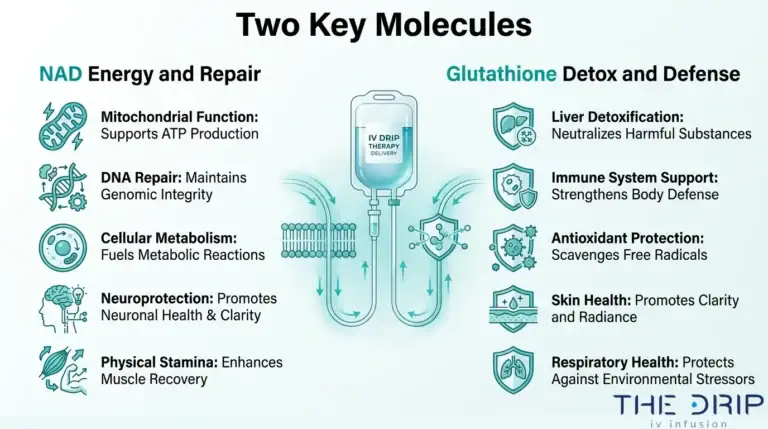
- Immune support drips combine high-dose vitamin C with antioxidants like glutathione to strengthen immune response.
- NAD+ infusions support cellular repair, mental clarity, and anti-aging benefits.
- Recovery blends address hangover symptoms, athletic fatigue, or post-event exhaustion with tailored combinations of fluids, anti-nausea medications, and vitamins.
- Specialty add-ons allow customization with ingredients like amino acids, Toradol for pain, or Zofran for nausea.
Because mobile IV therapy operates outside traditional clinical walls, choosing a reputable provider matters. According to a 2024 JAMA article on IV hydration spas, this fast-growing service category “seems to slip between the cracks of state and federal regulation and has the potential for significant adverse effects.” That reality makes it essential to verify that any mobile provider uses licensed nurses, medical-grade supplies, and standardized safety protocols before booking a session.
For clients who want treatments tailored beyond standard menus, the ability to add specific nutrients or medications transforms a routine drip into a personalized wellness session. Understanding which IV treatments align with your health goals helps you make the most of mobile service convenience.
How Can Mobile IV Therapy Fit Into Your Wellness Routine?
Mobile IV therapy fits into your wellness routine by delivering hydration, vitamins, and nutrient infusions directly to your home or workplace on a schedule that aligns with your lifestyle. The following sections cover how The Drip IV Infusion serves these needs and the core takeaways from comparing mobile and in-clinic options.
Can The Drip IV Infusion’s At-Home Service Meet Your IV Therapy Needs?
Yes, The Drip IV Infusion’s at-home service can meet your IV therapy needs through a comprehensive menu of IV cocktails, specialty treatments, and customizable add-ons. Founded in Fall 2022, The Drip IV Infusion operates as a mobile IV therapy provider in Arizona staffed by professionals with decades of experience in nursing, emergency medicine, and IV medical techniques.
The Drip IV Infusion offers treatments for a wide range of wellness goals:
- Rehydration and replenishment for general recovery
- Immune support for frequent travelers and seasonal wellness
- Morning sickness relief for expecting mothers
- Athletic performance and post-training recovery
- NAD+ infusions for anti-aging and mental restoration
- Weight loss support through semaglutide and tirzepatide
Each session takes approximately one hour, and add-ons such as glutathione, vitamin C, zinc, and magnesium allow further personalization. For those who value both clinical quality and the comfort of home, this combination of trained infusion specialists and a flexible service model makes routine IV therapy practical.
What Are the Key Takeaways About Mobile IV Therapy vs. In-Clinic?
The key takeaways about mobile IV therapy vs. in-clinic center on convenience, setting, and individual health priorities. Neither option is universally better; the right choice depends on your specific situation.
- Mobile IV therapy eliminates travel and waiting room time, making it ideal for busy professionals, athletes, recovering patients, and group events.
- In-clinic IV therapy provides on-site medical infrastructure, which suits first-time patients and those with complex health considerations.
- Treatment quality remains comparable when both settings use licensed nurses and follow CDC-recommended infection prevention protocols.
- Cost varies by provider and formulation, with individual sessions typically ranging from $100 to over $300.
- Personalized IV cocktails, including options like the Myers’ Cocktail, are available through both mobile and clinic-based providers.
For most people seeking routine wellness support, mobile IV therapy offers the strongest balance of accessibility and professional care. Prioritizing a provider with licensed staff, transparent safety protocols, and customizable formulations matters more than the setting itself. The Drip IV Infusion combines all three, bringing professional IV infusions to your preferred location across Arizona.