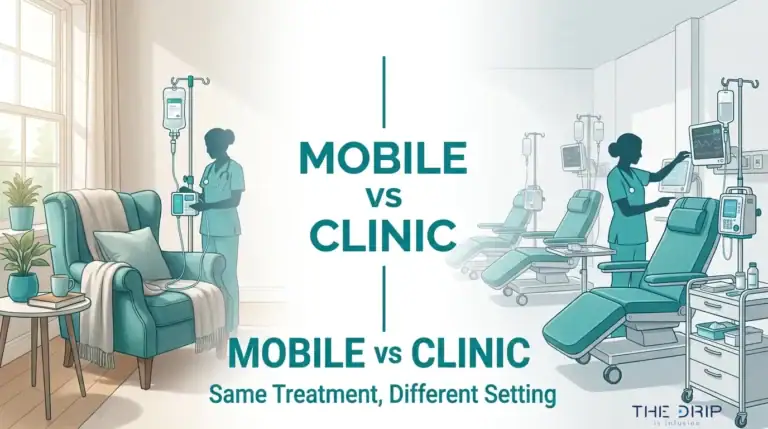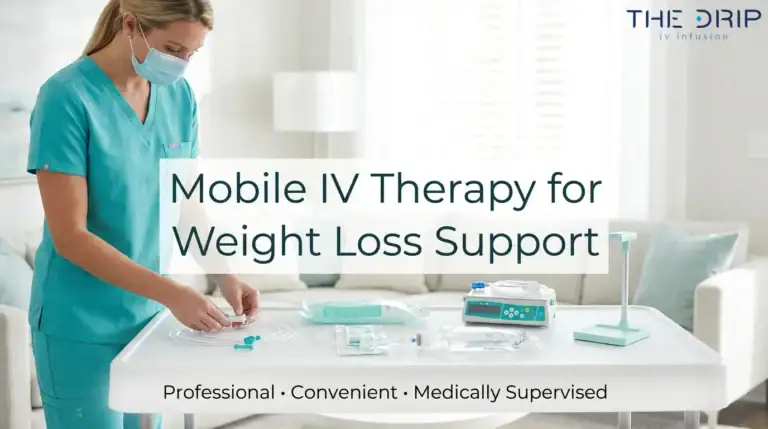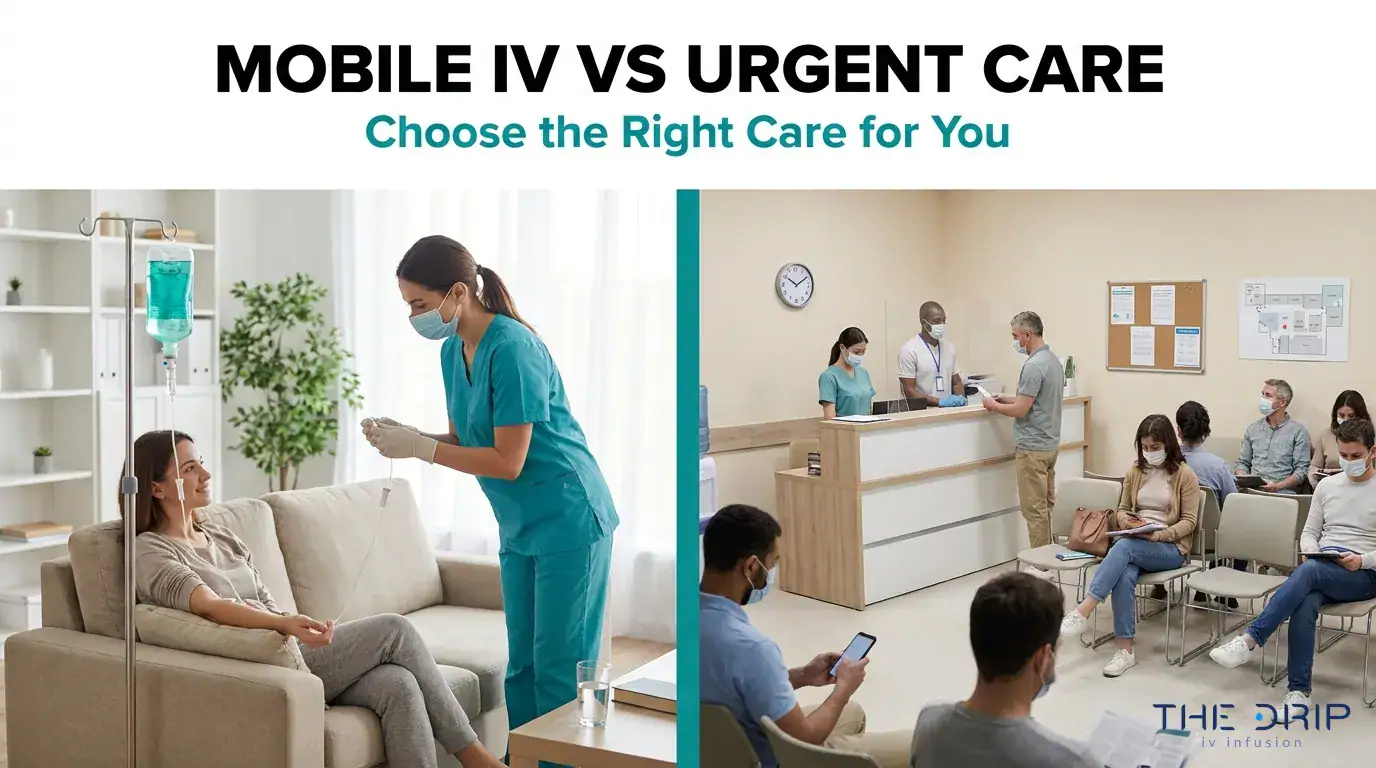
Mobile IV therapy is a licensed healthcare service where a registered nurse travels to your home and delivers hydration, vitamins, and nutrients directly into your bloodstream through an intravenous line. For San Tan Valley residents weighing this option against a traditional urgent care visit, the answer depends on the type of care you actually need.
This guide covers how mobile IV therapy works, which conditions it handles better than urgent care, when urgent care is still necessary, cost and time comparisons, the health benefits of home-based treatment, and where to find licensed mobile IV services locally.
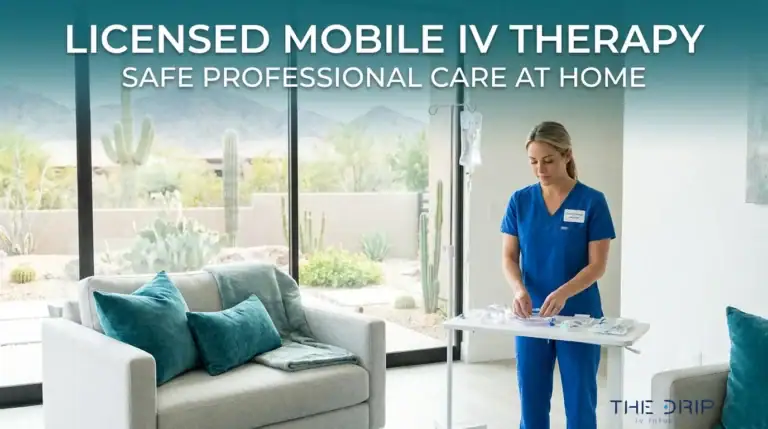
Mobile IV treatments are administered by licensed nurses operating under physician oversight, following the same aseptic protocols used in clinical settings. A standard appointment takes roughly 45 to 90 minutes at your chosen location, with no travel or waiting room time required.
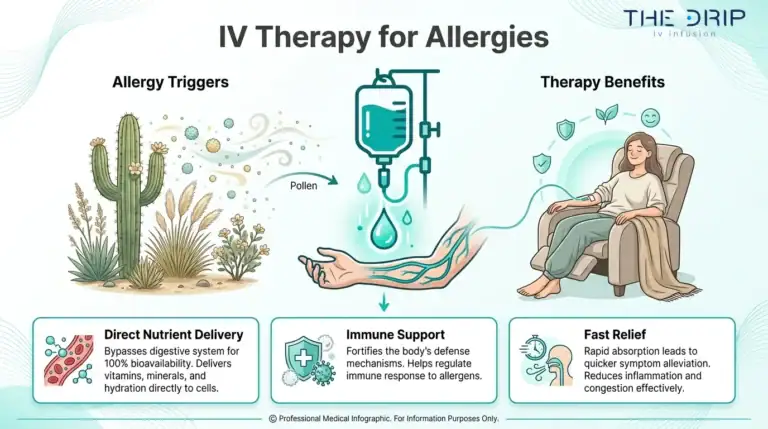
For non-emergency conditions like dehydration, hangovers, migraines, cold and flu recovery, morning sickness, and athletic soreness, mobile IV therapy delivers targeted relief at home. IV infusions bypass the digestive system entirely, achieving 100% bioavailability and faster results than oral fluids; this matters most when nausea prevents someone from keeping water down.
Urgent care remains essential when you need diagnostic imaging, lab work, stitches, antibiotics, or evaluation of worsening symptoms. Mobile IV therapy cannot replace those clinical capabilities.
Cost-wise, mobile IV sessions typically range from $149 to $279 with transparent flat-rate pricing, while urgent care visits often run $150 to $400 before surprise facility fees. Staying home also eliminates exposure to contagious patients in shared waiting rooms, which is a meaningful safety advantage for anyone already feeling unwell.
What Is Mobile IV Therapy and How Does It Work?
Mobile IV therapy is a healthcare service where a licensed nurse travels to your location and administers intravenous fluids, vitamins, and nutrients directly into your bloodstream. Below, we cover who provides these treatments and what a typical appointment looks like.
Who Administers Mobile IV Therapy Treatments?
Mobile IV therapy treatments are administered by licensed registered nurses (RNs) or licensed practical nurses (LPNs) operating under a medical order. In Arizona, the State Board of Nursing requires that any nurse providing IV therapy, including elective wellness infusions, must have physician oversight authorizing the treatment. This regulatory framework ensures that every mobile IV session follows the same clinical protocols used in hospitals and urgent care facilities. Nurses performing mobile IV therapy typically bring experience in emergency medicine, home health, or infusion specialties, which equips them to manage vein access, monitor for adverse reactions, and maintain sterile technique throughout the appointment.
What Happens During a Mobile IV Therapy Appointment?
A mobile IV therapy appointment follows a structured clinical process from start to finish. The nurse arrives at your chosen location, whether that is your home, office, or hotel in San Tan Valley. The session begins with a brief health assessment to review your symptoms, medical history, and hydration goals.
After the assessment, the appointment typically follows these steps:
- The nurse selects and sanitizes the IV insertion site using strict aseptic technique.
- A small catheter is placed into a peripheral vein, and the IV line is secured.
- The chosen drip formula begins flowing, delivering fluids and nutrients directly into the bloodstream.
- The nurse monitors vitals and comfort throughout the infusion.
- Once the drip is complete, the catheter is removed and the site is bandaged.
According to TrufaMED, the total time from a registered nurse’s arrival to departure is typically 45 to 90 minutes for a standard wellness IV therapy appointment at home. Proper aseptic technique during insertion and maintenance is essential, since the NCBI Bookshelf notes that local infection risk increases when sterile protocols are not followed or when the dressing becomes contaminated.
For San Tan Valley residents comparing this experience to a traditional clinic visit, the streamlined at-home process eliminates travel and waiting room time entirely.

What Does Urgent Care Treat in San Tan Valley?
Urgent care in San Tan Valley treats a wide range of non-life-threatening medical conditions that require same-day attention. These facilities handle issues too acute for a scheduled doctor’s visit but not severe enough for an emergency room. Common conditions treated at urgent care centers include:
- Minor injuries, such as sprains, strains, and simple fractures
- Respiratory infections, including colds, flu, bronchitis, and sinus infections
- Ear infections and sore throats
- Urinary tract infections
- Minor cuts and lacerations requiring stitches
- Allergic reactions that are not life-threatening
- Skin rashes, insect bites, and minor burns
- Stomach issues like nausea, vomiting, and mild dehydration
- Fever and body aches
- Basic diagnostic services, such as X-rays and lab work
Urgent care also provides preventive services like flu shots, physicals, and drug screenings. Most facilities are staffed by physicians or nurse practitioners who can prescribe medications on-site.
However, urgent care has clear boundaries. It is not designed for chronic condition management, customized nutrient therapies, or ongoing wellness optimization. For San Tan Valley residents dealing with symptoms like moderate dehydration, hangovers, migraines, or post-illness fatigue, many of these overlap with conditions that mobile IV therapy can also address, often without the wait or exposure to other sick patients. Understanding what urgent care covers helps clarify when a mobile alternative might better fit your needs.
When Should You Choose Mobile IV Therapy Over Urgent Care?
You should choose mobile IV therapy over urgent care when your condition is non-emergency and responds well to hydration, vitamins, or symptom-targeted infusions delivered at home. The scenarios below cover dehydration, cold and flu recovery, hangovers, migraines, morning sickness, and athletic recovery.

When Is Mobile IV Therapy Better for Dehydration?
Mobile IV therapy is better for dehydration when symptoms are mild to moderate and you can recover safely at home. Conditions such as heat-related fluid loss, illness-induced dehydration, or inadequate daily intake respond well to IV saline and electrolyte infusions without requiring a clinical visit. Urgent care becomes necessary when dehydration is severe or accompanied by confusion, rapid heartbeat, or inability to keep fluids down. For straightforward rehydration in San Tan Valley, a mobile appointment eliminates travel and waiting room exposure while delivering fluids directly into the bloodstream. This makes mobile IV a practical first choice before symptoms escalate to emergency-level severity.
When Is Mobile IV Therapy Better for Cold and Flu Recovery?
Mobile IV therapy is better for cold and flu recovery when you need immune support and hydration but do not require diagnostic testing or prescription antivirals. Infusions containing vitamin C, zinc, and B-complex vitamins help replenish nutrients depleted during illness while keeping you hydrated. Staying home also eliminates the risk of exposing others in a waiting room. Urgent care remains the right call when symptoms include persistent high fever, difficulty breathing, or chest pain. For typical cold and flu symptoms where rest and fluid support are the primary treatment, mobile IV therapy in San Tan Valley lets you recover comfortably without leaving bed.
When Is Mobile IV Therapy Better for Hangover Symptoms?
Mobile IV therapy is better for hangover symptoms when nausea, headache, and dehydration make it difficult to keep oral fluids down. IV hydration with saline, B vitamins, and anti-nausea add-ons like Zofran addresses multiple hangover symptoms simultaneously. Because the infusion bypasses the digestive system entirely, relief often begins during the session itself. Urgent care is rarely necessary for a standard hangover unless symptoms include vomiting blood, severe abdominal pain, or signs of alcohol poisoning. For most people in San Tan Valley dealing with a rough morning, mobile IV therapy provides faster, more comfortable relief than driving to a clinic.
When Is Mobile IV Therapy Better for Migraine Relief?
Mobile IV therapy is better for migraine relief when light sensitivity, nausea, or intense pain makes traveling to a clinic impractical. IV infusions can deliver magnesium and hydration directly, which are two key factors in migraine management. According to a study published in PubMed Central, one gram of intravenous magnesium sulfate administered over 15 minutes was superior to placebo in migraine pain relief, pain freedom, and freedom from associated symptoms. Urgent care is appropriate when migraines are accompanied by neurological changes, sudden onset unlike previous episodes, or fever. For recurring migraine sufferers in San Tan Valley, mobile IV therapy offers targeted relief without the fluorescent lights and noise of a waiting room.
When Is Mobile IV Therapy Better for Morning Sickness?
Mobile IV therapy is better for morning sickness when persistent nausea and vomiting make oral hydration unreliable. Expecting mothers who cannot keep water or food down benefit from IV fluids that restore electrolyte balance without relying on the digestive system. Add-ons such as Zofran and B-complex vitamins can further ease nausea. Urgent care should be visited if morning sickness progresses to hyperemesis gravidarum, marked by severe weight loss or an inability to retain any fluids for extended periods. For most pregnancy-related nausea, receiving care at home in San Tan Valley reduces stress and lets you rest immediately after treatment.
When Is Mobile IV Therapy Better for Athletic Recovery?
Mobile IV therapy is better for athletic recovery when rapid rehydration and nutrient replenishment are needed after intense training or competition. Endurance athletes, in particular, lose significant electrolytes through sweat that oral beverages replace slowly. IV infusions containing saline, magnesium, amino blends, and B vitamins accelerate recovery by delivering nutrients at 100% bioavailability. Urgent care is warranted when athletic injuries involve fractures, severe muscle tears, or symptoms of heat stroke requiring medical evaluation. For routine post-workout recovery in San Tan Valley, mobile IV therapy fits conveniently into a training schedule and eliminates downtime spent in a clinic.
With these condition-specific scenarios clarified, knowing when urgent care is still the better choice completes the decision.
When Should You Still Go to Urgent Care Instead?
You should still go to urgent care instead of mobile IV therapy when your condition requires diagnostic testing, physical examination, or medical interventions beyond hydration and nutrient support. Urgent care handles situations where identifying the underlying cause of symptoms matters more than symptom relief alone.
The following conditions require urgent care rather than mobile IV therapy:
- Suspected fractures, sprains, or acute injuries need X-rays and physical assessment that only a clinical facility can provide.
- Infections requiring antibiotics demand a proper diagnosis, lab testing, and prescription medications.
- Lacerations or wounds needing stitches require sterile clinical tools and hands-on wound care.
- Persistent high fever with unknown origin calls for blood work and diagnostic evaluation to rule out serious infection.
- Severe abdominal pain may signal appendicitis, kidney stones, or other conditions requiring imaging.
- Breathing difficulties or chest tightness warrant immediate clinical monitoring and oxygen assessment.
- Allergic reactions beyond mild symptoms need epinephrine access and supervised observation.
- Urinary tract infections or strep throat require cultures, rapid testing, and targeted prescriptions.
According to Medscape, severe dehydration warrants hospital admission for rehydration with isotonic saline, as do hypernatremic or hyponatremic states. Mobile IV therapy supports mild to moderate dehydration recovery, but it cannot replace the diagnostic capabilities or prescription authority of an urgent care clinic.
For most San Tan Valley residents, the decision comes down to whether you need a diagnosis or symptom relief. If you already know what is wrong and need hydration, vitamins, or nausea support, mobile IV therapy is often the more convenient choice. If something feels unfamiliar or worsening, urgent care provides the clinical infrastructure to investigate further.
Understanding when urgent care is necessary also helps clarify how cost factors into the decision between these two options.
How Does the Cost of Mobile IV Therapy Compare to Urgent Care?
The cost of mobile IV therapy is generally comparable to, or lower than, an urgent care visit for similar services. Pricing depends on insurance status, treatment complexity, and facility fees.
According to RevivaGo, the typical cost for an urgent care visit without insurance ranges from $150 to $400, while mobile IV therapy typically costs a flat rate of $149 to $279 without insurance. Mobile IV pricing offers a clear advantage: you know the total cost upfront before booking, with no surprise facility fees, lab charges, or separate provider bills that often accompany urgent care invoices.
For San Tan Valley residents seeking straightforward hydration, vitamin replenishment, or symptom relief, mobile IV therapy frequently delivers better cost predictability. Urgent care remains the right financial choice when you need diagnostic services, prescriptions, or treatments that insurance will cover. Understanding total appointment duration helps complete the cost-value picture.

How Long Does Mobile IV Therapy Take Compared to an Urgent Care Visit?
Mobile IV therapy typically takes less total time than an urgent care visit when factoring in travel, waiting, and treatment duration. The time difference becomes clear when comparing each step of the process side by side.
A typical mobile IV therapy session in San Tan Valley takes about 1 hour from the nurse’s arrival to departure. There is no drive time for the client, no waiting room delay, and no check-in paperwork beyond a brief health screening. The nurse arrives at your location ready to begin.
An urgent care visit involves several time-consuming steps:
- Driving to the nearest clinic and finding parking.
- Completing intake paperwork and registration.
- Waiting to be seen by a provider.
- Undergoing examination and assessment.
- Receiving treatment, which may include IV rehydration with saline fluids.
According to Experity Health, the most common use of IV infusions in urgent care is for rehydration with saline fluids during routine medical visits for patients presenting with moderate dehydration. When urgent care does administer IV fluids, the infusion itself adds 30 to 60 minutes on top of the wait and consultation time, pushing total visits well past the one-hour mark.
For San Tan Valley residents dealing with dehydration, hangovers, or post-illness fatigue, mobile IV therapy eliminates every minute spent outside the home. That reclaimed time often matters most when you are already feeling unwell, making convenience a practical health advantage rather than a luxury.
What Are the Benefits of Staying Home Instead of Visiting Urgent Care?
The benefits of staying home instead of visiting urgent care include reduced exposure to contagious illnesses and a more comfortable recovery environment. These advantages apply especially to non-emergency concerns like dehydration, fatigue, and cold and flu symptoms.
How Does Avoiding Waiting Rooms Reduce Exposure to Illness?
Avoiding waiting rooms reduces exposure to illness by eliminating contact with contagious patients in shared clinical spaces. Urgent care facilities see high volumes of people with respiratory infections, stomach viruses, and other communicable conditions throughout the day. Sitting among symptomatic patients while waiting for treatment increases the risk of picking up something new.
According to CDC data, about one in 31 hospital patients has at least one healthcare-associated infection on any given day, with an estimated 687,000 HAIs occurring in U.S. acute care hospitals in 2015. While urgent care centers are not hospitals, the principle holds: shared clinical environments concentrate sick individuals in close proximity. Mobile IV therapy in San Tan Valley bypasses this risk entirely, since a nurse arrives at your home where you control the environment.
How Does Home-Based Care Improve Comfort and Recovery?
Home-based care improves comfort and recovery by allowing patients to rest in familiar surroundings during treatment. Recovering on your own couch, in your own bed, without fluorescent lighting or unfamiliar noise creates less physiological stress.
Research supports this approach broadly. A study published in JAMA Network Open found that Hospital at Home patients had significantly lower odds of in-hospital mortality compared with traditional inpatient groups. Although mobile IV therapy addresses less acute concerns, the underlying benefit is the same: healing happens more effectively when the body is relaxed. For San Tan Valley residents managing dehydration, migraines, or morning sickness, receiving nurse-administered IV therapy at home means no driving while symptomatic and no disrupting rest for a clinic visit.
With home-based treatment advantages clear, the next consideration is whether mobile IV therapy can deliver clinical results that urgent care cannot.
Can Mobile IV Therapy Deliver Results That Urgent Care Cannot?
Mobile IV therapy can deliver results that urgent care cannot by offering customizable nutrient infusions and direct bloodstream delivery in a home setting. The sections below explain why IV hydration outpaces oral fluids and which personalized treatments are available.
Why Does IV Hydration Work Faster Than Oral Fluids?
IV hydration works faster than oral fluids because intravenous delivery bypasses the digestive system entirely, sending fluids and electrolytes directly into the bloodstream for immediate absorption. Oral rehydration must pass through the stomach and intestines, where absorption is gradual and incomplete, especially when nausea or vomiting is present.
According to a study published in the Evidence-Based Practice Journal, oral rehydration therapy results in approximately 4% higher risk of needing additional rehydration treatment compared with intravenous therapy in pediatric gastroenteritis patients. This difference matters most when dehydration is moderate or symptoms prevent someone from keeping fluids down. For San Tan Valley residents dealing with Arizona’s extreme heat, that speed advantage can make a meaningful difference in how quickly energy and cognitive function return.

What Customizable Treatments Are Available Through Mobile IV?
The customizable treatments available through mobile IV therapy include tailored nutrient blends, vitamin add-ons, and specialty infusions that urgent care facilities do not typically offer. While urgent care primarily administers standard saline for rehydration, mobile IV services can formulate drips around specific wellness goals.
Common customizable options include:
- Hydration drips with electrolytes for dehydration and heat exhaustion recovery.
- Immune support blends containing Vitamin C, zinc, and B-complex vitamins.
- NAD+ infusions for cellular restoration and anti-aging support.
- Anti-nausea formulations with Zofran for morning sickness or stomach illness.
- Recovery cocktails with magnesium, amino blends, and glutathione for athletic performance.
- Migraine-targeted drips with magnesium and Toradol for acute relief.
This level of personalization is where mobile IV therapy creates a clear separation from urgent care. Urgent care addresses acute symptoms with standardized protocols, while mobile IV providers build each infusion around the individual’s needs.
With these unique treatment capabilities established, the next step is finding a trusted mobile IV provider in San Tan Valley.
Where Can You Get Mobile IV Therapy in San Tan Valley?
The Drip IV Infusion delivers mobile IV therapy directly to homes across San Tan Valley. Below, learn how nurse-administered care works at your location and review the key takeaways comparing mobile IV therapy to urgent care.
Can The Drip IV Infusion Bring Nurse-Administered Care to Your Home?
Yes, The Drip IV Infusion can bring nurse-administered care to your home in San Tan Valley. Founded in Fall 2022 by professionals with decades of experience in nursing and emergency medicine, The Drip IV Infusion sends licensed nurses directly to your chosen location for personalized IV infusions.
This matters because, according to the Cleveland Clinic, healthcare providers categorize moderate dehydration as requiring IV hydration in an urgent care, emergency room, or hospital setting. The Drip IV Infusion provides that same caliber of intravenous care without requiring a trip to a clinical facility. Booking through thedripivinfusion.com connects San Tan Valley residents with a convenient, professional alternative that prioritizes comfort and accessibility.
What Are the Key Takeaways About Mobile IV Therapy vs Urgent Care in San Tan Valley?
The key takeaways about mobile IV therapy vs urgent care in San Tan Valley center on convenience, safety, and appropriate use. Mobile IV therapy suits non-emergency wellness needs, while urgent care handles acute medical conditions requiring diagnostic tools or prescriptions.
Core takeaways include:
- Mobile IV therapy delivers nurse-administered hydration, vitamins, and nutrients at home, eliminating facility wait times and exposure to other sick patients.
- According to a CDC report, about one in 31 hospital patients has at least one healthcare-associated infection, making home-based treatment a lower-exposure option for non-emergency care.
- Arizona requires mobile IV hydration businesses to obtain a health care institution license from the Arizona Department of Health Services, so verifying provider credentials is essential.
- Urgent care remains the right choice for conditions needing physical exams, lab work, imaging, or prescription medications.
- A typical mobile IV session takes about one hour at your location, compared to the combined travel, wait, and treatment time at a clinic.
For San Tan Valley residents weighing both options, the decision depends on the situation. When symptoms are non-emergency and the goal is rehydration, immune support, or recovery, The Drip IV Infusion offers a licensed, home-based solution worth considering.