A B12 shot is an intramuscular injection that delivers vitamin B12 directly into muscle tissue, while a B12 IV infusion delivers B12 alongside hydrating fluids and complementary nutrients directly into the bloodstream through a vein. Both methods bypass the digestive system, but they differ in absorption speed, nutrient scope, and ideal use cases.
This guide covers how each delivery method works, the core clinical differences between them, who benefits most from each option, and what to expect regarding side effects, treatment frequency, and cost.
B12 shots deposit cobalamin into muscle tissue, where it releases gradually into the bloodstream over hours to days. This sustained absorption profile makes shots well suited for routine maintenance and diagnosed deficiencies like pernicious anemia, particularly when only B12 replenishment is needed.
IV infusions achieve near-complete bioavailability by delivering B12 immediately into the vasculature. Providers can also combine B12 with vitamin C, magnesium, zinc, glutathione, and B-complex vitamins in a single session, making infusions a more versatile option for severe deficiency, athletic recovery, illness recovery, and chronic fatigue.
The practical tradeoffs between the two methods come down to time, customization, and cost. B12 shots take minutes and cost less per session, while IV infusions require 30 to 60 minutes and carry higher price points that reflect their expanded nutrient delivery and medical oversight.
Recognizing the signs of B12 deficiency, such as persistent fatigue, numbness, and cognitive changes, helps determine which method fits your situation. Mobile IV therapy now brings both options directly to your location, combining clinical precision with convenience.
What Is a B12 Shot and How Does It Work?
A B12 shot is an intramuscular injection that delivers vitamin B12 directly into muscle tissue, bypassing the digestive system. The following subsections cover how the shot is administered and how quickly the body absorbs it.
How Is a B12 Shot Administered?
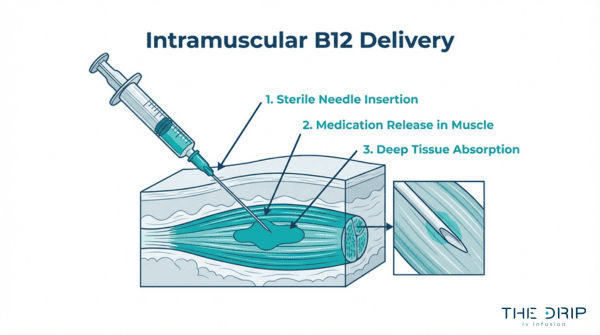
A B12 shot is administered by injecting vitamin B12 directly into muscle tissue, typically in the upper arm, thigh, or hip. A healthcare provider uses a small needle to deliver the dose intramuscularly, allowing the nutrient to absorb through the muscle’s blood supply. According to the NIH Office of Dietary Supplements, vitamin B12 is available as cyanocobalamin and hydroxocobalamin, which are typically administered parenterally by intramuscular injection to bypass gastrointestinal absorption barriers. The procedure takes only a few minutes, making it one of the fastest clinical options for targeted B12 supplementation. For individuals with absorption disorders or pernicious anemia, this direct delivery method is often the preferred route.
How Quickly Does a B12 Shot Get Absorbed?
A B12 shot gets absorbed gradually as the muscle tissue releases the nutrient into the bloodstream over hours to days. Because the vitamin deposits into muscle rather than entering the vasculature immediately, intramuscular delivery produces a sustained release effect. According to a study published in Frontiers in Pharmacology, intramuscular administration of vitamin B12 produces a faster increase in serum levels compared to oral routes, although both methods are effective in restoring normal cobalamin levels in patients with deficiency. Hydroxocobalamin, in particular, is retained in the body longer than cyanocobalamin, which can reduce the frequency of repeat injections. This slower, steady absorption profile makes B12 shots well suited for ongoing maintenance therapy rather than acute correction.
Understanding how B12 shots work sets the stage for comparing them with IV infusions.
What Is a B12 IV Infusion and How Does It Work?
A B12 IV infusion is an intravenous treatment that delivers vitamin B12 alongside hydrating fluids and complementary nutrients directly into the bloodstream. The sections below explain how IV delivery works and which additional nutrients a B12 drip can include.
How Is B12 Delivered Through an IV Infusion?
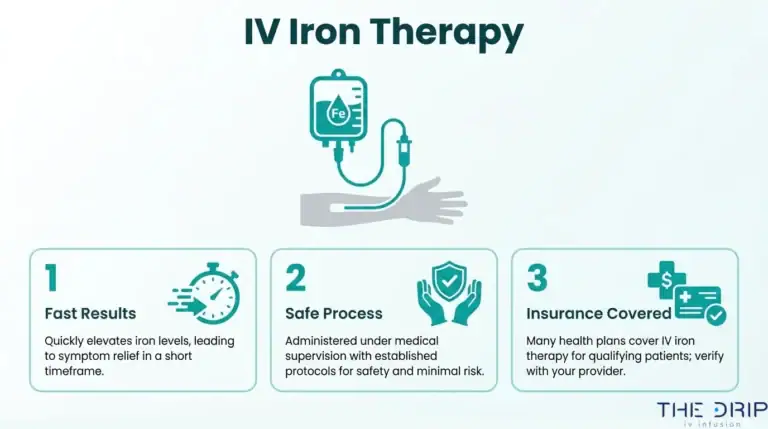
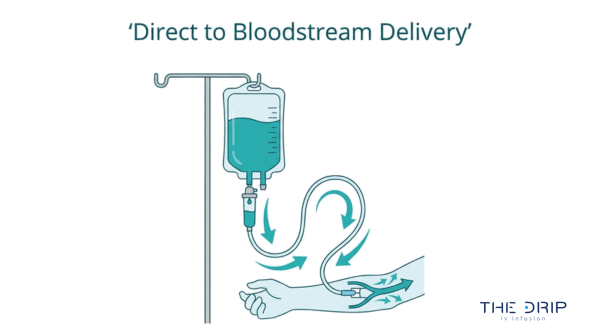
B12 is delivered through an IV infusion by inserting a small catheter into a vein, allowing a saline-based solution containing vitamin B12 to flow directly into the bloodstream. This bypasses the digestive system entirely, achieving near-complete bioavailability.
Unlike a single-nutrient intramuscular injection, an IV infusion supports multiple physiological systems simultaneously. According to physician observations reported by Avena Natural Health, B12 shots address a single nutrient through direct injection, while IV infusions offer broader support by combining hydrating fluids with diverse micronutrients. This multi-system approach makes IV infusions particularly valuable when hydration and nutrient replenishment are both priorities.
What Other Nutrients Can Be Included in a B12 IV Drip?
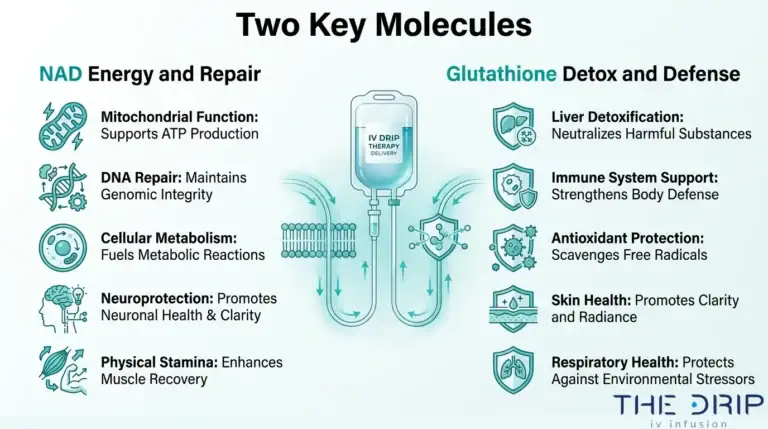
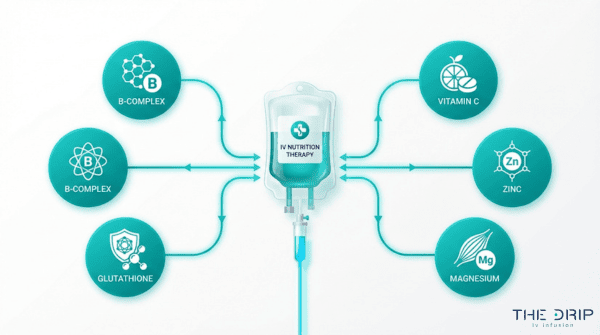
The other nutrients that can be included in a B12 IV drip span vitamins, minerals, and antioxidants selected to complement B12’s role in energy production and neurological function. According to Infinity Cellular Wellness, complementary nutrients frequently included in IV wellness infusions alongside B vitamins include zinc, magnesium, and glutathione to support immunity and energy metabolism.
Common additions in a B12 IV drip include:
- Vitamin C for immune support and antioxidant protection.
- Magnesium for muscle relaxation and nerve function.
- Zinc for immune defense and cellular repair.
- Glutathione for detoxification and oxidative stress reduction.
- B-complex vitamins such as B1, B2, and B6 for comprehensive metabolic support.
This nutrient flexibility is what separates IV infusions from standalone B12 shots, giving providers the ability to tailor each session to individual health goals.
What Are the Key Differences Between B12 Shots and IV Infusions?
The key differences between B12 shots and IV infusions involve delivery method, absorption rate, treatment duration, nutrient customization, and cost. Each factor influences which option best fits a patient’s health goals.
How Does the Delivery Method Differ?
The delivery method differs in how each treatment enters the body. B12 shots use intramuscular injection, depositing vitamin B12 directly into muscle tissue, typically in the upper arm or thigh. The muscle acts as a reservoir, releasing B12 gradually into the bloodstream over hours to days.
IV infusions deliver B12 intravenously through a catheter placed in a vein. This routes the nutrient directly into the bloodstream without an intermediary tissue depot. Because IV infusions bypass both the digestive system and the muscle absorption step, they offer the most direct pathway for nutrient delivery available outside of emergency medical settings.
How Does Absorption Rate Compare?
Absorption rate compares favorably for both injectable methods over oral supplements, though IV infusions hold an edge. Oral vitamin B12 absorption drops sharply at higher doses; according to the National Academies of Sciences, Engineering, and Medicine, absorption is approximately 50% at 1 mcg but falls to roughly 1.3% at 1,000 mcg.
Both B12 shots and IV infusions bypass the gastrointestinal tract entirely, eliminating this dose-dependent absorption loss. However, intramuscular shots release B12 gradually from muscle tissue, while IV infusions deliver the full dose into the bloodstream immediately. For individuals with absorption disorders or severe deficiency, this distinction in delivery speed can meaningfully affect how quickly levels normalize.
How Does Treatment Duration Differ?
Treatment duration differs significantly between the two options. A B12 shot takes roughly 5 to 10 minutes, including preparation and the injection itself. The process is quick, requiring no extended monitoring afterward.
An IV infusion typically lasts 30 to 60 minutes, depending on the volume of fluids and the specific nutrient formulation administered. The longer session allows for a steady, controlled infusion of larger fluid volumes. For individuals who prioritize speed and minimal time commitment, B12 shots offer clear convenience. Those seeking a comprehensive nutrient protocol may find the extended IV session worthwhile.
How Does Nutrient Customization Differ?
Nutrient customization differs substantially between the two treatments. B12 shots deliver a single nutrient, vitamin B12, in one specific form such as cyanocobalamin or methylcobalamin. There is no option to add complementary vitamins or minerals within the same injection.
IV infusions support multi-nutrient customization. A single IV session can combine B12 with complementary nutrients, such as:
- Vitamin C for immune and antioxidant support
- Magnesium for muscle function and relaxation
- Zinc for immune defense
- Glutathione for detoxification
- B-complex vitamins for broader energy metabolism
This flexibility makes IV infusions a more versatile option for individuals addressing multiple nutritional needs simultaneously.
How Does Cost Typically Compare?
Cost typically compares as follows: B12 shots are the more affordable option. According to the Royal Palm Beach Medical Group, a single vitamin B12 injection without insurance ranges between $20 and $100, depending on provider and location.
IV infusions carry higher price points, generally ranging from $100 to $600 per session. The increased cost reflects the longer treatment time, medical supplies, nursing oversight, and the ability to include multiple nutrients in one session. For individuals needing only B12 replenishment, shots deliver strong value. When broader nutritional support or hydration is the goal, IV infusions justify the premium through their expanded scope of delivery.
With these core differences established, the next step is determining which option suits your specific health situation.
Who Should Choose a B12 Shot Over an IV Infusion?
A B12 shot is the better choice for individuals who need targeted vitamin B12 supplementation without additional nutrients or extended session times. The following subsections cover ideal candidates for maintenance dosing and diagnosed deficiency treatment.

Who Benefits Most From B12 Shots for Maintenance?
Individuals who benefit most from B12 shots for maintenance are those with adequate overall nutrition who simply need periodic B12 replenishment. According to clinical observations reported by Integrative Medicine of Los Angeles, an intramuscular B12 injection is absorbed more slowly over a longer time frame compared to an IV infusion, which delivers the nutrient immediately into the vasculature. This slower, sustained absorption makes IM shots well suited for steady maintenance rather than acute correction.
Ideal maintenance candidates include:
- People on plant-based diets who need regular B12 supplementation to prevent gradual depletion.
- Adults over 50 with naturally declining B12 absorption seeking routine top-ups.
- Individuals who prefer quick, single-nutrient appointments lasting only a few minutes.
For those managing a confirmed deficiency rather than simply maintaining levels, the treatment approach shifts significantly.
Who Benefits Most From B12 Shots for Diagnosed Deficiency?
Individuals who benefit most from B12 shots for diagnosed deficiency are patients with conditions that impair gastrointestinal absorption, such as pernicious anemia, tropical sprue, or pancreatic insufficiency. Because these conditions prevent adequate oral uptake, intramuscular injection bypasses the digestive system entirely and delivers B12 directly into muscle tissue for reliable absorption.
B12 shots are particularly effective for deficiency management when:
- A healthcare provider has confirmed serum B12 levels below 200 pg/mL.
- The patient requires a structured loading-dose schedule followed by ongoing injections.
- The deficiency is isolated to B12 without the need for multi-nutrient replenishment.
For patients whose deficiency is severe or accompanied by broader nutritional gaps, an IV infusion may offer advantages that a single-nutrient shot cannot match.
Who Should Choose a B12 IV Infusion Over a Shot?
Individuals with severe deficiency, high physical demands, illness recovery needs, or chronic fatigue should choose a B12 IV infusion over a shot. The following sections break down each scenario.
Who Benefits Most From IV Infusions for Severe Deficiency?
Individuals with severe B12 deficiency benefit most from IV infusions because intravenous delivery raises serum levels faster than other supplementation routes. According to a study published in PubMed Central (NIH), IV administration of vitamin B12 provides a faster increase in B12 levels compared to oral supplementation, making it a potentially better option for patients with severe deficiency. When neurological symptoms like numbness or tingling are already present, that speed matters. For anyone whose levels have dropped critically low, an IV infusion delivers the rapid correction that a standard intramuscular shot simply cannot match.
Who Benefits Most From IV Infusions for Athletic Recovery?
Athletes recovering from intense training or competition benefit most from IV infusions for athletic recovery. IV drips combine B12 with hydrating saline and complementary nutrients, addressing multiple recovery demands simultaneously. Rehydration, electrolyte balance, and micronutrient replenishment happen in a single session rather than through separate oral supplements taken over hours. According to research published in the British Journal of Sports Medicine, IV rehydration has been proposed as an ergogenic aid for athletes to achieve euhydration more effectively than oral routes. For competitive or endurance athletes facing tight recovery windows, this multi-nutrient approach accelerates the return to peak readiness.
Who Benefits Most From IV Infusions for Illness Recovery?
Individuals recovering from acute illness benefit most from IV infusions for illness recovery. Fever, vomiting, and reduced appetite deplete fluids and nutrients rapidly, and a compromised digestive system absorbs oral supplements poorly. An IV infusion bypasses the gut entirely, delivering B12 alongside hydration and supportive vitamins like vitamin C and zinc directly into the bloodstream. This combination helps restore energy and immune function when the body needs it most. For anyone struggling to keep food or supplements down during illness, IV delivery removes the absorption barrier that makes oral intake unreliable.
Who Benefits Most From IV Infusions for Chronic Fatigue?
Individuals living with chronic fatigue conditions benefit most from IV infusions for chronic fatigue. A clinical series published in the Journal of Clinical Medicine found that patients with Myalgic Encephalomyelitis/Chronic Fatigue Syndrome (ME/CFS) who received intermittent intravenous saline infusions over a 9-week period showed beneficial effects in managing symptoms of dysautonomia and postural orthostatic tachycardia syndrome (POTS). Because chronic fatigue often involves overlapping nutrient deficiencies and poor gut absorption, IV infusions offer a reliable path to consistent B12 and micronutrient delivery. For those who have tried oral supplements without meaningful improvement, IV therapy represents a practical next step worth discussing with a healthcare provider.
What Are the Benefits of B12 Shots?
The benefits of B12 shots include rapid correction of vitamin B12 deficiency, improved energy levels, neurological support, and reliable absorption that bypasses the digestive system. B12 shots deliver a concentrated dose of cobalamin directly into muscle tissue, making them especially valuable for individuals with absorption disorders.
According to the Mayo Clinic, parenteral vitamin B12 therapy is clinically indicated for treating deficiency caused by pernicious anemia, gastrointestinal disorders such as tropical sprue, and conditions resulting in malabsorption like pancreatic insufficiency. Key benefits include:
- Bypasses GI absorption barriers. Intramuscular injection delivers B12 directly into tissue, which is critical for patients whose digestive systems cannot absorb oral supplements effectively.
- Corrects deficiency reliably. B12 shots restore serum cobalamin levels in a predictable, clinically proven manner for diagnosed deficiencies.
- Supports neurological function. Adequate B12 levels protect against nerve damage, numbness, and tingling that can become irreversible if left untreated.
- Provides sustained release. Because intramuscular B12 is absorbed more slowly over a longer time frame than intravenous delivery, each shot offers a sustained elevation in serum levels between appointments.
- Requires minimal time. A single injection takes only a few minutes, making it one of the most time-efficient supplementation methods available.
For individuals managing a straightforward B12 deficiency without broader nutrient needs, shots remain one of the most practical and cost-effective treatment options. Understanding these targeted benefits helps clarify when an IV infusion might offer additional advantages.
What Are the Benefits of B12 IV Infusions?
The benefits of B12 IV infusions include near-complete nutrient absorption, multi-system support through complementary vitamins and minerals, and faster correction of severe deficiency. B12 IV infusions deliver cobalamin directly into the bloodstream alongside hydrating fluids, bypassing digestive barriers entirely. According to a study published in PubMed Central (National Institutes of Health), intravenous administration of vitamin B12 provides a faster increase in B12 levels compared to oral supplementation, making it a potentially better option for patients with severe deficiency. IV infusions also allow nutrient customization; providers can combine B12 with zinc, magnesium, glutathione, and vitamin C to address energy, immunity, and recovery simultaneously. For anyone dealing with absorption issues or needing rapid replenishment, IV infusions offer a comprehensive approach that single-nutrient methods cannot match.
What Are the Side Effects of B12 Shots vs IV Infusions?
The side effects of B12 shots vs IV infusions differ primarily in injection site reactions and systemic risks. B12 shots commonly cause localized pain, while IV infusions carry additional considerations related to venous access and fluid delivery.
What Are the Common Side Effects of B12 Shots?
The common side effects of B12 shots include pain at the injection site, mild swelling, and temporary redness. According to StatPearls (NCBI Bookshelf), the most common adverse effect of intramuscular vitamin B12 injections is significant pain at the injection site, which is particularly noted in thinner individuals.
Additional side effects may include:
- Mild diarrhea or nausea shortly after injection.
- Headache or dizziness during the first few treatments.
- A warm or flushing sensation near the injection area.
Preparations containing benzyl alcohol are contraindicated for pregnant women and children due to potential toxicity risks. Most side effects from B12 shots resolve quickly, making them generally well-tolerated for routine supplementation. For individuals with minimal subcutaneous tissue, discussing injection technique with a provider can reduce discomfort significantly.
What Are the Common Side Effects of B12 IV Infusions?
The common side effects of B12 IV infusions include minor bruising at the catheter site, a cooling sensation during fluid delivery, and occasional lightheadedness. Because IV infusions deliver nutrients directly into the bloodstream, reactions can sometimes manifest faster than with intramuscular injections.
Potential side effects to be aware of include:
- Bruising or tenderness where the IV catheter is placed.
- A metallic taste during the infusion.
- Mild nausea or a temporary drop in blood pressure.
- Rare allergic reactions, particularly in individuals with sensitivities to specific additives.
Proper medical oversight during administration minimizes these risks. Since IV infusions often combine B12 with complementary nutrients, the broader formulation can occasionally introduce sensitivities that a standalone B12 shot would not. This is why discussing your full health history with a qualified provider before any infusion session remains essential.
Understanding side effect profiles helps determine the right frequency and format for ongoing B12 treatment.
How Often Should You Get B12 Shots vs IV Infusions?
You should get B12 shots weekly to monthly for maintenance and IV infusions monthly to quarterly for broader wellness support, though frequency depends on deficiency severity, health goals, and your provider’s recommendation.
B12 shot frequency follows a common clinical pattern. During initial treatment for diagnosed deficiency, providers typically administer injections daily or every other day for one to two weeks. After this loading phase, frequency tapers to weekly injections for four to six weeks, then transitions to monthly maintenance doses. Hydroxocobalamin, which the body retains longer than cyanocobalamin, often allows less frequent dosing once levels stabilize. Individuals using B12 shots purely for energy support or general wellness usually begin with weekly sessions and adjust based on how their levels respond.
IV infusion frequency differs because these sessions deliver a broader nutrient combination. Most wellness-focused clients schedule IV infusions every two to four weeks, while those managing chronic fatigue or recovering from illness may benefit from weekly sessions during acute phases. Because IV delivery achieves near-complete bioavailability by bypassing the digestive system entirely, the nutrient impact per session tends to be more comprehensive, which can extend the interval between treatments compared to single-nutrient injections.
For most people, the practical approach involves working with a healthcare provider to establish a baseline through blood work, then adjusting session frequency based on symptom improvement and lab results. Recognizing the signs that your B12 levels may be dropping helps determine the right schedule.
What Are the Signs You May Need B12 Supplementation?
The signs you may need B12 supplementation include persistent fatigue, neurological changes, and blood-related abnormalities. Recognizing these symptoms early prevents long-term complications.
Vitamin B12 deficiency affects a measurable portion of the population. According to CDC NHANES data, approximately 3.6% of U.S. adults aged 19 and older have a vitamin B12 deficiency, defined as serum levels lower than 200 pg/mL. Symptoms often develop gradually, making them easy to dismiss.
Common signs that suggest B12 supplementation may be necessary include:
- Numbness or tingling in hands and feet, which signals peripheral nerve involvement.
- Chronic fatigue and weakness that persists despite adequate sleep.
- Difficulty with balance and coordination, indicating possible neurological decline.
- Cognitive changes such as memory problems, brain fog, or difficulty concentrating.
- Pale or jaundiced skin, often linked to megaloblastic anemia from inadequate B12.
- Mood disturbances including irritability, depression, or unusual anxiety.
- Glossitis and mouth ulcers, where the tongue appears swollen or unusually smooth.
Neurological symptoms deserve particular attention. These nerve-related changes can occur even without anemia being present, which means standard blood counts alone may not catch a developing deficiency. Early intervention through supplementation, whether via B12 shots or IV infusions, helps prevent irreversible nerve damage.
Individuals at higher risk include older adults with reduced stomach acid production, people with gastrointestinal conditions affecting absorption, strict vegans, and those taking medications like metformin or proton pump inhibitors. If multiple symptoms from this list feel familiar, a serum B12 test offers a straightforward path to answers.
Understanding these warning signs helps determine the right supplementation approach, from targeted B12 shots to comprehensive IV infusions.
How Can Mobile IV Therapy Enhance Your B12 Treatment?
Mobile IV therapy enhances B12 treatment by delivering infusions directly to your home or workplace, eliminating clinic visits while maintaining clinical-grade care. The following sections cover how The Drip IV Infusion delivers customized B12 cocktails and the essential takeaways for choosing between B12 shots and IV infusions.
Can The Drip IV Infusion’s Custom IV Cocktails Deliver B12?
Yes, The Drip IV Infusion’s custom IV cocktails can deliver B12 as part of a multi-nutrient infusion. Vitamin B12 is available as a dedicated add-on, meaning it can be incorporated into any IV cocktail on the menu. The Drip IV Infusion also offers complementary add-ons such as glutathione, zinc, magnesium, vitamin C, and B-complex vitamins to address broader wellness goals alongside B12 replenishment.
Founded in 2022 by professionals with decades of experience in nursing, emergency medicine, and IV medical techniques, The Drip IV Infusion brings clinical expertise directly to clients across Arizona. This mobile model reflects a rapidly growing industry; according to Grand View Research, the U.S. mobile IV hydration therapy market reached approximately $568.5 million in 2024 and is projected to expand at a 10.4% CAGR through 2030.
What Are the Key Takeaways About B12 Shots vs IV Infusions?
The key takeaways about B12 shots vs IV infusions center on matching the delivery method to your specific health needs:
- B12 shots deliver a single nutrient via intramuscular injection, making them ideal for routine maintenance and diagnosed deficiencies at a lower cost per session.
- B12 IV infusions combine B12 with hydrating fluids and complementary micronutrients, offering near-complete bioavailability and broader physiological support.
- IV infusions cost more per session but address multiple deficiencies simultaneously, which can reduce the total number of appointments needed.
- Both methods bypass the digestive system, providing superior absorption compared to oral supplements.
For anyone weighing convenience against comprehensive care, mobile IV therapy bridges that gap. The Drip IV Infusion brings personalized B12 treatments directly to you, combining the clinical precision of IV infusions with the ease of at-home service.