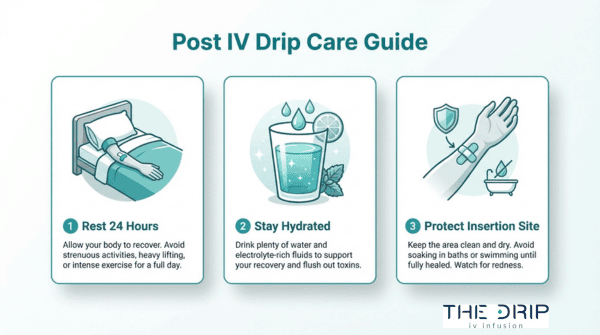
Post-IV drip aftercare is the set of precautions taken immediately following an intravenous infusion to protect hydration levels, support nutrient absorption, and allow the insertion site to heal properly.
This guide covers physical activity restrictions, dietary and beverage choices, insertion site care, heat exposure risks, medication and supplement interactions, rest and recovery needs, and common post-treatment mistakes.
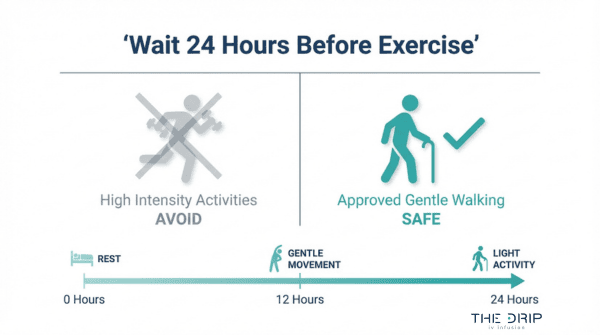
Strenuous exercise and heavy lifting should be avoided for at least 24 hours because elevated heart rate and venous pressure can reopen the puncture site, worsen bruising, and interfere with nutrient absorption. Light walking is generally safe, but resistance training and high-intensity cardio need to wait until the site has fully healed.
Alcohol and caffeine both act as diuretics that accelerate fluid loss, directly counteracting the hydration your infusion delivered. Heavily processed and high-sodium foods create similar problems by disrupting fluid balance and lacking the micronutrients needed to complement intravenous vitamins.
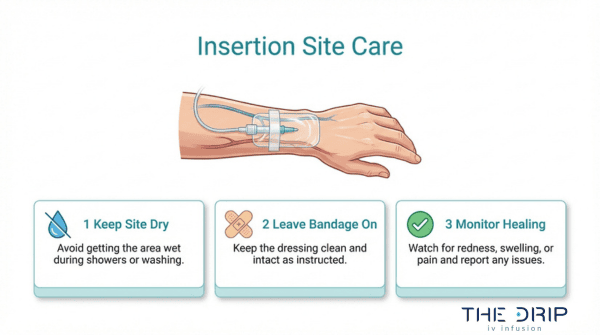
The insertion site requires careful attention; submerging it in water, removing the bandage prematurely, or ignoring persistent swelling can introduce bacteria or allow minor complications to escalate. Keeping the puncture dry and the dressing intact for several hours is one of the simplest ways to prevent infection.
Saunas, hot tubs, and prolonged sun exposure increase circulatory stress through vasodilation and fluid loss, which can diminish treatment results. Certain medications, including diabetes drugs, blood pressure treatments, and paracetamol, may interact with common IV nutrients like NAD+ and glutathione, making a full medication review with your provider essential.
Resting when your body signals fatigue, avoiding overhydration, and maintaining a consistent treatment schedule all protect the compounding benefits that IV therapy provides over time.
Why Does Post-IV Drip Care Matter for Your Results?
Post-IV drip care matters for your results because it directly influences how well your body absorbs infused nutrients, how quickly the insertion site heals, and whether you maintain the hydration benefits gained during treatment. IV fluid therapy plays a vital role in establishing and maintaining cellular homeostasis by providing rapid hydration and nutrient delivery, according to research published in the British Journal of Anaesthesia. However, that therapeutic advantage can be diminished or reversed by common post-treatment mistakes. Skipping proper aftercare, whether through strenuous activity, alcohol consumption, or neglecting the puncture site, places unnecessary stress on the body during a critical absorption window. For most people, the hours immediately following an infusion determine whether the treatment delivers lasting benefit or falls short. Understanding what to avoid after your session is just as important as the drip itself.
What Physical Activities Should You Avoid After an IV Drip?
You should avoid intense exercise, heavy lifting, and strenuous movements immediately after an IV drip. The following subsections cover exercise restrictions, weight lifting risks, and recommended wait times before resuming workouts.
Should You Avoid Intense Exercise After an IV Drip?
Yes, you should avoid intense exercise after an IV drip. Strenuous activity places strain on the IV insertion site and can prevent your body from properly absorbing the infused nutrients. According to Hydration Room’s post-care guidelines, heavy exercise or strenuous activities should be avoided immediately following an IV drip to allow the body to process the infused nutrients and protect the puncture area.
Elevated heart rate and increased blood pressure during vigorous workouts can worsen bruising or swelling at the insertion site. If you notice either symptom, applying ice for 10 to 20 minutes helps reduce inflammation. Light movement like walking is generally fine, but high-intensity interval training, running, or competitive sports should wait.
Is It Safe to Lift Heavy Weights After an IV Drip?
No, it is not safe to lift heavy weights immediately after an IV drip. Weight lifting increases venous pressure in the arms and engages muscles surrounding common IV insertion points, such as the inner elbow and forearm. This added pressure can reopen the puncture site, cause bleeding under the skin, or worsen post-treatment bruising.
Gripping heavy barbells or dumbbells also creates repetitive tension near the insertion area. For anyone whose session involved the antecubital vein, even moderate resistance exercises targeting the biceps or forearms should be postponed. Prioritizing gentle, lower-body activity during the first 24 hours is a safer approach for most clients.
How Long Should You Wait to Work Out After an IV Drip?
You should wait at least 24 hours before returning to a full workout after an IV drip. This window gives the puncture site time to heal and allows infused vitamins, minerals, and fluids to circulate and absorb properly.
A practical timeline for resuming activity includes:
- 0 to 4 hours post-drip: Rest or light walking only.
- 4 to 24 hours post-drip: Gentle stretching or low-impact movement, such as yoga, is acceptable if the insertion site shows no bruising or swelling.
- After 24 hours: Most clients can safely resume their regular exercise routine, including resistance training and cardio.
Listening to your body remains essential; if soreness or swelling persists at the site, extend your rest period before returning to strenuous activity. With workout timing addressed, proper dietary choices further protect your IV drip results.
What Should You Not Eat or Drink After an IV Drip?
You should not eat or drink alcohol, caffeine, or heavily processed and salty foods after an IV drip. These substances can undermine hydration and nutrient absorption, reducing the effectiveness of your session.

Should You Avoid Alcohol After an IV Drip?
Yes, you should avoid alcohol after an IV drip for at least 24 hours. Alcohol acts as a diuretic, pulling water from your body and directly counteracting the hydration your infusion just delivered. According to IV Bird, patients should avoid consuming alcohol and caffeine for at least 24 hours after an IV drip session because both substances act as diuretics, which can lead to dehydration and counteract the hydration benefits.
Even moderate drinking can strain the liver while it processes the vitamins and minerals from your infusion. For anyone investing in IV therapy for recovery or wellness, this is one of the simplest aftercare rules to follow, yet one of the most frequently ignored.
Should You Avoid Caffeine After an IV Drip?
Yes, you should avoid caffeine after an IV drip for at least 24 hours. Like alcohol, caffeine functions as a diuretic that increases urine output and accelerates fluid loss. A cup of coffee or energy drink consumed shortly after treatment can reduce the hydration gains your body just received through the IV.
If you rely on caffeine daily, consider switching to herbal tea or decaffeinated alternatives during the first 24 hours post-infusion. This small adjustment helps your body retain fluids and absorb the infused nutrients more effectively. Prioritizing hydration with plain water during this window consistently yields the best results from any IV session.
Can Eating Processed or Salty Foods Reduce IV Drip Benefits?
Yes, eating processed or salty foods can reduce IV drip benefits. High sodium intake promotes water retention in the wrong compartments and increases the body’s demand for fluids, which works against the balanced hydration an IV drip provides. Heavily processed foods also tend to lack the micronutrients your body needs to complement the vitamins delivered intravenously.
After an IV session, focus on nutrient-dense whole foods:
- Fresh fruits and vegetables rich in potassium and magnesium.
- Lean proteins to support cellular repair.
- Complex carbohydrates for sustained energy.
Choosing clean, minimally processed meals in the hours following your drip helps your body maximize absorption and extend the benefits of treatment.
What Should You Avoid Doing at the IV Insertion Site?
You should avoid submerging the site in water, removing the bandage prematurely, and ignoring signs of bruising or swelling. Each of these mistakes can compromise healing or introduce infection risk.
Should You Avoid Submerging the Insertion Site in Water?
Yes, you should avoid submerging the insertion site in water for at least 24 hours after your IV drip. The small puncture left by the catheter remains vulnerable to bacteria found in pools, bathtubs, and open water sources. Showering is generally safe if you keep the area dry or cover it with a waterproof barrier, but soaking the site creates a direct pathway for contaminants.
According to a 2025 NIH review on IV infiltration prevention, securement with transparent dressings allows continuous visual monitoring of the insertion area. Once that dressing is removed, the site loses its protective seal. Keeping the puncture dry until the skin fully closes is one of the simplest ways to prevent post-infusion complications.
Why Should You Not Pick at or Remove the Bandage Too Soon?
You should not pick at or remove the bandage too soon because the adhesive dressing serves as a sterile barrier over the puncture site. Premature removal exposes the wound before the skin has sealed, increasing infection risk and potentially reopening the vein puncture.
Most providers recommend leaving the bandage in place for several hours after IV removal. If the dressing becomes damp, loosened, or visibly soiled, replace it with a clean adhesive bandage rather than leaving the site uncovered. Resist the urge to scratch or peel at the edges; even minor disruption can reintroduce bacteria to healing tissue.
What Happens If You Ignore Bruising or Swelling at the Site?
Ignoring bruising or swelling at the site can allow minor complications to escalate. Small bruises are common after IV therapy, but persistent or worsening swelling may indicate infiltration, where fluid has leaked into surrounding tissue.
According to Kaiser Permanente’s post-IV care guidelines, patients should check the area for bruising or swelling for a few days and apply ice or a cold pack for 10 to 20 minutes if symptoms occur. Redness, increasing warmth, or pain that intensifies rather than fades warrants prompt medical attention. Catching these signs early prevents a routine insertion mark from becoming a more serious concern.
With the insertion site properly cared for, avoiding heat exposure is the next step in protecting your recovery.
Should You Avoid Heat Exposure After an IV Drip?
You should avoid heat exposure after an IV drip. Heat accelerates fluid loss and increases circulatory stress, which can undermine the hydration and nutrients your body just received. The sections below cover sauna and hot tub safety, along with prolonged sun exposure risks.
Is It Safe to Use a Sauna or Hot Tub After an IV Drip?
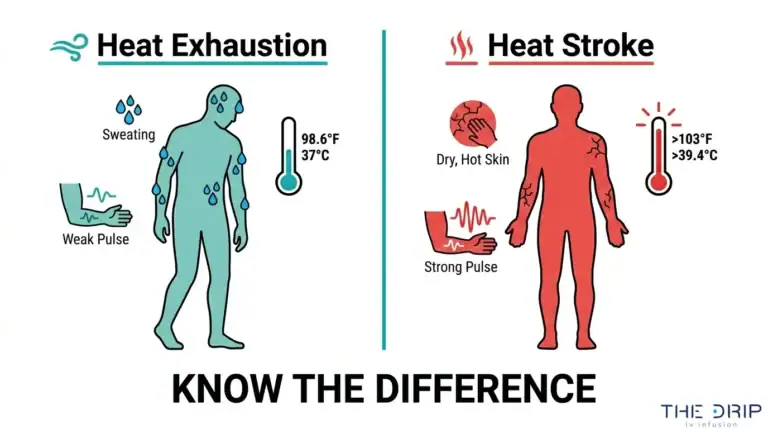
No, it is not safe to use a sauna or hot tub shortly after an IV drip. According to a study published by the National Institutes of Health, acute heat exposure increases circulatory stress through peripheral vasodilation and fluid loss, which can progress to heat exhaustion or heat stroke if internal heat storage continues. Saunas and hot tubs intensify this response rapidly, pulling fluids to the skin’s surface for cooling while simultaneously dehydrating you. This directly counteracts the hydration benefits your IV session provided. Waiting at least 24 hours before entering high-heat environments gives your body time to fully absorb and utilize the infused fluids and nutrients.
Should You Avoid Prolonged Sun Exposure After an IV Drip?
Yes, you should avoid prolonged sun exposure after an IV drip. Extended time in direct sunlight triggers the same thermoregulatory response as saunas, placing cardiovascular strain on the body. Individuals with heart conditions or blood pressure problems face heightened risk, as reported by ZME Science, because the body diverts blood flow to the skin for cooling while simultaneously losing fluids through sweat. Even for healthy individuals, this combination can diminish IV therapy results by accelerating dehydration. If you must be outdoors, stay in shaded areas, wear protective clothing, and increase water intake to preserve the benefits of your treatment. Understanding heat risks helps you protect your investment in proper nutrient and medication management.
What Medications or Supplements Should You Be Cautious With?
You should be cautious with medications that interact with IV nutrients, such as diabetes drugs, blood pressure treatments, antidepressants, and certain over-the-counter pain relievers. Supplement timing also matters after an infusion.
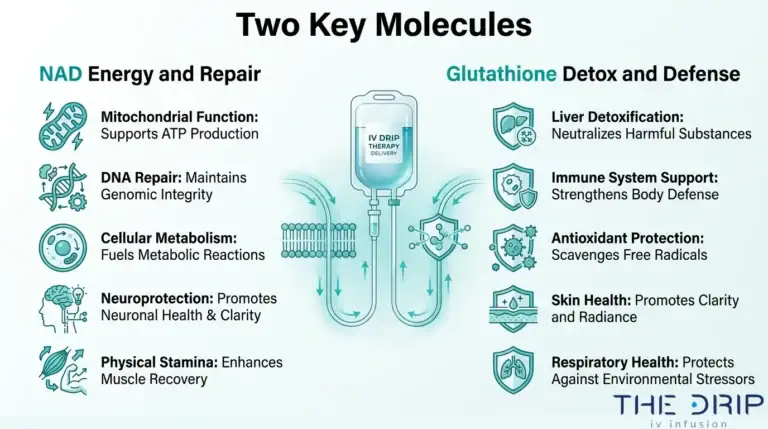
NAD+ can interact with several medications, including treatments for diabetes, blood pressure, cancer, blood clotting, and depression. According to Vivere, these interactions necessitate a full review of current prescriptions before receiving NAD+ infusion therapy. Anyone taking medications in these categories should disclose them to their provider before treatment, not after.
Paracetamol presents another concern. When taken alongside glutathione supplements, paracetamol can interact negatively with glutathione and may cause liver damage over time. Since glutathione is a common IV add-on, this interaction deserves attention from anyone who regularly uses acetaminophen-based pain relievers.
Beyond specific drug interactions, high doses of certain vitamins and minerals delivered intravenously have been linked to potential kidney damage, heart rhythm abnormalities, and peripheral nerve damage. These risks increase when oral supplements duplicate nutrients already provided through the IV.
To minimize risk after an IV drip, consider these precautions:
- Inform your IV provider about all current medications, including over-the-counter drugs.
- Avoid taking paracetamol or acetaminophen products if your infusion included glutathione.
- Wait before resuming high-dose oral supplements of the same nutrients delivered in your IV.
- Watch for unusual symptoms like heart palpitations, numbness, or changes in urination.
For most people, a simple conversation with their provider before treatment prevents the majority of interaction risks. Skipping this step is one of the most avoidable mistakes in IV therapy aftercare, yet it remains surprisingly common. Understanding your medication profile helps ensure post-drip recovery stays on track.
Should You Avoid Skipping Rest After an IV Drip?
You should avoid skipping rest after an IV drip if your body is recovering from an underlying condition. While routine wellness infusions rarely demand downtime, certain treatment contexts make rest essential for proper recovery.
According to the Cleveland Clinic, many people do not need recovery time after IV fluids, but additional rest may be required depending on the underlying reason for treatment, such as infection or surgery. This distinction matters because the infusion itself is only part of the equation; what your body is fighting determines how much energy it needs afterward.
For most healthy individuals receiving a standard hydration or vitamin drip, returning to light daily activities is perfectly reasonable. However, if the IV was administered to support recovery from illness, post-surgical healing, or severe dehydration, pushing through fatigue can slow the very process the infusion was designed to support. Listening to your body remains the simplest and most reliable guide. Even 30 to 60 minutes of quiet rest after a session can help the infused nutrients circulate and absorb more effectively, making the treatment worthwhile.
Understanding when rest matters sets the stage for recognizing other common post-drip mistakes to avoid.
What Are Common Mistakes People Make After an IV Drip?
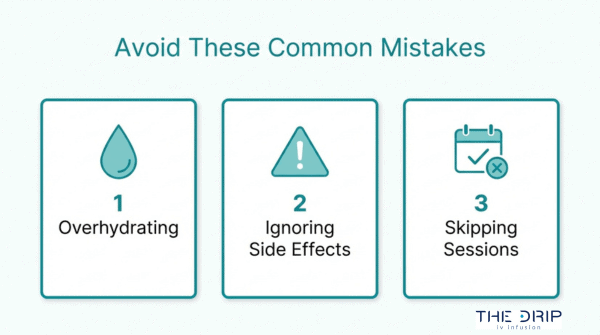
Common mistakes people make after an IV drip include overhydrating, ignoring side effects, and skipping follow-up sessions. Each of these errors can reduce treatment effectiveness or create unnecessary health risks.
Does Overhydrating After an IV Drip Cause Problems?
Yes, overhydrating after an IV drip can cause problems. Because IV therapy already delivers fluids directly into the bloodstream, drinking excessive water afterward may push total fluid intake beyond what the body can safely process. According to the Cleveland Clinic, if too much fluid is given too quickly during IV therapy, patients can experience fluid overload symptoms such as headache, high blood pressure, and trouble breathing.
These same risks extend to the hours following treatment when patients aggressively consume water, believing more hydration means better results. Sipping water normally is fine; forcing large volumes is not. Listening to your body’s thirst signals, rather than overcompensating, protects the balance your IV session established.
Can Ignoring Post-Drip Side Effects Be Dangerous?
Yes, ignoring post-drip side effects can be dangerous. Mild soreness or slight fatigue after an IV drip is normal, but symptoms like persistent swelling, chest tightness, shortness of breath, or a rapid heartbeat may signal complications that require medical attention.
While many people do not need recovery time after IV fluids, additional rest may be required depending on the underlying reason for treatment, such as infection or surgery, according to the Cleveland Clinic. Dismissing warning signs delays intervention and can turn a minor issue into a serious one. Any symptom that worsens rather than resolves within a few hours warrants a call to your provider.
Why Is Skipping Follow-Up Sessions a Mistake?
Skipping follow-up sessions is a mistake because IV therapy often works cumulatively. A single infusion provides immediate nutrient delivery, but sustained benefits for energy, immunity, or recovery typically require a consistent treatment schedule tailored to individual health goals.
When patients skip sessions, nutrient levels can drop back to baseline before the next infusion reinforces them. This inconsistency undermines the compounding effect that makes ongoing IV therapy effective. Following your provider’s recommended cadence keeps results steady and helps identify any adjustments needed over time.
With these common mistakes in mind, professional guidance makes proper aftercare significantly easier to follow.
How Can Mobile IV Therapy Help You Follow Proper Aftercare?
Mobile IV therapy can help you follow proper aftercare by bringing licensed professionals directly to your recovery environment, where they provide personalized guidance before leaving. The sections below cover how The Drip IV Infusion supports better recovery and the key aftercare takeaways.
Can At-Home IV Infusion Services From The Drip IV Infusion Support Better Recovery?
Yes, at-home IV infusion services from The Drip IV Infusion can support better recovery by allowing clients to rest immediately in their own space. Recovering at home eliminates the need to drive after treatment, reducing physical strain and making it easier to follow aftercare steps like avoiding strenuous activity and staying hydrated.
The Drip IV Infusion was founded by professionals with decades of experience in nursing and emergency medicine, so clients receive expert site-care instructions and personalized post-drip guidance during every visit. According to a 2023 National Institutes of Health study, the national utilization rate of IV infusion among hospitalized patients was 86.24%, reflecting how central IV therapy remains to modern patient care. Mobile services extend that same standard of professional oversight into comfortable, familiar settings where proper rest and recovery happen naturally.
What Are the Key Takeaways About What Not to Do After an IV Drip?
The key takeaways about what not to do after an IV drip center on protecting hydration, the insertion site, and nutrient absorption. Following these guidelines maximizes the benefits of every session:
- Avoid alcohol and caffeine for at least 24 hours, since both act as diuretics that counteract hydration gains.
- Skip intense exercise and heavy lifting for the rest of the day to prevent strain on the insertion site.
- Do not expose the puncture area to pools, hot tubs, or baths until it has fully closed.
- Avoid saunas and prolonged heat exposure, which increase circulatory stress and fluid loss.
- Wait 24 to 48 hours before resuming high-dose oral supplements of the same nutrients delivered during infusion.
- Never ignore unusual bruising, swelling, or side effects; contact your provider promptly.
Prioritizing these simple precautions is one of the most effective ways to ensure lasting results from IV therapy. With proper aftercare in place, The Drip IV Infusion can help you get the most from every treatment.