IV fluid therapy is the direct delivery of water, electrolytes, and nutrients into the bloodstream to correct dehydration, replenish lost minerals, and restore physiological equilibrium across cellular compartments.
This guide covers fluid and electrolyte fundamentals, how the body loses hydration, IV fluid compositions and how they enter the bloodstream, why IV delivery outperforms oral intake, what happens inside the body after infusion, and how personalized mobile IV therapy applies this science in practice.
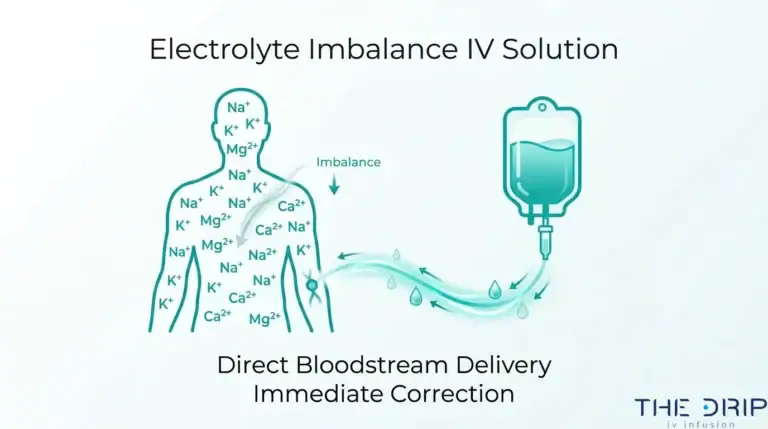
Fluid and electrolyte balance depends on precise concentrations of sodium, potassium, magnesium, and other ions that regulate everything from nerve signaling to muscle contraction. Even small disruptions can trigger symptoms ranging from fatigue and confusion to irregular heartbeat.
The body loses fluids through illness, intense exercise, heat exposure, and medications. Sweat rates during activity can reach well over two liters per hour, and gastrointestinal illness drains both water and sodium simultaneously.
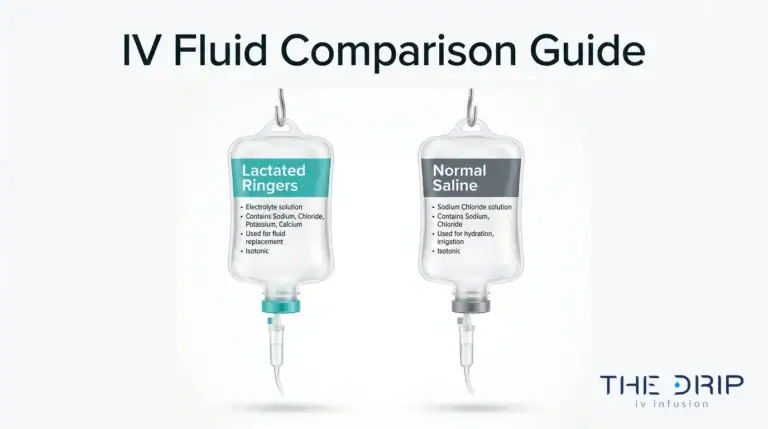
IV solutions like normal saline, Lactated Ringer’s, and dextrose formulations each target different types of fluid loss. Their tonicity (isotonic, hypotonic, or hypertonic) determines whether water stays in blood vessels, shifts into cells, or draws fluid out of swollen tissues.
Once infused, IV fluids bypass the digestive system entirely, achieving near-complete bioavailability. Osmotic gradients and oncotic pressure then distribute that fluid to the compartments that need it most.
After administration, kidneys and hormones like aldosterone and vasopressin fine-tune fluid retention, while targeted electrolytes restore concentration gradients at the cellular level. Lab values and symptom assessment guide clinicians in selecting the precise formulation for each situation.
What Is Fluid and Electrolyte Balance?
Fluid and electrolyte balance is the body’s continuous regulation of water volume and dissolved minerals across cellular compartments. The sections below explain water’s cellular role, how electrolytes govern critical processes, and what happens when this balance breaks down.

What Role Does Water Play in Cellular Function?
Water plays a foundational role in cellular function by serving as the medium for nearly every chemical reaction inside and outside cells. The movement of water between compartments depends on solute concentration. Hypotonic solutions have a lower concentration of solutes than blood plasma, causing water to move from the extracellular space into cells. Hypertonic solutions work in reverse, drawing water out of cells into the extracellular space.
These osmotic shifts directly affect cell volume, nutrient transport, and waste removal. According to StatPearls (NCBI Bookshelf), magnesium is an intracellular cation mainly involved in ATP metabolism, proper muscle functioning, neurological functioning, and neurotransmitter release. Without adequate water to facilitate these ion-dependent reactions, cellular energy production and signaling deteriorate rapidly.
How Do Electrolytes Regulate Body Processes?
Electrolytes regulate body processes by carrying electrical charges that control muscle contraction, nerve signaling, pH balance, and fluid distribution. Key electrolytes include:
- Sodium controls extracellular fluid volume and osmotic pressure.
- Potassium maintains resting membrane potential in muscle and nerve cells.
- Chloride supports acid-base balance and fluid movement.
- Magnesium drives ATP-dependent enzymatic reactions.
- Calcium enables muscle contraction and blood clotting.
- Bicarbonate buffers blood pH within a narrow range.
The sodium-potassium pump actively exchanges these ions across cell membranes, keeping intracellular and extracellular environments in equilibrium. Even minor shifts in electrolyte concentration can impair cardiac rhythm, cognitive function, and hydration status.
What Happens When Fluid and Electrolyte Balance Is Disrupted?
Disrupted fluid and electrolyte balance triggers a cascade of symptoms ranging from mild fatigue to life-threatening organ dysfunction. According to the Cleveland Clinic, sodium is the most abundant electrolyte ion in the body and plays a critical role in helping cells maintain the right balance of fluid. When sodium drops too low or climbs too high, neurological and cardiovascular symptoms follow quickly.
Common signs of disruption include:
- Muscle cramps and weakness from potassium or magnesium imbalances.
- Confusion, nausea, or headaches from sodium abnormalities.
- Irregular heartbeat from calcium or potassium shifts.
- Excessive thirst or reduced urine output from fluid volume deficits.
Proper IV fluid selection should be guided by the nature of fluid loss and any associated electrolyte or acid-base imbalances. Understanding how the body loses fluids helps clarify why targeted replenishment matters.
How Does the Body Lose Fluids and Electrolytes?
The body loses fluids and electrolytes through illness, physical exertion, heat exposure, and certain medications or chronic conditions. Each pathway depletes water and key electrolytes at different rates.
How Does Dehydration Occur Through Illness?
Dehydration occurs through illness when vomiting, diarrhea, and fever accelerate fluid and electrolyte loss faster than the body can replenish them. Gastrointestinal illness is particularly disruptive because it drains both water and sodium from the extracellular compartment simultaneously. According to the World Health Organization, diarrhoeal disease is the third leading cause of death in children aged 1 to 59 months, killing around 443,832 children under five each year. Fever compounds the problem by increasing insensible water loss through rapid breathing and sweat. Even a moderate stomach virus can shift electrolyte concentrations enough to cause:
- Headaches and confusion from sodium imbalance
- Muscle weakness from potassium depletion
- Fatigue from reduced circulating blood volume
For most adults, illness-related dehydration resolves with proper rehydration, but prolonged episodes can require clinical intervention.
How Does Intense Physical Activity Deplete Fluids?
Intense physical activity depletes fluids primarily through sweat, which removes both water and dissolved electrolytes from the body. Sweat contains significant concentrations of sodium, potassium, and chloride, meaning prolonged exercise creates a dual deficit. A study published in the Journal of Sports Science and Medicine found that sweat rates in trained endurance athletes ranged from 0.6 to 2.6 L/h, with sweat sodium concentrations varying from 13 to 103 mmol/L. That variability means two athletes performing the same workout can experience vastly different electrolyte losses.
Failing to replace these losses during or after exercise leads to:
- Decreased blood volume and elevated heart rate
- Impaired thermoregulation
- Reduced muscular performance and cramping
Athletes and active individuals often underestimate how quickly fluid deficits accumulate, especially during high-intensity or prolonged sessions.
How Does Heat Exposure Cause Fluid Loss?
Heat exposure causes fluid loss by triggering the body’s thermoregulation system, which relies on sweating to cool the skin’s surface. In hot environments, sweat production increases dramatically, pulling water and electrolytes from plasma and interstitial fluid. Typical sweat rates during activity in heat range from 0.5 to 2.0 L/h, according to research published in PMC. When fluid intake cannot keep pace with these losses, blood volume drops and core temperature rises. A 2023 JAMA Network analysis reported that U.S. heat-related deaths reached 2,325 that year, the highest recorded figure compared to 311 in 2004. Humid conditions make matters worse because sweat evaporates less efficiently, forcing the body to produce even more fluid to achieve the same cooling effect.
How Do Medications and Chronic Conditions Affect Hydration?
Medications and chronic conditions affect hydration by altering how the body retains or excretes water and electrolytes. Diuretics, commonly prescribed for hypertension, increase urinary output and accelerate sodium and potassium loss. Laxatives and certain diabetes medications produce similar effects through the gastrointestinal tract. Chronic kidney conditions impair the body’s ability to concentrate urine and maintain electrolyte homeostasis.
Older adults face compounded risk. According to StatPearls, dehydration prevalence among older adults in the United States ranges from 17% to 28%. Age-related factors that increase vulnerability include:
- Diminished thirst sensation
- Reduced kidney concentrating ability
- Polypharmacy involving multiple fluid-depleting medications
These overlapping factors make chronic, low-grade dehydration easy to miss until symptoms become severe. Understanding these diverse causes of fluid loss is the first step toward choosing the right rehydration strategy.
What Are the Key Components Inside IV Fluids?
The key components inside IV fluids include saline solutions, electrolyte-balanced formulas, dextrose, and supplemental vitamins or minerals. Each component targets a specific physiological need.

What Is Normal Saline and How Does It Work?
Normal saline is a sterile solution of 0.9% sodium chloride (NaCl) dissolved in water. It works by delivering sodium and chloride ions in concentrations that closely mirror extracellular fluid, making it isotonic with blood plasma.
According to Harvard Medical School, normal saline has a pH of 5.5 (range 4.5 to 7) and contains 154 mEq/L of sodium. This composition makes it particularly suitable for replacing gastric losses, where chloride depletion is common. Because normal saline contains no buffering agents, clinicians often reserve it for situations where a slightly acidic, electrolyte-simple replacement is appropriate. For broader fluid loss scenarios requiring pH balance, other solutions may be more suitable.
What Is Lactated Ringer’s Solution Used For?
Lactated Ringer’s solution is used for fluid replacement in cases involving alkaline fluid losses. It contains sodium, potassium, calcium, chloride, and lactate, which the liver converts to bicarbonate.
According to StatPearls, Lactated Ringer’s is preferred for biliary and pancreatic losses, which are typically alkaline in nature. This buffering capacity distinguishes it from normal saline, making it a better match when acid-base correction matters alongside volume restoration. Its multi-electrolyte composition also supports broader cellular function during resuscitation. For most general rehydration scenarios, Lactated Ringer’s offers a more physiologically balanced profile than single-electrolyte alternatives.
What Role Do Dextrose Solutions Play?
Dextrose solutions play the role of providing free water and caloric energy once the body metabolizes the sugar. D5W (dextrose 5% in water) starts isotonic but becomes effectively hypotonic after dextrose is processed, allowing water to shift into cells.
This mechanism is valuable when intracellular hydration is the primary goal rather than vascular volume expansion. Dextrose solutions also help maintain blood glucose levels in patients who cannot eat, preventing hypoglycemia during treatment. They serve a fundamentally different purpose than saline or electrolyte solutions; their strength lies in cellular rehydration rather than electrolyte correction.
How Are Vitamins and Minerals Added to IV Fluids?
Vitamins and minerals are added to IV fluids through direct injection into the base solution, typically by a qualified infusion specialist before or during administration. Common additions include:
- Vitamin C for antioxidant and immune support
- B-complex vitamins for energy metabolism
- Magnesium for muscle and neurological function
- Zinc for immune defense
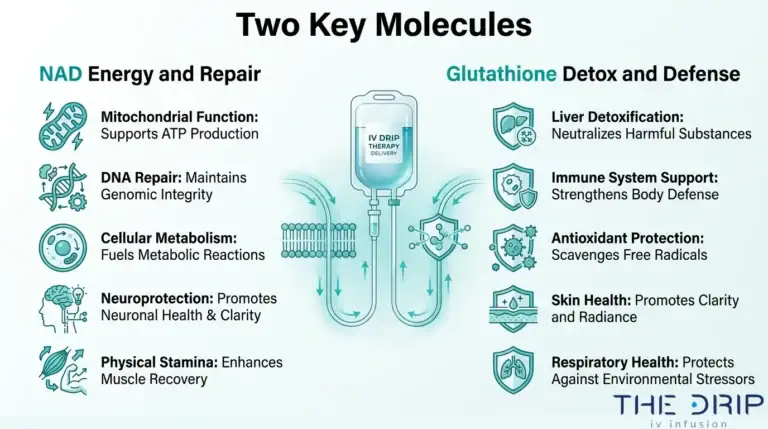
- Glutathione for cellular detoxification
These micronutrients bypass the digestive system entirely, which allows higher bioavailability compared to oral supplementation. Customization is what makes nutrient-enhanced IV therapy particularly practical; each formulation can be tailored to a client’s specific deficiencies or wellness goals.
Understanding these core components clarifies how each IV formulation targets different aspects of fluid and nutrient restoration.
How Do IV Fluids Enter and Move Through the Bloodstream?
IV fluids enter the bloodstream through a catheter placed directly into a vein, then distribute across body compartments through osmosis and pressure gradients. The subsections below explain how this bypasses digestion, how osmosis drives fluid distribution, and how oncotic pressure keeps fluids compartmentalized.
How Does Intravenous Delivery Bypass the Digestive System?
Intravenous delivery bypasses the digestive system by introducing fluids, electrolytes, and nutrients directly into the venous circulation. When substances are swallowed, they must survive stomach acid, pass through the intestinal lining, and undergo first-pass metabolism in the liver before reaching systemic blood flow. Each of these steps reduces how much of the original dose actually becomes available to cells.
IV administration eliminates all of those barriers. According to Bounce Hydration, IV delivery offers higher bioavailability compared to oral glutathione because it skips the gastrointestinal tract entirely. This principle applies broadly: vitamins, minerals, and fluids delivered intravenously reach target tissues at near-complete concentrations. For anyone with compromised gut absorption or acute fluid needs, this distinction is clinically significant.
What Is the Role of Osmosis in IV Fluid Distribution?
The role of osmosis in IV fluid distribution is to move water across semipermeable cell membranes from areas of lower solute concentration to areas of higher solute concentration, balancing hydration between compartments. According to StatPearls, the distribution of fluid throughout the body can be broken down into two general categories: intracellular fluid and extracellular fluid.
Once IV solution enters the bloodstream, osmotic gradients determine where that water ultimately goes:
- Isotonic fluids remain primarily in the extracellular space because their solute concentration matches plasma.
- Hypotonic fluids shift water into cells, rehydrating intracellular compartments.
- Hypertonic fluids pull water out of cells and into the vascular space.
This is why fluid tonicity selection matters so much in clinical practice; the wrong osmotic profile sends water to the wrong compartment.
How Does Oncotic Pressure Keep Fluids in the Right Compartments?
Oncotic pressure keeps fluids in the right compartments by using plasma proteins, primarily albumin, to create a pulling force that retains water inside blood vessels. Without sufficient oncotic pressure, fluid leaks from capillaries into surrounding tissues, causing edema.
According to StatPearls, albumin significantly affects capillary membrane pressure by modulating oncotic pressure. Because albumin accounts for roughly half of total plasma protein content, it generates the majority of this inward pull along capillary walls. When IV fluids dilute plasma proteins or when albumin levels drop, the balance shifts and fluid escapes the vascular space.
Colloid IV solutions containing albumin help maintain this pressure gradient, while crystalloid solutions distribute more freely across compartments. Understanding this mechanism clarifies why clinicians match fluid type to the patient’s protein status and volume needs.
Why Is IV Hydration More Effective Than Drinking Water?
IV hydration is more effective than drinking water because it delivers fluids directly into the bloodstream, bypassing digestive absorption limits. The following subsections compare bioavailability, restoration speed, and the populations that benefit most.

How Does Bioavailability Differ Between IV and Oral Hydration?
Bioavailability differs between IV and oral hydration primarily in absorption efficiency. IV delivery places fluids and nutrients directly into the bloodstream, achieving near-complete bioavailability. Oral hydration, by contrast, must pass through the gastrointestinal tract, where absorption depends on gut motility, enzyme activity, and mucosal health.
According to a study published in Sports Health, current data suggest that IV rehydration is faster than oral rehydration, though the differences in hydration markers tend to be small and transient in otherwise healthy individuals. This distinction matters most when the digestive system is compromised or when rapid correction is clinically necessary. For routine daily hydration in healthy people, oral intake remains practical; however, when speed and completeness of absorption are priorities, IV delivery holds a clear physiological advantage.
How Quickly Do IV Fluids Restore Hydration Compared to Oral Intake?
IV fluids restore hydration faster than oral intake because they enter the vascular space immediately, without waiting for gastric emptying or intestinal absorption. Clinically, the effect is most pronounced in acute scenarios. Isotonic fluids such as normal saline and Lactated Ringer’s are used for intravascular dehydration in cases of hemorrhage, severe vomiting or diarrhea, and surgical procedures, according to Nurseslabs.
Oral rehydration can take 30 to 60 minutes or longer to begin correcting fluid deficits, depending on how much the patient can tolerate. When someone is actively vomiting or unable to keep fluids down, that timeline stretches further. IV infusion effectively eliminates this bottleneck, making it the preferred route when time-sensitive correction is needed.
Who Benefits Most From IV Over Oral Rehydration?
The people who benefit most from IV over oral rehydration are those whose bodies cannot absorb fluids efficiently through the digestive tract. Key populations include:
- Patients with severe vomiting or diarrhea, where oral fluids cannot be retained long enough for absorption.
- Individuals with malabsorption conditions, such as Crohn’s disease or short bowel syndrome, that impair gut uptake.
- Older adults with chronic dehydration, who may have diminished thirst signals and reduced kidney concentrating ability.
- Athletes or workers experiencing acute volume depletion from extreme heat or prolonged exertion.
- Post-surgical patients who are restricted from oral intake during recovery.
For most healthy individuals managing mild dehydration, drinking water and electrolyte beverages works well. IV hydration becomes the superior choice when the GI route is unreliable or when rapid volume restoration is critical. Understanding this distinction helps clarify when IV therapy transitions from optional wellness support to a meaningful clinical advantage.
What Happens in the Body After IV Fluids Are Administered?
After IV fluids are administered, the body activates renal, hormonal, and cellular mechanisms to redistribute fluid and restore electrolyte balance. The following sections explain how kidneys filter excess volume, how blood volume recovers, and how electrolytes are corrected at the cellular level.
How Do Kidneys Regulate Fluid Levels After Infusion?
Kidneys regulate fluid levels after infusion by filtering excess volume and adjusting electrolyte excretion to maintain homeostasis. Chloride, an anion found predominantly in extracellular fluid, is regulated primarily by the kidneys, which modulate how much is retained or excreted based on current serum concentrations.
Renal function markers help clinicians gauge how well this process is working. Increased blood urea nitrogen and creatinine levels are indicators of poor renal function or low fluid volume. When D5W is administered, its dextrose is metabolized quickly, leaving free water that the kidneys then distribute or eliminate as needed. According to the Think Kidneys initiative (NHS), the choice of IV fluid can influence a wide range of patient outcomes, not just kidney injury.
Monitoring renal response after infusion is one of the most underrated aspects of IV therapy, yet it directly determines whether the fluid achieves its intended effect.
How Does Blood Volume Recover During IV Therapy?
Blood volume recovers during IV therapy through a combination of direct intravascular expansion and hormonal regulation. Aldosterone and vasopressin (ADH) both act on collecting tubules and ducts to decrease urine output and increase blood volume, amplifying the effect of administered fluids.
This hormonal response is especially important in acute scenarios. IV therapy is meaningfully superior for patients with malabsorption, severe deficiency, acute volume depletion, or rapid therapeutic window requirements, where the body needs volume restored faster than oral intake allows. Once fluids enter the vascular space, these hormones signal the kidneys to conserve water, sustaining the volume gain over a longer period.
For most patients experiencing significant fluid loss, this dual mechanism of direct infusion plus hormonal conservation is what makes IV rehydration reliably effective.
How Are Electrolyte Levels Corrected at the Cellular Level?
Electrolyte levels are corrected at the cellular level when IV fluids deliver specific ions that restore concentration gradients across cell membranes. Normal physiological ranges are narrow:
- Serum sodium levels range from 135 to 145 mmol/L.
- Serum potassium levels range from 3.6 to 5.5 mmol/L.
- Serum magnesium levels range from 1.46 to 2.68 mg/dL.
When these values fall outside normal ranges, cellular function deteriorates. According to StatPearls (NCBI Bookshelf), hypernatremia occurs when serum sodium exceeds 145 mmol/L, producing symptoms such as tachypnea, sleeping difficulty, and restlessness.
IV fluids formulated with targeted electrolyte concentrations allow ions to move across cell membranes via transport proteins, gradually restoring intracellular and extracellular equilibrium. This cellular-level correction is what distinguishes IV therapy from simple hydration.
Understanding these post-infusion mechanisms helps clarify why fluid tonicity matters when selecting the right IV solution.
What Are the Different Types of IV Fluid Tonicity?
The different types of IV fluid tonicity are isotonic, hypotonic, and hypertonic. Each type moves water differently relative to cells, making tonicity a critical factor in fluid selection.
Isotonic Solutions
Isotonic solutions have the same concentration of solutes as blood plasma, causing no net movement of water into or out of cells. Because fluid stays in the vascular space, these solutions are the standard choice for intravascular dehydration. According to Nurseslabs, isotonic fluids are used for intravascular dehydration in cases of hemorrhage, severe vomiting or diarrhea, and surgical procedures. Normal saline (0.9% NaCl) and Lactated Ringer’s are the most commonly administered isotonic options. For most acute fluid loss scenarios, isotonic solutions should be the first consideration because they restore volume without disrupting cellular water balance.
Hypotonic Solutions
Hypotonic solutions have a lower concentration of solutes than blood plasma, causing water to move from the extracellular space into cells. This shift rehydrates cells that have lost water due to conditions such as hypernatremia or diabetic ketoacidosis. Half-normal saline (0.45% NaCl) is a common example. Because hypotonic fluids pull water out of the bloodstream and into tissues, they are not appropriate when intravascular volume is already low. Careful monitoring is essential, since excessive administration can cause cells to swell beyond safe limits.
Hypertonic Solutions
Hypertonic solutions have a higher concentration of solutes than blood plasma, causing water to move from cells into the extracellular space. This mechanism makes them effective for treating severe hyponatremia and cerebral edema, where reducing intracellular swelling is the priority. 3% saline is a widely used hypertonic fluid. These solutions require close clinical supervision because pulling too much water from cells too rapidly can cause dangerous shifts in sodium levels. Understanding how each tonicity category directs water movement helps medical professionals match the right IV fluid to a patient’s specific imbalance.
How Do Medical Professionals Determine the Right IV Fluid?
Medical professionals determine the right IV fluid by evaluating a patient’s symptoms alongside laboratory results. The following subsections explain how clinical presentation and lab values each guide fluid selection.
What Symptoms Indicate Which IV Solution Is Needed?
Symptoms indicate which IV solution is needed by revealing the type and severity of fluid or electrolyte loss. Specific clinical presentations point toward distinct fluid choices:
- Severe vomiting or diarrhea with signs of intravascular dehydration calls for isotonic solutions, such as normal saline or Lactated Ringer’s.
- Gastric fluid losses respond well to normal saline (0.9% NaCl), which replaces both sodium and chloride lost through vomiting.
- Biliary or pancreatic losses, which tend to be alkaline, are better matched by Lactated Ringer’s solution.
- Neurological symptoms like confusion, headaches, or altered mental status may suggest hyponatremia, requiring careful sodium correction with hypertonic saline.
- Tachypnea, restlessness, and sleeping difficulty can signal hypernatremia, where hypotonic fluids help lower elevated sodium.
According to StatPearls, the selection of IV fluid should be guided by the nature of fluid loss and the presence of any associated electrolyte or acid-base imbalances. In practice, symptom assessment is only the first step; confirming the clinical picture with objective data makes fluid prescribing far safer.
How Do Lab Values Guide IV Fluid Selection?
Lab values guide IV fluid selection by quantifying the exact electrolyte deficits or excesses that symptoms alone cannot pinpoint. Key markers include:
- Serum sodium: Normal range is 135 to 145 mmol/L. Values below 135 mmol/L confirm hyponatremia; values above 145 mmol/L confirm hypernatremia.
- Serum potassium: Normal range is 3.6 to 5.5 mmol/L, influencing whether potassium supplementation is added to the IV solution.
- BUN and creatinine: Elevated levels indicate poor renal function or low fluid volume, helping clinicians gauge dehydration severity.
According to DrOracle.ai, BUN is the single best laboratory predictor of dehydration severity after osmolality. These objective values allow providers to match tonicity, electrolyte composition, and infusion rate precisely to each patient’s needs. Without lab confirmation, even experienced clinicians risk prescribing the wrong fluid type or volume, which can cause serious harm.
Understanding how professionals select IV fluids highlights why nurse-administered therapy prioritizes individualized assessment.
Can Nurse-Administered Mobile IV Therapy Help Restore Your Balance?
Yes, nurse-administered mobile IV therapy can help restore your balance by delivering fluids, electrolytes, and nutrients directly to your bloodstream at your location. Below, learn how The Drip IV Infusion personalizes each session and review the key takeaways from this guide.

How Does The Drip IV Infusion Deliver Personalized IV Hydration?
The Drip IV Infusion delivers personalized IV hydration by sending experienced nurses directly to your home or workplace, where each infusion is tailored to your specific wellness needs. Founded in Fall 2022 by professionals with decades of experience in nursing and emergency medicine, The Drip IV Infusion offers a comprehensive menu of IV cocktails and customizable add-ons, such as magnesium, zinc, glutathione, and B-complex vitamins. Each session typically takes one hour, during which a nurse monitors the infusion from start to finish. This mobile approach reflects a rapidly growing segment of wellness care; according to a 2025 Mordor Intelligence report, mobile and concierge IV services register the highest projected CAGR at 12.8% through 2030 within the IV hydration therapy market. By bypassing the digestive system, The Drip IV Infusion ensures maximum absorption and immediate benefits for clients seeking rehydration, immune support, or recovery.
What Are the Key Takeaways About How IV Fluids Restore Balance?
The key takeaways about how IV fluids restore balance center on speed, precision, and physiological compatibility. IV fluids work by delivering water, electrolytes, and nutrients directly into the bloodstream, bypassing digestive absorption barriers. Fluid tonicity determines how water moves between compartments: isotonic solutions stabilize blood volume, hypotonic solutions rehydrate cells, and hypertonic solutions draw excess water out of swollen tissues. Kidneys fine-tune the result through hormonal feedback involving aldosterone and vasopressin. Choosing the right fluid depends on the nature of the deficit, whether sodium loss, dehydration from illness, or nutrient depletion. For those seeking a convenient, nurse-supervised path to rehydration and recovery, The Drip IV Infusion brings this science directly to your door.