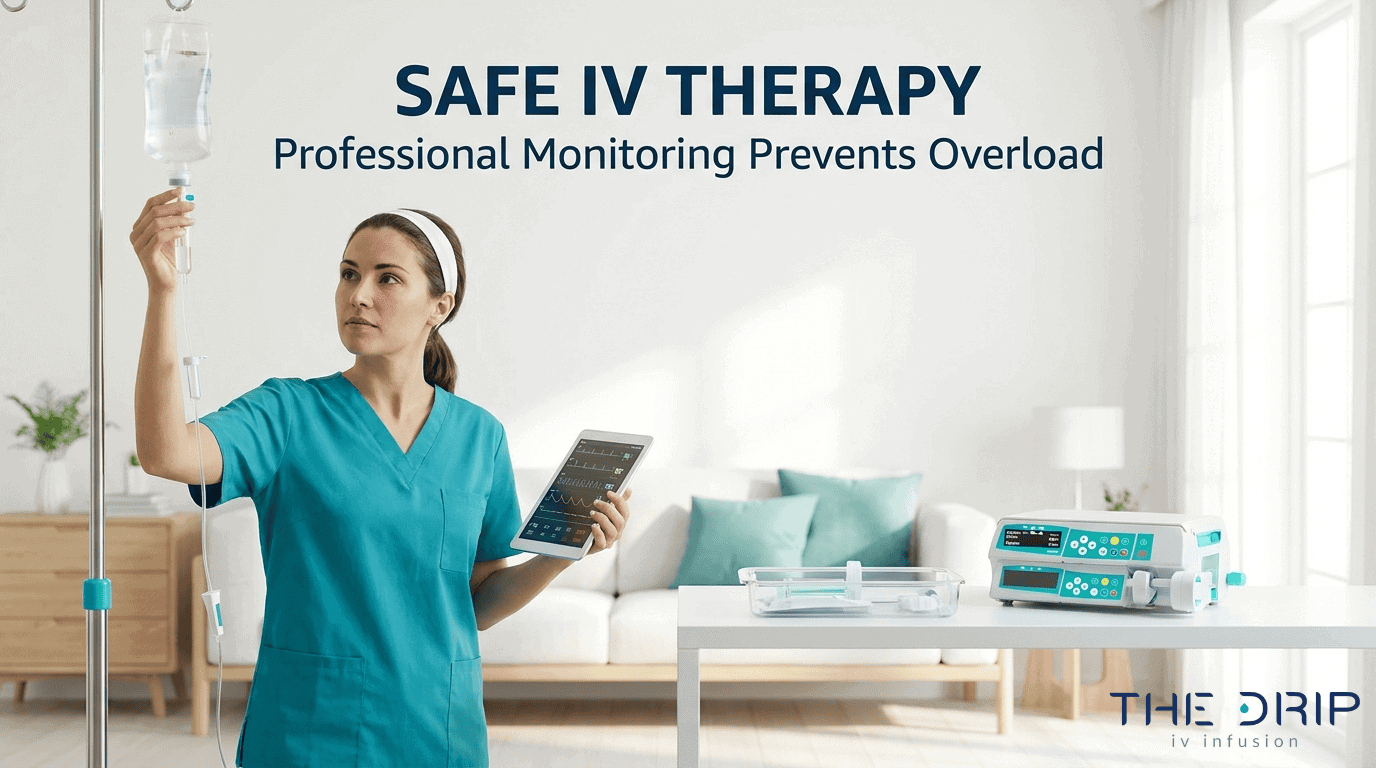
Overhydration during IV therapy is a condition called fluid overload, where the body receives more intravenous fluid than it can process, leading to dangerous increases in blood volume, tissue swelling, and cardiovascular strain.
This guide covers what overhydration is and what causes it, who faces the highest risk, how to recognize symptoms, the clinical protocols professionals use to prevent it, what patients can do to protect themselves, and how nurse-administered oversight serves as the final layer of safety.
Fluid overload occurs when IV fluids bypass the digestive system and enter the bloodstream directly, giving the body far less time to compensate than oral intake allows. Infusion rate, total volume, fluid tonicity, and pre-existing health conditions each independently raise the risk.
Patients with heart disease, chronic kidney disease, elderly individuals, and those with low body weight face the narrowest margins of safe fluid tolerance. Reduced cardiac output, impaired renal filtration, and smaller total blood volume all lower the threshold at which standard infusion volumes become dangerous.
Early warning signs include peripheral edema, rising blood pressure, and bounding pulse, while severe overload can progress to pulmonary edema, chest pain, and respiratory distress. Recognizing these symptoms quickly determines whether intervention stays simple or becomes urgent.
Prevention relies on layered clinical protocols: pre-infusion health assessments, weight-based volume calculations, controlled drip rates, proper solution selection, and real-time symptom monitoring by registered nurses. Patients play an active role by disclosing complete health histories, reporting symptoms immediately, and arriving at a moderate hydration level.
Professional nurse-administered IV therapy, like the model we use at The Drip IV Infusion, builds every one of these safeguards into each session through continuous clinical oversight and individualized fluid planning.
What Is Overhydration in IV Therapy?
Overhydration in IV therapy occurs when the body receives more intravenous fluid than it can process, leading to a dangerous state called fluid overload. The following sections explain what happens physiologically and how this differs from drinking too much water.
What Happens to Your Body When You Receive Too Much IV Fluid?
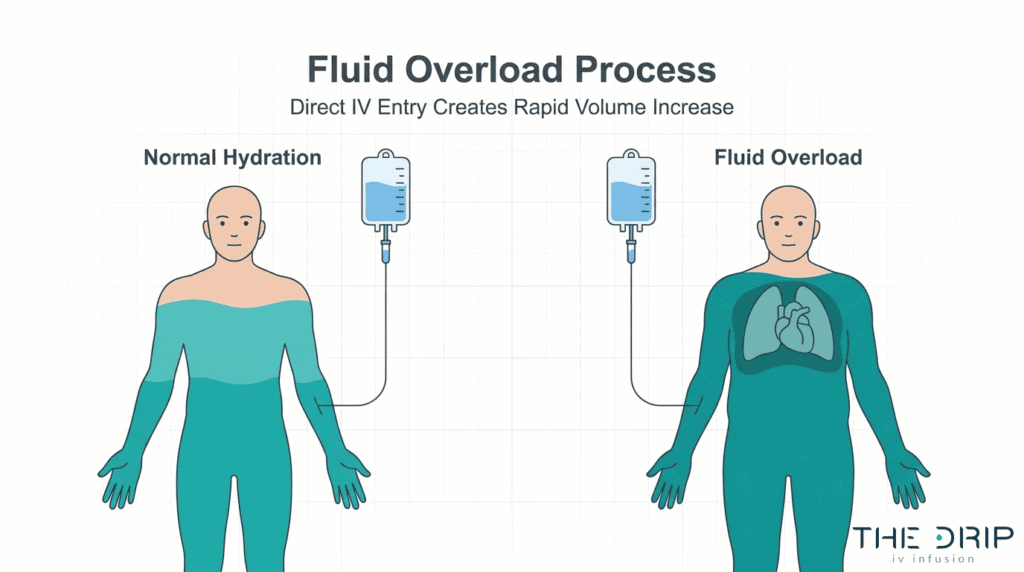
What happens to your body is a progressive buildup of excess fluid in the bloodstream and tissues, a condition known as fluid overload. Fluid overload causes hypervolemia, which raises blood volume beyond what the heart and kidneys can manage efficiently.
According to a review published in PubMed Central, fluid overload is characterized by hypervolemia, edema, or both, and is typically suspected when a patient shows pulmonary edema, peripheral edema, or body cavity effusion. Because IV fluids bypass the digestive system entirely, the volume enters the vascular system directly, giving the body far less time to compensate compared to oral intake. This rapid expansion of blood volume can strain the heart, compromise gas exchange in the lungs, and force fluid into surrounding tissues. For most healthy individuals receiving properly dosed infusions, the risk remains low; however, even small miscalculations in rate or volume can tip the balance toward overload.
How Is Overhydration Different From Oral Water Intoxication?
Overhydration from IV therapy differs from oral water intoxication primarily in the delivery mechanism and the speed at which fluid enters the body. When someone drinks excessive water, the gastrointestinal tract absorbs it gradually, and the kidneys have more time to excrete the surplus. IV fluids, by contrast, enter the bloodstream directly, creating an immediate increase in circulating volume.
The fluid composition also matters. As noted in StatPearls, hypotonic solutions such as 0.45% NaCl carry a higher risk of causing hyponatremia and cellular swelling if infused rapidly, because water shifts from the extracellular space into cells. Oral water intoxication dilutes sodium through sheer volume over time, while IV-induced overhydration can disrupt electrolyte balance far more quickly depending on solution tonicity. This distinction makes professional fluid selection and infusion rate control essential safeguards during any IV session.
Understanding what overhydration is lays the groundwork for recognizing what causes it during treatment.
What Causes Overhydration During IV Therapy?
Overhydration during IV therapy results from excessive infusion rates, inappropriate fluid volumes, pre-existing health conditions, and incorrect fluid type selection. Each factor independently raises the risk of fluid overload.
How Does Infusion Rate Contribute to Overhydration?
Infusion rate contributes to overhydration by delivering fluid faster than the body can redistribute and excrete it. When IV fluids enter the bloodstream too rapidly, the cardiovascular system cannot accommodate the sudden volume increase, causing venous pressure to rise sharply.
Patients with reduced cardiac or renal function face even greater sensitivity to rate miscalculations. A rate appropriate for a healthy, dehydrated adult may overwhelm someone with compromised circulation. Controlled, weight-adjusted drip rates give the kidneys time to process incoming volume and maintain safe fluid balance throughout the session.
How Does IV Fluid Volume Lead to Fluid Overload?
IV fluid volume leads to fluid overload when the total amount infused exceeds what the body can safely absorb and excrete. According to a BBC report, one fifth of patients receiving intravenous fluids in hospitals experience complications or morbidity due to inappropriate administration, often involving fluid overload.
NICE guidelines recommend an initial fluid challenge of 250 to 500 ml of isotonic crystalloid over less than 15 minutes for adults in non-emergency settings to avoid excessive volume expansion. Exceeding this threshold without reassessing the patient’s response significantly raises overload risk. Patients with heart failure are especially vulnerable; their reduced venous compliance means even small volume increases can produce large spikes in central venous pressure and pulmonary edema. This is why precise volume calculation, not a one-size-fits-all approach, remains critical for safe IV administration.
How Do Pre-Existing Health Conditions Increase the Risk?
Pre-existing health conditions increase the risk of overhydration by impairing the body’s ability to handle additional fluid volume. Conditions that limit this capacity include:
- Heart failure reduces venous system compliance, so minor fluid additions cause disproportionate pressure increases in the lungs and heart.
- Chronic kidney disease diminishes sodium and water excretion, making even standard infusion volumes potentially dangerous.
- Liver disease disrupts albumin production, lowering plasma oncotic pressure and promoting fluid leakage into tissues.
- Elderly physiology involves decreased cardiac reserve and reduced renal filtration, narrowing the margin of safe fluid intake.
For patients managing any of these conditions, individualized volume limits and slower infusion rates are essential safeguards.
How Does Fluid Type Selection Affect Overhydration Risk?
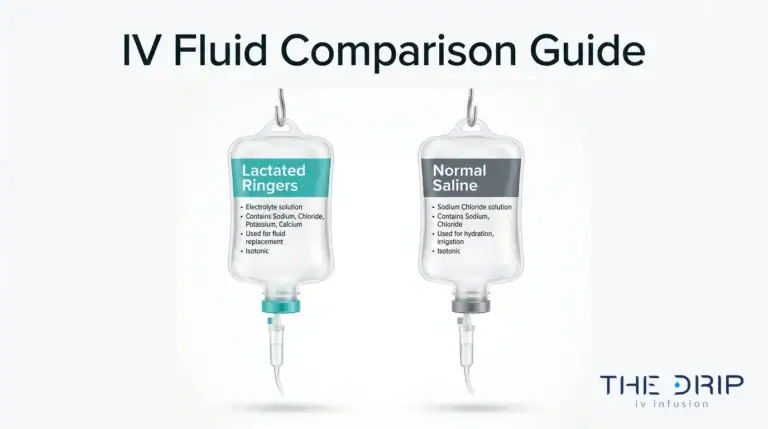
Fluid type selection affects overhydration risk by influencing how infused volume distributes across body compartments. Isotonic solutions, such as normal saline (0.9% NaCl), remain primarily in the intravascular space, expanding blood volume more directly. Hypotonic solutions (0.45% NaCl), by contrast, shift water from the extracellular space into cells, raising the risk of hyponatremia and cellular swelling if infused too quickly.
Colloid solutions exert higher oncotic pressure and pull additional interstitial fluid into the bloodstream, which can unexpectedly amplify intravascular volume beyond what was infused. Selecting a fluid that matches the patient’s hydration status, electrolyte needs, and cardiovascular tolerance is one of the most effective ways to prevent volume-related complications.
Understanding these causes helps clarify who faces the greatest overhydration risk during IV therapy.
Who Is Most at Risk for Overhydration During IV Therapy?
Patients with heart disease, kidney conditions, elderly individuals, and those with low body weight face the highest risk for overhydration during IV therapy. Each group has reduced fluid tolerance for distinct physiological reasons.

How Does Heart Disease Affect Fluid Tolerance During IV Therapy?
Heart disease affects fluid tolerance during IV therapy by limiting the heart’s ability to manage additional volume. Patients with heart failure have a reduced compliance of the venous system, meaning small increases in fluid volume lead to large increases in central venous pressure. This pressure buildup pushes fluid into the lungs, causing pulmonary edema. Even standard IV infusion volumes that a healthy person tolerates easily can overwhelm a compromised heart. For this reason, any client with a history of congestive heart failure, cardiomyopathy, or valvular disease should disclose their condition before receiving IV fluids. Slower infusion rates and reduced total volumes are typically necessary to keep these patients safe.
Why Are Patients With Kidney Conditions More Vulnerable?
Patients with kidney conditions are more vulnerable because their kidneys cannot efficiently remove excess fluid from the body. According to a report published in the American Journal of Kidney Diseases, patients with chronic kidney disease have a diminished ability to excrete sodium and water, making them highly susceptible to volume overload even with standard infusion rates. When the kidneys fail to filter and expel surplus fluid, it accumulates in the bloodstream and tissues. This buildup can trigger peripheral edema, elevated blood pressure, and breathing difficulties. Clients managing any stage of kidney disease should always inform their infusion specialist so fluid volumes and rates can be adjusted accordingly.
What Overhydration Risks Do Elderly Individuals Face?
Elderly individuals face overhydration risks tied to age-related declines in organ function. Cardiac output decreases with age, reducing the heart’s capacity to circulate additional fluid volume. Kidney filtration rates also decline, slowing the body’s ability to excrete excess water and sodium. These overlapping limitations mean older adults reach fluid overload thresholds faster than younger patients receiving the same IV volume. Lean muscle mass loss further concentrates fluid distribution into a smaller effective body compartment. For older clients, careful pre-infusion assessment and conservative fluid volumes are essential to prevent complications during IV therapy sessions.
Why Should Patients With Low Body Weight Be Cautious?
Patients with low body weight should be cautious because total blood volume scales directly with body size. A person weighing 110 pounds has significantly less circulating blood volume than someone weighing 180 pounds, yet a standard IV bag delivers the same amount of fluid to both. This mismatch creates a proportionally larger volume burden on smaller individuals. Without weight-based adjustments, low-body-weight patients can experience rapid fluid accumulation that overwhelms their circulatory capacity. Infusion specialists should calculate fluid volumes relative to body weight to maintain safe thresholds. Disclosing your weight before a session helps ensure the infusion is appropriately tailored.
Understanding these risk factors highlights why thorough pre-infusion screening matters for every client.
What Are the Signs and Symptoms of IV Fluid Overload?
The signs and symptoms of IV fluid overload range from subtle early warnings to severe, life-threatening complications. Key indicators include hypertension, bounding pulse, and peripheral edema. The sections below cover early warning signs and severe symptoms separately.

What Are the Early Warning Signs of Overhydration?
The early warning signs of overhydration include symptoms that develop as excess fluid begins accumulating in the body. Recognizing these signs promptly allows for intervention before the condition worsens.
Common early indicators include:
- Swelling in the hands, feet, or ankles (peripheral edema)
- A feeling of puffiness or tightness in the skin
- Mild shortness of breath, especially when lying flat
- Unexplained weight gain over a short period
- A bounding or unusually strong pulse
- Rising blood pressure during the infusion
Patients receiving IV fluids should be monitored for hypertension, bounding pulse, and peripheral edema, as these represent the body’s earliest responses to excess intravascular volume. Even mild swelling during a session warrants immediate communication with your infusion specialist.
What Do Severe Symptoms of Fluid Overload Look Like?
Severe symptoms of fluid overload look like a medical emergency and require immediate intervention. When excess fluid overwhelms the cardiovascular and respiratory systems, the body signals distress through pronounced, unmistakable symptoms.
These include:
- Significant difficulty breathing or gasping for air
- Chest pain or tightness
- Persistent, worsening cough with frothy sputum
- Visibly distended neck veins (jugular venous distension)
- Rapid heart rate combined with audible lung crackles
- Confusion or altered mental status
According to Nursing CE Central, informed consent for elective IV therapy must include specific disclosures about fluid overload risks, and patients bear responsibility to report symptoms like shortness of breath or chest pain immediately. Severe overhydration, left unaddressed, can progress to pulmonary edema, a condition where fluid fills the lungs. Any of these symptoms during an infusion demands that the session be stopped without delay.
Knowing what to watch for is essential; understanding how professionals actively prevent these complications provides an additional layer of safety.
How Do Medical Professionals Prevent Overhydration During IV Therapy?
Medical professionals prevent overhydration during IV therapy through layered safety protocols, from pre-infusion screening to real-time monitoring. The key strategies include health assessments, infusion rate control, precise fluid calculations, solution selection, and continuous symptom observation.

Why Is a Pre-Infusion Health Assessment Important?
A pre-infusion health assessment is important because it identifies individual risk factors that determine how safely a patient can tolerate intravenous fluids. Conditions such as heart failure, kidney disease, and low body weight all reduce the body’s capacity to handle standard fluid volumes. Without this screening step, a nurse has no baseline for tailoring the infusion plan. The assessment also captures current medications, allergies, and recent fluid intake, all of which influence how the body processes additional volume. For any responsible IV therapy provider, skipping this step is the single fastest route to a preventable complication.
How Does Monitoring Infusion Rate Prevent Fluid Overload?
Monitoring infusion rate prevents fluid overload by controlling how quickly fluid enters the bloodstream. When fluids are delivered too fast, the cardiovascular system cannot redistribute the volume efficiently, and pressure builds in the pulmonary and peripheral vasculature. Pre-session hydration status is clinically relevant here; according to Elite Mobile IV, a patient who is already euvolemic (normally hydrated) has a much lower threshold for fluid overload than a dehydrated patient. Nurses adjust drip rates based on this baseline, slowing delivery for well-hydrated individuals. This real-time rate control is one of the most effective safeguards against excess volume accumulation during any infusion session.
What Role Does Fluid Volume Calculation Play in Safe IV Therapy?
Fluid volume calculation plays a central role in safe IV therapy because it determines the exact amount of fluid appropriate for each patient. Weight-based dosing ensures that a 120-pound individual receives a different volume than a 200-pound individual. According to Google’s People Also Ask data, core IV therapy safety measures involve checking the “5 Rights”: right patient, right drug, right dose, right route, and right time. Precise dose calculation sits at the heart of this framework. Many mobile IV services underemphasize weight-based protocols in their patient materials, yet this step is arguably the most objective safeguard a nurse can apply before the infusion even begins.
How Does Choosing the Right IV Solution Reduce Risk?
Choosing the right IV solution reduces risk by matching the fluid’s tonicity to the patient’s physiological needs. Isotonic solutions, such as normal saline (0.9% NaCl), remain within the extracellular space and carry a lower risk of cellular swelling. Hypotonic solutions shift water into cells more aggressively, which can worsen osmotic imbalance in vulnerable patients. The selection also considers what additives are included, since electrolyte concentrations, vitamins, and medications each influence how the body handles the infused volume. Matching solution type to patient need is a straightforward yet critical decision that directly affects overhydration risk.
Why Is Real-Time Symptom Monitoring Essential During Infusion?
Real-time symptom monitoring is essential during infusion because fluid overload can develop within minutes, and early detection allows immediate intervention. Nurses watch for warning signs such as rapid breathing, persistent cough, rising blood pressure, and visible swelling in the extremities. Catching these indicators early means the infusion rate can be slowed or stopped before the situation escalates. This is precisely why nurse-administered IV therapy offers a safety advantage over unsupervised settings; trained clinical eyes recognize subtle changes that patients themselves may not notice until symptoms become severe. With real-time monitoring in place, professional oversight becomes the final and most adaptive layer of overhydration prevention.
What Should You Do as a Patient to Avoid Overhydration?
As a patient, you should share complete health information, communicate symptoms immediately during your infusion, and assess your hydration status before each session. These three actions directly support safer IV therapy outcomes.
What Health Information Should You Share Before IV Therapy?
The health information you should share before IV therapy includes your complete medical history, current medications, and any conditions affecting fluid tolerance. Conditions such as heart failure, chronic kidney disease, and liver disease significantly alter how your body processes intravenous fluids. According to Nursing CE Central, informed consent for elective IV therapy must include specific disclosures about fluid overload risks and the patient’s responsibility to report symptoms like shortness of breath or chest pain immediately.
You should also disclose:
- Any history of edema or swelling in the extremities.
- Current diuretic or blood pressure medications.
- Recent hospitalizations involving IV fluid administration.
- Pregnancy status or recent significant weight changes.
Being upfront about these details allows your nurse to tailor fluid volume and infusion rate to your specific needs. Withholding even one relevant detail can shift the margin of safety considerably.
How Should You Communicate Symptoms During an Infusion?
You should communicate symptoms during an infusion by alerting your nurse immediately when anything feels abnormal. Early warning signs of fluid overload, such as tightness in the chest, a new cough, rapid breathing, or swelling in the hands and feet, often appear before the situation becomes serious. Reporting these changes in real time gives your nurse the opportunity to slow or pause the infusion before complications develop.
Do not wait for symptoms to worsen or assume mild discomfort is normal. A slight headache, sudden anxiety, or feeling unusually full can all signal shifting fluid balance. Every observation matters; even something that seems minor provides valuable clinical information during an active infusion.
Why Does Hydration Status Before Your Session Matter?
Hydration status before your session matters because it directly determines how much additional fluid your body can safely absorb. A patient who is already euvolemic (normally hydrated) has a much lower threshold for fluid overload than someone who arrives dehydrated, according to clinical guidance from Elite Mobile IV.
Practical steps to prepare include:
- Drinking water normally throughout the day; avoid excessive intake right before your appointment.
- Noting your fluid intake over the prior 12 to 24 hours so your nurse can factor this into dosing.
- Avoiding alcohol or caffeine in the hours before, as both distort your baseline hydration.
For most patients, arriving at a moderate, natural hydration level gives the clinical team the clearest starting point. With these preparation habits in place, your nurse can focus on delivering the right volume for your body’s actual needs.
What Happens if Overhydration Occurs During IV Therapy?
Overhydration during IV therapy requires prompt clinical action, ranging from simple infusion adjustments to urgent medical interventions. The response depends on whether the fluid overload is mild or severe.
How Is Mild Fluid Overload Managed During an Infusion?
Mild fluid overload is managed during an infusion by first slowing or pausing the IV drip to stop additional volume from entering the bloodstream. A nurse will elevate the patient’s head to ease breathing, then reassess vital signs, including blood pressure and oxygen saturation.
Key steps for managing mild overload include:
- Reducing the infusion rate or temporarily stopping the drip.
- Repositioning the patient into a semi-upright posture to relieve pulmonary congestion.
- Monitoring respiratory rate, heart rate, and blood pressure at frequent intervals.
- Reassessing whether the remaining fluid volume is still clinically appropriate.
In most cases, the body’s kidneys can gradually clear the modest excess if the infusion is caught early. This is precisely why continuous monitoring during every session matters; small adjustments prevent mild symptoms from escalating.
What Medical Interventions Treat Severe Overhydration?
Medical interventions that treat severe overhydration include immediate cessation of the infusion and administration of diuretic medications. According to NHS England guidelines, severe fluid overload management requires stopping the infusion and administering intravenous loop diuretics, such as furosemide, to promote rapid fluid excretion.
Severe overhydration interventions typically involve:
- Stopping all IV fluid delivery immediately.
- Administering loop diuretics intravenously to accelerate renal fluid elimination.
- Providing supplemental oxygen if pulmonary edema compromises breathing.
- Transferring the patient to an emergency department when symptoms do not resolve promptly.
Severe fluid overload is uncommon in elective wellness settings where trained professionals control volume and rate. However, having a clear emergency protocol in place separates responsible providers from those cutting corners. Understanding how professional oversight prevents these scenarios begins with choosing the right IV therapy provider.
How Does Professional IV Therapy Help Prevent Overhydration?
Professional IV therapy helps prevent overhydration through clinical oversight, real-time vital sign monitoring, and precise fluid balance tracking by registered nurses. The following subsections cover how The Drip IV Infusion’s nurse-administered model reduces risk and the key prevention takeaways.
Can The Drip IV Infusion’s Nurse-Administered Service Reduce Overhydration Risk?
Yes, The Drip IV Infusion’s nurse-administered service can reduce overhydration risk. Every session is managed by registered nurses with backgrounds in emergency medicine, home health, and IV medical techniques, ensuring trained clinical judgment guides each infusion from start to finish.
According to research published in the British Journal of Nursing, professional clinical oversight by registered nurses reduces the risk of overhydration through real-time monitoring of vital signs and fluid balance tracking, which is often absent in unsupervised or boutique settings. The Drip IV Infusion applies this standard by conducting pre-infusion health assessments, adjusting fluid volumes to individual needs, and monitoring clients continuously throughout each session. This level of oversight is what separates a clinically grounded mobile IV service from unmonitored alternatives.
What Are the Key Takeaways About Preventing Overhydration During IV Therapy?
The key takeaways about preventing overhydration during IV therapy center on preparation, professional oversight, and active communication. Safe infusion outcomes depend on multiple factors working together:
- Share your full health history, including heart, kidney, and medication details, before any session.
- Confirm your current hydration status with your nurse, since already-hydrated individuals face a lower overload threshold.
- Ensure a qualified registered nurse administers and monitors every infusion in real time.
- Understand early warning signs like persistent cough, rapid breathing, or swelling so you can report them immediately.
- Verify that fluid type and volume are tailored to your body weight, health profile, and hydration needs.
Choosing a nurse-led service like The Drip IV Infusion ensures these safeguards are built into every session rather than left to chance. For anyone considering IV therapy, prioritizing clinical expertise over convenience alone is the single most effective way to prevent overhydration.