IV therapy for seasonal allergies is a nutrient-based approach that delivers vitamins, minerals, and antioxidants directly into the bloodstream to support immune function and reduce allergy-related inflammation. This guide covers Arizona’s unique allergen landscape, the physiology behind allergic reactions, specific IV nutrients that target allergy symptoms, how IV therapy compares to conventional treatments, and practical considerations for scheduling and receiving infusions.
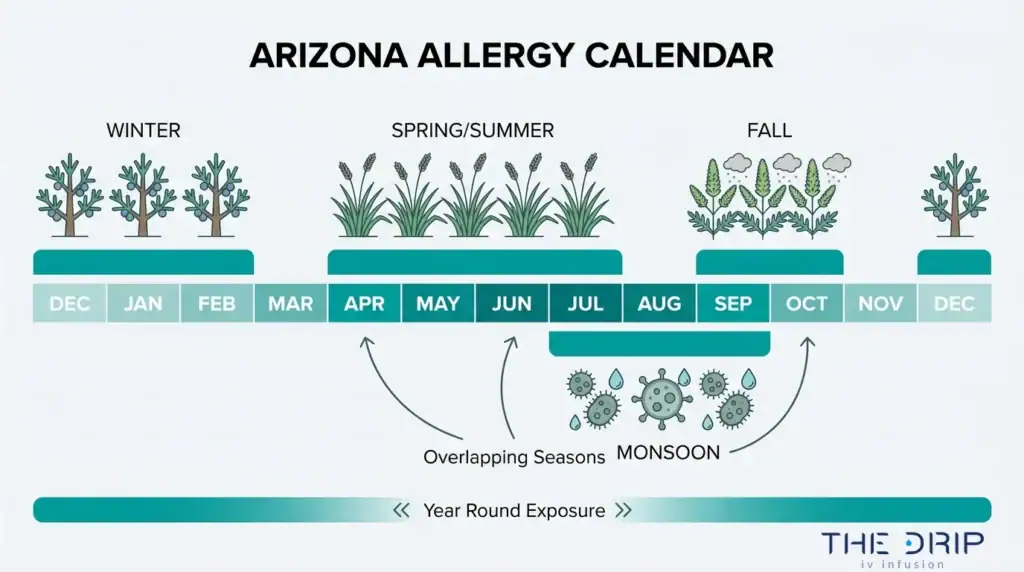
Arizona’s desert climate produces overlapping pollen cycles from ragweed, Bermuda grass, juniper, and olive trees, with monsoon moisture adding mold spores to the mix. These persistent triggers mean residents can face nearly year-round allergen exposure, making proactive nutrient support especially relevant.
When allergens enter the body, IgE antibodies bind to mast cells and trigger histamine release, producing congestion, sneezing, and airway inflammation. Nutrient deficiencies in zinc, B vitamins, and glutathione can worsen this cascade by shifting immune balance toward overactive allergic pathways.
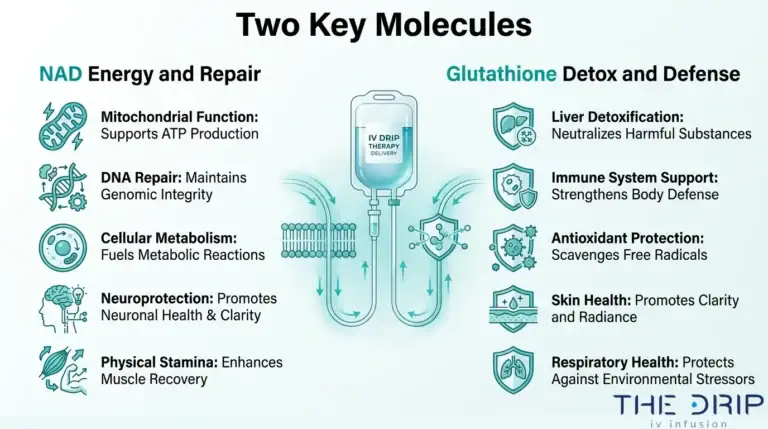
IV infusions deliver vitamin C, magnesium, zinc, B complex, and glutathione at near-complete bioavailability, bypassing digestive absorption limits that reduce oral supplement effectiveness. Each nutrient targets a different mechanism: vitamin C lowers circulating histamine, magnesium relaxes bronchial smooth muscle, and glutathione neutralizes the oxidative stress that amplifies inflammation.
Unlike antihistamines that block symptoms at a single endpoint, or allergy shots that require years of gradual desensitization, IV therapy provides short-term nutritional optimization that complements existing treatment plans. Sessions typically last 30 to 60 minutes and can be scheduled weekly during peak exposure, then tapered to monthly maintenance.
Mobile IV services bring professionally-administered infusions directly to your home, removing the logistical barriers that make consistent allergy care difficult during high-symptom days.
What Are Seasonal Allergies and Why Are They So Common in Arizona?
Seasonal allergies are immune responses triggered by airborne allergens that fluctuate with weather and plant cycles. Arizona’s desert environment produces a distinct set of triggers and extended exposure windows that affect residents at higher rates than the national average.
What Allergens Trigger Seasonal Allergies in the Arizona Desert?
The allergens that trigger seasonal allergies in the Arizona desert include pollen from native and non-native plants, such as:
- Ragweed and desert broom, which release lightweight pollen that travels long distances on dry desert winds.
- Bermuda grass and olive trees, introduced through urban landscaping and golf courses.
- Juniper and cypress trees, which pollinate heavily during winter and early spring.
- Mold spores, which spike after monsoon rains create pockets of moisture in an otherwise arid climate.
These allergens affect a significant share of the population. According to University of Arizona Health Sciences, approximately 35% of Arizona residents experience hay fever, a rate well above the national figure of 25.2% of U.S. adults reported by the CDC. For anyone living in the desert, understanding which specific plants drive symptoms is the first step toward effective relief.
Why Does Arizona’s Unique Climate Make Allergy Seasons Longer?
Arizona’s unique climate makes allergy seasons longer because mild winters, low humidity, and minimal frost allow plants to pollinate across multiple overlapping cycles rather than in a single spring burst. Trees like juniper begin releasing pollen as early as December, while grasses peak in spring and summer. Ragweed and desert broom then extend the season well into fall.
Monsoon moisture in July and August adds mold spores to the mix, creating a brief but intense secondary allergy wave. Unlike colder states where a hard freeze ends the pollen season definitively, Arizona’s warm temperatures rarely halt plant activity for long. This means residents can face nearly year-round allergen exposure, making proactive symptom management especially important.
With these persistent triggers in mind, understanding the body’s underlying allergic response helps explain why certain treatments work better than others.
What Happens in Your Body During an Allergic Reaction?
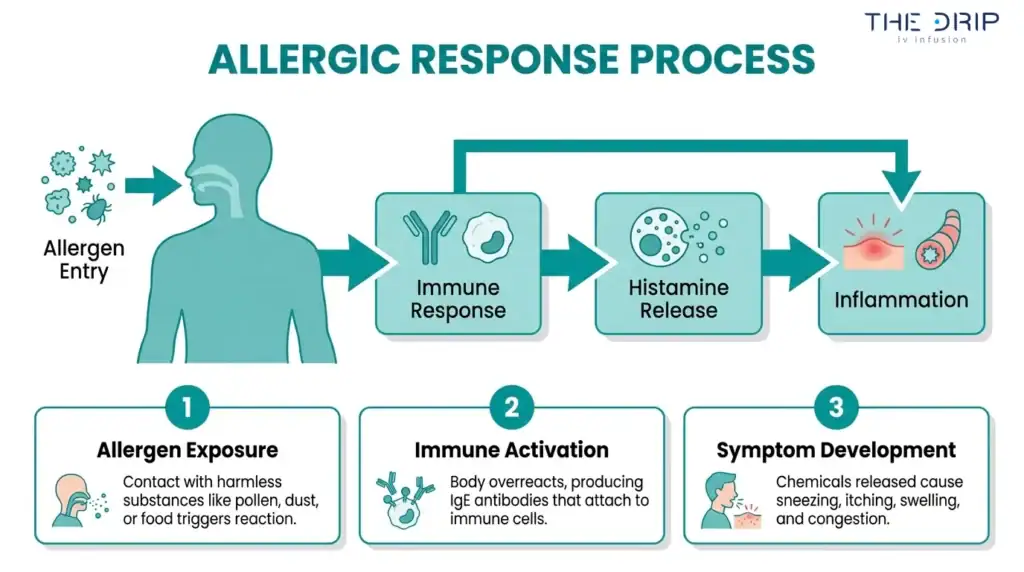
An allergic reaction occurs when your immune system overreacts to a normally harmless substance by triggering a cascade of inflammatory responses. The process involves IgE antibodies, mast cells, and histamine release, with nutrient deficiencies potentially worsening the immune imbalance.
During an allergic reaction, your body launches a type I hypersensitivity response. Antigen-specific immunoglobulin E (IgE) binds to mast cells and basophils, triggering the release of inflammatory mediators, including histamine, tryptase, and proteases. According to NCBI StatPearls, this IgE-mediated immune response is classified as immediate hypersensitivity because symptoms appear within minutes of allergen exposure.
Once activated, mast cells orchestrate a broader inflammatory cascade. Eosinophils, basophils, and Th2 lymphocytes are recruited to the site, amplifying the reaction. This is what produces the familiar symptoms: sneezing, nasal congestion, itchy eyes, and airway inflammation. For many allergy sufferers, these responses repeat with every exposure, creating a cycle of chronic discomfort.
Nutrient status plays an underappreciated role in how aggressively this cascade unfolds. Zinc deficiency, for example, causes thymic atrophy and reduces the activity of thymulin, a serum hormone essential for immune regulation. The result is an imbalanced Th1/Th2 ratio, where Th1 cells decline and Th2 cells dominate. Because Th2 cells activate B cells and antibody production, this imbalance directly fuels the IgE-driven allergic response. A 2024 review in Biomolecules confirmed that zinc deficiency shifts immune activity toward the allergic pathway by promoting this Th2 dominance.
Understanding this mechanism reveals why simply blocking histamine with antihistamines addresses only one endpoint of a much larger process. Supporting the immune system’s underlying nutrient balance can influence the reaction at an earlier stage, before histamine floods your tissues.
How Does IV Therapy Work to Relieve Allergy Symptoms?
IV therapy works to relieve allergy symptoms by delivering nutrients directly into the bloodstream, bypassing digestive absorption limits. The following sections explain why this delivery method improves relief and how quickly results can occur.
How Does Bypassing the Digestive System Improve Allergy Relief?
Bypassing the digestive system improves allergy relief by eliminating the absorption barriers that reduce nutrient potency. When vitamins and minerals are taken orally, gut health, enzyme activity, and metabolism all influence how much actually reaches your cells. IV delivery skips these variables entirely.
According to the Cleveland Clinic, IV vitamin therapy delivers almost 100% of the dosed nutrients, eliminating the variability that comes with oral supplements where gut health and metabolism affect what enters your system. This near-complete bioavailability allows higher therapeutic concentrations of allergy-fighting nutrients, such as vitamin C, magnesium, and zinc, to reach tissues faster. For allergy sufferers whose symptoms demand rapid nutrient support, this direct delivery method represents a meaningful advantage over oral supplementation alone.
How Quickly Can IV Therapy Reduce Allergy Symptoms?
IV therapy can reduce allergy symptoms within the duration of a single session, which typically lasts between 30 and 60 minutes. Because nutrients enter the bloodstream immediately, the body can begin using them without the multi-hour delay associated with oral digestion.
A study published in the Journal of International Medical Research investigating the acute effect of 7.5 g of IV vitamin C on histamine levels in 89 patients with allergies or upper respiratory infections found that treatment with intravenous high-dose vitamin C reduces allergy-related symptoms. This suggests that certain IV nutrients can produce measurable effects shortly after administration. While individual responses vary based on symptom severity and overall health, many people notice improvements in congestion, inflammation, and energy levels before leaving their session.
With the mechanism of IV therapy established, the specific nutrients that target allergy symptoms deserve a closer look.
Which IV Nutrients Help Fight Seasonal Allergy Symptoms?
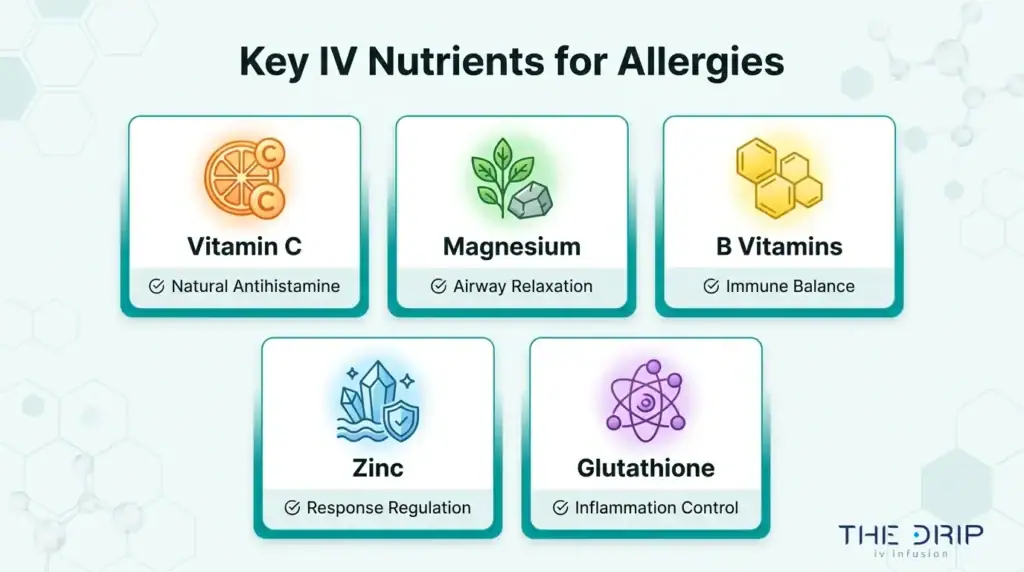
IV nutrients that help fight seasonal allergy symptoms include vitamin C, magnesium, B vitamins, zinc, and glutathione. Each nutrient targets a different mechanism in the allergic response, from histamine reduction to airway relaxation and immune regulation.
How Does Vitamin C Act as a Natural Antihistamine?
Vitamin C acts as a natural antihistamine by reducing circulating histamine levels in the bloodstream. As an essential antioxidant, ascorbic acid protects cells against oxidative stress triggered during allergic reactions. When delivered intravenously, vitamin C reaches concentrations far higher than oral supplementation allows. According to a study published in the Journal of International Medical Research, 7.5 g of IV vitamin C administered to 89 patients with allergies or upper respiratory infections produced observations suggesting that high-dose intravenous vitamin C reduces allergy-related symptoms. This direct histamine-lowering effect makes vitamin C one of the most practical nutrients for acute seasonal relief.
How Does Magnesium Help Relax Inflamed Airways?
Magnesium helps relax inflamed airways by counteracting calcium-driven muscle contraction in the bronchial passages. When allergens trigger airway tightening, magnesium acts as a natural smooth-muscle relaxant. According to Chest Journal, magnesium causes bronchial smooth-muscle relaxation in vitro, probably through its action as a “physiologic calcium antagonist.” This mechanism is particularly valuable for allergy sufferers who experience chest tightness or breathing difficulty alongside nasal congestion. IV delivery ensures magnesium reaches therapeutic levels quickly, bypassing the absorption limitations common with oral forms.
How Do B Vitamins Support Immune Balance During Allergy Season?
B vitamins support immune balance during allergy season by maintaining healthy communication between the immune and nervous systems. A deficiency in any member of this group can shift immune activity toward exaggerated allergic responses. According to a review published in Maturitas, vitamin B complex (B1, B2, B3, B5, B6, B9, B12) is essential for healthy immune and nervous system balance, and B vitamin deficiency has been linked to increased allergic responses. Because these vitamins are water-soluble and deplete quickly under stress, IV administration during peak allergy months offers consistent replenishment.
How Does Zinc Help Regulate the Immune Response to Allergens?
Zinc helps regulate the immune response to allergens by maintaining the balance between Th1 and Th2 immune cells. When zinc levels drop, Th2 cells outnumber Th1 cells, promoting the IgE antibody production that drives allergic reactions. As described in NCBI StatPearls, Type I hypersensitivity is an IgE-mediated immune response where antigen-specific IgE binds to mast cells and basophils, triggering release of histamine and other inflammatory mediators. Adequate zinc helps prevent this cascade from overactivating. For allergy sufferers, correcting even a mild zinc deficiency can meaningfully reduce the severity of seasonal symptoms.
How Does Glutathione Reduce Allergy-Related Inflammation?
Glutathione reduces allergy-related inflammation by neutralizing the oxidative stress that amplifies allergic reactions. As the body’s most abundant intracellular antioxidant, glutathione (GSH) scavenges reactive oxygen species generated during immune activation. According to a 2025 review in the International Journal of Molecular Sciences, a decrease in reduced glutathione (GSH) paired with an increase in oxidized glutathione (GSSG) indicates elevated oxidative stress and diminished cellular antioxidant capacity. IV glutathione replenishes these depleted stores directly, supporting the body’s ability to dampen inflammation at its source.
With these nutrients working through distinct pathways, combining them in a single IV session addresses seasonal allergies from multiple angles.
How Does IV Therapy Compare to Traditional Allergy Treatments?
IV therapy compares to traditional allergy treatments by offering a different mechanism: nutrient delivery for immune support rather than direct symptom blocking or long-term desensitization. The following subsections compare IV therapy to antihistamines and allergy shots.
How Does IV Therapy Compare to Over-the-Counter Antihistamines?
IV therapy compares to over-the-counter antihistamines in both mechanism and purpose. Antihistamines directly block histamine receptors to reduce sneezing, itching, and congestion. IV therapy, by contrast, delivers nutrients like vitamin C and zinc that support the immune system’s ability to manage inflammatory responses over time.
First-generation antihistamines cross the blood-brain barrier and cause drowsiness, while second-generation options are generally safer with fewer sedating effects. According to an ACEP Now review, there is no evidence that IV agents provide superior treatment of urticaria compared to oral ones. Antihistamines remain the frontline choice for acute symptom relief. IV nutrient therapy serves a complementary role, addressing underlying deficiencies that may worsen allergic responses rather than replacing direct symptom control.
How Does IV Therapy Compare to Allergy Shots?
IV therapy compares to allergy shots in timeline, goal, and approach. Allergy shots, a form of immunotherapy, work by gradually exposing the immune system to allergens to build long-term tolerance. This process requires a buildup phase of one to three injections per week for six to ten months, followed by monthly maintenance for three to five years.
IV nutrient therapy operates on a fundamentally different model. Rather than training immune tolerance, it delivers vitamins, minerals, and antioxidants that support balanced immune function during active allergy seasons. Sessions typically last 30 to 60 minutes with results focused on short-term relief and nutritional optimization. As allergist Purvi Parikh of NYU Langone Health noted in National Geographic, newer biologic therapies “work similarly to traditional allergy shots by inducing tolerance,” highlighting how immunotherapy continues to evolve independently from nutrient-based approaches.
For those seeking both immediate nutritional support and long-term desensitization, IV therapy and immunotherapy can serve different roles within a broader allergy management plan.
Who Should Consider IV Therapy for Seasonal Allergies?
IV therapy for seasonal allergies suits individuals whose symptoms persist despite conventional treatments. The following sections cover severe allergy sufferers, those intolerant of oral medications, and athletes managing allergies during training.
Can People with Severe Allergy Symptoms Benefit from IV Therapy?
People with severe allergy symptoms can benefit from IV therapy, particularly when standard treatments provide incomplete relief. According to the AAAAI, roughly 7.8% of U.S. adults have hay fever, and many in that group experience symptoms intense enough to disrupt daily life.
Traditional immunotherapy requires a buildup phase of one to three injections weekly for six to ten months, followed by monthly maintenance for three to five years. IV therapy offers a different approach: nutrient infusions that target inflammation and histamine response directly, often starting at weekly sessions and tapering to every two to four weeks. For someone struggling through a brutal Arizona allergy season, that faster timeline makes IV therapy a practical complement worth discussing with a healthcare provider.
Is IV Therapy a Good Option for Allergy Sufferers Who Cannot Tolerate Oral Medications?
IV therapy is a good option for allergy sufferers who cannot tolerate oral medications. First-generation antihistamines frequently cause drowsiness, while even second-generation options can trigger gastrointestinal side effects in sensitive individuals.
Because IV infusions bypass the digestive tract entirely, they eliminate common oral side effects:
- No stomach irritation or nausea from pill breakdown.
- No absorption variability caused by gut health conditions.
- No sedation tied to oral antihistamine formulations.
Nutrients such as vitamin C, magnesium, and glutathione reach the bloodstream at full therapeutic concentration without requiring GI processing. For anyone who has tried multiple oral allergy medications and found them intolerable, IV nutrient therapy represents one of the most practical alternatives available.
Should Athletes Dealing with Allergies Consider IV Therapy?
Athletes dealing with allergies should consider IV therapy because it addresses both symptom relief and performance recovery simultaneously. Allergy symptoms like nasal congestion, airway inflammation, and fatigue directly impair training output and competition readiness.
High-dose IV vitamin C acts as a natural antihistamine, reducing allergy-related symptoms while also supporting tissue repair from intense exercise. Combined with hydration, B vitamins for energy metabolism, and magnesium for muscle and airway relaxation, a single infusion session targets multiple athlete-specific needs at once. Most oral antihistamines cause drowsiness or dehydration, both unacceptable for competitive performance. IV therapy sidesteps those trade-offs entirely, making it especially valuable during peak allergy months when training volume cannot afford interruption.
With a clearer picture of who benefits most, understanding session frequency helps maximize results.
How Often Should You Get IV Therapy During Allergy Season?
You should get IV therapy during allergy season on a schedule that matches your symptom severity, typically ranging from weekly sessions during peak exposure to monthly maintenance as symptoms stabilize.
The ideal IV therapy frequency during allergy season depends on whether you are in an active symptom phase or maintaining relief. A common clinical pattern starts with more frequent sessions to address nutrient deficits and reduce inflammation, then tapers as the body responds. According to Mobile IV Medics, a common clinical pattern for IV therapy is to start at roughly weekly frequency while recovering from a deficit, then taper to every two to four weeks as recovery progresses. For ongoing wellness and maintenance outside peak flare-ups, one to two sessions per month is a widely recommended baseline.
Allergy seasons in Arizona can stretch across multiple months, which makes consistency more important than intensity. Starting weekly sessions two to three weeks before your known trigger season begins allows nutrient levels to build before pollen counts spike. Once symptoms stabilize, spacing sessions to every two to four weeks maintains protective levels of key nutrients like vitamin C, magnesium, and zinc without overcommitting time or budget. For those managing the unpredictability of Arizona’s overlapping allergy seasons, this flexible approach adapts well to shifting conditions.
Understanding what happens during each session helps set realistic expectations for your treatment timeline.
What Should You Expect During an IV Therapy Session for Allergies?
You should expect a straightforward process that involves a brief health assessment, comfortable IV placement, and a relaxation period while nutrients infuse directly into your bloodstream. According to OMG Wellness MD, a typical IV therapy session for allergies lasts between 30 and 60 minutes. The session begins when a nurse reviews your health history and current allergy symptoms to confirm the infusion is appropriate. After selecting the nutrient blend, the nurse inserts a small catheter into a vein, usually in the arm. From there, the IV drip delivers the solution at a controlled rate while you rest comfortably. Most people read, work on a laptop, or simply relax during this time. Minor sensations like a cool feeling along the arm or a slight taste of vitamins are normal. Once the infusion is complete, the nurse removes the IV and monitors you briefly before wrapping up.
With a session this simple, mobile IV services can make allergy relief even more accessible.
How Can Mobile IV Therapy Make Allergy Relief More Convenient?
Mobile IV therapy makes allergy relief more convenient by bringing nurse-administered infusions directly to your home or workplace. The following sections cover how The Drip IV Infusion’s mobile service addresses seasonal allergies and the key takeaways from this article.
Can The Drip IV Infusion’s Nurse-Administered Mobile Service Help with Your Seasonal Allergies?
Yes, The Drip IV Infusion’s nurse-administered mobile service can help with your seasonal allergies by delivering nutrient-rich infusions wherever you are. Rather than driving to a clinic while dealing with congestion, fatigue, or itchy eyes, you receive professional care at home. Each session is administered by a registered nurse who customizes your infusion with allergy-supportive add-ons such as vitamin C, glutathione, zinc, and magnesium.
This at-home approach also eliminates a common frustration with conventional allergy medications. According to the Cleveland Clinic Health Library, first-generation antihistamines cross the blood-brain barrier and cause drowsiness, while even second-generation options carry limitations. IV nutrient therapy offers a complementary path that avoids those oral medication side effects entirely. For anyone whose allergy symptoms disrupt daily life, having a nurse come to you removes barriers to consistent care.

What Are the Key Takeaways About How IV Therapy Can Help with Seasonal Allergies in Arizona?
The key takeaways about how IV therapy can help with seasonal allergies in Arizona center on bioavailability, targeted nutrients, and accessible care:
- IV delivery bypasses the digestive system, so nutrients reach the bloodstream at near-complete absorption levels. According to the Cleveland Clinic, IV vitamin therapy delivers almost 100% of dosed nutrients, eliminating the variability of oral supplements.
- Allergy-supportive nutrients, including vitamin C, magnesium, B vitamins, zinc, and glutathione, each address different aspects of the allergic response, from histamine regulation to airway relaxation.
- Mobile services like The Drip IV Infusion remove logistical barriers by sending a nurse directly to your location, making consistent treatment practical even during peak allergy season.
For most allergy sufferers in Arizona, combining IV nutrient support with your existing treatment plan is one of the most practical ways to stay ahead of symptoms rather than constantly reacting to them.