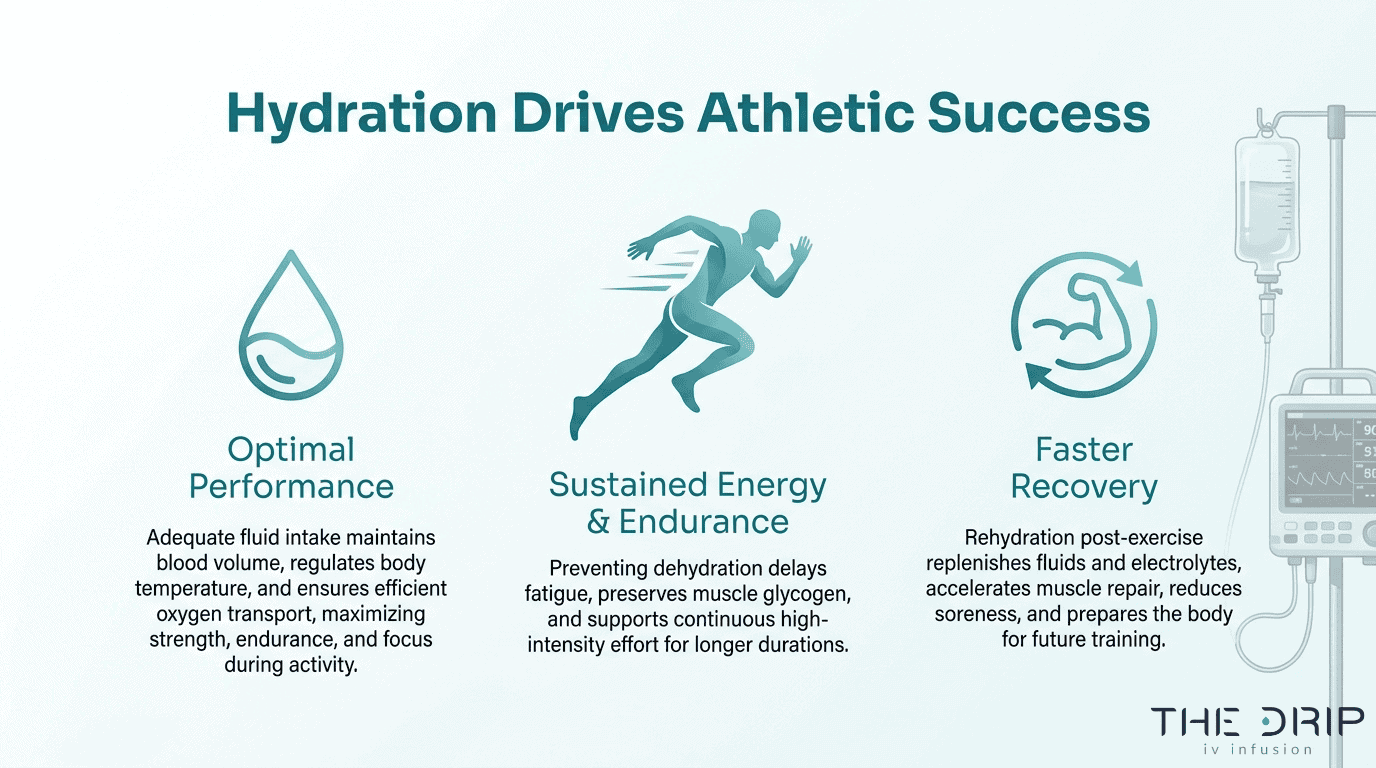
Hydration for athletes is the strategic management of fluid and electrolyte intake to sustain physical output, protect cognitive function, and accelerate post-exercise recovery. Even modest fluid deficits impair strength, power, and endurance while increasing injury risk.
This guide covers the physiological reasons hydration drives performance, practical fluid intake guidelines for every training phase, dehydration and overhydration warning signs, the role of electrolytes and beverage selection, recovery mechanisms tied to fluid balance, and advanced rehydration options including IV therapy.
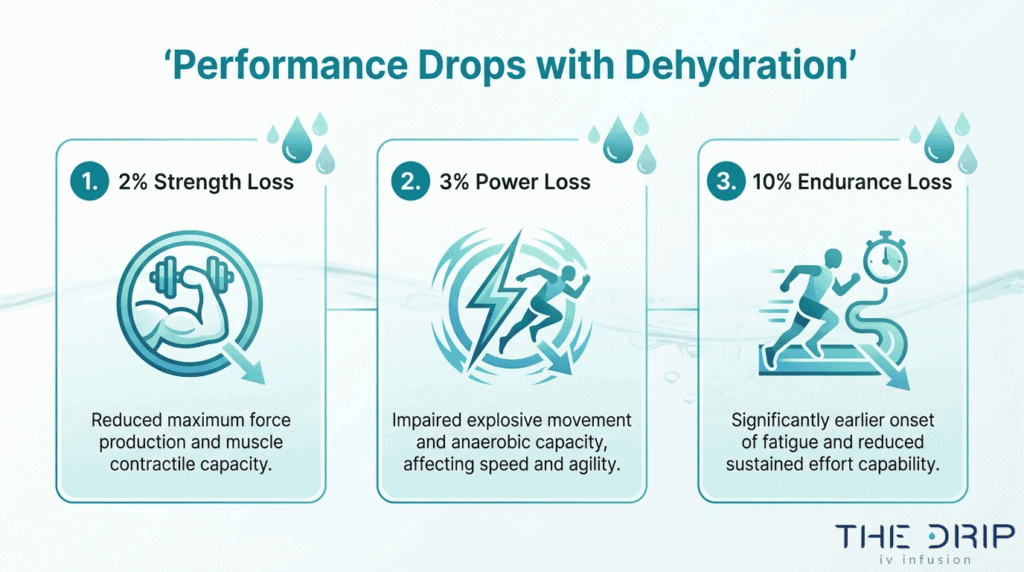
Fluid loss disrupts thermoregulation, reduces blood volume, and compromises muscle contraction efficiency. Performance declines are measurable: hypohydration consistently attenuates strength by roughly 2%, power by roughly 3%, and high-intensity endurance by up to 10%. Cognitive sharpness suffers in parallel, with reaction time and decision-making deteriorating as dehydration progresses.
Proper timing and volume of fluid intake vary by sport, body size, and environment. Pre-exercise, mid-session, and post-exercise hydration each follow distinct protocols, and endurance athletes face different demands than team sport athletes whose sweating rates and fluid access windows differ significantly.
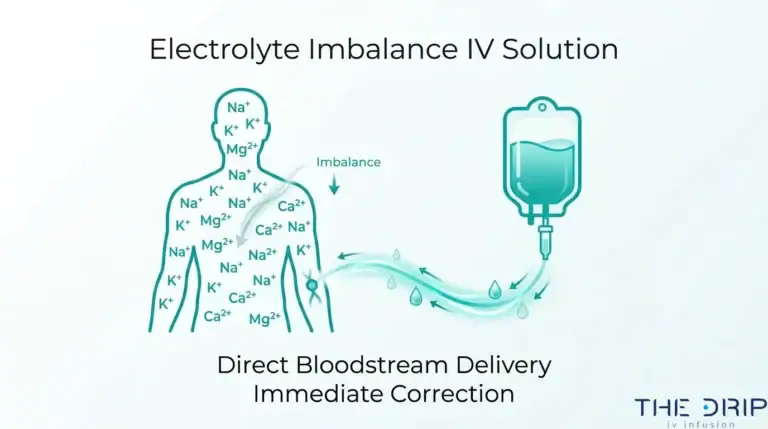
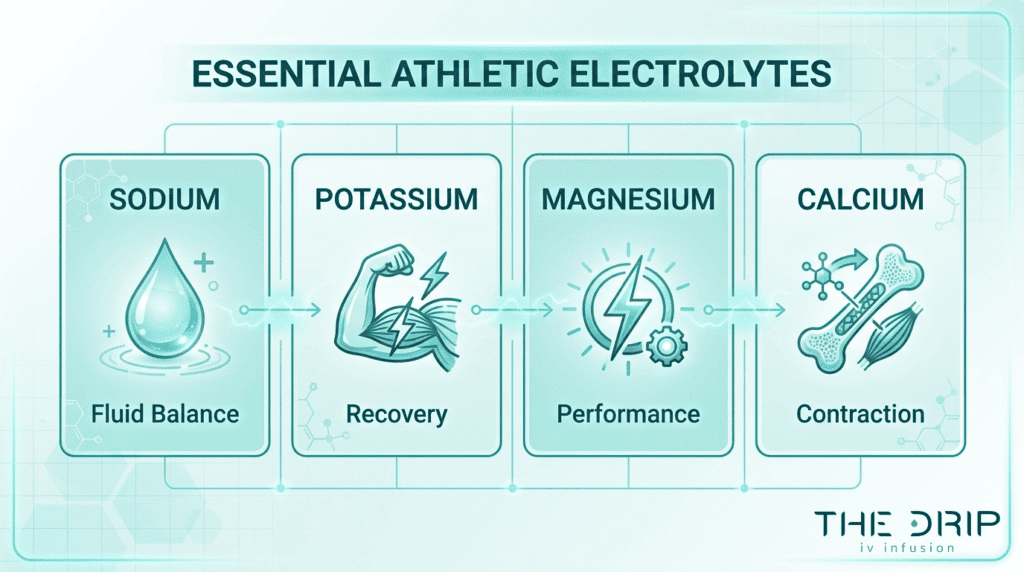
Sodium, potassium, magnesium, and calcium each serve specific roles in muscle function, nerve signaling, and fluid retention. Sodium is the primary electrolyte lost through sweat and anchors effective replacement strategies, while beverage choices between water, sports drinks, and coconut water depend on session duration and intensity.
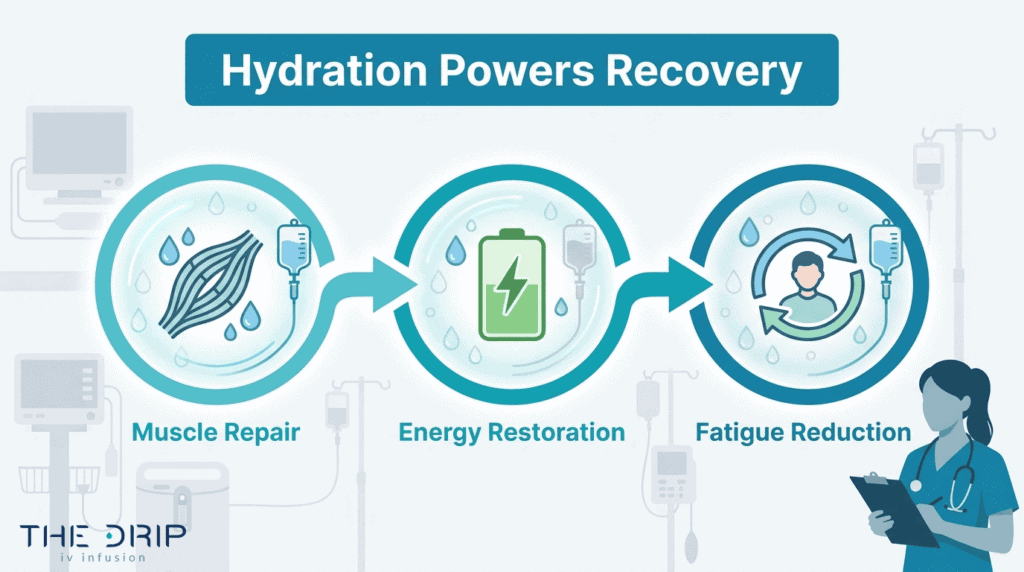
Adequate rehydration after training reduces muscle soreness by limiting exercise-induced muscle damage, supports joint and tissue repair through sustained synovial fluid balance, and restores energy by normalizing plasma volume and cardiac output. For athletes whose recovery demands exceed what oral hydration can address, IV infusion therapy delivers fluids and nutrients directly into the bloodstream for faster replenishment.
Why Is Hydration So Important for Athletic Performance?
Hydration is important for athletic performance because water supports every physiological system athletes depend on during training and competition. Below, each subsection covers temperature regulation, muscle function, mental focus, and blood volume.
How Does Water Regulate Body Temperature During Exercise?
Water regulates body temperature during exercise by absorbing metabolic heat and dissipating it through sweat evaporation. As muscles generate heat, circulating blood carries that warmth to the skin’s surface, where perspiration cools the body. Without adequate fluid, this thermoregulatory system falters, core temperature rises rapidly, and heat-related illness becomes a serious risk.
Environmental conditions amplify this challenge considerably. According to research from the University of New Mexico, high-altitude exposure above 2,500 meters significantly increases fluid requirements due to heightened respiratory water loss, and exercise performance can decrease by up to 34% when hypohydration combines with altitude-induced physiological stress. Athletes training in hot, humid, or high-altitude environments should increase fluid intake proactively rather than waiting for thirst to signal a deficit.
How Does Dehydration Impair Muscle Function and Strength?
Dehydration impairs muscle function and strength by disrupting electrolyte balance, reducing intracellular fluid volume, and compromising the contractile efficiency of muscle fibers. Even modest fluid deficits interfere with excitation-contraction coupling, the process that translates neural signals into muscular force.
The measurable impact is substantial. A meta-analysis published in the African Journal of Sport and Physical Science found that hypohydration attenuates strength by approximately 2%, power by approximately 3%, and high-intensity endurance by approximately 10%, with muscle strength falling by 5.5 ± 1.0% and anaerobic power dropping by 5.8 ± 2.3%. For competitive athletes, losses of this magnitude can determine outcomes in strength-dependent and power-based sports.
How Does Fluid Loss Affect Mental Focus and Reaction Time?
Fluid loss affects mental focus and reaction time by reducing cerebral blood flow and altering neurotransmitter activity. Cognitive tasks that require sustained attention, working memory, and rapid decision-making deteriorate as dehydration progresses. Athletes relying on split-second reactions, such as those in racket sports, martial arts, or team sports, are particularly vulnerable.
Sodium, the primary electrolyte lost in sweat, plays a central role in maintaining neural signaling speed. According to Precision Fuel & Hydration, sodium should be the focus for hydration strategies, while magnesium losses remain minimal at approximately 0.1 to 0.5 mmol/L and calcium losses average about 0.5 mmol/L per liter of sweat. Prioritizing sodium replacement helps preserve the cognitive sharpness athletes need under pressure.
How Does Blood Volume Change When Athletes Are Dehydrated?
Blood volume decreases when athletes are dehydrated because fluid shifts out of the vascular compartment to compensate for sweat losses. This reduction in plasma volume forces the heart to work harder, increasing heart rate to maintain adequate cardiac output. Stroke volume drops as less blood returns to the heart with each cycle.
The cardiovascular strain cascades into performance limitations. Reduced blood volume means less oxygen-rich blood reaches working muscles, accelerating fatigue and lowering aerobic capacity. Simultaneously, blood flow to the skin for cooling diminishes, compounding the thermoregulatory burden discussed above. Maintaining fluid balance preserves plasma volume, which in turn sustains both oxygen delivery and thermal regulation throughout prolonged or intense activity.
With the performance consequences of dehydration established, knowing exactly how much to drink before, during, and after exercise becomes the next practical step.
How Much Water Should Athletes Drink Before, During, and After Exercise?
Athletes should drink specific fluid volumes before, during, and after exercise to maintain performance and support recovery. The subsections below break down timing-based guidelines, endurance race day needs, and strength training hydration requirements.
How Much Water Should Athletes Drink Before a Workout?
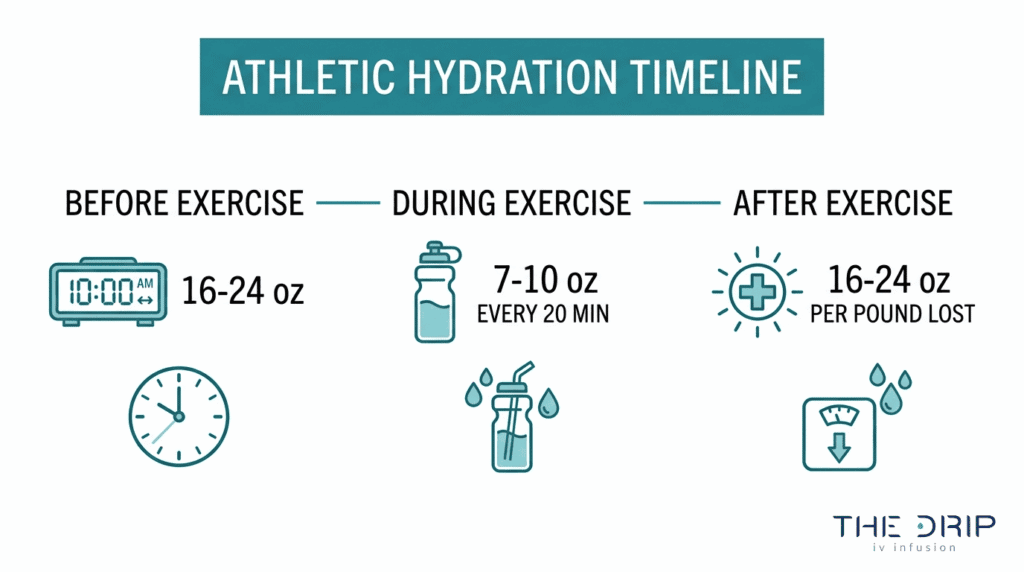
Athletes should drink 16–24 fl. oz. of water within two hours before training, followed by another 7–10 fl. oz. approximately 10–20 minutes before exercise begins. According to the National Athletic Trainers’ Association (NATA), this two-phase pre-hydration approach ensures adequate fluid levels without causing stomach discomfort during activity.
Starting a session even mildly under-hydrated compromises thermoregulation and muscular output from the first rep. Pre-hydration is one of the simplest performance strategies athletes consistently overlook.
How Much Water Should Athletes Drink During Exercise?
Athletes should drink 7–10 fl. oz. of fluid every 10–20 minutes during exercise, adjusting based on sweat rate and environmental conditions. Smaller, frequent sips are more effective than large volumes consumed at once, since the gut absorbs fluid at a limited rate.
For sessions lasting under 60 minutes, plain water is typically sufficient. When activity extends beyond that threshold or involves heavy sweating, adding electrolytes helps maintain sodium balance. Carrying a measured bottle makes it easier to track intake rather than relying on thirst, which often lags behind actual fluid needs.
How Much Water Should Athletes Drink After Exercise?
Athletes should drink 16–24 fl. oz. of fluid for every pound of body weight lost during exercise. Weighing in before and after a session provides the most accurate measure of fluid deficit.
Research published by NutritionFacts.org found no significant difference in rehydration effectiveness between coconut water, sports drinks, and plain water for replacing fluid loss of up to 3% of body weight. However, coconut water’s high potassium content can be problematic for individuals with compromised kidney function. For most athletes, the post-exercise beverage matters less than consuming adequate volume within the first two hours of finishing.
How Much Water Do Endurance Athletes Need on Race Day?
Endurance athletes need a structured, individualized hydration plan on race day because sweat rates vary significantly across sports. A 2019 study published in the Journal of Sports Sciences found that American football athletes exhibit the highest whole-body sweating rates at 1.51 ± 0.70 L/h, followed by endurance athletes at 1.28 ± 0.57 L/h.
Monitoring biomarkers like urine specific gravity, plasma osmolality, and sweat sodium concentration helps endurance athletes fine-tune intake across multi-hour events. Relying solely on a fixed drinking schedule without accounting for individual sweat losses is one of the most common race day hydration mistakes.
How Much Water Do Strength Training Athletes Need?
Strength training athletes need approximately 16–24 fl. oz. of water in the two hours before lifting and 7–10 fl. oz. every 10–20 minutes during the session. Although resistance workouts typically produce lower sweat rates than endurance events, fluid losses still accumulate, especially during high-volume or superset-style training.
Post-workout rehydration follows the same guideline: 16–24 fl. oz. per pound of body weight lost. Because strength sessions often take place indoors, athletes tend to underestimate their fluid deficit. Tracking pre- and post-session weight remains the most reliable method for dialing in individual needs.
With hydration timing established, recognizing dehydration symptoms helps athletes intervene before performance suffers.
What Are the Signs of Dehydration in Athletes?
The signs of dehydration in athletes range from subtle early cues like thirst and dark urine to severe symptoms such as confusion and muscle cramping. The following subsections cover mild warning signs, moderate to severe symptoms, and practical self-monitoring methods.
What Are the Early Warning Signs of Mild Dehydration?
The early warning signs of mild dehydration include increased thirst, darker urine color, dry mouth, slight fatigue, and reduced sweat output. According to the Korey Stringer Institute at the University of Connecticut, thirst typically develops only once dehydration has already reached approximately 1–2% of body mass loss. This delay makes thirst an unreliable early indicator on its own.
Other subtle cues to watch for include:
- Mild headache that worsens during activity
- Slightly elevated heart rate at the same exercise intensity
- Decreased concentration or a feeling of sluggishness
Because thirst lags behind actual fluid deficit, athletes who wait to feel thirsty before drinking are likely already experiencing performance decline. Proactive fluid intake based on a schedule, rather than sensation alone, is one of the simplest ways to catch mild dehydration before it escalates.
What Are the Symptoms of Moderate to Severe Dehydration?
The symptoms of moderate to severe dehydration are more pronounced and can pose serious health risks if left unaddressed. When fluid loss exceeds 2–3% of body mass, athletes may experience:
- Intense thirst with very dark or minimal urine output
- Muscle cramps and involuntary spasms
- Rapid or weak pulse
- Dizziness, lightheadedness, or fainting
- Nausea or vomiting during or after exercise
- Confusion, disorientation, or irritability
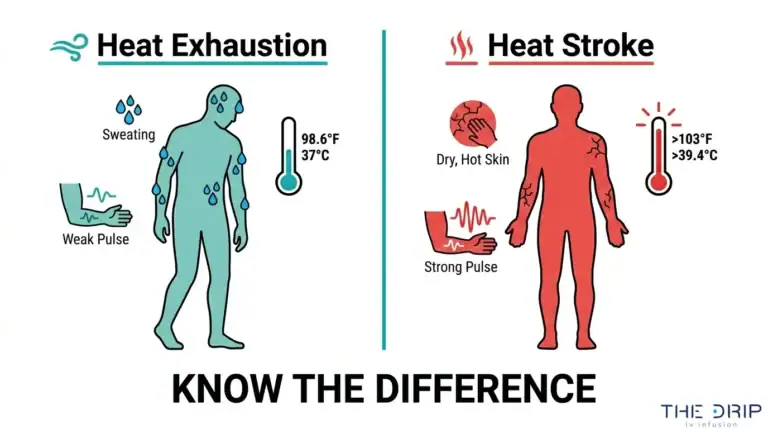
Severe dehydration can progress to heat exhaustion or heatstroke, both of which require immediate medical attention. Any athlete showing signs of mental confusion or an inability to drink fluids independently should stop activity and seek emergency care. Recognizing these symptoms quickly is critical because the window between moderate dehydration and a medical emergency can be narrow during intense training.
How Can Athletes Monitor Hydration Status Themselves?
Athletes can monitor hydration status themselves using simple, practical tools that require no laboratory equipment. The two most accessible methods are urine color assessment and body weight tracking.
Urine color at a value of 4 or greater on a standard color chart indicates dehydration, making morning urine checks a reliable daily habit. Weighing in before and after training sessions reveals sweat loss; each pound lost corresponds to roughly 16–24 fl. oz. of fluid that needs replacement.
As Gabrielle Judd, M.S., R.D., notes through Johns Hopkins Medicine, “dehydration is a heavy hitter when it comes to athletic performance,” reinforcing why consistent self-monitoring matters. Combining urine checks, pre- and post-exercise weigh-ins, and attention to thirst patterns gives athletes a practical hydration picture without specialized testing.
With dehydration signs identified, understanding which electrolytes athletes need helps complete the hydration strategy.
What Electrolytes Do Athletes Need and Why?
Athletes need sodium, potassium, magnesium, and calcium to maintain fluid balance, support muscle function, and sustain performance. Each electrolyte serves a distinct role during exercise and recovery.
What Role Does Sodium Play in Athletic Hydration?
Sodium plays the central role in athletic hydration by regulating fluid balance and maintaining blood volume during exercise. As the primary electrolyte lost through sweat, sodium drives the body’s thirst mechanism and helps retain ingested fluids rather than allowing them to pass through too quickly.
According to Precision Fuel & Hydration, sodium is the main electrolyte lost in sweat and should be the primary focus for hydration strategies. When sodium levels drop too low during prolonged exercise, athletes risk exercise-associated hyponatremia, a potentially dangerous condition. Replacing sodium during and after training helps maintain plasma volume, supports nerve signaling, and prevents cramping. For athletes with high sweat rates, sodium-containing beverages outperform plain water for sustained fluid retention.
Why Is Potassium Important for Muscle Recovery?
Potassium is important for muscle recovery because it regulates muscle contraction and cellular fluid balance after exercise. This intracellular electrolyte works alongside sodium to maintain the electrochemical gradients that nerve and muscle cells depend on for proper function.
During intense training, potassium shifts out of muscle cells into the bloodstream. Replenishing potassium after exercise supports:
- Normal muscle contraction and relaxation cycles.
- Restoration of cellular fluid equilibrium.
- Glycogen synthesis in recovering muscle tissue.
- Healthy heart rhythm during the post-exercise cooldown period.
Potassium-rich foods, such as bananas, sweet potatoes, and avocados, offer a practical recovery option. Athletes who neglect potassium intake often experience prolonged soreness and sluggish recovery between sessions.
How Do Magnesium Levels Affect Athletic Performance?
Magnesium levels affect athletic performance by influencing energy production, oxygen delivery, and neuromuscular coordination. Magnesium serves as a cofactor in over 300 enzymatic reactions, including those that convert food into usable ATP for working muscles.
Although sweat-based magnesium losses are relatively small at approximately 0.1 to 0.5 mmol/L per liter of sweat, even marginal deficiency can impair performance. Low magnesium is associated with:
- Increased muscle cramping and involuntary spasms.
- Reduced aerobic capacity and elevated heart rate at submaximal effort.
- Poor sleep quality, which directly slows recovery.
Supplementation through diet or targeted infusions can help athletes who train at high volumes maintain adequate levels. Magnesium is often the most overlooked electrolyte in athletic nutrition planning, yet its impact on both performance and recovery is substantial.
Why Do Athletes Need Calcium During Prolonged Exercise?
Athletes need calcium during prolonged exercise because calcium enables muscle contraction, supports bone integrity under repetitive loading, and assists in nerve signal transmission. Every stride, pedal stroke, and lift depends on calcium ions triggering the contraction-relaxation cycle within muscle fibers.
Sweat-based calcium losses average about 0.5 mmol/L (20 mg/L) per liter of sweat, as reported by Precision Fuel & Hydration. While these losses appear modest per hour, they accumulate during multi-hour endurance events. Chronic inadequate calcium replacement raises the risk of stress fractures and diminished bone density over time. Athletes engaged in weight-bearing or high-impact sports should prioritize calcium through dairy, fortified foods, or supplementation to protect long-term skeletal health.
Understanding these four electrolytes helps athletes build a targeted hydration strategy that goes beyond water alone.
How Does Hydration Speed Up Post-Exercise Recovery?
Hydration speeds up post-exercise recovery by reducing muscle soreness, supporting joint and tissue repair, and restoring energy levels. The following subsections explain each recovery mechanism.
How Does Hydration Help Reduce Muscle Soreness After Exercise?
Hydration helps reduce muscle soreness after exercise by mitigating the physiological stress that causes exercise-induced muscle damage (EIMD). Adequate fluid levels counteract osmotic stress, limit muscle fiber swelling, and help regulate core temperature during and after intense training.
According to the Gatorade Sports Science Institute, proper hydration may help negate EIMD by addressing these mechanisms, while dehydration exceeding 2% of body mass can prolong recovery through impaired excitation-contraction coupling and decreased skeletal muscle blood flow.
When fluid balance drops too low, muscles struggle to clear metabolic waste efficiently, and the inflammatory response intensifies. Maintaining hydration before, during, and after training is one of the simplest strategies athletes can use to limit next-day soreness and accelerate their return to peak output.
How Does Proper Fluid Intake Support Joint and Tissue Repair?
Proper fluid intake supports joint and tissue repair by maintaining the water content in synovial fluid, cartilage, and connective tissues. Joints rely on adequate hydration to stay lubricated, cushion impact forces, and transport nutrients essential for tissue regeneration after strenuous activity.
According to Mayo Clinic guidelines, total daily fluid intake from all sources should range from approximately 2.7 liters for healthy women to 3.7 liters for healthy men, with individual needs increasing based on activity level and environment.
Athletes recovering from high-impact training sessions often underestimate how much fluid their joints require. Consistently meeting daily intake targets, rather than hydrating only around workouts, gives connective tissues the sustained moisture they need for repair.
How Does Rehydration Restore Energy and Reduce Fatigue?
Rehydration restores energy and reduces fatigue by replenishing plasma volume, which improves oxygen and nutrient delivery to working muscles. Even mild fluid deficits force the cardiovascular system to work harder, elevating heart rate and perceived exertion while slowing glycogen resynthesis.
When athletes replace lost fluids promptly after exercise, blood viscosity decreases and cardiac output normalizes. This allows glucose and electrolytes to reach muscle cells more efficiently, accelerating the conversion of stored glycogen back into usable fuel. Fatigue that lingers hours after a session is frequently a hydration problem rather than a training load issue.
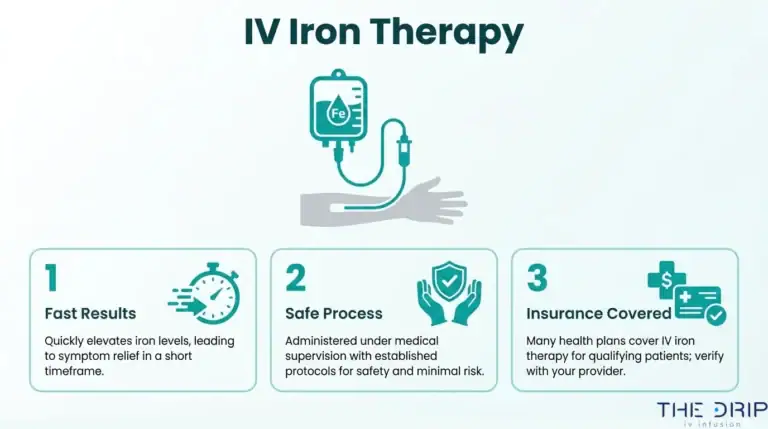
For athletes who find oral rehydration too slow or insufficient after intense sessions, options like IV therapy can deliver fluids and nutrients directly into the bloodstream. Understanding how fluid timing shapes recovery sets the stage for choosing the right hydration strategy.
What Should Athletes Drink Besides Water for Hydration?
Athletes should drink sports drinks, coconut water, and natural electrolyte beverages besides water for hydration. The best choice depends on exercise duration, intensity, and individual needs.
When Should Athletes Choose Sports Drinks Over Water?
Athletes should choose sports drinks over water during prolonged exercise lasting longer than 60 minutes or during intense sessions that produce heavy sweating. Sports drinks contain sodium, potassium, and carbohydrates that help replace electrolytes lost through sweat while providing quick energy.
For shorter, moderate-intensity workouts, plain water typically suffices. However, when sessions extend beyond an hour, or when training occurs in hot conditions, the added electrolytes and glucose in isotonic formulations support sustained fluid absorption and energy output. Heavy sweaters and salty sweaters benefit most from the sodium content in these beverages. For most casual gym sessions under 45 minutes, spending extra on sports drinks offers little measurable advantage over water alone.
Are Coconut Water and Natural Electrolyte Drinks Effective?
Coconut water and natural electrolyte drinks are effective hydration options for athletes. According to a review published by NutritionFacts.org, research comparing rehydration after strenuous exercise found no significant difference in effectiveness between coconut water, sports drinks, and plain water for replacing fluid loss of up to 3% of body weight.
Coconut water is naturally rich in potassium, which supports muscle function. However, its high potassium content can be problematic for individuals with compromised kidney function. It also contains less sodium than most sports drinks, making it a weaker choice for heavy sweaters who lose significant sodium. Natural electrolyte drinks made with fruit juice, sea salt, and honey offer a whole-food alternative worth considering, particularly for athletes who prefer fewer artificial ingredients.
Should Athletes Avoid Caffeine and Alcohol for Hydration?
Athletes should avoid alcohol for hydration but can use caffeine strategically. Alcohol acts as a diuretic, increasing urine output and accelerating fluid loss. Consuming alcohol after training delays rehydration and impairs recovery processes.
Caffeine, on the other hand, is more nuanced. In moderate doses, caffeine does not cause clinically significant dehydration in habituated users. It can even enhance endurance performance and reduce perceived exertion. Coffee or caffeinated teas before training are generally acceptable when paired with adequate water intake. The key distinction is dose: excessive caffeine consumption above 400 mg daily may produce mild diuretic effects that offset hydration efforts. For post-exercise recovery specifically, prioritizing water or electrolyte-rich beverages over caffeinated or alcoholic options remains the most reliable approach.
Understanding which beverages support hydration helps athletes build a complete fluid strategy alongside proper intake timing.
How Does Heat and Humidity Change Hydration Needs for Athletes?
Heat and humidity change hydration needs for athletes by accelerating sweat rates, impairing evaporative cooling, and increasing total fluid loss. When ambient temperature and moisture levels rise, the body works harder to dissipate internal heat, demanding significantly more fluid intake to maintain safe core temperatures and sustain performance.
Hot environments amplify sweat production as the thermoregulatory system attempts to cool the body through evaporation. High humidity compounds this challenge because moisture-saturated air slows evaporative cooling, forcing the body to produce even more sweat with diminishing returns. Athletes exercising in these conditions can lose fluid at rates far exceeding those in temperate climates, sometimes surpassing 2 liters per hour during intense activity.
This elevated fluid loss carries direct performance consequences. According to the African Journal of Sport and Physical Science, hypohydration consistently attenuates strength by approximately 2%, power by approximately 3%, and high-intensity endurance by approximately 10%. In hot, humid conditions, athletes reach these thresholds faster because sweat losses accumulate more rapidly.
Practical adjustments help athletes manage heat-related hydration demands:
- Pre-hydrate aggressively in the hours before outdoor training or competition.
- Increase fluid intake frequency during exercise, drinking smaller amounts every 15 to 20 minutes rather than waiting for thirst.
- Include sodium in fluids, since sweat losses in heat carry higher electrolyte concentrations.
- Monitor body weight before and after sessions to quantify individual sweat rates.
- Adjust clothing and scheduling to reduce overall thermal load when possible.
Beyond volume, fluid composition matters more in hot environments. Sweat sodium concentrations tend to increase with higher sweat rates, making plain water insufficient for prolonged heat exposure. Electrolyte-containing beverages help maintain plasma volume and prevent the dilutional effects that can occur when athletes consume large volumes of hypotonic fluid alone.
Athletes who train or compete regularly in heat should treat acclimatization as a hydration strategy in its own right. Gradual exposure over 10 to 14 days improves the body’s sweating efficiency and fluid retention, reducing the net fluid deficit during subsequent sessions. For athletes whose environmental demands outpace what oral rehydration can address, understanding when additional recovery support is needed becomes essential.
What Happens When Athletes Overhydrate?
When athletes overhydrate, they risk a dangerous condition called exercise-associated hyponatremia (EAH), where excess fluid dilutes blood sodium to critically low levels. This occurs when fluid intake exceeds the kidneys’ ability to excrete it, and hormonal responses during exercise can make the problem worse.
EAH is defined as a serum sodium level below 135 mmol/L. According to StatPearls (via NCBI Bookshelf), this condition results from excessive hypotonic fluid consumption beyond renal excretion capacity, often exacerbated by inappropriate non-osmotic antidiuretic hormone (ADH) secretion during physical exertion. Symptoms range from mild nausea and headache to seizures, pulmonary edema, and in rare cases, death.
Several factors increase overhydration risk:
- Drinking on a fixed schedule rather than responding to thirst signals.
- Consuming only plain water during prolonged exercise lasting over 90 minutes.
- Having a smaller body size, which reduces total fluid tolerance.
- Participating in slower-paced endurance events where fluid access is frequent and sweat losses are lower.
Athletes can prevent overhydration by matching fluid intake to individual sweat rate rather than following generic volume targets. Weighing yourself before and after training sessions provides a reliable measure of actual fluid loss. Including sodium in hydration strategies also helps the body retain appropriate fluid balance, since sodium is the primary electrolyte lost through sweat.
For most athletes, thirst remains a more reliable guide than predetermined drinking schedules. Overhydrating is less common than dehydration, but its consequences can be equally severe, making individualized hydration planning essential. Understanding how hydration needs differ across sports helps athletes fine-tune these strategies further.
How Does Hydration Differ for Team Sports Versus Endurance Events?
Hydration differs for team sports versus endurance events primarily in sweat rate patterns, fluid access opportunities, and electrolyte replacement timing. Team sports involve intermittent high-intensity bursts with structured breaks, while endurance events demand sustained fluid intake over prolonged continuous effort.
A study published in the Journal of Sports Sciences found that American football athletes exhibit the highest whole-body sweating rates at 1.51 ± 0.70 L/h, followed by endurance athletes at 1.28 ± 0.57 L/h, while basketball and soccer athletes average significantly lower rates at approximately 0.94–0.95 L/h. These differences shape how each sport category should approach fluid replacement.
Team sport athletes benefit from natural hydration windows during timeouts, halftime, and substitution rotations. Because activity alternates between sprints and rest, fluid absorption can occur in shorter, more frequent doses. Endurance athletes, by contrast, must plan intake around continuous movement where stopping is impractical. Carrying fluids, using aid stations, and practicing race-day drinking strategies become essential skills.
Sodium replacement priorities also shift between categories. Endurance athletes competing for hours lose substantially more total sodium, making electrolyte-enhanced beverages critical during events lasting beyond 60 minutes. Team sport athletes, despite sometimes higher hourly sweat rates, typically compete in shorter total durations where water alone may suffice for maintaining performance.
For athletes in either category, individualized hydration plans based on personal sweat rate testing remain the most reliable approach. Understanding whether your sport demands sustained or intermittent fluid strategies can make the difference between peak output and preventable decline.
How Can Athletes Optimize Hydration With IV Therapy?
Athletes can optimize hydration with IV therapy by receiving fluids, electrolytes, and nutrients directly into the bloodstream for rapid absorption. The sections below cover mobile IV infusion for recovery and key hydration takeaways.
Can Mobile IV Infusion Therapy Help Athletes Recover Faster?
Yes, mobile IV infusion therapy can help athletes recover faster by delivering hydration and nutrients intravenously, bypassing the digestive system entirely. According to HealthE1 Mobile Medical, IV hydration provides faster rehydration and nutrient replenishment compared to oral methods, with professional sports teams reporting improved hydration levels and quicker recovery times.
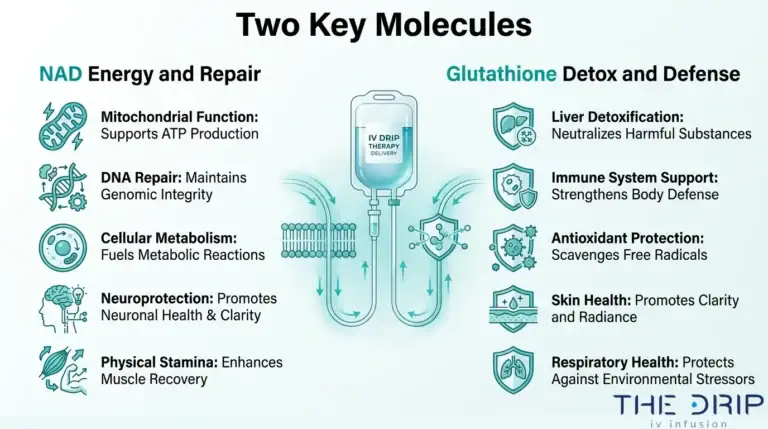
This approach is particularly valuable after intense training sessions or competitions when the gut may not absorb fluids efficiently. The Drip IV Infusion brings this service directly to athletes at home or at training facilities across Arizona. Founded by professionals with decades of experience in nursing and emergency medicine, The Drip IV Infusion offers customizable IV cocktails with add-ons such as magnesium, zinc, amino blends, and B-complex vitamins to match individual recovery needs.
What Are the Key Takeaways About Hydration for Athletes?
The key takeaways about hydration for athletes center on consistency, individualization, and strategic timing. Maintaining fluid balance before, during, and after exercise directly supports performance, recovery, and injury prevention.
Essential principles every athlete should follow include:
- Drink 16 to 24 fl. oz. of water within two hours before training and replace each pound lost with 16 to 24 fl. oz. afterward.
- Monitor hydration status using urine color, body weight changes, and thirst awareness rather than relying on a single indicator.
- Prioritize sodium replacement since it is the primary electrolyte lost through sweat.
- Adjust fluid intake based on environmental conditions, sport type, and individual sweat rate.
- Consider IV hydration therapy when rapid rehydration or enhanced nutrient delivery is needed beyond what oral intake can provide.
Staying proactive with hydration is one of the simplest, most effective strategies athletes have for protecting both performance and long-term health.